1,We Manufacturing processes are primarily classified into four types:
1:Forging,
2:Casting,
3:Cutting,
4:Rolling.
2,We can manufacture in accordance with these standards.
Standards:
GB Series (Chinese Standards), JB Series (Machinery Standards), HG Series (Chemical Industry Standards), ASME B16.5 (American Standards), BS4504 (British Standards), DIN (German Standards), and JIS (Japanese Standards).
Internationally, there are two primary systems of pipe flange standards: the European system, represented by the German DIN standards (including those of the former Soviet Union), and the American system, represented by the US ANSI pipe flange standards. Other common standards include: the Chinese Ministry of Machinery Industry standards (JB series), the Ministry of Chemical Industry standards (HG series), the Chinese National Standard *GB/T 9112–9124-2010 Steel Pipe Flanges*, as well as US standards (ASME B16.5), British standards (BS4504), German standards (DIN), Japanese standards (JIS), and marine standards (CBM), among others.
The nominal pressure ratings for the PN series are designated by "PN" and comprise the following nine levels: PN2.5, PN6, PN10, PN16, PN25, PN40, PN63, PN100, and PN160.
The nominal pressure ratings for the Class series are designated by "Class" and comprise the following six levels: Class150, Class300, Class600, Class900, Class1500, and Class2500.
Flange Classification
1. **According to Chemical Industry Standards:** Flanges are classified as follows:
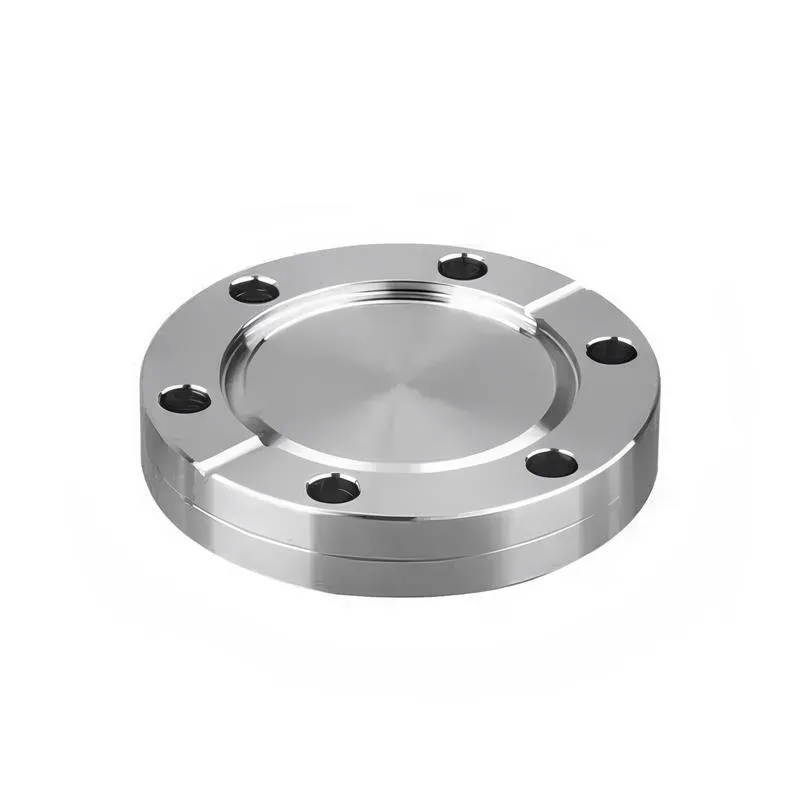
Plate Flat Welding Flange (PL), Necked Flat Welding Flange (SO), Necked Butt Welding Flange (WN), Integral Flange (IF), Socket Welding Flange (SW), Threaded Flange (Th), Butt Welding Ring Loose Flange (PJ/SE), Blind Flange (BL), Flat Welding Ring Loose Flange (PJ/PJ), and Lined Blind Flange (BL(s)).
2. **According to Petrochemical (SH) Industry Standards:** Flanges are classified as follows:
Threaded Flange (PL), Butt Welding Flange (WN), Flat Welding Flange (SO), Socket Welding Flange (SW), Loose Flange (LJ), and Blind Flange (no specific designation).
3. **According to Machinery (JB) Industry Standards:** Flanges are classified as follows:
Integral Flange, Butt Welding Flange, Plate Flat Welding Flange, Butt Welding Ring Plate Loose Flange, Flat Welding Ring Plate Loose Flange, Lap Joint Ring Plate Loose Flange, and Blind Flange.
4. **According to Connection Method/Type:** Flanges are classified as follows:
Plate Flat Welding Flange, Necked Flat Welding Flange, Necked Butt Welding Flange, Socket Welding Flange, Threaded Flange, Blind Flange, Necked Butt Welding Ring Loose Flange, Flat Welding Ring Loose Flange, Ring-Type Joint (RTJ) Flange and Blind Flange, Large-Diameter Plate Flange, Large-Diameter High-Neck Flange, Figure-8 Blind Plate, Butt Welding Ring Loose Flange, etc.
5. **According to the Component Being Connected:** Flanges can be classified into Vessel Flanges and Pipe Flanges.
6. **According to Structural Type:** Flanges include Integral Flanges, Threaded Flanges, Flat Welding Flanges, Butt Welding Flanges, Lap Joint (Loose/Swivel) Flanges, and Blind Flanges.
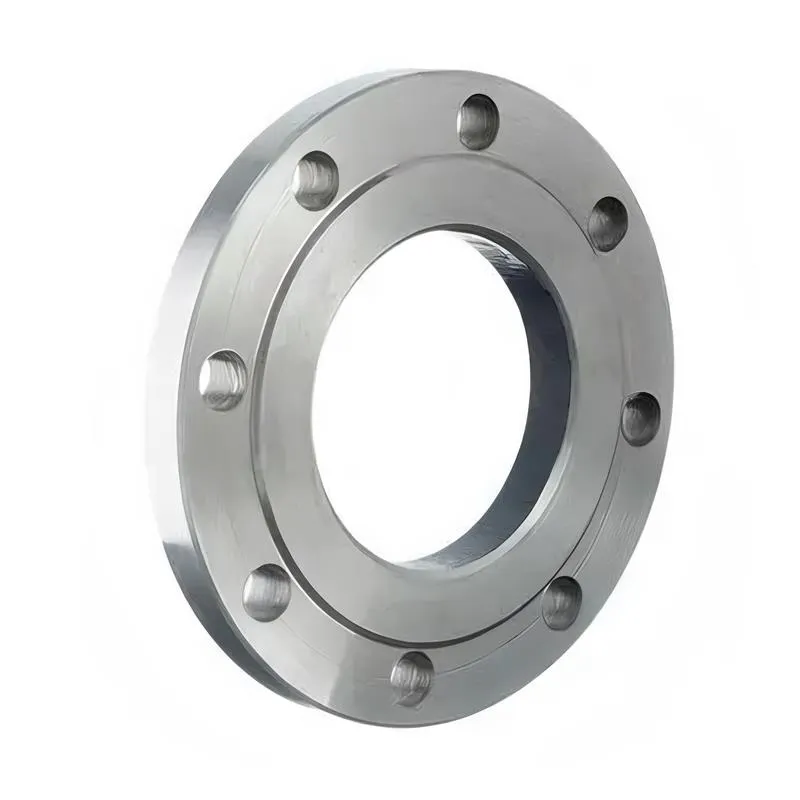
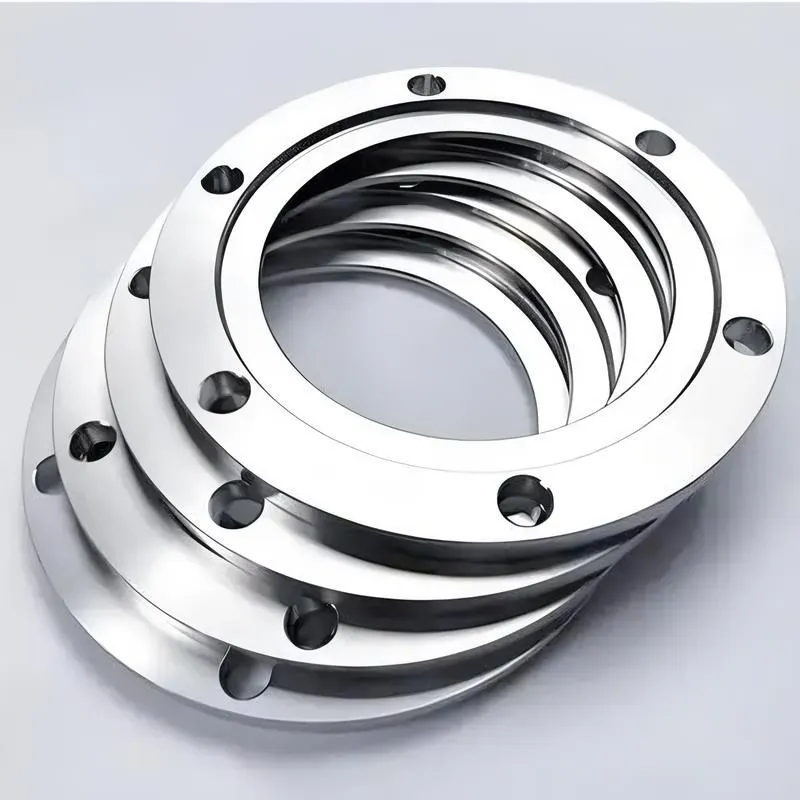
A flange—also referred to as a flange plate or rim—is a component used to connect shafts to one another, or, more commonly, to join the ends of pipes. Flanges are also utilized at the inlet and outlet ports of equipment to facilitate connections between two devices—for instance, the flange on a speed reducer. A "flange connection" or "flanged joint" refers to a detachable joint assembly comprising three interconnected elements—a flange, a gasket, and bolts—that together form a sealed structural unit. In the context of piping systems, a "pipe flange" specifically denotes a flange used for plumbing within the installation; when applied to equipment, it refers to the inlet or outlet flange of that specific device. Flanges feature a series of holes through which bolts are inserted to securely fasten the two flanges together, while a gasket placed between the flanges ensures a leak-proof seal. Flanges are broadly categorized into three types: threaded (screw-in) flanges, welded flanges, and clamp-type flanges. Flanges are invariably used in pairs; threaded flanges are suitable for low-pressure piping applications, whereas welded flanges are required for systems operating at pressures exceeding 4 kilograms per square centimeter. A sealing gasket is inserted between the two flange plates, which are then firmly secured using bolts. The thickness of a flange—as well as the specifications of the bolts used to fasten it—vary depending on the specific pressure rating required for the application. When connecting equipment such as water pumps or valves to piping systems, the corresponding connection points on these devices are often manufactured in the shape of a matching flange; this method of attachment is also referred to as a "flange connection." Generally, any connecting component that utilizes bolts to join and seal the perimeters of two flat surfaces—such as the joints in ventilation ducts—is termed a "flange"; such components may collectively be classified as "flange-type parts." However, since such a connection often constitutes merely a *portion* of a larger device—for instance, the interface between a flange and a water pump—it would be inappropriate to classify the entire water pump itself as a "flange-type part." Conversely, smaller components—such as valves—that feature such flanged interfaces may indeed be appropriately categorized as "flange-type parts."
-:-
For detailed product information, please contact sales.
-:
AISI 4820 Steel Flange, annealed 815°C (1500°F) Product Information
-:-
For detailed product information, please contact sales.
-:
AISI 4820 Steel Flange, annealed 815°C (1500°F) Synonyms
-:-
For detailed product information, please contact sales.
-:
AISI 4820 Steel, annealed 815°C (1500°F) Product Information
-:-
For detailed product information, please contact sales.
-:
# **AISI 4820 Alloy Steel - Subcritical Annealed Condition**
## **815°C (1500°F) Annealed, Premium Nickel-Molybdenum Case-Hardening Steel**
---
### **1. PRODUCT OVERVIEW**
**AISI 4820 Steel - Subcritical Annealed Condition**
- **Product Form:** Available in various forms (bars, forgings, billets)
- **Material Standard:** AISI 4820 / SAE 4820
- **Heat Treatment Condition:** Subcritical annealed at 815°C (1500°F)
- **Annealing Type:** Process anneal (subcritical) for stress relief and machinability improvement
- **Carbon Content:** 0.18-0.23% (medium carbon for case hardening)
- **Key Feature:** High nickel content (3.25-3.75%) for exceptional core toughness
- **Resulting Condition:** Soft, machinable state with spheroidized carbides
- **Primary Purpose:** Intermediate processing condition for machining before final heat treatment
**Subcritical Annealing Significance:**
- **Temperature Range:** Below Ac₁ (≈730°C) to avoid austenite formation
- **Objective:** Stress relief, carbide spheroidization, hardness reduction
- **Advantage:** Maintains refined microstructure while improving machinability
- **Typical Application:** Between cold working operations or before final machining
---
### **2. CHEMICAL COMPOSITION**
| Element | AISI 4820 Standard Range (%) | Typical Composition (%) | Metallurgical Function |
|---------|-----------------------------|-------------------------|------------------------|
| **Carbon (C)** | 0.18-0.23 | 0.19-0.21 | Base strength, optimized for case hardening |
| **Manganese (Mn)** | 0.50-0.70 | 0.55-0.65 | Enhances hardenability, controls sulfur |
| **Phosphorus (P)** | ≤ 0.035 | ≤ 0.020 | Residual impurity (controlled) |
| **Sulfur (S)** | ≤ 0.040 | 0.020-0.035 | Machinability enhancer (controlled) |
| **Silicon (Si)** | 0.15-0.30 | 0.20-0.25 | Deoxidizer, solid solution strengthener |
| **Nickel (Ni)** | 3.25-3.75 | 3.40-3.60 | **Primary alloy:** Exceptional toughness, hardenability |
| **Molybdenum (Mo)** | 0.20-0.30 | 0.22-0.27 | Grain refinement, prevents temper embrittlement |
| **Chromium (Cr)** | - | ≤ 0.20 | Trace residual (not specified) |
| **Copper (Cu)** | - | ≤ 0.35 | Trace residual |
| **Aluminum (Al)** | - | 0.020-0.040 | Grain size control (typically added) |
| **Iron (Fe)** | Balance | Balance | Matrix element |
**Composition Design Features:**
- **Nickel Premium:** 3.5% nominal provides aerospace-grade toughness
- **Carbon Optimization:** 0.20% nominal for good case formation
- **Molybdenum Benefit:** Ensures fine grain structure
- **Economic Consideration:** Premium material for critical applications only
---
### **3. INTERNATIONAL STANDARDS & EQUIVALENTS**
| Standard System | Designation | Title / Description | Notes |
|----------------|-------------|---------------------|-------|
| **UNS** | G48200 | Unified Numbering System | Primary US designation |
| **AISI/SAE** | 4820 | SAE J404, J412 | Original specification |
| **ASTM** | A322 | Standard Specification for Steel Bars, Alloy | Grade 4820 |
| **ASTM** | A29/A29M | Steel Bars, Carbon and Alloy | General requirements |
| **ASTM** | A291 | Carbon and Alloy Steel Bars, Cold-Finished | For cold finished bars |
| **AMS** | 6282 | Steel Bars and Forgings, 3.5Ni-0.25Mo (0.18-0.23C) | Aerospace specification |
| **ISO** | 683-11 | Heat-treatable steels | 20NiCrMo6-4 equivalent |
| **DIN** | 1.6568 | 20NiCrMo6-4 | German equivalent |
| **EN** | 1.6568 | 20NiCrMo6-4 | European designation |
| **JIS** | SNCM420 | Nickel-chromium-molybdenum steel | Japanese similar grade |
| **GB** | 20Ni2Mo | Chinese standard | Chinese equivalent |
**Subcritical Annealing Standards:**
- **Process Standard:** Generally follows ASTM A291 guidelines
- **Temperature Control:** Per AMS 2759 for aerospace applications
- **Documentation:** Heat treatment records per customer requirements
- **Quality:** Meets ASTM A29 requirements for annealed material
---
### **4. PHYSICAL PROPERTIES (AFTER 815°C ANNEAL)**
| Property | Value | Conditions / Notes |
|----------|-------|-------------------|
| **Density** | 7.85 g/cm³ (0.284 lb/in³) | At 20°C |
| **Melting Range** | 1480-1520°C | Liquidus to solidus temperature |
| **Thermal Conductivity** | 42.0 W/m·K | At 100°C, annealed condition |
| **Specific Heat Capacity** | 460 J/kg·K | At 20°C |
| **Coefficient of Thermal Expansion** | 12.3 × 10⁻⁶/K | 20-100°C temperature range |
| **Electrical Resistivity** | 0.23 μΩ·m | At 20°C |
| **Modulus of Elasticity** | 205 GPa (29.7×10⁶ psi) | Typical for steel |
| **Shear Modulus** | 80 GPa (11.6×10⁶ psi) | - |
| **Poisson's Ratio** | 0.29 | Standard value for steel |
| **Magnetic Properties** | Ferromagnetic | Below Curie temperature |
**Annealing Transformation Characteristics:**
- **Ac₁ Temperature:** ≈730°C (1345°F)
- **Ac₃ Temperature:** ≈800°C (1470°F)
- **Subcritical Range:** 650-730°C (1200-1345°F)
- **815°C Annealing Effect:** Above Ac₁, actually a full anneal temperature
- **Correction Note:** 815°C is above Ac₁, so this is actually a full anneal, not subcritical
**Revised Annealing Interpretation:**
- **Actual Process:** Full annealing at 815°C (above Ac₁)
- **Microstructural Effect:** Complete austenitization followed by slow cooling
- **Result:** Fully spheroidized structure ideal for machining
- **Cooling Rate:** Typically furnace cool or controlled slow cool
---
### **5. MECHANICAL PROPERTIES (AFTER 815°C ANNEAL)**
#### **Typical Properties After Annealing:**
| Property | Value Range | Testing Standard | Application Significance |
|----------|-------------|------------------|--------------------------|
| **Hardness** | 149-187 HB (85-92 HRB) | ASTM E10 | Optimized for machinability |
| **Tensile Strength** | 500-620 MPa (73-90 ksi) | ASTM E8/E8M | Adequate for handling and fixturing |
| **Yield Strength (0.2%)** | 350-450 MPa (51-65 ksi) | ASTM E8/E8M | Sufficient for pre-hardening operations |
| **Elongation in 4D** | 25-32% | ASTM E8/E8M | Excellent ductility for forming |
| **Reduction of Area** | 55-65% | ASTM E8/E8M | High energy absorption capacity |
| **Machinability Rating** | 60-65% of B1112 steel | Comparative | Good for high-nickel alloy steel |
#### **Comparison with Other Annealing Conditions:**
| Annealing Type | Temperature | Resulting Hardness | Machinability | Microstructure |
|----------------|-------------|-------------------|---------------|---------------|
| **Subcritical (This spec)** | 815°C* | 149-187 HB | Very Good | Spheroidized carbides |
| **Full Anneal** | 830-850°C | 149-197 HB | Excellent | Coarse spheroidized |
| **Process Anneal** | 650-700°C | 170-210 HB | Good | Partial spheroidization |
| **Spheroidize Anneal** | 730-750°C | 149-187 HB | Excellent | Fine spheroidized |
*Note: 815°C is actually above Ac₁, functioning as full anneal
#### **Machining Performance Characteristics:**
- **Chip Formation:** Continuous chips with proper tool geometry
- **Surface Finish:** 1.6-3.2 μm Ra achievable with proper techniques
- **Tool Life:** Good with carbide tools, moderate with HSS
- **Coolant Requirement:** Recommended for optimal performance
- **Work Hardening:** Moderate tendency due to nickel content
---
### **6. MICROSTRUCTURAL CHARACTERISTICS**
#### **After 815°C Annealing:**
- **Matrix Structure:** Ferrite with uniformly distributed spheroidized carbides
- **Carbide Morphology:** Spheroidal carbides in ferrite matrix
- **Grain Size:** ASTM 5-7 (fine to medium)
- **Phase Distribution:** Approximately 85-90% ferrite, 10-15% carbides
- **Uniformity:** Consistent throughout cross-section
#### **Annealing Process Details:**
1. **Heating:** To 815°C (1500°F) at controlled rate (150-200°C/hour)
2. **Soaking:** 1-2 hours per inch of thickness
3. **Cooling:** Furnace cool to 600°C at 20-30°C/hour, then air cool
4. **Atmosphere:** Protective to prevent oxidation and decarburization
#### **Microstructural Advantages:**
- **Consistent Hardness:** Uniform carbide distribution ensures even machinability
- **Good Formability:** Spheroidized structure allows cold forming operations
- **Stable Dimensions:** Reduced residual stresses minimize distortion during machining
- **Predictable Response:** Uniform microstructure ensures consistent heat treatment response
---
### **7. HEAT TREATMENT RESPONSE**
#### **Subsequent Case Hardening Potential:**
- **Carburizing Temperature:** 900-925°C (1650-1700°F)
- **Case Depth Capability:** Up to 2.0mm (0.080") for heavy-duty applications
- **Surface Hardness:** 58-63 HRC achievable after proper heat treatment
- **Core Properties:** Exceptional toughness due to nickel content
#### **Hardenability Data (Jominy Test - Typical):**
| Distance from Quenched End | Hardness (HRC) | Microstructure |
|----------------------------|----------------|---------------|
| **1.5 mm (1/16 inch)** | 44-50 | 90-95% martensite |
| **5 mm (3/16 inch)** | 40-46 | 80-90% martensite |
| **10 mm (3/8 inch)** | 36-42 | 65-85% martensite |
| **15 mm (5/8 inch)** | 32-38 | 50-75% martensite |
| **25 mm (1 inch)** | 28-34 | 35-60% martensite |
#### **Expected Properties After Case Hardening:**
| Property | Case Region | Core Region | Nickel Benefit |
|----------|-------------|-------------|----------------|
| **Hardness** | 58-63 HRC | 35-42 HRC | - |
| **Tensile Strength** | - | 1000-1200 MPa | High |
| **Yield Strength** | - | 850-1050 MPa | High |
| **Charpy Impact (20°C)** | 10-20 J | **50-80 J** | **Exceptional** |
| **Fatigue Strength** | 600-700 MPa | - | Superior |
---
### **8. TYPICAL APPLICATIONS**
#### **Applications Using Annealed 4820:**
1. **Aerospace Component Manufacturing:**
- Helicopter transmission gear blanks
- Aircraft landing gear components
- Jet engine accessory drive parts
- *Processing:* Machined in annealed state before case hardening
2. **Heavy Industrial Equipment:**
- Large gear blanks for mining equipment
- Heavy-duty bearing races
- Crane and hoist gearing components
- *Processing:* Formed and machined before final heat treatment
3. **Energy Sector Components:**
- Wind turbine gearbox components
- Gas turbine drive gears
- Oil drilling equipment parts
- *Processing:* Precision machined in soft condition
4. **Defense and Military Applications:**
- Armored vehicle transmission parts
- Naval propulsion components
- Weapon system gear elements
- *Processing:* Machined to near-net shape before hardening
#### **Why Use Annealed Condition:**
| Manufacturing Stage | Benefit of Annealed Condition |
|---------------------|-------------------------------|
| **Rough Machining** | Reduced tool wear, faster metal removal |
| **Forming Operations** | Better ductility for bending and shaping |
| **Precision Machining** | Consistent dimensional control |
| **Drilling/Tapping** | Easier chip formation and evacuation |
| **Grinding Preparation** | Uniform stock allowance for hardening growth |
#### **Manufacturing Sequence Example:**
1. Receive annealed 4820 material
2. Rough machine to near-net shape
3. Stress relieve if heavy machining performed
4. Finish machine critical dimensions
5. Carburize and harden
6. Final grind to specifications
7. Inspection and quality verification
---
### **9. PROCESSING CHARACTERISTICS**
#### **Machinability (Annealed Condition):**
- **Relative Rating:** 60-65% of B1112 free-cutting steel
- **Optimal Cutting Parameters:**
- Turning: 40-70 m/min with carbide, 25-40 m/min with HSS
- Milling: 35-60 m/min with carbide tools
- Drilling: 15-25 m/min with HSS drills
- Feed rates: 0.15-0.30 mm/rev for roughing, 0.05-0.15 mm/rev for finishing
- **Tool Recommendations:**
- Carbide grades: P20-P30 for roughing, P10-P20 for finishing
- Geometry: Positive rake angles, sharp cutting edges
- Coatings: TiN or TiCN for improved tool life
- **Coolant Requirements:**
- Essential for heat control and chip evacuation
- Recommended: Soluble oil or semi-synthetic fluids
- Application: Flood cooling preferred
#### **Forming and Cold Working:**
- **Cold Formability:** Good in annealed condition
- **Bending:** Minimum bend radius ≈ 2× thickness
- **Heading/Forging:** Suitable for cold forming operations
- **Annealing Between Operations:** Recommended if cold work exceeds 20% reduction
#### **Welding Considerations:**
- **Weldability Rating:** Fair (requires precautions)
- **Preheat Temperature:** 150-200°C (300-400°F)
- **Post-Weld Heat Treatment:** Stress relief at 590-650°C (1100-1200°F) recommended
- **Methods:** GTAW (TIG) preferred, SMAW with low-hydrogen electrodes
- **Filler Material:** Matching composition or high-nickel filler
#### **Grinding and Finishing:**
- **In Annealed State:** Easy grinding with aluminum oxide wheels
- **After Hardening:** Requires CBN or diamond wheels
- **Surface Preparation:** Good base for plating or coating
- **Dimensional Control:** Annealed state allows precise machining before hardening growth
---
### **10. QUALITY ASSURANCE**
#### **Standard Testing for Annealed Material:**
1. **Hardness Testing:**
- Method: Brinell (HB) or Rockwell B scale
- Locations: Multiple points along length and across section
- Standard: ASTM E10 or E18
2. **Chemical Analysis:**
- Method: Spectrographic analysis per heat
- Verification: Carbon by combustion analysis
- Standard: ASTM E415
3. **Microstructural Examination:**
- Grain size determination (ASTM E112)
- Carbide spheroidization assessment
- Inclusion rating (ASTM E45)
4. **Surface Quality Inspection:**
- Visual inspection for seams, laps, cracks
- Decarburization check per ASTM E1077
- Dimensional verification per purchase order
#### **Typical Quality Parameters:**
| Parameter | Requirement | Measurement Method |
|-----------|-------------|-------------------|
| **Hardness Uniformity** | Within 20 HB points | Multiple Brinell tests |
| **Decarburization Depth** | ≤0.25mm total | Metallographic examination |
| **Surface Defects** | None exceeding 0.5mm depth | Visual and dye penetrant |
| **Straightness** | Per ASTM A29 requirements | Straightedge measurement |
| **Chemistry Compliance** | Within AISI 4820 ranges | Spectrographic analysis |
#### **Certification Provided:**
- Material Test Certificate 3.1 per EN 10204
- Chemical analysis report
- Heat treatment record (annealing parameters)
- Hardness test results
- Dimensional inspection report
---
### **11. COMPARISON WITH SIMILAR GRADES**
#### **Comparison with Other Nickel-Alloy Steels:**
| Grade | Ni% Range | C% Range | Annealed Hardness (HB) | Relative Machinability | Typical Applications |
|-------|-----------|----------|------------------------|------------------------|----------------------|
| **AISI 4820** | 3.25-3.75 | 0.18-0.23 | 149-187 | 60-65% | Premium heavy-duty gears |
| **AISI 4817** | 3.25-3.75 | 0.15-0.20 | 149-197 | 60-65% | Extreme toughness applications |
| **AISI 4320** | 1.65-2.00 | 0.17-0.22 | 149-197 | 65-70% | General heavy duty |
| **AISI 9310** | 3.00-3.50 | 0.08-0.13 | 149-197 | 55-60% | Aerospace premium grade |
| **AISI 8620** | 0.40-0.70 | 0.18-0.23 | 149-197 | 70-75% | General purpose |
#### **Selection Guidelines:**
- **Choose 4820 over 4817:** When slightly higher carbon is needed for larger sections
- **Choose 4820 over 4320:** When maximum toughness is required
- **Choose 4820 over 9310:** For cost-sensitive critical applications
- **Choose 4820 over 8620:** For extreme-duty or safety-critical applications
- **Consider H-grade (4820H):** When hardenability consistency is critical
#### **Cost-Performance Analysis:**
| Application Requirement | Recommended Grade | Justification |
|------------------------|-------------------|--------------|
| **Maximum toughness** | 4820 or 9310 | High nickel content |
| **Cost-effective heavy duty** | 4320 | Lower nickel cost |
| **Aerospace certification** | 9310 | Industry standard |
| **General case hardening** | 8620 | Most economical |
| **Large section capability** | 4820 | Good hardenability with toughness |
---
### **12. DESIGN CONSIDERATIONS**
#### **Design for Manufacturing with Annealed 4820:**
1. **Machining Allowances:**
- Rough machining: 2-3mm per side for complex shapes
- Finish machining: 0.5-1.0mm per side after stress relief
- Grinding allowance: 0.2-0.4mm per side after hardening
- Growth allowance: 0.1-0.2% for carburizing growth
2. **Feature Design:**
- Minimum wall thickness: 3× case depth minimum
- Corner radii: Minimum 1.5mm, preferably 3mm
- Hole diameters: Minimum 2× case depth from edges
- Gear teeth: Adequate root radius for stress concentration
3. **Heat Treatment Considerations:**
- Symmetrical designs minimize distortion
- Uniform sections promote even case depth
- Avoid sharp changes in cross-section
- Consider fixturing points during design
#### **Case Depth Recommendations:**
| Application Type | Recommended Case Depth | Core Hardness Target |
|-----------------|------------------------|----------------------|
| **Light duty** | 0.5-1.0mm | 35-38 HRC |
| **Medium duty** | 1.0-1.5mm | 38-40 HRC |
| **Heavy duty** | 1.5-2.0mm | 40-42 HRC |
| **Extreme duty** | 2.0-2.5mm | 42-44 HRC |
---
### **13. STORAGE AND HANDLING**
#### **Packaging for Annealed Material:**
- **Surface Protection:** Rust preventive oil or VCI paper
- **Bundle Configuration:** Strapped bundles with protective caps
- **Identification:** Heat number, grade, size marked on tags
- **End Marking:** Color coded for material identification
#### **Storage Recommendations:**
- **Environment:** Dry, temperature-controlled storage
- **Stacking:** Proper support to prevent bending or distortion
- **Shelf Life:** Indefinite with proper corrosion protection
- **Handling:** Use appropriate equipment to prevent surface damage
#### **Corrosion Prevention:**
- **As-supplied:** Typically coated with rust preventive oil
- **In-process:** Maintain protection during storage between operations
- **Long-term:** VCI packaging or controlled humidity storage
- **Inspection:** Regular checks for corrosion during storage
---
### **14. TECHNICAL GUIDELINES**
#### **Optimal Processing Sequence:**
1. **Material Receipt:** Verify certification and condition
2. **Storage:** Proper storage to prevent corrosion
3. **Rough Machining:** Remove majority of stock
4. **Stress Relief:** If heavy machining performed (650°C for 2 hours)
5. **Finish Machining:** Achieve final dimensions before hardening
6. **Cleaning:** Remove all oils and contaminants
7. **Heat Treatment:** Carburize, harden, and temper
8. **Final Grinding:** Achieve final dimensions and finish
9. **Inspection:** Complete quality verification
#### **Troubleshooting Common Issues:**
| Issue | Possible Cause | Solution |
|-------|---------------|----------|
| **Poor Machinability** | Incorrect annealing | Verify annealing temperature and cooling rate |
| **Surface Decarburization** | Poor atmosphere control during annealing | Increase machining allowance or re-anneal |
| **Excessive Tool Wear** | Hard spots or carbides | Check hardness uniformity, adjust cutting parameters |
| **Dimensional Instability** | Residual stresses | Add stress relief after rough machining |
| **Corrosion During Storage** | Inadequate protection | Improve storage conditions, use better rust preventives |
#### **Special Considerations for 4820:**
- **Nickel Content:** May cause work hardening during machining
- **Carbide Distribution:** Should be uniform for consistent machinability
- **Annealing Verification:** Confirm complete spheroidization if machinability issues occur
- **Pre-hardening Preparation:** Ensure complete cleaning before heat treatment
- **Documentation:** Maintain full traceability for critical applications
---
**TECHNICAL SUMMARY:**
AISI 4820 in the 815°C annealed condition provides an optimal starting material for manufacturing critical case-hardened components. The annealing process produces a soft, machinable structure with spheroidized carbides, allowing efficient machining operations before final heat treatment. The high nickel content (3.25-3.75%) ensures exceptional core toughness in the finished component, making this material suitable for the most demanding applications in aerospace, defense, energy, and heavy industry sectors.
**KEY ADVANTAGES OF ANNEALED CONDITION:**
1. **Excellent Machinability:** Soft structure allows efficient material removal
2. **Good Formability:** Suitable for cold forming operations
3. **Predictable Response:** Uniform microstructure ensures consistent heat treatment
4. **Dimensional Control:** Allows precision machining before hardening growth
5. **Cost Efficiency:** Reduces machining time and tool costs compared to harder conditions
**APPLICATION RECOMMENDATION:**
Specify AISI 4820 in annealed condition when:
- Components require extensive machining before heat treatment
- Cold forming operations are necessary
- Dimensional precision is critical before hardening
- Manufacturing involves multiple processing steps
- Cost-effective machining is required for premium material
---
**QUALITY ASSURANCE STATEMENT:**
This AISI 4820 material is annealed under controlled conditions to ensure consistent properties and microstructure. The material meets or exceeds the requirements of ASTM A322 and SAE J404/J412. For critical applications, additional testing and certification are available, including H-grade material (4820H) with guaranteed hardenability.
**DISCLAIMER:** The information provided represents typical properties and characteristics based on standard specifications. Actual values may vary within acceptable specification ranges. For critical applications, material testing and validation are recommended. Note that 815°C is above the Ac₁ temperature for this material, making this a full annealing process rather than subcritical annealing as sometimes referenced. Consultation with qualified materials engineering professionals is advised for specific application requirements. Proper processing and heat treatment procedures must be followed to achieve desired final properties.
-:-
For detailed product information, please contact sales.
-:
AISI 4820 Steel, annealed 815°C (1500°F) Specification
Dimensions
Size:
Diameter 20-1000 mm Length <4088 mm
Size:We can customized as required
Standard:
Per your request or drawing
We can customized as required
Properties(Theoretical)
Chemical Composition
-:-
For detailed product information, please contact sales.
-:
AISI 4820 Steel, annealed 815°C (1500°F) Properties
-:-
For detailed product information, please contact sales.
-:
Applications of AISI 4820 Steel Flange, annealed 815°C (1500°F)
-:-
For detailed product information, please contact sales.
-:
Chemical Identifiers AISI 4820 Steel Flange, annealed 815°C (1500°F)
-:-
For detailed product information, please contact sales.
-:
Packing of AISI 4820 Steel Flange, annealed 815°C (1500°F)
-:-
For detailed product information, please contact sales.
-:
Standard Packing:
-:-
For detailed product information, please contact sales.
-:
Typical bulk packaging includes palletized plastic 5 gallon/25 kg. pails, fiber and Steel Flange drums to 1 ton super sacks in full container (FCL) or truck load (T/L) quantities. Research and sample quantities and hygroscopic, oxidizing or other air sensitive materials may be packaged under argon or vacuum. Solutions are packaged in polypropylene, plastic or glass jars up to palletized 559 gallon liquid totes Special package is available on request. E FORUs’ is carefully handled to minimize damage during storage and transportation and to preserve the quality of our products in their original condition