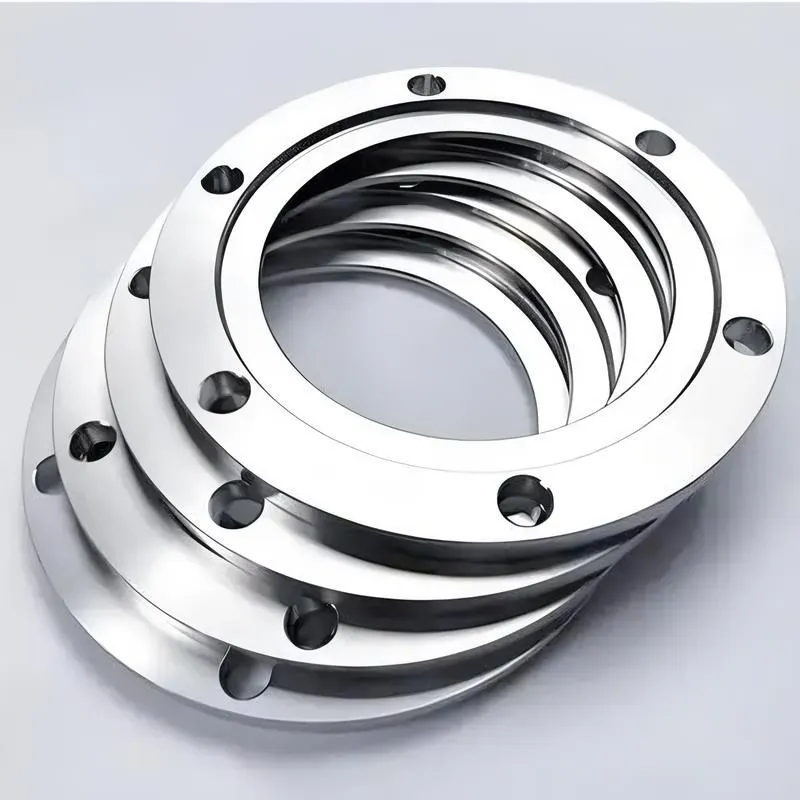
1,We Manufacturing processes are primarily classified into four types:
1:Forging,
2:Casting,
3:Cutting,
4:Rolling.
2,We can manufacture in accordance with these standards.
Standards:
GB Series (Chinese Standards), JB Series (Machinery Standards), HG Series (Chemical Industry Standards), ASME B16.5 (American Standards), BS4504 (British Standards), DIN (German Standards), and JIS (Japanese Standards).
Internationally, there are two primary systems of pipe flange standards: the European system, represented by the German DIN standards (including those of the former Soviet Union), and the American system, represented by the US ANSI pipe flange standards. Other common standards include: the Chinese Ministry of Machinery Industry standards (JB series), the Ministry of Chemical Industry standards (HG series), the Chinese National Standard *GB/T 9112–9124-2010 Steel Pipe Flanges*, as well as US standards (ASME B16.5), British standards (BS4504), German standards (DIN), Japanese standards (JIS), and marine standards (CBM), among others.
The nominal pressure ratings for the PN series are designated by "PN" and comprise the following nine levels: PN2.5, PN6, PN10, PN16, PN25, PN40, PN63, PN100, and PN160.
The nominal pressure ratings for the Class series are designated by "Class" and comprise the following six levels: Class150, Class300, Class600, Class900, Class1500, and Class2500.
Flange Classification
1. **According to Chemical Industry Standards:** Flanges are classified as follows:
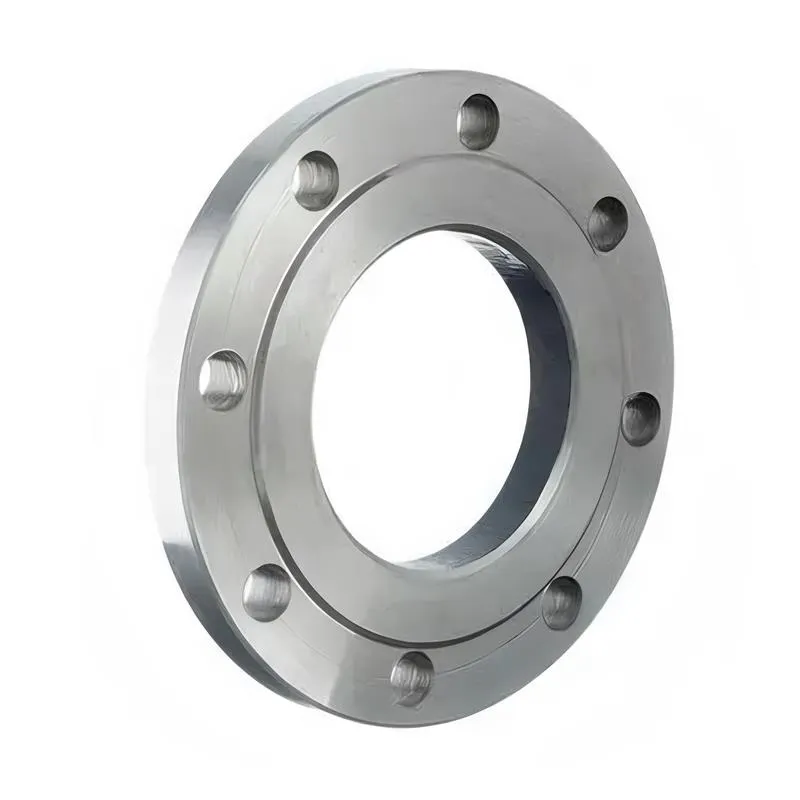
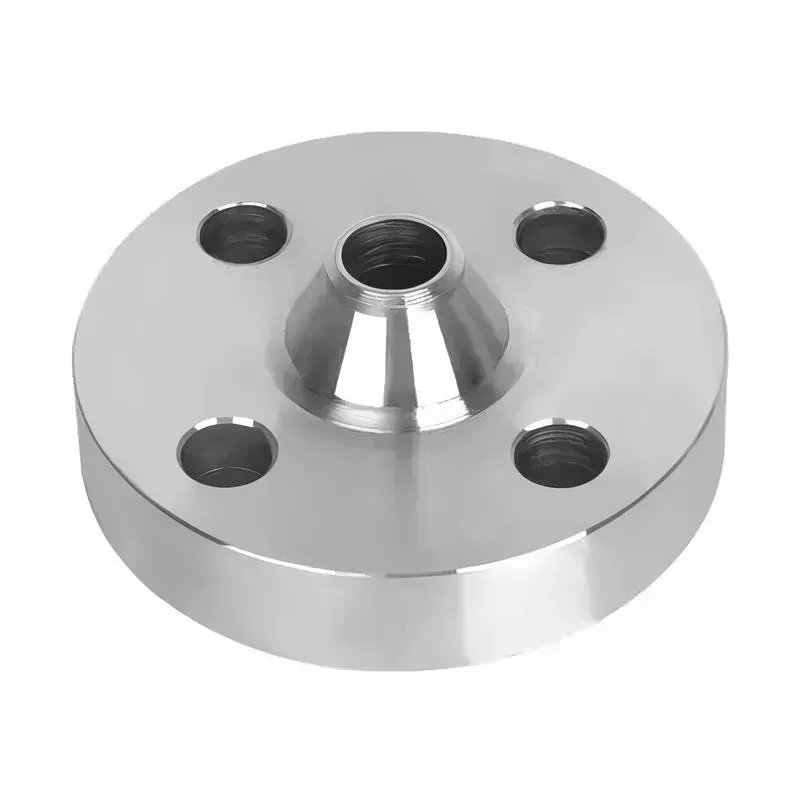
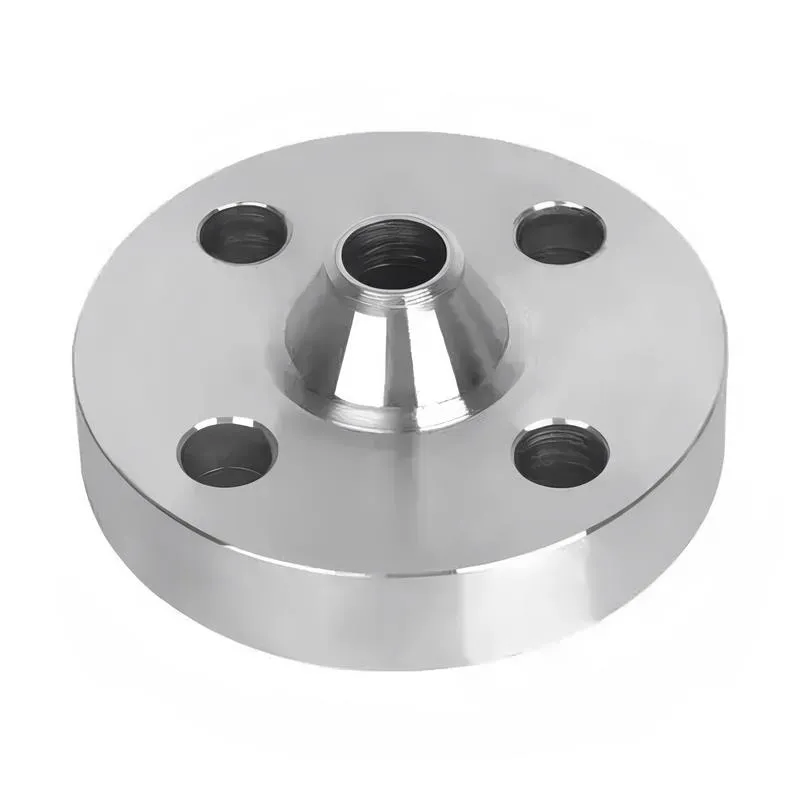
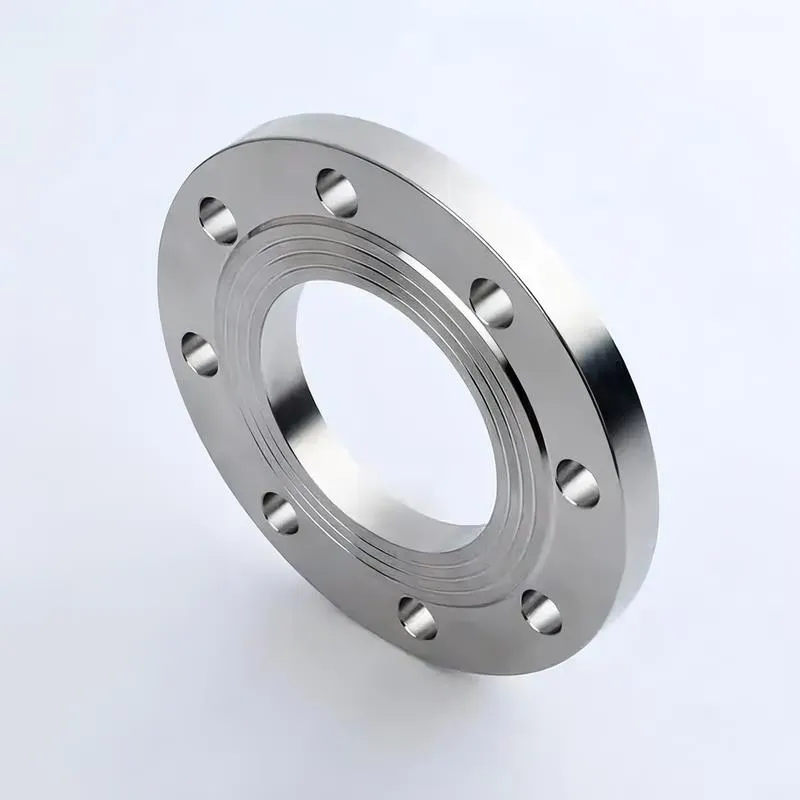
Plate Flat Welding Flange (PL), Necked Flat Welding Flange (SO), Necked Butt Welding Flange (WN), Integral Flange (IF), Socket Welding Flange (SW), Threaded Flange (Th), Butt Welding Ring Loose Flange (PJ/SE), Blind Flange (BL), Flat Welding Ring Loose Flange (PJ/PJ), and Lined Blind Flange (BL(s)).
2. **According to Petrochemical (SH) Industry Standards:** Flanges are classified as follows:
Threaded Flange (PL), Butt Welding Flange (WN), Flat Welding Flange (SO), Socket Welding Flange (SW), Loose Flange (LJ), and Blind Flange (no specific designation).
3. **According to Machinery (JB) Industry Standards:** Flanges are classified as follows:
Integral Flange, Butt Welding Flange, Plate Flat Welding Flange, Butt Welding Ring Plate Loose Flange, Flat Welding Ring Plate Loose Flange, Lap Joint Ring Plate Loose Flange, and Blind Flange.
4. **According to Connection Method/Type:** Flanges are classified as follows:
Plate Flat Welding Flange, Necked Flat Welding Flange, Necked Butt Welding Flange, Socket Welding Flange, Threaded Flange, Blind Flange, Necked Butt Welding Ring Loose Flange, Flat Welding Ring Loose Flange, Ring-Type Joint (RTJ) Flange and Blind Flange, Large-Diameter Plate Flange, Large-Diameter High-Neck Flange, Figure-8 Blind Plate, Butt Welding Ring Loose Flange, etc.
5. **According to the Component Being Connected:** Flanges can be classified into Vessel Flanges and Pipe Flanges.
6. **According to Structural Type:** Flanges include Integral Flanges, Threaded Flanges, Flat Welding Flanges, Butt Welding Flanges, Lap Joint (Loose/Swivel) Flanges, and Blind Flanges.
A flange—also referred to as a flange plate or rim—is a component used to connect shafts to one another, or, more commonly, to join the ends of pipes. Flanges are also utilized at the inlet and outlet ports of equipment to facilitate connections between two devices—for instance, the flange on a speed reducer. A "flange connection" or "flanged joint" refers to a detachable joint assembly comprising three interconnected elements—a flange, a gasket, and bolts—that together form a sealed structural unit. In the context of piping systems, a "pipe flange" specifically denotes a flange used for plumbing within the installation; when applied to equipment, it refers to the inlet or outlet flange of that specific device. Flanges feature a series of holes through which bolts are inserted to securely fasten the two flanges together, while a gasket placed between the flanges ensures a leak-proof seal. Flanges are broadly categorized into three types: threaded (screw-in) flanges, welded flanges, and clamp-type flanges. Flanges are invariably used in pairs; threaded flanges are suitable for low-pressure piping applications, whereas welded flanges are required for systems operating at pressures exceeding 4 kilograms per square centimeter. A sealing gasket is inserted between the two flange plates, which are then firmly secured using bolts. The thickness of a flange—as well as the specifications of the bolts used to fasten it—vary depending on the specific pressure rating required for the application. When connecting equipment such as water pumps or valves to piping systems, the corresponding connection points on these devices are often manufactured in the shape of a matching flange; this method of attachment is also referred to as a "flange connection." Generally, any connecting component that utilizes bolts to join and seal the perimeters of two flat surfaces—such as the joints in ventilation ducts—is termed a "flange"; such components may collectively be classified as "flange-type parts." However, since such a connection often constitutes merely a *portion* of a larger device—for instance, the interface between a flange and a water pump—it would be inappropriate to classify the entire water pump itself as a "flange-type part." Conversely, smaller components—such as valves—that feature such flanged interfaces may indeed be appropriately categorized as "flange-type parts."
-:-
For detailed product information, please contact sales.
-:
AISI 5160 Steel Flange, annealed, 25 mm (1 in.) round Product Information
-:-
For detailed product information, please contact sales.
-:
AISI 5160 Steel Flange, annealed, 25 mm (1 in.) round Synonyms
-:-
For detailed product information, please contact sales.
-:
AISI 5160 Steel, annealed, 25 mm (1 in.) round Product Information
-:-
For detailed product information, please contact sales.
-:
# **AISI 5160 Steel, Annealed, 25 mm (1 inch) Round Bar - Technical Data Sheet**
## **1. Product Overview**
**AISI 5160 annealed 25 mm (1 inch) round bar** is a high-carbon chromium alloy steel supplied in a fully softened condition, optimized for superior machinability and formability while maintaining excellent potential for subsequent heat treatment. With nominal composition of 0.60% carbon and 0.80% chromium, this steel represents one of the most popular spring and high-strength alloy steels, particularly valued for its outstanding combination of high strength, good toughness, and excellent fatigue resistance when properly heat treated.
The 25mm diameter round bar form is exceptionally versatile, providing an optimal balance between sufficient cross-section for structural applications and manageable size for uniform heat treatment response. The annealed condition (typically achieved through full annealing at 790-820°C with controlled cooling) produces a soft, pearlitic structure that maximizes tool life and minimizes cutting forces during machining operations, making it an ideal starting material for a wide range of mechanical components.
---
## **2. Chemical Composition (SAE J404/J412)**
| Element | Composition Range (%) | Metallurgical Significance for 25mm Annealed Bar |
|---------|----------------------|--------------------------------------------------|
| **Carbon (C)** | 0.56 - 0.64 | High carbon content provides exceptional hardenability and spring properties; balanced for machinability in annealed state |
| **Manganese (Mn)** | 0.75 - 1.00 | Enhances hardenability significantly; contributes to uniform transformation during annealing |
| **Phosphorus (P)** | ≤ 0.035 | Impurity; minimized for improved ductility and impact toughness |
| **Sulfur (S)** | ≤ 0.040 | Typically controlled at moderate levels; may be optimized for improved machinability |
| **Silicon (Si)** | 0.15 - 0.35 | Deoxidizer; strengthens ferrite matrix; improves fatigue resistance |
| **Chromium (Cr)** | 0.70 - 0.90 | Primary alloying element; improves hardenability, wear resistance, and corrosion resistance |
| **Iron (Fe)** | Balance | Base metal |
**Product Specifications:**
- **SAE/AISI:** 5160
- **UNS:** G51600
- **Form:** Round bar, centerless ground or as-annealed finish
- **Diameter:** 25.0 mm ±0.5 mm (1.00 inch ±0.020 inch)
- **Condition:** Fully Annealed (typically to 179-229 HB)
- **Standard Lengths:** 3m, 6m (10ft, 20ft); cut lengths available
- **Surface Finish:** As-annealed (light scale) or machined finish
---
## **3. Physical & Mechanical Properties (As-Annealed, 25mm Round)**
### **Typical As-Annealed Properties:**
- **Hardness:** 179-229 HB (85-97 HRB)
- **Tensile Strength:** 585-795 MPa (85-115 ksi)
- **Yield Strength (0.2% offset):** 345-550 MPa (50-80 ksi)
- **Elongation (in 50mm/2"):** 18-25%
- **Reduction of Area:** 40-55%
- **Modulus of Elasticity:** 205 GPa (29,700 ksi)
- **Shear Modulus:** 80 GPa (11,600 ksi)
- **Poisson's Ratio:** 0.29
### **Machinability Characteristics (25mm Round):**
- **Machinability Rating:** 45-50% (relative to 1212 steel = 100%)
- **Optimal Cutting Parameters:**
- Turning speed: 35-55 m/min (115-180 SFM) with carbide tools
- Feed rate: 0.15-0.30 mm/rev (0.006-0.012 in/rev)
- Tool life: Good with proper coolant and tool geometry
- **Chip Formation:** Continuous chips; chip breakers highly recommended
- **Surface Finish Achievable:** 1.6-3.2 μm Ra (63-125 μin)
- **Specific Cutting Force:** ~2200 N/mm²
### **Physical Properties:**
- **Weight per meter:** 3.85 kg/m (2.59 lb/ft)
- **Cross-sectional Area:** 490.9 mm² (0.761 in²)
- **Surface Area per meter:** 0.0785 m²/m (0.258 ft²/ft)
- **Density:** 7.85 g/cm³ (0.284 lb/in³)
- **Thermal Conductivity:** 42.0 W/m·K at 100°C
- **Coefficient of Thermal Expansion:** 12.3 μm/m·°C (20-100°C)
- **Specific Heat:** 460 J/kg·K at 20°C
- **Electrical Resistivity:** 0.24 μΩ·m at 20°C
### **Through-Thickness Consistency (25mm Diameter):**
| Position | Hardness (HB) | Microstructure | Remarks |
|----------|---------------|----------------|---------|
| **Surface** | 195 ±10 | Fine pearlite + ferrite | May have slight decarb (≤0.2mm) |
| **Mid-radius** | 205 ±8 | Uniform pearlite | Most representative properties |
| **Center** | 210 ±12 | Slightly coarser pearlite | Slower cooling during annealing |
| **Maximum Variation** | ≤15 HB (7.3%) | Consistent phase distribution | Excellent uniformity for 25mm |
---
## **4. Metallurgical Structure & Annealing Process**
### **Standard Annealing Parameters for 25mm Round Bar:**
- **Annealing Temperature:** 790-820°C (1450-1510°F)
- **Soak Time:** 1.5-2 hours at temperature
- **Cooling Rate:** Furnace cool to 600°C at 20-30°C/hour, then air cool
- **Atmosphere:** Protective or controlled to limit decarburization to ≤0.25mm
- **Resulting Microstructure:** Coarse lamellar pearlite with proeutectoid ferrite
- **Spheroidization:** Optional for improved machinability (740-760°C, slow cool)
### **Microstructural Characteristics:**
- **Primary Phase:** Pearlite (70-85% area fraction)
- **Pearlite Colony Size:** 25-60 μm
- **Interlamellar Spacing:** 0.4-0.8 μm
- **Ferrite Content:** 15-30% (at prior austenite grain boundaries)
- **Grain Size:** ASTM 5-7 (equiaxed ferrite grains)
- **Carbide Distribution:** Uniform lamellar structure with possible partial spheroidization
### **Benefits of Annealed Condition for 25mm Round:**
1. **Excellent machinability** - minimal tool wear, good surface finish
2. **Dimensional stability** - minimal residual stresses for accurate machining
3. **Uniform properties** - consistent behavior throughout bar length
4. **Good formability** - suitable for bending, forging, or cold working
5. **Predictable heat treatment response** - uniform starting structure
---
## **5. Manufacturing & Processing in Annealed Condition**
### **Recommended Machining Parameters:**
| Operation | Speed (m/min) | Feed (mm/rev) | Depth of Cut (mm) | Tool Recommendations |
|-----------|---------------|---------------|-------------------|---------------------|
| **Turning** | 40-60 | 0.20-0.40 | 1.0-5.0 | Carbide C2-C4, positive rake 5-7° |
| **Drilling** | 20-35 | 0.15-0.30 | Full diameter | HSS-Co, 118-135° point, adequate coolant |
| **Milling** | 35-55 | 0.10-0.25/tooth | 2.0-4.0 | Carbide, 4-6 flutes, climb milling preferred |
| **Tapping** | 5-15 | Pitch determined | Full depth | HSS spiral point, proper lubrication |
| **Sawing** | 35-60 | Moderate pressure | - | Bimetal blades, 4-8 TPI |
### **Forming & Fabrication Capabilities:**
- **Cold Bending:** Minimum radius = 2× diameter (50mm) for 90° bends
- **Hot Forging:** Excellent at 1050-850°C; finish forging ≥850°C
- **Cold Heading:** Suitable for moderate reductions with proper annealing
- **Thread Rolling:** Produces strong, clean threads with good lubrication
- **Punching/Blanking:** Clean edges with die clearance 6-9% of thickness
### **Subsequent Heat Treatment Potential:**
*Typical hardening parameters optimized for 25mm round bar:*
- **Austenitizing:** 830-850°C (1525-1560°F)
- **Quenching:** Oil (ideal for this diameter)
- **Tempering Range:** 400-600°C (750-1110°F) for most applications
- **Achievable Hardness:** 45-55 HRC (depending on tempering temperature)
- **Special Processes:** Austempering for improved toughness at 45-50 HRC
### **Welding Considerations:**
- **Weldability Rating:** Poor (not generally recommended)
- **If welding required:** Pre-heat 250-350°C, post-heat 600-650°C
- **Processes:** SMAW with low-hydrogen electrodes (E11018-D2)
- **Critical Note:** Complete re-heat treatment recommended after welding
---
## **6. Product Applications**
### **Spring Applications (After Heat Treatment):**
- **Automotive suspension** coil springs and leaf springs
- **Industrial machinery** springs and spring washers
- **Valve springs** for internal combustion engines
- **Tool and die** springs
- **Agricultural equipment** springs
### **Automotive Components:**
- **Axle shafts** for performance and heavy-duty vehicles
- **Transmission shafts** and gear components
- **Steering components** (drag links, tie rods, pitman arms)
- **Suspension parts** (torsion bars, stabilizer bars)
- **High-stress fasteners** and studs
### **Industrial Machinery:**
- **Shafting** for pumps, compressors, and turbines
- **Gear blanks** for heavy-duty gearboxes
- **Machine tool components** (arbors, spindles, tool holders)
- **Hydraulic piston rods** and cylinder components
- **Rolls** for conveying and processing equipment
### **Tooling & Hand Tools:**
- **Wrenches** and socket drives
- **Pry bars** and crowbars
- **Cutting blades** and shear components
- **Die components** and mold bases
- **Fixture and jig** components
### **Agricultural & Construction Equipment:**
- **Tractor components** and implement parts
- **Earth-moving equipment** pins and bushings
- **Mining equipment** wear components
- **Material handling** shafts and gears
### **Why 25mm Annealed 5160 is Selected:**
1. **Optimal size** for a wide range of mechanical components
2. **Excellent balance** between machinability and final properties
3. **Predictable heat treatment response** for consistent quality
4. **Good availability** from steel service centers
5. **Cost-effective** for medium to high production volumes
6. **Versatile applications** across multiple industries
---
## **7. International Standards & Equivalents**
### **Primary Standards:**
| Standard | Designation | Specification |
|----------|-------------|---------------|
| **SAE/AISI** | **5160** | SAE J404, J412 |
| **ASTM** | **A29/A29M** | Standard Specification for Steel Bars, Carbon and Alloy |
| **ASTM** | **A322** | Standard Specification for Steel Bars, Alloy, Standard Grades |
| **AMS** | **AMS 6440** | Aircraft quality steel (special applications) |
### **Global Equivalent Grades (Annealed Round Bar):**
| Country/Region | Standard | Equivalent Grade | Similar Product Form |
|----------------|----------|-----------------|----------------------|
| **International (ISO)** | ISO 683-14 | **60Cr4** | Spring steel, annealed condition |
| **Europe (EN)** | EN 10089 | **60Cr4** | Designation 1.7102, annealed |
| **Germany** | DIN 17221 | **60Cr4** | Federstahl, weichgeglüht |
| **Japan** | JIS G4801 | **SUP6** | Spring steel, annealed |
| **China** | GB/T 1222 | **60Si2CrA** | Spring steel, annealed |
| **United Kingdom** | BS 970 | **525H60** | Spring steel, softened condition |
| **France** | NF A35-571 | **60SC7** | Acier pour ressorts |
### **Dimensional Standards for 25mm Round Bar:**
- **Diameter Tolerance:** Typically h11 (±0.13mm) or as-rolled tolerance
- **Straightness:** ≤1mm per meter for annealed bars
- **Out-of-Roundness:** ≤0.3mm for precision ground bars
- **Surface Roughness:** As-annealed: 6.3-12.5 μm Ra; Machined: 1.6-3.2 μm Ra
- **Length Tolerance:** ±10mm for standard lengths
### **Spring Steel Specific Standards:**
- **ASTM A689:** Standard Specification for Carbon and Alloy Steel Bars for Springs
- **SAE J1320:** Physical and Chemical Properties of Spring Steels
- **ISO 8458:** Mechanical spring wire
---
## **8. Quality Control & Inspection**
### **Standard Testing for 25mm Annealed Bar:**
- **Chemical Analysis:** Per heat/lot (ASTM A751, spectrochemical)
- **Hardness Testing:** Brinell (ASTM E10) or Rockwell B (ASTM E18)
- **Microstructure Examination:** Grain size (ASTM E112), phase distribution
- **Decarburization Check:** Per ASTM E1077 (typically ≤0.25mm allowed)
- **Surface Inspection:** Visual for seams, laps, cracks, or excessive scale
- **Dimensional Verification:** Diameter, roundness, straightness
### **Typical Certificate Requirements:**
1. **Mill Test Certificate:** EN 10204 2.2 or 3.1 format
2. **Chemical Composition:** Full analysis with heat number traceability
3. **Mechanical Properties:** Hardness and tensile data from representative samples
4. **Heat Treatment Record:** Annealing cycle documentation
5. **Dimensional Report:** Actual measurements from supplied material
### **Incoming Inspection Recommendations:**
1. Verify certification matches material markings and heat numbers
2. Check hardness at both ends and middle of bar (minimum 3 points)
3. Inspect for surface defects using visual and magnetic particle if critical
4. Measure diameter at multiple positions along length
5. Perform sample machining test to verify machinability
6. Check straightness by rolling on flat surface
### **Special Testing Available:**
- **Ultrasonic Testing:** For internal quality assessment (ASTM A388)
- **Magnetic Particle Inspection:** For surface defect detection (ASTM E1444)
- **Microcleanliness:** Inclusion rating per ASTM E45
- **Hardenability Testing:** Jominy test per SAE J1268 (if specified)
---
## **9. Technical Advantages & Limitations**
### **Advantages of 5160 Annealed 25mm Round:**
✅ **Excellent spring properties** after heat treatment
✅ **Superior fatigue resistance** for dynamic applications
✅ **Good hardenability** for through-hardening of 25mm sections
✅ **High strength-to-weight ratio** for weight-sensitive designs
✅ **Good wear resistance** when properly heat treated
✅ **Cost-effective** compared to specialty spring steels
✅ **Wide availability** in standard sizes and conditions
### **Limitations & Considerations:**
⚠️ **Poor weldability** - generally not recommended for welded structures
⚠️ **Limited toughness** at very high hardness levels (>55 HRC)
⚠️ **Machinability moderate** - requires proper tooling and parameters
⚠️ **Surface scale** may require removal for precision applications
⚠️ **Heat treatment required** for optimal properties - adds processing step
⚠️ **Not suitable** for corrosive environments without protection
### **Economic Considerations:**
| Factor | Impact | Justification |
|--------|--------|---------------|
| **Material Cost** | Moderate | Higher than 1045, lower than specialty alloys |
| **Machining Cost** | Medium | Requires proper tooling but good chip control |
| **Tooling Cost** | Medium | Standard carbide tools sufficient with coolant |
| **Heat Treatment Cost** | Required | Essential for achieving design properties |
| **Scrap Rate** | Low | Predictable material behavior |
| **Total Cost** | **Competitive** | **Excellent value for spring/high-strength applications** |
### **Comparison with Similar Materials (25mm Annealed Round):**
| Material | Hardness (HB) | Machinability | Spring Properties | Relative Cost |
|----------|---------------|---------------|-------------------|---------------|
| **5160 Annealed** | 179-229 | 45-50% | Excellent | 1.00 |
| **9260 Annealed** | 174-217 | 50-55% | Very Good | 1.10 |
| **4140 Annealed** | 197-241 | 50-55% | Good | 1.05 |
| **1045 Annealed** | 163-207 | 60-65% | Fair | 0.75 |
| **1095 Annealed** | 183-229 | 40-45% | Good | 0.90 |
---
## **10. Design & Engineering Considerations**
### **Optimal Design Parameters for 25mm 5160 Components:**
- **Section Modulus:** 1533 mm³ for solid 25mm round
- **Polar Moment:** 3067 mm⁴ for torsional applications
- **Minimum Bend Radius:** 50mm for cold bending (2× diameter)
- **Fatigue Considerations:** Design for 250-350 MPa endurance limit (after heat treatment)
- **Safety Factors:** Typically 2.0-3.0 for dynamic loading applications
### **Heat Treatment Design Guidelines:**
1. **Allow for Growth:** 0.1-0.3% diameter increase during hardening
2. **Grinding Allowance:** 0.2-0.5mm per side after heat treatment
3. **Stress Relief:** Recommended after heavy machining (600-650°C, 1-2 hours)
4. **Distortion Control:** For 25mm round, typical runout ≤0.1mm after hardening
5. **Surface Finish:** Critical for fatigue applications; specify 0.8-1.6 μm Ra
### **Spring Design Specifics (After Heat Treatment):**
- **Shear Modulus:** 79-81 GPa (tempered at 400-500°C)
- **Spring Rate Calculation:** Use actual tempered hardness for accuracy
- **Shot Peening:** Highly recommended for fatigue life improvement
- **Presetting:** Required for compression springs to prevent set
### **Failure Mode Considerations:**
1. **Fatigue Failure:** Primary concern for spring applications
2. **Brittle Fracture:** Risk at high hardness with stress concentrations
3. **Stress Corrosion:** Possible in certain environments
4. **Wear:** Generally not primary failure mode when properly heat treated
5. **Plastic Deformation:** Unlikely if designed within yield limits
---
## **11. Storage, Handling & Processing Recommendations**
### **Storage Conditions:**
- **Environment:** Dry, indoor storage preferred (RH < 60%)
- **Temperature:** Stable, avoid condensation
- **Stacking:** Properly supported on racks; maximum stack height 1.5m
- **Protection:** Light oil coating if long-term storage anticipated
- **Identification:** Maintain heat number and certification traceability
- **Shelf Life:** 12+ months with proper storage conditions
### **Handling & Safety:**
- **Lifting:** Use proper equipment for 6m bars (~23kg each)
- **Cutting:** Band saw or cold saw recommended; wear appropriate PPE
- **Scale Removal:** Proper ventilation if abrasive blasting or pickling
- **Heat Treatment:** Follow standard furnace and quench safety procedures
- **Disposal:** Recyclable as ferrous scrap; no hazardous constituents
### **Processing Sequence Recommendations:**
1. **Material Receipt & Verification:** Check certification and condition
2. **Storage:** Protect from corrosion if not immediately processed
3. **Cutting to Length:** Allow extra length for end conditioning if required
4. **Machining:** Utilize optimized parameters for annealed material
5. **Stress Relief (if needed):** 600-650°C after heavy asymmetric machining
6. **Heat Treatment:** Harden and temper to specified requirements
7. **Finishing:** Grinding, shot peening, coating as required
8. **Inspection:** Final verification against design specifications
9. **Assembly:** Proper handling to avoid damage to finished surfaces
### **Pre-Heat Treatment Preparation:**
- **Cleaning:** Remove all oils, coolants, and contaminants
- **Fixture Design:** Consider distortion control during quenching
- **Atmosphere Control:** Protective atmosphere for minimal decarburization
- **Temperature Uniformity:** Ensure even heating for 25mm section
- **Quench Medium:** Select appropriate oil for desired cooling rate
---
**Technical Significance:** AISI 5160 in 25mm annealed round bar form represents one of the most versatile and widely used high-strength alloy steels for mechanical and spring applications. The 25mm diameter provides an optimal balance between sufficient cross-section for structural integrity and manageable size for uniform heat treatment response. The annealed condition offers excellent machinability for complex component shapes, while the 5160 chemistry ensures exceptional final properties after heat treatment, particularly for applications requiring high fatigue resistance and spring characteristics. This combination of manufacturability and performance makes it a preferred choice for automotive, industrial, and equipment components where reliability and durability are paramount.
**Revision:** 1.1
**Date:** October 2023
**Disclaimer:** This technical data is for informational purposes. Actual properties may vary based on specific annealing cycles, cooling rates, and material processing history. The 25mm diameter is optimal for many applications but other sizes may be more appropriate for specific component designs. Always consult with material suppliers and conduct application-specific testing for critical components. Heat treatment after machining is essential to achieve the full performance potential of AISI 5160 steel, particularly for spring applications where proper tempering is critical for optimal properties. Design values should be verified through prototype testing for safety-critical applications.
-:-
For detailed product information, please contact sales.
-:
AISI 5160 Steel, annealed, 25 mm (1 in.) round Specification
Dimensions
Size:
Diameter 20-1000 mm Length <4129 mm
Size:We can customized as required
Standard:
Per your request or drawing
We can customized as required
Properties(Theoretical)
Chemical Composition
-:-
For detailed product information, please contact sales.
-:
AISI 5160 Steel, annealed, 25 mm (1 in.) round Properties
-:-
For detailed product information, please contact sales.
-:
Applications of AISI 5160 Steel Flange, annealed, 25 mm (1 in.) round
-:-
For detailed product information, please contact sales.
-:
Chemical Identifiers AISI 5160 Steel Flange, annealed, 25 mm (1 in.) round
-:-
For detailed product information, please contact sales.
-:
Packing of AISI 5160 Steel Flange, annealed, 25 mm (1 in.) round
-:-
For detailed product information, please contact sales.
-:
Standard Packing:
-:-
For detailed product information, please contact sales.
-:
Typical bulk packaging includes palletized plastic 5 gallon/25 kg. pails, fiber and Steel Flange drums to 1 ton super sacks in full container (FCL) or truck load (T/L) quantities. Research and sample quantities and hygroscopic, oxidizing or other air sensitive materials may be packaged under argon or vacuum. Solutions are packaged in polypropylene, plastic or glass jars up to palletized 600 gallon liquid totes Special package is available on request. E FORUs’ is carefully handled to minimize damage during storage and transportation and to preserve the quality of our products in their original condition