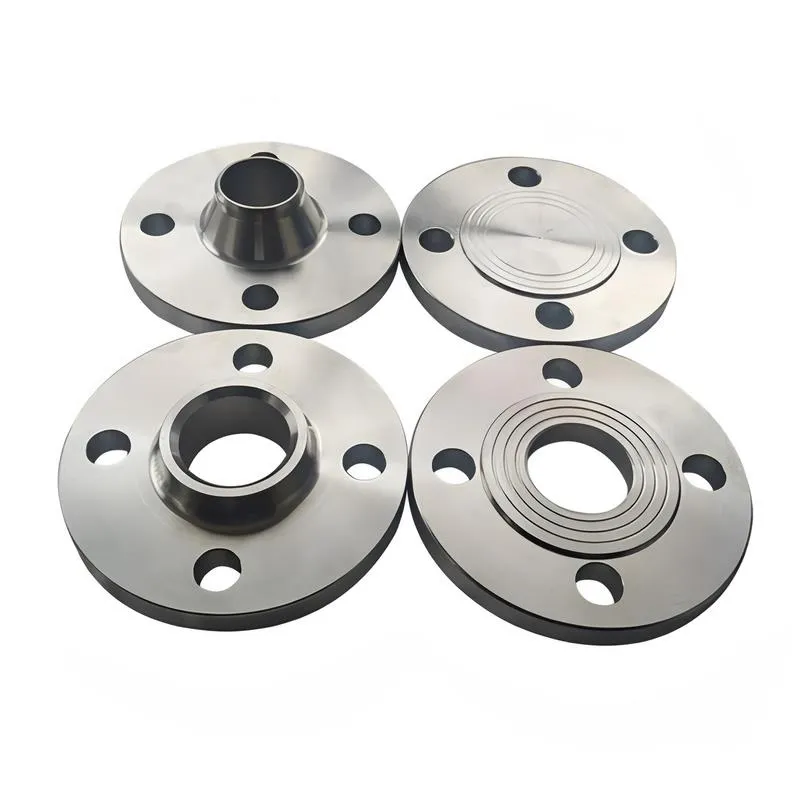
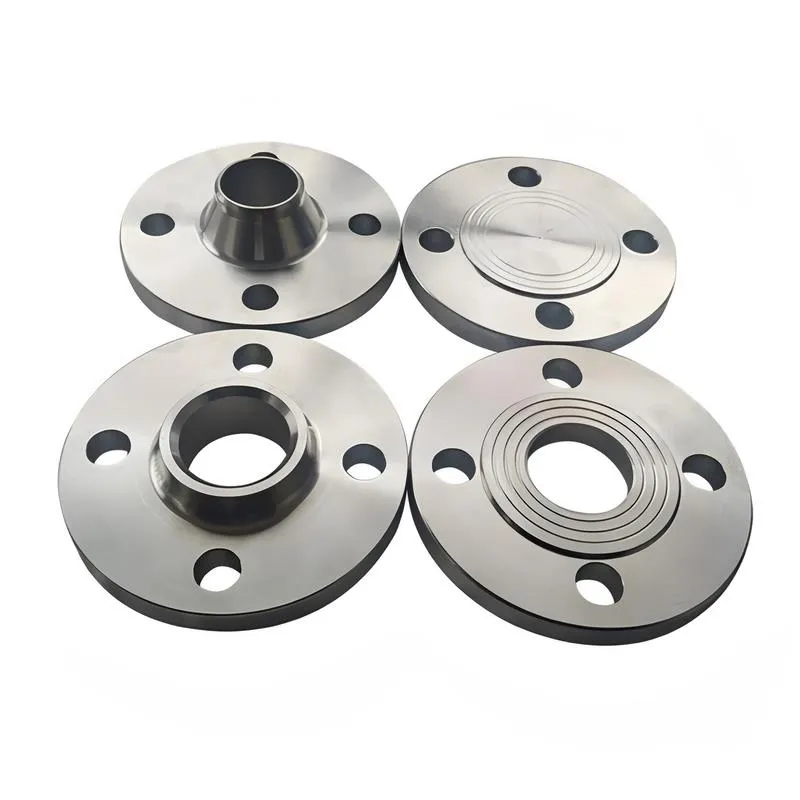
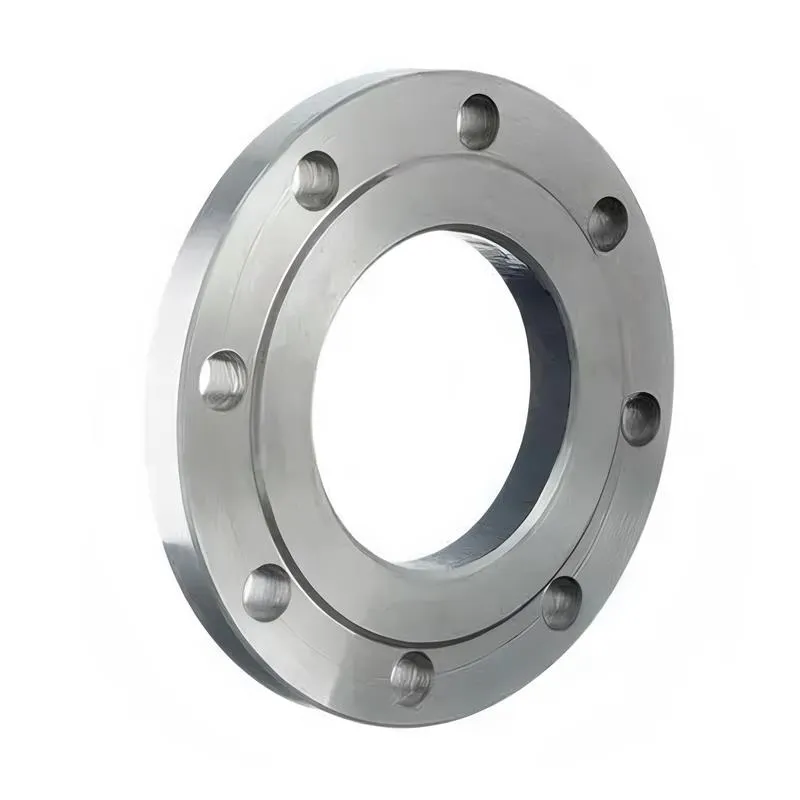
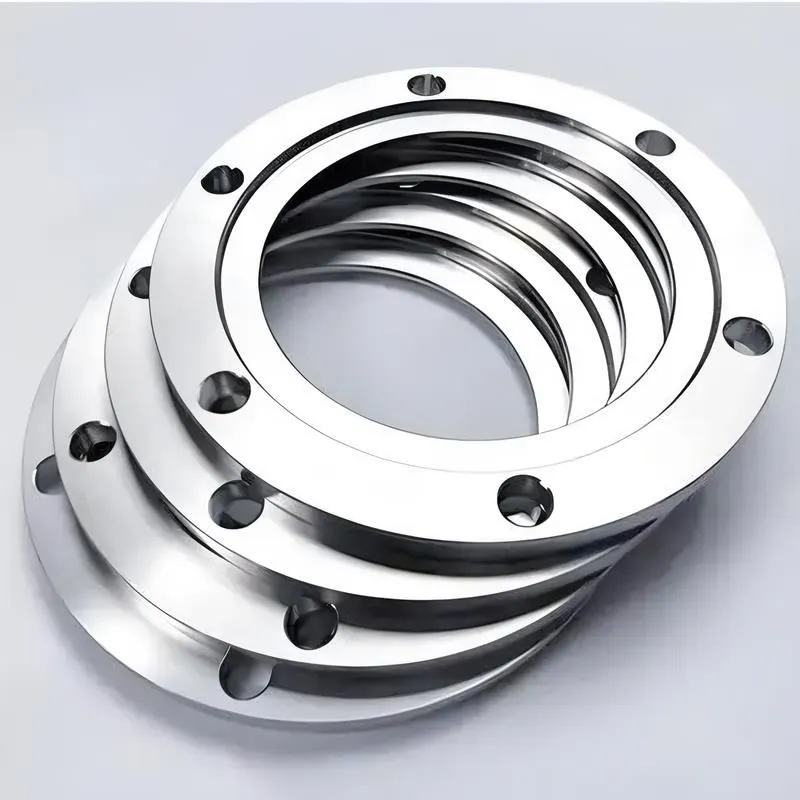
1,We Manufacturing processes are primarily classified into four types:
1:Forging,
2:Casting,
3:Cutting,
4:Rolling.
2,We can manufacture in accordance with these standards.
Standards:
GB Series (Chinese Standards), JB Series (Machinery Standards), HG Series (Chemical Industry Standards), ASME B16.5 (American Standards), BS4504 (British Standards), DIN (German Standards), and JIS (Japanese Standards).
Internationally, there are two primary systems of pipe flange standards: the European system, represented by the German DIN standards (including those of the former Soviet Union), and the American system, represented by the US ANSI pipe flange standards. Other common standards include: the Chinese Ministry of Machinery Industry standards (JB series), the Ministry of Chemical Industry standards (HG series), the Chinese National Standard *GB/T 9112–9124-2010 Steel Pipe Flanges*, as well as US standards (ASME B16.5), British standards (BS4504), German standards (DIN), Japanese standards (JIS), and marine standards (CBM), among others.
The nominal pressure ratings for the PN series are designated by "PN" and comprise the following nine levels: PN2.5, PN6, PN10, PN16, PN25, PN40, PN63, PN100, and PN160.
The nominal pressure ratings for the Class series are designated by "Class" and comprise the following six levels: Class150, Class300, Class600, Class900, Class1500, and Class2500.
Flange Classification
1. **According to Chemical Industry Standards:** Flanges are classified as follows:
Plate Flat Welding Flange (PL), Necked Flat Welding Flange (SO), Necked Butt Welding Flange (WN), Integral Flange (IF), Socket Welding Flange (SW), Threaded Flange (Th), Butt Welding Ring Loose Flange (PJ/SE), Blind Flange (BL), Flat Welding Ring Loose Flange (PJ/PJ), and Lined Blind Flange (BL(s)).
2. **According to Petrochemical (SH) Industry Standards:** Flanges are classified as follows:
Threaded Flange (PL), Butt Welding Flange (WN), Flat Welding Flange (SO), Socket Welding Flange (SW), Loose Flange (LJ), and Blind Flange (no specific designation).
3. **According to Machinery (JB) Industry Standards:** Flanges are classified as follows:
Integral Flange, Butt Welding Flange, Plate Flat Welding Flange, Butt Welding Ring Plate Loose Flange, Flat Welding Ring Plate Loose Flange, Lap Joint Ring Plate Loose Flange, and Blind Flange.
4. **According to Connection Method/Type:** Flanges are classified as follows:
Plate Flat Welding Flange, Necked Flat Welding Flange, Necked Butt Welding Flange, Socket Welding Flange, Threaded Flange, Blind Flange, Necked Butt Welding Ring Loose Flange, Flat Welding Ring Loose Flange, Ring-Type Joint (RTJ) Flange and Blind Flange, Large-Diameter Plate Flange, Large-Diameter High-Neck Flange, Figure-8 Blind Plate, Butt Welding Ring Loose Flange, etc.
5. **According to the Component Being Connected:** Flanges can be classified into Vessel Flanges and Pipe Flanges.
6. **According to Structural Type:** Flanges include Integral Flanges, Threaded Flanges, Flat Welding Flanges, Butt Welding Flanges, Lap Joint (Loose/Swivel) Flanges, and Blind Flanges.
A flange—also referred to as a flange plate or rim—is a component used to connect shafts to one another, or, more commonly, to join the ends of pipes. Flanges are also utilized at the inlet and outlet ports of equipment to facilitate connections between two devices—for instance, the flange on a speed reducer. A "flange connection" or "flanged joint" refers to a detachable joint assembly comprising three interconnected elements—a flange, a gasket, and bolts—that together form a sealed structural unit. In the context of piping systems, a "pipe flange" specifically denotes a flange used for plumbing within the installation; when applied to equipment, it refers to the inlet or outlet flange of that specific device. Flanges feature a series of holes through which bolts are inserted to securely fasten the two flanges together, while a gasket placed between the flanges ensures a leak-proof seal. Flanges are broadly categorized into three types: threaded (screw-in) flanges, welded flanges, and clamp-type flanges. Flanges are invariably used in pairs; threaded flanges are suitable for low-pressure piping applications, whereas welded flanges are required for systems operating at pressures exceeding 4 kilograms per square centimeter. A sealing gasket is inserted between the two flange plates, which are then firmly secured using bolts. The thickness of a flange—as well as the specifications of the bolts used to fasten it—vary depending on the specific pressure rating required for the application. When connecting equipment such as water pumps or valves to piping systems, the corresponding connection points on these devices are often manufactured in the shape of a matching flange; this method of attachment is also referred to as a "flange connection." Generally, any connecting component that utilizes bolts to join and seal the perimeters of two flat surfaces—such as the joints in ventilation ducts—is termed a "flange"; such components may collectively be classified as "flange-type parts." However, since such a connection often constitutes merely a *portion* of a larger device—for instance, the interface between a flange and a water pump—it would be inappropriate to classify the entire water pump itself as a "flange-type part." Conversely, smaller components—such as valves—that feature such flanged interfaces may indeed be appropriately categorized as "flange-type parts."
-:-
For detailed product information, please contact sales.
-:
AISI Grade 18Ni (200) Maraging Steel Flange, Annealed Product Information
-:-
For detailed product information, please contact sales.
-:
AISI Grade 18Ni (200) Maraging Steel Flange, Annealed Synonyms
-:-
For detailed product information, please contact sales.
-:
AISI Grade 18Ni (200) Maraging Steel, Annealed Product Information
-:-
For detailed product information, please contact sales.
-:
# **Product Name: AISI Grade 18Ni (200) Maraging Steel, Annealed**
## **Introduction**
AISI Grade 18Ni (200) Maraging Steel in the annealed condition is a special class of ultra-high-strength steel characterized by its unique metallurgical system. Unlike conventional steels hardened by carbon, maraging steels achieve their exceptional strength through a combination of a low-carbon, iron-nickel martensitic matrix and age-hardening via intermetallic compound precipitation. The **annealed (also called solution-annealed or soft) condition** provides a **ductile, machinable, and weldable state** with moderate strength, which is then transformed into an ultra-high-strength state through a simple, low-distortion aging heat treatment. This makes 18Ni (200) a premier material for aerospace, tooling, and critical structural applications requiring a combination of extreme strength, toughness, and dimensional stability during heat treatment.
## **Key Features**
* **Ultra-High Strength Potential:** Following aging, it achieves nominal yield strengths of **200 ksi (1380 MPa)** with excellent fracture toughness, far exceeding conventional quenched and tempered steels of similar strength levels.
* **Superior Processability in Annealed State:** In the annealed condition, it exhibits **good ductility, excellent machinability, and outstanding weldability**, allowing complex components to be fabricated relatively easily.
* **Simple, Low-Distortion Aging:** The final strengthening is achieved by a low-temperature (around 480°C / 900°F) aging process that causes minimal dimensional change, warping, or scaling, unlike the severe quenching required for traditional high-strength steels.
* **Excellent Combination of Properties:** After aging, it maintains good toughness and fatigue resistance at very high strength levels, and offers high resistance to crack propagation.
---
## **1. Chemical Composition (Typical Weight %)**
The composition is designed for a martensitic transformation upon cooling from the solution temperature and subsequent age-hardening.
| Element | Content (%) | Primary Role |
| :------------- | :------------ | :-------------------------------------------- |
| **Nickel (Ni)**| **17.0 - 19.0**| Primary alloying element; promotes formation of a soft, low-carbon martensite upon air cooling from the solution temperature. |
| **Cobalt (Co)**| **8.0 - 9.0** | Reduces the solubility of molybdenum in the matrix, promoting precipitation hardening during aging. |
| **Molybdenum (Mo)**| **3.0 - 3.5** | Primary hardening element; forms intermetallic precipitates (Ni₃Mo) during aging. |
| **Titanium (Ti)**| **0.15 - 0.25** | Secondary hardening element; forms Ni₃Ti precipitates. |
| Aluminum (Al) | 0.05 - 0.15 | Aids in deoxidation and contributes to aging. |
| Carbon (C) | **≤ 0.03 (max)** | Kept extremely low to ensure good martensitic toughness and weldability. |
| Silicon (Si) | ≤ 0.10 | |
| Manganese (Mn) | ≤ 0.10 | |
| Sulfur (S) | ≤ 0.01 | |
| Phosphorus (P) | ≤ 0.01 | |
| **Iron (Fe)** | **Balance** | |
---
## **2. Physical & Mechanical Properties**
### **Properties in the ANNEALED Condition:**
This is the *fabricable* state of the material.
| Property | Value / Range (Typical, Annealed) |
| :-------------------------------------------- | :--------------------------------------- |
| Density | 8.1 g/cm³ |
| Modulus of Elasticity | ~190 GPa |
| **Tensile Strength (Rm)** | **1000 - 1150 MPa** |
| **Yield Strength (Rp0.2)** | **830 - 970 MPa** |
| **Elongation (A)** | **≥ 15 %** |
| Hardness (Rockwell C) | **28 - 34 HRC** |
| **Machinability** | **Good** (relative to its strength). Similar to annealed 4340. |
| **Weldability** | **Excellent** for an ultra-high-strength steel. Pre- and post-weld heat treatment often not required for thin sections. |
### **Properties in the AGED Condition (Typical, for reference):**
| Property (Aged) | Value / Range |
| :-------------------------------------------- | :--------------------------------------- |
| **Tensile Strength (Rm)** | **~2000 MPa** |
| **Yield Strength (Rp0.2)** | **~1380 MPa (200 ksi)** |
| **Elongation (A)** | **~10 %** |
| **Fracture Toughness (K_IC)** | **~80 - 110 MPa√m** |
| Hardness (Rockwell C) | **50 - 54 HRC** |
---
## **3. Product Forms & Applications**
**Available Product Forms (Annealed):**
* **Bar and Rod:** For machining into critical components.
* **Plate and Sheet:** For structural applications.
* **Forgings:** For high-strength, complex shapes.
* **Billet:** For further processing.
**Primary Applications:**
The annealed material is fabricated into components that are later aged to achieve their final properties.
* **Aerospace & Defense:** **Rocket motor cases**, aircraft landing gear components, helicopter undercarriages, missile skins, and critical fasteners.
* **Tooling & Molds:** **Injection molds** for plastics, die-casting tooling, and extrusion dies where high pressure and wear resistance are required.
* **High-Performance Racing:** Gears, shafts, and suspension components.
* **Precision Machinery:** Critical parts requiring dimensional stability after heat treatment and high strength-to-weight ratios.
---
## **4. International Standards & Approvals**
18Ni (200) is covered by several international and proprietary specifications.
| Standard Type | Standard Number & Designation | Notes |
| :------------------ | :--------------------------------------------------------------------------------------------------------------------------- | :-------------------------------------------------------------------- |
| **AISI / SAE (USA)**| **Grade 18Ni (200)** | Common U.S. designation. The number indicates the nominal yield strength in ksi after aging. |
| **Unified Numbering System (UNS)** | **K92890** (for the 18Ni maraging steel family). Specific grades may have variations. | |
| **AMS (Aerospace Material Spec)** | **AMS 6512** (Solution Heat Treated Condition)
**AMS 6514** (Aged Condition) | The primary procurement specifications for aerospace applications. |
| **ASTM (USA)** | **ASTM A538** (Standard Specification for Maraging Steel Grades 200, 250, 300, and 350) | Covers bar, plate, and sheet. |
| **MIL-Spec** | **MIL-S-46850** | U.S. military specification. |
| **Proprietary** | Vendor-specific grades like **VascoMax® 200** (Carpenter Technology). | Often have tighter controls or proprietary processing. |
---
## **Critical Technical & Procurement Note**
**Maraging steel is a process-sensitive material. Its performance is entirely dependent on strict adherence to specified heat treatments.**
1. **Procurement Specification:** Always specify the **condition** (e.g., **"Annealed" or "Solution Annealed"**) and the intended **final aged strength level** (e.g., Grade 200). Referencing an AMS or ASTM standard is crucial.
2. **Heat Treatment Cycle:**
* **Solution Annealing:** Typically 820-850°C (1500-1550°F) for 1 hour per inch of thickness, followed by **air cooling**. This produces the soft, martensitic structure.
* **Aging (Final Hardening):** Typically 480°C (900°F) for 3-6 hours, followed by air cooling. **This step is performed by the end-user after all machining and welding is complete.** Aging causes a **predictable, slight growth** (~0.04% linear).
3. **Fabrication in Annealed State:**
* **Machining:** Can be machined using techniques for alloy steels. Material work-hardens, so sharp tools and positive rake angles are recommended.
* **Welding:** Can be welded in the annealed condition using matching or nickel-based filler wires (e.g., AWS ERNiMo-3). Welds are typically aged along with the base metal. For optimum properties in the weld zone, a full re-solution anneal after welding may be required.
4. **Certification:** Require a **material test certificate** confirming chemistry and mechanical properties **in the supplied condition (annealed)**. For critical applications, additional tests for grain size or cleanliness may be specified.
5. **Distinct Advantage:** The primary advantage over conventional high-strength steels is the ability to fabricate a complex, high-tolerance component in a **soft, stable state**, and then achieve ultra-high strength with a simple, low-temperature aging treatment that minimizes distortion and eliminates the risk of quench cracking.
-:-
For detailed product information, please contact sales.
-:
AISI Grade 18Ni (200) Maraging Steel, Annealed Specification
Dimensions
Size:
Diameter 20-1000 mm Length <7311 mm
Size:We can customized as required
Standard:
Per your request or drawing
We can customized as required
Properties(Theoretical)
Chemical Composition
-:-
For detailed product information, please contact sales.
-:
AISI Grade 18Ni (200) Maraging Steel, Annealed Properties
-:-
For detailed product information, please contact sales.
-:
Applications of AISI Grade 18Ni (200) Maraging Steel Flange, Annealed
-:-
For detailed product information, please contact sales.
-:
Chemical Identifiers AISI Grade 18Ni (200) Maraging Steel Flange, Annealed
-:-
For detailed product information, please contact sales.
-:
Packing of AISI Grade 18Ni (200) Maraging Steel Flange, Annealed
-:-
For detailed product information, please contact sales.
-:
Standard Packing:
-:-
For detailed product information, please contact sales.
-:
Typical bulk packaging includes palletized plastic 5 gallon/25 kg. pails, fiber and Steel Flange drums to 1 ton super sacks in full container (FCL) or truck load (T/L) quantities. Research and sample quantities and hygroscopic, oxidizing or other air sensitive materials may be packaged under argon or vacuum. Solutions are packaged in polypropylene, plastic or glass jars up to palletized 3782 gallon liquid totes Special package is available on request. E FORUs’ is carefully handled to minimize damage during storage and transportation and to preserve the quality of our products in their original condition