1,We Manufacturing processes are primarily classified into four types:
1:Forging,
2:Casting,
3:Cutting,
4:Rolling.
2,We can manufacture in accordance with these standards.
Standards:
GB Series (Chinese Standards), JB Series (Machinery Standards), HG Series (Chemical Industry Standards), ASME B16.5 (American Standards), BS4504 (British Standards), DIN (German Standards), and JIS (Japanese Standards).
Internationally, there are two primary systems of pipe flange standards: the European system, represented by the German DIN standards (including those of the former Soviet Union), and the American system, represented by the US ANSI pipe flange standards. Other common standards include: the Chinese Ministry of Machinery Industry standards (JB series), the Ministry of Chemical Industry standards (HG series), the Chinese National Standard *GB/T 9112–9124-2010 Steel Pipe Flanges*, as well as US standards (ASME B16.5), British standards (BS4504), German standards (DIN), Japanese standards (JIS), and marine standards (CBM), among others.
The nominal pressure ratings for the PN series are designated by "PN" and comprise the following nine levels: PN2.5, PN6, PN10, PN16, PN25, PN40, PN63, PN100, and PN160.
The nominal pressure ratings for the Class series are designated by "Class" and comprise the following six levels: Class150, Class300, Class600, Class900, Class1500, and Class2500.
Flange Classification
1. **According to Chemical Industry Standards:** Flanges are classified as follows:
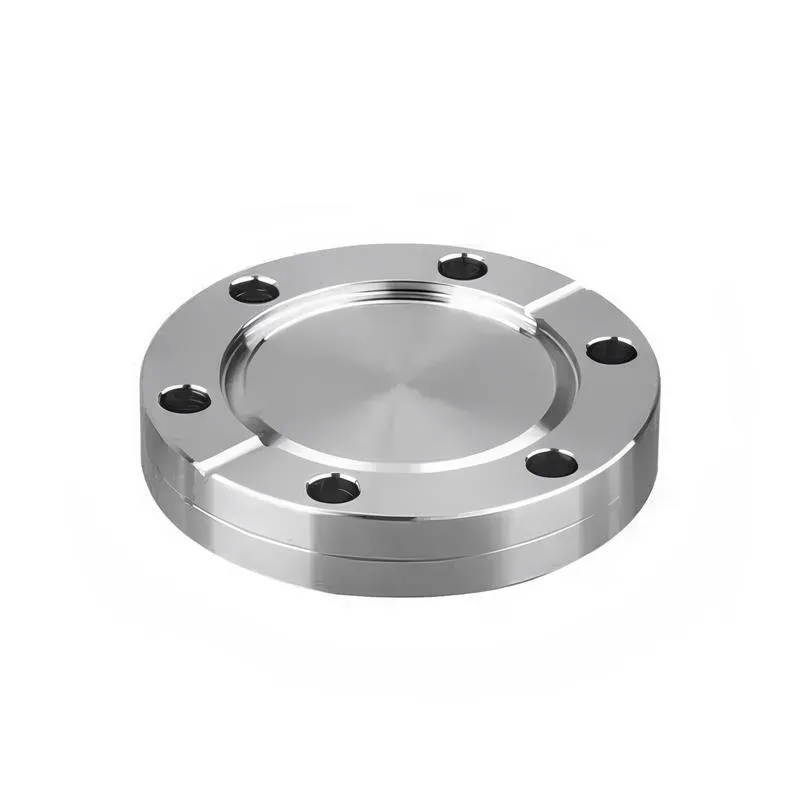
Plate Flat Welding Flange (PL), Necked Flat Welding Flange (SO), Necked Butt Welding Flange (WN), Integral Flange (IF), Socket Welding Flange (SW), Threaded Flange (Th), Butt Welding Ring Loose Flange (PJ/SE), Blind Flange (BL), Flat Welding Ring Loose Flange (PJ/PJ), and Lined Blind Flange (BL(s)).
2. **According to Petrochemical (SH) Industry Standards:** Flanges are classified as follows:
Threaded Flange (PL), Butt Welding Flange (WN), Flat Welding Flange (SO), Socket Welding Flange (SW), Loose Flange (LJ), and Blind Flange (no specific designation).
3. **According to Machinery (JB) Industry Standards:** Flanges are classified as follows:
Integral Flange, Butt Welding Flange, Plate Flat Welding Flange, Butt Welding Ring Plate Loose Flange, Flat Welding Ring Plate Loose Flange, Lap Joint Ring Plate Loose Flange, and Blind Flange.
4. **According to Connection Method/Type:** Flanges are classified as follows:
Plate Flat Welding Flange, Necked Flat Welding Flange, Necked Butt Welding Flange, Socket Welding Flange, Threaded Flange, Blind Flange, Necked Butt Welding Ring Loose Flange, Flat Welding Ring Loose Flange, Ring-Type Joint (RTJ) Flange and Blind Flange, Large-Diameter Plate Flange, Large-Diameter High-Neck Flange, Figure-8 Blind Plate, Butt Welding Ring Loose Flange, etc.
5. **According to the Component Being Connected:** Flanges can be classified into Vessel Flanges and Pipe Flanges.
6. **According to Structural Type:** Flanges include Integral Flanges, Threaded Flanges, Flat Welding Flanges, Butt Welding Flanges, Lap Joint (Loose/Swivel) Flanges, and Blind Flanges.
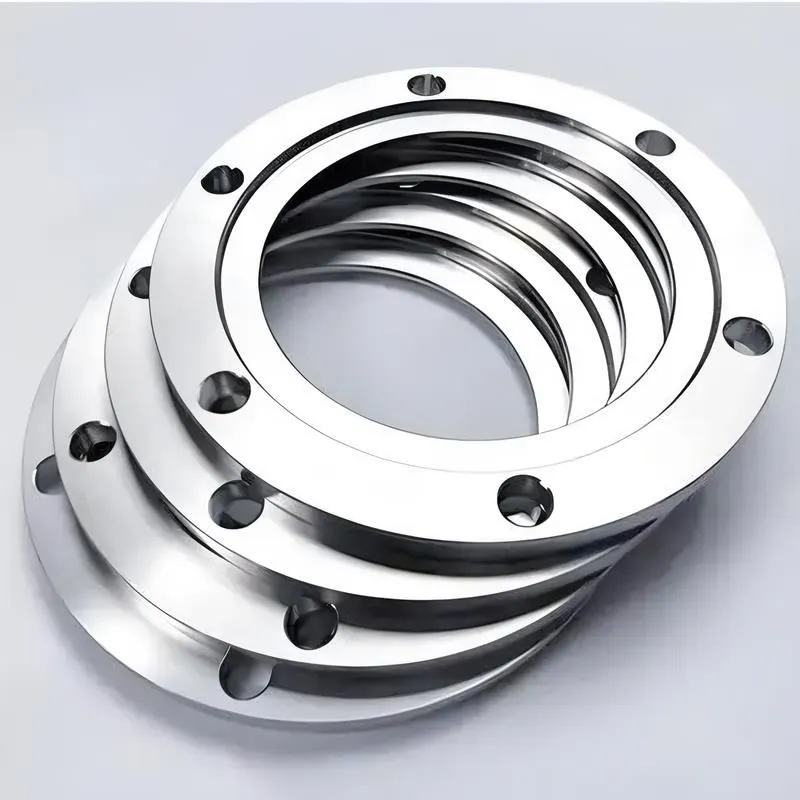
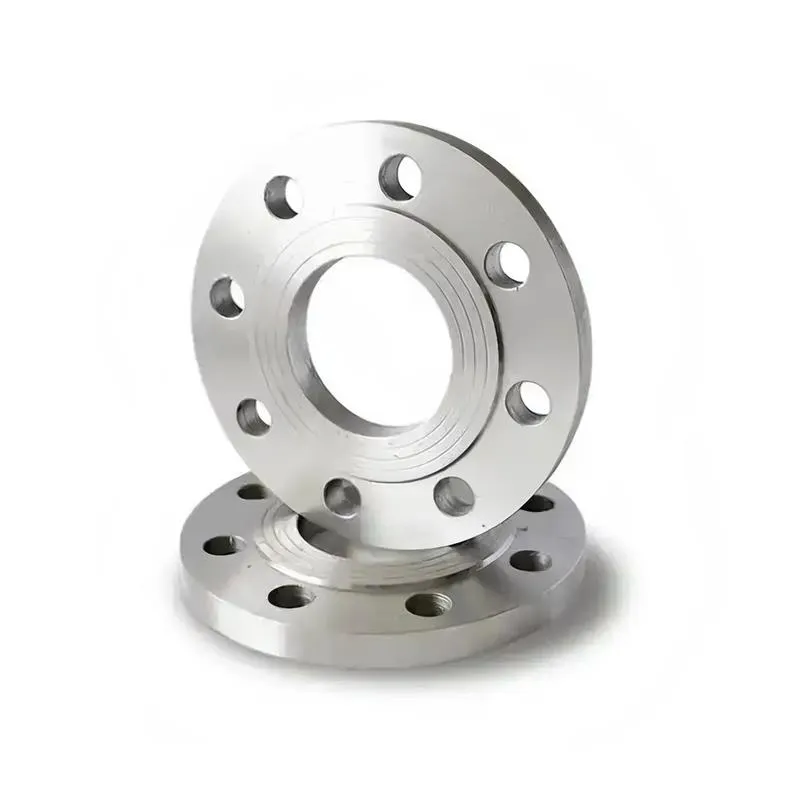
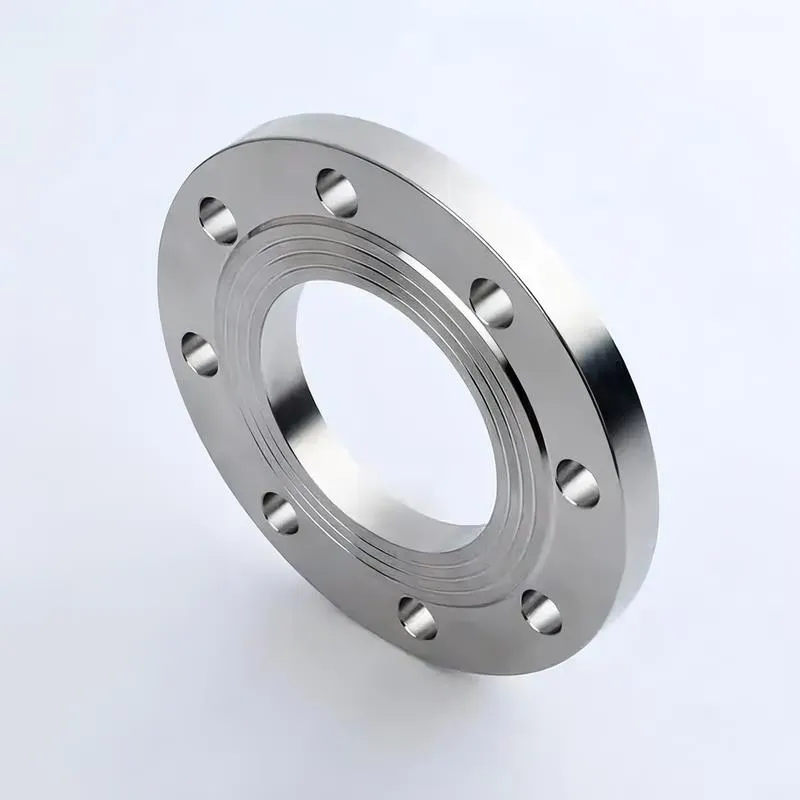
A flange—also referred to as a flange plate or rim—is a component used to connect shafts to one another, or, more commonly, to join the ends of pipes. Flanges are also utilized at the inlet and outlet ports of equipment to facilitate connections between two devices—for instance, the flange on a speed reducer. A "flange connection" or "flanged joint" refers to a detachable joint assembly comprising three interconnected elements—a flange, a gasket, and bolts—that together form a sealed structural unit. In the context of piping systems, a "pipe flange" specifically denotes a flange used for plumbing within the installation; when applied to equipment, it refers to the inlet or outlet flange of that specific device. Flanges feature a series of holes through which bolts are inserted to securely fasten the two flanges together, while a gasket placed between the flanges ensures a leak-proof seal. Flanges are broadly categorized into three types: threaded (screw-in) flanges, welded flanges, and clamp-type flanges. Flanges are invariably used in pairs; threaded flanges are suitable for low-pressure piping applications, whereas welded flanges are required for systems operating at pressures exceeding 4 kilograms per square centimeter. A sealing gasket is inserted between the two flange plates, which are then firmly secured using bolts. The thickness of a flange—as well as the specifications of the bolts used to fasten it—vary depending on the specific pressure rating required for the application. When connecting equipment such as water pumps or valves to piping systems, the corresponding connection points on these devices are often manufactured in the shape of a matching flange; this method of attachment is also referred to as a "flange connection." Generally, any connecting component that utilizes bolts to join and seal the perimeters of two flat surfaces—such as the joints in ventilation ducts—is termed a "flange"; such components may collectively be classified as "flange-type parts." However, since such a connection often constitutes merely a *portion* of a larger device—for instance, the interface between a flange and a water pump—it would be inappropriate to classify the entire water pump itself as a "flange-type part." Conversely, smaller components—such as valves—that feature such flanged interfaces may indeed be appropriately categorized as "flange-type parts."
-:-
For detailed product information, please contact sales.
-:
AISI Type M45 Molybdenum High Speed Tool Steel Flange (UNS T11345) Product Information
-:-
For detailed product information, please contact sales.
-:
AISI Type M45 Molybdenum High Speed Tool Steel Flange (UNS T11345) Synonyms
-:-
For detailed product information, please contact sales.
-:
AISI Type M45 Molybdenum High Speed Tool Steel (UNS T11345) Product Information
-:-
For detailed product information, please contact sales.
-:
### **Product Introduction: AISI Type M45 Molybdenum High-Speed Tool Steel (UNS T11345)**
AISI M45 (UNS T11345) is a unique **carbon-enriched, cobalt-free, molybdenum-based high-speed steel** designed to bridge the performance gap between standard high-speed steels and premium cobalt-bearing grades. Often referred to as an **"Economical High-Hardness HSS"**, its distinguishing feature is the ability to achieve a high working hardness (up to 67 HRC) without the strategic and costly addition of cobalt. This makes M45 an excellent cost-effective alternative for applications requiring superior wear resistance and high hardness, but where the extreme red-hardness of cobalt grades like M42 or M35 is not absolutely critical.
---
### **1. Chemical Composition (Nominal %)**
The unique performance of M45 stems from its carefully balanced high-carbon, high-vanadium, and moderate tungsten-molybdenum chemistry.
| Element | Content (%) | Primary Function |
| :--- | :--- | :--- |
| **Carbon (C)** | 1.25 - 1.40 | **Higher than typical HSS.** Provides high matrix hardness and increased carbide volume for exceptional wear resistance. |
| **Tungsten (W)** | 5.75 - 6.75 | Contributes to hot hardness and secondary hardening. |
| **Molybdenum (Mo)** | 4.50 - 5.50 | Primary hardening element for hardenability and hot strength. |
| **Chromium (Cr)** | 3.75 - 4.50 | Enhances hardenability, wear, and mild corrosion resistance. |
| **Vanadium (V)** | 1.75 - 2.25 | Forms extremely hard vanadium carbides, providing excellent abrasion resistance. |
| **Cobalt (Co)** | **Not Specified** | **Key Differentiator.** M45 achieves hardness through carbon and carbide formers, not cobalt. |
| **Silicon (Si)** | 0.15 - 0.40 | Deoxidizer. |
| **Manganese (Mn)** | 0.15 - 0.40 | Aids in hardenability. |
| **Sulfur (S)** | ≤ 0.03 | Typically low. |
| **Phosphorus (P)** | ≤ 0.03 | Impurity kept low. |
| **Iron (Fe)** | Balance | Base metal. |
---
### **2. Physical & Mechanical Properties**
| Property | Typical Value / Condition |
| :--- | :--- |
| **Density** | ~8.10 g/cm³ (0.292 lb/in³) |
| **Melting Point** | ~1410°C (2570°F) |
| **Thermal Conductivity** | Low (~25-30 W/m·K), similar to other complex HSS grades. |
| **Coefficient of Thermal Expansion** | ~11.4 x 10⁻⁶/K (20-600°C) |
| **Hardness (Annealed)** | 248-285 HB |
| **Hardness (Hardened & Tempered)** | **65-67 HRC** (Can reliably achieve 66-67 HRC). |
| **Tempering Temperature** | 540-600°C (1000-1110°F), typically double or triple-tempered. |
| **Hot Hardness** | **Good.** Superior to M2 but below cobalt-bearing grades (M35, M42). Suitable for moderately high-speed/heavy-duty operations. |
| **Abrasion Resistance** | **Excellent.** The high carbon and vanadium content provide wear resistance comparable to more expensive grades. |
| **Toughness** | **Moderate to Fair.** Higher carbide volume can reduce toughness compared to lower-carbon HSS. Proper application and sharp edge geometry are important. |
| **Grindability** | **Difficult.** High vanadium carbide content requires proper wheel selection (e.g., aluminum oxide or CBN) and grinding techniques. |
---
### **3. International Standards & Cross-References**
AISI M45 is a less common but standardized grade. Key equivalents include:
| Standard | Designation |
| :--- | :--- |
| **UNS** | T11345 |
| **AISI (USA)** | M45 |
| **ASTM (USA)** | A600: M45 |
| **ISO (International)** | **HS 6-5-3** (ISO 4957: Tool steels) - This is a close functional equivalent, though not a direct 1:1 match. |
| **DIN (Germany)** | **1.3243** (Old designation: S 6-5-3) |
| **JIS (Japan)** | No direct equivalent. SKH55 is a closer match to M35. |
| **GB (China)** | **W6Mo5Cr4V2Al** (A cobalt-free, aluminum-modified super HSS with similar performance philosophy) |
---
### **4. Product Applications**
M45 is ideal for applications demanding high hardness and excellent wear resistance at a more competitive price point than cobalt HSS.
**Primary Applications Include:**
* **Cutting Tools:**
* **High-wear drills, taps, and end mills** for machining abrasive materials such as cast irons, carbon steels, alloy steels, and some stainless steels.
* **Form tools, broaches, and gear cutters** where precise edge retention and wear life are critical.
* **Woodworking and plastic cutting knives** requiring long-lasting sharp edges.
* **Cold heading dies and punches** for moderate severity applications.
* **Industrial Blades & Wear Parts:**
* **Shear blades** for cutting wire, rod, or bar stock.
* **Slitter knives** for metal or paper.
* **Wear plates and guides** in machinery subject to abrasive conditions.
**Key Advantage:** **Cost-effective high hardness and wear resistance.** It provides a significant upgrade over M2 or M7 in terms of achievable hardness and tool life, without stepping into the higher-cost cobalt HSS category. It is best suited for operations where cutting temperatures do not exceed those where cobalt's benefits become dominant.
---
### **5. Processing & Heat Treatment Notes**
* **Forging:** Heat slowly to **1050-1120°C (1920-2050°F)**. Do not forge below **925°C (1700°F)**. Cool slowly post-forging.
* **Annealing:** Heat to **840-870°C (1545-1600°F)**, hold, then furnace cool slowly to **540°C (1000°F)**.
* **Hardening (Austenitizing):** **Critical preheating** at 800-850°C (1470-1560°F) is mandatory. Final austenitizing temperature range is relatively narrow, typically **1190-1210°C (2175-2210°F)**. Use salt, oil, or vacuum quenching. Lower austenitizing temperatures promote toughness, higher temperatures promote hardness and wear resistance.
* **Tempering:** **Must be tempered immediately** after quenching. Temper at **540-590°C (1000-1095°F)** for at least 2 hours per cycle. **Double tempering is standard; triple tempering is recommended** for maximum dimensional stability and to fully transform retained austenite. The high carbon content makes proper tempering crucial to achieve optimal properties.
**Disclaimer:** This information is for reference purposes. Specific processing parameters must be determined based on the specific product form, manufacturer's data, and intended application. Always consult the material supplier's technical data sheets for precise guidance.
-:-
For detailed product information, please contact sales.
-:
AISI Type M45 Molybdenum High Speed Tool Steel (UNS T11345) Specification
Dimensions
Size:
Diameter 20-1000 mm Length <6731 mm
Size:We can customized as required
Standard:
Per your request or drawing
We can customized as required
Properties(Theoretical)
Chemical Composition
-:-
For detailed product information, please contact sales.
-:
AISI Type M45 Molybdenum High Speed Tool Steel (UNS T11345) Properties
-:-
For detailed product information, please contact sales.
-:
Applications of AISI Type M45 Molybdenum High Speed Tool Steel Flange (UNS T11345)
-:-
For detailed product information, please contact sales.
-:
Chemical Identifiers AISI Type M45 Molybdenum High Speed Tool Steel Flange (UNS T11345)
-:-
For detailed product information, please contact sales.
-:
Packing of AISI Type M45 Molybdenum High Speed Tool Steel Flange (UNS T11345)
-:-
For detailed product information, please contact sales.
-:
Standard Packing:
-:-
For detailed product information, please contact sales.
-:
Typical bulk packaging includes palletized plastic 5 gallon/25 kg. pails, fiber and Steel Flange drums to 1 ton super sacks in full container (FCL) or truck load (T/L) quantities. Research and sample quantities and hygroscopic, oxidizing or other air sensitive materials may be packaged under argon or vacuum. Solutions are packaged in polypropylene, plastic or glass jars up to palletized 3202 gallon liquid totes Special package is available on request. E FORUs’ is carefully handled to minimize damage during storage and transportation and to preserve the quality of our products in their original condition