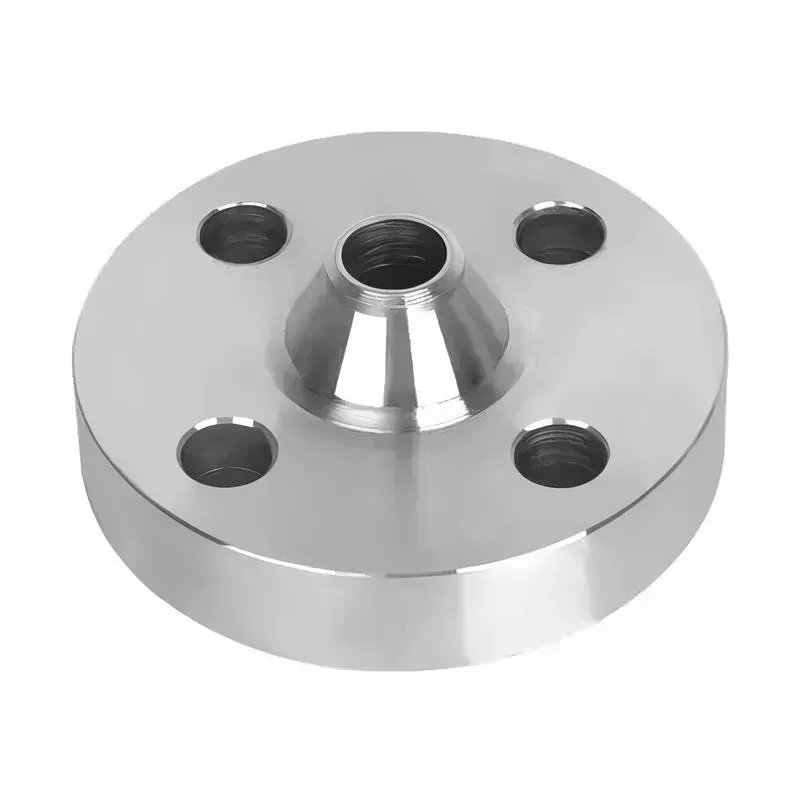
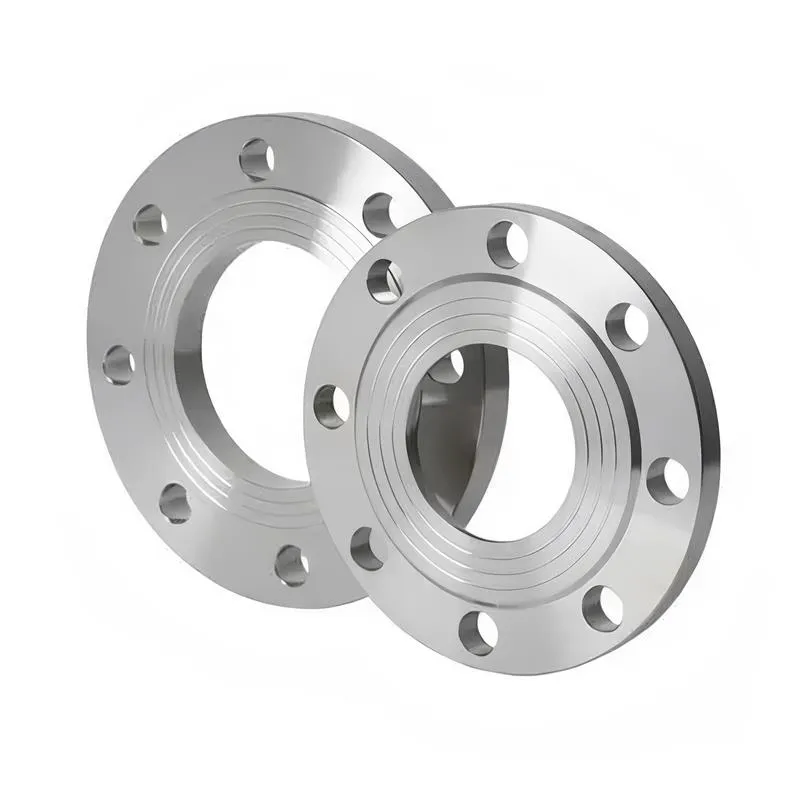
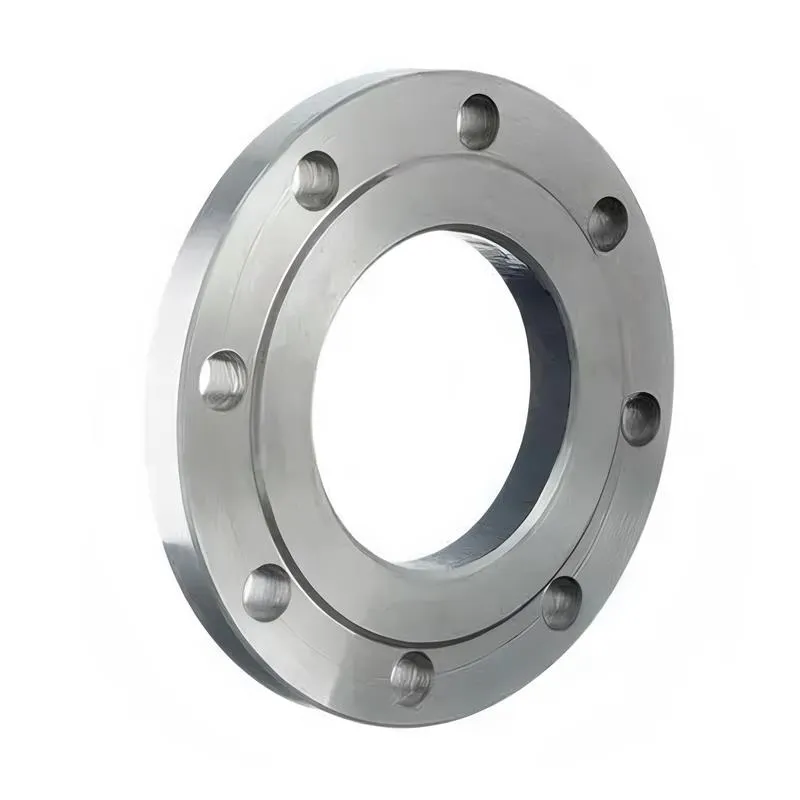
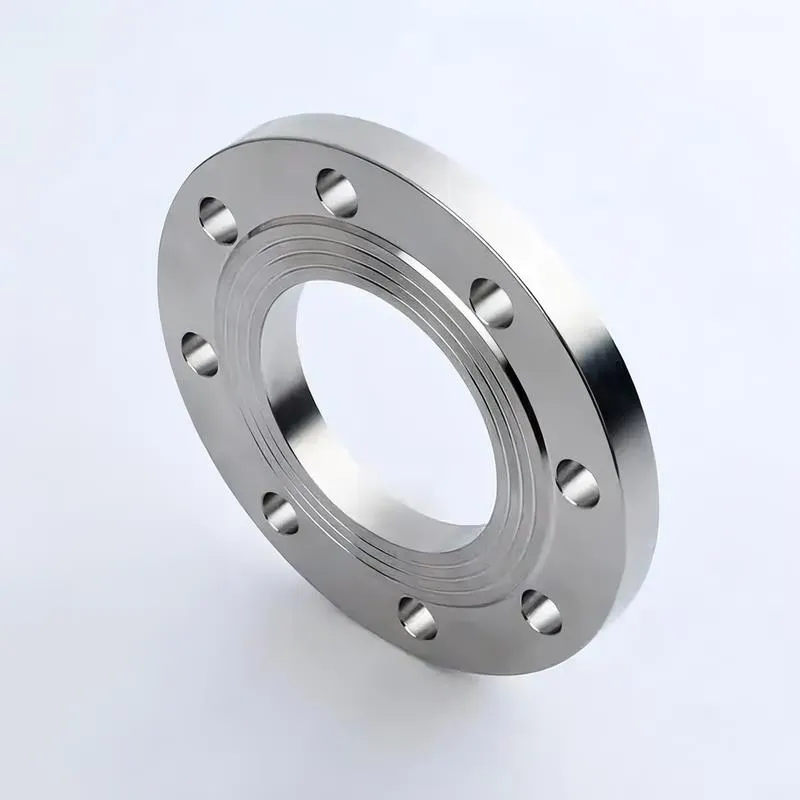
1,We Manufacturing processes are primarily classified into four types:
1:Forging,
2:Casting,
3:Cutting,
4:Rolling.
2,We can manufacture in accordance with these standards.
Standards:
GB Series (Chinese Standards), JB Series (Machinery Standards), HG Series (Chemical Industry Standards), ASME B16.5 (American Standards), BS4504 (British Standards), DIN (German Standards), and JIS (Japanese Standards).
Internationally, there are two primary systems of pipe flange standards: the European system, represented by the German DIN standards (including those of the former Soviet Union), and the American system, represented by the US ANSI pipe flange standards. Other common standards include: the Chinese Ministry of Machinery Industry standards (JB series), the Ministry of Chemical Industry standards (HG series), the Chinese National Standard *GB/T 9112–9124-2010 Steel Pipe Flanges*, as well as US standards (ASME B16.5), British standards (BS4504), German standards (DIN), Japanese standards (JIS), and marine standards (CBM), among others.
The nominal pressure ratings for the PN series are designated by "PN" and comprise the following nine levels: PN2.5, PN6, PN10, PN16, PN25, PN40, PN63, PN100, and PN160.
The nominal pressure ratings for the Class series are designated by "Class" and comprise the following six levels: Class150, Class300, Class600, Class900, Class1500, and Class2500.
Flange Classification
1. **According to Chemical Industry Standards:** Flanges are classified as follows:
Plate Flat Welding Flange (PL), Necked Flat Welding Flange (SO), Necked Butt Welding Flange (WN), Integral Flange (IF), Socket Welding Flange (SW), Threaded Flange (Th), Butt Welding Ring Loose Flange (PJ/SE), Blind Flange (BL), Flat Welding Ring Loose Flange (PJ/PJ), and Lined Blind Flange (BL(s)).
2. **According to Petrochemical (SH) Industry Standards:** Flanges are classified as follows:
Threaded Flange (PL), Butt Welding Flange (WN), Flat Welding Flange (SO), Socket Welding Flange (SW), Loose Flange (LJ), and Blind Flange (no specific designation).
3. **According to Machinery (JB) Industry Standards:** Flanges are classified as follows:
Integral Flange, Butt Welding Flange, Plate Flat Welding Flange, Butt Welding Ring Plate Loose Flange, Flat Welding Ring Plate Loose Flange, Lap Joint Ring Plate Loose Flange, and Blind Flange.
4. **According to Connection Method/Type:** Flanges are classified as follows:
Plate Flat Welding Flange, Necked Flat Welding Flange, Necked Butt Welding Flange, Socket Welding Flange, Threaded Flange, Blind Flange, Necked Butt Welding Ring Loose Flange, Flat Welding Ring Loose Flange, Ring-Type Joint (RTJ) Flange and Blind Flange, Large-Diameter Plate Flange, Large-Diameter High-Neck Flange, Figure-8 Blind Plate, Butt Welding Ring Loose Flange, etc.
5. **According to the Component Being Connected:** Flanges can be classified into Vessel Flanges and Pipe Flanges.
6. **According to Structural Type:** Flanges include Integral Flanges, Threaded Flanges, Flat Welding Flanges, Butt Welding Flanges, Lap Joint (Loose/Swivel) Flanges, and Blind Flanges.
A flange—also referred to as a flange plate or rim—is a component used to connect shafts to one another, or, more commonly, to join the ends of pipes. Flanges are also utilized at the inlet and outlet ports of equipment to facilitate connections between two devices—for instance, the flange on a speed reducer. A "flange connection" or "flanged joint" refers to a detachable joint assembly comprising three interconnected elements—a flange, a gasket, and bolts—that together form a sealed structural unit. In the context of piping systems, a "pipe flange" specifically denotes a flange used for plumbing within the installation; when applied to equipment, it refers to the inlet or outlet flange of that specific device. Flanges feature a series of holes through which bolts are inserted to securely fasten the two flanges together, while a gasket placed between the flanges ensures a leak-proof seal. Flanges are broadly categorized into three types: threaded (screw-in) flanges, welded flanges, and clamp-type flanges. Flanges are invariably used in pairs; threaded flanges are suitable for low-pressure piping applications, whereas welded flanges are required for systems operating at pressures exceeding 4 kilograms per square centimeter. A sealing gasket is inserted between the two flange plates, which are then firmly secured using bolts. The thickness of a flange—as well as the specifications of the bolts used to fasten it—vary depending on the specific pressure rating required for the application. When connecting equipment such as water pumps or valves to piping systems, the corresponding connection points on these devices are often manufactured in the shape of a matching flange; this method of attachment is also referred to as a "flange connection." Generally, any connecting component that utilizes bolts to join and seal the perimeters of two flat surfaces—such as the joints in ventilation ducts—is termed a "flange"; such components may collectively be classified as "flange-type parts." However, since such a connection often constitutes merely a *portion* of a larger device—for instance, the interface between a flange and a water pump—it would be inappropriate to classify the entire water pump itself as a "flange-type part." Conversely, smaller components—such as valves—that feature such flanged interfaces may indeed be appropriately categorized as "flange-type parts."
-:-
For detailed product information, please contact sales.
-:
ASTM A228 Steel Flange (UNS K08500) Product Information
-:-
For detailed product information, please contact sales.
-:
ASTM A228 Steel Flange (UNS K08500) Synonyms
-:-
For detailed product information, please contact sales.
-:
ASTM A228 Steel (UNS K08500) Product Information
-:-
For detailed product information, please contact sales.
-:
# **Product Introduction: ASTM A228 Steel (UNS K08500)**
**ASTM A228** is a high-carbon, unalloyed **patented and cold-drawn steel wire** specified for **high-strength spring applications**, most notably for **piano wire and high-tensile springs**. This steel is distinguished by its exceptionally high tensile strength, fine pearlitic microstructure, and superior surface finish, achieved through a specialized **patenting heat treatment followed by heavy cold drawing**. It represents one of the highest strength forms of commercially available steel wire, with tensile strengths that can exceed **400 ksi (2,760 MPa)** in finer gauges, making it ideal for applications demanding the ultimate in strength, fatigue resistance, and dimensional precision within a small cross-section.
---
## **International Standard & Key Specifications**
* **Primary Standard:** **ASTM A228/A228M** - Standard Specification for Steel Wire, Music Spring Quality.
* **Key Process:** Production involves **austenitizing, isothermal transformation (patenting) in a lead or salt bath to form a fine pearlite structure, followed by cold drawing to very high reductions**. This process is critical to achieving its unique properties.
* **UNS Designation:** **K08500** (Carbon Steel, Spring Wire).
* **Related Standards:**
* **ISO 8458-2:** Steel wire for mechanical springs - Part 2: Patented cold-drawn non-alloy steel wire.
* **SAE J217:** Music Wire (Spring Quality).
* **Various ASTM Spring Wire Standards** (e.g., A227, A229, A401) for different grades and processes.
* **Key Feature:** It is supplied in the **cold-drawn, as-drawn** condition. No final thermal stress relief is typically applied, as it would reduce the vital residual compressive stresses on the wire surface that enhance fatigue life.
---
## **Chemical Composition (Weight %) - UNS K08500**
The composition is a simple, high-carbon steel. Consistency and purity are paramount to ensure uniform response to patenting and drawing.
| Element | Composition Range (%) | Role in Performance |
| :--- | :--- | :--- |
| **Carbon (C)** | 0.70 - 1.00 | **Primary element.** Provides the high hardenability for pearlite formation and is the foundation for ultimate tensile strength after cold work. |
| **Manganese (Mn)** | 0.20 - 0.60 | Enhances hardenability and strength. |
| **Phosphorus (P)** | 0.025 max | Impurity, kept very low for ductility. |
| **Sulfur (S)** | 0.030 max | Impurity, kept low to prevent hot shortness and wire breakage during drawing. |
| **Silicon (Si)** | 0.10 - 0.30 | Deoxidizer; contributes to strength. |
| **Other Elements** | Trace residuals | Very low levels of Cr, Ni, Cu, Mo, etc. |
**Note:** The consistent, controlled chemistry within this range is essential for the predictable transformation during the patenting process.
---
## **Typical Physical & Mechanical Properties**
Properties are highly dependent on the final wire diameter, with smaller diameters achieving significantly higher strengths due to greater cold work.
| Property | Value / Description |
| :--- | :--- |
| **Tensile Strength Range** | **260 - 420+ ksi (1,790 - 2,900+ MPa)**.
• ~0.010 in. (0.25 mm) dia.: Up to 420+ ksi (2,900+ MPa)
• ~0.125 in. (3.2 mm) dia.: ~260-290 ksi (1,790-2,000 MPa) |
| **Modulus of Elasticity** | ~29-30 x 10⁶ psi (200-207 GPa) |
| **Torsional Properties** | Must withstand a specified number of twists without fracture (per ASTM test), indicating good ductility despite high strength. |
| **Surface Finish** | **Exceptionally smooth and clean.** Free from seams, cracks, and scale, which is critical for fatigue performance. |
| **Microstructure** | Fine, uniform lamellar pearlite (due to patenting) elongated in the drawing direction. |
| **Fatigue Strength** | Very high, benefiting from the fine microstructure, clean surface, and residual compressive surface stresses from drawing. |
| **Formability** | Can be coiled into springs at room temperature, but is inherently stiff and requires specialized spring coiling equipment. |
---
## **Product Applications**
ASTM A228's unique combination of ultra-high strength, good fatigue resistance, and fine surface finish dictates its use in highly stressed, precision dynamic applications.
**Primary Industries and Products:**
1. **Musical Instruments & Components:**
* **Piano strings** (high-treble wires).
* Springs and actions in other musical instruments.
2. **High-Performance Mechanical Springs:**
* **Valve springs** in internal combustion engines (especially high-performance).
* **Critical small-diameter springs** in aerospace, defense, and precision instruments.
* **Snap rings, clutch springs, and brush springs**.
3. **Precision Mechanical Components:**
* **Bristles for high-strength brushes** (e.g., street sweeper brushes).
* **Strings for archery bows** (crossbows, compound bows).
* **Wire forms** requiring high strength and precise dimensions.
4. **Specialty Fasteners & Tools:**
* **High-strength pins** and **small clips**.
* Components in surgical and dental instruments.
---
## **Advantages and Critical Fabrication & Handling Considerations**
* **Advantages:**
* **Ultimate Tensile Strength:** One of the highest strength-to-weight ratios of any manufactured material.
* **Superior Fatigue Life:** The patented and cold-drawn structure, combined with an excellent surface, provides exceptional resistance to cyclic loading.
* **Dimensional Precision and Consistency:** Tight diameter tolerances and uniform properties coil-to-coil.
* **Reliability:** Proven performance in the most demanding dynamic applications for over a century.
* **Critical Fabrication & Handling Considerations:**
* **Stress Relief:** **NOT RECOMMENDED for spring applications.** Heating above ~400°F (204°C) will relieve the beneficial residual stresses and dramatically reduce fatigue life. **Low-temperature baking (< 300°F / 149°C)** may be used to relieve coiling stresses without major property loss.
* **Forming/Coiling:** Requires significant force and proper tooling. It is **not annealed** and will work-harden further if bent or formed. Spring design must account for its high modulus and strength.
* **Corrosion Susceptibility:** **Highly susceptible to rust** due to its high carbon content and lack of coating. Must be protected by plating (e.g., cadmium, zinc), painting, or use in dry environments. **Hydrogen embrittlement risk is high** if electroplated; proper baking after plating is mandatory.
* **Notch Sensitivity:** Extremely high strength makes it sensitive to surface scratches, nicks, or sharp bends, which can act as crack initiation sites.
* **Specialized Cutting:** Requires abrasive cutting or special shears to avoid deforming the end.
**In summary, ASTM A228 (UNS K08500) is the premier material for small-diameter, ultra-high-strength spring wire. Its unparalleled strength and fatigue performance are the result of the meticulous patented and cold-drawn process, making it indispensable for critical applications from piano strings to racing engine valve springs. Its successful use requires strict adherence to handling guidelines and an understanding that its phenomenal mechanical properties come with specific sensitivities to heat, corrosion, and surface damage.**
-:-
For detailed product information, please contact sales.
-:
ASTM A228 Steel (UNS K08500) Specification
Dimensions
Size:
Diameter 20-1000 mm Length <4552 mm
Size:We can customized as required
Standard:
Per your request or drawing
We can customized as required
Properties(Theoretical)
Chemical Composition
-:-
For detailed product information, please contact sales.
-:
ASTM A228 Steel (UNS K08500) Properties
-:-
For detailed product information, please contact sales.
-:
Applications of ASTM A228 Steel Flange (UNS K08500)
-:-
For detailed product information, please contact sales.
-:
Chemical Identifiers ASTM A228 Steel Flange (UNS K08500)
-:-
For detailed product information, please contact sales.
-:
Packing of ASTM A228 Steel Flange (UNS K08500)
-:-
For detailed product information, please contact sales.
-:
Standard Packing:
-:-
For detailed product information, please contact sales.
-:
Typical bulk packaging includes palletized plastic 5 gallon/25 kg. pails, fiber and Steel Flange drums to 1 ton super sacks in full container (FCL) or truck load (T/L) quantities. Research and sample quantities and hygroscopic, oxidizing or other air sensitive materials may be packaged under argon or vacuum. Solutions are packaged in polypropylene, plastic or glass jars up to palletized 1023 gallon liquid totes Special package is available on request. E FORUs’ is carefully handled to minimize damage during storage and transportation and to preserve the quality of our products in their original condition