1,We Manufacturing processes are primarily classified into four types:
1:Forging,
2:Casting,
3:Cutting,
4:Rolling.
2,We can manufacture in accordance with these standards.
Standards:
GB Series (Chinese Standards), JB Series (Machinery Standards), HG Series (Chemical Industry Standards), ASME B16.5 (American Standards), BS4504 (British Standards), DIN (German Standards), and JIS (Japanese Standards).
Internationally, there are two primary systems of pipe flange standards: the European system, represented by the German DIN standards (including those of the former Soviet Union), and the American system, represented by the US ANSI pipe flange standards. Other common standards include: the Chinese Ministry of Machinery Industry standards (JB series), the Ministry of Chemical Industry standards (HG series), the Chinese National Standard *GB/T 9112–9124-2010 Steel Pipe Flanges*, as well as US standards (ASME B16.5), British standards (BS4504), German standards (DIN), Japanese standards (JIS), and marine standards (CBM), among others.
The nominal pressure ratings for the PN series are designated by "PN" and comprise the following nine levels: PN2.5, PN6, PN10, PN16, PN25, PN40, PN63, PN100, and PN160.
The nominal pressure ratings for the Class series are designated by "Class" and comprise the following six levels: Class150, Class300, Class600, Class900, Class1500, and Class2500.
Flange Classification
1. **According to Chemical Industry Standards:** Flanges are classified as follows:
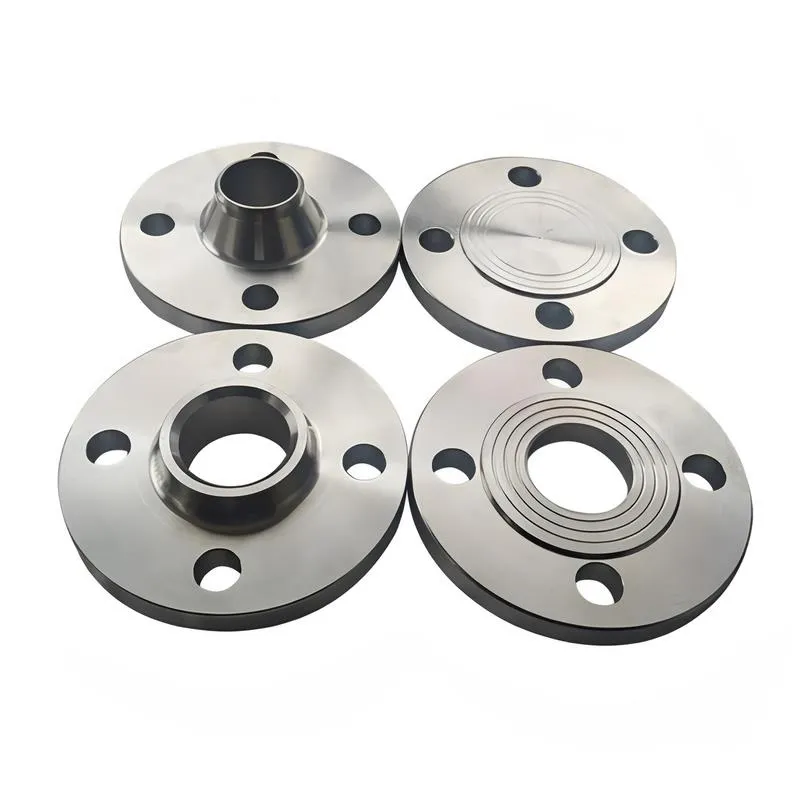
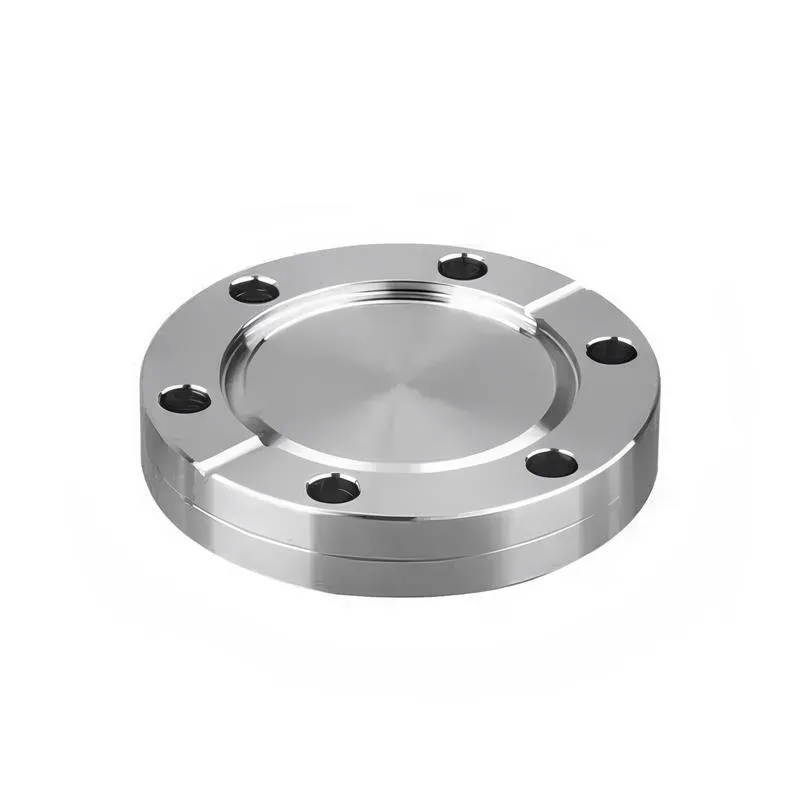
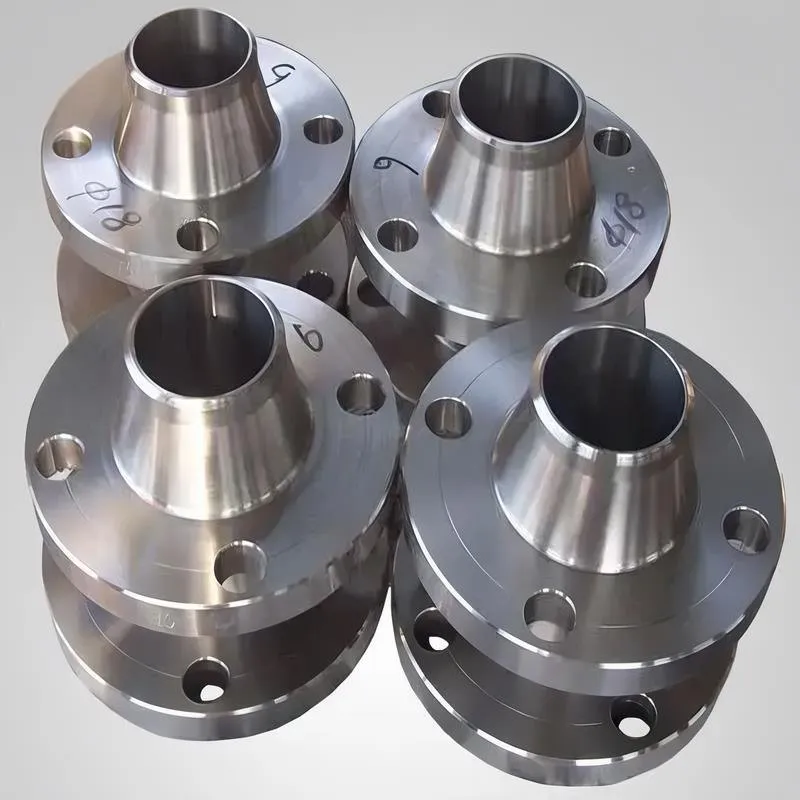
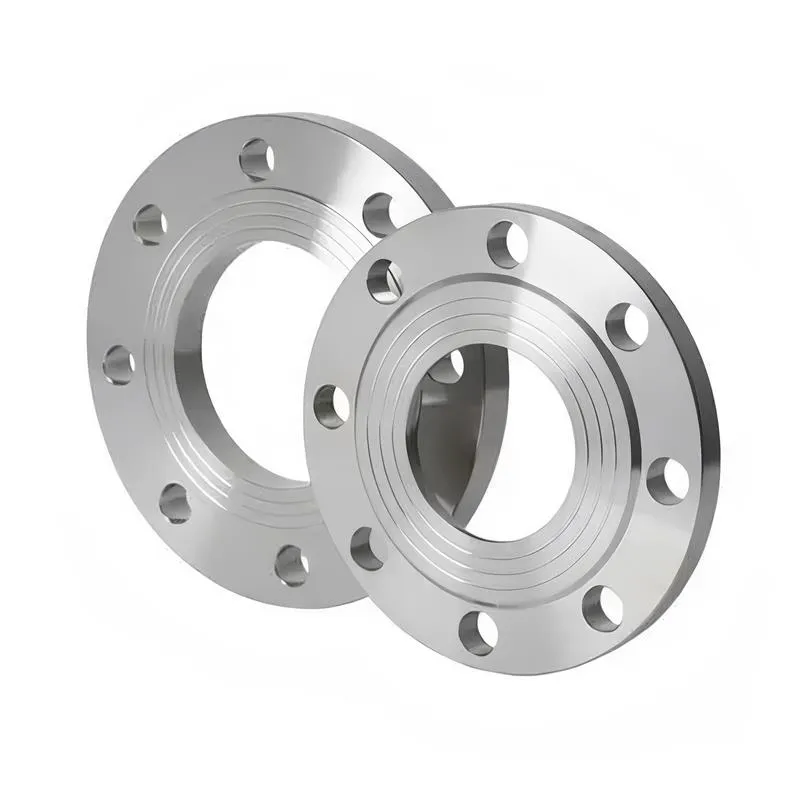
Plate Flat Welding Flange (PL), Necked Flat Welding Flange (SO), Necked Butt Welding Flange (WN), Integral Flange (IF), Socket Welding Flange (SW), Threaded Flange (Th), Butt Welding Ring Loose Flange (PJ/SE), Blind Flange (BL), Flat Welding Ring Loose Flange (PJ/PJ), and Lined Blind Flange (BL(s)).
2. **According to Petrochemical (SH) Industry Standards:** Flanges are classified as follows:
Threaded Flange (PL), Butt Welding Flange (WN), Flat Welding Flange (SO), Socket Welding Flange (SW), Loose Flange (LJ), and Blind Flange (no specific designation).
3. **According to Machinery (JB) Industry Standards:** Flanges are classified as follows:
Integral Flange, Butt Welding Flange, Plate Flat Welding Flange, Butt Welding Ring Plate Loose Flange, Flat Welding Ring Plate Loose Flange, Lap Joint Ring Plate Loose Flange, and Blind Flange.
4. **According to Connection Method/Type:** Flanges are classified as follows:
Plate Flat Welding Flange, Necked Flat Welding Flange, Necked Butt Welding Flange, Socket Welding Flange, Threaded Flange, Blind Flange, Necked Butt Welding Ring Loose Flange, Flat Welding Ring Loose Flange, Ring-Type Joint (RTJ) Flange and Blind Flange, Large-Diameter Plate Flange, Large-Diameter High-Neck Flange, Figure-8 Blind Plate, Butt Welding Ring Loose Flange, etc.
5. **According to the Component Being Connected:** Flanges can be classified into Vessel Flanges and Pipe Flanges.
6. **According to Structural Type:** Flanges include Integral Flanges, Threaded Flanges, Flat Welding Flanges, Butt Welding Flanges, Lap Joint (Loose/Swivel) Flanges, and Blind Flanges.
A flange—also referred to as a flange plate or rim—is a component used to connect shafts to one another, or, more commonly, to join the ends of pipes. Flanges are also utilized at the inlet and outlet ports of equipment to facilitate connections between two devices—for instance, the flange on a speed reducer. A "flange connection" or "flanged joint" refers to a detachable joint assembly comprising three interconnected elements—a flange, a gasket, and bolts—that together form a sealed structural unit. In the context of piping systems, a "pipe flange" specifically denotes a flange used for plumbing within the installation; when applied to equipment, it refers to the inlet or outlet flange of that specific device. Flanges feature a series of holes through which bolts are inserted to securely fasten the two flanges together, while a gasket placed between the flanges ensures a leak-proof seal. Flanges are broadly categorized into three types: threaded (screw-in) flanges, welded flanges, and clamp-type flanges. Flanges are invariably used in pairs; threaded flanges are suitable for low-pressure piping applications, whereas welded flanges are required for systems operating at pressures exceeding 4 kilograms per square centimeter. A sealing gasket is inserted between the two flange plates, which are then firmly secured using bolts. The thickness of a flange—as well as the specifications of the bolts used to fasten it—vary depending on the specific pressure rating required for the application. When connecting equipment such as water pumps or valves to piping systems, the corresponding connection points on these devices are often manufactured in the shape of a matching flange; this method of attachment is also referred to as a "flange connection." Generally, any connecting component that utilizes bolts to join and seal the perimeters of two flat surfaces—such as the joints in ventilation ducts—is termed a "flange"; such components may collectively be classified as "flange-type parts." However, since such a connection often constitutes merely a *portion* of a larger device—for instance, the interface between a flange and a water pump—it would be inappropriate to classify the entire water pump itself as a "flange-type part." Conversely, smaller components—such as valves—that feature such flanged interfaces may indeed be appropriately categorized as "flange-type parts."
-:-
For detailed product information, please contact sales.
-:
ASTM A439 Austenitic Ductile Iron Flange type D2C Product Information
-:-
For detailed product information, please contact sales.
-:
ASTM A439 Austenitic Ductile Iron Flange type D2C Synonyms
-:-
For detailed product information, please contact sales.
-:
ASTM A439 Austenitic Ductile Iron type D2C Product Information
-:-
For detailed product information, please contact sales.
-:
# **Product Technical Data Sheet: ASTM A439 Austenitic Ductile Iron – Type D-2C**
---
## **1. Product Overview**
**ASTM A439 Type D-2C Austenitic Ductile Iron** is a **high-nickel, chromium-alloyed, stabilized austenitic spheroidal graphite iron**. As a variant of the Type D-2 family, its defining characteristic is a significantly **higher chromium content**, engineered to provide **dramatically improved resistance to oxidation, sulfidation, and elevated-temperature growth** in extreme thermal environments. While maintaining a fully austenitic matrix with good general corrosion resistance, Type D-2C is specifically optimized for **continuous service at temperatures up to 980°C (1800°F)**, where it outperforms standard D-2 and D-2B grades in resisting scale formation and microstructural degradation. This alloy is the primary choice for the most demanding high-temperature applications within the austenitic ductile iron family.
---
## **2. Governing Standards & Specifications**
This alloy is formally defined within the ASTM A439 specification, with its composition tailored for maximum high-temperature stability.
* **Primary Standard:**
* **ASTM A439** - *Standard Specification for Austenitic Ductile Iron Castings*
* **International & Commercial Equivalents:**
* **ISO 2892:** *Austenitic cast irons* – Type D-2C corresponds approximately to **L-NiCr 20 3** or related grades.
* **EN 13835:** *Austenitic cast irons* – Designated as **EN-JS 2031**.
* **Common Trade Name:** **Ni-Resist® Type D-2C**.
* **Key Referenced Testing Standards:**
* **ASTM E8/E21:** Tensile Testing (Room & Elevated Temperature)
* **ASTM A247:** Microstructure Evaluation
* **ASTM G54:** Static Oxidation Testing
* **ASTM G79:** Metallographic Determination of Microstructure After High-Temperature Exposure
---
## **3. Chemical Composition Requirements (per ASTM A439)**
The elevated chromium content is the critical compositional feature differentiating D-2C from other D-2 types.
| Element | Composition Range (wt.%, ASTM A439) | Functional Role & Rationale for D-2C |
| :--- | :--- | :--- |
| **Carbon (C)** | 2.40 - 2.90 | Slightly lower max than D-2 to reduce the carbon available for chromium carbide formation, improving high-temperature stability. |
| **Silicon (Si)** | 1.00 - 2.80 | Promotes graphitization and oxidation resistance; range accommodates optimization. |
| **Nickel (Ni)** | **21.00 - 24.00** | **Primary Austenite Stabilizer.** The higher minimum ensures full austenite stability at all service temperatures despite the higher chromium content. |
| **Chromium (Cr)** | **2.75 - 4.00** | **The Key Differentiator.** This elevated level **greatly enhances the formation and stability of a protective Cr₂O₃-rich oxide scale**, providing outstanding resistance to oxidation, sulfidation, and "growth" (permanent swelling due to internal oxidation of graphite) at extreme temperatures. Also provides solid solution strengthening. |
| **Manganese (Mn)** | 0.50 - 1.50 | Austenite stabilizer and sulfur control. |
| **Copper (Cu)** | **≤ 0.50** | Low, as in other D-2 types. |
| **Magnesium (Mg)** | ≥ 0.07 (min., residual) | Ensures spheroidal graphite. |
| **Phosphorus (P)** | ≤ 0.08 | Kept low. |
| **Sulfur (S)** | ≤ 0.03 | Kept low. |
---
## **4. Physical & Mechanical Properties**
Type D-2C prioritizes long-term stability and resistance to degradation at high temperatures over room-temperature mechanical performance.
| Property | Typical Value / Range for D-2C | Key Characteristics & Comparison |
| :--- | :--- | :--- |
| **Tensile Strength, min.** | **414 MPa (60,000 psi)** | Similar minimum to D-2/D-2B. Room-temperature strength is generally comparable. |
| **Yield Strength (0.2% offset), min.** | **207 MPa (30,000 psi)** | Similar minimum. |
| **Elongation, min.** | **15%** | Good ductility is maintained. |
| **Hardness (Brinell, HBW)** | **150 - 210 HBW** | Slightly higher than D-2 due to increased Cr solid solution strengthening, but generally softer than D-2B. |
| **Modulus of Elasticity** | **~110 - 125 GPa** | Similar to other austenitic grades; low modulus reduces thermal stress. |
| **Impact Resistance** | **Good.** Maintains good toughness. |
| **Maximum Recommended Service Temperature** | **980°C (1800°F) Continuous / 1050°C (1920°F) Intermittent** | **Significantly higher than D-2 (~870°C).** This is its primary advantage. |
| **Oxidation & Growth Resistance** | **Excellent to Outstanding.** The high Cr content forms a dense, adherent, and self-healing Cr₂O₃ scale, **dramatically reducing oxidation rates and virtually eliminating growth (dimensional instability)** during prolonged high-temperature exposure. Superior resistance to sulfidizing atmospheres. |
| **Thermal Fatigue Resistance** | **Very Good.** The stable microstructure, good ductility, and low modulus help accommodate thermal stresses, though the high CTE must be managed in design. |
| **Creep & Stress Rupture Strength** | **Improved over D-2 at high temperatures.** The solid-solution strengthened austenitic matrix offers better resistance to deformation under sustained load at elevated temperatures. |
| **Corrosion Resistance** | **Excellent, with a different profile.** Outstanding in oxidizing environments. Similar to D-2 in many alkaline and some acid environments. **Less resistant than D-2 to reducing acids** due to higher Cr content without balancing Mo. |
| **Non-Magnetic Property** | **Maintained.** Fully austenitic. |
---
## **5. Product Applications**
Type D-2C is the go-to austenitic ductile iron for the most severe high-temperature environments.
* **High-Temperature Furnace & Heat Treatment:**
* **Fixture components** (jigs, trays, grids, baskets) for carburizing, nitriding, and sintering furnaces.
* **Radiant tubes, retorts, and furnace fans** operating up to 1000°C.
* **Kiln furniture and burner nozzles.**
* **Power Generation & Heat Recovery:**
* **Turbine exhaust manifolds, ducting, and components** in gas turbines and combined-cycle plants.
* **Parts for waste heat boilers** and advanced thermal oxidizers.
* **Chemical & Petrochemical Processing:**
* **Reformer tubes, pyrolysis furnace components, and catalyst supports** in high-temperature, corrosive atmospheres.
* **Automotive & Aerospace (High-Temp):**
* **Exhaust manifolds and turbocharger housings** for extreme-performance applications.
* **Components for auxiliary power units (APUs).**
---
## **6. Fabrication & Processing Notes**
* **Condition:** Supplied **as-cast** or **solution annealed**. A high-temperature solution anneal (e.g., 1050-1100°C followed by rapid cooling) is often employed to dissolve any secondary carbides that may have formed during casting, ensuring maximum corrosion resistance and ductility.
* **Casting Considerations:** The higher Cr and Ni content can affect fluidity and feeding characteristics. Careful gating/risering design is important to achieve sound castings.
* **"Thermal Stabilization" or "Graphitization" Treatment:** For the **absolute best dimensional stability (minimum growth)** in cyclic high-temperature service, a proprietary thermal stabilization heat treatment may be specified. This process conditions the graphite to minimize its reactivity with oxygen during service.
* **Machinability:** **Good.** Similar to Type D-2. The austenitic matrix produces stringy chips. Carbide tools with positive rake are effective. Work hardening can occur, requiring consistent, engaged cuts.
* **Weldability:** **Fair (with specialized procedures).** The high Cr content increases susceptibility to carbide precipitation in the HAZ, which can impair corrosion and toughness. Welding requires:
* **Low heat input** techniques (e.g., GTAW).
* **Matching or over-alloyed filler metals** (e.g., ENiCrFe-2, -3).
* **Post-weld solution annealing** is strongly recommended to restore optimum properties.
---
## **7. Ordering Information**
**Specify:** **"Austenitic Ductile Iron Castings, ASTM A439 Type D-2C (Ni-Resist D-2C equivalent), [As-Cast or Solution Annealed]."**
**Critical Details to Provide:**
* **Applicable Standard & Grade** (ASTM A439 D-2C).
* **Heat Treatment Condition** (essential for performance).
* **Part Drawing & Specification.**
* **Service Temperature & Atmosphere** (e.g., max continuous temp, oxidizing/sulfidizing/carburizing).
* **Certification Requirements:** MTR with full chemical analysis, mechanical properties, and heat treatment records. For critical applications, **microstructure certification** post-heat-treatment and/or **oxidized sample testing** may be requested.
* **Special Requirements:** Specifying a **thermal stabilization treatment** for maximum dimensional stability if required.
---
## **8. Summary: D-2 Family Selection for High Temperatures**
| **Criterion** | **Type D-2** | **Type D-2B** | **Type D-2C** |
| :--- | :--- | :--- | :--- |
| **Max Continuous Service Temp** | ~870°C (1600°F) | ~870°C (1600°F) | **~980°C (1800°F)** |
| **Key High-Temp Property** | Good oxidation resistance | Good oxidation resistance + better strength | **Superior oxidation/sulfidation resistance & dimensional stability** |
| **Primary Strengthening** | Solid solution (Ni, Cr) | Solid solution + boride dispersion | Solid solution (higher Cr) + optimized microstructure |
| **Room-Temp Hardness** | 140-190 HBW | **180-250 HBW** | 150-210 HBW |
| **Best Application Fit** | General corrosion/heat resistance | Corrosion + wear at moderate temps | **Severe, sustained high-temperature service** |
**ASTM A439 Type D-2C is the undisputed high-temperature champion of the standard austenitic ductile iron grades. Its optimized chemistry delivers unparalleled resistance to thermal degradation, making it an essential material for engineers designing components that must survive and function reliably in the most aggressive thermal environments.**
-:-
For detailed product information, please contact sales.
-:
ASTM A439 Austenitic Ductile Iron type D2C Specification
Dimensions
Size:
Diameter 20-1000 mm Length <6553 mm
Size:We can customized as required
Standard:
Per your request or drawing
We can customized as required
Properties(Theoretical)
Chemical Composition
-:-
For detailed product information, please contact sales.
-:
ASTM A439 Austenitic Ductile Iron type D2C Properties
-:-
For detailed product information, please contact sales.
-:
Applications of ASTM A439 Austenitic Ductile Iron Flange type D2C
-:-
For detailed product information, please contact sales.
-:
Chemical Identifiers ASTM A439 Austenitic Ductile Iron Flange type D2C
-:-
For detailed product information, please contact sales.
-:
Packing of ASTM A439 Austenitic Ductile Iron Flange type D2C
-:-
For detailed product information, please contact sales.
-:
Standard Packing:
-:-
For detailed product information, please contact sales.
-:
Typical bulk packaging includes palletized plastic 5 gallon/25 kg. pails, fiber and Steel Flange drums to 1 ton super sacks in full container (FCL) or truck load (T/L) quantities. Research and sample quantities and hygroscopic, oxidizing or other air sensitive materials may be packaged under argon or vacuum. Solutions are packaged in polypropylene, plastic or glass jars up to palletized 3024 gallon liquid totes Special package is available on request. E FORUs’ is carefully handled to minimize damage during storage and transportation and to preserve the quality of our products in their original condition