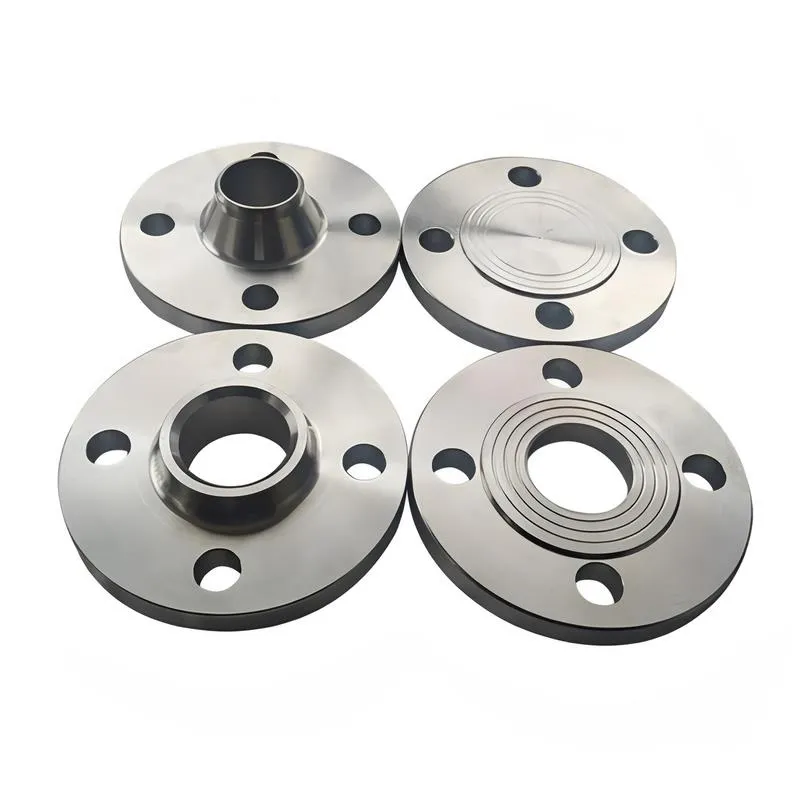
1,We Manufacturing processes are primarily classified into four types:
1:Forging,
2:Casting,
3:Cutting,
4:Rolling.
2,We can manufacture in accordance with these standards.
Standards:
GB Series (Chinese Standards), JB Series (Machinery Standards), HG Series (Chemical Industry Standards), ASME B16.5 (American Standards), BS4504 (British Standards), DIN (German Standards), and JIS (Japanese Standards).
Internationally, there are two primary systems of pipe flange standards: the European system, represented by the German DIN standards (including those of the former Soviet Union), and the American system, represented by the US ANSI pipe flange standards. Other common standards include: the Chinese Ministry of Machinery Industry standards (JB series), the Ministry of Chemical Industry standards (HG series), the Chinese National Standard *GB/T 9112–9124-2010 Steel Pipe Flanges*, as well as US standards (ASME B16.5), British standards (BS4504), German standards (DIN), Japanese standards (JIS), and marine standards (CBM), among others.
The nominal pressure ratings for the PN series are designated by "PN" and comprise the following nine levels: PN2.5, PN6, PN10, PN16, PN25, PN40, PN63, PN100, and PN160.
The nominal pressure ratings for the Class series are designated by "Class" and comprise the following six levels: Class150, Class300, Class600, Class900, Class1500, and Class2500.
Flange Classification
1. **According to Chemical Industry Standards:** Flanges are classified as follows:
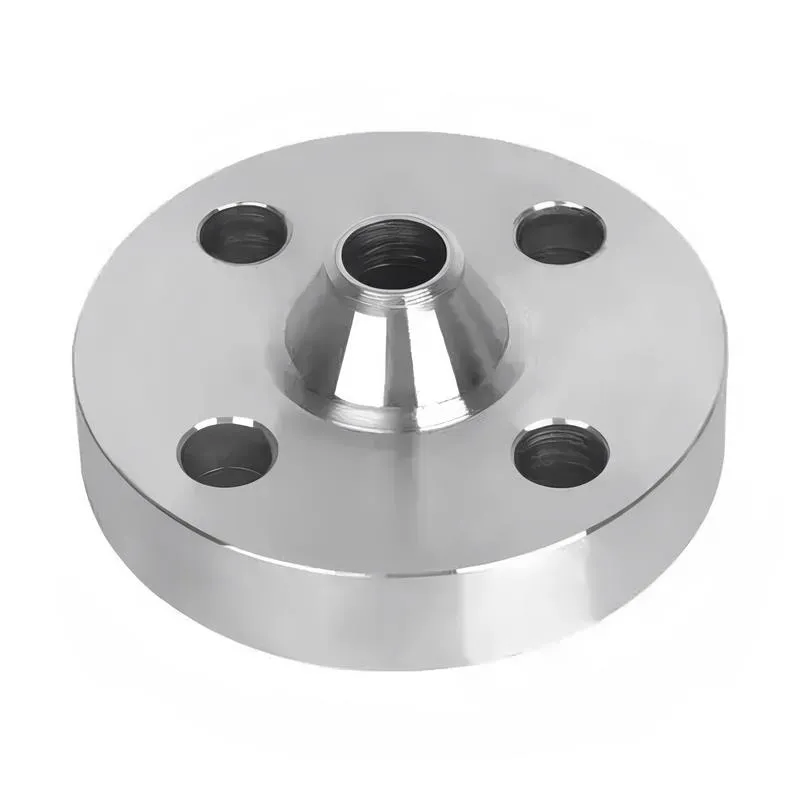
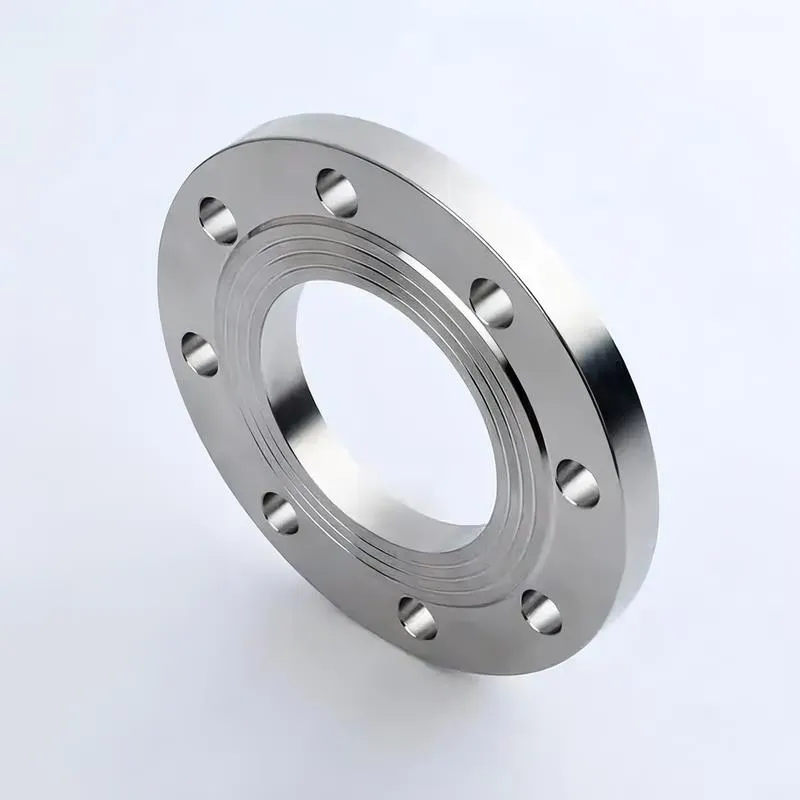
Plate Flat Welding Flange (PL), Necked Flat Welding Flange (SO), Necked Butt Welding Flange (WN), Integral Flange (IF), Socket Welding Flange (SW), Threaded Flange (Th), Butt Welding Ring Loose Flange (PJ/SE), Blind Flange (BL), Flat Welding Ring Loose Flange (PJ/PJ), and Lined Blind Flange (BL(s)).
2. **According to Petrochemical (SH) Industry Standards:** Flanges are classified as follows:
Threaded Flange (PL), Butt Welding Flange (WN), Flat Welding Flange (SO), Socket Welding Flange (SW), Loose Flange (LJ), and Blind Flange (no specific designation).
3. **According to Machinery (JB) Industry Standards:** Flanges are classified as follows:
Integral Flange, Butt Welding Flange, Plate Flat Welding Flange, Butt Welding Ring Plate Loose Flange, Flat Welding Ring Plate Loose Flange, Lap Joint Ring Plate Loose Flange, and Blind Flange.
4. **According to Connection Method/Type:** Flanges are classified as follows:
Plate Flat Welding Flange, Necked Flat Welding Flange, Necked Butt Welding Flange, Socket Welding Flange, Threaded Flange, Blind Flange, Necked Butt Welding Ring Loose Flange, Flat Welding Ring Loose Flange, Ring-Type Joint (RTJ) Flange and Blind Flange, Large-Diameter Plate Flange, Large-Diameter High-Neck Flange, Figure-8 Blind Plate, Butt Welding Ring Loose Flange, etc.
5. **According to the Component Being Connected:** Flanges can be classified into Vessel Flanges and Pipe Flanges.
6. **According to Structural Type:** Flanges include Integral Flanges, Threaded Flanges, Flat Welding Flanges, Butt Welding Flanges, Lap Joint (Loose/Swivel) Flanges, and Blind Flanges.
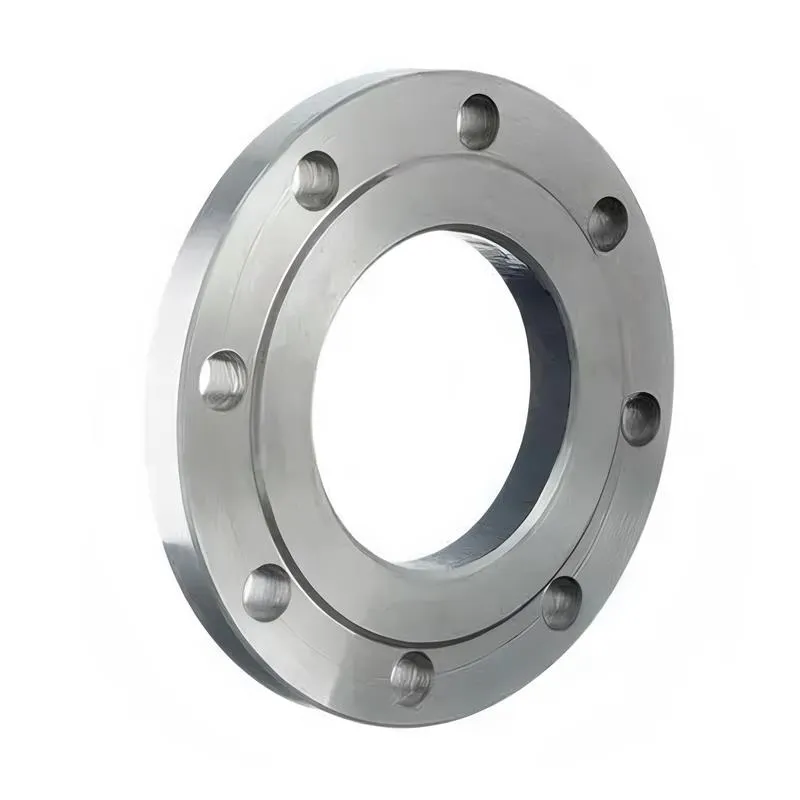
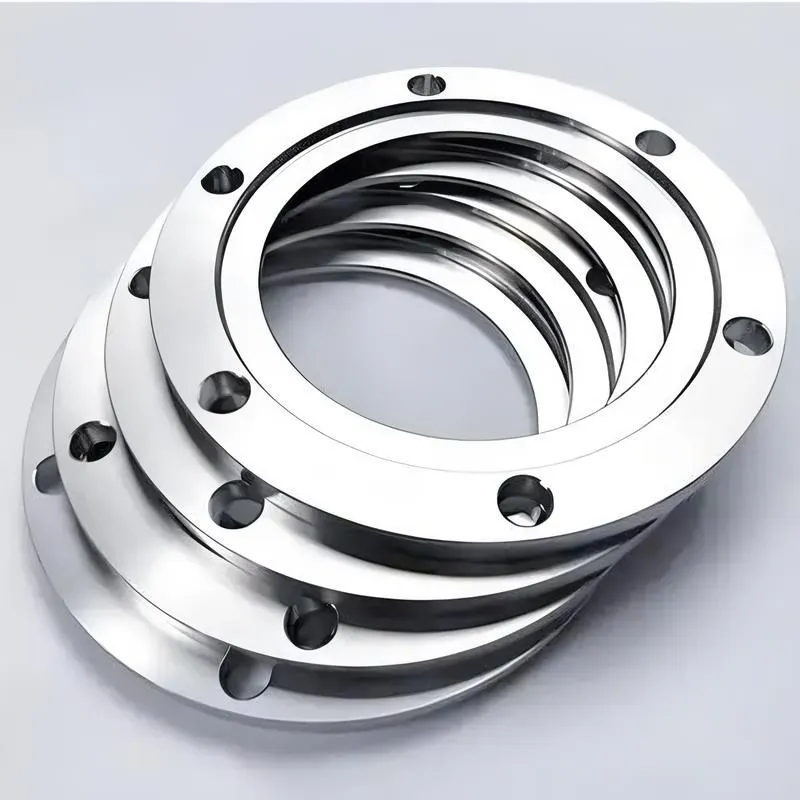
A flange—also referred to as a flange plate or rim—is a component used to connect shafts to one another, or, more commonly, to join the ends of pipes. Flanges are also utilized at the inlet and outlet ports of equipment to facilitate connections between two devices—for instance, the flange on a speed reducer. A "flange connection" or "flanged joint" refers to a detachable joint assembly comprising three interconnected elements—a flange, a gasket, and bolts—that together form a sealed structural unit. In the context of piping systems, a "pipe flange" specifically denotes a flange used for plumbing within the installation; when applied to equipment, it refers to the inlet or outlet flange of that specific device. Flanges feature a series of holes through which bolts are inserted to securely fasten the two flanges together, while a gasket placed between the flanges ensures a leak-proof seal. Flanges are broadly categorized into three types: threaded (screw-in) flanges, welded flanges, and clamp-type flanges. Flanges are invariably used in pairs; threaded flanges are suitable for low-pressure piping applications, whereas welded flanges are required for systems operating at pressures exceeding 4 kilograms per square centimeter. A sealing gasket is inserted between the two flange plates, which are then firmly secured using bolts. The thickness of a flange—as well as the specifications of the bolts used to fasten it—vary depending on the specific pressure rating required for the application. When connecting equipment such as water pumps or valves to piping systems, the corresponding connection points on these devices are often manufactured in the shape of a matching flange; this method of attachment is also referred to as a "flange connection." Generally, any connecting component that utilizes bolts to join and seal the perimeters of two flat surfaces—such as the joints in ventilation ducts—is termed a "flange"; such components may collectively be classified as "flange-type parts." However, since such a connection often constitutes merely a *portion* of a larger device—for instance, the interface between a flange and a water pump—it would be inappropriate to classify the entire water pump itself as a "flange-type part." Conversely, smaller components—such as valves—that feature such flanged interfaces may indeed be appropriately categorized as "flange-type parts."
-:-
For detailed product information, please contact sales.
-:
ASTM A439 Austenitic Ductile Iron Flange type D5B Product Information
-:-
For detailed product information, please contact sales.
-:
ASTM A439 Austenitic Ductile Iron Flange type D5B Synonyms
-:-
For detailed product information, please contact sales.
-:
ASTM A439 Austenitic Ductile Iron type D5B Product Information
-:-
For detailed product information, please contact sales.
-:
# **Product Technical Data Sheet: ASTM A439 Austenitic Ductile Iron – Type D-5B**
---
## **1. Product Overview**
**ASTM A439 Type D-5B Austenitic Ductile Iron** is a **boron-modified, high-nickel austenitic spheroidal graphite iron** that combines the **exceptional dimensional stability and corrosion resistance of Type D-5 with significantly enhanced as-cast hardness and wear resistance**. As the "B" suffix indicates, this grade incorporates a controlled boron addition that precipitates fine, hard borides throughout the austenitic matrix. This modification transforms the typically soft D-5 into a material capable of withstanding **abrasion, galling, and deformation under load**, making it ideal for applications where both the low thermal expansion of D-5 and improved mechanical durability are required.
---
## **2. Governing Standards & Specifications**
Type D-5B is a specialized variant within the ASTM A439 standard, distinguished by its boron content.
* **Primary Standard:**
* **ASTM A439** - *Standard Specification for Austenitic Ductile Iron Castings* (Includes Type D-5 and D-5B).
* **International & Commercial Equivalents:**
* There is no direct ISO equivalent; it is a proprietary enhancement of the ISO 2892 **L-NiCr 35 3** (D-5) grade.
* **Common Trade Name:** **Ni-Resist® Type D-5B** (Low-Expansion, Wear-Resistant Grade).
* **Key Referenced Testing Standards:**
* **ASTM E8:** Tensile Testing
* **ASTM E10/E18:** Hardness Testing (Brinell/Rockwell)
* **ASTM A247:** Microstructure Evaluation
* **ASTM E228:** Linear Thermal Expansion Testing
* **ASTM G65:** Dry Sand/Rubber Wheel Abrasion Test
---
## **3. Chemical Composition Requirements (per ASTM A439)**
The composition mirrors that of Type D-5, with the critical addition of boron.
| Element | Composition Range (wt.%, ASTM A439) | Functional Role & Rationale for D-5B |
| :--- | :--- | :--- |
| **Carbon (C)** | 2.30 - 2.80 | Controlled for matrix integrity; boron will tie up some carbon in hard borocarbides. |
| **Silicon (Si)** | 1.00 - 2.00 | Controlled to preserve low thermal expansion characteristics. |
| **Nickel (Ni)** | **34.00 - 36.00** | **Primary Austenite Stabilizer and Low-CTE Agent.** Ensures dimensional stability and a fully austenitic, ductile, and corrosion-resistant matrix. |
| **Chromium (Cr)** | **2.00 - 3.00** | Provides oxidation and corrosion resistance. |
| **Manganese (Mn)** | 0.50 - 1.50 | Austenite stabilizer. |
| **Boron (B)** | **0.010 - 0.030** | **The Defining Addition.** Boron segregates during solidification to form a fine, interconnected network of extremely hard **boron carbides and borides (e.g., (Fe,Cr,Ni)₂₃(C,B)₆)**. This dramatically increases **as-cast hardness, yield strength, and resistance to abrasive and adhesive wear.** |
| **Copper (Cu)** | ≤ 0.50 | Low. |
| **Magnesium (Mg)** | ≥ 0.07 (min., residual) | Ensures spheroidal graphite formation. |
| **Phosphorus (P)** | ≤ 0.08 | Kept low. |
| **Sulfur (S)** | ≤ 0.03 | Kept low. |
---
## **4. Physical & Mechanical Properties**
The boron addition fundamentally changes the mechanical performance of the D-5 matrix while largely preserving its unique physical properties.
| Property | Typical Value / Range for D-5B | Key Characteristics & Comparison vs. D-5 |
| :--- | :--- | :--- |
| **Tensile Strength, min.** | **414 MPa (60,000 psi)** | Similar minimum, but typical values are **higher (500-600 MPa)** due to dispersion strengthening. |
| **Yield Strength (0.2% offset), min.** | **207 MPa (30,000 psi)** | Similar minimum, but typical values are **significantly higher (300-400 MPa)**. |
| **Elongation, min.** | **10%** | **Reduced from D-5 (15%).** The hard boride network increases strength but reduces ductility and impact toughness. |
| **Hardness (Brinell, HBW)** | **200 - 280 HBW** | **The most significant change.** D-5B is **substantially harder than D-5 (120-180 HBW)**, providing excellent resistance to indentation, abrasion, and galling. |
| **Coefficient of Thermal Expansion (20-400°C)** | **~9.5 - 11.0 x 10⁻⁶ /°C** | **Retains the low CTE characteristic of D-5**, though it may be slightly higher due to the presence of hard phases. Still far lower than other austenitic grades. |
| **Modulus of Elasticity** | **~115 - 125 GPa** | Slightly higher than D-5 due to the hard secondary phases. |
| **Wear & Abrasion Resistance** | **Very Good to Excellent.** **Superior to all other standard A439 grades.** The fine, hard boride network provides exceptional resistance to adhesive wear (galling), abrasive wear, and cavitation erosion. |
| **Impact Resistance** | **Moderate.** Lower than standard D-5 due to reduced ductility. Suitable for loaded components but not for high shock applications. |
| **Corrosion Resistance** | **Excellent.** Comparable to Type D-5. The boron addition does not significantly detract from its outstanding resistance to alkalis, seawater, and many acids. The austenitic matrix remains protective. |
| **Non-Magnetic Property** | **Maintained.** Fully austenitic matrix ensures low magnetic permeability. |
| **Machinability** | **Fair.** More difficult than D-5 due to higher hardness and abrasive borides. Requires carbide tooling and appropriate parameters. |
---
## **5. Product Applications**
Type D-5B is specified for demanding applications where the unique combination of **dimensional stability, corrosion resistance, and wear resistance** is required.
* **Precision Machinery with Wear Surfaces:**
* **Machine tool slideways, gibs, and wear plates** in environments with temperature variation or corrosive coolant.
* **Gauges, fixtures, and molding dies** subject to both wear and thermal cycling.
* **Marine & Offshore (Wear-Critical):**
* **Stern tube bearings, seal rings, and bushings** in seawater-lubricated systems where corrosion, wear, and precise fit are all critical.
* **Control valve trim and seats** in seawater handling systems.
* **Chemical Processing (Abrasive-Corrosive):**
* **Pump wear parts (casings, impellers), mixer blades, and valve components** handling corrosive slurries or abrasive particles.
* **Energy & Automotive:**
* **Turbocharger components** (e.g., wastegate bushings) exposed to thermal cycling and corrosive exhaust.
* **Select components in fuel injection or auxiliary systems.**
---
## **6. Fabrication & Processing Notes**
* **Condition:** Supplied **as-cast**. The enhanced properties are achieved directly through the boron modification during solidification; no subsequent hardening heat treatment is typically applied. A **stress relief anneal** may be used for dimensional stability in complex castings.
* **Casting Considerations:** Boron affects solidification behavior. It can reduce ductility and impact toughness if not carefully controlled. Foundry practice must ensure the boron content is within the optimal range to maximize hardness without causing excessive brittleness.
* **Machinability:** **Fair to Good, but more demanding than D-5.** The increased hardness and abrasive phases require **carbide tooling**. Operations like drilling and tapping require careful technique. Machining is generally performed in the as-cast condition.
* **Weldability:** **Poor to Fair (Not Recommended for Service).** Similar to other boron-modified grades (e.g., D-2B). Welding can cause:
* **HAZ embrittlement** due to boron redistribution and formation of undesirable phases.
* **Cracking susceptibility** due to high hardness and residual stresses.
If repair is absolutely necessary, it requires extreme care: low heat input, pre-heat (~300°C), specialized nickel-based filler metals, and mandatory post-weld stress relief. **Fabrication by welding is not advised.**
---
## **7. Ordering Information**
**Specify:** **"Austenitic Ductile Iron Castings, ASTM A439 Type D-5B (Ni-Resist D-5B / Low-Expansion Wear Grade), As-Cast."**
**Critical Details to Provide:**
* **Applicable Standard & Grade** (ASTM A439 D-5B).
* **Part Drawing & Specification**, highlighting wear surfaces, dimensional tolerances, and corrosion service environment.
* **Key Performance Requirements:** Specify a **minimum hardness** (e.g., 220 HBW) if wear resistance is critical. The low-CTE characteristic should be referenced if it is a design factor.
* **Certification Requirements:** MTR with full chemical analysis (**must include Boron content**), mechanical properties (tensile, yield, elongation, hardness). Microstructure review may be requested.
* **Special Notes:** This is a specialized foundry product. Engagement with a foundry experienced in boron-treated austenitic irons is recommended.
---
## **8. Summary: The Wear-Resistant, Low-Expansion Alloy**
**ASTM A439 Type D-5B solves a unique set of engineering challenges that no other standard material addresses as effectively:**
* **Unique Value Proposition:** **D-5B is the only standard grade that offers the low thermal expansion of D-5 *combined with* the high as-cast hardness and wear resistance of a boron-modified alloy.**
* **When to Select D-5B Over D-5:** When the application involves **sliding contact, abrasion, or required high surface hardness** in addition to the need for dimensional stability and corrosion resistance. For example: a seawater-lubricated bearing that must maintain a precise fit within a steel housing.
* **When to Select D-5B Over D-2B:** When **low thermal expansion is a critical design parameter** and the environment is highly corrosive (e.g., hot alkalis, seawater). D-2B offers higher hardness but lacks the dimensional stability of D-5B.
* **Primary Trade-off:** The gain in hardness and wear resistance comes with a **reduction in ductility and impact toughness** compared to standard D-5.
**ASTM A439 Type D-5B is a premier engineering material for applications operating at the intersection of precision mechanics, corrosion, and wear—a niche where its specialized property combination is unmatched.**
-:-
For detailed product information, please contact sales.
-:
ASTM A439 Austenitic Ductile Iron type D5B Specification
Dimensions
Size:
Diameter 20-1000 mm Length <6558 mm
Size:We can customized as required
Standard:
Per your request or drawing
We can customized as required
Properties(Theoretical)
Chemical Composition
-:-
For detailed product information, please contact sales.
-:
ASTM A439 Austenitic Ductile Iron type D5B Properties
-:-
For detailed product information, please contact sales.
-:
Applications of ASTM A439 Austenitic Ductile Iron Flange type D5B
-:-
For detailed product information, please contact sales.
-:
Chemical Identifiers ASTM A439 Austenitic Ductile Iron Flange type D5B
-:-
For detailed product information, please contact sales.
-:
Packing of ASTM A439 Austenitic Ductile Iron Flange type D5B
-:-
For detailed product information, please contact sales.
-:
Standard Packing:
-:-
For detailed product information, please contact sales.
-:
Typical bulk packaging includes palletized plastic 5 gallon/25 kg. pails, fiber and Steel Flange drums to 1 ton super sacks in full container (FCL) or truck load (T/L) quantities. Research and sample quantities and hygroscopic, oxidizing or other air sensitive materials may be packaged under argon or vacuum. Solutions are packaged in polypropylene, plastic or glass jars up to palletized 3029 gallon liquid totes Special package is available on request. E FORUs’ is carefully handled to minimize damage during storage and transportation and to preserve the quality of our products in their original condition