1,We Manufacturing processes are primarily classified into four types:
1:Forging,
2:Casting,
3:Cutting,
4:Rolling.
2,We can manufacture in accordance with these standards.
Standards:
GB Series (Chinese Standards), JB Series (Machinery Standards), HG Series (Chemical Industry Standards), ASME B16.5 (American Standards), BS4504 (British Standards), DIN (German Standards), and JIS (Japanese Standards).
Internationally, there are two primary systems of pipe flange standards: the European system, represented by the German DIN standards (including those of the former Soviet Union), and the American system, represented by the US ANSI pipe flange standards. Other common standards include: the Chinese Ministry of Machinery Industry standards (JB series), the Ministry of Chemical Industry standards (HG series), the Chinese National Standard *GB/T 9112–9124-2010 Steel Pipe Flanges*, as well as US standards (ASME B16.5), British standards (BS4504), German standards (DIN), Japanese standards (JIS), and marine standards (CBM), among others.
The nominal pressure ratings for the PN series are designated by "PN" and comprise the following nine levels: PN2.5, PN6, PN10, PN16, PN25, PN40, PN63, PN100, and PN160.
The nominal pressure ratings for the Class series are designated by "Class" and comprise the following six levels: Class150, Class300, Class600, Class900, Class1500, and Class2500.
Flange Classification
1. **According to Chemical Industry Standards:** Flanges are classified as follows:
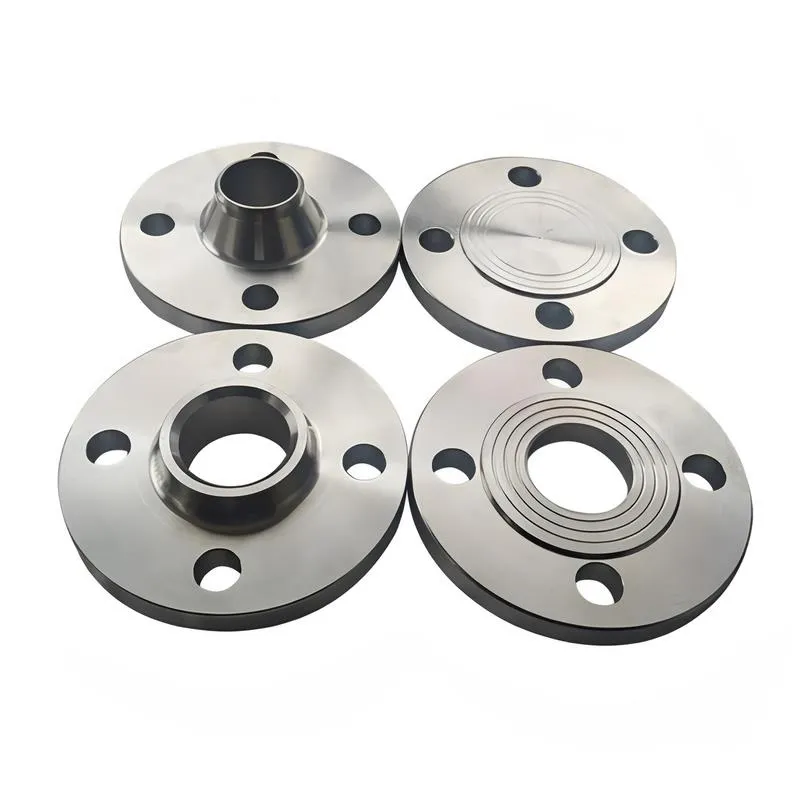
Plate Flat Welding Flange (PL), Necked Flat Welding Flange (SO), Necked Butt Welding Flange (WN), Integral Flange (IF), Socket Welding Flange (SW), Threaded Flange (Th), Butt Welding Ring Loose Flange (PJ/SE), Blind Flange (BL), Flat Welding Ring Loose Flange (PJ/PJ), and Lined Blind Flange (BL(s)).
2. **According to Petrochemical (SH) Industry Standards:** Flanges are classified as follows:
Threaded Flange (PL), Butt Welding Flange (WN), Flat Welding Flange (SO), Socket Welding Flange (SW), Loose Flange (LJ), and Blind Flange (no specific designation).
3. **According to Machinery (JB) Industry Standards:** Flanges are classified as follows:
Integral Flange, Butt Welding Flange, Plate Flat Welding Flange, Butt Welding Ring Plate Loose Flange, Flat Welding Ring Plate Loose Flange, Lap Joint Ring Plate Loose Flange, and Blind Flange.
4. **According to Connection Method/Type:** Flanges are classified as follows:
Plate Flat Welding Flange, Necked Flat Welding Flange, Necked Butt Welding Flange, Socket Welding Flange, Threaded Flange, Blind Flange, Necked Butt Welding Ring Loose Flange, Flat Welding Ring Loose Flange, Ring-Type Joint (RTJ) Flange and Blind Flange, Large-Diameter Plate Flange, Large-Diameter High-Neck Flange, Figure-8 Blind Plate, Butt Welding Ring Loose Flange, etc.
5. **According to the Component Being Connected:** Flanges can be classified into Vessel Flanges and Pipe Flanges.
6. **According to Structural Type:** Flanges include Integral Flanges, Threaded Flanges, Flat Welding Flanges, Butt Welding Flanges, Lap Joint (Loose/Swivel) Flanges, and Blind Flanges.
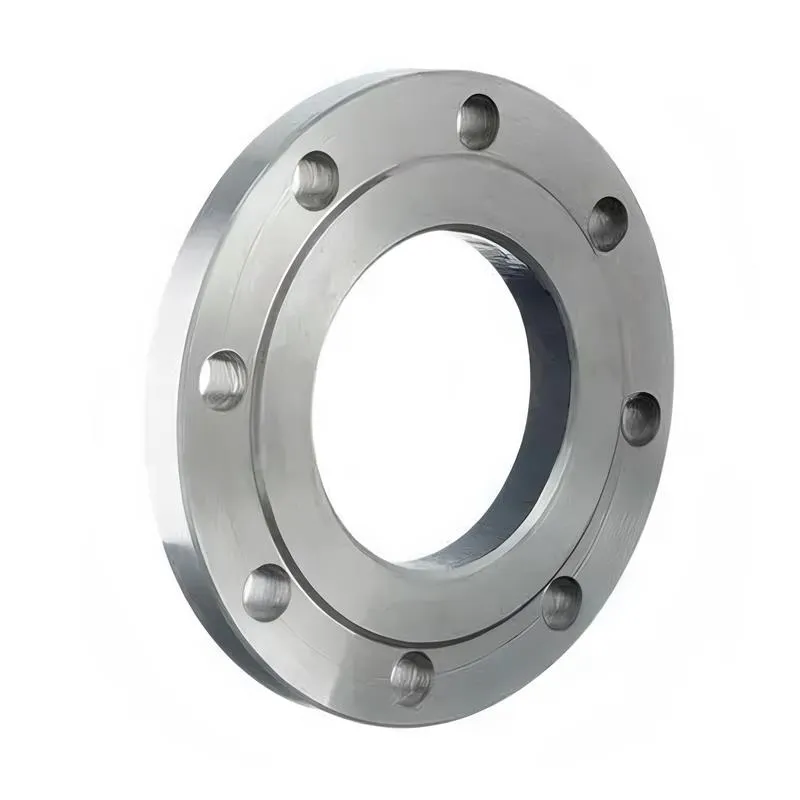
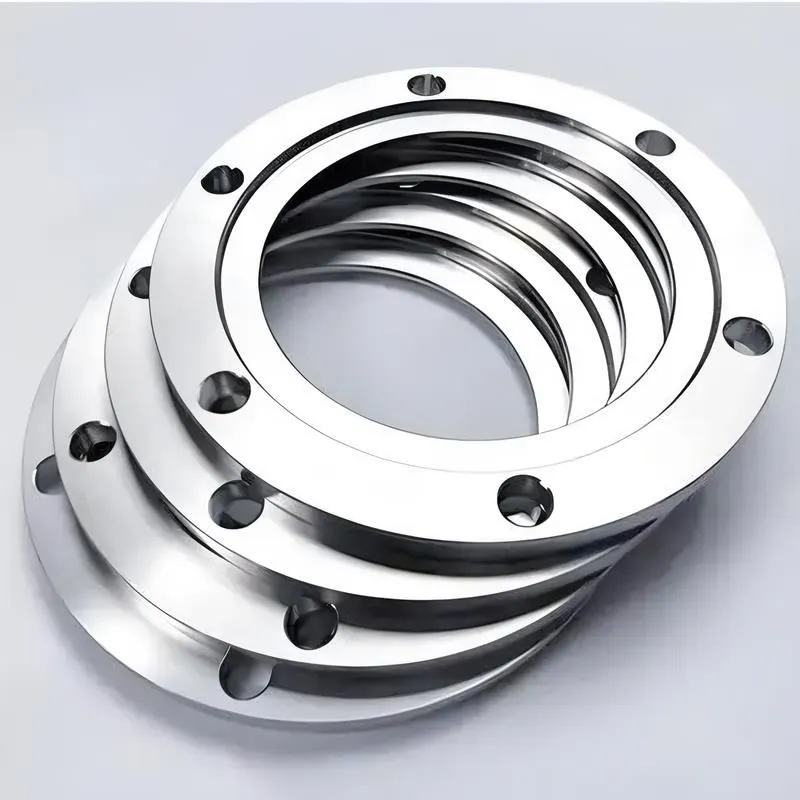
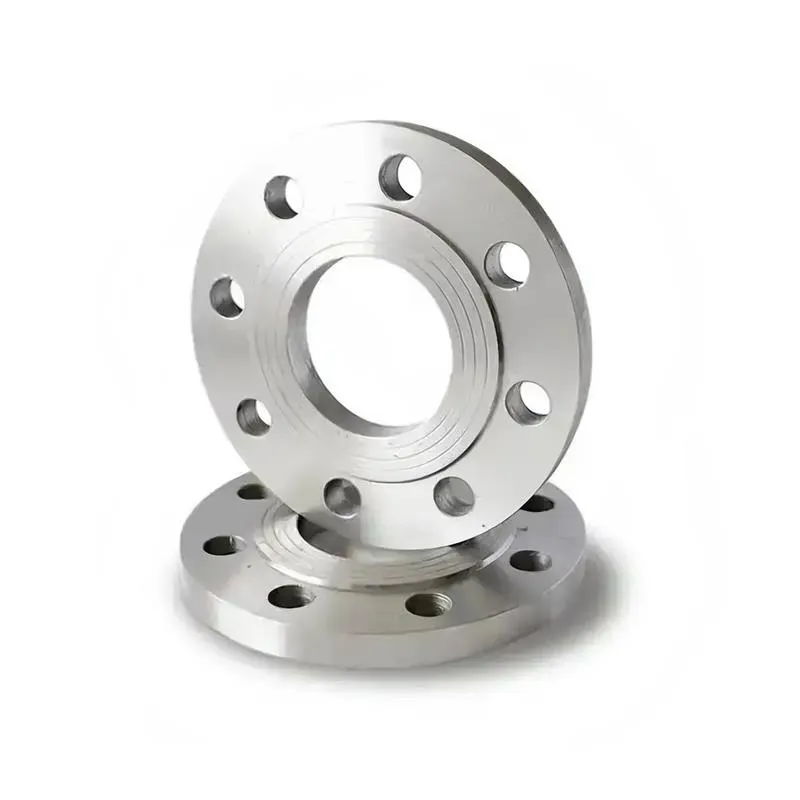
A flange—also referred to as a flange plate or rim—is a component used to connect shafts to one another, or, more commonly, to join the ends of pipes. Flanges are also utilized at the inlet and outlet ports of equipment to facilitate connections between two devices—for instance, the flange on a speed reducer. A "flange connection" or "flanged joint" refers to a detachable joint assembly comprising three interconnected elements—a flange, a gasket, and bolts—that together form a sealed structural unit. In the context of piping systems, a "pipe flange" specifically denotes a flange used for plumbing within the installation; when applied to equipment, it refers to the inlet or outlet flange of that specific device. Flanges feature a series of holes through which bolts are inserted to securely fasten the two flanges together, while a gasket placed between the flanges ensures a leak-proof seal. Flanges are broadly categorized into three types: threaded (screw-in) flanges, welded flanges, and clamp-type flanges. Flanges are invariably used in pairs; threaded flanges are suitable for low-pressure piping applications, whereas welded flanges are required for systems operating at pressures exceeding 4 kilograms per square centimeter. A sealing gasket is inserted between the two flange plates, which are then firmly secured using bolts. The thickness of a flange—as well as the specifications of the bolts used to fasten it—vary depending on the specific pressure rating required for the application. When connecting equipment such as water pumps or valves to piping systems, the corresponding connection points on these devices are often manufactured in the shape of a matching flange; this method of attachment is also referred to as a "flange connection." Generally, any connecting component that utilizes bolts to join and seal the perimeters of two flat surfaces—such as the joints in ventilation ducts—is termed a "flange"; such components may collectively be classified as "flange-type parts." However, since such a connection often constitutes merely a *portion* of a larger device—for instance, the interface between a flange and a water pump—it would be inappropriate to classify the entire water pump itself as a "flange-type part." Conversely, smaller components—such as valves—that feature such flanged interfaces may indeed be appropriately categorized as "flange-type parts."
-:-
For detailed product information, please contact sales.
-:
ASTM A897/A897M-06 Grade 750 (110-70-11) Austempered Ductile Iron Flange Product Information
-:-
For detailed product information, please contact sales.
-:
ASTM A897/A897M-06 Grade 750 (110-70-11) Austempered Ductile Iron Flange Synonyms
-:-
For detailed product information, please contact sales.
-:
ASTM A897/A897M-06 Grade 750 (110-70-11) Austempered Ductile Iron Product Information
-:-
For detailed product information, please contact sales.
-:
# **Product Technical Data Sheet: ASTM A897/A897M-06 Grade 750/500/11 Austempered Ductile Iron (ADI)**
---
## **1. Product Overview**
**ASTM A897/A897M-06 Grade 750/500/11** represents a premium **high-strength, high-ductility Austempered Ductile Iron (ADI)**. This material is produced by subjecting standard ductile iron to the **austempering heat treatment process**, resulting in a unique **ausferritic microstructure** of acicular ferrite and high-carbon stabilized austenite. Designated by its tensile strength in megapascals (750 MPa minimum), yield strength (500 MPa minimum), and elongation (11% minimum), this grade delivers an exceptional combination of **very high strength, excellent toughness, and superior fatigue performance**, effectively bridging the gap between conventional ductile iron and forged steel. It is engineered for demanding, dynamically loaded components where weight reduction, wear resistance, and reliability are critical.
---
## **2. Governing Standards & Specifications**
This grade is formally defined by the ASTM standard specifically for Austempered Ductile Iron.
* **Primary Standard:**
* **ASTM A897/A897M-06** - *Standard Specification for Austempered Ductile Iron Castings*
* **International Equivalents:**
* **ISO 17804:** *Austempered spheroidal graphite cast irons – Classification*.
Grade 750/500/11 corresponds to **ADI 750-500-11** or **JS/750/11/260/12**.
* **SAE J2477:** *Austempered Ductile Iron Castings*.
* **AMS 5317C:** Aerospace Material Specification.
* **Key Referenced Testing Standards:**
* **ASTM E8:** Tensile Testing
* **ASTM E23:** Charpy Impact Testing
* **ASTM A247:** Microstructure Evaluation (Graphite & Matrix)
* **ASTM E466:** Conducting Force Controlled Constant Amplitude Axial Fatigue Tests
---
## **3. Typical Base Iron Chemical Composition**
The properties are achieved through heat treatment of a carefully controlled base ductile iron. A typical composition is balanced for optimal austemperability.
| Element | Target Range (wt.%) | Functional Role for ADI Grade 750/500/11 |
| :--- | :--- | :--- |
| **Carbon (C)** | 3.5 - 3.8 | Provides carbon for the ausferrite reaction; high carbon stabilizes the high-carbon austenite phase, enhancing ductility and fatigue crack growth resistance. |
| **Silicon (Si)** | **2.4 - 2.8** | **Crucial for ADI.** Suppresses the formation of brittle carbides during austempering, promotes the formation of the beneficial acicular ferrite, and increases the carbon solubility in austenite. |
| **Manganese (Mn)** | **0.20 - 0.40** | **Stringently limited.** High Mn segregates to cell boundaries and can stabilize pearlite or bainite, interfering with the austempering transformation and reducing toughness. |
| **Molybdenum (Mo)** | **0.15 - 0.30** | Often added to increase hardenability, ensuring the austempering transformation occurs fully through the casting section, especially in thicker parts. |
| **Copper (Cu)** | 0.40 - 0.80 | Used as a supplemental hardenability agent and to promote a uniform microstructure. |
| **Nickel (Ni)** | 0 - 0.50 | May be added with Mo for hardenability in complex geometries. |
| **Magnesium (Mg)** | 0.03 - 0.05 | Ensures spheroidal graphite (nodularity >85%). |
| **Trace Elements (Sn, Sb)** | **Minimized** | Strong pearlite promoters; must be controlled to allow the ausferritic transformation. |
---
## **4. Physical & Mechanical Properties**
Grade 750/500/11 is characterized by its outstanding balance of strength and ductility.
| Property | Minimum Requirement (ASTM A897) | Typical Value / Significance |
| :--- | :--- | :--- |
| **Tensile Strength (UTS)** | **750 MPa (109 ksi)** | Very high strength, comparable to quenched & tempered low-alloy steels. |
| **Yield Strength (0.2% YS)** | **500 MPa (73 ksi)** | High yield strength provides excellent resistance to permanent deformation. |
| **Elongation** | **11%** | **Exceptional ductility for its strength level.** This is a key differentiator from conventional high-strength cast irons and many steels, providing damage tolerance. |
| **Hardness (Brinell)** | **241 - 302 HBW** | Typically 260-285 HBW. Provides good wear resistance. |
| **Modulus of Elasticity** | **165 - 175 GPa** | Similar to standard ductile iron and steel. |
| **Charpy Impact (Unnotched)** | **65 - 100 J** | **Excellent impact resistance,** a hallmark of properly austempered ADI. |
| **Charpy Impact (V-notch)** | **Typically 18 - 25 J @ 23°C** | Good fracture toughness. |
| **Fatigue Endurance Limit** | **~325 - 375 MPa** | **Outstanding.** Typically 0.43-0.50 x UTS. Superior to most steels at similar hardness due to the crack-blunting effect of the graphite nodules and compressive stresses in the matrix. |
| **Density** | **~7.1 g/cm³** | Lightweight compared to steel (~7.8 g/cm³). |
| **Damping Capacity** | **~3-5x greater than steel** | Advantageous for reducing noise and vibration in dynamic components. |
| **Microstructure** | **Fine Ausferrite:** Acicular (needle-like) ferrite in a matrix of **high-carbon stabilized austenite** (typically 25-40% by volume). Graphite nodules are well-spheroidized. The absence of carbides and pearlite is critical. |
---
## **5. Product Applications**
Grade 750/500/11 is specified for highly stressed, safety-critical components across multiple industries.
* **Automotive & Commercial Vehicles:**
* **Differential carriers, ring gears, steering knuckles, suspension components, and brake calipers.**
* **High-performance engine connecting rods and crankshafts.**
* **Heavy Equipment & Agriculture:**
* **Track rollers and links, drive sprockets, and final drive components** for excavators and tractors.
* **Gearbox housings and high-strength brackets.**
* **Railway:**
* **Brake discs, coupler components, and bogie frames.**
* **Industrial Machinery:**
* **High-load gears, camshafts, press frames, and hydraulic components.**
* **Defense:**
* **Lightweight armor components, track system parts, and structural housings.**
---
## **6. Austempering Process & Fabrication Notes**
* **Heat Treatment Process (Austempering):** This is the core of the material.
1. **Austenitizing:** Heating to 870-900°C to form a homogeneous austenite matrix.
2. **Quenching:** Rapid transfer to a molten salt bath at the **austempering temperature** (typically **290-330°C** for this grade).
3. **Isothermal Transformation:** Holding at the salt bath temperature (1-4 hours) to form the ausferritic microstructure.
4. **Cooling:** Air cooling to room temperature.
* **Machinability:** **Fair to Good in the as-austempered condition.** Tougher and more abrasive than ferritic DI but machinable with carbide tooling. **Hard machining** is often performed post-heat treatment. Some components are machined in a soft, pearlitic pre-austempering condition and then final austempered.
* **Weldability:** **Not Recommended.** The precise ausferritic microstructure is severely compromised by welding heat, leading to hard, brittle zones (martensite) in the HAZ. ADI components are designed as-cast and heat-treated; repair welding is highly specialized and generally avoided.
* **Grindability:** Good. Can be ground to precise dimensions and fine surface finishes.
---
## **7. Ordering Information**
**Specify:** **"Austempered Ductile Iron (ADI) Castings, ASTM A897/A897M-06 Grade 750/500/11."**
**Critical Details to Provide:**
* **Applicable Standard and Full Grade Designation.**
* **Part Drawing & Specification.**
* **Section Size/Weight:** Critical for the foundry/heat treater to ensure proper hardenability and cycle time.
* **Certification Requirements:** Mill Test Report must include:
* Base iron chemistry.
* Final mechanical properties (Tensile, Yield, Elongation, Hardness).
* **Microstructure report** verifying ausferritic matrix and nodularity (per ASTM A247).
* Charpy impact test results, if specified.
* **Non-Destructive Testing (NDT):** Magnetic particle or fluorescent penetrant inspection is common for critical surfaces. Ultrasonic testing may be specified for internal soundness in high-integrity parts.
---
## **8. Key Advantages & Design Considerations**
* **Advantages:**
* **High Strength-to-Weight Ratio:** Enables lightweight design.
* **Excellent Fatigue Strength:** For long service life under cyclic loads.
* **Good Wear Resistance & Damping Capacity.**
* **Design Freedom:** Complex near-net shapes achievable via casting.
* **Design Considerations:**
* **Avoid Sharp Notches:** The high strength makes it notch-sensitive; use generous fillet radii.
* **Residual Stresses:** The austempering process induces beneficial compressive surface stresses, but machining can relieve them. Design machining sequences carefully.
* **No Post-Heat Treatment Welding.**
**ASTM A897 Grade 750/500/11 ADI is a premier engineering material that allows designers to push performance boundaries, offering a unique property set that often enables the replacement of steel forgings or assemblies with a single, high-performance casting.**
-:-
For detailed product information, please contact sales.
-:
ASTM A897/A897M-06 Grade 750 (110-70-11) Austempered Ductile Iron Specification
Dimensions
Size:
Diameter 20-1000 mm Length <6560 mm
Size:We can customized as required
Standard:
Per your request or drawing
We can customized as required
Properties(Theoretical)
Chemical Composition
-:-
For detailed product information, please contact sales.
-:
ASTM A897/A897M-06 Grade 750 (110-70-11) Austempered Ductile Iron Properties
-:-
For detailed product information, please contact sales.
-:
Applications of ASTM A897/A897M-06 Grade 750 (110-70-11) Austempered Ductile Iron Flange
-:-
For detailed product information, please contact sales.
-:
Chemical Identifiers ASTM A897/A897M-06 Grade 750 (110-70-11) Austempered Ductile Iron Flange
-:-
For detailed product information, please contact sales.
-:
Packing of ASTM A897/A897M-06 Grade 750 (110-70-11) Austempered Ductile Iron Flange
-:-
For detailed product information, please contact sales.
-:
Standard Packing:
-:-
For detailed product information, please contact sales.
-:
Typical bulk packaging includes palletized plastic 5 gallon/25 kg. pails, fiber and Steel Flange drums to 1 ton super sacks in full container (FCL) or truck load (T/L) quantities. Research and sample quantities and hygroscopic, oxidizing or other air sensitive materials may be packaged under argon or vacuum. Solutions are packaged in polypropylene, plastic or glass jars up to palletized 3031 gallon liquid totes Special package is available on request. E FORUs’ is carefully handled to minimize damage during storage and transportation and to preserve the quality of our products in their original condition