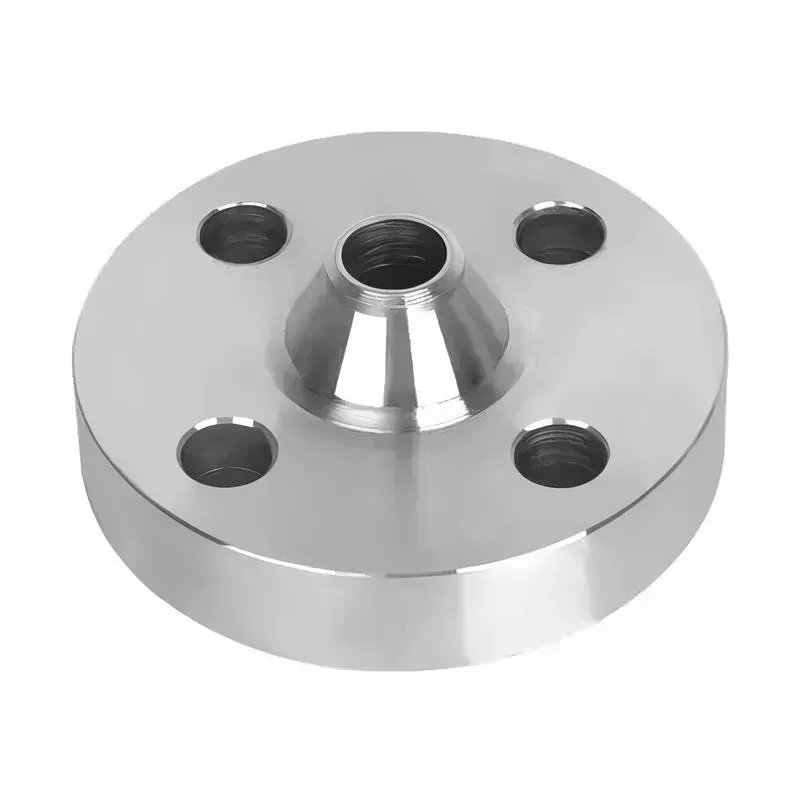
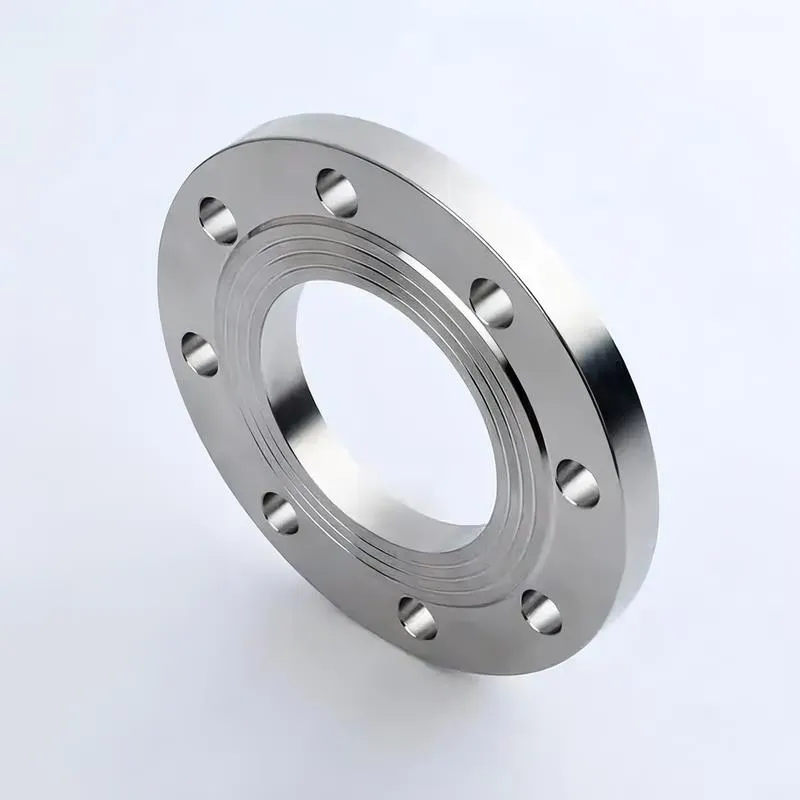
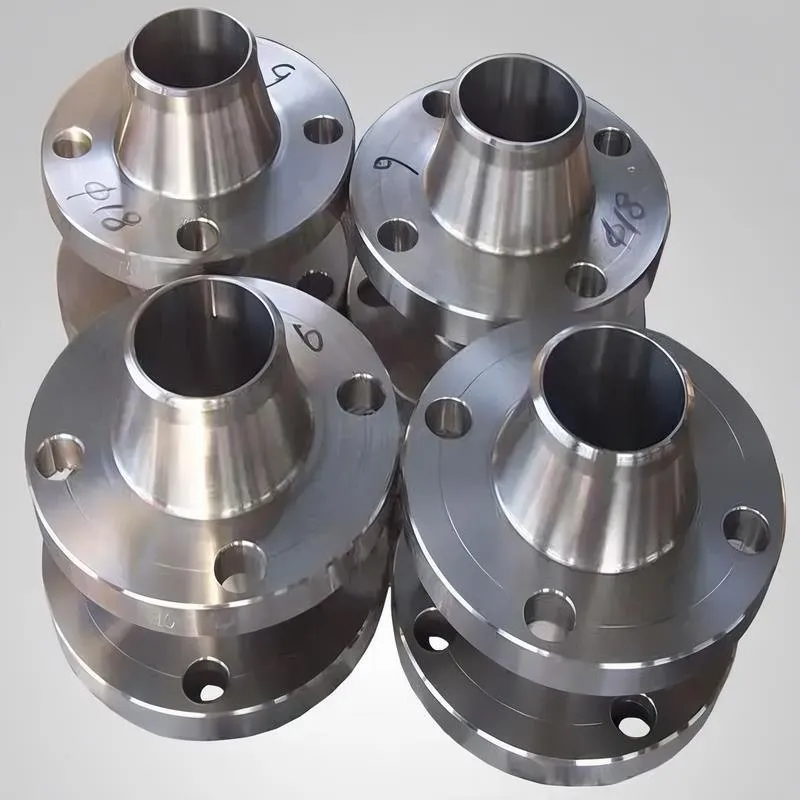
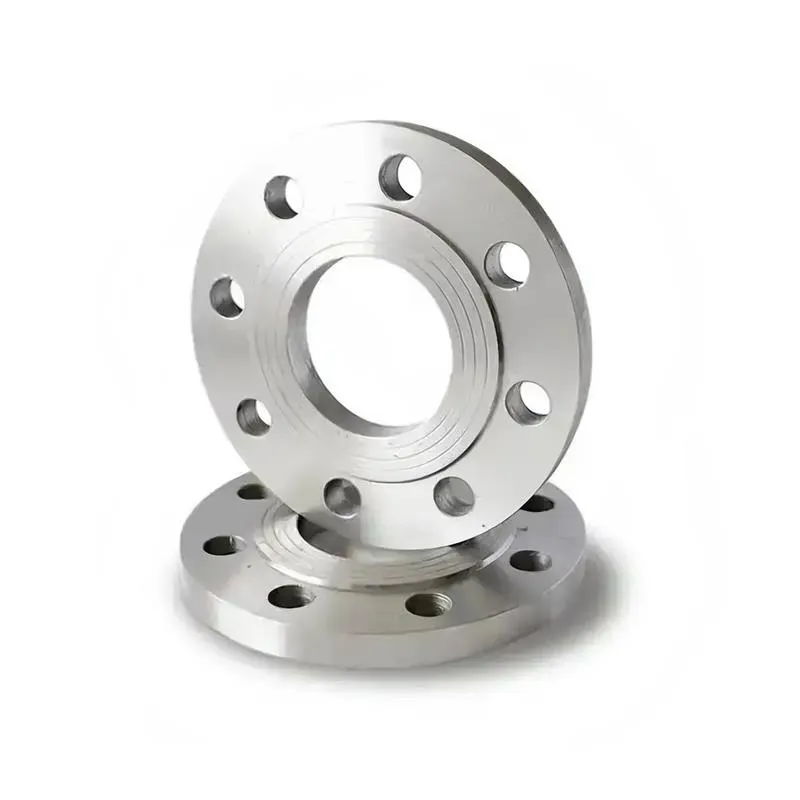
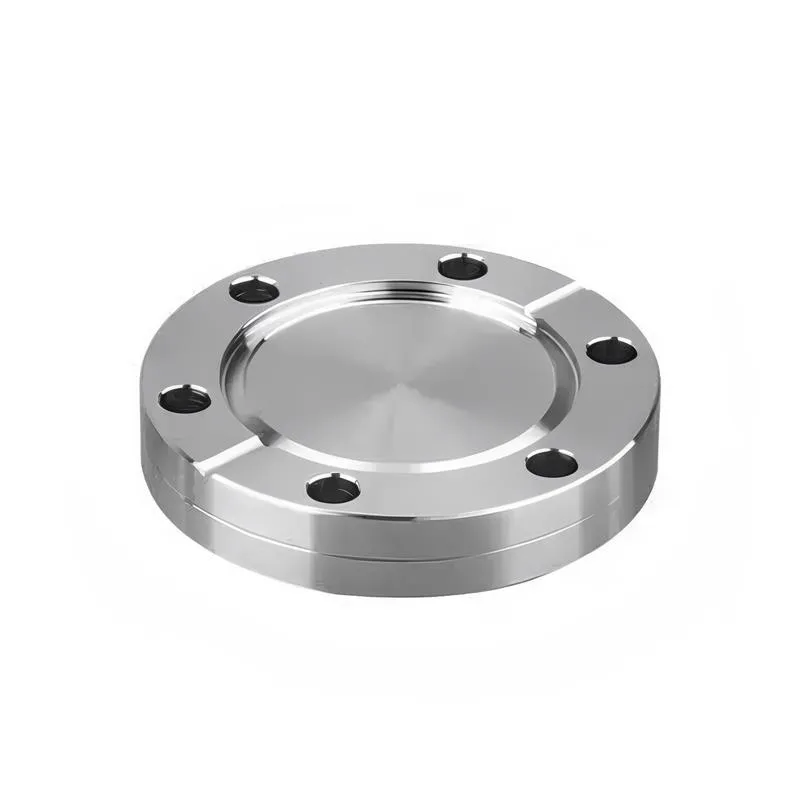
1,We Manufacturing processes are primarily classified into four types:
1:Forging,
2:Casting,
3:Cutting,
4:Rolling.
2,We can manufacture in accordance with these standards.
Standards:
GB Series (Chinese Standards), JB Series (Machinery Standards), HG Series (Chemical Industry Standards), ASME B16.5 (American Standards), BS4504 (British Standards), DIN (German Standards), and JIS (Japanese Standards).
Internationally, there are two primary systems of pipe flange standards: the European system, represented by the German DIN standards (including those of the former Soviet Union), and the American system, represented by the US ANSI pipe flange standards. Other common standards include: the Chinese Ministry of Machinery Industry standards (JB series), the Ministry of Chemical Industry standards (HG series), the Chinese National Standard *GB/T 9112–9124-2010 Steel Pipe Flanges*, as well as US standards (ASME B16.5), British standards (BS4504), German standards (DIN), Japanese standards (JIS), and marine standards (CBM), among others.
The nominal pressure ratings for the PN series are designated by "PN" and comprise the following nine levels: PN2.5, PN6, PN10, PN16, PN25, PN40, PN63, PN100, and PN160.
The nominal pressure ratings for the Class series are designated by "Class" and comprise the following six levels: Class150, Class300, Class600, Class900, Class1500, and Class2500.
Flange Classification
1. **According to Chemical Industry Standards:** Flanges are classified as follows:
Plate Flat Welding Flange (PL), Necked Flat Welding Flange (SO), Necked Butt Welding Flange (WN), Integral Flange (IF), Socket Welding Flange (SW), Threaded Flange (Th), Butt Welding Ring Loose Flange (PJ/SE), Blind Flange (BL), Flat Welding Ring Loose Flange (PJ/PJ), and Lined Blind Flange (BL(s)).
2. **According to Petrochemical (SH) Industry Standards:** Flanges are classified as follows:
Threaded Flange (PL), Butt Welding Flange (WN), Flat Welding Flange (SO), Socket Welding Flange (SW), Loose Flange (LJ), and Blind Flange (no specific designation).
3. **According to Machinery (JB) Industry Standards:** Flanges are classified as follows:
Integral Flange, Butt Welding Flange, Plate Flat Welding Flange, Butt Welding Ring Plate Loose Flange, Flat Welding Ring Plate Loose Flange, Lap Joint Ring Plate Loose Flange, and Blind Flange.
4. **According to Connection Method/Type:** Flanges are classified as follows:
Plate Flat Welding Flange, Necked Flat Welding Flange, Necked Butt Welding Flange, Socket Welding Flange, Threaded Flange, Blind Flange, Necked Butt Welding Ring Loose Flange, Flat Welding Ring Loose Flange, Ring-Type Joint (RTJ) Flange and Blind Flange, Large-Diameter Plate Flange, Large-Diameter High-Neck Flange, Figure-8 Blind Plate, Butt Welding Ring Loose Flange, etc.
5. **According to the Component Being Connected:** Flanges can be classified into Vessel Flanges and Pipe Flanges.
6. **According to Structural Type:** Flanges include Integral Flanges, Threaded Flanges, Flat Welding Flanges, Butt Welding Flanges, Lap Joint (Loose/Swivel) Flanges, and Blind Flanges.
A flange—also referred to as a flange plate or rim—is a component used to connect shafts to one another, or, more commonly, to join the ends of pipes. Flanges are also utilized at the inlet and outlet ports of equipment to facilitate connections between two devices—for instance, the flange on a speed reducer. A "flange connection" or "flanged joint" refers to a detachable joint assembly comprising three interconnected elements—a flange, a gasket, and bolts—that together form a sealed structural unit. In the context of piping systems, a "pipe flange" specifically denotes a flange used for plumbing within the installation; when applied to equipment, it refers to the inlet or outlet flange of that specific device. Flanges feature a series of holes through which bolts are inserted to securely fasten the two flanges together, while a gasket placed between the flanges ensures a leak-proof seal. Flanges are broadly categorized into three types: threaded (screw-in) flanges, welded flanges, and clamp-type flanges. Flanges are invariably used in pairs; threaded flanges are suitable for low-pressure piping applications, whereas welded flanges are required for systems operating at pressures exceeding 4 kilograms per square centimeter. A sealing gasket is inserted between the two flange plates, which are then firmly secured using bolts. The thickness of a flange—as well as the specifications of the bolts used to fasten it—vary depending on the specific pressure rating required for the application. When connecting equipment such as water pumps or valves to piping systems, the corresponding connection points on these devices are often manufactured in the shape of a matching flange; this method of attachment is also referred to as a "flange connection." Generally, any connecting component that utilizes bolts to join and seal the perimeters of two flat surfaces—such as the joints in ventilation ducts—is termed a "flange"; such components may collectively be classified as "flange-type parts." However, since such a connection often constitutes merely a *portion* of a larger device—for instance, the interface between a flange and a water pump—it would be inappropriate to classify the entire water pump itself as a "flange-type part." Conversely, smaller components—such as valves—that feature such flanged interfaces may indeed be appropriately categorized as "flange-type parts."
-:-
For detailed product information, please contact sales.
-:
Bethlehem Steel Flange ASTM A283 Grade A 3/16 to 15 in. thick, as-rolled Steel Flange plate Product Information
-:-
For detailed product information, please contact sales.
-:
Bethlehem Steel Flange ASTM A283 Grade A 3/16 to 15 in. thick, as-rolled Steel Flange plate Synonyms
-:-
For detailed product information, please contact sales.
-:
Bethlehem Steel ASTM A283 Grade A 3/16 to 15 in. thick, as-rolled steel plate Product Information
-:-
For detailed product information, please contact sales.
-:
# **Bethlehem Steel ASTM A283 Grade A (3/16" to 15" thick) As-Rolled Structural Steel Plate**
---
## **1. Overview**
Bethlehem Steel's **ASTM A283 Grade A** plate represents a classic, **general-purpose low to intermediate tensile strength carbon steel** available across an extraordinary thickness range from **3/16" to 15"**. Supplied in the **as-rolled condition**, this material is characterized by its **excellent weldability, formability, and availability** at a **lower cost** than higher-strength grades. Grade A is the lowest strength tier within the A283 specification, making it suitable for applications where high ductility and ease of fabrication are prioritized over load-bearing capacity. Its availability in such a vast thickness spectrum—from sheet-like plate to massive blocks—made it a versatile choice for a wide array of industrial, construction, and general fabrication purposes where precise property uniformity was less critical than functionality and economy.
---
## **2. International Standards**
This product conforms to the following standard, which defines multiple grades of low tensile strength carbon steel:
* **Primary Standard: ASTM A283 / A283M** – Standard Specification for Low and Intermediate Tensile Strength Carbon Steel Plates.
* **Grade Designation:** **A** (Lowest Strength), followed by B, C, and D with increasing strength.
* **Related Standards:** Often accepted in applications referencing **ASTM A36** when higher strength is not required, though chemistry and properties differ.
* **Note on Thickness:** While A283 covers a wide range, the provision of material up to 15 inches thick under this specification, particularly in the as-rolled condition, represents a historical application where the specification served more as a chemical and general quality guide rather than a guarantee of homogeneous mechanical properties in the ultra-thick sections.
---
## **3. Chemical Composition (Typical, % by Weight)**
The chemistry is a simple carbon-manganese steel designed for manufacturability. For thick sections, killing practices were adjusted.
| Element | Content (Maximum, unless specified) | Role & Implication |
| :--- | :--- | :--- |
| **Carbon (C)** | 0.14% max | Very low carbon ensures excellent weldability and formability across all thicknesses. This is the key feature differentiating it from higher-carbon structural steels. |
| **Manganese (Mn)** | 0.90% max | Provides basic strength and aids in hot rolling. |
| **Phosphorus (P)** | 0.035% max | Residual; kept low. |
| **Sulfur (S)** | 0.04% max | Residual; controlled. For very thick plates (>4"), levels were often lowered. |
| **Silicon (Si)** | 0.15% - 0.40% (for killed steel) | Deoxidizer. Thinner plates could be semi-killed; thicker plates required fully killed practice for soundness. |
| **Key Characteristic:** | **Low Carbon Equivalent (CE).** Very favorable for welding, even in thick sections, with minimal preheat requirements. | |
---
## **4. Physical & Mechanical Properties (As-Rolled)**
A283 Grade A has the lowest strength requirements of common structural plate steels. Note the significant property gradient in thick sections.
| Property | ASTM A283 Grade A Specification Minimum | **Typical Value & Important Gradient Notes** |
| :--- | :--- | :--- |
| **Tensile Strength** | **45 ksi min (310 MPa)** | **For thicknesses up to ~2":** 45-55 ksi.
**For thicknesses >2" (As-Rolled):** Strength decreases significantly from surface to center. At the **centerline of a 15" plate**, tensile strength can be **below 45 ksi**, potentially out-of-spec. This was an accepted reality for such massive as-rolled sections, often addressed by location-specific testing or design allowances. |
| **Yield Strength** | **24 ksi min (165 MPa)** | **For thicknesses up to ~2":** 24-30 ksi.
**For very thick sections:** Centerline yield can drop towards **20 ksi or lower**. |
| **Elongation in 2" (min)** | **30%** (for plates ≤ 3/4") | **High ductility is a hallmark.** In thinner plates, often exceeds 35%. In thick plate, surface elongation remains good, but **centerline ductility is markedly reduced** due to coarse grain structure. |
| **Yield-to-Tensile Ratio** | N/A | Typically 0.53 - 0.65. This very low ratio indicates exceptional formability and energy absorption in thinner sections. |
| **Notch Toughness** | Not specified. | Generally poor, especially at the centerline of thick plates, where coarse grain and segregation lead to low impact resistance. |
| **Key Consideration:** | **Property Uniformity is Thickness-Dependent.** For plates > 2", the material is **not homogeneous**. The as-rolled condition results in a **coarse, low-strength, low-toughness core**. Design using thick A283 Grade A required conservative assumptions or use of the material in compression/low-stress applications. | |
---
## **5. Key Features & Advantages**
* **Exceptional Weldability & Formability:** The low carbon content allows for easy welding with virtually no preheat (except on very thick sections to control hydrogen) and permits severe cold bending and drawing.
* **Cost-Effectiveness:** Historically one of the most economical steel plates available, especially in heavy thicknesses where the cost premium for higher grades increased significantly.
* **Availability in Extreme Thicknesses:** Served as a "go-to" material for massive blocks where the primary requirement was solid fill or compressive load bearing, not high tensile strength.
* **Good Machinability:** Produces good surface finish and continuous chips, making it ideal for large-scale machining operations.
---
## **6. Product Applications**
Applications varied dramatically by thickness:
* **3/16" to 3/4" (Sheet/Plate):** Tanks, bins, hoppers, guards, ductwork, light structural parts, and forming/blanking stock.
* **>3/4" to 2" (Medium Plate):** Base plates, machine frames, weldments, shear keys, and general fabrication where higher-strength A36 was not required.
* **>2" to 6" (Heavy Plate):** Machinery bases, large weldment cores, counterweights, ballast blocks, and non-critical industrial foundations.
* **>6" to 15" (Ultra-Massive Blocks):** **This was a specialty application.** Uses included:
* **Ballast and Counterweights:** For cranes, drawbridges, and heavy machinery.
* **Anvil Blocks & Foundations:** For lower-stress forging operations or as a sub-base under higher-grade anvil plates.
* **Radiation Shielding:** Where mass, not strength, was the primary design parameter.
* **Die Blocks:** For low-pressure forming dies.
* **Mass Concrete Replacement:** As a solid steel insert or core where precise dimensional stability was needed.
---
## **7. Fabrication & Processing Notes**
* **Cutting:**
* **Thin/Medium:** All methods (shear, plasma, flame, laser).
* **Thick/Very Thick (>4"):** Primarily flame cut. Due to low hardenability, **preheat for cutting was often unnecessary from a hardness perspective**, but for very thick pieces, a light preheat (150°F) helped control thermal stress and distortion.
* **Forming:**
* **Excellent cold formability** in thinner gauges (bend radii can be 1/2T).
* Thick plates can be bent hot if necessary.
* **Welding:**
* **Highly weldable.** Standard low-hydrogen practices (E7018) are recommended but not always critical for non-code work due to low carbon.
* **For thick sections (>2"):** While preheat is not needed to prevent HAZ hardening, a **moderate preheat (200-300°F)** is **strongly recommended to drive off moisture and prevent hydrogen-induced cold cracking in the deep, restrained weld zones**, especially given the potentially poor centerline toughness.
* **Machining:** Excellent. Low hardness and consistent microstructure (in thinner sections) allow for high-speed machining.
* **Critical Warning for Thick Plate:**
* **Through-Thickness (Z-Direction) Properties:** Can be **very poor** due to chemical segregation and non-metallic inclusions. **Welding on thick A283 Grade A, especially with full penetration welds, carries a high risk of lamellar tearing** in restrained joints. This material is generally **not recommended for highly restrained welded connections in thick sections**.
---
## **8. Modern Perspective & Comparison**
* **vs. ASTM A36:** A283 Gr. A is weaker (24 ksi vs. 36 ksi yield) but more formable and weldable. A36 is the default for structural work; A283 Gr. A is for non-structural or very low-stress applications.
* **vs. ASTM A516 Gr. 55/60:** For pressure vessel applications, A516 is normalized and has tightly controlled properties, including toughness. A283 is not suitable for pressure containment.
* **Obsolete for Critical Heavy Sections:** The use of **as-rolled** A283 Grade A in thicknesses above 4-6 inches for any structurally significant purpose is **obsolete**. Modern engineering demands predictable properties, which for thick plate are only achieved through **normalizing heat treatment** (as found in grades like A516, A537, or normalized A36).
* **Current Status:** ASTM A283 Grade A is still produced and used today, but predominantly in the **thinner thickness ranges** for applications like water tanks, non-critical parts, and forming stock. Its production in ultra-heavy, as-rolled thicknesses has been largely supplanted by grades with better-defined properties for heavy sections.
---
## **Final Historical & Technical Disclaimer**
**This profile documents a material with an exceptionally broad historical application range. For thicknesses above 2 inches, especially in the as-rolled condition, its use entailed significant compromises in property uniformity and predictability.**
**For any new design:**
* For **thin plate applications** requiring maximum formability, A283 Gr. A remains a valid, economical choice.
* For **structural applications of any thickness**, **ASTM A36** or higher grades should be used.
* For **thick plate applications (>2") requiring reliable properties**, specify a **normalized steel (A516, A537, normalized A36)**. The use of as-rolled A283 Grade A in thick sections would be considered inappropriate for any modern engineered structure subject to significant stress.
Bethlehem's ability to supply this grade across such a range demonstrated its rolling mill versatility. Today, equivalent material in standard thicknesses is widely available from numerous steel service centers and mills.
-:-
For detailed product information, please contact sales.
-:
Bethlehem Steel ASTM A283 Grade A 3/16 to 15 in. thick, as-rolled steel plate Specification
Dimensions
Size:
Diameter 20-1000 mm Length <4614 mm
Size:We can customized as required
Standard:
Per your request or drawing
We can customized as required
Properties(Theoretical)
Chemical Composition
-:-
For detailed product information, please contact sales.
-:
Bethlehem Steel ASTM A283 Grade A 3/16 to 15 in. thick, as-rolled steel plate Properties
-:-
For detailed product information, please contact sales.
-:
Applications of Bethlehem Steel Flange ASTM A283 Grade A 3/16 to 15 in. thick, as-rolled Steel Flange plate
-:-
For detailed product information, please contact sales.
-:
Chemical Identifiers Bethlehem Steel Flange ASTM A283 Grade A 3/16 to 15 in. thick, as-rolled Steel Flange plate
-:-
For detailed product information, please contact sales.
-:
Packing of Bethlehem Steel Flange ASTM A283 Grade A 3/16 to 15 in. thick, as-rolled Steel Flange plate
-:-
For detailed product information, please contact sales.
-:
Standard Packing:
-:-
For detailed product information, please contact sales.
-:
Typical bulk packaging includes palletized plastic 5 gallon/25 kg. pails, fiber and Steel Flange drums to 1 ton super sacks in full container (FCL) or truck load (T/L) quantities. Research and sample quantities and hygroscopic, oxidizing or other air sensitive materials may be packaged under argon or vacuum. Solutions are packaged in polypropylene, plastic or glass jars up to palletized 1085 gallon liquid totes Special package is available on request. E FORUs’ is carefully handled to minimize damage during storage and transportation and to preserve the quality of our products in their original condition