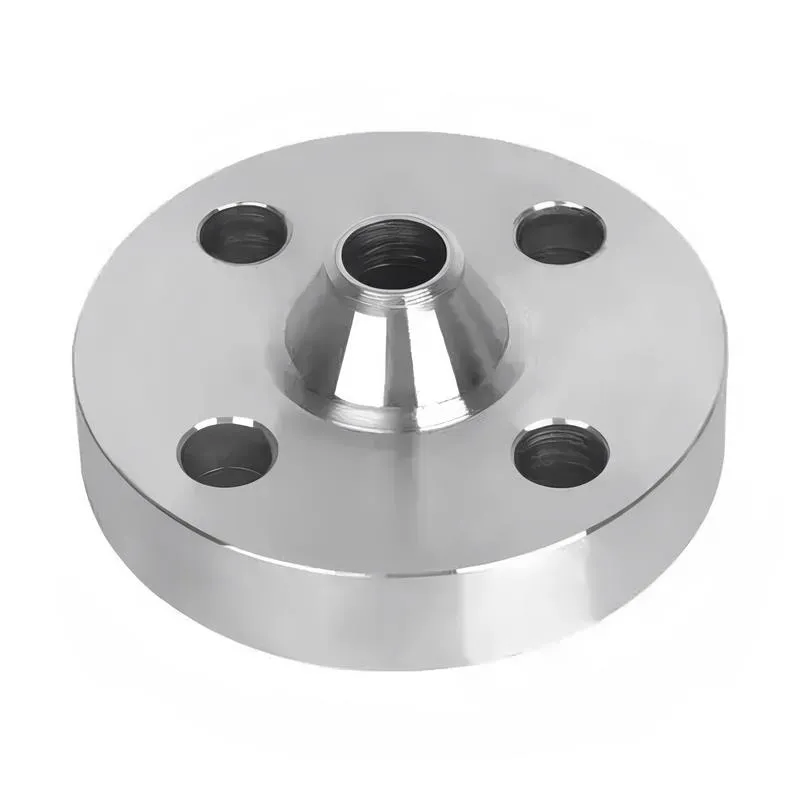
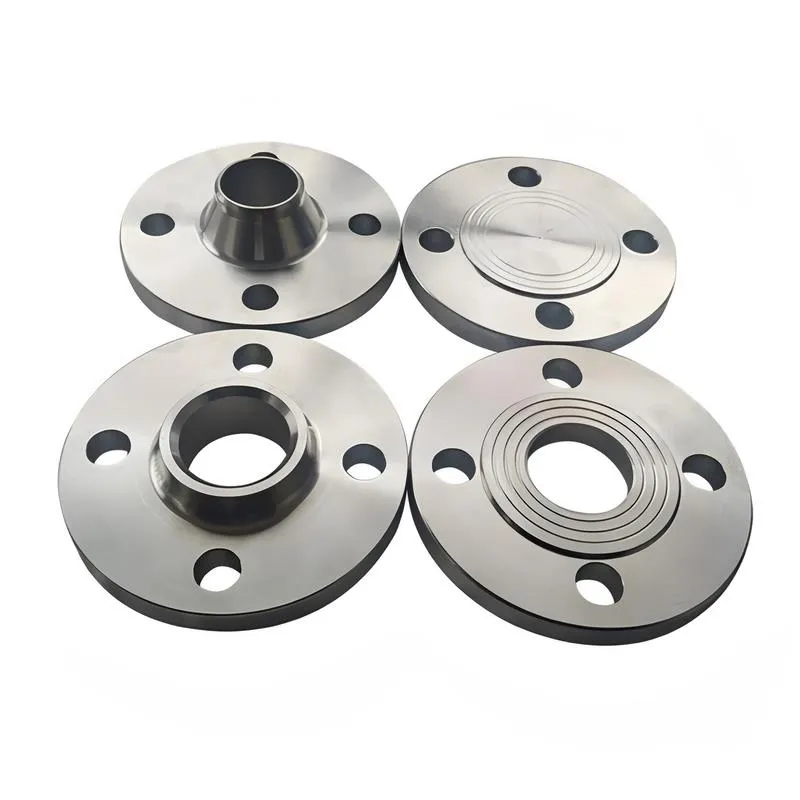
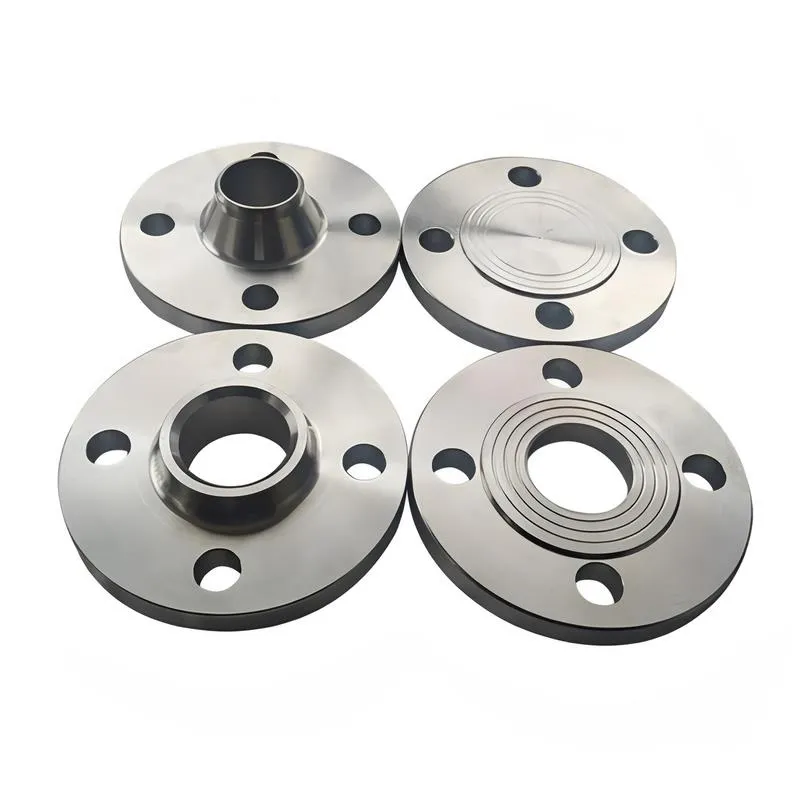
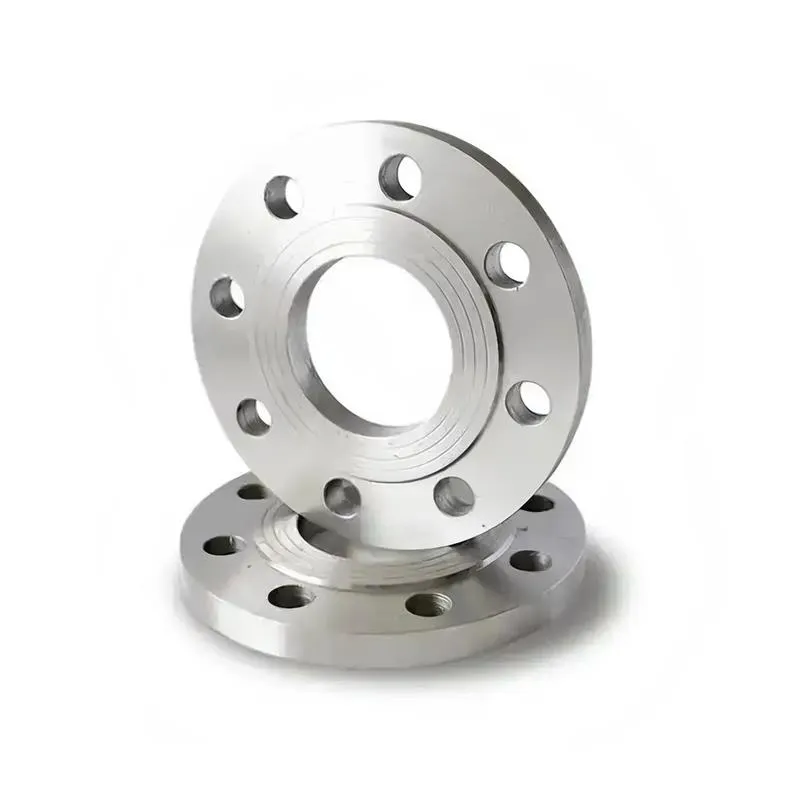
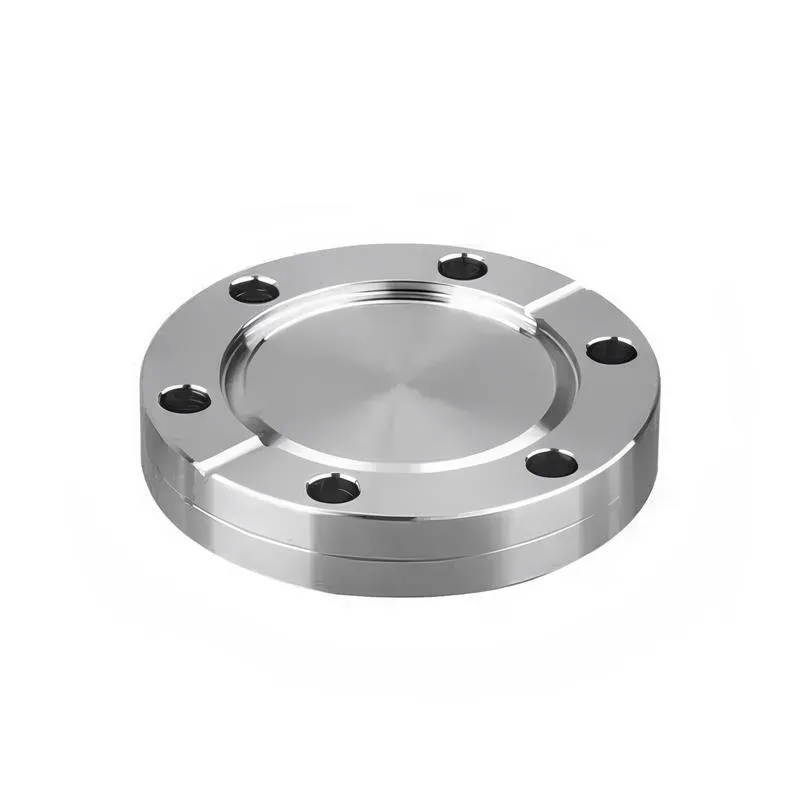
1,We Manufacturing processes are primarily classified into four types:
1:Forging,
2:Casting,
3:Cutting,
4:Rolling.
2,We can manufacture in accordance with these standards.
Standards:
GB Series (Chinese Standards), JB Series (Machinery Standards), HG Series (Chemical Industry Standards), ASME B16.5 (American Standards), BS4504 (British Standards), DIN (German Standards), and JIS (Japanese Standards).
Internationally, there are two primary systems of pipe flange standards: the European system, represented by the German DIN standards (including those of the former Soviet Union), and the American system, represented by the US ANSI pipe flange standards. Other common standards include: the Chinese Ministry of Machinery Industry standards (JB series), the Ministry of Chemical Industry standards (HG series), the Chinese National Standard *GB/T 9112–9124-2010 Steel Pipe Flanges*, as well as US standards (ASME B16.5), British standards (BS4504), German standards (DIN), Japanese standards (JIS), and marine standards (CBM), among others.
The nominal pressure ratings for the PN series are designated by "PN" and comprise the following nine levels: PN2.5, PN6, PN10, PN16, PN25, PN40, PN63, PN100, and PN160.
The nominal pressure ratings for the Class series are designated by "Class" and comprise the following six levels: Class150, Class300, Class600, Class900, Class1500, and Class2500.
Flange Classification
1. **According to Chemical Industry Standards:** Flanges are classified as follows:
Plate Flat Welding Flange (PL), Necked Flat Welding Flange (SO), Necked Butt Welding Flange (WN), Integral Flange (IF), Socket Welding Flange (SW), Threaded Flange (Th), Butt Welding Ring Loose Flange (PJ/SE), Blind Flange (BL), Flat Welding Ring Loose Flange (PJ/PJ), and Lined Blind Flange (BL(s)).
2. **According to Petrochemical (SH) Industry Standards:** Flanges are classified as follows:
Threaded Flange (PL), Butt Welding Flange (WN), Flat Welding Flange (SO), Socket Welding Flange (SW), Loose Flange (LJ), and Blind Flange (no specific designation).
3. **According to Machinery (JB) Industry Standards:** Flanges are classified as follows:
Integral Flange, Butt Welding Flange, Plate Flat Welding Flange, Butt Welding Ring Plate Loose Flange, Flat Welding Ring Plate Loose Flange, Lap Joint Ring Plate Loose Flange, and Blind Flange.
4. **According to Connection Method/Type:** Flanges are classified as follows:
Plate Flat Welding Flange, Necked Flat Welding Flange, Necked Butt Welding Flange, Socket Welding Flange, Threaded Flange, Blind Flange, Necked Butt Welding Ring Loose Flange, Flat Welding Ring Loose Flange, Ring-Type Joint (RTJ) Flange and Blind Flange, Large-Diameter Plate Flange, Large-Diameter High-Neck Flange, Figure-8 Blind Plate, Butt Welding Ring Loose Flange, etc.
5. **According to the Component Being Connected:** Flanges can be classified into Vessel Flanges and Pipe Flanges.
6. **According to Structural Type:** Flanges include Integral Flanges, Threaded Flanges, Flat Welding Flanges, Butt Welding Flanges, Lap Joint (Loose/Swivel) Flanges, and Blind Flanges.
A flange—also referred to as a flange plate or rim—is a component used to connect shafts to one another, or, more commonly, to join the ends of pipes. Flanges are also utilized at the inlet and outlet ports of equipment to facilitate connections between two devices—for instance, the flange on a speed reducer. A "flange connection" or "flanged joint" refers to a detachable joint assembly comprising three interconnected elements—a flange, a gasket, and bolts—that together form a sealed structural unit. In the context of piping systems, a "pipe flange" specifically denotes a flange used for plumbing within the installation; when applied to equipment, it refers to the inlet or outlet flange of that specific device. Flanges feature a series of holes through which bolts are inserted to securely fasten the two flanges together, while a gasket placed between the flanges ensures a leak-proof seal. Flanges are broadly categorized into three types: threaded (screw-in) flanges, welded flanges, and clamp-type flanges. Flanges are invariably used in pairs; threaded flanges are suitable for low-pressure piping applications, whereas welded flanges are required for systems operating at pressures exceeding 4 kilograms per square centimeter. A sealing gasket is inserted between the two flange plates, which are then firmly secured using bolts. The thickness of a flange—as well as the specifications of the bolts used to fasten it—vary depending on the specific pressure rating required for the application. When connecting equipment such as water pumps or valves to piping systems, the corresponding connection points on these devices are often manufactured in the shape of a matching flange; this method of attachment is also referred to as a "flange connection." Generally, any connecting component that utilizes bolts to join and seal the perimeters of two flat surfaces—such as the joints in ventilation ducts—is termed a "flange"; such components may collectively be classified as "flange-type parts." However, since such a connection often constitutes merely a *portion* of a larger device—for instance, the interface between a flange and a water pump—it would be inappropriate to classify the entire water pump itself as a "flange-type part." Conversely, smaller components—such as valves—that feature such flanged interfaces may indeed be appropriately categorized as "flange-type parts."
-:-
For detailed product information, please contact sales.
-:
Bohler-Uddeholm UDDEHOLM Carmo Granshots Tool Steel Flange Foundry Meltstock Product Information
-:-
For detailed product information, please contact sales.
-:
Bohler-Uddeholm UDDEHOLM Carmo Granshots Tool Steel Flange Foundry Meltstock Synonyms
-:-
For detailed product information, please contact sales.
-:
Bohler-Uddeholm UDDEHOLM Carmo Granshots Tool Steel Foundry Meltstock Product Information
-:-
For detailed product information, please contact sales.
-:
# **Böhler-Uddeholm UDDEHOLM Carmo Granshots Tool Steel Foundry Meltstock**
## **Product Overview**
**UDDEHOLM Carmo Granshots** represents a specialized category of **pre-alloyed, granular tool steel feedstock** specifically engineered for foundry casting applications. Unlike conventional bar or block forms of tool steel, Carmo Granshots are produced as carefully controlled **spherical or granular particles** with precisely defined chemical compositions, designed to be used as the primary charge material in **tool steel casting operations**. This product enables foundries and specialized manufacturers to produce large, complex, or near-net-shape tooling components (such as plastic injection mold bases, die-casting frames, and large forming dies) through casting processes, offering significant advantages in material utilization, design freedom, and production economics compared to machining from solid forged blocks.
---
## **1. Key Characteristics & Advantages**
* **Controlled Chemistry:** Each grade is produced with exacting chemical specifications, ensuring predictable final properties in the cast component.
* **Superior Melt Consistency:** The granular form promotes faster, more uniform melting with reduced oxidation and slag formation compared to mixed scrap or irregular solids.
* **High Purity:** Manufactured from selected raw materials with low levels of impurities (S, P, gases), resulting in cleaner castings with improved mechanical properties.
* **Improved Yield & Efficiency:** The consistent size and shape minimize furnace losses, improve charge density, and optimize alloy recovery.
* **Design Flexibility:** Enables the economic production of very large or integrally complex tooling components that would be prohibitively expensive or impossible to produce by forging and machining.
* **Tailored Microstructure:** When combined with appropriate foundry practices (gating, risering, heat treatment), it can yield a homogeneous and fine microstructure suitable for demanding tooling applications.
---
## **2. Available Grades & Typical Chemical Composition (Weight %)**
Carmo Granshots are offered in a range of standard and modified tool steel grades. Two primary categories include:
**A. Hot Work Tool Steel Grades**
*Based on AISI H13 (DIN 1.2344)*
| Element | C | Cr | Mo | V | Si |
| :--- | :---: | :---: | :---: | :---: | :---: |
| **Content** | 0.37-0.42 | 4.80-5.50 | 1.20-1.50 | 0.90-1.10 | 0.90-1.10 |
**B. Plastic Mold Steel Grades**
*Modified P20 Type (DIN 1.2311/1.2738)*
| Element | C | Cr | Ni | Mo | Mn |
| :--- | :---: | :---: | :---: | :---: | :---: |
| **Content** | ~0.40 | ~1.90 | ~1.00* | ~0.20 | ~1.50 |
*Nickel content varies between standard P20 (1.2311) and P20+Ni (1.2738) grades.
**Note:** Specific compositions for other grades (e.g., H11, D2, etc.) are available upon request, tailored to the foundry's end-use requirements.
---
## **3. Physical & Product Specifications**
### **Physical Form & Properties:**
* **Form:** Spherical or irregular granules.
* **Size Distribution:** Typically supplied in controlled size fractions (e.g., 5-30mm) to optimize packing and melting dynamics.
* **Melting Point:** Varies by grade; ~1420-1510°C for common hot work and mold steel grades.
* **Density (Bulk):** ~4.0 - 4.5 g/cm³ (varies with size distribution and packing).
* **Metallurgical State:** Pre-alloyed, often supplied in annealed or as-cast granular form.
### **Foundry Process Data:**
* **Recommended Melting Practice:** Electric Arc Furnace (EAF) or Induction Melting under protective slag or atmosphere.
* **Mold Technology:** Suitable for sand casting (resin-bonded, furan), ceramic mold (lost wax/foam), or large investment casting processes.
* **Typical Casting Yield:** >65% (significantly higher than from forged blocks when producing complex shapes).
---
## **4. Primary Applications & Casting Outcomes**
Carmo Granshots are used to cast large, heavy, or complex tooling components where traditional machining from solid is impractical.
* **Plastic Injection Mold Bases & Frames:** Very large mold bases for automotive, appliance, and pallet molds.
* **Die-Casting Machine Frames & Bolster Plates:** Massive support structures for aluminum and magnesium die-casting machines.
* **Large Hot Work & Forging Die Blocks:** For open-die forging or large press tools.
* **Glass Molding Machinery Components:** Furnace tools and mold carriers.
* **Specialty Rolls & Cylinders:** For the paper, steel, and plastics industries.
* **Near-Net-Shape Pre-forms:** For subsequent forging or machining into final tool shapes, improving material yield.
**Final Component Properties:** After casting, the components **must undergo a full heat treatment cycle** (normalizing, hardening, and tempering) to develop the required microstructure and mechanical properties (hardness, toughness, etc.) appropriate for the intended tool steel grade and application.
---
## **5. Relevant International Standards & Quality Assurance**
Carmo Granshots are designed to meet the chemical requirements of standard tool steel grades, enabling foundries to produce castings compliant with international norms.
| Category | Standard Grade Target | Casting Standard Reference | Note |
| :--- | :--- | :--- | :--- |
| **Hot Work Steel** | AISI H13 / DIN 1.2344 | ASTM A597 / EN ISO 4957 | Castings are heat treated to meet equivalent mechanical properties. |
| **Plastic Mold Steel** | AISI P20 Modified / DIN 1.2738 | Proprietary Foundry Specs | Common for large mold bases; properties are developed post-casting via heat treatment. |
| **General Quality** | N/A | Internal Uddeholm Specs | Each batch is certified with full chemical analysis (spectrographic) and often with hydrogen/nitrogen/oxygen gas analysis. |
**Important:** The final casting's properties are a function of **three critical factors**: 1) The meltstock chemistry (Carmo Granshots), 2) The foundry's casting process and quality controls (gating, solidification control), and 3) The post-casting heat treatment. Carmo Granshots guarantee the first factor.
---
## **6. Processing & Foundry Guidelines**
* **Storage & Handling:** Store in a dry environment. The granular form is free-flowing and suitable for automated charging systems.
* **Charge Make-up:** Can be used as 100% of the metallic charge or blended with other clean, segregated revert material of known chemistry.
* **Melting:** Use standard melting practices for alloy steels. The uniform composition promotes stable arc/induction conditions and predictable slag chemistry.
* **Deoxidation & Refining:** Standard ladle refining practices apply. The low gas content of the feedstock simplifies degassing operations.
* **Pouring & Solidification:** Requires careful gating and risering design typical for heavy-section alloy steel castings to minimize segregation and shrinkage defects.
* **Heat Treatment (Post-Casting):** **Mandatory.**
1. **Stress Relieving/Normalizing:** To homogenize the as-cast structure.
2. **Austenitizing & Quenching:** According to the specific grade's protocol.
3. **Multiple Tempering:** To achieve desired hardness and toughness, and ensure transformation of retained austenite.
* **Machining:** Cast and heat-treated components are machined using standard tool steel practices.
---
## **7. Conclusion**
**UDDEHOLM Carmo Granshots** is not a finished tool steel product, but a **high-integrity engineered feedstock** that unlocks the manufacturing potential of **tool steel casting**. It provides foundries with a reliable, high-quality raw material to produce large-scale tooling components that are economically unfeasible through traditional wrought routes.
By offering consistency, purity, and alloy accuracy in a convenient granular form, it allows manufacturers to leverage the design and cost benefits of casting for the tool and die industry. For producers of very large molds, dies, and industrial tooling components, specifying Carmo Granshots as the meltstock ensures the foundational material quality necessary to achieve successful, high-performance cast tools after proper foundry processing and heat treatment.
-:-
For detailed product information, please contact sales.
-:
Bohler-Uddeholm UDDEHOLM Carmo Granshots Tool Steel Foundry Meltstock Specification
Dimensions
Size:
Diameter 20-1000 mm Length <6894 mm
Size:We can customized as required
Standard:
Per your request or drawing
We can customized as required
Properties(Theoretical)
Chemical Composition
-:-
For detailed product information, please contact sales.
-:
Bohler-Uddeholm UDDEHOLM Carmo Granshots Tool Steel Foundry Meltstock Properties
-:-
For detailed product information, please contact sales.
-:
Applications of Bohler-Uddeholm UDDEHOLM Carmo Granshots Tool Steel Flange Foundry Meltstock
-:-
For detailed product information, please contact sales.
-:
Chemical Identifiers Bohler-Uddeholm UDDEHOLM Carmo Granshots Tool Steel Flange Foundry Meltstock
-:-
For detailed product information, please contact sales.
-:
Packing of Bohler-Uddeholm UDDEHOLM Carmo Granshots Tool Steel Flange Foundry Meltstock
-:-
For detailed product information, please contact sales.
-:
Standard Packing:
-:-
For detailed product information, please contact sales.
-:
Typical bulk packaging includes palletized plastic 5 gallon/25 kg. pails, fiber and Steel Flange drums to 1 ton super sacks in full container (FCL) or truck load (T/L) quantities. Research and sample quantities and hygroscopic, oxidizing or other air sensitive materials may be packaged under argon or vacuum. Solutions are packaged in polypropylene, plastic or glass jars up to palletized 3365 gallon liquid totes Special package is available on request. E FORUs’ is carefully handled to minimize damage during storage and transportation and to preserve the quality of our products in their original condition