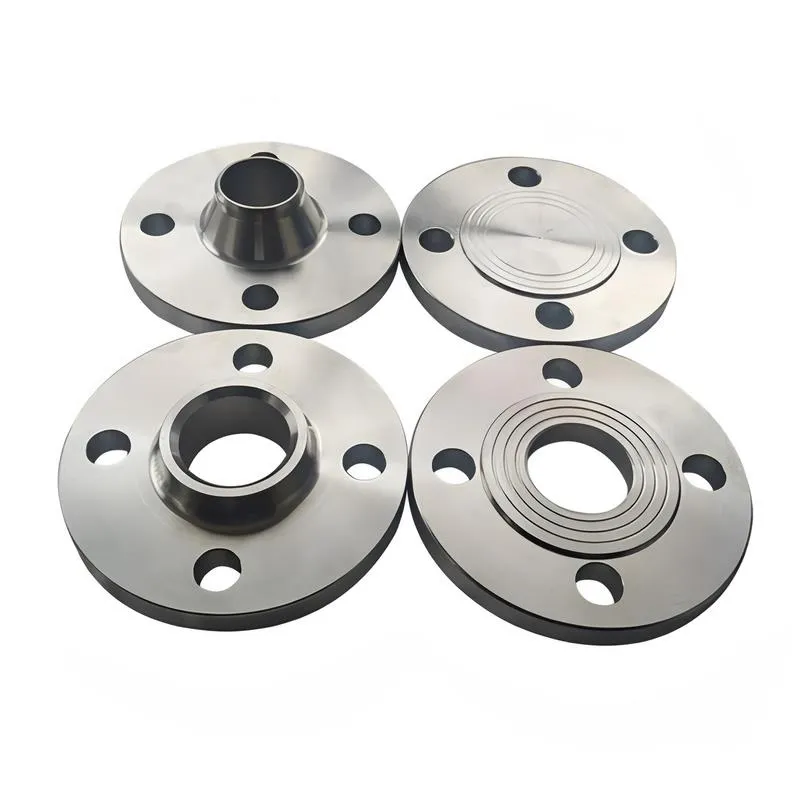
1,We Manufacturing processes are primarily classified into four types:
1:Forging,
2:Casting,
3:Cutting,
4:Rolling.
2,We can manufacture in accordance with these standards.
Standards:
GB Series (Chinese Standards), JB Series (Machinery Standards), HG Series (Chemical Industry Standards), ASME B16.5 (American Standards), BS4504 (British Standards), DIN (German Standards), and JIS (Japanese Standards).
Internationally, there are two primary systems of pipe flange standards: the European system, represented by the German DIN standards (including those of the former Soviet Union), and the American system, represented by the US ANSI pipe flange standards. Other common standards include: the Chinese Ministry of Machinery Industry standards (JB series), the Ministry of Chemical Industry standards (HG series), the Chinese National Standard *GB/T 9112–9124-2010 Steel Pipe Flanges*, as well as US standards (ASME B16.5), British standards (BS4504), German standards (DIN), Japanese standards (JIS), and marine standards (CBM), among others.
The nominal pressure ratings for the PN series are designated by "PN" and comprise the following nine levels: PN2.5, PN6, PN10, PN16, PN25, PN40, PN63, PN100, and PN160.
The nominal pressure ratings for the Class series are designated by "Class" and comprise the following six levels: Class150, Class300, Class600, Class900, Class1500, and Class2500.
Flange Classification
1. **According to Chemical Industry Standards:** Flanges are classified as follows:
Plate Flat Welding Flange (PL), Necked Flat Welding Flange (SO), Necked Butt Welding Flange (WN), Integral Flange (IF), Socket Welding Flange (SW), Threaded Flange (Th), Butt Welding Ring Loose Flange (PJ/SE), Blind Flange (BL), Flat Welding Ring Loose Flange (PJ/PJ), and Lined Blind Flange (BL(s)).
2. **According to Petrochemical (SH) Industry Standards:** Flanges are classified as follows:
Threaded Flange (PL), Butt Welding Flange (WN), Flat Welding Flange (SO), Socket Welding Flange (SW), Loose Flange (LJ), and Blind Flange (no specific designation).
3. **According to Machinery (JB) Industry Standards:** Flanges are classified as follows:
Integral Flange, Butt Welding Flange, Plate Flat Welding Flange, Butt Welding Ring Plate Loose Flange, Flat Welding Ring Plate Loose Flange, Lap Joint Ring Plate Loose Flange, and Blind Flange.
4. **According to Connection Method/Type:** Flanges are classified as follows:
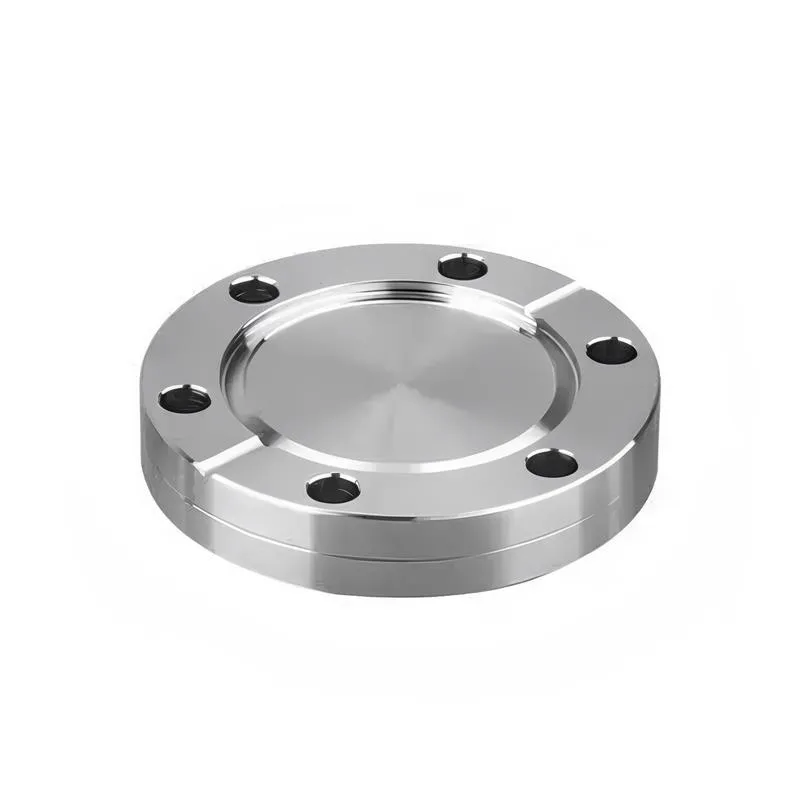
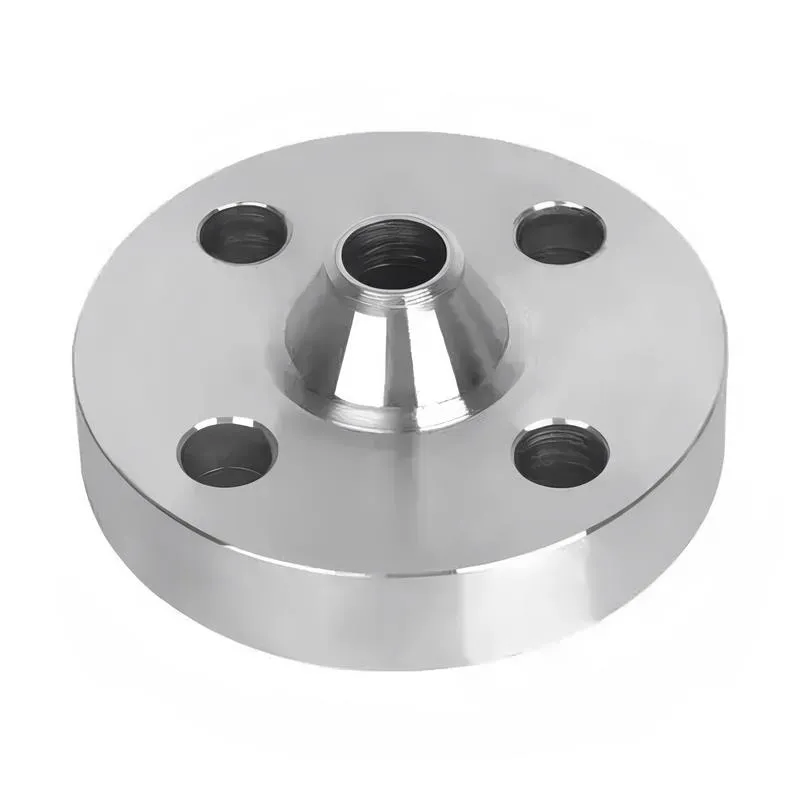
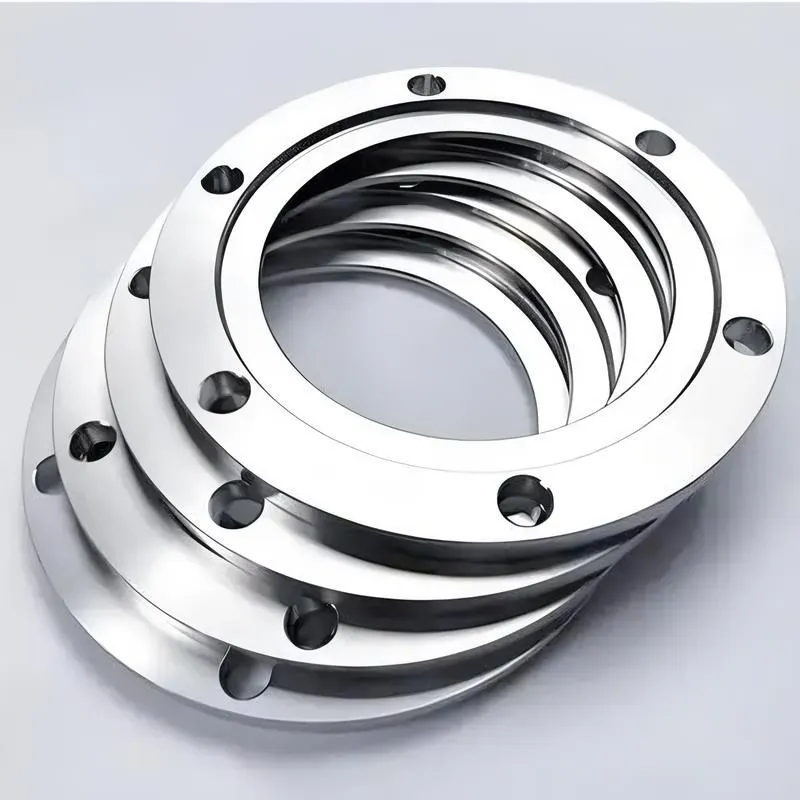
Plate Flat Welding Flange, Necked Flat Welding Flange, Necked Butt Welding Flange, Socket Welding Flange, Threaded Flange, Blind Flange, Necked Butt Welding Ring Loose Flange, Flat Welding Ring Loose Flange, Ring-Type Joint (RTJ) Flange and Blind Flange, Large-Diameter Plate Flange, Large-Diameter High-Neck Flange, Figure-8 Blind Plate, Butt Welding Ring Loose Flange, etc.
5. **According to the Component Being Connected:** Flanges can be classified into Vessel Flanges and Pipe Flanges.
6. **According to Structural Type:** Flanges include Integral Flanges, Threaded Flanges, Flat Welding Flanges, Butt Welding Flanges, Lap Joint (Loose/Swivel) Flanges, and Blind Flanges.
A flange—also referred to as a flange plate or rim—is a component used to connect shafts to one another, or, more commonly, to join the ends of pipes. Flanges are also utilized at the inlet and outlet ports of equipment to facilitate connections between two devices—for instance, the flange on a speed reducer. A "flange connection" or "flanged joint" refers to a detachable joint assembly comprising three interconnected elements—a flange, a gasket, and bolts—that together form a sealed structural unit. In the context of piping systems, a "pipe flange" specifically denotes a flange used for plumbing within the installation; when applied to equipment, it refers to the inlet or outlet flange of that specific device. Flanges feature a series of holes through which bolts are inserted to securely fasten the two flanges together, while a gasket placed between the flanges ensures a leak-proof seal. Flanges are broadly categorized into three types: threaded (screw-in) flanges, welded flanges, and clamp-type flanges. Flanges are invariably used in pairs; threaded flanges are suitable for low-pressure piping applications, whereas welded flanges are required for systems operating at pressures exceeding 4 kilograms per square centimeter. A sealing gasket is inserted between the two flange plates, which are then firmly secured using bolts. The thickness of a flange—as well as the specifications of the bolts used to fasten it—vary depending on the specific pressure rating required for the application. When connecting equipment such as water pumps or valves to piping systems, the corresponding connection points on these devices are often manufactured in the shape of a matching flange; this method of attachment is also referred to as a "flange connection." Generally, any connecting component that utilizes bolts to join and seal the perimeters of two flat surfaces—such as the joints in ventilation ducts—is termed a "flange"; such components may collectively be classified as "flange-type parts." However, since such a connection often constitutes merely a *portion* of a larger device—for instance, the interface between a flange and a water pump—it would be inappropriate to classify the entire water pump itself as a "flange-type part." Conversely, smaller components—such as valves—that feature such flanged interfaces may indeed be appropriately categorized as "flange-type parts."
-:-
For detailed product information, please contact sales.
-:
Carlson 2205 (UNS S32205) Duplex Stainless Steel Flange Product Information
-:-
For detailed product information, please contact sales.
-:
Carlson 2205 (UNS S32205) Duplex Stainless Steel Flange Synonyms
-:-
For detailed product information, please contact sales.
-:
Carlson 2205 (UNS S32205) Duplex Stainless Steel Product Information
-:-
For detailed product information, please contact sales.
-:
**Product Name:** Carlson 2205 Duplex Stainless Steel (UNS S32205)
**Introduction:**
Carlson 2205 (UNS S32205) represents the **benchmark standard for duplex stainless steel performance**. This 22% chromium, 5% nickel, and molybdenum-nitrogen alloy possesses a balanced microstructure of approximately equal parts ferrite and austenite. It delivers an optimal combination of **exceptional strength, superior corrosion resistance, and excellent fabrication characteristics**. Specifically engineered to bridge the gap between standard austenitic steels (e.g., 316L) and higher-grade super duplex alloys, 2205 offers outstanding resistance to chloride stress corrosion cracking (SCC) and localized pitting/crevice corrosion, making it the most widely specified and trusted duplex grade globally.
**Key Features:**
* **Outstanding Strength:** Yield strength is **over double that of conventional 316L stainless steel**, enabling significant weight reduction and material savings in structural designs and pressure equipment.
* **Superior Corrosion Resistance:** Excellent and predictable resistance to chloride-induced stress corrosion cracking, pitting, and crevice corrosion, validated by its high Pitting Resistance Equivalent Number (PREN ≥ 34).
* **Excellent Fabricability:** Demonstrates good weldability and formability using industry-standard practices and appropriate duplex filler metals (e.g., ER2209).
* **Proven Cost Efficiency:** Provides a superior lifecycle cost compared to nickel alloys for many aggressive environments, offering the best value proposition in the duplex family.
---
**1. Chemical Composition (Typical Weight % - ASTM A240)**
The composition is precisely balanced to ensure optimal phase stability and property consistency.
| Element | Content (%) | Element | Content (%) |
| :------------- | :---------- | :------------- | :---------- |
| Chromium (Cr) | 22.0 - 23.0 | Nickel (Ni) | 4.5 - 6.5 |
| Molybdenum (Mo)| 3.0 - 3.5 | Nitrogen (N) | 0.14 - 0.20 |
| Manganese (Mn) | ≤ 2.00 | Copper (Cu) | ≤ 0.75* |
| Silicon (Si) | ≤ 1.00 | Carbon (C) | ≤ 0.030 |
| Phosphorus (P) | ≤ 0.030 | Sulfur (S) | ≤ 0.020 |
| **Iron (Fe)** | **Balance** | | |
***Note on UNS S31803:** UNS S32205 has tighter compositional controls, specifically **higher minimum contents for Molybdenum (3.0% vs. 2.5%) and Nitrogen (0.14% vs. 0.08%)**. This ensures consistently higher pitting resistance and is the preferred specification for critical applications. Carlson 2205 meets the premium S32205 specification.*
---
**2. Physical & Mechanical Properties (Typical at Room Temperature - Annealed Condition)**
| Property | Value / Range |
| :-------------------------------------------- | :-------------------------------- |
| Density | 7.80 g/cm³ |
| Melting Range | 1380 - 1445 °C |
| Specific Heat Capacity (0-100°C) | 500 J/kg·K |
| Thermal Conductivity (20°C) | 19 W/m·K |
| Coefficient of Thermal Expansion (20-100°C) | 13.7 x 10⁻⁶ /K |
| Modulus of Elasticity | 200 GPa |
| **Tensile Strength (Rm)** | **≥ 690 MPa** |
| **Yield Strength (Rp0.2)** | **≥ 485 MPa** |
| **Elongation (A in 50mm)** | **≥ 25 %** |
| Hardness (Brinell) | ≤ 293 HBW |
| **Pitting Resistance Equivalent (PREN)** | **PREN = %Cr + 3.3(%Mo) + 16(%N) ≥ 34** |
| **Impact Toughness (Charpy V-notch, min.)** | **≥ 100 J at -40°C** |
*The guaranteed high PREN and low-temperature toughness are key performance differentiators.*
---
**3. Product Forms & Applications**
**Available Product Forms:**
* Plate, Sheet, and Strip
* Seamless and Welded Pipe & Tubing (Process, Mechanical, Heat Exchanger)
* Bar, Rod, Wire, and Forgings
* Flanges, Fittings (ASME B16.9, B16.11), Fasteners, and Valves
**Primary Applications:**
* **Oil & Gas Industry:** Production tubing, flowlines, separators, heat exchangers, and pressure vessels in offshore, subsea, and sour (H₂S) service. **NACE MR0175/ISO 15156 compliant**.
* **Chemical & Petrochemical Processing:** Reactors, columns, tanks, and piping for chlorides, organic acids, and aggressive chemical media.
* **Pulp & Paper Industry:** Digester impregnation vessels, bleach plants, and liquor handling systems.
* **Marine & Offshore:** Seawater cooling systems, pumps, valves, and propeller shafts.
* **Desalination & Water Treatment:** High-pressure reverse osmosis (RO) membranes, piping, and pumps.
* **Chemical Tankers:** Cargo tanks and unloading systems.
* **Pollution Control:** Flue gas desulfurization (FGD) scrubbers and ducting.
* **Architecture, Building & Construction (ABC):** Structural components, façades, and bridges in corrosive coastal atmospheres.
---
**4. International Standards & Approvals**
UNS S32205 is a globally standardized premium duplex grade with wide acceptance.
| Standard Type | Standard Number & Designation | Notes |
| :------------------ | :--------------------------------------------------------------------------------------------------------------------------- | :-------------------------------------------------------------------- |
| **Unified Numbering System (UNS)** | **S32205** | The premium designation with guaranteed higher Mo and N minima. |
| **ASTM (USA)** | ASTM A240 (Plate/Sheet/Strip)
ASTM A790/A789 (Pipe & Tube)
ASTM A182 (Forgings & Fittings)
ASTM A276 (Bar) | The primary procurement standards; S32205 is now the dominant specification. |
| **EN / EURONORM (Europe)** | **1.4462** (Common material number) | Covers both S31803 and S32205; specific requirements are defined by the purchasing standard. |
| | EN 10088-2: Sheet/Plate
EN 10216-5: Seamless pressure tubes
EN 10253-4: Butt-welding fittings | |
| **NACE MR0175 / ISO 15156** | **Compliant** (for defined environmental limits) | Mandatory for sour service in oil & gas. Requires controlled hardness (typically ≤ 32 HRC). |
| **ASME Boiler & Pressure Vessel Code** | **Section II, Part A** (SA-240, SA-789, etc.) | Approved for pressure-retaining applications. |
| **Other Standards** | JIS G4304 / G4305 (Japan) - SUS 329J3L
GB/T 20878 (China) - 022Cr22Ni5Mo3N
AS 4677 (Australia) - 2205 | Widely adopted in national standards. |
**Important Technical & Procurement Note:**
For critical service, always specify **UNS S32205** over S31803 to guarantee the higher alloy content and consistent premium performance. Material must be supplied in the **solution annealed and quenched condition** to achieve the correct duplex microstructure. All fabrication, especially welding (using matching or over-alloyed consumables like ER2209), must follow qualified procedures to avoid the formation of detrimental secondary phases. Always require a **certified material test report (CMTR/MTR)** confirming compliance with the ordered specification.
-:-
For detailed product information, please contact sales.
-:
Carlson 2205 (UNS S32205) Duplex Stainless Steel Specification
Dimensions
Size:
Diameter 20-1000 mm Length <7272 mm
Size:We can customized as required
Standard:
Per your request or drawing
We can customized as required
Properties(Theoretical)
Chemical Composition
-:-
For detailed product information, please contact sales.
-:
Carlson 2205 (UNS S32205) Duplex Stainless Steel Properties
-:-
For detailed product information, please contact sales.
-:
Applications of Carlson 2205 (UNS S32205) Duplex Stainless Steel Flange
-:-
For detailed product information, please contact sales.
-:
Chemical Identifiers Carlson 2205 (UNS S32205) Duplex Stainless Steel Flange
-:-
For detailed product information, please contact sales.
-:
Packing of Carlson 2205 (UNS S32205) Duplex Stainless Steel Flange
-:-
For detailed product information, please contact sales.
-:
Standard Packing:
-:-
For detailed product information, please contact sales.
-:
Typical bulk packaging includes palletized plastic 5 gallon/25 kg. pails, fiber and Steel Flange drums to 1 ton super sacks in full container (FCL) or truck load (T/L) quantities. Research and sample quantities and hygroscopic, oxidizing or other air sensitive materials may be packaged under argon or vacuum. Solutions are packaged in polypropylene, plastic or glass jars up to palletized 3743 gallon liquid totes Special package is available on request. E FORUs’ is carefully handled to minimize damage during storage and transportation and to preserve the quality of our products in their original condition