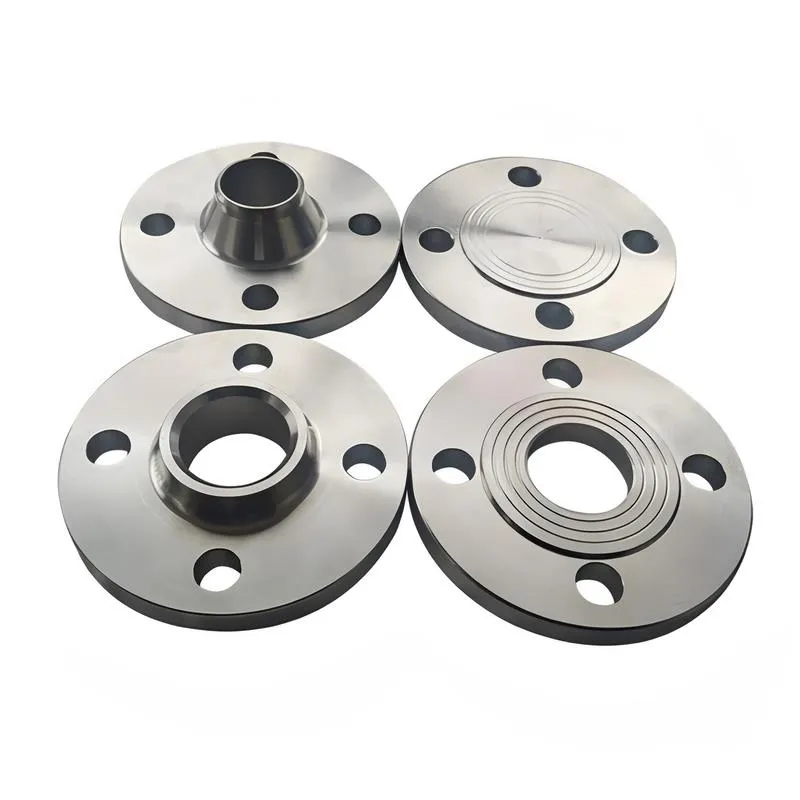
1,We Manufacturing processes are primarily classified into four types:
1:Forging,
2:Casting,
3:Cutting,
4:Rolling.
2,We can manufacture in accordance with these standards.
Standards:
GB Series (Chinese Standards), JB Series (Machinery Standards), HG Series (Chemical Industry Standards), ASME B16.5 (American Standards), BS4504 (British Standards), DIN (German Standards), and JIS (Japanese Standards).
Internationally, there are two primary systems of pipe flange standards: the European system, represented by the German DIN standards (including those of the former Soviet Union), and the American system, represented by the US ANSI pipe flange standards. Other common standards include: the Chinese Ministry of Machinery Industry standards (JB series), the Ministry of Chemical Industry standards (HG series), the Chinese National Standard *GB/T 9112–9124-2010 Steel Pipe Flanges*, as well as US standards (ASME B16.5), British standards (BS4504), German standards (DIN), Japanese standards (JIS), and marine standards (CBM), among others.
The nominal pressure ratings for the PN series are designated by "PN" and comprise the following nine levels: PN2.5, PN6, PN10, PN16, PN25, PN40, PN63, PN100, and PN160.
The nominal pressure ratings for the Class series are designated by "Class" and comprise the following six levels: Class150, Class300, Class600, Class900, Class1500, and Class2500.
Flange Classification
1. **According to Chemical Industry Standards:** Flanges are classified as follows:
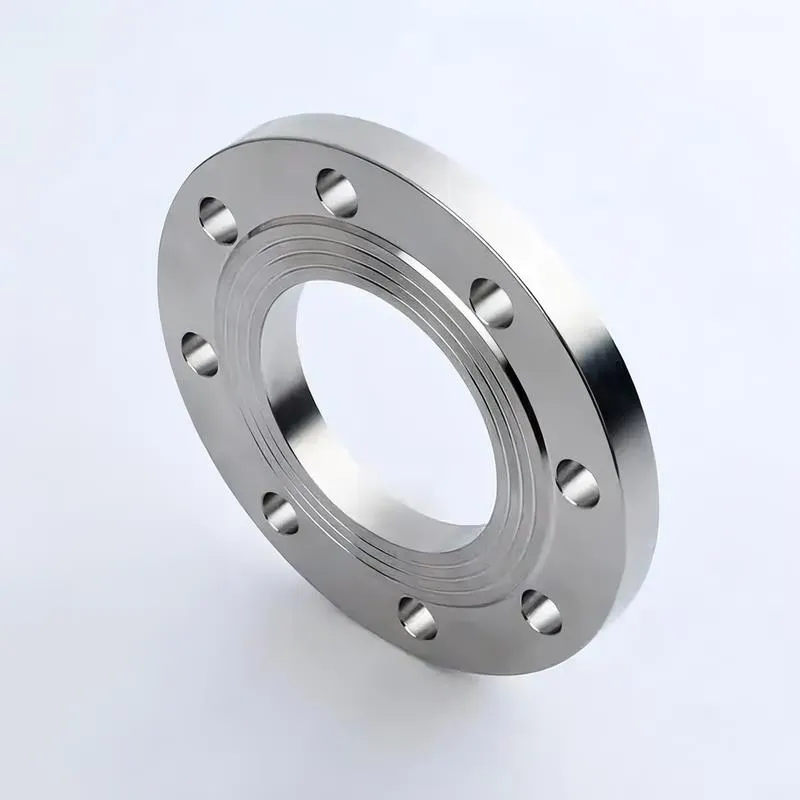
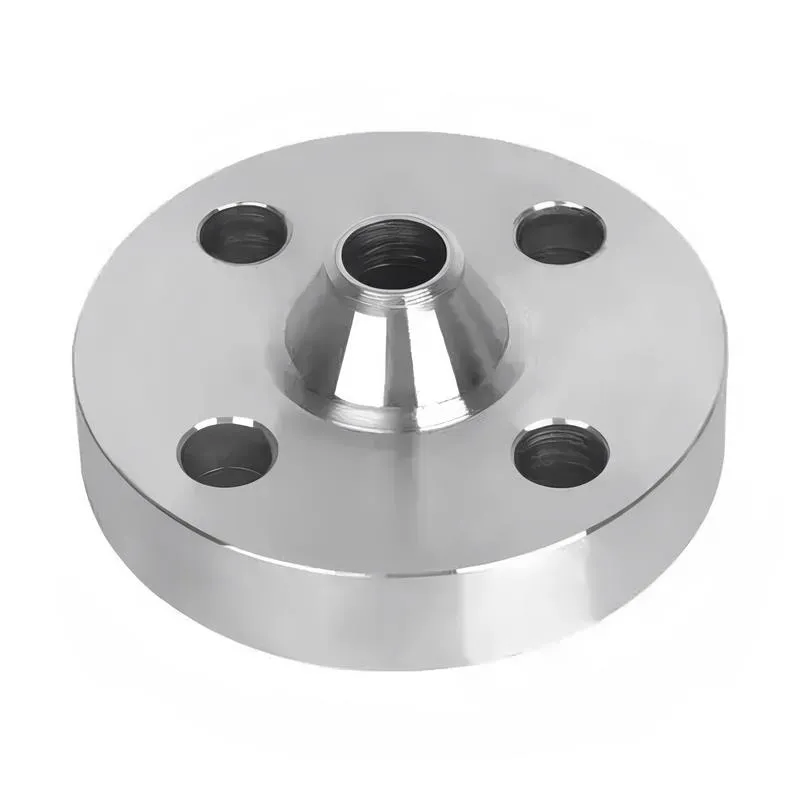
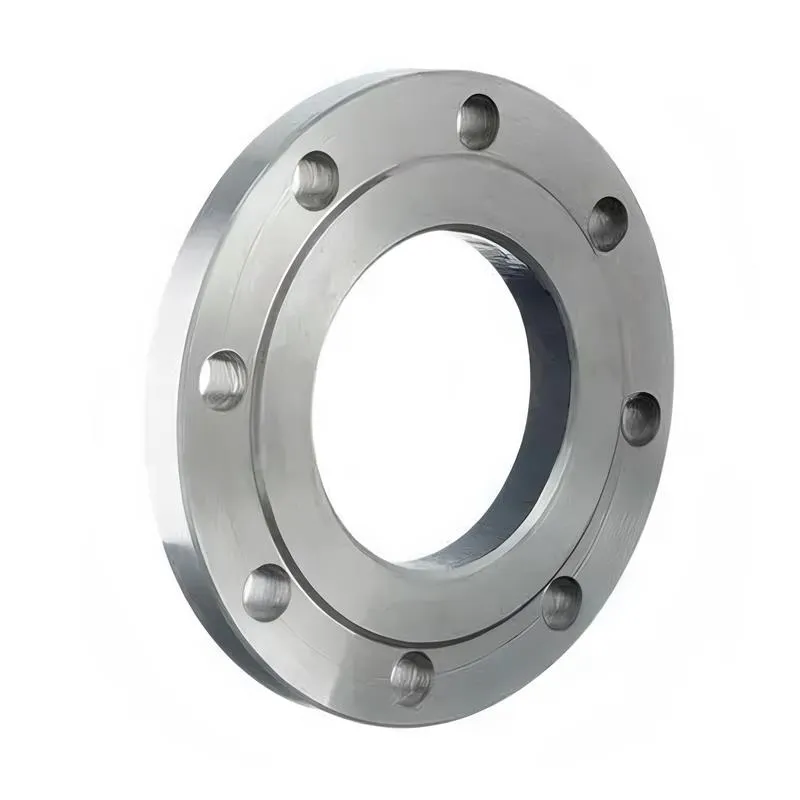
Plate Flat Welding Flange (PL), Necked Flat Welding Flange (SO), Necked Butt Welding Flange (WN), Integral Flange (IF), Socket Welding Flange (SW), Threaded Flange (Th), Butt Welding Ring Loose Flange (PJ/SE), Blind Flange (BL), Flat Welding Ring Loose Flange (PJ/PJ), and Lined Blind Flange (BL(s)).
2. **According to Petrochemical (SH) Industry Standards:** Flanges are classified as follows:
Threaded Flange (PL), Butt Welding Flange (WN), Flat Welding Flange (SO), Socket Welding Flange (SW), Loose Flange (LJ), and Blind Flange (no specific designation).
3. **According to Machinery (JB) Industry Standards:** Flanges are classified as follows:
Integral Flange, Butt Welding Flange, Plate Flat Welding Flange, Butt Welding Ring Plate Loose Flange, Flat Welding Ring Plate Loose Flange, Lap Joint Ring Plate Loose Flange, and Blind Flange.
4. **According to Connection Method/Type:** Flanges are classified as follows:
Plate Flat Welding Flange, Necked Flat Welding Flange, Necked Butt Welding Flange, Socket Welding Flange, Threaded Flange, Blind Flange, Necked Butt Welding Ring Loose Flange, Flat Welding Ring Loose Flange, Ring-Type Joint (RTJ) Flange and Blind Flange, Large-Diameter Plate Flange, Large-Diameter High-Neck Flange, Figure-8 Blind Plate, Butt Welding Ring Loose Flange, etc.
5. **According to the Component Being Connected:** Flanges can be classified into Vessel Flanges and Pipe Flanges.
6. **According to Structural Type:** Flanges include Integral Flanges, Threaded Flanges, Flat Welding Flanges, Butt Welding Flanges, Lap Joint (Loose/Swivel) Flanges, and Blind Flanges.
A flange—also referred to as a flange plate or rim—is a component used to connect shafts to one another, or, more commonly, to join the ends of pipes. Flanges are also utilized at the inlet and outlet ports of equipment to facilitate connections between two devices—for instance, the flange on a speed reducer. A "flange connection" or "flanged joint" refers to a detachable joint assembly comprising three interconnected elements—a flange, a gasket, and bolts—that together form a sealed structural unit. In the context of piping systems, a "pipe flange" specifically denotes a flange used for plumbing within the installation; when applied to equipment, it refers to the inlet or outlet flange of that specific device. Flanges feature a series of holes through which bolts are inserted to securely fasten the two flanges together, while a gasket placed between the flanges ensures a leak-proof seal. Flanges are broadly categorized into three types: threaded (screw-in) flanges, welded flanges, and clamp-type flanges. Flanges are invariably used in pairs; threaded flanges are suitable for low-pressure piping applications, whereas welded flanges are required for systems operating at pressures exceeding 4 kilograms per square centimeter. A sealing gasket is inserted between the two flange plates, which are then firmly secured using bolts. The thickness of a flange—as well as the specifications of the bolts used to fasten it—vary depending on the specific pressure rating required for the application. When connecting equipment such as water pumps or valves to piping systems, the corresponding connection points on these devices are often manufactured in the shape of a matching flange; this method of attachment is also referred to as a "flange connection." Generally, any connecting component that utilizes bolts to join and seal the perimeters of two flat surfaces—such as the joints in ventilation ducts—is termed a "flange"; such components may collectively be classified as "flange-type parts." However, since such a connection often constitutes merely a *portion* of a larger device—for instance, the interface between a flange and a water pump—it would be inappropriate to classify the entire water pump itself as a "flange-type part." Conversely, smaller components—such as valves—that feature such flanged interfaces may indeed be appropriately categorized as "flange-type parts."
-:-
For detailed product information, please contact sales.
-:
EN S355JR High Manganese, Structural, Hot Rolled, Base Steel Flange Product Information
-:-
For detailed product information, please contact sales.
-:
EN S355JR High Manganese, Structural, Hot Rolled, Base Steel Flange Synonyms
-:-
For detailed product information, please contact sales.
-:
EN S355JR High Manganese, Structural, Hot Rolled, Base Steel Product Information
-:-
For detailed product information, please contact sales.
-:
# **Product Name:** EN S355JR Structural Steel, Hot Rolled, Base Material
**Overview**
EN S355JR is the **standard non-alloy structural steel** within the S355 strength category, defined as a **base material** under the EN 10025-2 standard. The "JR" designation indicates the **basic quality level**, with impact properties verified at room temperature (+20°C). It is a fundamental, cost-effective engineering material offering a balanced combination of high strength, excellent weldability, and good formability in the hot-rolled condition. It is critical to clarify that **S355JR is NOT classified as a "High Manganese" steel**; it is a standard carbon-manganese steel with typical manganese levels for its strength class. The term "High Manganese" is a persistent misnomer and should not be applied to this standard base grade.
**Key International Standards**
* **Primary Standard:** **EN 10025-2:2019** - Hot rolled products of structural steels - Part 2: Technical delivery conditions for non-alloy structural steels.
* **Grade & Quality Designation:** **S355JR**
* **S:** Structural Steel.
* **355:** Minimum yield strength (ReH) in MPa for nominal thickness **≤ 16 mm**. This value decreases for greater thicknesses as per standard tables.
* **JR:** Basic quality designation. **'J'** signifies the steel is impact tested, and **'R'** denotes the test temperature is **Room Temperature (+20°C)**.
* **Clarification on "High Manganese":** This is an **incorrect and misleading classification**. The permissible manganese content for S355JR (≤1.60%) is the standard upper limit for this strength class and is not considered "high" in a technical or specialized sense. Its properties are those of a general-purpose base steel.
* **Common International Equivalents:**
* **ASTM:** **A36** (general-purpose, though strength is lower) or **A572 Grade 50** (closer in strength intent).
* **JIS:** **SM490A**.
* **GB/T:** **Q355B**.
* **ISO:** **ISO 630-2:2021, Grade E355**.
**Chemical Composition (Ladle Analysis, % by weight, maximum values per EN 10025-2)**
Standard composition designed for manufacturability and cost-efficiency at the S355 strength level.
* **Carbon (C):** ≤ **0.22%**
* **Manganese (Mn):** ≤ **1.60%** (This is the standard upper limit for the S355 class, not a specially elevated "high" level).
* **Phosphorus (P):** ≤ **0.040%**
* **Sulphur (S):** ≤ **0.040%**
* **Silicon (Si):** ≤ **0.55%**
* **Nitrogen (N):** ≤ **0.018%** (for killed steel).
* **Carbon Equivalent (CEV):** Typically ~0.40-0.45%. This is an important parameter for welding procedure specification.
**Physical & Mechanical Properties (for hot-rolled condition, nominal for thickness ≤ 16 mm)**
* **Yield Strength (ReH):** ≥ **355 MPa** (Highest guaranteed value, applicable only for t ≤ 16 mm).
* **Tensile Strength (Rm):** **470 - 630 MPa**.
* **Elongation at Break (A5):** ≥ **21%** (Minimum, longitudinal test piece).
* **Impact Energy (KV):** ≥ **27 J at +20°C** (Longitudinal, Charpy V-notch). **CRITICAL LIMITATION:** This grade has **no guaranteed impact properties below +20°C**. It is not suitable for low-temperature service without specific engineering assessment.
* **Density:** **7.85 g/cm³**.
* **Modulus of Elasticity:** **210 GPa**.
* **Poisson's Ratio:** **0.3**.
**Product Features**
1. **High Strength at Competitive Cost:** Provides the high yield strength of the S355 family at the most economical entry point, ideal for applications where low-temperature toughness is not a specified requirement.
2. **Good Weldability (with Procedure):** Weldable with all common processes. Due to its significant carbon equivalent, proper procedure qualification, use of low-hydrogen consumables, and application of pre-heating (per EN 1011) are essential for thicker sections (>30 mm) and restrained joints to prevent hydrogen-induced cracking.
3. **Good Formability:** Suitable for cold bending and forming, though its higher strength requires more force than lower grades like S235.
4. **Proven Reliability:** A globally recognized and trusted material for a vast array of structural applications.
**Typical Applications**
S355JR is used in a wide range of general structural applications where specific low-temperature toughness is not a design requirement and service temperatures remain above 0°C.
* **General Construction:** Beams, columns, bracings, and plates in commercial buildings, industrial halls, and warehouses in temperate climates.
* **General Heavy Fabrication:** Machine frames, bases, heavy supports, and non-critical brackets.
* **Transportation:** Chassis components for trailers and heavy trucks, structural parts for railway freight cars.
* **Storage & Material Handling:** Heavy-duty racking components and shelving systems for indoor use.
* **Agricultural & Industrial Machinery:** Frames and structural parts for equipment used in ambient conditions.
**Available Forms & Processing**
* **Forms:** Hot-rolled plates, sheets, strips, bars (round, flat), and all common structural sections (HEA/HEB beams, IPE beams, channels, angles).
* **Surface:** Typically with mill scale. Can be shot blasted or primed upon request.
* **Processing:** Suitable for shearing, punching, plasma/laser cutting, drilling, welding (with correct procedure), and cold bending.
---
**Critical Selection & Procurement Note**
* **Temperature Limitation (Most Important):** The **JR quality is unsuitable for applications where the service temperature can fall below 0°C**, especially under dynamic or impact loads. For such applications, **S355J0 (0°C)** or **S355J2 (-20°C)** must be specified. Using S355JR in cold environments is a common but serious specification error.
* **Thickness-Strength Relationship:** The guaranteed minimum yield strength of **355 MPa applies only to thickness ≤ 16 mm**. For thicker material, the minimum yield strength is reduced (e.g., ≥345 MPa for t > 40mm ≤ 63mm). Always use the correct value for the product thickness in design calculations.
* **Welding Requires Care:** Do not treat it like S235. The higher CEV demands responsible welding practices.
* **Correct Terminology:** **DO NOT use the term "High Manganese Steel."** The correct and only accurate description is **"Non-Alloy Base Structural Steel, Grade S355JR."**
* **Specification:** For most purposes, specifying **"S355JR"** is sufficient. It is the base-grade counterpart to the quality grades like S355J0 and S355J2.
-:-
For detailed product information, please contact sales.
-:
EN S355JR High Manganese, Structural, Hot Rolled, Base Steel Specification
Dimensions
Size:
Diameter 20-1000 mm Length <5836 mm
Size:We can customized as required
Standard:
Per your request or drawing
We can customized as required
Properties(Theoretical)
Chemical Composition
-:-
For detailed product information, please contact sales.
-:
EN S355JR High Manganese, Structural, Hot Rolled, Base Steel Properties
-:-
For detailed product information, please contact sales.
-:
Applications of EN S355JR High Manganese, Structural, Hot Rolled, Base Steel Flange
-:-
For detailed product information, please contact sales.
-:
Chemical Identifiers EN S355JR High Manganese, Structural, Hot Rolled, Base Steel Flange
-:-
For detailed product information, please contact sales.
-:
Packing of EN S355JR High Manganese, Structural, Hot Rolled, Base Steel Flange
-:-
For detailed product information, please contact sales.
-:
Standard Packing:
-:-
For detailed product information, please contact sales.
-:
Typical bulk packaging includes palletized plastic 5 gallon/25 kg. pails, fiber and Steel Flange drums to 1 ton super sacks in full container (FCL) or truck load (T/L) quantities. Research and sample quantities and hygroscopic, oxidizing or other air sensitive materials may be packaged under argon or vacuum. Solutions are packaged in polypropylene, plastic or glass jars up to palletized 2307 gallon liquid totes Special package is available on request. E FORUs’ is carefully handled to minimize damage during storage and transportation and to preserve the quality of our products in their original condition