1,We Manufacturing processes are primarily classified into four types:
1:Forging,
2:Casting,
3:Cutting,
4:Rolling.
2,We can manufacture in accordance with these standards.
Standards:
GB Series (Chinese Standards), JB Series (Machinery Standards), HG Series (Chemical Industry Standards), ASME B16.5 (American Standards), BS4504 (British Standards), DIN (German Standards), and JIS (Japanese Standards).
Internationally, there are two primary systems of pipe flange standards: the European system, represented by the German DIN standards (including those of the former Soviet Union), and the American system, represented by the US ANSI pipe flange standards. Other common standards include: the Chinese Ministry of Machinery Industry standards (JB series), the Ministry of Chemical Industry standards (HG series), the Chinese National Standard *GB/T 9112–9124-2010 Steel Pipe Flanges*, as well as US standards (ASME B16.5), British standards (BS4504), German standards (DIN), Japanese standards (JIS), and marine standards (CBM), among others.
The nominal pressure ratings for the PN series are designated by "PN" and comprise the following nine levels: PN2.5, PN6, PN10, PN16, PN25, PN40, PN63, PN100, and PN160.
The nominal pressure ratings for the Class series are designated by "Class" and comprise the following six levels: Class150, Class300, Class600, Class900, Class1500, and Class2500.
Flange Classification
1. **According to Chemical Industry Standards:** Flanges are classified as follows:
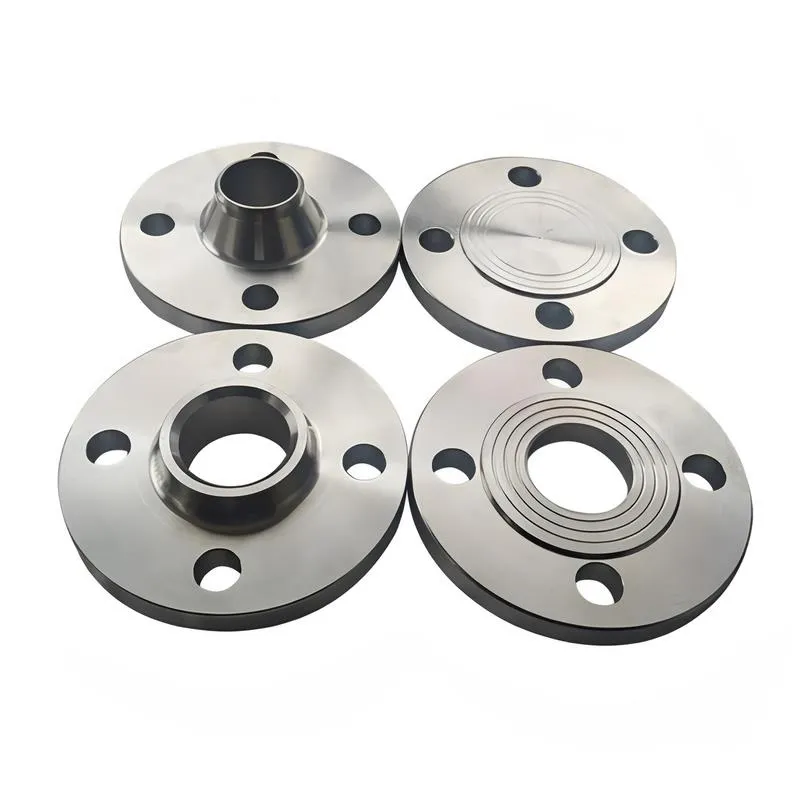
Plate Flat Welding Flange (PL), Necked Flat Welding Flange (SO), Necked Butt Welding Flange (WN), Integral Flange (IF), Socket Welding Flange (SW), Threaded Flange (Th), Butt Welding Ring Loose Flange (PJ/SE), Blind Flange (BL), Flat Welding Ring Loose Flange (PJ/PJ), and Lined Blind Flange (BL(s)).
2. **According to Petrochemical (SH) Industry Standards:** Flanges are classified as follows:
Threaded Flange (PL), Butt Welding Flange (WN), Flat Welding Flange (SO), Socket Welding Flange (SW), Loose Flange (LJ), and Blind Flange (no specific designation).
3. **According to Machinery (JB) Industry Standards:** Flanges are classified as follows:
Integral Flange, Butt Welding Flange, Plate Flat Welding Flange, Butt Welding Ring Plate Loose Flange, Flat Welding Ring Plate Loose Flange, Lap Joint Ring Plate Loose Flange, and Blind Flange.
4. **According to Connection Method/Type:** Flanges are classified as follows:
Plate Flat Welding Flange, Necked Flat Welding Flange, Necked Butt Welding Flange, Socket Welding Flange, Threaded Flange, Blind Flange, Necked Butt Welding Ring Loose Flange, Flat Welding Ring Loose Flange, Ring-Type Joint (RTJ) Flange and Blind Flange, Large-Diameter Plate Flange, Large-Diameter High-Neck Flange, Figure-8 Blind Plate, Butt Welding Ring Loose Flange, etc.
5. **According to the Component Being Connected:** Flanges can be classified into Vessel Flanges and Pipe Flanges.
6. **According to Structural Type:** Flanges include Integral Flanges, Threaded Flanges, Flat Welding Flanges, Butt Welding Flanges, Lap Joint (Loose/Swivel) Flanges, and Blind Flanges.
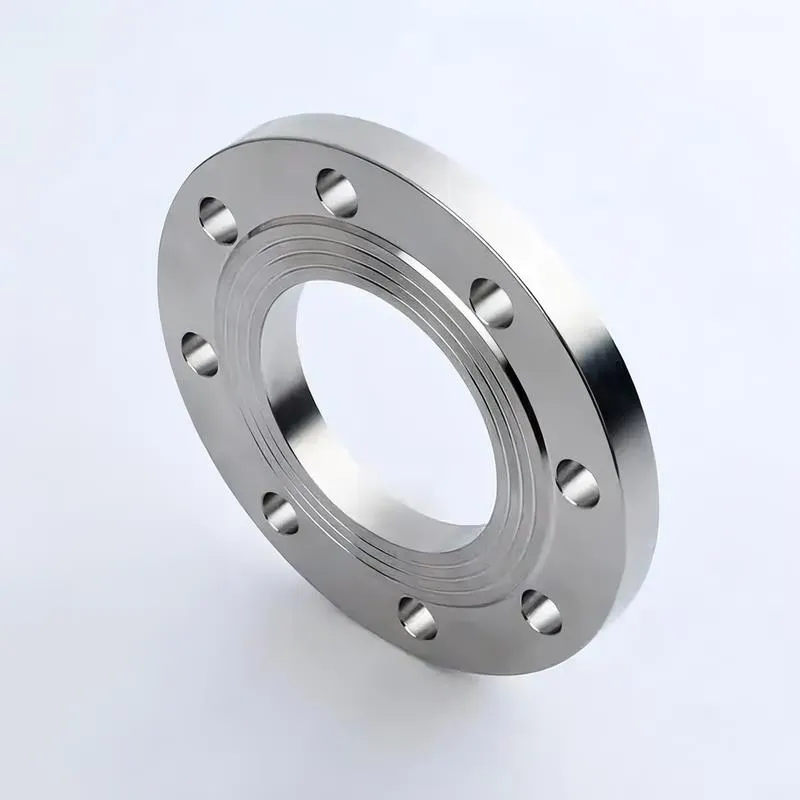
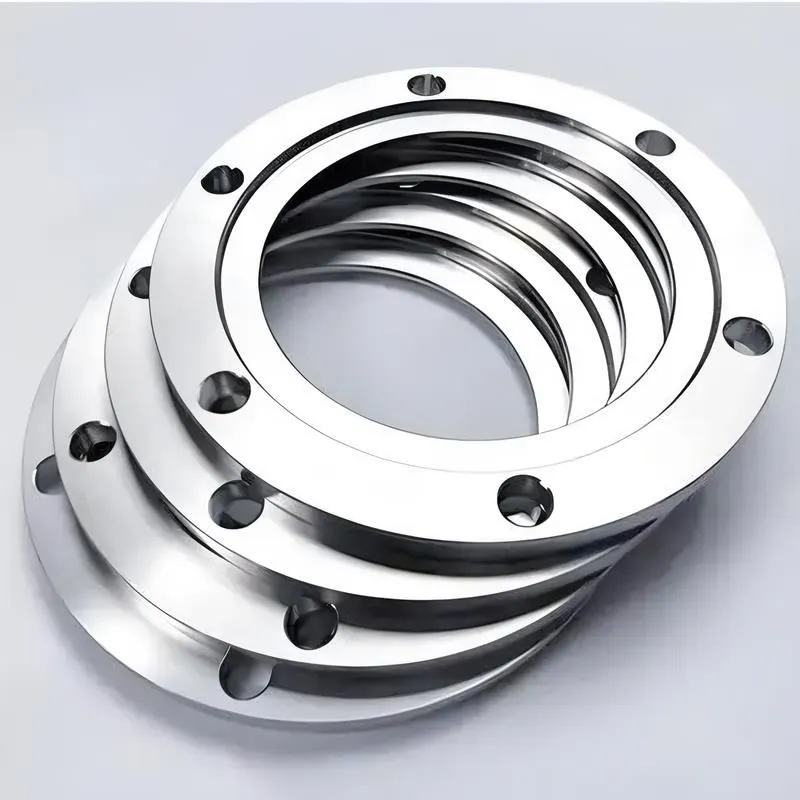
A flange—also referred to as a flange plate or rim—is a component used to connect shafts to one another, or, more commonly, to join the ends of pipes. Flanges are also utilized at the inlet and outlet ports of equipment to facilitate connections between two devices—for instance, the flange on a speed reducer. A "flange connection" or "flanged joint" refers to a detachable joint assembly comprising three interconnected elements—a flange, a gasket, and bolts—that together form a sealed structural unit. In the context of piping systems, a "pipe flange" specifically denotes a flange used for plumbing within the installation; when applied to equipment, it refers to the inlet or outlet flange of that specific device. Flanges feature a series of holes through which bolts are inserted to securely fasten the two flanges together, while a gasket placed between the flanges ensures a leak-proof seal. Flanges are broadly categorized into three types: threaded (screw-in) flanges, welded flanges, and clamp-type flanges. Flanges are invariably used in pairs; threaded flanges are suitable for low-pressure piping applications, whereas welded flanges are required for systems operating at pressures exceeding 4 kilograms per square centimeter. A sealing gasket is inserted between the two flange plates, which are then firmly secured using bolts. The thickness of a flange—as well as the specifications of the bolts used to fasten it—vary depending on the specific pressure rating required for the application. When connecting equipment such as water pumps or valves to piping systems, the corresponding connection points on these devices are often manufactured in the shape of a matching flange; this method of attachment is also referred to as a "flange connection." Generally, any connecting component that utilizes bolts to join and seal the perimeters of two flat surfaces—such as the joints in ventilation ducts—is termed a "flange"; such components may collectively be classified as "flange-type parts." However, since such a connection often constitutes merely a *portion* of a larger device—for instance, the interface between a flange and a water pump—it would be inappropriate to classify the entire water pump itself as a "flange-type part." Conversely, smaller components—such as valves—that feature such flanged interfaces may indeed be appropriately categorized as "flange-type parts."
-:-
For detailed product information, please contact sales.
-:
Ductile Iron Flange compression grade 120-90-02 Product Information
-:-
For detailed product information, please contact sales.
-:
Ductile Iron Flange compression grade 120-90-02 Synonyms
-:-
For detailed product information, please contact sales.
-:
Ductile Iron compression grade 120-90-02 Product Information
-:-
For detailed product information, please contact sales.
-:
### **Product Technical Data Sheet: Ductile Iron – Grade 120-90-02 (Ultra-High-Strength, Heat-Treated) for Extreme Compression Applications**
---
#### **1. Product Overview**
**Ductile Iron Grade 120-90-02** represents the **ultimate tier of compressive performance** achievable with ductile iron technology. While formally defined by its tensile rating, this material is engineered for applications where **extreme compressive strength, exceptional stiffness, and maximum resistance to permanent deformation and wear** under colossal loads are paramount. Achieving its properties requires specialized heat treatment—**Austempering (ADI) or Quenching & Tempering (QT)**—resulting in a microstructure (ausferrite or tempered martensite) that delivers compressive performance rivaling high-alloy steels. It is the material of choice for replacing forged steel components where the geometric complexity, damping capacity, and cost-effectiveness of a casting provide a decisive advantage.
---
#### **2. Governing International Standards & Specifications**
This grade's compressive capability is a direct result of heat treatment processes governed by specific standards.
* **Primary Reference (Tensile Basis): ASTM A536** - Includes **Grade 120-90-02** as a performance target for heat-treated material.
* **Governing Heat Treatment Standards (Critical for Properties):**
* **ASTM A897 / A897M** - *Austempered Ductile Iron (ADI) Castings*. Grades such as **850/550/10, 900/650/08, or 1050/700/05** are standard specifications that meet or exceed 120-90-02 performance.
* **ISO 17804:** *Austempered spheroidal graphite cast irons*. Grades like **JS/900/8/380/12** are relevant.
* **Proprietary QT Specifications:** Many foundries have proprietary processes for Quenched & Tempered ductile iron to achieve this performance level.
* **Key Referenced Testing Standards:**
* **Compressive Testing:** ASTM E9.
* **Tensile & Hardness (for certification):** ASTM E8, E10/E18.
* **Fatigue & Impact:** ASTM E466, E23 are often specified for validation.
---
#### **3. Typical Chemical Composition (Base Iron for ADI/QT)**
The chemistry is meticulously designed for extreme hardenability and microstructural control under heat treatment.
| Element | Target Range (%) | Functional Role for Extreme Compression Performance |
| :--- | :--- | :--- |
| **Carbon (C)** | 3.5 - 3.7 | Provides the carbon necessary for matrix strengthening and stable graphite formation. |
| **Silicon (Si)** | **2.4 - 2.8** | **Crucial.** In ADI, it enables the formation of high-carbon, stabilized austenite within the ausferrite, enhancing toughness under compression. In QT, it raises tempering resistance. |
| **Manganese (Mn)** | **0.20 - 0.40** | Controlled to ensure hardenability while minimizing segregation that could create brittle paths under high triaxial stresses. |
| **Magnesium (Mg)** | 0.03 - 0.05 | Ensures high nodularity for optimal stress distribution. |
| **Copper (Cu)** | **0.8 - 1.2** | Strong hardenability agent; ensures uniform high strength throughout the section under compressive load. |
| **Molybdenum (Mo)** | **0.3 - 0.6** | **Essential.** Provides the deep hardenability required to achieve a fully martensitic or ausferritic matrix in thick sections, preventing soft zones that would yield prematurely. |
| **Nickel (Ni)** | 0.5 - 1.5 | Used with Mo to improve hardenability and toughness, mitigating the risk of brittle fracture under extreme constraint. |
| **Phosphorus (P)** | **≤ 0.030** | Extremely low to eliminate grain boundary embrittlement. |
---
#### **4. Physical & Mechanical Properties (Compression Focus)**
This material operates at the frontier of cast material compressive performance.
| Property | Value / Performance | Significance for Extreme Compression Applications |
| :--- | :--- | :--- |
| **Compressive Yield Strength (0.2% offset)** | **~1100 - 1400 MPa (160 - 203 ksi)** | **Extraordinarily high, approximately 1.8-2.2x its tensile yield.** Allows for radical lightweighting and miniaturization of load-bearing components. |
| **Ultimate Compressive Strength** | **> 1500 MPa (218 ksi)** | Failure in pure compression is virtually theoretical; design is governed by yield, buckling, or fatigue. |
| **Compressive Yield-to-Tensile Yield Ratio** | **~1.8 : 1 to 2.2 : 1** | While slightly lower than lower-strength grades, the absolute strength value is vastly higher, enabling new design paradigms. |
| **Tensile Properties (Certification Basis)** | **830 MPa UTS, 620 MPa YS, 2% Elongation (min)** | The baseline for qualification. |
| **Hardness** | **280 - 360 HBW (30-38 HRC)** | Provides supreme resistance to brinelling, galling, and abrasive wear under high contact stress. |
| **Modulus of Elasticity** | **165 - 175 GPa** | Maintains very high stiffness, ensuring dimensional rigidity under extreme load. |
| **Fatigue Limit (Compressive/RBM)** | **~400 - 500 MPa** | **Exceptional.** The fine ausferritic/martensitic microstructure provides outstanding resistance to failure under cyclic compressive or reversed bending loads. |
| **Damping Capacity** | **2-3 times greater than steel** | A significant advantage over steel, reducing noise and high-frequency vibration in dynamic systems. |
| **Microstructure** | **ADI: Ausferrite** (acicular ferrite + high-carbon austenite).
**QT: Tempered Martensite.** | The ausferritic structure of ADI is particularly noted for its superior combination of ultra-high strength and good fracture toughness under constrained compression. |
---
#### **5. Product Applications (Extreme Compression-Dominant)**
This grade is reserved for the most critical, highly loaded components in demanding industries.
* **Heavy-Stamp & Forging Presses:** **Master link plates, eccentric shafts, crown segments, and massive press columns** in multi-thousand-ton forging and stamping presses.
* **Advanced Machine Tools:** **High-speed machining center columns, ram components for large boring mills, and bases for ultra-precision grinding machines** requiring nanometer-level stability.
* **Mining & Mineral Processing:** **Crusher main frames, cone crusher heads, jaw crusher side plates, and high-pressure grinding roll (HPGR) end-frames.**
* **Energy & Heavy Industry:** **Hydro turbine blade carriers, large offshore wind turbine gearbox housings, and components for isostatic pressing equipment.**
* **Defense & Aerospace:** **Landing gear components for heavy cargo aircraft, armored vehicle suspension components, and structural housings in demanding environments.**
---
#### **6. Fabrication & Design Notes**
* **Condition:** **Exclusively Supplied Heat-Treated (ADI or QT).** The as-cast state is merely a process intermediate. The specific heat treatment cycle is a critical part of the material specification.
* **Design Philosophy:** Design can safely utilize the **extremely high compressive yield strength**. **Advanced FEA modeling**, including non-linear material behavior and buckling analysis, is mandatory. The **high fatigue strength** allows for aggressive duty cycles.
* **Machinability:** **Very Difficult.** All significant machining must be performed in a soft, annealed state prior to final heat treatment. Post-heat treatment finishing is limited to grinding, honing, or hard machining with PCBN/PCD tooling.
* **Weldability:** **Not Recommended.** The engineered microstructure is compromised by welding. These are considered non-weldable components in service; repair is highly specialized and often impractical.
---
#### **7. Ordering Information**
Specification must be unambiguous and process-defined.
**Specify:** **"Austempered Ductile Iron (ADI) Castings, per ASTM A897 Grade 900/650/08 [or equivalent], targeting compressive performance of Grade 120-90-02"** OR **"Quenched & Tempered Ductile Iron Castings, Grade 120-90-02, per [Proprietary Specification XYZ]."**
**Mandatory Requirements:**
* **Exact Heat Treatment Process & Standard.**
* **Minimum Mechanical Properties** (Tensile, Yield, Hardness).
* **Compressive Performance Requirement** if design-critical (e.g., minimum compressive yield strength).
* **Section Size & Geometry** (for hardenability validation).
* **Certification:** Full traceability with MTR, heat treatment charts, mechanical tests, microstructure report (nodularity, matrix), and mandated NDT reports (100% UT & MPI typical).
* **Validation Testing:** Often requires component-level compressive, fatigue, or proof testing.
**Grade 120-90-02 (ADI/QT) is not just a material specification; it is a performance commitment. It enables the design of cast components that withstand compressive forces once thought exclusive to monolithic steel forgings, opening new frontiers in heavy equipment design.**
-:-
For detailed product information, please contact sales.
-:
Ductile Iron compression grade 120-90-02 Specification
Dimensions
Size:
Diameter 20-1000 mm Length <6538 mm
Size:We can customized as required
Standard:
Per your request or drawing
We can customized as required
Properties(Theoretical)
Chemical Composition
-:-
For detailed product information, please contact sales.
-:
Ductile Iron compression grade 120-90-02 Properties
-:-
For detailed product information, please contact sales.
-:
Applications of Ductile Iron Flange compression grade 120-90-02
-:-
For detailed product information, please contact sales.
-:
Chemical Identifiers Ductile Iron Flange compression grade 120-90-02
-:-
For detailed product information, please contact sales.
-:
Packing of Ductile Iron Flange compression grade 120-90-02
-:-
For detailed product information, please contact sales.
-:
Standard Packing:
-:-
For detailed product information, please contact sales.
-:
Typical bulk packaging includes palletized plastic 5 gallon/25 kg. pails, fiber and Steel Flange drums to 1 ton super sacks in full container (FCL) or truck load (T/L) quantities. Research and sample quantities and hygroscopic, oxidizing or other air sensitive materials may be packaged under argon or vacuum. Solutions are packaged in polypropylene, plastic or glass jars up to palletized 3009 gallon liquid totes Special package is available on request. E FORUs’ is carefully handled to minimize damage during storage and transportation and to preserve the quality of our products in their original condition