1,We Manufacturing processes are primarily classified into four types:
1:Forging,
2:Casting,
3:Cutting,
4:Rolling.
2,We can manufacture in accordance with these standards.
Standards:
GB Series (Chinese Standards), JB Series (Machinery Standards), HG Series (Chemical Industry Standards), ASME B16.5 (American Standards), BS4504 (British Standards), DIN (German Standards), and JIS (Japanese Standards).
Internationally, there are two primary systems of pipe flange standards: the European system, represented by the German DIN standards (including those of the former Soviet Union), and the American system, represented by the US ANSI pipe flange standards. Other common standards include: the Chinese Ministry of Machinery Industry standards (JB series), the Ministry of Chemical Industry standards (HG series), the Chinese National Standard *GB/T 9112–9124-2010 Steel Pipe Flanges*, as well as US standards (ASME B16.5), British standards (BS4504), German standards (DIN), Japanese standards (JIS), and marine standards (CBM), among others.
The nominal pressure ratings for the PN series are designated by "PN" and comprise the following nine levels: PN2.5, PN6, PN10, PN16, PN25, PN40, PN63, PN100, and PN160.
The nominal pressure ratings for the Class series are designated by "Class" and comprise the following six levels: Class150, Class300, Class600, Class900, Class1500, and Class2500.
Flange Classification
1. **According to Chemical Industry Standards:** Flanges are classified as follows:
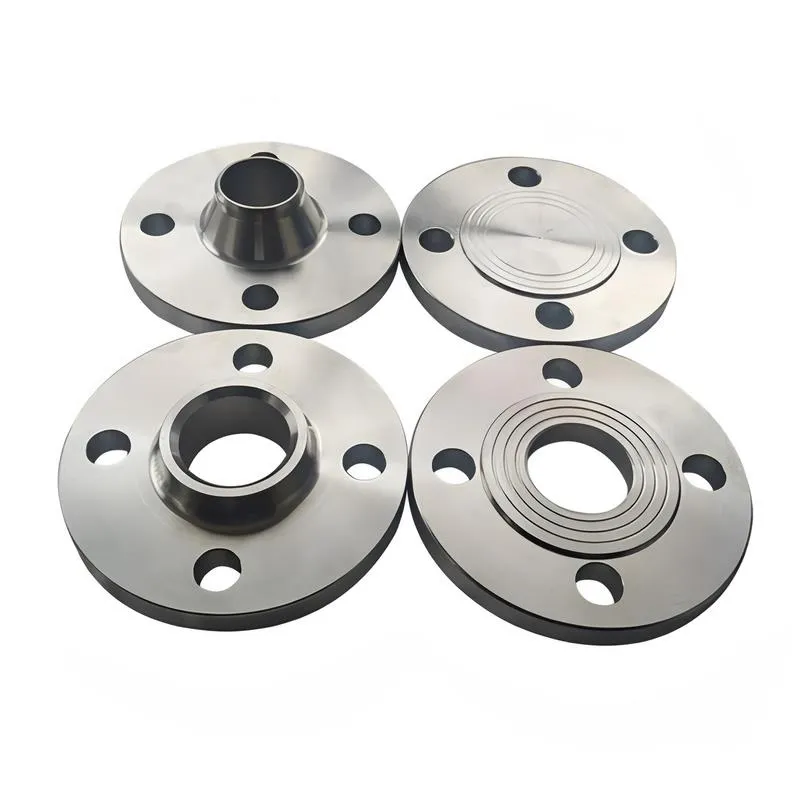
Plate Flat Welding Flange (PL), Necked Flat Welding Flange (SO), Necked Butt Welding Flange (WN), Integral Flange (IF), Socket Welding Flange (SW), Threaded Flange (Th), Butt Welding Ring Loose Flange (PJ/SE), Blind Flange (BL), Flat Welding Ring Loose Flange (PJ/PJ), and Lined Blind Flange (BL(s)).
2. **According to Petrochemical (SH) Industry Standards:** Flanges are classified as follows:
Threaded Flange (PL), Butt Welding Flange (WN), Flat Welding Flange (SO), Socket Welding Flange (SW), Loose Flange (LJ), and Blind Flange (no specific designation).
3. **According to Machinery (JB) Industry Standards:** Flanges are classified as follows:
Integral Flange, Butt Welding Flange, Plate Flat Welding Flange, Butt Welding Ring Plate Loose Flange, Flat Welding Ring Plate Loose Flange, Lap Joint Ring Plate Loose Flange, and Blind Flange.
4. **According to Connection Method/Type:** Flanges are classified as follows:
Plate Flat Welding Flange, Necked Flat Welding Flange, Necked Butt Welding Flange, Socket Welding Flange, Threaded Flange, Blind Flange, Necked Butt Welding Ring Loose Flange, Flat Welding Ring Loose Flange, Ring-Type Joint (RTJ) Flange and Blind Flange, Large-Diameter Plate Flange, Large-Diameter High-Neck Flange, Figure-8 Blind Plate, Butt Welding Ring Loose Flange, etc.
5. **According to the Component Being Connected:** Flanges can be classified into Vessel Flanges and Pipe Flanges.
6. **According to Structural Type:** Flanges include Integral Flanges, Threaded Flanges, Flat Welding Flanges, Butt Welding Flanges, Lap Joint (Loose/Swivel) Flanges, and Blind Flanges.
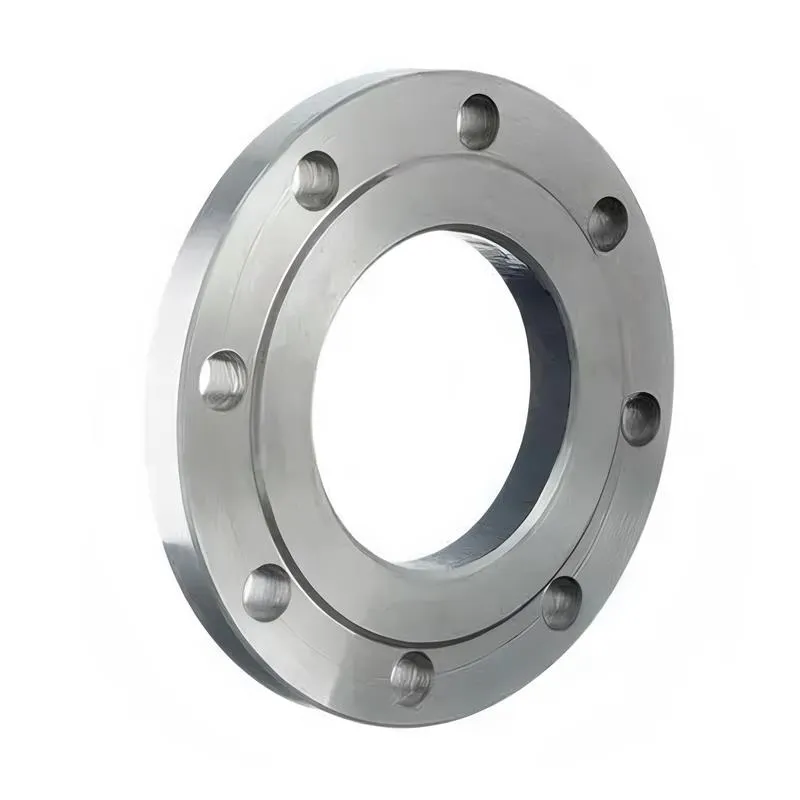
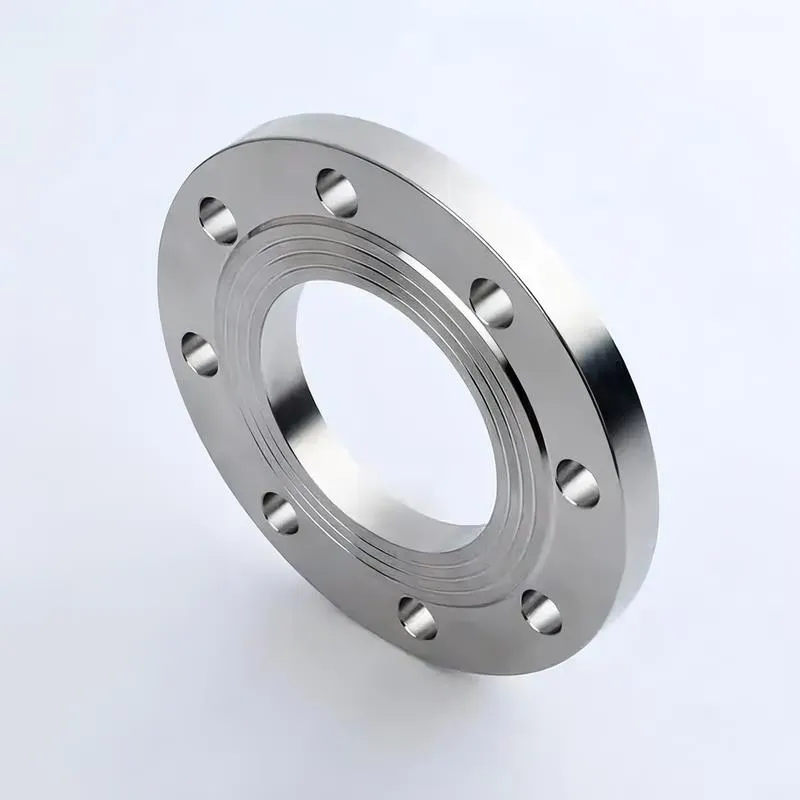
A flange—also referred to as a flange plate or rim—is a component used to connect shafts to one another, or, more commonly, to join the ends of pipes. Flanges are also utilized at the inlet and outlet ports of equipment to facilitate connections between two devices—for instance, the flange on a speed reducer. A "flange connection" or "flanged joint" refers to a detachable joint assembly comprising three interconnected elements—a flange, a gasket, and bolts—that together form a sealed structural unit. In the context of piping systems, a "pipe flange" specifically denotes a flange used for plumbing within the installation; when applied to equipment, it refers to the inlet or outlet flange of that specific device. Flanges feature a series of holes through which bolts are inserted to securely fasten the two flanges together, while a gasket placed between the flanges ensures a leak-proof seal. Flanges are broadly categorized into three types: threaded (screw-in) flanges, welded flanges, and clamp-type flanges. Flanges are invariably used in pairs; threaded flanges are suitable for low-pressure piping applications, whereas welded flanges are required for systems operating at pressures exceeding 4 kilograms per square centimeter. A sealing gasket is inserted between the two flange plates, which are then firmly secured using bolts. The thickness of a flange—as well as the specifications of the bolts used to fasten it—vary depending on the specific pressure rating required for the application. When connecting equipment such as water pumps or valves to piping systems, the corresponding connection points on these devices are often manufactured in the shape of a matching flange; this method of attachment is also referred to as a "flange connection." Generally, any connecting component that utilizes bolts to join and seal the perimeters of two flat surfaces—such as the joints in ventilation ducts—is termed a "flange"; such components may collectively be classified as "flange-type parts." However, since such a connection often constitutes merely a *portion* of a larger device—for instance, the interface between a flange and a water pump—it would be inappropriate to classify the entire water pump itself as a "flange-type part." Conversely, smaller components—such as valves—that feature such flanged interfaces may indeed be appropriately categorized as "flange-type parts."
-:-
For detailed product information, please contact sales.
-:
Ductile Iron Flange grade 100-70-03 Product Information
-:-
For detailed product information, please contact sales.
-:
Ductile Iron Flange grade 100-70-03 Synonyms
-:-
For detailed product information, please contact sales.
-:
Ductile Iron grade 100-70-03 Product Information
-:-
For detailed product information, please contact sales.
-:
### **Product Technical Data Sheet: Ductile Iron (Nodular Iron) Grade 100-70-03**
---
#### **1. Product Overview**
Ductile Iron Grade 100-70-03 is a **very high-strength, low-ductility grade** designed for applications demanding the ultimate in tensile and yield strength from a standard ductile iron, where extreme wear resistance and load-bearing capacity are paramount. The grade designation defines its minimum mechanical properties: **100 ksi (690 MPa) tensile strength, 70 ksi (485 MPa) yield strength, and 3% elongation**. This grade is achieved through a **fully pearlitic or bainitic matrix**, often requiring alloying and specific heat treatments such as quenching and tempering (QT) or austempering (ADI). It represents the upper tier of conventional ductile iron strength, bridging the gap between standard grades and cast steels for highly stressed, wear-critical components.
#### **2. Governing International Standards**
This grade is covered by specifications that accommodate high-strength ductile irons, with specific requirements often defined by contractual agreement.
* **Primary Designation: ASTM A536** - *Standard Specification for Ductile Iron Castings*. The grade is designated as **100-70-03**. For higher certainty, it is often linked to specific heat treatment conditions.
* **Alternative Designations:**
* **ISO 1083:** Designated as **EN-GJS-800-5** (800 MPa tensile, 500 MPa yield, 5% elongation) or **EN-GJS-700-2** (700 MPa tensile, 420 MPa yield, 2% elongation). **Note:** Direct numerical equivalence is not perfect; the functional equivalent is a high-strength, low-elongation grade, often requiring specification by exact properties.
* **EN 1563:** **EN-GJS-800-5** is a common reference.
* **SAE J434:** **D7003** (covers 100-70-03 and similar).
* **Key Testing Standards:**
* **Tensile Test:** ASTM E8 / ISO 6892-1.
* **Microstructure:** ASTM A247 / ISO 945.
* **Heat Treatment Standards:** Often referenced:
* **ASTM A897/A897M** for **Austempered Ductile Iron (ADI)**, which can achieve and exceed these properties (e.g., Grade 850/550/10).
* Quenched & Tempered (QT) processes per internal foundry specifications.
#### **3. Typical Chemical Composition (for QT or As-Cast Pearlitic)**
Achieving this strength level requires careful alloying to ensure hardenability and matrix control.
| Element | Target Range (%) | Functional Role |
| :--- | :--- | :--- |
| **Carbon (C)** | 3.4 - 3.7 | Provides strength potential; balanced for hardenability and to avoid excessive carbides. |
| **Silicon (Si)** | 2.0 - 2.5 | Provides solid solution strengthening and controls graphitization. Critical for ADI to promote ausferrite formation. |
| **Manganese (Mn)** | 0.3 - 0.6 | Pearlite/bainite stabilizer. Higher levels increase hardenability but risk segregation; controlled. |
| **Magnesium (Mg)** | 0.03 - 0.05 | Essential for nodulization. |
| **Copper (Cu)** | 0.8 - 1.5 | **Key alloy.** Strong pearlite promoter and increases hardenability for through-thickness strength in QT processes. |
| **Molybdenum (Mo)** | 0.2 - 0.5 | **Critical for hardenability.** Prevents the formation of soft ferrite in heavier sections during quenching, ensuring consistent high strength. |
| **Nickel (Ni)** | 0 - 1.0 | May be added with Mo to improve hardenability and toughness, particularly for thicker sections. |
| **Phosphorus (P)** | ≤ 0.035 | Very low to minimize boundary embrittlement. |
| **Sulfur (S)** | ≤ 0.015 | Very low. |
#### **4. Physical & Mechanical Properties**
This grade is defined by exceptional strength and hardness.
| Property | Minimum / Typical Value | Test Standard & Notes |
| :--- | :--- | :--- |
| **Tensile Strength, min.** | **100 ksi (690 MPa)** | ASTM A536. Can reach 110-120 ksi (760-830 MPa) with optimized QT/ADI. |
| **Yield Strength (0.2% offset), min.** | **70 ksi (485 MPa)** | Exceptionally high, allowing for compact, lightweight designs. |
| **Elongation, min.** | **3%** (in 2 inches or 50mm) | Limited ductility is characteristic; components are designed to operate within elastic limits. |
| **Hardness (Brinell)** | 241 - 302 HBW | Typically 269-285 HBW. Provides excellent resistance to abrasion and deformation. |
| **Modulus of Elasticity** | 24 - 25 x 10⁶ psi (165 - 172 GPa) | High stiffness maintained. |
| **Charpy Impact (Unnotched) @ 23°C** | 10 - 20 J (Typical) | Impact resistance is moderate; suitable for applications with controlled shock loads. |
| **Fatigue Endurance Limit** | ~310 - 350 MPa (≈ 0.45-0.5 x UTS) | Very good fatigue strength, a key benefit of the strong, fine matrix. |
| **Density** | 0.256 lb/in³ (7.1 g/cm³) | |
| **Typical Microstructure** | **Quenched & Tempered (QT):** Tempered martensite with graphite nodules.
**As-Cast/ Normalized:** Very fine, high-carbon pearlite (>95% pearlite).
**ADI:** Ausferrite (acicular ferrite + high-carbon austenite). | The specific microstructure depends on the chosen production route to meet the grade. |
#### **5. Product Applications**
Grade 100-70-03 is specified for the most demanding applications where failure is not an option and weight savings are critical.
* **Heavy-Duty Automotive & Truck:** **High-performance diesel engine crankshafts, camshafts, cylinder liners, heavy-duty pinions, and ring gears for large differentials.** Where 80-55-06 reaches its limit.
* **Earthmoving & Mining:** **Gears for large excavators and haul trucks, track shoes and rollers for severe service, crusher components, dredge pump impellers and liners.**
* **Oil & Gas:** **Wellhead components, valve bodies, high-pressure pump parts, and frac truck pump fluid ends** (where wear and pressure resistance are critical).
* **Railway:** **High-stress bogie frames, coupler knuckles, and brake discs** for heavy haul operations.
* **Industrial Machinery:** **Heavy-duty press rams, anvil blocks for forging, rolls for metal processing, and large bearing races.**
#### **6. Fabrication & Heat Treatment Notes**
* **Primary Condition:** Almost always supplied **heat-treated**—either **Quenched & Tempered (QT)** or **Austempered (ADI)**. "As-cast" to this grade is rare and limited to very thin sections.
* **Machinability:** **Difficult.** The high hardness and strength require aggressive use of carbide or ceramic tooling, ample power, and effective cooling. Machining is often performed post-heat-treatment; some operations may be done in a soft, annealed state prior to final hardening.
* **Weldability:** **Very Poor.** Generally **not recommended**. The high alloy content and required microstructure are severely compromised by welding heat. Repair is highly specialized, involving extensive pre-heat, specialized fillers, and complete re-heat treatment, which is often not practical.
#### **7. Ordering Information**
Specification must be precise due to the multiple processing routes.
Specify: **"Ductile Iron Castings, ASTM A536 Grade 100-70-03, Quenched and Tempered [or Austempered]"**.
**Critical details to include:**
* **Exact Heat Treatment Process:** QT or ADI. For ADI, specify the relevant ASTM A897 grade (e.g., 850/550/10).
* **Core Mechanical Properties:** Minimum tensile, yield, elongation, and hardness range.
* **Section Size:** Critical for ensuring proper hardenability.
* **Certification Requirements:** Comprehensive Mill Test Report including full chemistry, mechanical test results, and often microstructure analysis. Charpy impact testing may be specified.
* **Non-Destructive Testing (NDT):** Ultrasonic testing for internal soundness and magnetic particle inspection for surface integrity are commonly required for these critical components.
**Grade 100-70-03 represents the high-performance frontier of conventional ductile iron, offering a unique combination of castability and ultra-high strength for the most severe service conditions.**
-:-
For detailed product information, please contact sales.
-:
Ductile Iron grade 100-70-03 Specification
Dimensions
Size:
Diameter 20-1000 mm Length <6522 mm
Size:We can customized as required
Standard:
Per your request or drawing
We can customized as required
Properties(Theoretical)
Chemical Composition
-:-
For detailed product information, please contact sales.
-:
Ductile Iron grade 100-70-03 Properties
-:-
For detailed product information, please contact sales.
-:
Applications of Ductile Iron Flange grade 100-70-03
-:-
For detailed product information, please contact sales.
-:
Chemical Identifiers Ductile Iron Flange grade 100-70-03
-:-
For detailed product information, please contact sales.
-:
Packing of Ductile Iron Flange grade 100-70-03
-:-
For detailed product information, please contact sales.
-:
Standard Packing:
-:-
For detailed product information, please contact sales.
-:
Typical bulk packaging includes palletized plastic 5 gallon/25 kg. pails, fiber and Steel Flange drums to 1 ton super sacks in full container (FCL) or truck load (T/L) quantities. Research and sample quantities and hygroscopic, oxidizing or other air sensitive materials may be packaged under argon or vacuum. Solutions are packaged in polypropylene, plastic or glass jars up to palletized 2993 gallon liquid totes Special package is available on request. E FORUs’ is carefully handled to minimize damage during storage and transportation and to preserve the quality of our products in their original condition