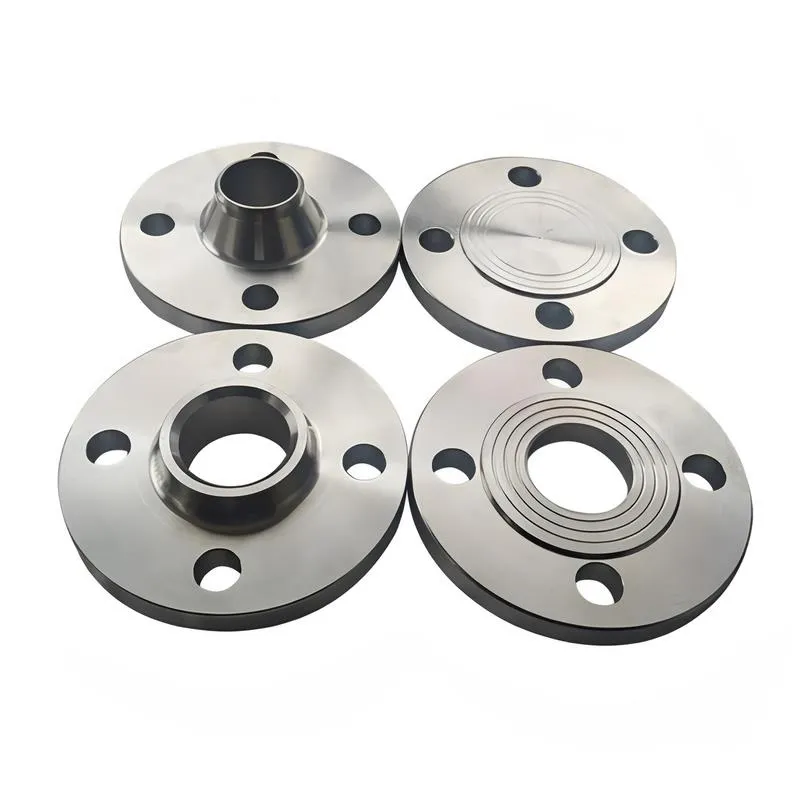
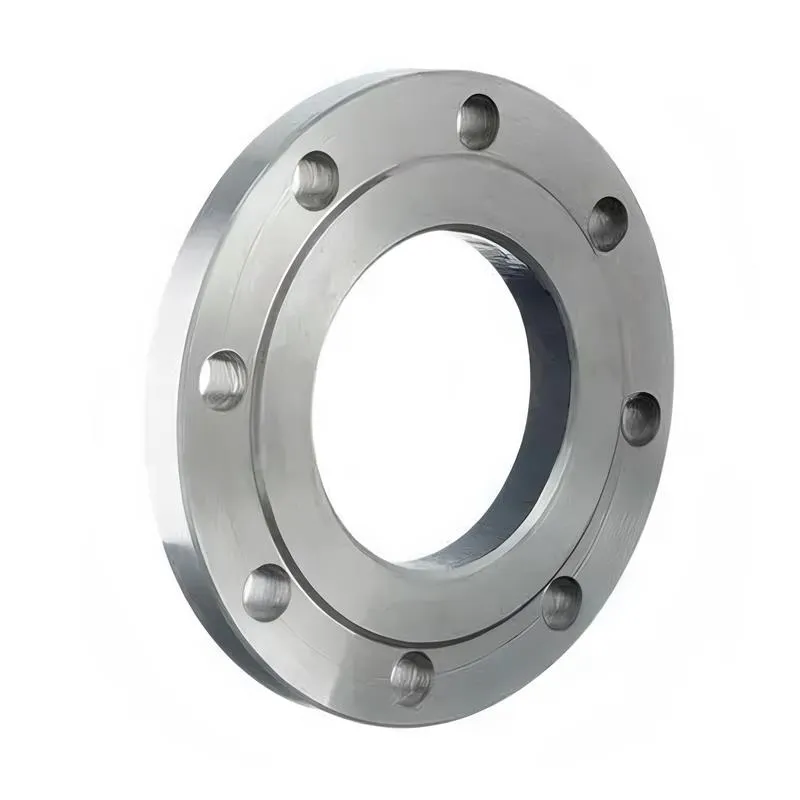
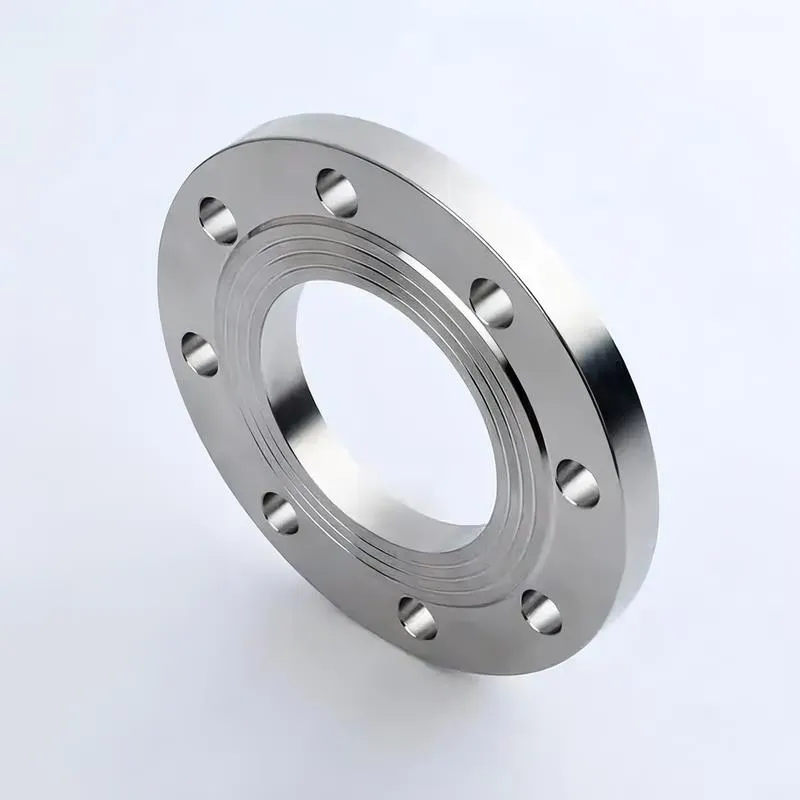
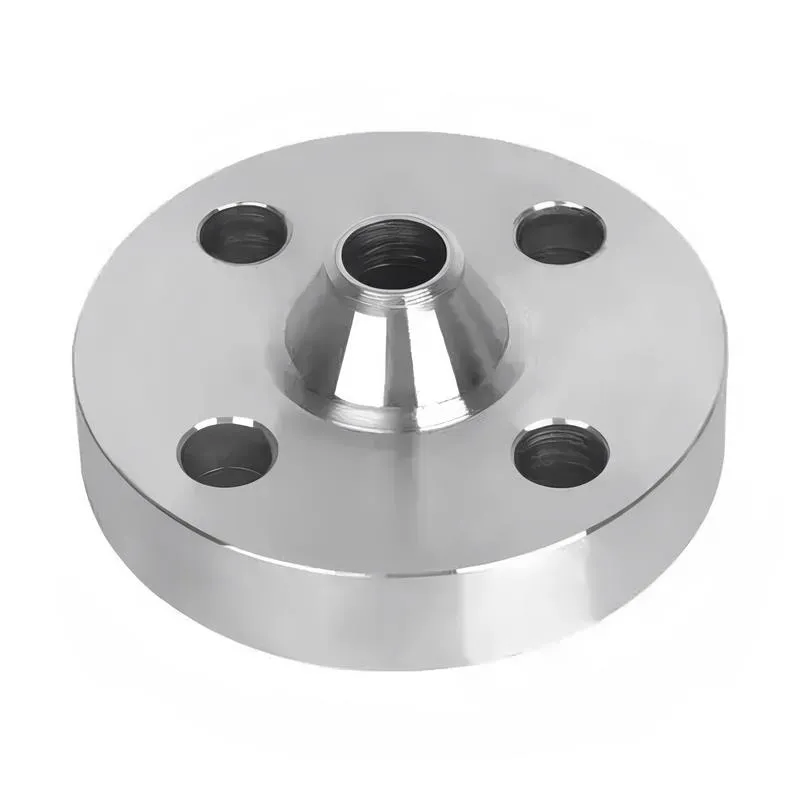
1,We Manufacturing processes are primarily classified into four types:
1:Forging,
2:Casting,
3:Cutting,
4:Rolling.
2,We can manufacture in accordance with these standards.
Standards:
GB Series (Chinese Standards), JB Series (Machinery Standards), HG Series (Chemical Industry Standards), ASME B16.5 (American Standards), BS4504 (British Standards), DIN (German Standards), and JIS (Japanese Standards).
Internationally, there are two primary systems of pipe flange standards: the European system, represented by the German DIN standards (including those of the former Soviet Union), and the American system, represented by the US ANSI pipe flange standards. Other common standards include: the Chinese Ministry of Machinery Industry standards (JB series), the Ministry of Chemical Industry standards (HG series), the Chinese National Standard *GB/T 9112–9124-2010 Steel Pipe Flanges*, as well as US standards (ASME B16.5), British standards (BS4504), German standards (DIN), Japanese standards (JIS), and marine standards (CBM), among others.
The nominal pressure ratings for the PN series are designated by "PN" and comprise the following nine levels: PN2.5, PN6, PN10, PN16, PN25, PN40, PN63, PN100, and PN160.
The nominal pressure ratings for the Class series are designated by "Class" and comprise the following six levels: Class150, Class300, Class600, Class900, Class1500, and Class2500.
Flange Classification
1. **According to Chemical Industry Standards:** Flanges are classified as follows:
Plate Flat Welding Flange (PL), Necked Flat Welding Flange (SO), Necked Butt Welding Flange (WN), Integral Flange (IF), Socket Welding Flange (SW), Threaded Flange (Th), Butt Welding Ring Loose Flange (PJ/SE), Blind Flange (BL), Flat Welding Ring Loose Flange (PJ/PJ), and Lined Blind Flange (BL(s)).
2. **According to Petrochemical (SH) Industry Standards:** Flanges are classified as follows:
Threaded Flange (PL), Butt Welding Flange (WN), Flat Welding Flange (SO), Socket Welding Flange (SW), Loose Flange (LJ), and Blind Flange (no specific designation).
3. **According to Machinery (JB) Industry Standards:** Flanges are classified as follows:
Integral Flange, Butt Welding Flange, Plate Flat Welding Flange, Butt Welding Ring Plate Loose Flange, Flat Welding Ring Plate Loose Flange, Lap Joint Ring Plate Loose Flange, and Blind Flange.
4. **According to Connection Method/Type:** Flanges are classified as follows:
Plate Flat Welding Flange, Necked Flat Welding Flange, Necked Butt Welding Flange, Socket Welding Flange, Threaded Flange, Blind Flange, Necked Butt Welding Ring Loose Flange, Flat Welding Ring Loose Flange, Ring-Type Joint (RTJ) Flange and Blind Flange, Large-Diameter Plate Flange, Large-Diameter High-Neck Flange, Figure-8 Blind Plate, Butt Welding Ring Loose Flange, etc.
5. **According to the Component Being Connected:** Flanges can be classified into Vessel Flanges and Pipe Flanges.
6. **According to Structural Type:** Flanges include Integral Flanges, Threaded Flanges, Flat Welding Flanges, Butt Welding Flanges, Lap Joint (Loose/Swivel) Flanges, and Blind Flanges.
A flange—also referred to as a flange plate or rim—is a component used to connect shafts to one another, or, more commonly, to join the ends of pipes. Flanges are also utilized at the inlet and outlet ports of equipment to facilitate connections between two devices—for instance, the flange on a speed reducer. A "flange connection" or "flanged joint" refers to a detachable joint assembly comprising three interconnected elements—a flange, a gasket, and bolts—that together form a sealed structural unit. In the context of piping systems, a "pipe flange" specifically denotes a flange used for plumbing within the installation; when applied to equipment, it refers to the inlet or outlet flange of that specific device. Flanges feature a series of holes through which bolts are inserted to securely fasten the two flanges together, while a gasket placed between the flanges ensures a leak-proof seal. Flanges are broadly categorized into three types: threaded (screw-in) flanges, welded flanges, and clamp-type flanges. Flanges are invariably used in pairs; threaded flanges are suitable for low-pressure piping applications, whereas welded flanges are required for systems operating at pressures exceeding 4 kilograms per square centimeter. A sealing gasket is inserted between the two flange plates, which are then firmly secured using bolts. The thickness of a flange—as well as the specifications of the bolts used to fasten it—vary depending on the specific pressure rating required for the application. When connecting equipment such as water pumps or valves to piping systems, the corresponding connection points on these devices are often manufactured in the shape of a matching flange; this method of attachment is also referred to as a "flange connection." Generally, any connecting component that utilizes bolts to join and seal the perimeters of two flat surfaces—such as the joints in ventilation ducts—is termed a "flange"; such components may collectively be classified as "flange-type parts." However, since such a connection often constitutes merely a *portion* of a larger device—for instance, the interface between a flange and a water pump—it would be inappropriate to classify the entire water pump itself as a "flange-type part." Conversely, smaller components—such as valves—that feature such flanged interfaces may indeed be appropriately categorized as "flange-type parts."
-:-
For detailed product information, please contact sales.
-:
Ductile Iron Flange torsion grade 65-45-12 Product Information
-:-
For detailed product information, please contact sales.
-:
Ductile Iron Flange torsion grade 65-45-12 Synonyms
-:-
For detailed product information, please contact sales.
-:
Ductile Iron torsion grade 65-45-12 Product Information
-:-
For detailed product information, please contact sales.
-:
### **Product Technical Data Sheet: Ductile Iron – Grade 65-45-12 (Ferritic-Pearlitic) for Torsion-Dominant Applications**
---
#### **1. Product Overview**
**Ductile Iron Grade 65-45-12** is a **balanced ferritic-pearlitic grade** engineered to provide optimal performance under **torsional (twisting) loads**. Positioned between the highly ductile 60-40-18 and higher-strength 80-55-06 grades, it delivers an excellent combination of **increased shear strength, good torsional stiffness, and maintained ductility** for absorbing shock torque. This grade is the industrial workhorse for a wide range of power transmission components where reliability, fatigue resistance, and cost-effectiveness are paramount. Its mixed microstructure offers a robust solution for shafts, gears, and couplings that must withstand both steady and fluctuating torsional stresses.
---
#### **2. Governing International Standards**
The material is universally specified by its tensile grade, with torsional properties being key derived characteristics.
* **Primary Standard (Tensile Definition): ASTM A536** - *Standard Specification for Ductile Iron Castings*. Formally designated as **Grade 65-45-12**.
* **Global Tensile Equivalents:** These define the material and thus its torsional behavior:
* **ISO 1083 / EN 1563:** **EN-GJS-500-7**.
* **SAE J434c:** **Grade D4512**.
* **UNS F33100**.
* **Key Referenced Testing Standards:**
* **Torsional Testing:** Principles guided by ASTM A938 or ISO 7800.
* **Tensile & Hardness (for certification):** ASTM E8, E10 / ISO equivalents.
* **Fatigue Testing:** Component-level torsional fatigue validation is common for critical parts.
---
#### **3. Typical Chemical Composition**
Chemistry is balanced to achieve a mixed matrix that enhances shear strength without sacrificing toughness.
| Element | Target Range (%) | Functional Role for Torsional Performance |
| :--- | :--- | :--- |
| **Carbon (C)** | 3.5 - 3.8 | Provides graphite for stress distribution and damping of torsional vibrations. |
| **Silicon (Si)** | 2.2 - 2.6 | Solid solution strengthener; balances matrix formation for strength and ductility. |
| **Manganese (Mn)** | **0.20 - 0.40** | Primary pearlite stabilizer; increases shear strength and hardness of the matrix. |
| **Phosphorus (P)** | **≤ 0.04** | Kept low to prevent grain boundary weakness under combined stresses. |
| **Sulfur (S)** | **≤ 0.015** | Kept very low. |
| **Magnesium (Mg)** | 0.03 - 0.05 | Ensures high nodularity for optimal load distribution under shear. |
| **Copper (Cu)** | **0 - 0.30** | Optional; promotes uniform pearlite for consistent torsional properties in varying sections. |
---
#### **4. Physical & Mechanical Properties (Torsion Focus)**
This grade offers a robust balance for torsional design.
| Property | Value / Relationship | Significance for Torsional Applications |
| :--- | :--- | :--- |
| **Shear Modulus (Modulus of Rigidity, G)** | **~64 - 67 GPa (9.3 - 9.7 x 10⁶ psi)** | Determines the shaft's resistance to angular twist under applied torque. |
| **Torsional Yield Strength (approx.)** | **~185 - 220 MPa (27 - 32 ksi)** | Estimated as **0.6 - 0.7 x Tensile Yield Strength (310 MPa)**. Provides a high safety margin against permanent twist. |
| **Ultimate Torsional Strength (approx.)** | **~360 - 405 MPa (52 - 59 ksi)** | Estimated as **0.8 - 0.9 x Tensile Strength (450 MPa)**. |
| **Tensile Properties (Certification Basis)** | **450 MPa UTS, 310 MPa YS, 12% Elongation** | The 12% elongation ensures good torsional ductility for overload situations. |
| **Fatigue Limit (Torsional)** | **~150 - 180 MPa** | Good high-cycle fatigue resistance under reversed or fluctuating torque. Critical for drive shafts. |
| **Hardness (Brinell)** | **170 - 207 HBW** | Provides good resistance to wear in keyways and splines while maintaining machinability. |
| **Damping Capacity** | **Good to Very Good** | Effectively dampens torsional vibrations, reducing noise and protecting downstream components. |
---
#### **5. Product Applications (Torsion-Dominant)**
This grade is specified for a vast array of power transmission and torque-carrying components.
* **Power Transmission Shafts:** **Intermediate drive shafts, PTO shafts for agricultural equipment, pump shafts, and conveyor drive shafts.** The standard choice for general industrial applications.
* **Gear Components:** **Shaft-mounted gear blanks, worm wheels, and gear hubs** prior to heat treatment or for moderate-duty applications.
* **Couplings & Hubs:** **Flexible coupling hubs, rigid coupling bodies, and splined adapters.**
* **Automotive & Off-Highway:** **Steering column shafts, auxiliary drive shafts, and implement linkage shafts.**
* **Marine & Industrial:** **Propeller shafts for small vessels, mixer shafts, and various machine tool drive components.**
---
#### **6. Fabrication & Design Notes**
* **Condition:** Typically supplied **as-cast** or **normalized**. Normalizing is recommended for critical applications to ensure uniform microstructure and consistent torsional properties, especially in parts with varying cross-sections.
* **Design Philosophy:** Focus on **minimizing stress concentrators**. Use large fillet radii, consider undercuts for grinding relief, and specify good surface finishes. The **balanced strength and ductility** allow for designs that can handle occasional overloads without catastrophic failure. **Finite Element Analysis (FEA)** is recommended for complex geometries.
* **Machinability:** **Excellent.** Ideal for machining precise features like splines, keyways, and bearing journals. The mixed microstructure provides a good balance of tool life and surface finish.
* **Surface Enhancement:** For applications requiring high surface wear resistance (e.g., bearing journals, seal surfaces), **induction hardening** can be applied locally to increase surface hardness to 50-55 HRC while retaining the tough core.
---
#### **7. Ordering Information**
**Specify:** **"Ductile Iron Castings, ASTM A536 Grade 65-45-12, [As-Cast or Normalized], for Torsional Application."**
**Essential Details to Provide:**
* **Applicable Standard** (ASTM A536).
* **Part Drawing & Specification,** clearly indicating design torque, safety factors, fatigue life requirements, and critical features (fillet radii, surface finishes).
* **Condition Preference:** As-cast or Normalized.
* **Certification Requirements:** Standard Mill Test Report (MTR) with tensile properties and hardness.
* **Special Requirements:** For high-integrity parts, specify **Non-Destructive Testing (NDT)** such as Magnetic Particle Inspection (MPI) for surface defects. **Component proof testing** (e.g., to 1.5x design torque) may also be required.
**Grade 65-45-12 is the engineer's default choice for dependable torsional components, offering the best all-around combination of strength, ductility, manufacturability, and cost for the vast majority of industrial power transmission applications.**
-:-
For detailed product information, please contact sales.
-:
Ductile Iron torsion grade 65-45-12 Specification
Dimensions
Size:
Diameter 20-1000 mm Length <6540 mm
Size:We can customized as required
Standard:
Per your request or drawing
We can customized as required
Properties(Theoretical)
Chemical Composition
-:-
For detailed product information, please contact sales.
-:
Ductile Iron torsion grade 65-45-12 Properties
-:-
For detailed product information, please contact sales.
-:
Applications of Ductile Iron Flange torsion grade 65-45-12
-:-
For detailed product information, please contact sales.
-:
Chemical Identifiers Ductile Iron Flange torsion grade 65-45-12
-:-
For detailed product information, please contact sales.
-:
Packing of Ductile Iron Flange torsion grade 65-45-12
-:-
For detailed product information, please contact sales.
-:
Standard Packing:
-:-
For detailed product information, please contact sales.
-:
Typical bulk packaging includes palletized plastic 5 gallon/25 kg. pails, fiber and Steel Flange drums to 1 ton super sacks in full container (FCL) or truck load (T/L) quantities. Research and sample quantities and hygroscopic, oxidizing or other air sensitive materials may be packaged under argon or vacuum. Solutions are packaged in polypropylene, plastic or glass jars up to palletized 3011 gallon liquid totes Special package is available on request. E FORUs’ is carefully handled to minimize damage during storage and transportation and to preserve the quality of our products in their original condition