1,We Manufacturing processes are primarily classified into four types:
1:Forging,
2:Casting,
3:Cutting,
4:Rolling.
2,We can manufacture in accordance with these standards.
Standards:
GB Series (Chinese Standards), JB Series (Machinery Standards), HG Series (Chemical Industry Standards), ASME B16.5 (American Standards), BS4504 (British Standards), DIN (German Standards), and JIS (Japanese Standards).
Internationally, there are two primary systems of pipe flange standards: the European system, represented by the German DIN standards (including those of the former Soviet Union), and the American system, represented by the US ANSI pipe flange standards. Other common standards include: the Chinese Ministry of Machinery Industry standards (JB series), the Ministry of Chemical Industry standards (HG series), the Chinese National Standard *GB/T 9112–9124-2010 Steel Pipe Flanges*, as well as US standards (ASME B16.5), British standards (BS4504), German standards (DIN), Japanese standards (JIS), and marine standards (CBM), among others.
The nominal pressure ratings for the PN series are designated by "PN" and comprise the following nine levels: PN2.5, PN6, PN10, PN16, PN25, PN40, PN63, PN100, and PN160.
The nominal pressure ratings for the Class series are designated by "Class" and comprise the following six levels: Class150, Class300, Class600, Class900, Class1500, and Class2500.
Flange Classification
1. **According to Chemical Industry Standards:** Flanges are classified as follows:
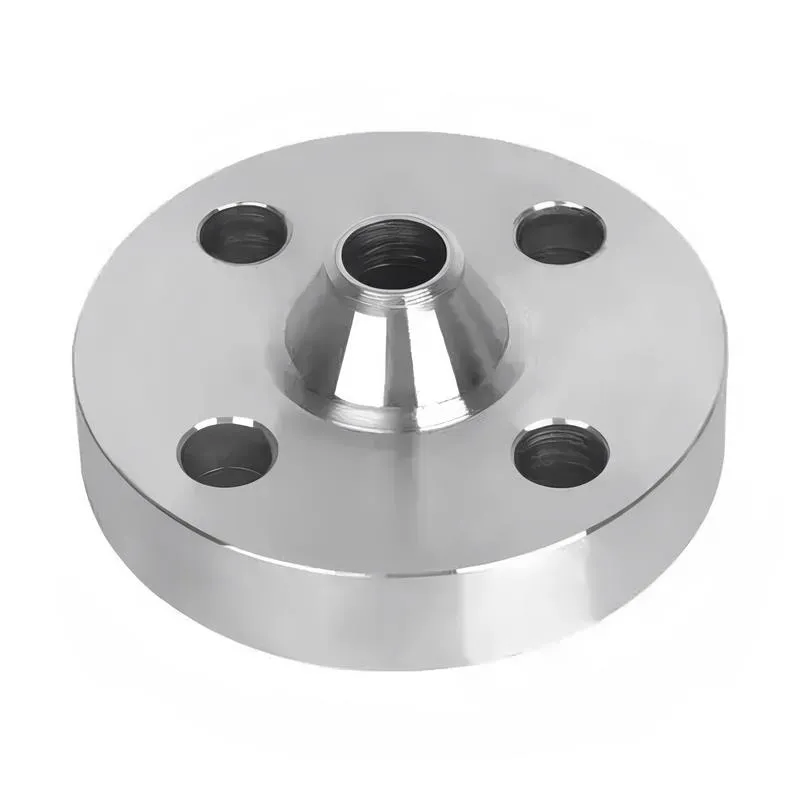
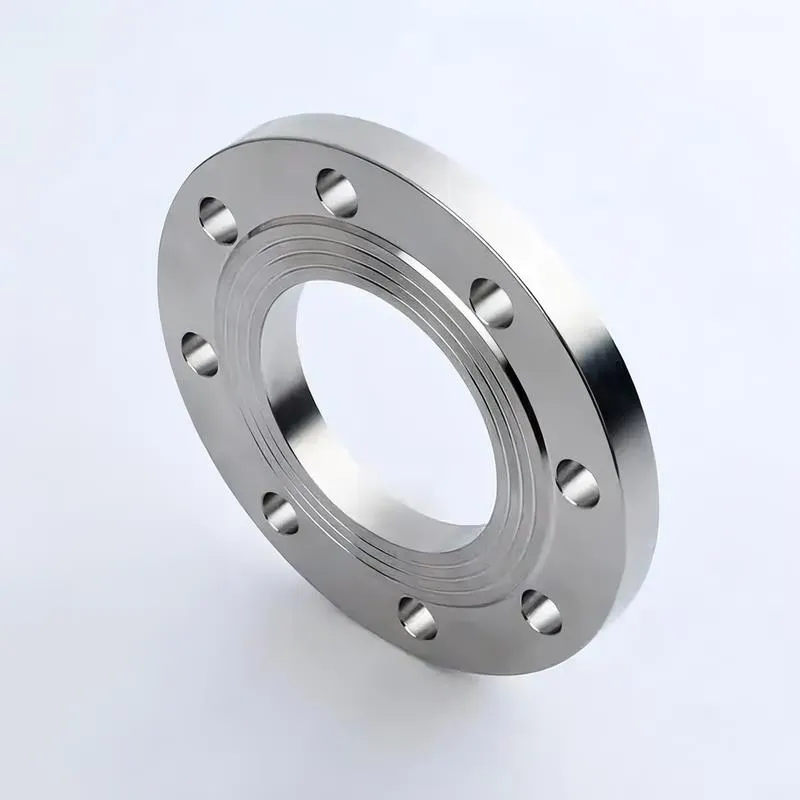
Plate Flat Welding Flange (PL), Necked Flat Welding Flange (SO), Necked Butt Welding Flange (WN), Integral Flange (IF), Socket Welding Flange (SW), Threaded Flange (Th), Butt Welding Ring Loose Flange (PJ/SE), Blind Flange (BL), Flat Welding Ring Loose Flange (PJ/PJ), and Lined Blind Flange (BL(s)).
2. **According to Petrochemical (SH) Industry Standards:** Flanges are classified as follows:
Threaded Flange (PL), Butt Welding Flange (WN), Flat Welding Flange (SO), Socket Welding Flange (SW), Loose Flange (LJ), and Blind Flange (no specific designation).
3. **According to Machinery (JB) Industry Standards:** Flanges are classified as follows:
Integral Flange, Butt Welding Flange, Plate Flat Welding Flange, Butt Welding Ring Plate Loose Flange, Flat Welding Ring Plate Loose Flange, Lap Joint Ring Plate Loose Flange, and Blind Flange.
4. **According to Connection Method/Type:** Flanges are classified as follows:
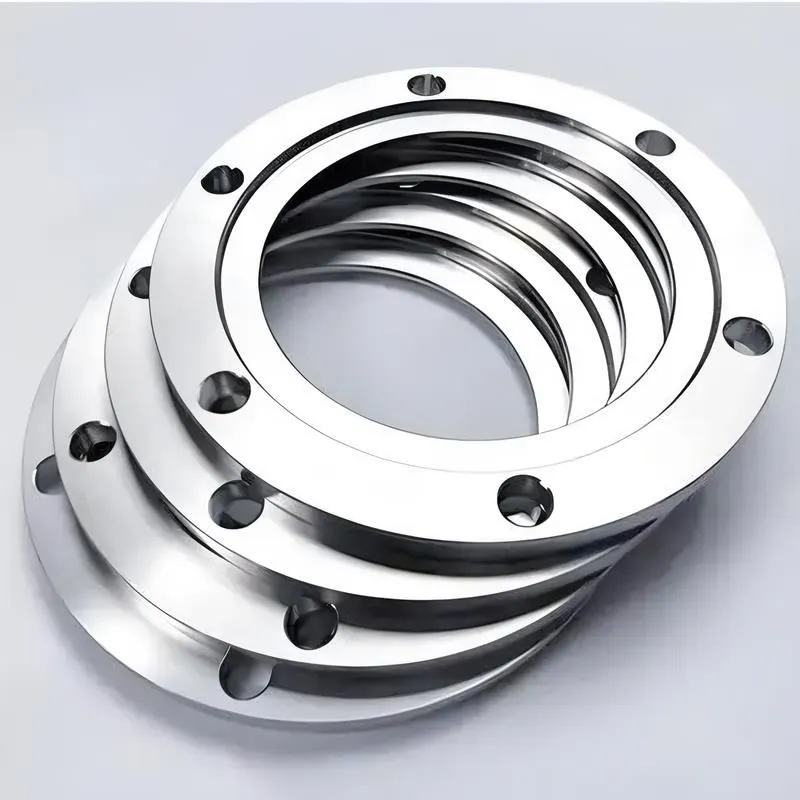
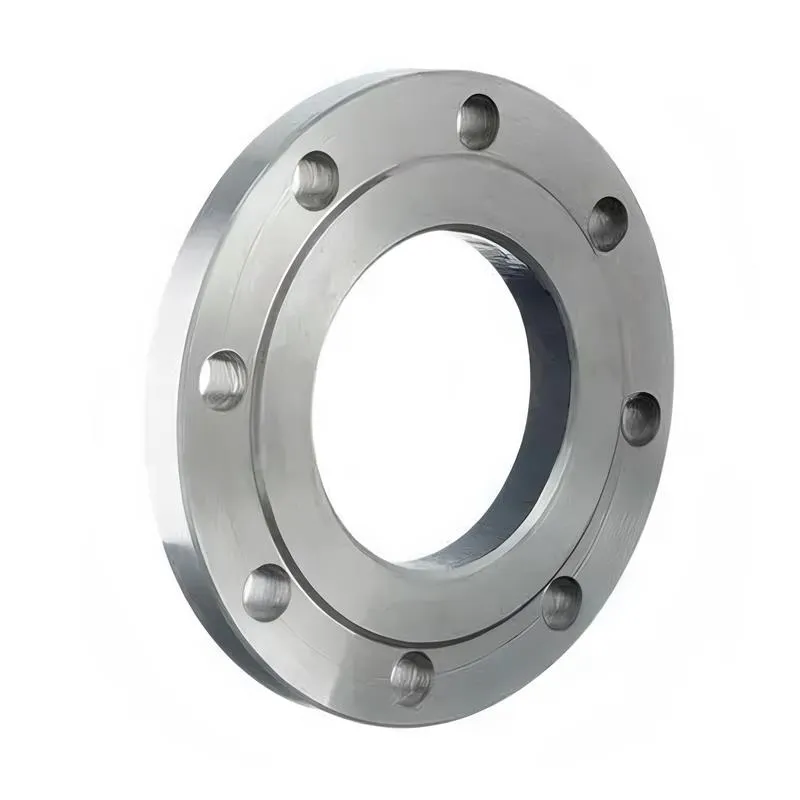
Plate Flat Welding Flange, Necked Flat Welding Flange, Necked Butt Welding Flange, Socket Welding Flange, Threaded Flange, Blind Flange, Necked Butt Welding Ring Loose Flange, Flat Welding Ring Loose Flange, Ring-Type Joint (RTJ) Flange and Blind Flange, Large-Diameter Plate Flange, Large-Diameter High-Neck Flange, Figure-8 Blind Plate, Butt Welding Ring Loose Flange, etc.
5. **According to the Component Being Connected:** Flanges can be classified into Vessel Flanges and Pipe Flanges.
6. **According to Structural Type:** Flanges include Integral Flanges, Threaded Flanges, Flat Welding Flanges, Butt Welding Flanges, Lap Joint (Loose/Swivel) Flanges, and Blind Flanges.
A flange—also referred to as a flange plate or rim—is a component used to connect shafts to one another, or, more commonly, to join the ends of pipes. Flanges are also utilized at the inlet and outlet ports of equipment to facilitate connections between two devices—for instance, the flange on a speed reducer. A "flange connection" or "flanged joint" refers to a detachable joint assembly comprising three interconnected elements—a flange, a gasket, and bolts—that together form a sealed structural unit. In the context of piping systems, a "pipe flange" specifically denotes a flange used for plumbing within the installation; when applied to equipment, it refers to the inlet or outlet flange of that specific device. Flanges feature a series of holes through which bolts are inserted to securely fasten the two flanges together, while a gasket placed between the flanges ensures a leak-proof seal. Flanges are broadly categorized into three types: threaded (screw-in) flanges, welded flanges, and clamp-type flanges. Flanges are invariably used in pairs; threaded flanges are suitable for low-pressure piping applications, whereas welded flanges are required for systems operating at pressures exceeding 4 kilograms per square centimeter. A sealing gasket is inserted between the two flange plates, which are then firmly secured using bolts. The thickness of a flange—as well as the specifications of the bolts used to fasten it—vary depending on the specific pressure rating required for the application. When connecting equipment such as water pumps or valves to piping systems, the corresponding connection points on these devices are often manufactured in the shape of a matching flange; this method of attachment is also referred to as a "flange connection." Generally, any connecting component that utilizes bolts to join and seal the perimeters of two flat surfaces—such as the joints in ventilation ducts—is termed a "flange"; such components may collectively be classified as "flange-type parts." However, since such a connection often constitutes merely a *portion* of a larger device—for instance, the interface between a flange and a water pump—it would be inappropriate to classify the entire water pump itself as a "flange-type part." Conversely, smaller components—such as valves—that feature such flanged interfaces may indeed be appropriately categorized as "flange-type parts."
-:-
For detailed product information, please contact sales.
-:
JIS SK3 Water Hardening Tool Steel Flange Product Information
-:-
For detailed product information, please contact sales.
-:
JIS SK3 Water Hardening Tool Steel Flange Synonyms
-:-
For detailed product information, please contact sales.
-:
JIS SK3 Water Hardening Tool Steel Product Information
-:-
For detailed product information, please contact sales.
-:
# **Product Introduction: JIS SK3 Water Hardening Tool Steel**
## **Overview**
**JIS SK3** is a **high-carbon, non-alloyed water-hardening tool steel** within the Japanese Industrial Standards (JIS) carbon tool steel series (SK). Positioned as a versatile, medium-high carbon grade, SK3 offers a **balanced combination of high hardness, good wear resistance, and moderate toughness** relative to the SK series. It is one of the most widely used carbon tool steels for general-purpose cutting, forming, and measuring tools where a hard, durable edge is required. Like all water-hardening steels, it features **very shallow hardenability, requires a severe water or brine quench, and has poor resistance to thermal softening**.
## **1. Chemical Composition (JIS G 4401 Standard)**
SK3 has a classic high-carbon, low-alloy composition.
| Element | Content (%) | Primary Function |
|---------|------------|------------------|
| **Carbon (C)** | **1.00 - 1.10** | **Primary element.** Provides high hardenability potential and forms cementite for hardness and wear resistance. This carbon range is optimal for a balance of hardness and toughness in carbon steels. |
| **Silicon (Si)** | ≤ 0.35 | Deoxidizer, slightly strengthens ferrite. |
| **Manganese (Mn)** | ≤ 0.50 | Moderately increases hardenability and combats sulfur embrittlement. |
| **Phosphorus (P)** | ≤ 0.03 | Impurity, kept low. |
| **Sulfur (S)** | ≤ 0.03 | Impurity, kept low. |
| **Chromium (Cr)** | ≤ 0.30 | Residual, not an intentional alloy. |
| **Nickel (Ni)** | ≤ 0.25 | Residual. |
| **Copper (Cu)** | ≤ 0.25 | Residual. |
| **Iron (Fe)** | Balance | Base metal. |
**Key Chemistry Note:** SK3 is a **eutectoid to slightly hypereutectoid steel**. Its **carbon content (~1.05%)** is near the eutectoid point (0.77% C), which allows for a microstructure consisting primarily of fine pearlite or martensite upon heat treatment, without excessive networks of brittle primary cementite that plague higher-carbon grades like SK1/SK2. This results in the **best overall toughness among the high-carbon SK grades** while still achieving very high hardness (~65 HRC). The minimal alloying means its properties are almost entirely dependent on carbon content and heat treatment precision.
## **2. Physical & Mechanical Properties**
*Typical properties in the hardened and tempered condition.*
| Property | Typical Value / Condition |
|----------|--------------------------|
| **Density** | ~7.85 g/cm³ |
| **Melting Point** | ~1485°C (2705°F) |
| **Thermal Conductivity** | ~48 W/m·K |
| **Coefficient of Thermal Expansion** | ~12.5 × 10⁻⁶/K (20-100°C) |
| **Modulus of Elasticity** | 205-210 GPa |
| **Annealed Hardness** | 183-217 HB |
| **As-Quenched Hardness (Water)** | **Up to 64-66 HRC**. |
| **Hardened & Tempered Hardness** | **58-63 HRC** (Versatile working range). |
| **Tensile Strength (at 60 HRC)** | ~1850-2000 MPa (268-290 ksi) |
| **Impact Toughness** | **Moderate (for a water-hardening steel).** The best in the SK1-SK3 range due to optimal carbon content and absence of coarse cementite networks. |
| **Wear Resistance** | **Good.** Relies on high hardness; adequate for many general tooling applications. |
| **Hardenability** | **Very Shallow.** Full hardening only to depths of **~3-5 mm (0.12-0.2 in)**. |
| **Hot Hardness** | **Very Poor.** Significant softening begins above **~200-250°C (390-480°F)**. |
| **Machinability (Annealed)** | **Good.** Better than SK1/SK2 due to lower carbon. |
| **Grindability** | Good. |
## **3. International Standards & Cross-References**
| Standard | Designation | Notes |
|----------|------------|-------|
| **JIS** | **SK3** (JIS G 4401) | |
| **AISI (USA)** | **~W1-10** (AISI W1 with ~1.0% C) | The closest direct equivalent. |
| **ISO (International)** | **~C100U** (ISO 4957) | |
| **DIN (Germany)** | **~C100W2** (1.1645) | |
| **BS (UK)** | **~BW1A** | |
| **GB (China)** | **T10** (Carbon tool steel) | A common equivalent (T10: 0.95-1.04% C). |
| **Common Name** | **1.0% Carbon Tool Steel** | |
## **4. Product Applications**
SK3 is a **general-purpose carbon tool steel** used for a wide variety of tools where high hardness is needed, and the severe limitations of water hardening are acceptable.
**Primary Applications:**
* **Cutting Tools:** **Hand saw blades, band saw blades, metal cutting knives, shears.**
* **Woodworking Tools:** **Chisels, plane blades, carving tools, drill bits.**
* **Metal-Forming Tools:** **Punches, dies, bending tools** for thin sheet metal.
* **Hand Tools:** **Screwdrivers, wrenches, pliers** (hardened parts).
* **Measuring Tools:** **Calipers, gauges, templates, straight edges.**
* **Springs** for mechanical devices.
* **Agricultural and Garden Tools** (blades, cutters).
**Applications to Avoid:**
* Tools subject to heavy impact or shock (e.g., cold chisels for thick steel).
* Complex tools with sharp internal corners or severe section changes (high cracking risk).
* High-speed cutting tools that generate heat.
* Tools requiring deep, uniform hardness in thick sections (>10mm).
## **5. Heat Treatment Guidelines**
Heat treatment is standard for water-hardening steels but requires skill.
* **Annealing:** Heat to **750-780°C (1380-1435°F)**, slow furnace cool for spheroidized structure.
* **Hardening:**
1. **Preheating:** Preheat to **700-750°C (1290-1380°F)** to reduce thermal shock.
2. **Austenitizing:** Heat to **780-820°C (1435-1510°F).** A common target is **790-810°C (1455-1490°F)**. Soak for 10-20 min/inch.
3. **Quenching:** Quench **immediately in agitated water or brine.** For any non-simple shape, use an **interrupted quench**: quench to ~300-400°C, then transfer to oil or air.
* **Tempering:**
* **Temper immediately** (within 30-60 min).
* **For cutting tools (high hardness):** Temper at **150-200°C (300-390°F)** for 1-2 hours. Target hardness: 61-63 HRC.
* **For improved toughness (striking/forming tools):** Temper at **250-350°C (480-660°F)**. **Note:** Rapid cooling from this tempering range is advised to minimize tempered martensite embrittlement. Target hardness: 55-60 HRC.
* **Double tempering** is recommended.
## **6. Key Advantages & Limitations**
**Advantages:**
* **Good balance of hardness and toughness** for a carbon tool steel.
* **Lower cost** than alloy tool steels.
* **Simple heat treatment principle** (though difficult in practice).
* **Good machinability and grindability** in the annealed state.
* **Can be re-hardened** if damaged or worn.
**Severe Limitations (Inherent to Water-Hardening):**
* **Very Shallow Hardenability:** Only surface hardens; thick tools have soft cores.
* **High Distortion & Cracking Risk:** The water quench induces severe stresses and unpredictable size changes.
* **Low Toughness (Relative):** Still brittle compared to oil- or air-hardening tool steels at the same hardness.
* **Poor Thermal Stability:** Cannot be used in any application generating heat.
* **Decarburization:** Easily loses surface carbon during heat treatment, requiring grinding allowance.
**Modern Perspective & Alternatives:**
While SK3 is still used for traditional and low-cost tools, it has been **largely superseded for industrial and precision tooling by oil- and air-hardening steels**.
* **For general-purpose tooling:** **JIS SKS3 (Oil-Hardening)** or **AISI O1** offer deeper hardening, much less distortion, better toughness, and are more forgiving to heat treat.
* **For better stability and wear resistance:** **JIS SKD11 (AISI D2)** or **JIS SKS93 (AISI A2)**.
* SK3 remains relevant for **simple hand tools, low-volume production, or applications where its limitations are well-understood and its low cost is decisive.**
**Conclusion:** JIS SK3 is a **versatile, traditional carbon tool steel** that represents a practical balance within the limitations of water-hardening technology. For makers and users who can manage its finicky heat treatment and design around its shallow hardening, it provides a hard, serviceable edge at low material cost. However, for any application requiring reliability, precision, or durability, moving to an oil- or air-hardening grade is a transformative improvement that justifies the modest increase in material cost.
---
**Disclaimer:** Heat treating JIS SK3 is a **high-risk process** that requires experience to avoid cracking and excessive distortion. It is not suitable for precision tools with tight tolerances or complex geometries without specialized expertise. The steel is **not recommended for tools subject to impact or thermal exposure**. For new designs, strongly consider **oil-hardening alternatives like SKS3 (JIS) / O1 (AISI)**. The information provided assumes proper heat treatment execution; results vary widely with technique and part geometry.
-:-
For detailed product information, please contact sales.
-:
JIS SK3 Water Hardening Tool Steel Specification
Dimensions
Size:
Diameter 20-1000 mm Length <6788 mm
Size:We can customized as required
Standard:
Per your request or drawing
We can customized as required
Properties(Theoretical)
Chemical Composition
-:-
For detailed product information, please contact sales.
-:
JIS SK3 Water Hardening Tool Steel Properties
-:-
For detailed product information, please contact sales.
-:
Applications of JIS SK3 Water Hardening Tool Steel Flange
-:-
For detailed product information, please contact sales.
-:
Chemical Identifiers JIS SK3 Water Hardening Tool Steel Flange
-:-
For detailed product information, please contact sales.
-:
Packing of JIS SK3 Water Hardening Tool Steel Flange
-:-
For detailed product information, please contact sales.
-:
Standard Packing:
-:-
For detailed product information, please contact sales.
-:
Typical bulk packaging includes palletized plastic 5 gallon/25 kg. pails, fiber and Steel Flange drums to 1 ton super sacks in full container (FCL) or truck load (T/L) quantities. Research and sample quantities and hygroscopic, oxidizing or other air sensitive materials may be packaged under argon or vacuum. Solutions are packaged in polypropylene, plastic or glass jars up to palletized 3259 gallon liquid totes Special package is available on request. E FORUs’ is carefully handled to minimize damage during storage and transportation and to preserve the quality of our products in their original condition