1,We Manufacturing processes are primarily classified into four types:
1:Forging,
2:Casting,
3:Cutting,
4:Rolling.
2,We can manufacture in accordance with these standards.
Standards:
GB Series (Chinese Standards), JB Series (Machinery Standards), HG Series (Chemical Industry Standards), ASME B16.5 (American Standards), BS4504 (British Standards), DIN (German Standards), and JIS (Japanese Standards).
Internationally, there are two primary systems of pipe flange standards: the European system, represented by the German DIN standards (including those of the former Soviet Union), and the American system, represented by the US ANSI pipe flange standards. Other common standards include: the Chinese Ministry of Machinery Industry standards (JB series), the Ministry of Chemical Industry standards (HG series), the Chinese National Standard *GB/T 9112–9124-2010 Steel Pipe Flanges*, as well as US standards (ASME B16.5), British standards (BS4504), German standards (DIN), Japanese standards (JIS), and marine standards (CBM), among others.
The nominal pressure ratings for the PN series are designated by "PN" and comprise the following nine levels: PN2.5, PN6, PN10, PN16, PN25, PN40, PN63, PN100, and PN160.
The nominal pressure ratings for the Class series are designated by "Class" and comprise the following six levels: Class150, Class300, Class600, Class900, Class1500, and Class2500.
Flange Classification
1. **According to Chemical Industry Standards:** Flanges are classified as follows:
Plate Flat Welding Flange (PL), Necked Flat Welding Flange (SO), Necked Butt Welding Flange (WN), Integral Flange (IF), Socket Welding Flange (SW), Threaded Flange (Th), Butt Welding Ring Loose Flange (PJ/SE), Blind Flange (BL), Flat Welding Ring Loose Flange (PJ/PJ), and Lined Blind Flange (BL(s)).
2. **According to Petrochemical (SH) Industry Standards:** Flanges are classified as follows:
Threaded Flange (PL), Butt Welding Flange (WN), Flat Welding Flange (SO), Socket Welding Flange (SW), Loose Flange (LJ), and Blind Flange (no specific designation).
3. **According to Machinery (JB) Industry Standards:** Flanges are classified as follows:
Integral Flange, Butt Welding Flange, Plate Flat Welding Flange, Butt Welding Ring Plate Loose Flange, Flat Welding Ring Plate Loose Flange, Lap Joint Ring Plate Loose Flange, and Blind Flange.
4. **According to Connection Method/Type:** Flanges are classified as follows:
Plate Flat Welding Flange, Necked Flat Welding Flange, Necked Butt Welding Flange, Socket Welding Flange, Threaded Flange, Blind Flange, Necked Butt Welding Ring Loose Flange, Flat Welding Ring Loose Flange, Ring-Type Joint (RTJ) Flange and Blind Flange, Large-Diameter Plate Flange, Large-Diameter High-Neck Flange, Figure-8 Blind Plate, Butt Welding Ring Loose Flange, etc.
5. **According to the Component Being Connected:** Flanges can be classified into Vessel Flanges and Pipe Flanges.
6. **According to Structural Type:** Flanges include Integral Flanges, Threaded Flanges, Flat Welding Flanges, Butt Welding Flanges, Lap Joint (Loose/Swivel) Flanges, and Blind Flanges.
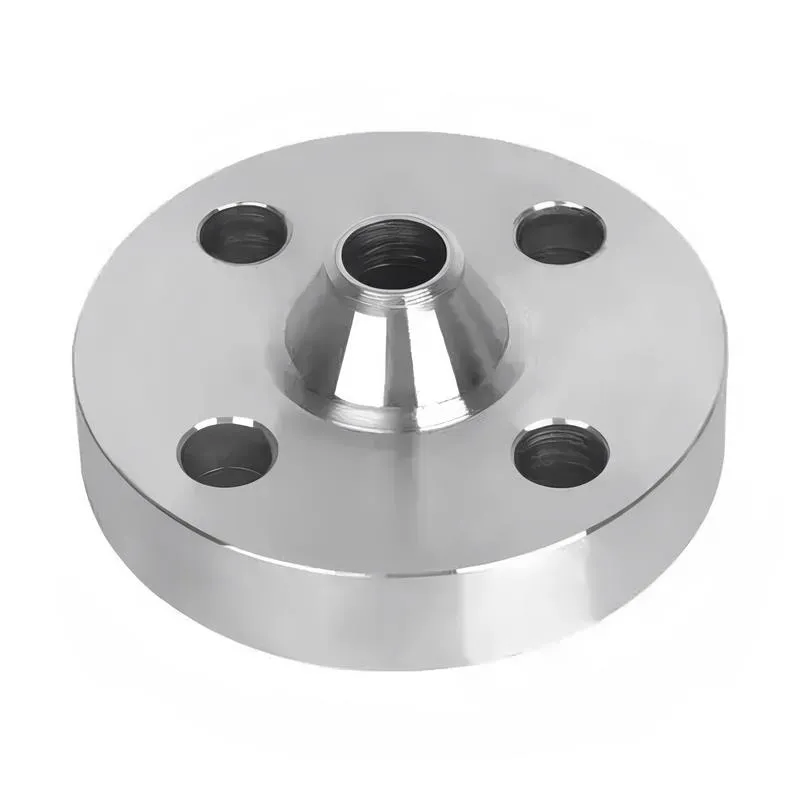
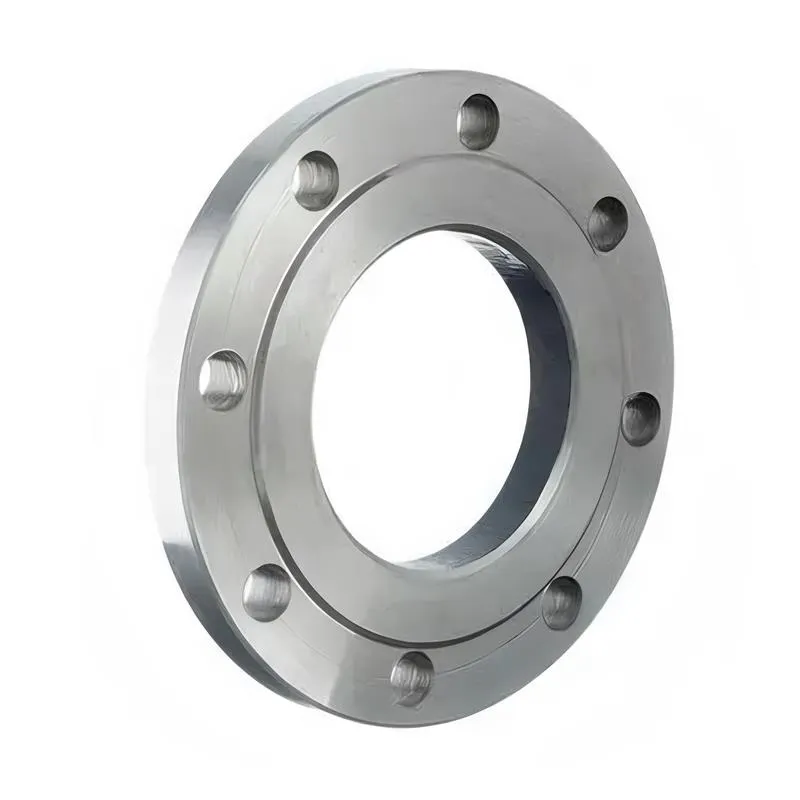
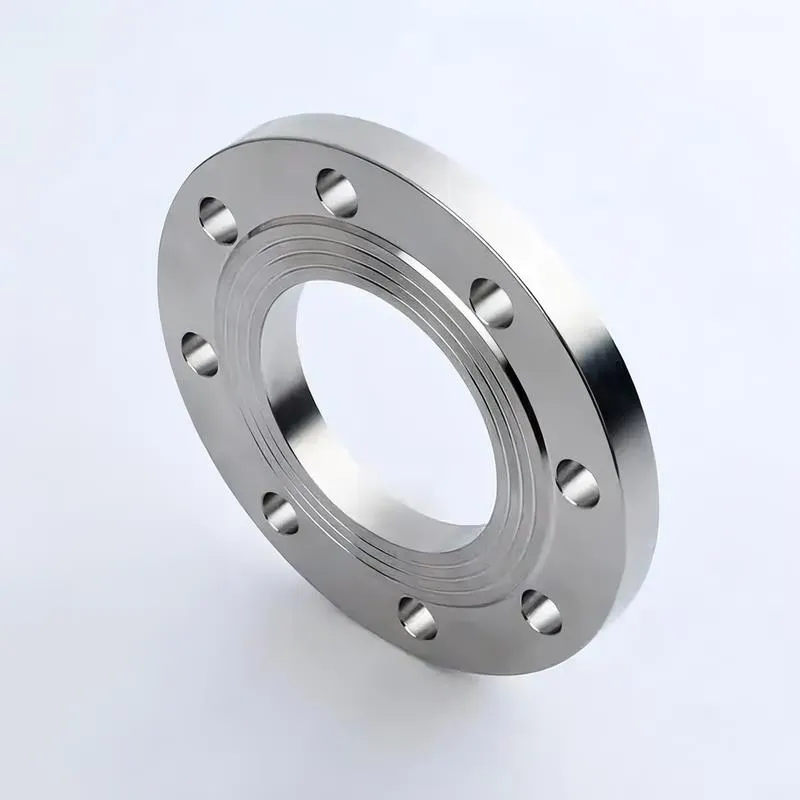
A flange—also referred to as a flange plate or rim—is a component used to connect shafts to one another, or, more commonly, to join the ends of pipes. Flanges are also utilized at the inlet and outlet ports of equipment to facilitate connections between two devices—for instance, the flange on a speed reducer. A "flange connection" or "flanged joint" refers to a detachable joint assembly comprising three interconnected elements—a flange, a gasket, and bolts—that together form a sealed structural unit. In the context of piping systems, a "pipe flange" specifically denotes a flange used for plumbing within the installation; when applied to equipment, it refers to the inlet or outlet flange of that specific device. Flanges feature a series of holes through which bolts are inserted to securely fasten the two flanges together, while a gasket placed between the flanges ensures a leak-proof seal. Flanges are broadly categorized into three types: threaded (screw-in) flanges, welded flanges, and clamp-type flanges. Flanges are invariably used in pairs; threaded flanges are suitable for low-pressure piping applications, whereas welded flanges are required for systems operating at pressures exceeding 4 kilograms per square centimeter. A sealing gasket is inserted between the two flange plates, which are then firmly secured using bolts. The thickness of a flange—as well as the specifications of the bolts used to fasten it—vary depending on the specific pressure rating required for the application. When connecting equipment such as water pumps or valves to piping systems, the corresponding connection points on these devices are often manufactured in the shape of a matching flange; this method of attachment is also referred to as a "flange connection." Generally, any connecting component that utilizes bolts to join and seal the perimeters of two flat surfaces—such as the joints in ventilation ducts—is termed a "flange"; such components may collectively be classified as "flange-type parts." However, since such a connection often constitutes merely a *portion* of a larger device—for instance, the interface between a flange and a water pump—it would be inappropriate to classify the entire water pump itself as a "flange-type part." Conversely, smaller components—such as valves—that feature such flanged interfaces may indeed be appropriately categorized as "flange-type parts."
-:-
For detailed product information, please contact sales.
-:
JIS SKS93 Oil-hardening Cold Work Tool Steel Flange Product Information
-:-
For detailed product information, please contact sales.
-:
JIS SKS93 Oil-hardening Cold Work Tool Steel Flange Synonyms
-:-
For detailed product information, please contact sales.
-:
JIS SKS93 Oil-hardening Cold Work Tool Steel Product Information
-:-
For detailed product information, please contact sales.
-:
# **JIS SKS93 Oil-Hardening Cold Work Tool Steel**
**International Standard:** JIS G4404 (Japan Industrial Standard) - Tool Steels
---
## **1. Overview**
JIS SKS93 is a **high-carbon, low-alloy oil-hardening cold work tool steel** characterized by its **exceptional hardness potential, good dimensional stability during heat treatment, and superior wear resistance**. As a member of the SKS series, this steel offers an optimal balance between the simplicity of oil-hardening processing and the performance requirements of demanding cold work applications. SKS93 is specifically formulated for tools requiring high surface hardness, good compressive strength, and resistance to abrasion, while maintaining reasonable toughness for service in stamping, forming, and cutting operations.
---
## **2. Chemical Composition (Typical Weight %)**
| Element | Content (%) |
| :------ | :---------- |
| C | 0.90–1.00 |
| Si | 0.15–0.35 |
| Mn | 1.20–1.60 |
| Cr | 0.30–0.70 |
| W | 0.30–0.70 |
| V | 0.10–0.25 |
| Mo | ≤ 0.30 |
| P (max) | 0.030 |
| S (max) | 0.030 |
**Balance:** Iron (Fe).
**Key Characteristics:** SKS93 features a **carefully balanced alloy composition** with:
- **High carbon content (0.90–1.00%)** for excellent hardenability and wear resistance
- **Elevated manganese (1.20–1.60%)** for enhanced hardenability and oil-quenching response
- **Moderate tungsten and chromium** for carbide formation and wear resistance improvement
- **Vanadium addition** for grain refinement and secondary hardening response
---
## **3. Physical & Mechanical Properties**
### **Physical Properties**
- **Density:** ~7.83 g/cm³
- **Thermal Conductivity:** ~40 W/m·K (at 20°C)
- **Coefficient of Thermal Expansion:** ~12.0 ×10⁻⁶ /K (20–200°C)
- **Specific Heat Capacity:** ~0.46 kJ/kg·K
- **Modulus of Elasticity:** ~210 GPa
- **Magnetic Properties:** Ferromagnetic
### **Mechanical Properties (Heat-Treated)**
- **Annealed Hardness:** 192–229 HB
- **Hardened & Tempered Hardness:** **60–63 HRC** (typical working range)
- Can achieve 62–63 HRC with proper low-temperature tempering
- **Tensile Strength:** ~2000–2300 MPa (at 62 HRC)
- **Yield Strength:** ~1800–2100 MPa
- **Elongation:** **Moderate** – 5–8%
- **Impact Toughness (Charpy):** **Good** – Typically 12–20 J
- **Wear Resistance:** **Very Good to Excellent** – High carbon and alloy content provide superior abrasion resistance
- **Compressive Strength:** ~2600–3000 MPa
- **Fatigue Strength:** Good – Suitable for cyclic loading applications
- **Dimensional Stability:** **Excellent** – Minimal distortion during oil quenching
### **Hardenability Characteristics:**
- **Critical Diameter (Oil Quench):** ~30–50 mm for 50% martensite at center
- **Hardness Gradient:** Moderate – good through-hardening capability
- **Full Hardening Depth:** Up to 60 mm diameter achievable
- **Size Change Predictability:** Very good – typically 0.08–0.12% expansion
---
## **4. Heat Treatment Specifications**
### **1. Annealing**
- **Temperature:** 750–800°C
- **Process:** Heat uniformly, hold for 2–4 hours, furnace cool slowly (≤ 20°C/h) to 550°C, then air cool
- **Resulting Hardness:** 192–229 HB
- **Spheroidize Annealing:** 760–780°C for 4–6 hours, slow cool to 600°C at 10°C/h (optimal for machining)
### **2. Stress Relieving**
- **Temperature:** 600–650°C
- **Hold Time:** 1–2 hours per 25mm thickness
- **Purpose:** Critical for complex tools to minimize distortion during hardening
### **3. Hardening (Quenching)**
- **Preheating:** Recommended for optimal results
- **First Preheat:** 400–500°C (beneficial for uniform heating)
- **Second Preheat:** 700–750°C (highly recommended)
- **Austenitizing Temperature:** **790–850°C** (typically 810–830°C)
- **Soaking Time:** 20–40 minutes per 25mm at temperature
- **Quenching Medium:** **Oil** (40–80°C recommended)
- Warm oil provides optimal balance of cooling rate and minimal distortion
- **Agitation:** Moderate agitation recommended
- **Quench Temperature:** Quench from austenitizing temperature to 50–70°C
### **4. Tempering**
- **Immediate Tempering Required:** Begin when tool reaches 50–80°C
- **Temperature Range:**
- **Low Temperature (150–200°C):** For maximum hardness (62–63 HRC) – 1–2 hours
- **Medium-Low (200–300°C):** For optimal balance (60–62 HRC) – 1–2 hours
- **Medium (300–400°C):** For improved toughness (58–60 HRC) – 1–2 hours
- **High (400–550°C):** For maximum toughness (55–58 HRC) – 1.5–2.5 hours
- **Hold Time:** 1–2 hours per 25mm thickness, minimum 1 hour
- **Cycles:** Single temper usually sufficient; double tempering improves dimensional stability
- **Secondary Hardening:** Moderate response due to alloy content
### **5. Special Considerations:**
- **Decarburization Control:** Important during heating – protective atmosphere recommended
- **Grain Growth Resistance:** Good – moderate alloying prevents excessive grain growth
- **Size Change:** Predictable and consistent with proper processing
- **Retained Austenite:** Typically low (<5%) with proper tempering
---
## **5. Key Features & Advantages**
1. **High Hardness Potential:** Can achieve 62–63 HRC, suitable for demanding wear applications
2. **Excellent Dimensional Stability:** Oil quenching provides minimal distortion and predictable size changes
3. **Superior Wear Resistance:** High carbon and alloy content provide excellent abrasion resistance
4. **Good Through-Hardenability:** Can effectively harden moderate to large sections
5. **Balanced Toughness:** Maintains reasonable impact resistance at high hardness levels
6. **Excellent Machinability:** In annealed state, comparable to other SKS grades
7. **Reliable Heat Treatment:** Forgiving processing characteristics with consistent results
8. **Cost-Effective Performance:** Provides excellent value for performance level
**Limitations:**
- **Moderate Toughness:** Not suitable for severe impact applications
- **Limited Hot Hardness:** Not designed for elevated temperature service
- **Not for Extreme Conditions:** Either wear or impact beyond design limits
- **Specialized Grade:** May not be as widely available as more common grades
---
## **6. Typical Applications**
SKS93 is used for **demanding cold work tooling applications** where high hardness, good wear resistance, and dimensional stability are required.
### **Stamping & Forming Tools:**
- **Blanking and Piercing Dies:** For medium to thick materials
- **Progressive Dies:** Multi-station dies requiring dimensional stability
- **Forming and Drawing Dies:** For sheet metal forming operations
- **Fine Blanking Tools:** For precision edge requirements
- **Lamination Dies:** For electrical motor and transformer components
### **Cutting Tools:**
- **Shear Blades:** For metal cutting applications
- **Slitting Knives:** For coil slitting operations
- **Cut-off Tools:** For bar and tube cutting
- **Industrial Knives:** For various cutting applications
### **Mold & Die Applications:**
- **Plastic Injection Mold Components:** Cavities, cores for engineering plastics
- **Die Casting Components:** Ejector pins, cores (for lower-temperature alloys)
- **Rubber Molds:** For compression and transfer molding
- **Glass Molds:** For container and specialty glass production
### **Precision Tooling:**
- **Gauges and Fixtures:** Precision measurement and inspection tools
- **Jigs and Templates:** For manufacturing and assembly
- **Machine Components:** Bushings, wear plates, guide pins
- **Cutting Tool Holders:** For machining operations
### **Special Applications:**
- **Thread Rolling Dies:** For precision thread production
- **Knurling Tools:** For surface patterning operations
- **Marking and Engraving Tools:** For product identification
- **Spring Forming Tools:** For spring manufacturing
### **Application Guidelines:**
- **Best for:** Tools requiring high hardness and good dimensional stability
- **Ideal for:** Production tooling with moderate to high wear requirements
- **Suitable for:** Components subject to compressive loading and abrasion
- **Avoid for:** Severe impact applications or elevated temperature service
- **Excellent for:** Tools requiring repeatable performance in production environments
---
## **7. International Standard Equivalents**
| Standard | Grade Designation | Notes |
| :--------------- | :------------------ | :----------------------------------------- |
| **JIS** | SKS93 | Original specification (JIS G4404) |
| **AISI/SAE (USA)**| No direct equivalent | Similar to modified O1/O7 grades |
| **DIN (Germany)** | 1.2510 mod | Modified with higher Mn and alloy content |
| **ISO** | 95MnCrW2 | International designation |
| **BS (UK)** | No direct equivalent | Similar to 01-type modified grades |
| **GB (China)** | 9Mn2CrW | Similar characteristics |
| **Custom** | Various modified oil-hardening grades | Engineered for specific needs |
**Note:** SKS93 is a specialized Japanese grade with specific alloy balance that differentiates it from common international equivalents. Its properties are optimized for specific industrial requirements within Japanese manufacturing.
---
## **8. Machining & Fabrication Guidelines**
### **Machining (In Annealed State):**
- **Excellent Machinability:** Comparable to other SKS grades
- **Tooling:** High-speed steel tools work well; carbide for production
- **Cutting Speeds:** 30–45 m/min for turning with HSS
- **Feeds:** Moderate feeds with good chip control
- **Chip Formation:** Discontinuous chips typical
- **Surface Finish:** Produces good surface finishes
- **Drilling and Tapping:** Good performance with standard tools
### **Grinding:**
- **Good Grindability:** Responds well to standard grinding operations
- **Wheel Selection:** Aluminum oxide wheels (A46-JV or similar)
- **Coolant:** Recommended for best results and surface finish
- **Parameters:** Standard grinding parameters suitable
- **Surface Finish:** Can achieve excellent finishes with proper technique
### **Electrical Discharge Machining (EDM):**
- **Suitable:** Can be EDMed in hardened or annealed state
- **Parameters:** Standard EDM settings generally suitable
- **Post-EDM:** Temper at 150–200°C to relieve white layer stresses
- **Surface Integrity:** Good with proper finishing passes
### **Welding:**
- **Possible with Care:** Can be welded using appropriate techniques
- **Preheat:** 200–300°C recommended
- **Filler Material:** Use matching or similar composition filler
- **Post-Weld:** Stress relieve at 600–650°C or re-harden for best results
- **Techniques:** SMAW with low-hydrogen electrodes recommended
### **Forging:**
- **Good Forgeability:** Can be forged with proper procedures
- **Forging Temperature:** 1050–900°C
- **Start:** 1050°C maximum
- **Finish:** 900°C minimum
- **Cooling:** Slow furnace cool after forging
- **Annealing:** Always required after forging before machining
---
## **9. Surface Treatment**
### **1. Nitriding:**
- **Highly Effective:** Creates hard, wear-resistant surface
- **Process:** Gas or plasma nitriding at 500–550°C
- **Case Depth:** 0.1–0.3 mm typical
- **Surface Hardness:** 800–1000 HV
- **Benefits:** Dramatically extends tool life in abrasive applications
### **2. PVD Coatings:**
- **Excellent Results:** TiN, TiCN, TiAlN coatings adhere well
- **Benefits:** Further enhance wear resistance, reduce friction
- **Application Temperature:** 400–500°C (must not affect base hardness)
- **Typical Thickness:** 2–5 μm
### **3. Traditional Treatments:**
- **Phosphate Coating:** For corrosion resistance and lubricity
- **Chrome Plating:** Hard chrome for wear resistance (0.01–0.05 mm)
- **Black Oxide:** Traditional finish for appearance and mild corrosion protection
### **4. Polishing & Texturing:**
- **Excellent Polishability:** Can achieve mirror finishes for mold applications
- **Texturing:** Good for chemical and EDM texturing processes
- **Surface Preparation:** Critical for optimal coating adhesion
---
## **10. Performance Comparison**
### **Within SKS Oil-Hardening Series:**
| Property | SKS93 | SKS2 (O1) | SKS3 (O2) | SKS7 (W-bearing) |
|-----------------------|---------------------|---------------------|---------------------|---------------------|
| **Manganese Content** | 1.20–1.60% | 0.90–1.20% | 0.90–1.20% | 0.90–1.20% |
| **Carbon Content** | 0.90–1.00% | 0.95–1.10% | 0.85–0.95% | 0.90–1.00% |
| **Typical Hardness** | 60–63 HRC | 57–62 HRC | 56–61 HRC | 58–62 HRC |
| **Hardenability** | **Best** | Good | Good | Very Good |
| **Wear Resistance** | **Excellent** | Very Good | Good | Very Good |
| **Impact Toughness** | Good | Good | Very Good | Good |
| **Machinability** | Excellent | Excellent | Excellent | Excellent |
| **Primary Advantage** | Hardness + Hardenability | General Purpose | Toughness Balance | Tungsten Wear |
### **Compared to Other Tool Steel Categories:**
| Property | SKS93 (Oil-H) | A2 (Air-H) | D2 (High-Cr) | SKS8 (Water-H) |
|-----------------------|---------------------|---------------------|---------------------|---------------------|
| **Hardening Method** | Oil | Air | Air | Water |
| **Max Hardness** | 63 HRC | 62 HRC | 62 HRC | 65+ HRC |
| **Distortion** | Low | Very Low | Very Low | Very High |
| **Toughness** | Good | Good | Fair | Very Poor |
| **Wear Resistance** | Excellent | Excellent | **Excellent** | Excellent (surface) |
| **Hardenability** | Very Good | Excellent | Excellent | Very Poor |
| **Machinability** | Excellent | Good | Fair | Excellent |
| **Processing Safety** | High | Very High | High | Very Low |
---
## **11. Design Considerations**
### **Section Size Capability:**
- **Fully Hardenable:** Up to approximately 60 mm diameter/thickness
- **Surface Hardening:** Effective for sections up to 100 mm
- **Large Tools:** Good choice for moderate to large tooling applications
- **Optimal Range:** 15–80 mm sections
### **Stress Management:**
- **Radius Requirements:** Minimum 0.5 mm radius on all corners
- **Uniform Sections:** Design for even wall thickness where possible
- **Stress Relief:** Essential after rough machining of complex tools
- **Gradual Transitions:** Use generous fillets and tapers (3:1 minimum)
### **Hardness Selection Strategy:**
- **For Maximum Wear Resistance:** Temper at 150–200°C (62–63 HRC)
- **For General Purpose:** Temper at 200–300°C (60–62 HRC)
- **For Impact Applications:** Temper at 350–450°C (58–60 HRC)
- **With Surface Treatment:** Can use higher tempering temperatures with nitriding/coating
### **Dimensional Changes:**
- **During Hardening:** Typically 0.08–0.12% growth
- **During Tempering:** Minimal change with proper processing
- **Predictability:** Excellent – consistent size changes
- **Machining Allowance:** 0.1–0.2 mm per side for finish grinding
### **Tool Life Optimization:**
- **Design for Service Conditions:** Match hardness to specific wear/impact balance
- **Surface Treatment Integration:** Plan for coatings from initial design stage
- **Maintenance Considerations:** Design for resharpening or refurbishment where applicable
- **Cooling System Design:** For mold applications, complete before heat treatment
---
## **12. Quality Control**
### **Hardness Testing:**
- **Surface Hardness:** Rockwell C scale (multiple locations)
- **Core Hardness:** Important for thicker sections to verify through-hardening
- **Hardness Uniformity:** Check across tool surfaces and through thickness
- **File Testing:** Quick verification method for hardened surfaces
### **Microstructure Examination:**
- **Annealed Condition:** Spheroidized carbides in ferritic matrix
- **Hardened Condition:** Tempered martensite with fine, evenly distributed carbides
- **Grain Size:** ASTM 8 or finer preferred
- **Carbide Distribution:** Should be uniform without excessive clustering
### **Non-Destructive Testing:**
- **Magnetic Particle Inspection:** For surface cracks after heat treatment
- **Dye Penetrant:** Alternative for complex geometries
- **Dimensional Verification:** Critical for precision tools and dies
- **Visual Inspection:** For surface defects, finish quality, and obvious issues
### **Performance Testing:**
- **Tool Life Testing:** For production applications – establish baselines
- **Wear Testing:** For applications with specific abrasion requirements
- **Production Trials:** Most valuable for new tool designs
- **Comparative Testing:** Against existing tools or alternative materials
---
## **13. Summary & Selection Guidelines**
JIS SKS93 represents a **high-performance oil-hardening tool steel** optimized for applications requiring excellent hardness, good wear resistance, and reliable dimensional stability.
### **Select SKS93 When:**
1. **High hardness (60–63 HRC)** is required for wear resistance
2. **Excellent dimensional stability** during heat treatment is critical
3. **Good through-hardenability** is needed for moderate to large sections
4. **Balanced performance** (wear resistance with reasonable toughness) is required
5. **Reliable, predictable heat treatment** results are important
6. **Production tooling** needs consistent, repeatable performance
7. **Cost-effective solution** for demanding cold work applications is desired
### **Optimal Application Examples:**
- **Production stamping and forming dies** for medium to high volumes
- **Precision cutting tools** requiring high hardness and edge retention
- **Mold components** for engineering plastics and composites
- **Wear parts** subject to abrasion and compressive loading
- **Tooling for manufacturing** requiring reliable, consistent performance
- **Replacement components** for existing high-performance tooling
### **Consider Alternatives When:**
1. **Extreme impact resistance** is the primary requirement
2. **Maximum toughness** is needed for severe service conditions
3. **Elevated temperature operation** (>250°C) is involved
4. **Extreme wear conditions** require specialized high-alloy steels
5. **Complex geometries** necessitate air hardening for minimal distortion
6. **Cost must be absolutely minimized** for simple applications
### **Economic Advantages:**
- **Competitive material cost** for performance level achieved
- **Reduced machining costs** due to excellent machinability in annealed state
- **Lower heat treatment costs** compared to air-hardening grades
- **Good tool life** – balanced properties often yield excellent service life
- **Reduced downtime** – reliable performance means fewer unexpected failures
- **Predictable maintenance** – consistent wear patterns facilitate planning
### **Heat Treatment Advantages:**
- **Forgiving Process:** Tolerant of normal variations in industrial heat treatment
- **Predictable Results:** Consistent hardness and dimensional changes
- **Minimal Equipment Requirements:** Standard oil quenching facilities adequate
- **Low Risk:** Reduced cracking compared to water hardening
- **Good Reproducibility:** Batch-to-batch consistency in production environments
### **Industry Applications:**
SKS93 is particularly valued in:
- **Stamping and forming** operations for automotive and appliance industries
- **Precision tool and die** manufacturing
- **Mold making** for plastic and rubber components
- **Industrial cutting tool** production
- **Manufacturing support** tooling and fixtures
- **Maintenance and repair** of production tooling
### **Technical Development Position:**
SKS93 occupies an important position in the tool steel spectrum:
- **Between standard oil-hardening grades** and more specialized alloys
- **Offering enhanced performance** over basic grades without excessive cost
- **Providing reliability** often missing in water-hardening alternatives
- **Balancing manufacturability** with service performance requirements
### **Final Recommendation:**
JIS SKS93 is a **highly capable and reliable oil-hardening tool steel** that delivers excellent performance across a wide range of demanding cold work applications. Its balanced alloy composition provides enhanced hardenability and wear resistance compared to standard oil-hardening grades, while maintaining the processing advantages that make oil quenching so valuable for dimensional control.
For tool designers and manufacturers seeking a **dependable, high-performance material** that offers an optimal balance of properties for challenging applications, SKS93 represents an excellent choice. Its combination of high achievable hardness, good toughness at service hardness levels, excellent dimensional stability, and competitive cost makes it a **versatile and valuable option** in the tool steel selection matrix.
When tooling requirements demand **more than basic performance but not the extreme specialization** of premium alloys, when **reliability and consistency are paramount** in production environments, or when a **cost-effective solution** is needed for demanding applications, SKS93 offers a **proven, practical solution** that has demonstrated its value in industrial applications. It exemplifies the principle that optimal tool steel selection often involves finding the right balance of properties for specific applications, rather than simply choosing the "hardest" or "toughest" material available.
-:-
For detailed product information, please contact sales.
-:
JIS SKS93 Oil-hardening Cold Work Tool Steel Specification
Dimensions
Size:
Diameter 20-1000 mm Length <6833 mm
Size:We can customized as required
Standard:
Per your request or drawing
We can customized as required
Properties(Theoretical)
Chemical Composition
-:-
For detailed product information, please contact sales.
-:
JIS SKS93 Oil-hardening Cold Work Tool Steel Properties
-:-
For detailed product information, please contact sales.
-:
Applications of JIS SKS93 Oil-hardening Cold Work Tool Steel Flange
-:-
For detailed product information, please contact sales.
-:
Chemical Identifiers JIS SKS93 Oil-hardening Cold Work Tool Steel Flange
-:-
For detailed product information, please contact sales.
-:
Packing of JIS SKS93 Oil-hardening Cold Work Tool Steel Flange
-:-
For detailed product information, please contact sales.
-:
Standard Packing:
-:-
For detailed product information, please contact sales.
-:
Typical bulk packaging includes palletized plastic 5 gallon/25 kg. pails, fiber and Steel Flange drums to 1 ton super sacks in full container (FCL) or truck load (T/L) quantities. Research and sample quantities and hygroscopic, oxidizing or other air sensitive materials may be packaged under argon or vacuum. Solutions are packaged in polypropylene, plastic or glass jars up to palletized 3304 gallon liquid totes Special package is available on request. E FORUs’ is carefully handled to minimize damage during storage and transportation and to preserve the quality of our products in their original condition