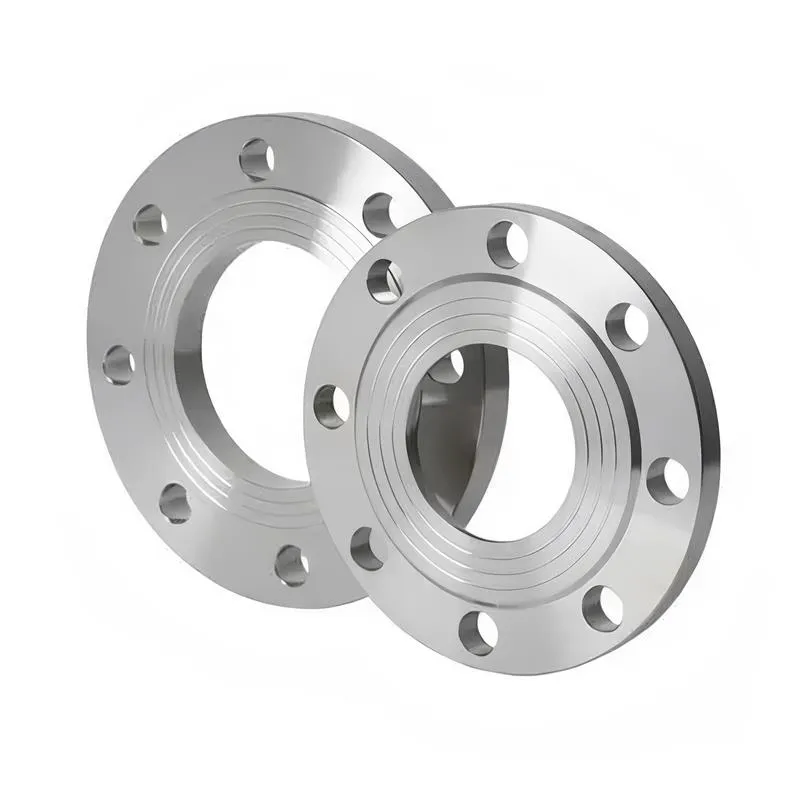
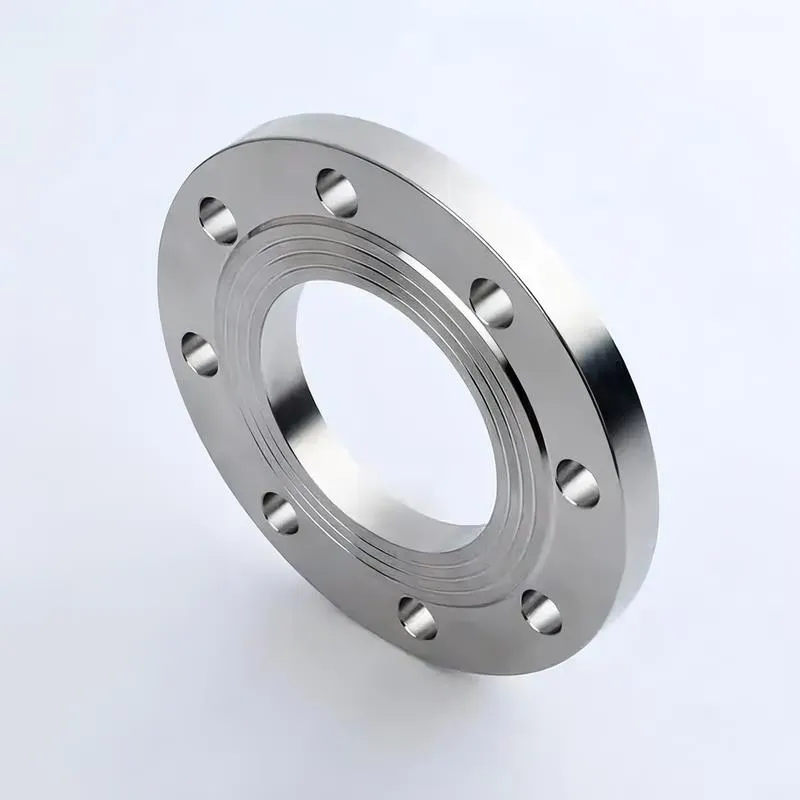
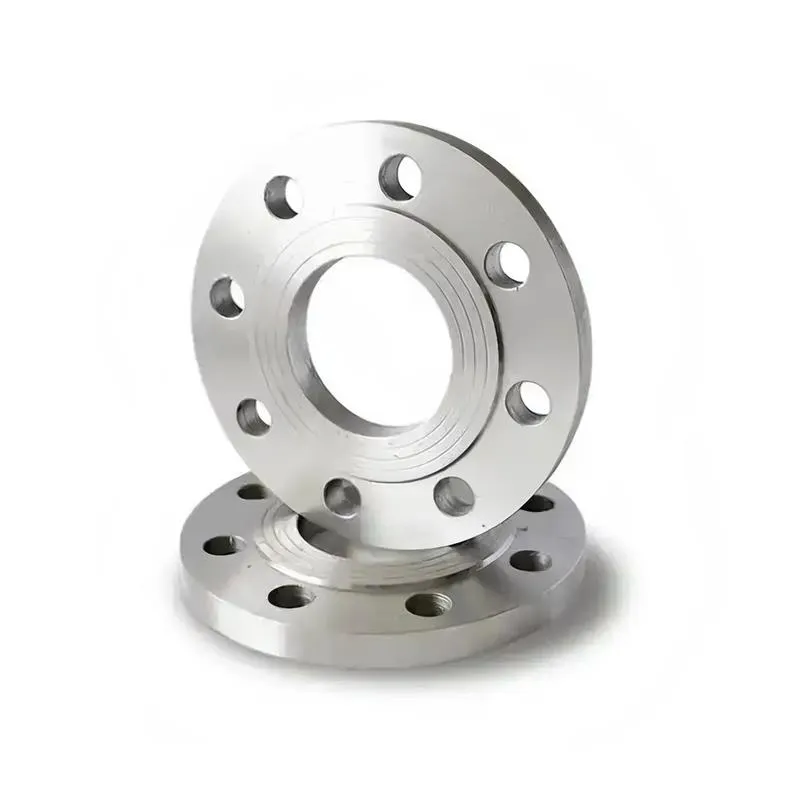
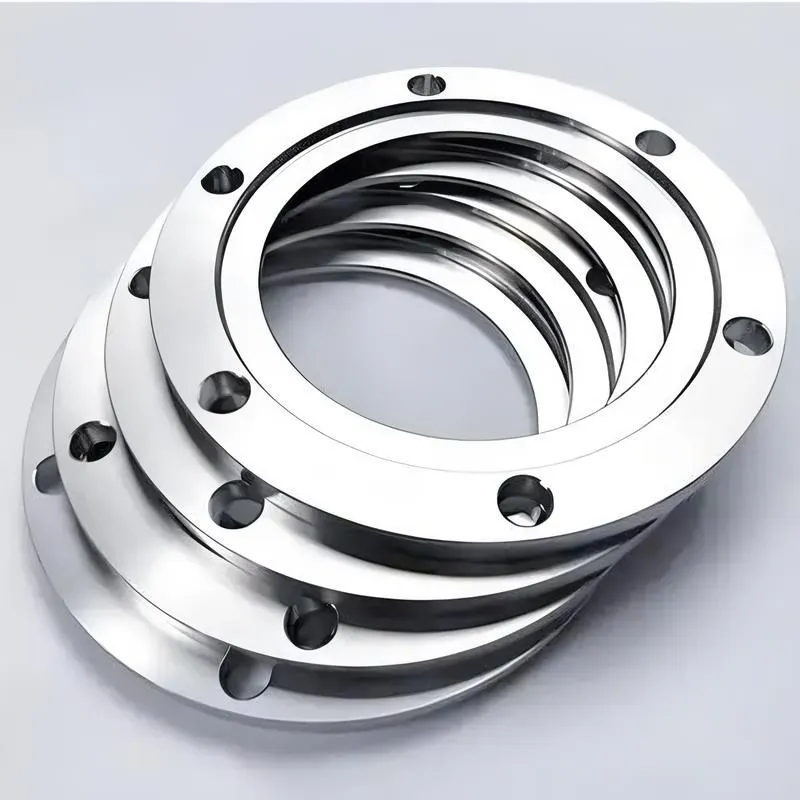
1,We Manufacturing processes are primarily classified into four types:
1:Forging,
2:Casting,
3:Cutting,
4:Rolling.
2,We can manufacture in accordance with these standards.
Standards:
GB Series (Chinese Standards), JB Series (Machinery Standards), HG Series (Chemical Industry Standards), ASME B16.5 (American Standards), BS4504 (British Standards), DIN (German Standards), and JIS (Japanese Standards).
Internationally, there are two primary systems of pipe flange standards: the European system, represented by the German DIN standards (including those of the former Soviet Union), and the American system, represented by the US ANSI pipe flange standards. Other common standards include: the Chinese Ministry of Machinery Industry standards (JB series), the Ministry of Chemical Industry standards (HG series), the Chinese National Standard *GB/T 9112–9124-2010 Steel Pipe Flanges*, as well as US standards (ASME B16.5), British standards (BS4504), German standards (DIN), Japanese standards (JIS), and marine standards (CBM), among others.
The nominal pressure ratings for the PN series are designated by "PN" and comprise the following nine levels: PN2.5, PN6, PN10, PN16, PN25, PN40, PN63, PN100, and PN160.
The nominal pressure ratings for the Class series are designated by "Class" and comprise the following six levels: Class150, Class300, Class600, Class900, Class1500, and Class2500.
Flange Classification
1. **According to Chemical Industry Standards:** Flanges are classified as follows:
Plate Flat Welding Flange (PL), Necked Flat Welding Flange (SO), Necked Butt Welding Flange (WN), Integral Flange (IF), Socket Welding Flange (SW), Threaded Flange (Th), Butt Welding Ring Loose Flange (PJ/SE), Blind Flange (BL), Flat Welding Ring Loose Flange (PJ/PJ), and Lined Blind Flange (BL(s)).
2. **According to Petrochemical (SH) Industry Standards:** Flanges are classified as follows:
Threaded Flange (PL), Butt Welding Flange (WN), Flat Welding Flange (SO), Socket Welding Flange (SW), Loose Flange (LJ), and Blind Flange (no specific designation).
3. **According to Machinery (JB) Industry Standards:** Flanges are classified as follows:
Integral Flange, Butt Welding Flange, Plate Flat Welding Flange, Butt Welding Ring Plate Loose Flange, Flat Welding Ring Plate Loose Flange, Lap Joint Ring Plate Loose Flange, and Blind Flange.
4. **According to Connection Method/Type:** Flanges are classified as follows:
Plate Flat Welding Flange, Necked Flat Welding Flange, Necked Butt Welding Flange, Socket Welding Flange, Threaded Flange, Blind Flange, Necked Butt Welding Ring Loose Flange, Flat Welding Ring Loose Flange, Ring-Type Joint (RTJ) Flange and Blind Flange, Large-Diameter Plate Flange, Large-Diameter High-Neck Flange, Figure-8 Blind Plate, Butt Welding Ring Loose Flange, etc.
5. **According to the Component Being Connected:** Flanges can be classified into Vessel Flanges and Pipe Flanges.
6. **According to Structural Type:** Flanges include Integral Flanges, Threaded Flanges, Flat Welding Flanges, Butt Welding Flanges, Lap Joint (Loose/Swivel) Flanges, and Blind Flanges.
A flange—also referred to as a flange plate or rim—is a component used to connect shafts to one another, or, more commonly, to join the ends of pipes. Flanges are also utilized at the inlet and outlet ports of equipment to facilitate connections between two devices—for instance, the flange on a speed reducer. A "flange connection" or "flanged joint" refers to a detachable joint assembly comprising three interconnected elements—a flange, a gasket, and bolts—that together form a sealed structural unit. In the context of piping systems, a "pipe flange" specifically denotes a flange used for plumbing within the installation; when applied to equipment, it refers to the inlet or outlet flange of that specific device. Flanges feature a series of holes through which bolts are inserted to securely fasten the two flanges together, while a gasket placed between the flanges ensures a leak-proof seal. Flanges are broadly categorized into three types: threaded (screw-in) flanges, welded flanges, and clamp-type flanges. Flanges are invariably used in pairs; threaded flanges are suitable for low-pressure piping applications, whereas welded flanges are required for systems operating at pressures exceeding 4 kilograms per square centimeter. A sealing gasket is inserted between the two flange plates, which are then firmly secured using bolts. The thickness of a flange—as well as the specifications of the bolts used to fasten it—vary depending on the specific pressure rating required for the application. When connecting equipment such as water pumps or valves to piping systems, the corresponding connection points on these devices are often manufactured in the shape of a matching flange; this method of attachment is also referred to as a "flange connection." Generally, any connecting component that utilizes bolts to join and seal the perimeters of two flat surfaces—such as the joints in ventilation ducts—is termed a "flange"; such components may collectively be classified as "flange-type parts." However, since such a connection often constitutes merely a *portion* of a larger device—for instance, the interface between a flange and a water pump—it would be inappropriate to classify the entire water pump itself as a "flange-type part." Conversely, smaller components—such as valves—that feature such flanged interfaces may indeed be appropriately categorized as "flange-type parts."
-:-
For detailed product information, please contact sales.
-:
Markforged 3D Printed A2 Tool Steel Flange, Heat-Treated Product Information
-:-
For detailed product information, please contact sales.
-:
Markforged 3D Printed A2 Tool Steel Flange, Heat-Treated Synonyms
-:-
For detailed product information, please contact sales.
-:
Markforged 3D Printed A2 Tool Steel, Heat-Treated Product Information
-:-
For detailed product information, please contact sales.
-:
# **Product Introduction: Markforged 3D Printed A2 Tool Steel (Heat-Treated)**
## **1. Overview**
**Markforged 3D Printed A2 Tool Steel** is an advanced **additively manufactured (AM), air-hardening cold work tool steel** produced via **Metal Fused Filament Fabrication (Metal FFF)** technology followed by **industry-standard heat treatment**. This material represents the digital transformation of the classic **AISI A2 (UNS T30102)** tool steel, enabling the production of complex, monolithic tooling components—such as conformal cooling channels, lightweight structures, and integrated assemblies—that are difficult or impossible to manufacture through traditional methods. While its base composition targets the A2 specification, its microstructure and properties are defined by the unique layer-by-layer printing process and subsequent debinding, sintering, and heat treatment cycles. This technology bridges the gap between the design freedom of additive manufacturing and the demanding performance requirements of production tooling and end-use parts.
## **2. Manufacturing Process & Specifications**
This material is defined by a proprietary digital manufacturing process rather than conventional mill specifications.
* **Primary Manufacturing Process:**
* **Markforged Metal FFF (Metal X System):** A two-stage additive process:
1. **Printing:** Extrusion of a metal-polymer composite filament ("bound metal deposition") to create a "green" part.
2. **Post-Processing:** **Debinding** (catalytic or solvent) to remove the polymer binder, followed by **sintering** in a furnace to fuse the metal particles into a dense (>99%) solid. This results in a "brown" part.
* **Final Heat Treatment:** The sintered part undergoes a full **austenitize, quench, and temper (AQT) cycle**—typically in a vacuum or controlled atmosphere furnace—to achieve the final tool steel microstructure and properties. This step is critical and is performed according to Markforged-specified or user-defined protocols.
* **Material Classification:**
* **Type:** **Additively Manufactured A2-Type Tool Steel**.
* **Not a Direct Standard Equivalent:** It is **not** an ASTM A681 A2 bar stock. Its properties are **process- and geometry-dependent**. Markforged provides guaranteed **minimum** property values for standardized test specimens printed and processed under optimal conditions.
* **Industry Position:** Competes with other AM tool steels from binder jetting (e.g., ExOne, Desktop Metal) and Laser Powder Bed Fusion (LPBF) processes, offering a distinct balance of cost, resolution, and ease of use.
## **3. Chemical Composition (Weight %, Target)**
The feedstock filament is formulated to achieve a sintered chemistry approximating standard A2 after processing.
| Element | Target Range (%) (Post-Sintering) | Role & Benefit |
|---------|-----------------------------------|----------------|
| **Carbon (C)** | ~0.95 – 1.05 | For martensitic hardness and wear resistance. Sintering atmosphere must be controlled to manage carbon loss. |
| **Chromium (Cr)** | ~4.75 – 5.50 | Provides air hardenability and wear resistance. |
| **Molybdenum (Mo)** | ~0.90 – 1.40 | Enhances hardenability and toughness. |
| **Vanadium (V)** | ~0.15 – 0.50 | For grain refinement and wear resistance. |
| **Other Elements:** Iron (Fe) balance, with Mn, Si similar to standard A2. The precise chemistry can vary slightly based on sintering parameters and feedstock batch. |
## **4. Typical Physical & Mechanical Properties (As Printed & Heat Treated)**
* **Important Note:** Properties are **anisotropic** (direction-dependent). Values are typically highest in the plane of printing (XY) and lower in the build direction (Z) due to layer adhesion characteristics.
* **Density:** >99% of theoretical density (after sintering and HIPping if applied).
* **As-Sintered Condition:** Soft, suitable for machining or EDM before final heat treatment.
* **After Final Heat Treatment (Typical Values - XY Direction):**
* **Hardness:** **58 – 61 HRC** (achievable with proper heat treatment).
* **Ultimate Tensile Strength (UTS):** **1500 – 1850 MPa** (218,000 – 268,000 psi) *[Guaranteed minimums are lower, e.g., ~1400 MPa]*.
* **Yield Strength (0.2% Offset):** **1300 – 1600 MPa** (189,000 – 232,000 psi).
* **Elongation at Break:** **1 – 3%.** **Significantly lower than wrought A2.** Ductility is a key limitation of the as-sintered, heat-treated MFF/FFF microstructure.
* **Impact Toughness:** **Lower than wrought A2.** The microstructure contains sintering pores and lacks the directional grain flow of forged material, reducing energy absorption.
* **Wear Resistance:** **Good,** comparable to wrought A2 at similar hardness, due to the hard martensitic matrix and carbides.
* **Thermal Conductivity:** Similar to wrought steel.
## **5. Product Application**
This material is ideal for **complex tooling inserts and end-use parts** where geometry, not ultimate material performance, is the limiting design factor.
* **Injection Molds & Tooling Inserts:**
* **Cores and cavities with conformal cooling channels** for dramatically reduced cycle times and warpage.
* **Complex ejector pins, sliders, and lifters.**
* **Lightweight, optimized mold bases and support structures.**
* **Jigs, Fixtures, and End-of-Arm Tooling:**
* **Custom gripping jaws, assembly fixtures, and drill guides.**
* **Lightweight robotic end-effectors.**
* **Prototype and Low-Run Production Tools:**
* **Forming dies, bending tools, and stamping inserts** for short runs where rapid tooling turnaround is critical.
* **Replacement Parts for Legacy Machinery:** One-off replacement of complex, worn components.
## **6. Key Features & Advantages**
* **Geometric Freedom & Integration:** Enables internal conformal cooling, lattice structures, part consolidation, and topology-optimized designs unattainable with machining.
* **Rapid Tooling Lead Time:** From digital file to hardened tool in days, not weeks.
* **Material Efficiency:** Near-net-shape production minimizes material waste compared to machining from solid block.
* **Accessibility:** Metal FFF systems are more office-/shop-floor-friendly than powder-based LPBF systems, with less hazardous feedstock handling.
* **Good As-Printed Surface Finish:** Suitable for many mold applications, often reducing post-processing.
* **Achieves Tool Steel Hardness:** Proper heat treatment enables real production use.
## **7. Critical Design & Processing Considerations**
* **Anisotropy:** Parts are weakest in the build direction (Z-axis). **Orient critical loads within the XY printing plane.**
* **Limited Ductility and Toughness:** Not suitable for high-impact or high-fatigue applications where wrought A2 would be used. Avoid sharp corners and design for stiffness, not toughness.
* **Support Structure & Distortion:** Requires careful support design for overhangs. Sintering and heat treatment can cause distortion; designs should accommodate or be stress-relieved.
* **Post-Processing is Mandatory:** **Debinding, sintering, and heat treatment are not optional.** These are separate, critical furnace processes requiring significant time and expertise.
* **Surface Porosity:** As-sintered surfaces may have micro-porosity, which can be sealed via infiltration (for some materials) or surface treatments like nitriding.
* **Property Variability:** Final properties depend heavily on print orientation, part geometry, sintering profile, and heat treatment consistency. **Characterize with your own geometry and process.**
**Summary:**
Markforged 3D Printed A2 Tool Steel is not a drop-in replacement for wrought A2 bar stock. It is a **new manufacturing paradigm for tooling.** Its value proposition lies in **enabling revolutionary tool designs that solve thermal management and weight problems,** trading off some mechanical performance (especially ductility and isotropic toughness) for unprecedented geometric capability and speed. For applications where conformal cooling, part consolidation, or rapid prototyping of complex tools delivers a decisive economic or performance advantage, it is a powerful solution. Success requires designers to think additively, respect the material's process-driven limitations, and leverage its unique strengths to create tools that outperform their conventionally made counterparts in specific, high-value ways.
-:-
For detailed product information, please contact sales.
-:
Markforged 3D Printed A2 Tool Steel, Heat-Treated Specification
Dimensions
Size:
Diameter 20-1000 mm Length <7061 mm
Size:We can customized as required
Standard:
Per your request or drawing
We can customized as required
Properties(Theoretical)
Chemical Composition
-:-
For detailed product information, please contact sales.
-:
Markforged 3D Printed A2 Tool Steel, Heat-Treated Properties
-:-
For detailed product information, please contact sales.
-:
Applications of Markforged 3D Printed A2 Tool Steel Flange, Heat-Treated
-:-
For detailed product information, please contact sales.
-:
Chemical Identifiers Markforged 3D Printed A2 Tool Steel Flange, Heat-Treated
-:-
For detailed product information, please contact sales.
-:
Packing of Markforged 3D Printed A2 Tool Steel Flange, Heat-Treated
-:-
For detailed product information, please contact sales.
-:
Standard Packing:
-:-
For detailed product information, please contact sales.
-:
Typical bulk packaging includes palletized plastic 5 gallon/25 kg. pails, fiber and Steel Flange drums to 1 ton super sacks in full container (FCL) or truck load (T/L) quantities. Research and sample quantities and hygroscopic, oxidizing or other air sensitive materials may be packaged under argon or vacuum. Solutions are packaged in polypropylene, plastic or glass jars up to palletized 3532 gallon liquid totes Special package is available on request. E FORUs’ is carefully handled to minimize damage during storage and transportation and to preserve the quality of our products in their original condition