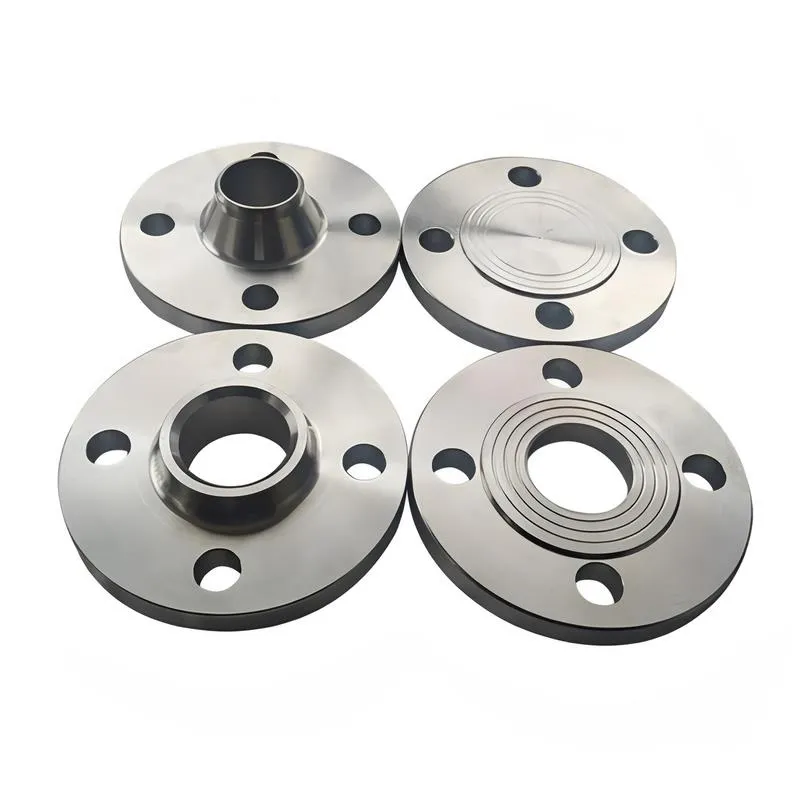
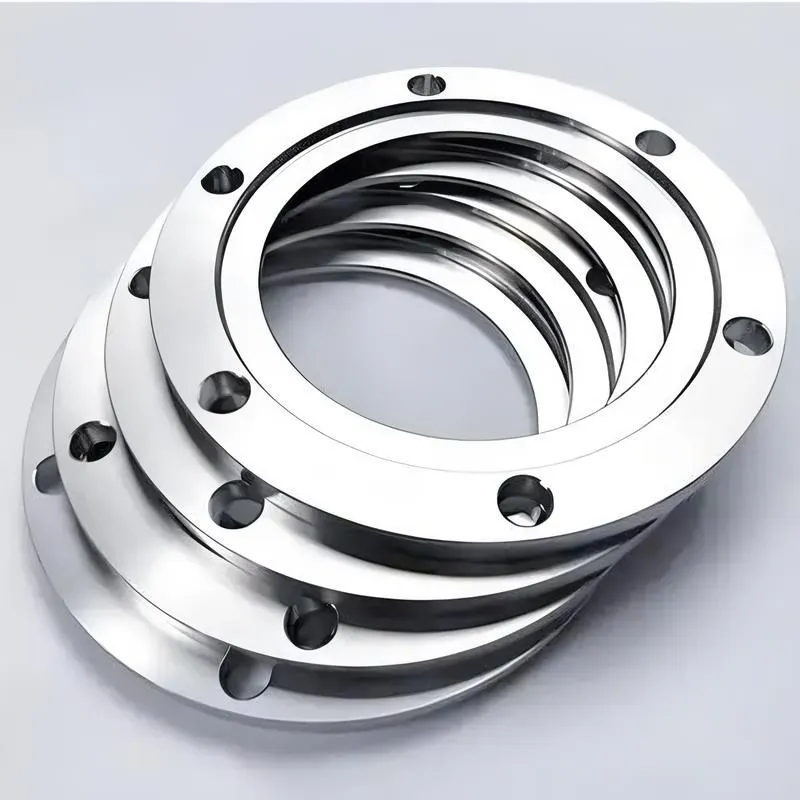
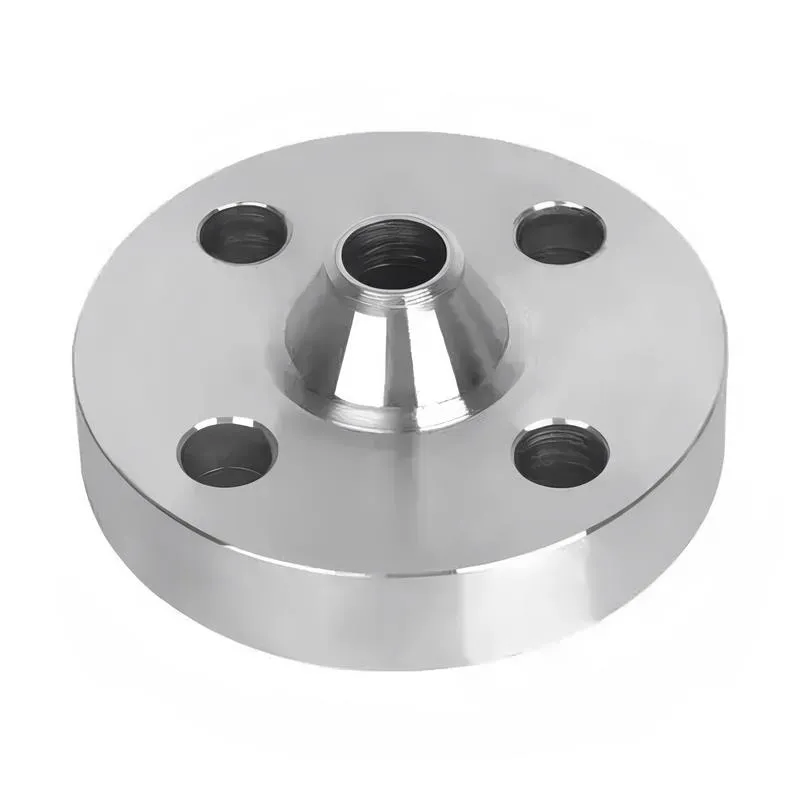
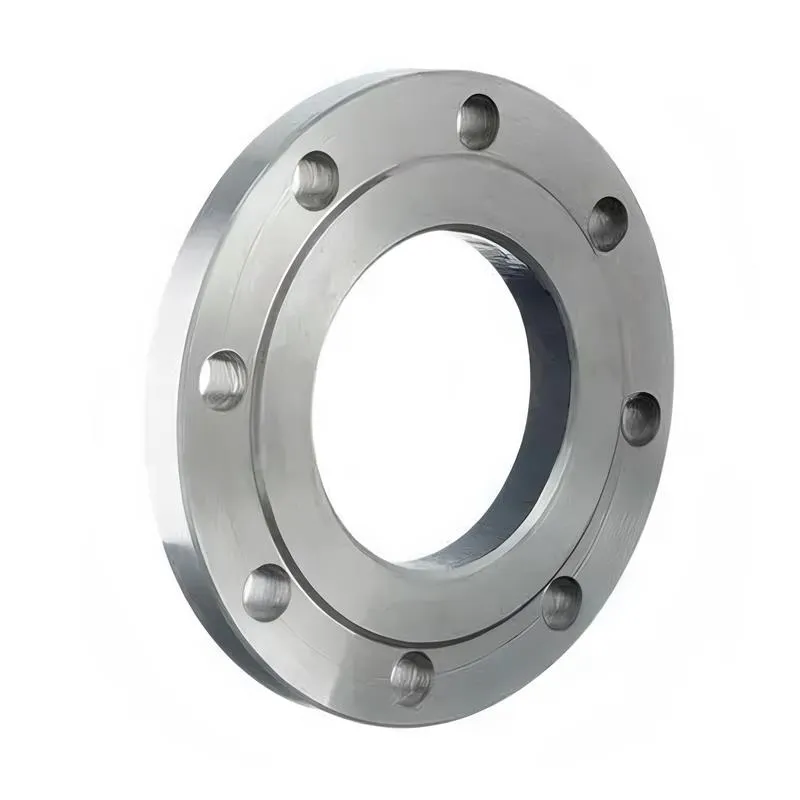
SAE J2477 AD 1400 Automotive Austempered Ductile Iron Flange
Product Code : FL-Steel-3016-CU
We provide SAE J2477 AD 1400 Automotive Austempered Ductile Iron Flange Manufacturing types: Forging, Casting, Cutting, Rolling.We can manufacture in accordance with these standards.GB/T 9112–9124-2010 Steel Pipe Flanges , JB Series , HG Series, ASME B16.5, BS4504, DIN , JIS,CBM,etc
1,We Manufacturing processes are primarily classified into four types:
1:Forging,
2:Casting,
3:Cutting,
4:Rolling.
2,We can manufacture in accordance with these standards.
Standards:
GB Series (Chinese Standards), JB Series (Machinery Standards), HG Series (Chemical Industry Standards), ASME B16.5 (American Standards), BS4504 (British Standards), DIN (German Standards), and JIS (Japanese Standards).
Internationally, there are two primary systems of pipe flange standards: the European system, represented by the German DIN standards (including those of the former Soviet Union), and the American system, represented by the US ANSI pipe flange standards. Other common standards include: the Chinese Ministry of Machinery Industry standards (JB series), the Ministry of Chemical Industry standards (HG series), the Chinese National Standard *GB/T 9112–9124-2010 Steel Pipe Flanges*, as well as US standards (ASME B16.5), British standards (BS4504), German standards (DIN), Japanese standards (JIS), and marine standards (CBM), among others.
The nominal pressure ratings for the PN series are designated by "PN" and comprise the following nine levels: PN2.5, PN6, PN10, PN16, PN25, PN40, PN63, PN100, and PN160.
The nominal pressure ratings for the Class series are designated by "Class" and comprise the following six levels: Class150, Class300, Class600, Class900, Class1500, and Class2500.
Flange Classification
1. **According to Chemical Industry Standards:** Flanges are classified as follows:
Plate Flat Welding Flange (PL), Necked Flat Welding Flange (SO), Necked Butt Welding Flange (WN), Integral Flange (IF), Socket Welding Flange (SW), Threaded Flange (Th), Butt Welding Ring Loose Flange (PJ/SE), Blind Flange (BL), Flat Welding Ring Loose Flange (PJ/PJ), and Lined Blind Flange (BL(s)).
2. **According to Petrochemical (SH) Industry Standards:** Flanges are classified as follows:
Threaded Flange (PL), Butt Welding Flange (WN), Flat Welding Flange (SO), Socket Welding Flange (SW), Loose Flange (LJ), and Blind Flange (no specific designation).
3. **According to Machinery (JB) Industry Standards:** Flanges are classified as follows:
Integral Flange, Butt Welding Flange, Plate Flat Welding Flange, Butt Welding Ring Plate Loose Flange, Flat Welding Ring Plate Loose Flange, Lap Joint Ring Plate Loose Flange, and Blind Flange.
4. **According to Connection Method/Type:** Flanges are classified as follows:
Plate Flat Welding Flange, Necked Flat Welding Flange, Necked Butt Welding Flange, Socket Welding Flange, Threaded Flange, Blind Flange, Necked Butt Welding Ring Loose Flange, Flat Welding Ring Loose Flange, Ring-Type Joint (RTJ) Flange and Blind Flange, Large-Diameter Plate Flange, Large-Diameter High-Neck Flange, Figure-8 Blind Plate, Butt Welding Ring Loose Flange, etc.
5. **According to the Component Being Connected:** Flanges can be classified into Vessel Flanges and Pipe Flanges.
6. **According to Structural Type:** Flanges include Integral Flanges, Threaded Flanges, Flat Welding Flanges, Butt Welding Flanges, Lap Joint (Loose/Swivel) Flanges, and Blind Flanges.
A flange—also referred to as a flange plate or rim—is a component used to connect shafts to one another, or, more commonly, to join the ends of pipes. Flanges are also utilized at the inlet and outlet ports of equipment to facilitate connections between two devices—for instance, the flange on a speed reducer. A "flange connection" or "flanged joint" refers to a detachable joint assembly comprising three interconnected elements—a flange, a gasket, and bolts—that together form a sealed structural unit. In the context of piping systems, a "pipe flange" specifically denotes a flange used for plumbing within the installation; when applied to equipment, it refers to the inlet or outlet flange of that specific device. Flanges feature a series of holes through which bolts are inserted to securely fasten the two flanges together, while a gasket placed between the flanges ensures a leak-proof seal. Flanges are broadly categorized into three types: threaded (screw-in) flanges, welded flanges, and clamp-type flanges. Flanges are invariably used in pairs; threaded flanges are suitable for low-pressure piping applications, whereas welded flanges are required for systems operating at pressures exceeding 4 kilograms per square centimeter. A sealing gasket is inserted between the two flange plates, which are then firmly secured using bolts. The thickness of a flange—as well as the specifications of the bolts used to fasten it—vary depending on the specific pressure rating required for the application. When connecting equipment such as water pumps or valves to piping systems, the corresponding connection points on these devices are often manufactured in the shape of a matching flange; this method of attachment is also referred to as a "flange connection." Generally, any connecting component that utilizes bolts to join and seal the perimeters of two flat surfaces—such as the joints in ventilation ducts—is termed a "flange"; such components may collectively be classified as "flange-type parts." However, since such a connection often constitutes merely a *portion* of a larger device—for instance, the interface between a flange and a water pump—it would be inappropriate to classify the entire water pump itself as a "flange-type part." Conversely, smaller components—such as valves—that feature such flanged interfaces may indeed be appropriately categorized as "flange-type parts."
-:-
For detailed product information, please contact sales.
-:
SAE J2477 AD 1400 Automotive Austempered Ductile Iron Flange Product Information
-:-
For detailed product information, please contact sales.
-:
SAE J2477 AD 1400 Automotive Austempered Ductile Iron Flange Synonyms
-:-
For detailed product information, please contact sales.
-:
SAE J2477 AD 1400 Automotive Austempered Ductile Iron Product Information
-:-
For detailed product information, please contact sales.
-:
# **Product Technical Data Sheet: SAE J2477 AD 1400 Automotive Austempered Ductile Iron (ADI)**
---
## **1. Product Overview**
**SAE J2477 AD 1400** represents the **absolute performance frontier** of standardized automotive-grade Austempered Ductile Iron, achieving mechanical properties that **rival ultra-high-strength maraging steels and advanced aerospace alloys**. With a minimum tensile strength of **1400 MPa (203 ksi)**, this exceptional material operates at the theoretical limits of austempering technology, delivering **unprecedented strength-to-weight ratio** while maintaining critical damage tolerance. Through ultra-precise low-temperature transformation processing, AD 1400 develops a **nanostructured ausferritic-bainitic matrix** that provides a unique combination of **extreme strength, minimal but essential ductility, and exceptional fatigue performance** exceeding most quenched and tempered steels at equivalent hardness levels. This grade is engineered for revolutionary applications in next-generation vehicle architectures where maximizing performance while minimizing mass is non-negotiable.
---
## **2. Governing Standards & Specifications**
This specification defines the ultimate performance tier for automotive ADI, representing both current capabilities and future development targets.
* **Primary Standard Reference:**
* **SAE J2477** - *Austempered Ductile (Nodular) Iron Castings (Automotive)*
* **Performance Context:**
* **ASTM A897/A897M:** Beyond standard table values; conceptually approaches **Grade 1400/1100/02** territory.
* **ISO 17804:** Exceeds published ISO classifications; represents **experimental/development grade** performance.
* **Status Note:** AD 1400 represents **advanced development material** rather than standard production grade. Specifications are typically **program-specific** and co-developed between OEMs and specialized suppliers.
* **Advanced Testing Protocols:**
* **Tensile Testing:** ASTM E8 with high-resolution extensometry
* **Fracture Mechanics:** ASTM E1820 (JIC), ASTM E399 (KIC)
* **Microstructural Analysis:** ASTM A247, SEM/TEM/EBSD for nanostructure characterization
* **Fatigue & Damage Tolerance:** ASTM E647 (da/dN testing), component-specific HCF/LCF protocols
* **Residual Stress Analysis:** XRD or hole-drilling methods
---
## **3. Chemical Composition (Advanced Alloy Design)**
Achieving AD 1400 properties demands near-perfect chemistry control and innovative alloy optimization.
| Element | Target Range (%) | Metallurgical Function for AD 1400 |
| :--- | :--- | :--- |
| **Carbon (C)** | 3.2 - 3.5 | Aggressively minimized to reduce graphite volume while maintaining transformation capability; focuses carbon in matrix strengthening. |
| **Silicon (Si)** | **2.1 - 2.4** | **Precisely optimized** - just sufficient to suppress cementite formation at ultra-low temperatures; minimized to prevent excessive austenite retention. |
| **Manganese (Mn)** | **≤ 0.10** | **Effectively eliminated** - purity levels approaching vacuum-melted steels required to prevent intercellular embrittlement. |
| **Molybdenum (Mo)** | **0.60 - 0.90** | **Critical transformation control** - ensures complete low-temperature transformation throughout section; enables nanostructure development. |
| **Copper (Cu)** | **1.2 - 1.8** | **Primary strengthening agent** - provides deep hardenability and significant solid solution strengthening. |
| **Nickel (Ni)** | **1.5 - 2.5** | **Essential for toughness** - enables nanostructure refinement while maintaining fracture resistance at this strength level. |
| **Chromium (Cr)** | 0.3 - 0.6 | Enhances hardenability and provides secondary strengthening. |
| **Vanadium (V)** | 0.1 - 0.3 | **Nanoscale precipitate former** - provides additional strengthening via precipitation hardening. |
| **Niobium (Nb)** | 0.05 - 0.15 | May be added for grain refinement and precipitation strengthening. |
| **Magnesium (Mg)** | 0.04 - 0.07 | Ensures near-perfect nodularity (>96%). |
| **Trace Elements** | **Ultra-high purity** | P ≤ 0.015%, S ≤ 0.008%; other residuals at near-detection limits. |
---
## **4. Physical & Mechanical Properties**
AD 1400 delivers performance characteristics that challenge conventional material paradigms.
| Property | Target Performance Range | Technological Significance |
| :--- | :--- | :--- |
| **Tensile Strength (UTS)** | **1400 - 1550 MPa (203 - 225 ksi)** | Strength level comparable to 300M steel (1930-2070 MPa) but with density advantage and castability. |
| **Yield Strength (0.2% YS)** | **1100 - 1250 MPa (160 - 181 ksi)** | Exceptional resistance to plastic deformation; enables ultra-thin, high-stiffness designs. |
| **Elongation** | **2 - 4%** | **Critical but minimal ductility** - provides essential crack tolerance; achieving consistent >2% is the primary technical achievement. |
| **Hardness** | **444 - 534 HBW** (45-52 HRC) | Typically 470-500 HBW (~47-50 HRC). Provides extreme wear and contact fatigue resistance. |
| **Modulus of Elasticity** | 170 - 180 GPa | Slightly increased due to reduced graphite content. |
| **Charpy Impact (V-notch)** | **6 - 12 J @ 23°C** | Low but measurable toughness; requires sophisticated damage-tolerant design. |
| **Fracture Toughness (KIC)** | **35 - 50 MPa√m** | Respectable for strength level; exceeds many ultra-high-strength steels. |
| **Fatigue Endurance Limit** | **630 - 780 MPa** (≈ 0.45-0.55 x UTS) | **Exceptional fatigue performance** - approaches maraging steel levels with weight advantage. |
| **Fatigue Crack Growth Threshold (ΔKth)** | **6 - 8 MPa√m** | Excellent crack initiation resistance. |
| **Density** | **~7.15 g/cm³** | **9-10% lighter than equivalent-strength steels**, enabling revolutionary mass reduction. |
| **Damping Capacity** | **1.5-2.5× steel** | Maintains NVH advantages despite extreme strength. |
| **Microstructure** | **Nanostructured Bainite/Ausferrite** with minimal retained austenite (<10%). Transformation at **150-200°C (300-390°F)**. | Features nanoscale ferrite plates (20-50 nm) with carbon-stabilized austenite films; approaches "nanobainite" structure. |
---
## **5. Potential Applications in Future Automotive Systems**
AD 1400 is envisioned for breakthrough applications in next-generation mobility platforms.
* **Advanced Electric Vehicle Architectures:**
* **Ultra-high-speed motor shafts** and **rotor components** for >20,000 RPM electric motors.
* **Multi-speed EV transmission gearsets** handling >400 kW power levels.
* **Integrated e-axle structural components** combining gearbox and differential functions.
* **Performance & Hypercar Applications:**
* **Complete gearbox casings and internals** for >1000 hp applications.
* **Chassis structural nodes** in carbon-fiber composite monocoques.
* **Advanced braking system components** for repeated high-g deceleration.
* **Autonomous & Connected Vehicle Systems:**
* **High-integrity sensor mounts** and **LiDAR/radar supports** requiring dimensional stability.
* **Steering system components** for fail-operational autonomous systems.
* **Commercial Vehicle Innovations:**
* **Ultra-durable final drive components** for long-haul electric trucks.
* **Wheel-end components** for mega-truck applications.
* **Aerospace & Defense Ground Vehicles:**
* **Lightweight armor components** with multi-hit capability.
* **Drive system components** for unmanned ground vehicles.
---
## **6. Advanced Manufacturing & Processing Technology**
* **Heat Treatment Technology:** Represents the state-of-the-art in industrial transformation processing.
* **Austenitizing:** 900-950°C with vacuum or protective atmosphere.
* **Quenching:** Near-instantaneous transfer to **150-200°C** salt or fluidized bed.
* **Transformation:** 3-8+ hours at tightly controlled temperature (±2°C).
* **Cooling:** Precision-controlled to manage residual stresses.
* **Process Innovations Required:**
* **Adaptive process control** using real-time transformation monitoring.
* **Multi-stage austempering** with temperature profiling.
* **Post-transformation treatments** for stress management and property optimization.
* **Manufacturing Challenges:**
* **Extremely narrow processing window** - minor deviations cause martensite formation or incomplete transformation.
* **Residual stress management** critical due to high strength and limited ductility.
* **Consistency achievement** across production runs requires advanced statistical methods.
* **Machining & Finishing:**
* **Unmachinable in final condition** with conventional methods.
* **Final shaping** via precision grinding, EDM, or laser ablation.
* **Surface enhancement** via controlled shot peening or laser shock peening often required.
---
## **7. Quality Assurance & Validation Framework**
**Development Specification:** "Advanced Austempered Ductile Iron, SAE J2477 AD 1400 Performance Target"
**Mandatory Development Protocol:**
1. **Multi-phase Development Program:**
* Phase 1: Alloy design and process feasibility
* Phase 2: Laboratory-scale optimization
* Phase 3: Pilot-scale production validation
* Phase 4: Component-level demonstration
2. **Comprehensive Material Characterization:**
* **Full chemical analysis** with trace element quantification
* **Mechanical property mapping** across multiple production batches
* **Advanced microstructure analysis** including TEM for nanostructure characterization
* **Fracture mechanics evaluation** under service-relevant conditions
3. **Process Capability Demonstration:**
* **Statistical process validation** demonstrating capability for critical properties
* **Microstructural consistency** across component geometry
* **Property uniformity** through section thickness
4. **Component Validation Requirements:**
* **Full-scale fatigue testing** under simulated service conditions
* **Damage tolerance evaluation** including flaw growth characterization
* **Environmental testing** (temperature, corrosion effects)
* **Comparative benchmarking** against alternative materials
---
## **8. Technological Value Proposition & Implementation Pathway**
**SAE J2477 AD 1400 represents a paradigm shift in automotive material capabilities:**
* **Weight Reduction Potential:** 15-20% mass savings versus equivalent-strength steel systems
* **Performance Enhancement:** Enables higher power densities and improved vehicle dynamics
* **Design Integration:** Allows consolidation of multiple components into single, complex castings
* **Lifecycle Advantages:** Potential for improved durability and reduced maintenance
**Implementation Considerations:**
1. **Technology Readiness:** Currently at **TRL 4-5** (laboratory/pilot validation); requires further development for volume production
2. **Cost Structure:** Significant premium over conventional ADI grades; justified only by system-level performance benefits
3. **Supply Chain:** Limited to specialized suppliers with advanced capabilities
4. **Design Methodology:** Requires advanced simulation and damage-tolerant design approaches
5. **Validation Strategy:** Extensive testing required due to limited historical data
**Development Partnerships:** Successful implementation requires close collaboration between OEMs, material developers, and component manufacturers in **pre-competitive consortiums** to advance the technology while managing risk.
---
## **9. Future Outlook & Research Directions**
**SAE J2477 AD 1400 serves as both a performance target and a technology driver:**
* **Near-term (1-3 years):** Limited applications in motorsport and specialty vehicles
* **Mid-term (3-7 years):** Adoption in high-performance production vehicles and premium EVs
* **Long-term (7+ years):** Potential for broader adoption as technology matures and costs reduce
**Key Research Areas:**
1. **Process robustness improvement** for production consistency
2. **Alloy optimization** for improved toughness at this strength level
3. **Joining technologies** for multi-material assemblies
4. **Surface engineering** for enhanced performance in specific applications
5. **Recycling and sustainability** considerations for circular economy
**SAE J2477 AD 1400 represents the cutting edge of automotive material science, offering a pathway to revolutionary vehicle performance through advanced material innovation. While currently at the development stage, it points toward a future where cast components can deliver performance previously achievable only with exotic materials and complex manufacturing processes.**
-:-
For detailed product information, please contact sales.
-:
SAE J2477 AD 1400 Automotive Austempered Ductile Iron Specification
Dimensions
Size:
Diameter 20-1000 mm Length <6571 mm
Size:We can customized as required
Standard:
Per your request or drawing
We can customized as required
Properties(Theoretical)
Chemical Composition
-:-
For detailed product information, please contact sales.
-:
SAE J2477 AD 1400 Automotive Austempered Ductile Iron Properties
-:-
For detailed product information, please contact sales.
-:
Applications of SAE J2477 AD 1400 Automotive Austempered Ductile Iron Flange
-:-
For detailed product information, please contact sales.
-:
Chemical Identifiers SAE J2477 AD 1400 Automotive Austempered Ductile Iron Flange
-:-
For detailed product information, please contact sales.
-:
Packing of SAE J2477 AD 1400 Automotive Austempered Ductile Iron Flange
-:-
For detailed product information, please contact sales.
-:
Standard Packing:
-:-
For detailed product information, please contact sales.
-:
Typical bulk packaging includes palletized plastic 5 gallon/25 kg. pails, fiber and Steel Flange drums to 1 ton super sacks in full container (FCL) or truck load (T/L) quantities. Research and sample quantities and hygroscopic, oxidizing or other air sensitive materials may be packaged under argon or vacuum. Solutions are packaged in polypropylene, plastic or glass jars up to palletized 3042 gallon liquid totes Special package is available on request. E FORUs’ is carefully handled to minimize damage during storage and transportation and to preserve the quality of our products in their original condition