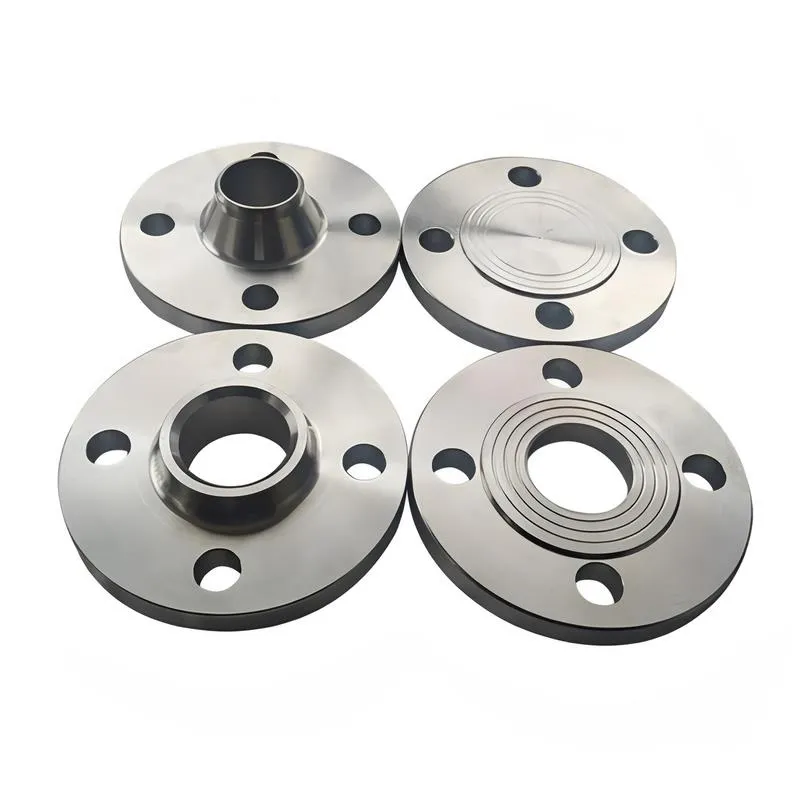
1,We Manufacturing processes are primarily classified into four types:
1:Forging,
2:Casting,
3:Cutting,
4:Rolling.
2,We can manufacture in accordance with these standards.
Standards:
GB Series (Chinese Standards), JB Series (Machinery Standards), HG Series (Chemical Industry Standards), ASME B16.5 (American Standards), BS4504 (British Standards), DIN (German Standards), and JIS (Japanese Standards).
Internationally, there are two primary systems of pipe flange standards: the European system, represented by the German DIN standards (including those of the former Soviet Union), and the American system, represented by the US ANSI pipe flange standards. Other common standards include: the Chinese Ministry of Machinery Industry standards (JB series), the Ministry of Chemical Industry standards (HG series), the Chinese National Standard *GB/T 9112–9124-2010 Steel Pipe Flanges*, as well as US standards (ASME B16.5), British standards (BS4504), German standards (DIN), Japanese standards (JIS), and marine standards (CBM), among others.
The nominal pressure ratings for the PN series are designated by "PN" and comprise the following nine levels: PN2.5, PN6, PN10, PN16, PN25, PN40, PN63, PN100, and PN160.
The nominal pressure ratings for the Class series are designated by "Class" and comprise the following six levels: Class150, Class300, Class600, Class900, Class1500, and Class2500.
Flange Classification
1. **According to Chemical Industry Standards:** Flanges are classified as follows:
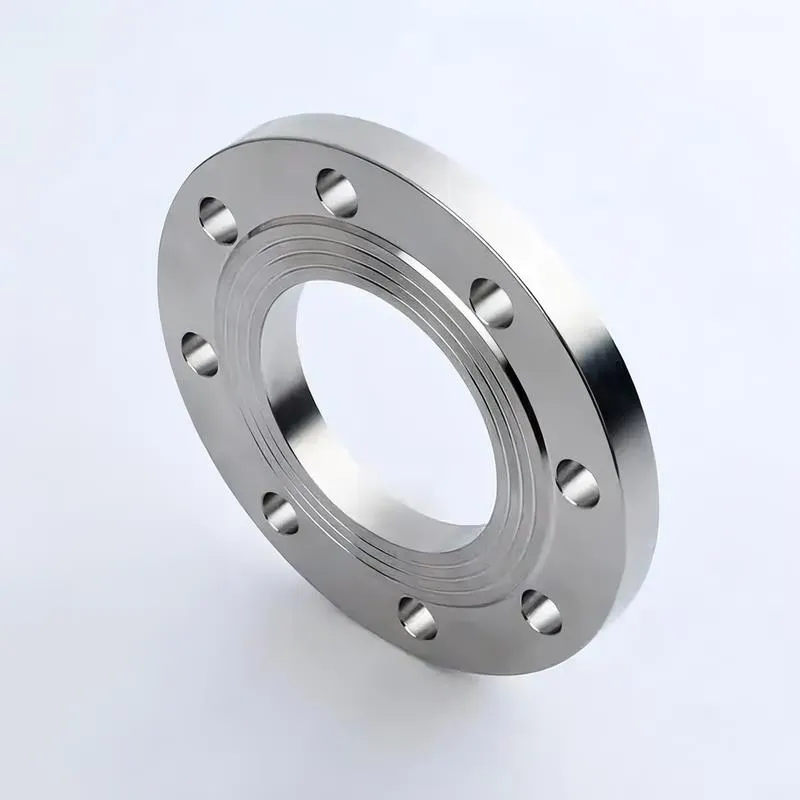
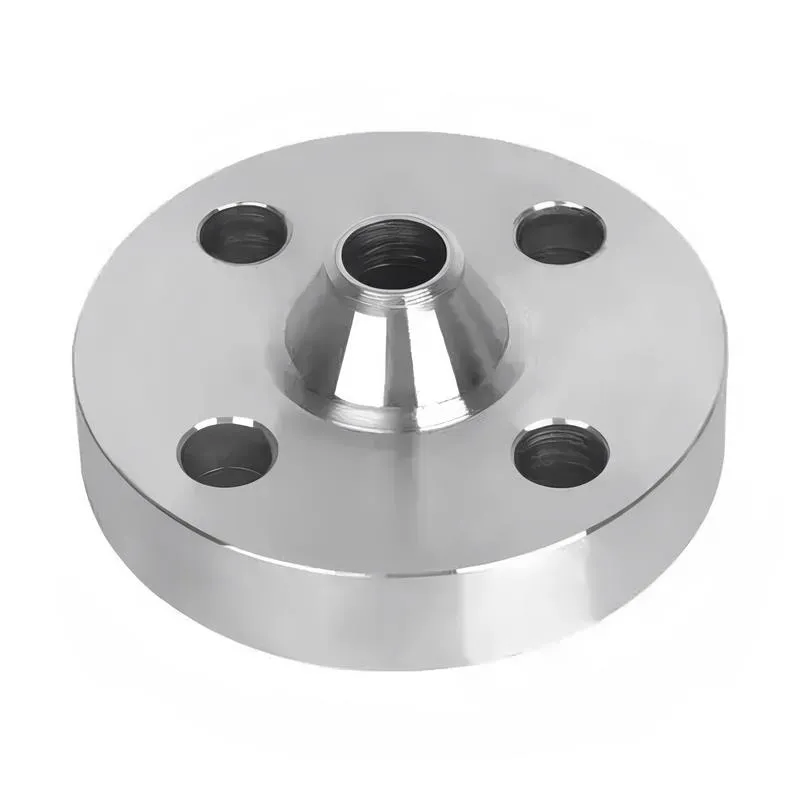
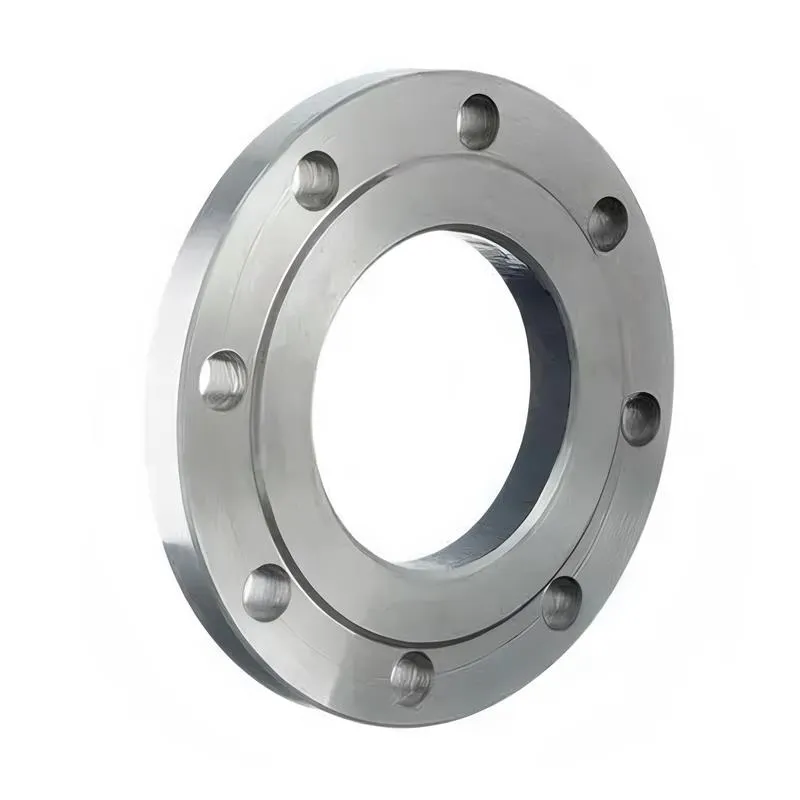
Plate Flat Welding Flange (PL), Necked Flat Welding Flange (SO), Necked Butt Welding Flange (WN), Integral Flange (IF), Socket Welding Flange (SW), Threaded Flange (Th), Butt Welding Ring Loose Flange (PJ/SE), Blind Flange (BL), Flat Welding Ring Loose Flange (PJ/PJ), and Lined Blind Flange (BL(s)).
2. **According to Petrochemical (SH) Industry Standards:** Flanges are classified as follows:
Threaded Flange (PL), Butt Welding Flange (WN), Flat Welding Flange (SO), Socket Welding Flange (SW), Loose Flange (LJ), and Blind Flange (no specific designation).
3. **According to Machinery (JB) Industry Standards:** Flanges are classified as follows:
Integral Flange, Butt Welding Flange, Plate Flat Welding Flange, Butt Welding Ring Plate Loose Flange, Flat Welding Ring Plate Loose Flange, Lap Joint Ring Plate Loose Flange, and Blind Flange.
4. **According to Connection Method/Type:** Flanges are classified as follows:
Plate Flat Welding Flange, Necked Flat Welding Flange, Necked Butt Welding Flange, Socket Welding Flange, Threaded Flange, Blind Flange, Necked Butt Welding Ring Loose Flange, Flat Welding Ring Loose Flange, Ring-Type Joint (RTJ) Flange and Blind Flange, Large-Diameter Plate Flange, Large-Diameter High-Neck Flange, Figure-8 Blind Plate, Butt Welding Ring Loose Flange, etc.
5. **According to the Component Being Connected:** Flanges can be classified into Vessel Flanges and Pipe Flanges.
6. **According to Structural Type:** Flanges include Integral Flanges, Threaded Flanges, Flat Welding Flanges, Butt Welding Flanges, Lap Joint (Loose/Swivel) Flanges, and Blind Flanges.
A flange—also referred to as a flange plate or rim—is a component used to connect shafts to one another, or, more commonly, to join the ends of pipes. Flanges are also utilized at the inlet and outlet ports of equipment to facilitate connections between two devices—for instance, the flange on a speed reducer. A "flange connection" or "flanged joint" refers to a detachable joint assembly comprising three interconnected elements—a flange, a gasket, and bolts—that together form a sealed structural unit. In the context of piping systems, a "pipe flange" specifically denotes a flange used for plumbing within the installation; when applied to equipment, it refers to the inlet or outlet flange of that specific device. Flanges feature a series of holes through which bolts are inserted to securely fasten the two flanges together, while a gasket placed between the flanges ensures a leak-proof seal. Flanges are broadly categorized into three types: threaded (screw-in) flanges, welded flanges, and clamp-type flanges. Flanges are invariably used in pairs; threaded flanges are suitable for low-pressure piping applications, whereas welded flanges are required for systems operating at pressures exceeding 4 kilograms per square centimeter. A sealing gasket is inserted between the two flange plates, which are then firmly secured using bolts. The thickness of a flange—as well as the specifications of the bolts used to fasten it—vary depending on the specific pressure rating required for the application. When connecting equipment such as water pumps or valves to piping systems, the corresponding connection points on these devices are often manufactured in the shape of a matching flange; this method of attachment is also referred to as a "flange connection." Generally, any connecting component that utilizes bolts to join and seal the perimeters of two flat surfaces—such as the joints in ventilation ducts—is termed a "flange"; such components may collectively be classified as "flange-type parts." However, since such a connection often constitutes merely a *portion* of a larger device—for instance, the interface between a flange and a water pump—it would be inappropriate to classify the entire water pump itself as a "flange-type part." Conversely, smaller components—such as valves—that feature such flanged interfaces may indeed be appropriately categorized as "flange-type parts."
-:-
For detailed product information, please contact sales.
-:
SAE J431 automotive gray cast Iron Flange, SAE grade G2500 Product Information
-:-
For detailed product information, please contact sales.
-:
SAE J431 automotive gray cast Iron Flange, SAE grade G2500 Synonyms
-:-
For detailed product information, please contact sales.
-:
SAE J431 automotive gray cast iron, SAE grade G2500 Product Information
-:-
For detailed product information, please contact sales.
-:
## **Product Introduction: SAE J431 G2500 Automotive Gray Cast Iron**
SAE J431 G2500 is a medium-strength, highly versatile automotive-grade gray cast iron, representing a critical balance between manufacturability and enhanced mechanical performance. The "G2500" designation indicates a minimum tensile strength of 25,000 psi (172 MPa). This grade is engineered to provide significantly greater load-bearing capacity and wear resistance than the foundational G1800, while retaining the excellent castability, machinability, and damping characteristics inherent to gray iron. It achieves this through a controlled microstructure featuring a higher proportion of the stronger pearlitic phase. G2500 serves as the workhorse material for a vast array of structurally important, moderately stressed components in automotive powertrains, chassis, and braking systems, where reliability under cyclic loads is essential.
This grade strikes the optimal performance-cost balance for a wide spectrum of automotive applications, making it one of the most widely specified gray irons in the industry.
---
### **1. Chemical Composition**
The composition is tailored to promote a stronger pearlitic matrix while maintaining good foundry characteristics. Ranges allow for foundry process control.
**Typical Composition Range (SAE J431 G2500):**
| Element | Content (%) | Primary Function |
| :--- | :--- | :--- |
| **Carbon (C)** | **3.20 - 3.50** | **Graphite former and fluidity enhancer.** Slightly lower than G1800 to reduce graphitization, promoting a stronger pearlitic matrix while maintaining adequate castability. |
| **Silicon (Si)** | **2.00 - 2.40** | **Graphitizer and ferrite promoter.** Controlled at a lower level than G1800 to allow for more pearlite formation in the matrix, thereby increasing strength and hardness. |
| **Manganese (Mn)** | **0.60 - 0.90** | **Critical pearlite stabilizer.** Higher than in G1800 to actively counteract silicon and ensure a predominantly pearlitic matrix, which is key to achieving the G2500 strength class. |
| **Phosphorus (P)** | **≤ 0.12** | **Fluidity agent.** Kept at a low level to minimize the formation of brittle phosphide eutectic and maintain toughness. |
| **Sulfur (S)** | **≤ 0.15** | **Controlled impurity.** Balanced by manganese to form stable MnS inclusions. |
| **Iron (Fe)** | Balance | Base metal. |
**Microstructural Note:** The target microstructure for G2500 is a **predominantly pearlitic matrix (approx. 80-95% pearlite) with a uniform distribution of Type A, medium-sized flake graphite**. A small amount of ferrite is acceptable. The pearlite, a fine lamellar mixture of ferrite and cementite, provides the increased strength and hardness. Graphite morphology remains crucial for machinability and damping.
---
### **2. Physical & Mechanical Properties**
Properties reflect the enhanced strength of a pearlitic matrix while preserving the beneficial attributes of gray iron.
| Property | Typical Value / Description | SAE J431 Requirement |
| :--- | :--- | :--- |
| **Microstructure** | **Pearlitic matrix with flake graphite (Type A).** | - |
| **Tensile Strength, min** | **172 MPa (25,000 psi)** | **172 MPa (25,000 psi)** |
| **Typical Tensile Strength** | 175 - 240 MPa (25 - 35 ksi) | - |
| **Compressive Strength** | ~600 - 800 MPa | - |
| **Elongation** | **Negligible (< 0.5%)** | - |
| **Hardness (Brinell)** | **170 - 229 HB** | Specified range |
| **Modulus of Elasticity** | ~100-130 GPa (14.5-18.9 x 10⁶ psi) | - |
| **Damping Capacity** | **Very Good.** Slightly lower than ferritic G1800 but still excellent for vibration dampening. | - |
| **Thermal Conductivity** | **Good (~45 W/m·K).** Slightly reduced compared to more ferritic grades but effective for heat dissipation. | - |
| **Thermal Fatigue Resistance** | **Good.** Suitable for components undergoing repeated thermal cycles. | - |
| **Wear Resistance** | **Good.** The harder pearlitic matrix provides better resistance to scuffing and light abrasion than ferritic grades. | - |
| **Machinability** | **Very Good to Good.** The pearlitic structure is harder to machine than ferrite, but the graphite flakes still facilitate chip breaking. Requires robust tooling but remains highly productive. | - |
| **Castability** | **Excellent.** Maintains very good fluidity and dimensional stability for complex castings. | - |
---
### **3. Key Product Advantages & Characteristics**
* **Optimal Strength-Cost Balance:** Provides a significant strength upgrade over G1800 with a minimal cost premium, offering excellent value.
* **Enhanced Load-Bearing Capacity:** Suitable for components subjected to moderate mechanical stresses and pressures.
* **Good Wear & Scuffing Resistance:** The pearlitic matrix withstands sliding friction better than softer ferritic grades.
* **Maintained Foundry & Machining Performance:** Retains the high manufacturability critical for automotive volume production.
* **Reliable Thermal & Damping Performance:** Continues to offer good thermal conductivity and vibration damping for under-hood and driveline applications.
---
### **4. Product Applications (Automotive)**
SAE G2500 is the default or preferred choice for a vast range of critical, stressed components in modern vehicles.
* **Engine & Powertrain:** **Cylinder heads** (for lower-performance engines), **engine blocks** (for many passenger car and light truck applications), **differential carriers and cases**, transmission housings and clutch housings, intake manifolds.
* **Braking Systems:** **Brake drums** and **disc brake rotors** (for standard duty), brake caliper housings.
* **Chassis & Steering:** **Steering knuckles**, steering gear housings, suspension control arm brackets.
* **Exhaust Systems:** **Exhaust manifolds** (for most standard applications), turbocharger housings (for certain diesel applications).
---
### **5. International & Related Standards**
SAE J431 G2500 has direct equivalents in all major international casting standards.
| Standard | Title / Scope | Equivalent / Related Designations |
| :--- | :--- | :--- |
| **SAE J431** | *Automotive Gray Iron Castings* | **Grade G2500** |
| **ASTM A48** | *Standard Specification for Gray Iron Castings* | **Class 30** is the closest equivalent, though chemistry and properties are aligned with G2500. |
| **ISO 185** | *Grey cast irons — Classification* | **Grade 250** provides a direct equivalent minimum tensile strength. |
| **JIS G5501** | *Grey iron castings* (Japanese) | **FC250** |
| **GB/T 9439** | *Grey iron castings* (Chinese) | **HT250** |
| **DIN EN 1561** | *Founding - Grey cast irons* (European) | **EN-GJL-250** |
| **AMS 5310** | *Gray Iron Castings, Automotive* | Also references SAE grades. |
**Specification Note:** Procurement specifies **"SAE J431, Grade G2500"**. Key production controls include:
* **Mechanical Test Certification:** Tensile strength and hardness must be verified from separately cast test bars per the standard.
* **Microstructure Evaluation:** Often reviewed to ensure a predominantly pearlitic matrix with acceptable graphite form.
* **Chemical Analysis:** Provided for each melt to ensure compliance with the specified ranges.
* **Dimensional & Soundness Inspection:** Per stringent automotive quality requirements, often involving statistical process control (SPC).
---
### **Conclusion**
SAE J431 G2500 Automotive Gray Cast Iron is the **indispensable, high-volume engineering material** that forms the structural backbone of millions of vehicles. Its **predominantly pearlitic microstructure** delivers the **perfect compromise of strength, durability, and manufacturability**, meeting the demanding needs of cost-sensitive, high-reliability automotive components. From engine blocks and brake rotors to differential cases and steering knuckles, G2500 provides a proven, predictable, and economical solution. Its widespread adoption across global OEMs is a testament to its unmatched ability to deliver consistent performance at scale, solidifying its role as the quintessential medium-duty cast iron for the automotive industry.
-:-
For detailed product information, please contact sales.
-:
SAE J431 automotive gray cast iron, SAE grade G2500 Specification
Dimensions
Size:
Diameter 20-1000 mm Length <6500 mm
Size:We can customized as required
Standard:
Per your request or drawing
We can customized as required
Properties(Theoretical)
Chemical Composition
-:-
For detailed product information, please contact sales.
-:
SAE J431 automotive gray cast iron, SAE grade G2500 Properties
-:-
For detailed product information, please contact sales.
-:
Applications of SAE J431 automotive gray cast Iron Flange, SAE grade G2500
-:-
For detailed product information, please contact sales.
-:
Chemical Identifiers SAE J431 automotive gray cast Iron Flange, SAE grade G2500
-:-
For detailed product information, please contact sales.
-:
Packing of SAE J431 automotive gray cast Iron Flange, SAE grade G2500
-:-
For detailed product information, please contact sales.
-:
Standard Packing:
-:-
For detailed product information, please contact sales.
-:
Typical bulk packaging includes palletized plastic 5 gallon/25 kg. pails, fiber and Steel Flange drums to 1 ton super sacks in full container (FCL) or truck load (T/L) quantities. Research and sample quantities and hygroscopic, oxidizing or other air sensitive materials may be packaged under argon or vacuum. Solutions are packaged in polypropylene, plastic or glass jars up to palletized 2971 gallon liquid totes Special package is available on request. E FORUs’ is carefully handled to minimize damage during storage and transportation and to preserve the quality of our products in their original condition