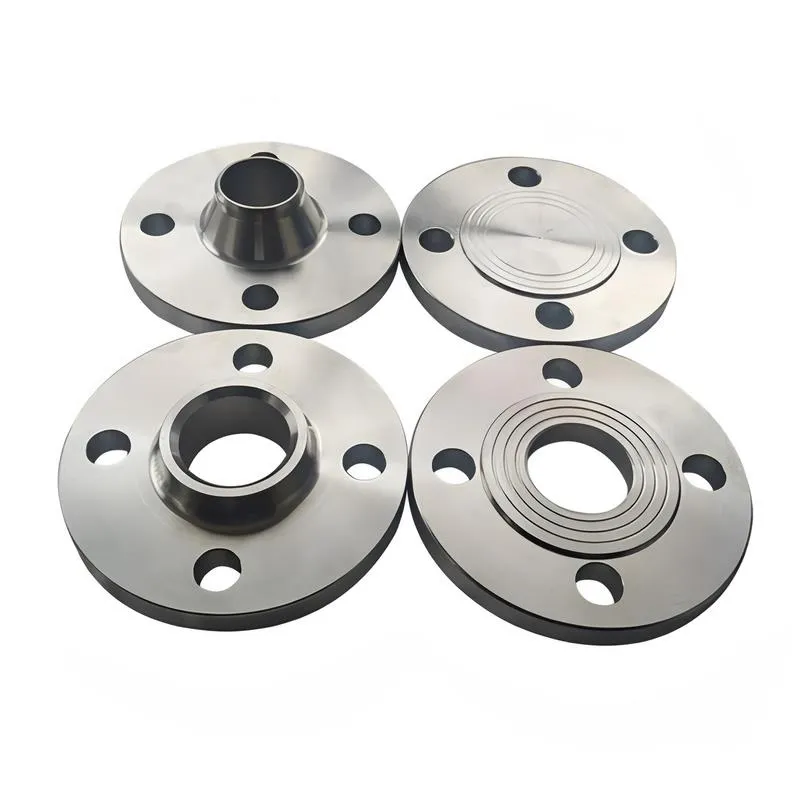
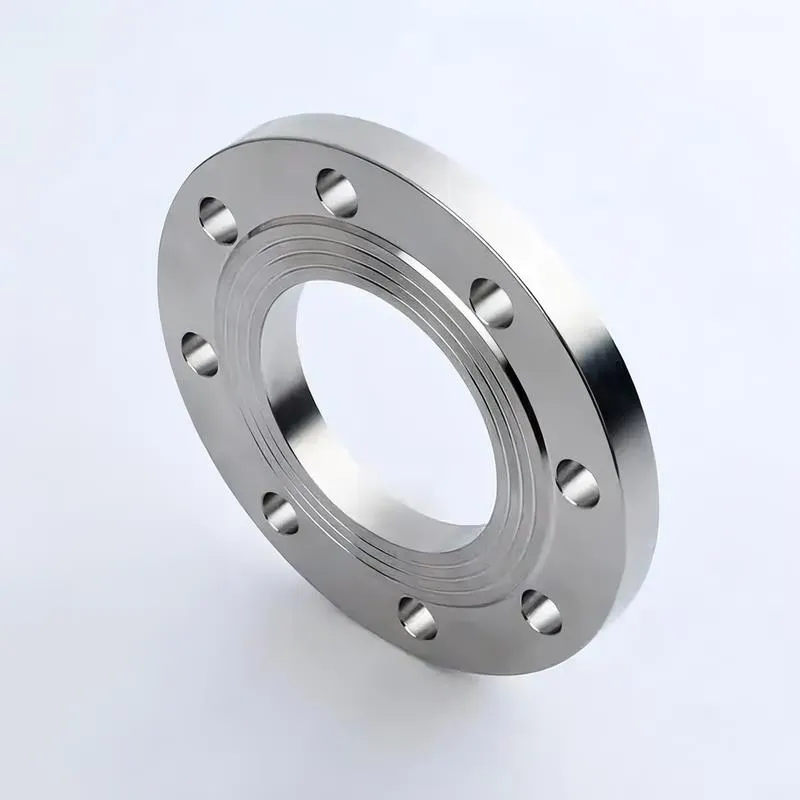
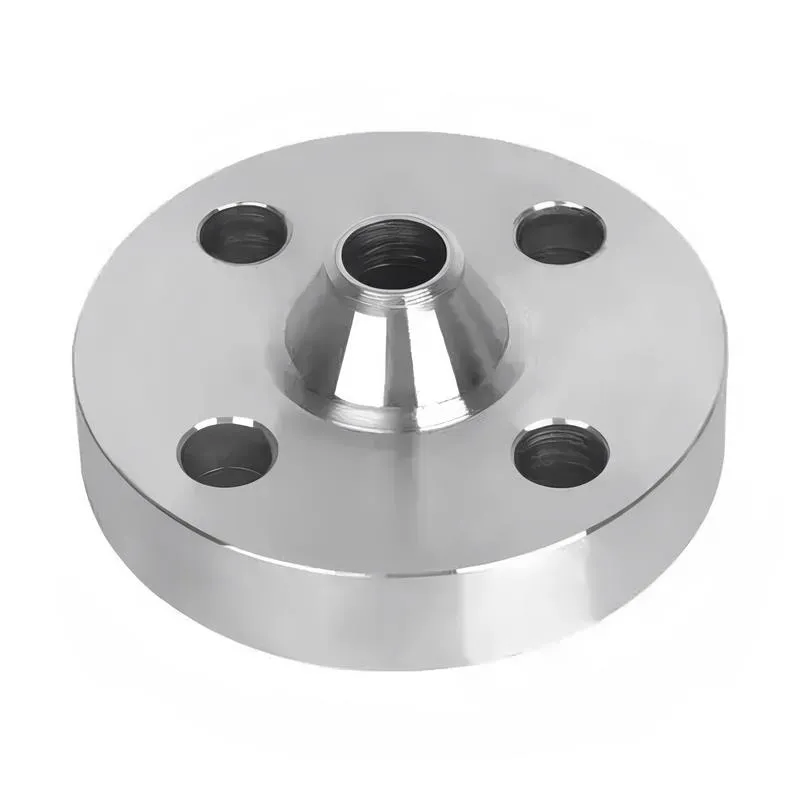
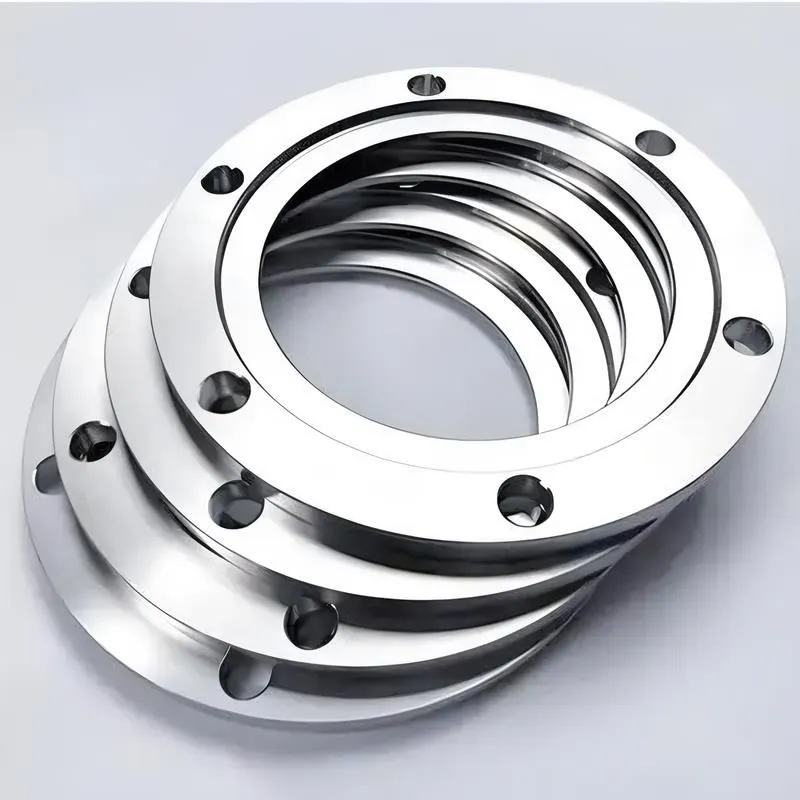
1,We Manufacturing processes are primarily classified into four types:
1:Forging,
2:Casting,
3:Cutting,
4:Rolling.
2,We can manufacture in accordance with these standards.
Standards:
GB Series (Chinese Standards), JB Series (Machinery Standards), HG Series (Chemical Industry Standards), ASME B16.5 (American Standards), BS4504 (British Standards), DIN (German Standards), and JIS (Japanese Standards).
Internationally, there are two primary systems of pipe flange standards: the European system, represented by the German DIN standards (including those of the former Soviet Union), and the American system, represented by the US ANSI pipe flange standards. Other common standards include: the Chinese Ministry of Machinery Industry standards (JB series), the Ministry of Chemical Industry standards (HG series), the Chinese National Standard *GB/T 9112–9124-2010 Steel Pipe Flanges*, as well as US standards (ASME B16.5), British standards (BS4504), German standards (DIN), Japanese standards (JIS), and marine standards (CBM), among others.
The nominal pressure ratings for the PN series are designated by "PN" and comprise the following nine levels: PN2.5, PN6, PN10, PN16, PN25, PN40, PN63, PN100, and PN160.
The nominal pressure ratings for the Class series are designated by "Class" and comprise the following six levels: Class150, Class300, Class600, Class900, Class1500, and Class2500.
Flange Classification
1. **According to Chemical Industry Standards:** Flanges are classified as follows:
Plate Flat Welding Flange (PL), Necked Flat Welding Flange (SO), Necked Butt Welding Flange (WN), Integral Flange (IF), Socket Welding Flange (SW), Threaded Flange (Th), Butt Welding Ring Loose Flange (PJ/SE), Blind Flange (BL), Flat Welding Ring Loose Flange (PJ/PJ), and Lined Blind Flange (BL(s)).
2. **According to Petrochemical (SH) Industry Standards:** Flanges are classified as follows:
Threaded Flange (PL), Butt Welding Flange (WN), Flat Welding Flange (SO), Socket Welding Flange (SW), Loose Flange (LJ), and Blind Flange (no specific designation).
3. **According to Machinery (JB) Industry Standards:** Flanges are classified as follows:
Integral Flange, Butt Welding Flange, Plate Flat Welding Flange, Butt Welding Ring Plate Loose Flange, Flat Welding Ring Plate Loose Flange, Lap Joint Ring Plate Loose Flange, and Blind Flange.
4. **According to Connection Method/Type:** Flanges are classified as follows:
Plate Flat Welding Flange, Necked Flat Welding Flange, Necked Butt Welding Flange, Socket Welding Flange, Threaded Flange, Blind Flange, Necked Butt Welding Ring Loose Flange, Flat Welding Ring Loose Flange, Ring-Type Joint (RTJ) Flange and Blind Flange, Large-Diameter Plate Flange, Large-Diameter High-Neck Flange, Figure-8 Blind Plate, Butt Welding Ring Loose Flange, etc.
5. **According to the Component Being Connected:** Flanges can be classified into Vessel Flanges and Pipe Flanges.
6. **According to Structural Type:** Flanges include Integral Flanges, Threaded Flanges, Flat Welding Flanges, Butt Welding Flanges, Lap Joint (Loose/Swivel) Flanges, and Blind Flanges.
A flange—also referred to as a flange plate or rim—is a component used to connect shafts to one another, or, more commonly, to join the ends of pipes. Flanges are also utilized at the inlet and outlet ports of equipment to facilitate connections between two devices—for instance, the flange on a speed reducer. A "flange connection" or "flanged joint" refers to a detachable joint assembly comprising three interconnected elements—a flange, a gasket, and bolts—that together form a sealed structural unit. In the context of piping systems, a "pipe flange" specifically denotes a flange used for plumbing within the installation; when applied to equipment, it refers to the inlet or outlet flange of that specific device. Flanges feature a series of holes through which bolts are inserted to securely fasten the two flanges together, while a gasket placed between the flanges ensures a leak-proof seal. Flanges are broadly categorized into three types: threaded (screw-in) flanges, welded flanges, and clamp-type flanges. Flanges are invariably used in pairs; threaded flanges are suitable for low-pressure piping applications, whereas welded flanges are required for systems operating at pressures exceeding 4 kilograms per square centimeter. A sealing gasket is inserted between the two flange plates, which are then firmly secured using bolts. The thickness of a flange—as well as the specifications of the bolts used to fasten it—vary depending on the specific pressure rating required for the application. When connecting equipment such as water pumps or valves to piping systems, the corresponding connection points on these devices are often manufactured in the shape of a matching flange; this method of attachment is also referred to as a "flange connection." Generally, any connecting component that utilizes bolts to join and seal the perimeters of two flat surfaces—such as the joints in ventilation ducts—is termed a "flange"; such components may collectively be classified as "flange-type parts." However, since such a connection often constitutes merely a *portion* of a larger device—for instance, the interface between a flange and a water pump—it would be inappropriate to classify the entire water pump itself as a "flange-type part." Conversely, smaller components—such as valves—that feature such flanged interfaces may indeed be appropriately categorized as "flange-type parts."
-:-
For detailed product information, please contact sales.
-:
SAE J431 heavy duty automotive gray cast Iron Flange, SAE grade G3500b Product Information
-:-
For detailed product information, please contact sales.
-:
SAE J431 heavy duty automotive gray cast Iron Flange, SAE grade G3500b Synonyms
-:-
For detailed product information, please contact sales.
-:
SAE J431 heavy duty automotive gray cast iron, SAE grade G3500b Product Information
-:-
For detailed product information, please contact sales.
-:
## **Product Introduction: SAE J431 G3500b Heavy Duty Automotive Gray Cast Iron**
SAE J431 G3500b is a premium, high-performance heavy-duty gray cast iron variant engineered for the most demanding structural applications in commercial transportation and high-stress industrial equipment. The "**b**" suffix designates a specially modified specification within the G3500 strength class, incorporating significantly enhanced alloying and stricter metallurgical controls to achieve superior high-temperature strength, exceptional thermal fatigue resistance, and unparalleled microstructural uniformity. This grade is not merely a stronger iron; it is a materially engineered solution for components operating under extreme combinations of mechanical stress, thermal cycling, and wear, where standard grades would fail prematurely. It serves as the benchmark material for critical powertrain and braking components in heavy-duty diesel engines and commercial vehicles.
This specification represents the culmination of advanced foundry metallurgy applied to gray iron, pushing its functional boundaries to meet the rigorous demands of modern heavy-duty engineering.
---
### **1. Chemical Composition**
The composition of G3500b is heavily alloyed and tightly controlled, designed to produce a fully pearlitic, carbide-strengthened matrix with exceptional stability.
**Typical Composition Range (SAE J431 G3500b - Heavy Duty):**
| Element | Content (%) | Primary Function & Heavy-Duty Rationale |
| :--- | :--- | :--- |
| **Carbon (C)** | **2.95 - 3.15** | **Precision matrix optimizer.** Carefully balanced to maximize matrix strength while retaining sufficient graphite for thermal shock resistance and manufacturability. Lower than standard G3500 for increased matrix density. |
| **Silicon (Si)** | **1.50 - 1.80** | **Minimal graphitizer.** Severely restricted to force a fully pearlitic transformation and increase the Ac1 temperature, enhancing high-temperature stability. |
| **Manganese (Mn)** | **0.85 - 1.10** | **Aggressive transformation controller.** Ensures complete suppression of ferrite, even in slow-cooling sections of massive castings. |
| **Chromium (Cr)** | **0.30 - 0.50** | **Essential high-temperature strengthener.** Key alloying element. Forms fine, stable carbides that increase wear resistance, refine pearlite, and dramatically improve oxidation and scaling resistance up to ~700°C. Critical for exhaust and braking components. |
| **Molybdenum (Mo)** | **0.20 - 0.40** | **Critical for heavy sections and creep resistance.** Enhances hardenability to prevent pearlite degradation in thick sections, increases high-temperature tensile and creep strength, and refines the matrix. A defining element for the "b" grade. |
| **Copper (Cu)** | **0.50 - 0.80** | **Primary solid solution strengthener.** Significantly strengthens the ferrite lamellae in pearlite, improves machinability by promoting a finer graphite structure, and enhances atmospheric corrosion resistance. |
| **Nickel (Ni)** | **0.15 - 0.35** (Optional) | Often added to improve toughness and hardenability synergistically with Mo, and to enhance corrosion resistance further. |
| **Vanadium (V)** | **0.05 - 0.15** (Optional) | Sometimes used in premium specs to form ultra-fine carbides for additional precipitation strengthening and grain refinement. |
| **Phosphorus (P)** | **≤ 0.05** | **Ultra-low limit.** Minimized to eliminate brittle phosphide networks, maximizing impact and thermal shock resistance—critical for heavy-duty thermal cycling. |
| **Sulfur (S)** | **≤ 0.08** | **Stringently controlled.** Low levels are vital for maximizing ductility and high-temperature integrity. |
| **Iron (Fe)** | Balance | Base metal. |
**Microstructural Note:** The target microstructure is a **100% fine, fully alloyed pearlitic matrix** with an **extremely fine interlamellar spacing**. The graphite is uniformly dispersed as very fine, Type A flakes. Alloying elements (Cr, Mo, V) exist in solid solution and as fine, dispersed secondary carbides, providing precipitation strengthening. The structure is homogeneous from surface to core, even in sections exceeding 75 mm.
---
### **2. Physical & Mechanical Properties**
G3500b properties are defined by high strength, exceptional thermal stability, and remarkable consistency.
| Property | Typical Value / Description | Heavy-Duty Performance Focus |
| :--- | :--- | :--- |
| **Microstructure** | **Ultra-fine, fully alloyed pearlitic matrix with fine graphite.** | Audited for complete absence of ferrite and carbide networks. |
| **Tensile Strength, min** | **241 MPa (35,000 psi)** | **Typical range: 260 - 330 MPa.** High consistency is required. |
| **Elevated Temp Tensile Strength (500°C)** | **Retains > 65% of RT strength.** Exceptional retention due to Cr/Mo alloying. | Key for exhaust manifolds and turbo components. |
| **Hardness (Brinell)** | **235 - 285 HB** | Often specified with a tight range (e.g., 241-269 HB) and strict uniformity requirements. |
| **Modulus of Elasticity** | ~130-165 GPa | High stiffness for structural components. |
| **Fatigue Strength (High-Cycle)** | **~110-140 MPa** | Excellent for components subjected to engine or driveline vibrations. |
| **Thermal Fatigue Resistance** | **Outstanding.** The primary advantage. Withstands severe thermal cycling without crack initiation due to low P, high alloy content, and stable microstructure. | The defining property for heavy-duty exhaust manifolds and brake discs. |
| **Thermal Conductivity** | **Moderate (~30-36 W/m·K).** Reduced by alloying but sufficient for designed heat dissipation. | - |
| **Growth Resistance at High Temp** | **Excellent.** Minimal permanent growth after prolonged exposure due to stable carbides and absence of phase changes. | Critical for maintaining dimensional stability in turbo housings. |
| **Wear & Scuffing Resistance** | **Superior.** High hardness combined with fine Cr/Mo carbides provides excellent resistance to abrasion and adhesive wear. | - |
| **Machinability** | **Fair to Good (with premium tooling).** Abrasive and hard but predictable. Requires rigid setups, ceramic or coated carbide tools, and optimized parameters. Machining cost is a significant factor. | - |
---
### **3. Key Product Advantages & Characteristics**
* **Unmatched Thermal-Mechanical Fatigue Life:** Specifically engineered to survive the extreme thermal cycles of modern high-EGT (Exhaust Gas Temperature) diesel engines and heavy-duty braking systems.
* **Superior High-Temperature Strength and Stability:** Maintains mechanical properties and resists oxidation and growth at temperatures where standard gray irons rapidly degrade.
* **Exceptional Heavy-Section Performance:** The Mo/Cr alloying ensures uniform, high-strength properties throughout thick casting cross-sections.
* **Premium Reliability and Consistency:** Delivers predictable performance with minimal lot-to-lot variation, essential for warranty and durability calculations in commercial fleets.
---
### **4. Product Applications (Critical Heavy-Duty Systems)**
SAE G3500b is reserved for the most critical, highly stressed components where failure leads to catastrophic downtime or safety risks.
* **Heavy-Duty Diesel Powertrain:** **High-EGT exhaust manifolds** (for turbocharged diesels), **cylinder heads for high-output heavy-duty engines**, **turbocharger housings and bearing housings**, heavy-duty engine blocks (top-tier applications).
* **Commercial Vehicle Braking:** **Premium heavy-duty brake discs/drums** for line-haul trucks and buses, **railway brake discs**.
* **Off-Highway & Industrial:** **Critical components in large industrial compressors and pumps**, **high-stress parts in agricultural and mining equipment**, hydraulic press cylinders for continuous operation.
* **Power Generation:** **Components for large diesel generator sets** and other stationary power units.
---
### **5. International & Related Standards**
G3500b is a high-end, often proprietary specification. Direct equivalents in general standards are rare; it is typically defined by OEM or tier-1 supplier specifications.
| Standard / Basis | Title / Scope | Notes on Equivalency |
| :--- | :--- | :--- |
| **SAE J431** | *Automotive Gray Iron Castings* | **Grade G3500b** is the root specification, but the "b" suffix implies additional, often proprietary, requirements. |
| **OEM Heavy-Duty Specifications** | E.g., **Detroit Diesel**, **Caterpillar**, **Cummins** (e.g., higher-tier specs), **Scania**, **MAN**. | These are the *de facto* standards. A spec like **Detroit Diesel 93K214** or a **Caterpillar "Premium" block specification** would be analogous to or more stringent than G3500b. |
| **Proprietary Alloy Designations** | Often known as **"High-Thermal Fatigue Gray Iron"**, **"Alloyed G3500"**, or by foundry-specific names. | Common in the tier-1 supply chain for exhaust manifolds and turbo components. |
| **ASTM A159** | *Standard Specification for Automotive Gray Iron Castings* | Covers G1800-G3500 but does not define the alloyed "b" variants. G3500b far exceeds its typical requirements. |
| **ISO 185** | *Grey cast irons* | **Grade 350** is the base strength equivalent, lacking the specific alloying and performance targets. |
**Specification Note:** Procuring G3500b is a high-assurance activity involving partnership with certified foundries.
* **Proprietary Material Data Sheets (MDS):** Governed by detailed OEM or customer MDS specifying exact chemistry, mechanical properties (including elevated temperature tests), microstructure, and quality gates.
* **Comprehensive Metallurgical Certification:** Each lot requires full chemistry, tensile reports, hardness maps, and microstructural analysis (including pearlite fineness rating).
* **Performance Validation Testing:** Often requires component-level validation tests, such as thermal shock cycling on exhaust manifolds or dynamometer testing of brake components.
* **Advanced Process Controls & Audits:** The foundry process (melting, inoculation, alloy addition, heat treatment) is subject to strict SPC and regular customer audits.
---
### **Conclusion**
SAE J431 G3500b Heavy Duty Automotive Gray Cast Iron is the **pinnacle of applied gray iron metallurgy for severe service**. It transcends the traditional role of cast iron by incorporating **strategic, high-performance alloying (notably Cr and Mo)** to create a material uniquely capable of withstanding the **combined assault of high mechanical stress, extreme thermal cycling, and aggressive environments**. Its development is directly driven by the escalating demands of modern heavy-duty diesel technology. While its cost is substantial, its value is proven through **dramatically extended component life, reduced warranty claims, and enhanced vehicle uptime** in commercial fleets. For engineers designing the heart of heavy-duty machinery, G3500b provides a trusted, high-performance material solution that reliably operates at the very edge of material capability.
-:-
For detailed product information, please contact sales.
-:
SAE J431 heavy duty automotive gray cast iron, SAE grade G3500b Specification
Dimensions
Size:
Diameter 20-1000 mm Length <6505 mm
Size:We can customized as required
Standard:
Per your request or drawing
We can customized as required
Properties(Theoretical)
Chemical Composition
-:-
For detailed product information, please contact sales.
-:
SAE J431 heavy duty automotive gray cast iron, SAE grade G3500b Properties
-:-
For detailed product information, please contact sales.
-:
Applications of SAE J431 heavy duty automotive gray cast Iron Flange, SAE grade G3500b
-:-
For detailed product information, please contact sales.
-:
Chemical Identifiers SAE J431 heavy duty automotive gray cast Iron Flange, SAE grade G3500b
-:-
For detailed product information, please contact sales.
-:
Packing of SAE J431 heavy duty automotive gray cast Iron Flange, SAE grade G3500b
-:-
For detailed product information, please contact sales.
-:
Standard Packing:
-:-
For detailed product information, please contact sales.
-:
Typical bulk packaging includes palletized plastic 5 gallon/25 kg. pails, fiber and Steel Flange drums to 1 ton super sacks in full container (FCL) or truck load (T/L) quantities. Research and sample quantities and hygroscopic, oxidizing or other air sensitive materials may be packaged under argon or vacuum. Solutions are packaged in polypropylene, plastic or glass jars up to palletized 2976 gallon liquid totes Special package is available on request. E FORUs’ is carefully handled to minimize damage during storage and transportation and to preserve the quality of our products in their original condition