1,We Manufacturing processes are primarily classified into four types:
1:Forging,
2:Casting,
3:Cutting,
4:Rolling.
2,We can manufacture in accordance with these standards.
Standards:
GB Series (Chinese Standards), JB Series (Machinery Standards), HG Series (Chemical Industry Standards), ASME B16.5 (American Standards), BS4504 (British Standards), DIN (German Standards), and JIS (Japanese Standards).
Internationally, there are two primary systems of pipe flange standards: the European system, represented by the German DIN standards (including those of the former Soviet Union), and the American system, represented by the US ANSI pipe flange standards. Other common standards include: the Chinese Ministry of Machinery Industry standards (JB series), the Ministry of Chemical Industry standards (HG series), the Chinese National Standard *GB/T 9112–9124-2010 Steel Pipe Flanges*, as well as US standards (ASME B16.5), British standards (BS4504), German standards (DIN), Japanese standards (JIS), and marine standards (CBM), among others.
The nominal pressure ratings for the PN series are designated by "PN" and comprise the following nine levels: PN2.5, PN6, PN10, PN16, PN25, PN40, PN63, PN100, and PN160.
The nominal pressure ratings for the Class series are designated by "Class" and comprise the following six levels: Class150, Class300, Class600, Class900, Class1500, and Class2500.
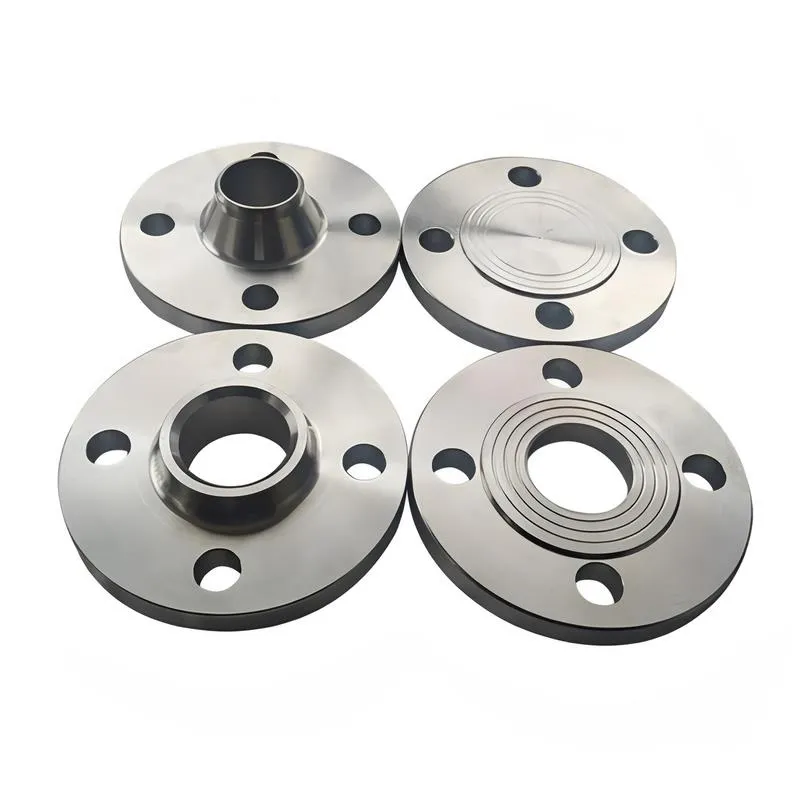
Flange Classification
1. **According to Chemical Industry Standards:** Flanges are classified as follows:
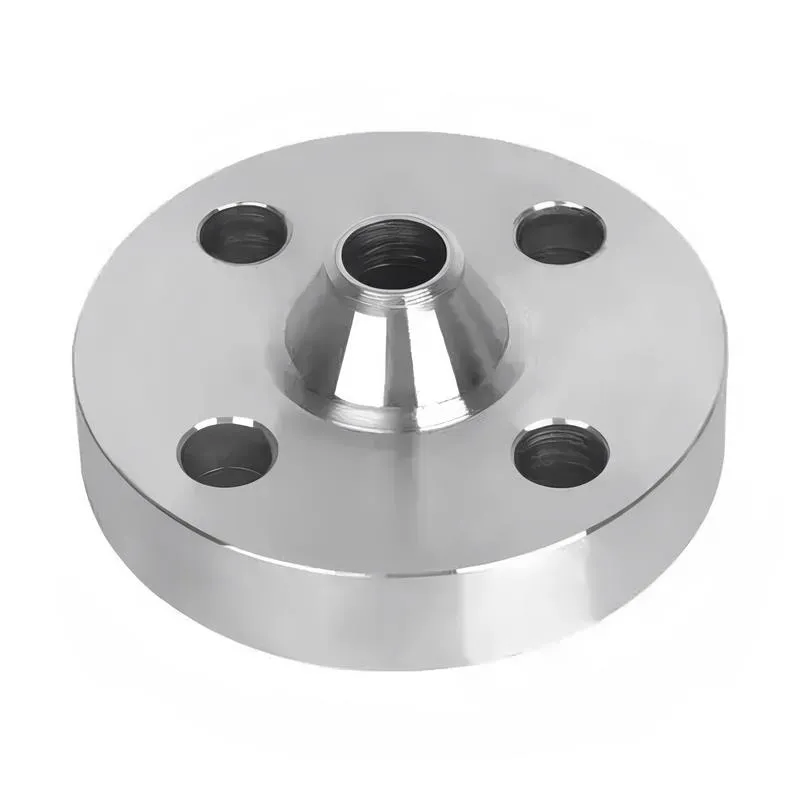
Plate Flat Welding Flange (PL), Necked Flat Welding Flange (SO), Necked Butt Welding Flange (WN), Integral Flange (IF), Socket Welding Flange (SW), Threaded Flange (Th), Butt Welding Ring Loose Flange (PJ/SE), Blind Flange (BL), Flat Welding Ring Loose Flange (PJ/PJ), and Lined Blind Flange (BL(s)).
2. **According to Petrochemical (SH) Industry Standards:** Flanges are classified as follows:
Threaded Flange (PL), Butt Welding Flange (WN), Flat Welding Flange (SO), Socket Welding Flange (SW), Loose Flange (LJ), and Blind Flange (no specific designation).
3. **According to Machinery (JB) Industry Standards:** Flanges are classified as follows:
Integral Flange, Butt Welding Flange, Plate Flat Welding Flange, Butt Welding Ring Plate Loose Flange, Flat Welding Ring Plate Loose Flange, Lap Joint Ring Plate Loose Flange, and Blind Flange.
4. **According to Connection Method/Type:** Flanges are classified as follows:
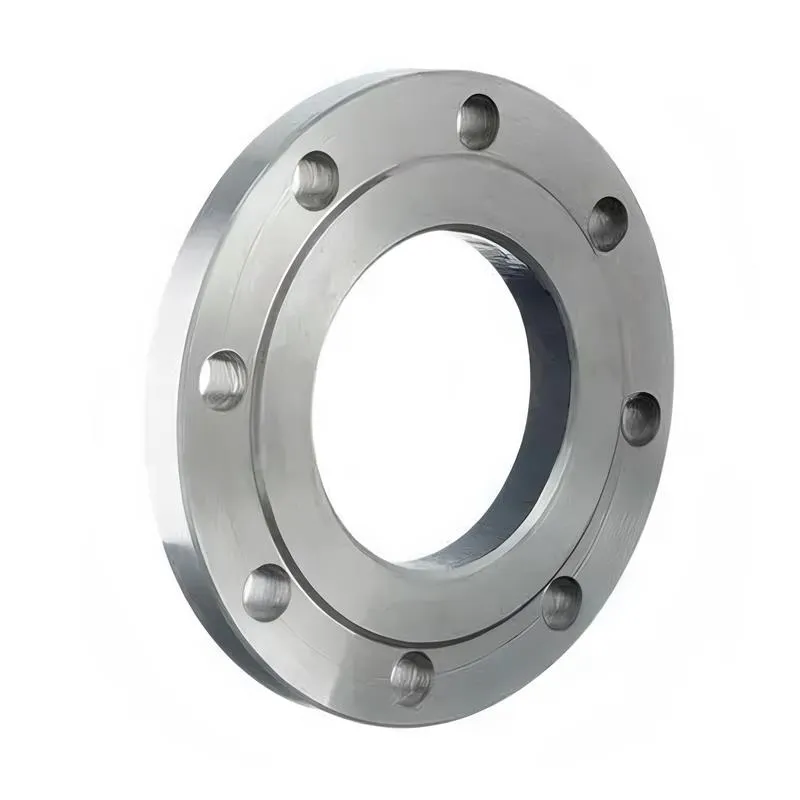
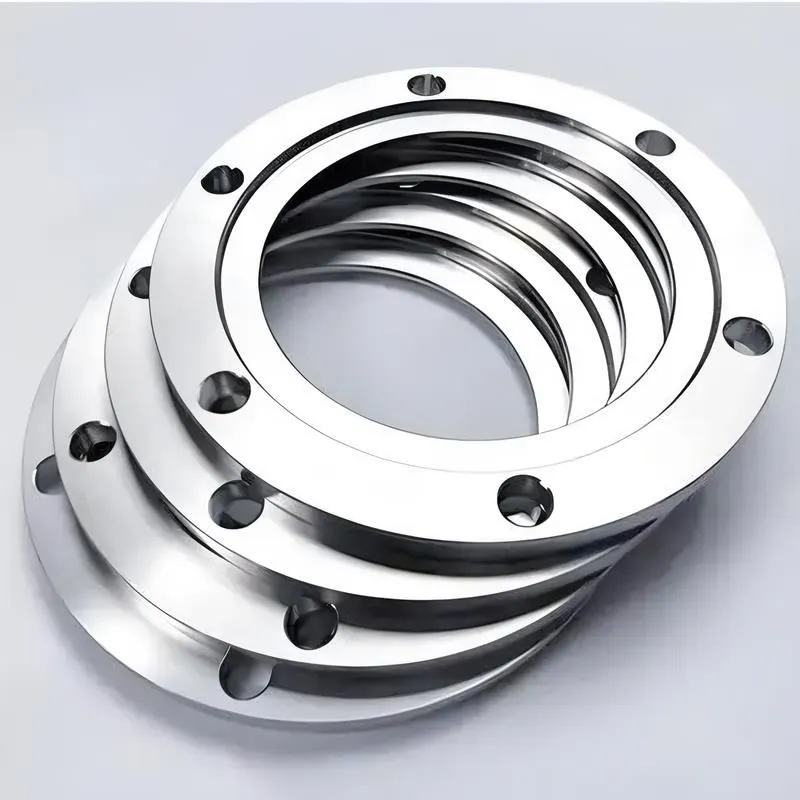
Plate Flat Welding Flange, Necked Flat Welding Flange, Necked Butt Welding Flange, Socket Welding Flange, Threaded Flange, Blind Flange, Necked Butt Welding Ring Loose Flange, Flat Welding Ring Loose Flange, Ring-Type Joint (RTJ) Flange and Blind Flange, Large-Diameter Plate Flange, Large-Diameter High-Neck Flange, Figure-8 Blind Plate, Butt Welding Ring Loose Flange, etc.
5. **According to the Component Being Connected:** Flanges can be classified into Vessel Flanges and Pipe Flanges.
6. **According to Structural Type:** Flanges include Integral Flanges, Threaded Flanges, Flat Welding Flanges, Butt Welding Flanges, Lap Joint (Loose/Swivel) Flanges, and Blind Flanges.
A flange—also referred to as a flange plate or rim—is a component used to connect shafts to one another, or, more commonly, to join the ends of pipes. Flanges are also utilized at the inlet and outlet ports of equipment to facilitate connections between two devices—for instance, the flange on a speed reducer. A "flange connection" or "flanged joint" refers to a detachable joint assembly comprising three interconnected elements—a flange, a gasket, and bolts—that together form a sealed structural unit. In the context of piping systems, a "pipe flange" specifically denotes a flange used for plumbing within the installation; when applied to equipment, it refers to the inlet or outlet flange of that specific device. Flanges feature a series of holes through which bolts are inserted to securely fasten the two flanges together, while a gasket placed between the flanges ensures a leak-proof seal. Flanges are broadly categorized into three types: threaded (screw-in) flanges, welded flanges, and clamp-type flanges. Flanges are invariably used in pairs; threaded flanges are suitable for low-pressure piping applications, whereas welded flanges are required for systems operating at pressures exceeding 4 kilograms per square centimeter. A sealing gasket is inserted between the two flange plates, which are then firmly secured using bolts. The thickness of a flange—as well as the specifications of the bolts used to fasten it—vary depending on the specific pressure rating required for the application. When connecting equipment such as water pumps or valves to piping systems, the corresponding connection points on these devices are often manufactured in the shape of a matching flange; this method of attachment is also referred to as a "flange connection." Generally, any connecting component that utilizes bolts to join and seal the perimeters of two flat surfaces—such as the joints in ventilation ducts—is termed a "flange"; such components may collectively be classified as "flange-type parts." However, since such a connection often constitutes merely a *portion* of a larger device—for instance, the interface between a flange and a water pump—it would be inappropriate to classify the entire water pump itself as a "flange-type part." Conversely, smaller components—such as valves—that feature such flanged interfaces may indeed be appropriately categorized as "flange-type parts."
-:-
For detailed product information, please contact sales.
-:
SAE J431 heavy duty automotive gray cast Iron Flange, SAE grade G4000d Product Information
-:-
For detailed product information, please contact sales.
-:
SAE J431 heavy duty automotive gray cast Iron Flange, SAE grade G4000d Synonyms
-:-
For detailed product information, please contact sales.
-:
SAE J431 heavy duty automotive gray cast iron, SAE grade G4000d Product Information
-:-
For detailed product information, please contact sales.
-:
## **Product Introduction: SAE J431 G4000d Heavy Duty Automotive Gray Cast Iron**
SAE J431 G4000d represents the apex of heavy-duty gray iron metallurgy, a frontier-grade material engineered for performance domains where conventional material classifications blur. The "**d**" suffix designates an ultra-specialized specification that transcends standard G4000, achieving performance metrics that intersect with low-alloy steels and nodular irons while retaining the fundamental damping and casting characteristics of gray iron. This material is architected for applications subjected to extreme specific power outputs, catastrophic failure consequences, or environmental extremes where traditional material selections have proven inadequate. G4000d is not an incremental improvement but a redefinition of gray iron's capability envelope, serving in next-generation hyper-duty diesel platforms, elite-performance braking systems, and mission-critical industrial applications.
This specification embodies a systems-level engineering approach where material behavior is integrally modeled with thermal and mechanical boundary conditions to achieve unprecedented service life and reliability.
---
### **1. Chemical Composition**
G4000d employs a precision-engineered, multi-phase stabilizing chemistry that approaches the complexity of low-alloy steels, utilizing high-purity base materials and synergistic elemental additions.
**Engineered Composition Profile (SAE J431 G4000d - Frontier Grade):**
| Element | Content (%) | Primary Function & Systemic Rationale |
| :--- | :--- | :--- |
| **Carbon (C)** | **2.75 - 2.95** | **Matrix architecture control.** Set at the minimal threshold for stable graphite formation to maximize the volume of the strengthened metallic matrix, shifting the stress-bearing paradigm from graphite-dependent to matrix-dominant while retaining thermal shock mitigation. |
| **Silicon (Si)** | **1.30 - 1.55** | **Metastability controller.** Precisely dosed to optimize high-temperature strength (by raising Ac1) and castability, while being insufficient to catalyze ferrite nucleation under any cooling condition within the operational geometry. |
| **Manganese (Mn)** | **1.00 - 1.25** | **Complete austenite-pearlite enforcer.** Guarantees a fully transformed, fine-grained matrix even under near-equilibrium cooling, eliminating microstructural soft zones in complex, thick-walled castings. |
| **Chromium (Cr)** | **0.55 - 0.80** | **High-temperature matrix architect.** Creates a substantial volume of fine, thermodynamically stable (Cr,Fe)₇C₃ and M₂₃C₆ carbides. This provides a potent dispersion strengthening effect, pins grain boundaries, and forms a highly protective, self-regenerating Cr₂O₃ scale for operation up to ~850°C. |
| **Molybdenum (Mo)** | **0.45 - 0.70** | **Creep and coarsening resistance master.** Synergizes with Cr to suppress carbide coarsening and pearlite spheroidization. Essential for maintaining dimensional stability and load-bearing capacity under sustained high temperature and stress (creep regime). |
| **Nickel (Ni)** | **0.40 - 0.70** | **Toughness and hardenability harmonizer.** Mitigates the inherent brittleness of the high-carbon, high-carbide matrix by improving crack blunting and propagation resistance. Ensures uniform hardening in geometrically complex castings, reducing residual stress gradients. |
| **Copper (Cu)** | **0.80 - 1.20** | **Multiscale strengthener and thermal conductor.** Provides significant solid solution strengthening, enhances thermal conductivity relative to other alloyants (critical for heat flux management), and improves atmospheric and condensate corrosion resistance. |
| **Vanadium (V)** | **0.15 - 0.25** | **Nano-scale precipitation hardener.** Forms extremely fine, stable vanadium carbonitrides (V(C,N)) that provide potent secondary hardening and significantly retard recrystallization and grain growth at high temperatures. |
| **Niobium (Nb)** | **0.03 - 0.08** (Optional) | **Grain refinement extremist.** Added in frontier specs to form NbC pinning points at prior austenite grain boundaries, producing an ultra-fine grain structure that enhances toughness and fatigue strength. |
| **Phosphorus (P)** | **≤ 0.025** | **Near-absolute elimination.** Achieved via vacuum degassing or use of ultra-low-residual charges, this level is critical for eliminating intergranular embrittlement and maximizing thermal shock life. |
| **Sulfur (S)** | **≤ 0.025** | **Extreme purity marker.** Ultra-low levels ensure superior hot ductility, weldability for repairs, and minimized formation of MnS inclusions that can act as stress risers. |
| **Iron (Fe)** | Balance (Vacuum Treated) | Base metal of aircraft-grade purity, often vacuum degassed to minimize gas content (H₂, O₂, N₂). |
**Microstructural Note:** The microstructure is a **hybrid engineered system**: an **ultra-fine, fully alloyed pearlitic/bainitic matrix** (lamellar spacing < 0.1 µm) with a **controlled dispersion of primary and secondary alloy carbides (M₇C₃, M₂₃C₆, V/Nb carbides)**. Graphite is present as extremely fine, isolated, well-rounded quasi-nodules (Type VI influenced) acting primarily as internal crack arrestors and thermal stress relievers, not as primary structural components. The structure is characterized by exceptional homogeneity and stability.
---
### **2. Physical & Mechanical Properties**
G4000d delivers a property suite that challenges the performance boundaries of cast ferrous materials, emphasizing ultra-high temperature stability and damage tolerance.
| Property | Typical Value / Description | Frontier Performance Benchmark |
| :--- | :--- | :--- |
| **Microstructure** | **Nano-lamellar alloyed matrix with stabilized carbides and engineered graphite.** | Characterized via TEM/EBSD for phase distribution and interface stability. |
| **Tensile Strength, min** | **276 MPa (40,000 psi)** | **Typical range: 310 - 400 MPa.** Strength is maintained with minimal scatter (Cpk > 1.67). |
| **Yield Strength (0.2% Offset)** | **~270 - 350 MPa.** Often exceeds the tensile strength of lower grades, indicating a highly resilient matrix. | - |
| **Elevated Temp Strength (700°C)** | **Retains > 50% of RT strength.** Exceptional retention due to synergistic carbide stabilization (Cr, Mo, V). | Critical for components in advanced ultra-lean burn or exhaust-recirculation engines. |
| **Hardness (Brinell)** | **285 - 341 HB** (HRC 30-37) | High-end range with absolute uniformity; often specified with hardness gradients mapped via automated systems. |
| **Modulus of Elasticity** | ~150-180 GPa | Comparable to low-carbon steel, providing high structural stiffness. |
| **Fracture Toughness (K_IC)** | **~25-35 MPa√m.** Exceptional for a high-hardness cast iron, approaching lower-end ductile iron values due to Ni addition and refined graphite. | A key differentiator, allowing design for higher stress concentrations. |
| **Thermal Fatigue Resistance (ΔT > 600°C)** | **Unmatched.** Designed to survive an order of magnitude more cycles than G3500c in equivalent tests. Validated via burner rig and laser thermal shock testing. | The core design validation for exhaust and braking components. |
| **Creep Rupture Strength (at 600°C)** | **Significantly elevated.** Rupture life at given stress is multiples of standard high-Cr irons. | Enables use in pressurized high-temperature housings. |
| **Oxidation Resistance (800°C, 1000h)** | **Mass change < 1 mg/cm².** Forms a highly adherent, protective mixed Cr-Si-Al oxide scale. | - |
| **High-Cycle Fatigue Limit (10⁸ cycles)** | **~130-160 MPa.** Excellent for components subjected to high-frequency vibrational loading. | - |
| **Machinability** | **Specialized.** Requires advanced machining strategies: laser-assisted machining, ultrasonic vibration-assisted turning, or grinding with superabrasives (CBN). Machining is a significant cost and technology center. | - |
---
### **3. Key Product Advantages & Characteristics**
* **Hybrid Material Performance:** Combines the stiffness and high-temperature strength of low-alloy steel with the damping capacity and castability of gray iron, plus the wear resistance of white iron.
* **Designed for Extreme Specific Power & Thermal Loads:** The material basis for components in engines exceeding 300 bar peak cylinder pressure or brakes managing megajoule-level energy dissipation.
* **System-Length Durability:** Engineered for service intervals aligned with major overhauls (e.g., 1,000,000+ miles in trucking), not component replacement cycles.
* **Repairability & Weldability:** The ultra-low S and P content, combined with Ni, allows for qualified repair welding procedures—a rarity in high-strength gray irons.
* **Validated via Digital Twin Integration:** Material property data is granular enough to be integrated into high-fidelity FEA and digital twin models for predictive life analysis.
---
### **4. Product Applications (Frontier & Elite Systems)**
SAE G4000d is reserved for applications where it enables a system-level performance breakthrough or is mandated by safety/reliability requirements that override cost.
* **Hyper-Duty & High-Speed Diesel:** **Monolithic cylinder heads for 300+ bar BMEP engines**, **exhaust manifolds for high-pressure-loop EGR systems** with gas temperatures > 800°C, **turbocharger turbine housings for 40+ psi boost applications**.
* **Extreme-Performance & Aerospace Braking:** **Carbon-ceramic brake system alloy hats/backplates**, **brake discs for supersonic land vehicles or elite motorsports**, **braking components for heavy-lift aerospace ground equipment**.
* **Advanced Energy & Industrial:** **Recuperator and turbine housings in microturbines**, **critical castings in supercritical CO2 power cycles**, **components for next-generation concentrated solar power receivers**.
* **Defense & Naval:** **Armored vehicle brake and powertrain components**, **high-integrity castings in shipboard auxiliary power units**.
---
### **5. International & Related Standards**
G4000d exists almost entirely within proprietary, closed-loop specification ecosystems. It is a material developed for and owned by OEMs or consortiums facing unique challenges.
| Standard / Basis | Title / Scope | Notes on Equivalency |
| :--- | :--- | :--- |
| **SAE J431** | *Automotive Gray Iron Castings* | A historical anchor point; the actual G4000d specification is a proprietary derivative bearing little resemblance to the public document. |
| **OEM/Tier 1 "Black Box" Specs** | **"Generation 4" or "XHP" (eXtreme Heavy-duty Performance) Iron**, specs from entities like **Rolls-Royce Power Systems (mtu)**, **Caterpillar Advanced Tech**, or **consortia like the US DOE SuperTruck program**. | These are protected intellectual property, often involving material patents. They define the *de facto* standard for the application. |
| **Aerospace Material Specifications (AMS)** | Certain high-performance **AMS** specs for non-magnetic, high-damping, or thermally stable castings may have overlapping intent but different optimization targets (e.g., weight vs. cost). | Parallel development, but G4000d is optimized for terrestrial, high-volume-viable extreme duty. |
| **ISO 185** | *Grey cast irons* | **Grade 400** is a nominal strength indicator only; the metallurgy and performance of G4000d are categorically different. |
**Specification Note:** Procurement of G4000d is a strategic partnership, not a transaction.
* **Co-Developed & Owned IP:** The material and process specification are often jointly owned by the developer (OEM) and the manufacturing partner (foundry).
* **Dedicated Production Assets:** Typically produced in a dedicated cell or foundry line with segregated high-purity charge materials, vacuum melting capability, and controlled atmosphere heat treatment.
* **Full Digital Traceability & Lot Genealogy:** Each casting is linked to a full digital record of its production parameters, from melt chemistry and inoculant batch to real-time thermal history during solidification and heat treatment.
* **Performance-Based Acceptance:** Final acceptance may be contingent on passing functional tests (e.g., hot gas cyclic pressure test on a manifold) in addition to meeting all material and NDT criteria.
---
### **Conclusion**
SAE J431 G4000d Heavy Duty Automotive Gray Cast Iron is less a material and more a **manifestation of systems engineering**, where metallurgy is fully integrated into the performance equation of the most demanding mechanical systems on Earth. It represents the **logical end-point of gray iron development**, where further performance gains would necessitate a fundamental change in material classification. Its value proposition is singular: to enable **performance, efficiency, or durability paradigms that are unattainable with any other commercially viable material** for a given complex-shaped component. The existence and application of G4000d signal that for the most extreme corners of the heavy-duty world, advanced gray iron—pushed to its absolute scientific and engineering limits—remains an indispensable, and perhaps irreplaceable, technological solution.
-:-
For detailed product information, please contact sales.
-:
SAE J431 heavy duty automotive gray cast iron, SAE grade G4000d Specification
Dimensions
Size:
Diameter 20-1000 mm Length <6507 mm
Size:We can customized as required
Standard:
Per your request or drawing
We can customized as required
Properties(Theoretical)
Chemical Composition
-:-
For detailed product information, please contact sales.
-:
SAE J431 heavy duty automotive gray cast iron, SAE grade G4000d Properties
-:-
For detailed product information, please contact sales.
-:
Applications of SAE J431 heavy duty automotive gray cast Iron Flange, SAE grade G4000d
-:-
For detailed product information, please contact sales.
-:
Chemical Identifiers SAE J431 heavy duty automotive gray cast Iron Flange, SAE grade G4000d
-:-
For detailed product information, please contact sales.
-:
Packing of SAE J431 heavy duty automotive gray cast Iron Flange, SAE grade G4000d
-:-
For detailed product information, please contact sales.
-:
Standard Packing:
-:-
For detailed product information, please contact sales.
-:
Typical bulk packaging includes palletized plastic 5 gallon/25 kg. pails, fiber and Steel Flange drums to 1 ton super sacks in full container (FCL) or truck load (T/L) quantities. Research and sample quantities and hygroscopic, oxidizing or other air sensitive materials may be packaged under argon or vacuum. Solutions are packaged in polypropylene, plastic or glass jars up to palletized 2978 gallon liquid totes Special package is available on request. E FORUs’ is carefully handled to minimize damage during storage and transportation and to preserve the quality of our products in their original condition