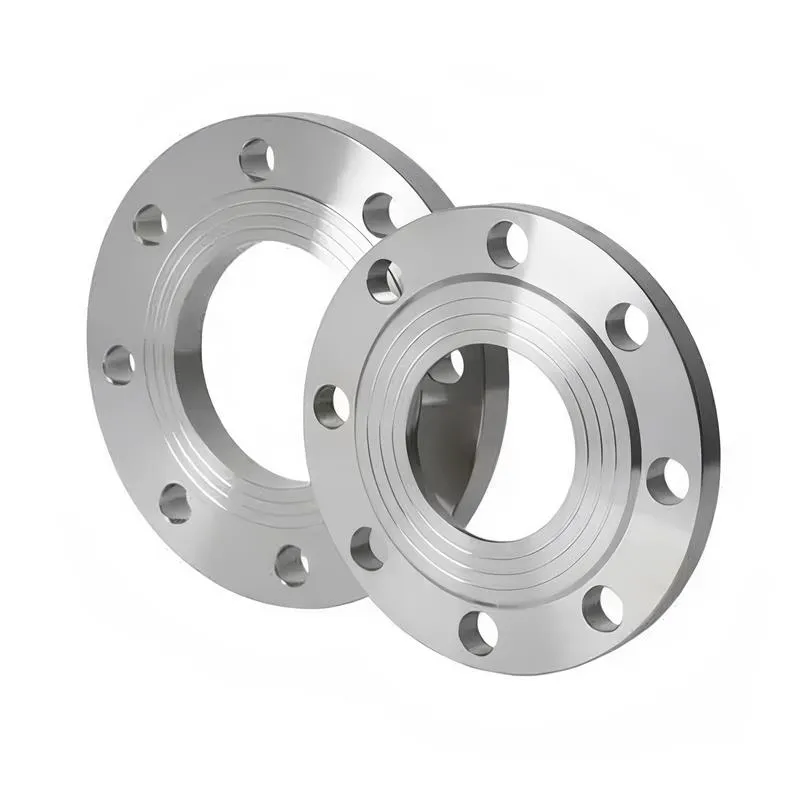
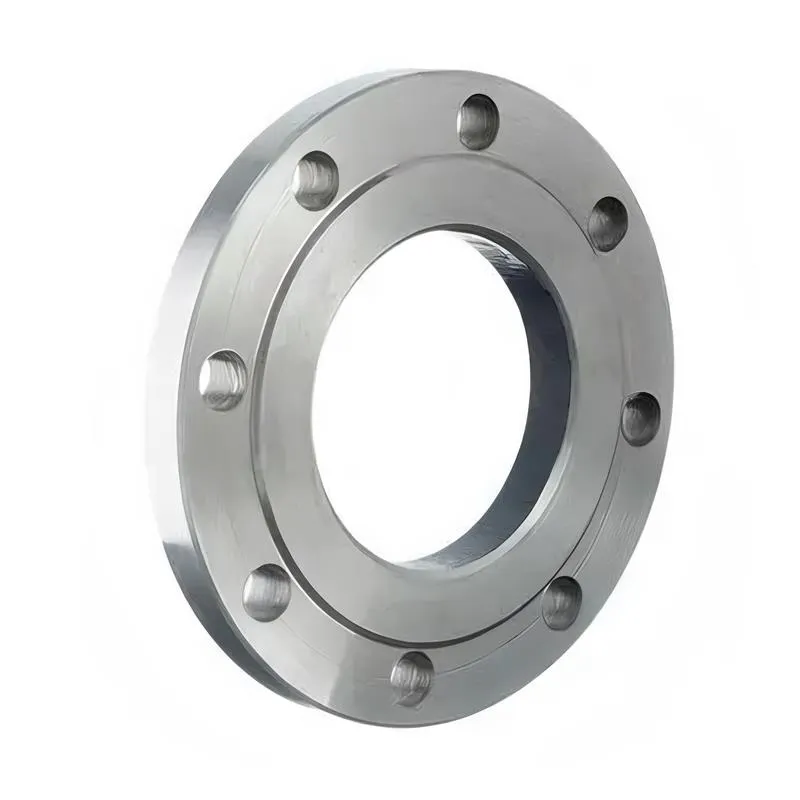
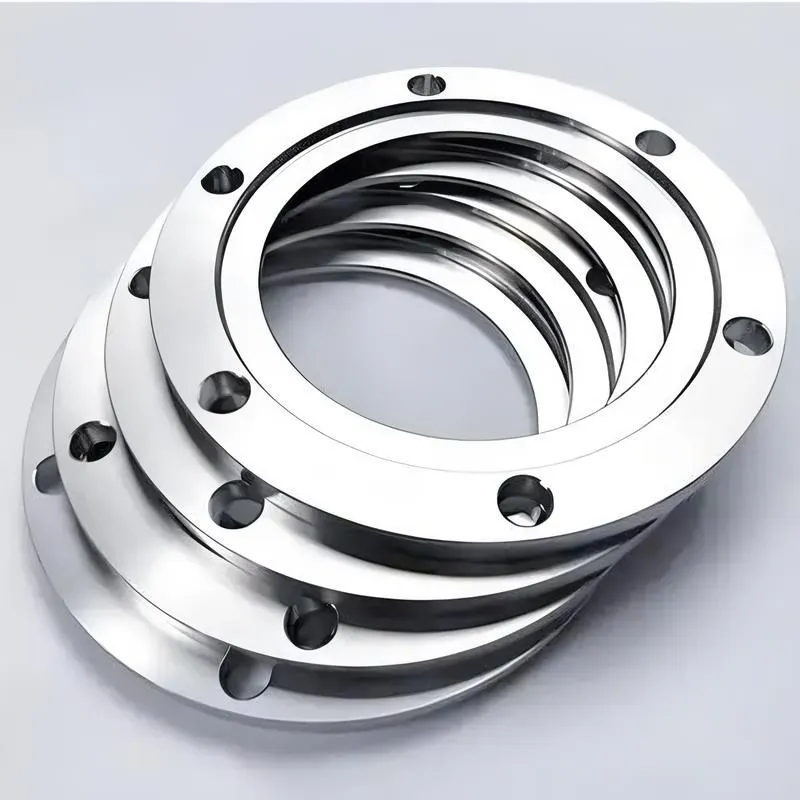
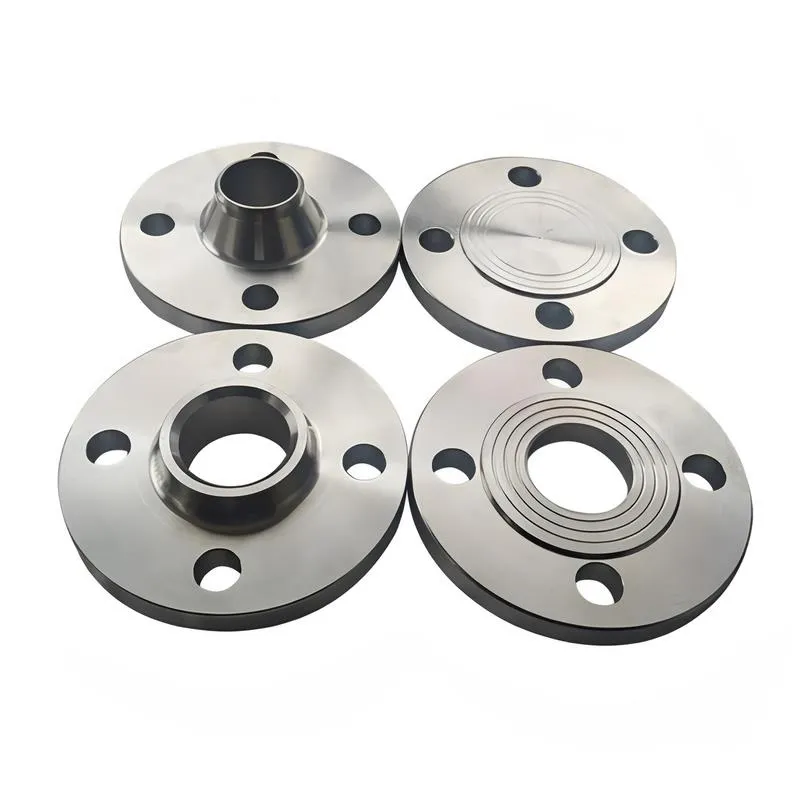
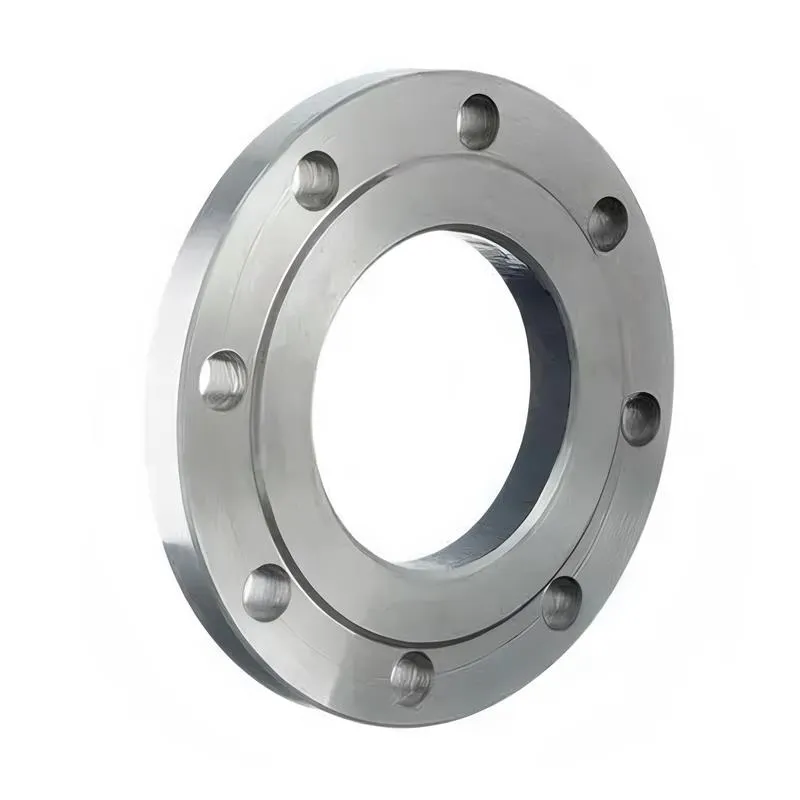
1,We Manufacturing processes are primarily classified into four types:
1:Forging,
2:Casting,
3:Cutting,
4:Rolling.
2,We can manufacture in accordance with these standards.
Standards:
GB Series (Chinese Standards), JB Series (Machinery Standards), HG Series (Chemical Industry Standards), ASME B16.5 (American Standards), BS4504 (British Standards), DIN (German Standards), and JIS (Japanese Standards).
Internationally, there are two primary systems of pipe flange standards: the European system, represented by the German DIN standards (including those of the former Soviet Union), and the American system, represented by the US ANSI pipe flange standards. Other common standards include: the Chinese Ministry of Machinery Industry standards (JB series), the Ministry of Chemical Industry standards (HG series), the Chinese National Standard *GB/T 9112–9124-2010 Steel Pipe Flanges*, as well as US standards (ASME B16.5), British standards (BS4504), German standards (DIN), Japanese standards (JIS), and marine standards (CBM), among others.
The nominal pressure ratings for the PN series are designated by "PN" and comprise the following nine levels: PN2.5, PN6, PN10, PN16, PN25, PN40, PN63, PN100, and PN160.
The nominal pressure ratings for the Class series are designated by "Class" and comprise the following six levels: Class150, Class300, Class600, Class900, Class1500, and Class2500.
Flange Classification
1. **According to Chemical Industry Standards:** Flanges are classified as follows:
Plate Flat Welding Flange (PL), Necked Flat Welding Flange (SO), Necked Butt Welding Flange (WN), Integral Flange (IF), Socket Welding Flange (SW), Threaded Flange (Th), Butt Welding Ring Loose Flange (PJ/SE), Blind Flange (BL), Flat Welding Ring Loose Flange (PJ/PJ), and Lined Blind Flange (BL(s)).
2. **According to Petrochemical (SH) Industry Standards:** Flanges are classified as follows:
Threaded Flange (PL), Butt Welding Flange (WN), Flat Welding Flange (SO), Socket Welding Flange (SW), Loose Flange (LJ), and Blind Flange (no specific designation).
3. **According to Machinery (JB) Industry Standards:** Flanges are classified as follows:
Integral Flange, Butt Welding Flange, Plate Flat Welding Flange, Butt Welding Ring Plate Loose Flange, Flat Welding Ring Plate Loose Flange, Lap Joint Ring Plate Loose Flange, and Blind Flange.
4. **According to Connection Method/Type:** Flanges are classified as follows:
Plate Flat Welding Flange, Necked Flat Welding Flange, Necked Butt Welding Flange, Socket Welding Flange, Threaded Flange, Blind Flange, Necked Butt Welding Ring Loose Flange, Flat Welding Ring Loose Flange, Ring-Type Joint (RTJ) Flange and Blind Flange, Large-Diameter Plate Flange, Large-Diameter High-Neck Flange, Figure-8 Blind Plate, Butt Welding Ring Loose Flange, etc.
5. **According to the Component Being Connected:** Flanges can be classified into Vessel Flanges and Pipe Flanges.
6. **According to Structural Type:** Flanges include Integral Flanges, Threaded Flanges, Flat Welding Flanges, Butt Welding Flanges, Lap Joint (Loose/Swivel) Flanges, and Blind Flanges.
A flange—also referred to as a flange plate or rim—is a component used to connect shafts to one another, or, more commonly, to join the ends of pipes. Flanges are also utilized at the inlet and outlet ports of equipment to facilitate connections between two devices—for instance, the flange on a speed reducer. A "flange connection" or "flanged joint" refers to a detachable joint assembly comprising three interconnected elements—a flange, a gasket, and bolts—that together form a sealed structural unit. In the context of piping systems, a "pipe flange" specifically denotes a flange used for plumbing within the installation; when applied to equipment, it refers to the inlet or outlet flange of that specific device. Flanges feature a series of holes through which bolts are inserted to securely fasten the two flanges together, while a gasket placed between the flanges ensures a leak-proof seal. Flanges are broadly categorized into three types: threaded (screw-in) flanges, welded flanges, and clamp-type flanges. Flanges are invariably used in pairs; threaded flanges are suitable for low-pressure piping applications, whereas welded flanges are required for systems operating at pressures exceeding 4 kilograms per square centimeter. A sealing gasket is inserted between the two flange plates, which are then firmly secured using bolts. The thickness of a flange—as well as the specifications of the bolts used to fasten it—vary depending on the specific pressure rating required for the application. When connecting equipment such as water pumps or valves to piping systems, the corresponding connection points on these devices are often manufactured in the shape of a matching flange; this method of attachment is also referred to as a "flange connection." Generally, any connecting component that utilizes bolts to join and seal the perimeters of two flat surfaces—such as the joints in ventilation ducts—is termed a "flange"; such components may collectively be classified as "flange-type parts." However, since such a connection often constitutes merely a *portion* of a larger device—for instance, the interface between a flange and a water pump—it would be inappropriate to classify the entire water pump itself as a "flange-type part." Conversely, smaller components—such as valves—that feature such flanged interfaces may indeed be appropriately categorized as "flange-type parts."
-:-
For detailed product information, please contact sales.
-:
SUJ 1 High Carbon Bearing Steel Flange (Composition Spec) Product Information
-:-
For detailed product information, please contact sales.
-:
SUJ 1 High Carbon Bearing Steel Flange (Composition Spec) Synonyms
-:-
For detailed product information, please contact sales.
-:
SUJ 1 High Carbon Bearing Steel (Composition Spec) Product Information
-:-
For detailed product information, please contact sales.
-:
### **Product Datasheet: SUJ 1 High Carbon Chromium Bearing Steel (JIS G 4805)**
---
#### **1. Material Overview**
**SUJ 1** is a **high-carbon, chromium alloy steel** defined by the **Japanese Industrial Standard (JIS) G 4805** for high-carbon chromium bearing steels. It is one of three primary grades (SUJ 1, SUJ 2, SUJ 3) in this standard, with SUJ 1 having the **lowest chromium content** of the series. As a through-hardening bearing steel, it is designed to provide a combination of **high hardness, good wear resistance, and moderate fatigue strength** after proper heat treatment. It is suitable for general-purpose bearing applications where the highest level of performance offered by the more alloyed SUJ 2 or SUJ 3 is not required, offering a cost-effective solution for less demanding conditions.
#### **2. Key Material Concept: The SUJ Series Chromium Gradient**
The SUJ series grades are differentiated primarily by their chromium content, which directly influences hardenability, wear resistance, and cost:
- **SUJ 1 (~0.35% Cr):** Provides **basic hardenability and wear resistance**. It is the most economical grade in the series, suitable for smaller sections or applications with moderate loads.
- **SUJ 2 (~0.95% Cr):** The **standard and most widely used** bearing steel globally (equivalent to AISI 52100). Offers excellent all-around performance.
- **SUJ 3 (~1.45% Cr):** Provides the **deepest hardenability** for large-sized bearings or severe applications.
SUJ 1 is selected when the component size and service conditions allow for the use of a lower-hardenability steel, providing a performance-to-cost advantage.
#### **3. International Standard & Cross-References**
- **Primary Standard:** **JIS G 4805:2019** - High carbon chromium bearing steels.
- **ISO Standard:** **ISO 683-17:2014**, Type 2 (Through-hardening bearing steel, low Cr variant). Not a direct one-to-one match.
- **ASTM/AISI Equivalent:** There is no direct AISI equivalent with this specific low Cr content. The closest general-purpose high-carbon steel might be **1070** or **1080**, but these lack the specified chromium.
- **DIN (German) Equivalent:** No direct equivalent. The closest is **1.3503 (105Cr2)** which has a higher Cr range (0.90-1.20%).
- **GB (Chinese) Equivalent:** No direct equivalent in the GCrXX series.
- **Common Quality Designation:** Like all SUJ grades, it is typically supplied in **"Bearing Quality"** with controlled inclusion levels.
#### **4. Chemical Composition (% by Weight, per JIS G 4805)**
| Element | Content Range (%) | Key Role |
| :--- | :--- | :--- |
| **Carbon (C)** | **0.95 – 1.10** | Primary hardening element; ensures high hardness and forms hard carbides. |
| **Silicon (Si)** | **0.15 – 0.35** | Deoxidizer. |
| **Manganese (Mn)** | **≤ 0.50** | Enhances hardenability moderately. |
| **Phosphorus (P)** | **≤ 0.025** | Impurity; kept very low. |
| **Sulfur (S)** | **≤ 0.025** | Impurity; kept very low to improve fatigue life. |
| **Chromium (Cr)** | **0.35 – 0.75** | **Defining Characteristic.** Provides basic hardenability, forms some chromium carbides for wear resistance, and improves corrosion resistance slightly. Lower than SUJ2/3. |
| **Nickel (Ni)** | **≤ 0.25** | Residual element; controlled. |
| **Copper (Cu)** | **≤ 0.25** | Residual element; controlled. |
| **Molybdenum (Mo)** | **≤ 0.08** | Residual element; controlled. |
#### **5. Typical Physical & Mechanical Properties**
**A. Physical Properties:**
- **Density:** 7.85 g/cm³
- **Modulus of Elasticity:** ~210 GPa
- **Thermal Conductivity:** ~48 W/m·K
**B. Mechanical Properties (After Standard Bearing Heat Treatment):**
- **Hardness:** **60 – 65 HRC** (after quenching and low-temperature tempering).
- **Tensile Strength:** **~2200 MPa** (in the hardened state).
- **Core Hardness in Large Sections:** Will be lower than SUJ 2 or SUJ 3 for the same diameter due to lower hardenability.
- **Fatigue Strength:** Good, but generally lower than SUJ 2 for equivalent section sizes under high contact stress.
**Typical Heat Treatment for Bearings:**
1. **Spheroidize Annealing:** For machinability.
2. **Hardening:** Austenitize at ~800-830°C, **oil quench**. The lower Cr limits the fully hardenable diameter.
3. **Tempering:** 150-200°C to achieve final service hardness while relieving stresses.
#### **6. Processing & Fabrication Characteristics**
- **Hardenability:** **Moderate.** Suitable for through-hardening of **small to medium sections** (e.g., balls, rollers, and bearing rings of modest cross-section). Larger parts risk a soft pearlitic core.
- **Machinability (Annealed):** **Fair.** Similar to other high-carbon steels in the spheroidize annealed condition.
- **Grindability:** **Good.** Essential for finishing bearing raceways.
- **Weldability:** **Very Poor.** Not recommended for any structural welding.
- **Decarburization Sensitivity:** **High.** Requires controlled atmosphere during heat treatment or allowance for stock removal.
#### **7. Primary Applications**
SUJ 1 is used for general and less severely loaded bearing components:
- **Small Bearing Components:** **Balls, rollers, and races for miniature and small-sized ball bearings** (e.g., for electric motors, precision instruments, small appliances).
- **General-Purpose Bearings:** Bearings for light-duty machinery, agricultural equipment, and non-critical automotive applications.
- **Wear Parts:** **Gauge blocks, straight edges, rollers, and guides** where high hardness is needed but extreme load capacity is not.
- **Automotive Components:** Certain **ancillary system bearings** (e.g., idler pulleys, tensioners) where loads are moderate.
#### **8. Available Forms & Quality**
- **Forms:** Hot-rolled or cold-drawn bars, wire rod (for ball/roller manufacturing), and seamless tubing.
- **Quality:** Supplied as **"Bearing Steel"** with controlled non-metallic inclusion content per JIS G 0555 (equivalent to ASTM E45). Standard quality is typical; higher grades (e.g., for improved fatigue life) may be available.
#### **9. Comparison within JIS SUJ Series**
| Grade | Nominal Cr (%) | Relative Hardenability | Typical Application Size | Relative Cost |
| :--- | :--- | :--- | :--- | :--- |
| **SUJ 1** | **0.35 – 0.75** | **Lowest** | Small sections, moderate loads | **Most Economical** |
| **SUJ 2** | 0.90 – 1.20 | High (Standard) | Most general bearing applications | Standard |
| **SUJ 3** | 1.35 – 1.65 | Highest | Large bearings, severe service | Highest |
---
**Disclaimer:** SUJ 1 is a specific JIS grade. When specifying, it is crucial to consider the **section size and required core hardness** to ensure adequate hardenability. For applications where full through-hardening is critical, **SUJ 2 should be the default choice.** The properties listed are typical; actual performance depends on heat treatment, section size, and steel cleanliness. For international projects, specifying the more common SUJ 2 or its ASTM/ISO equivalents (52100/100Cr6) is often preferred for supply chain simplicity unless a specific cost/performance benefit for SUJ 1 is identified.
-:-
For detailed product information, please contact sales.
-:
SUJ 1 High Carbon Bearing Steel (Composition Spec) Specification
Dimensions
Size:
Diameter 20-1000 mm Length <5197 mm
Size:We can customized as required
Standard:
Per your request or drawing
We can customized as required
Properties(Theoretical)
Chemical Composition
-:-
For detailed product information, please contact sales.
-:
SUJ 1 High Carbon Bearing Steel (Composition Spec) Properties
-:-
For detailed product information, please contact sales.
-:
Applications of SUJ 1 High Carbon Bearing Steel Flange (Composition Spec)
-:-
For detailed product information, please contact sales.
-:
Chemical Identifiers SUJ 1 High Carbon Bearing Steel Flange (Composition Spec)
-:-
For detailed product information, please contact sales.
-:
Packing of SUJ 1 High Carbon Bearing Steel Flange (Composition Spec)
-:-
For detailed product information, please contact sales.
-:
Standard Packing:
-:-
For detailed product information, please contact sales.
-:
Typical bulk packaging includes palletized plastic 5 gallon/25 kg. pails, fiber and Steel Flange drums to 1 ton super sacks in full container (FCL) or truck load (T/L) quantities. Research and sample quantities and hygroscopic, oxidizing or other air sensitive materials may be packaged under argon or vacuum. Solutions are packaged in polypropylene, plastic or glass jars up to palletized 1668 gallon liquid totes Special package is available on request. E FORUs’ is carefully handled to minimize damage during storage and transportation and to preserve the quality of our products in their original condition