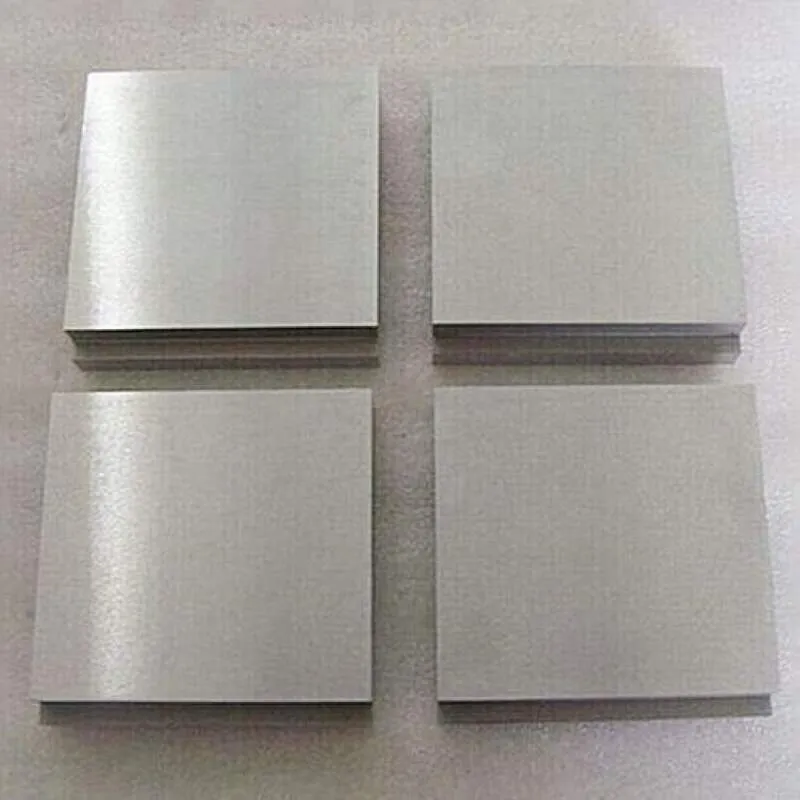
AISI 3120 Steel (UNS G31200)
Product Code : STI-AL-013-CU
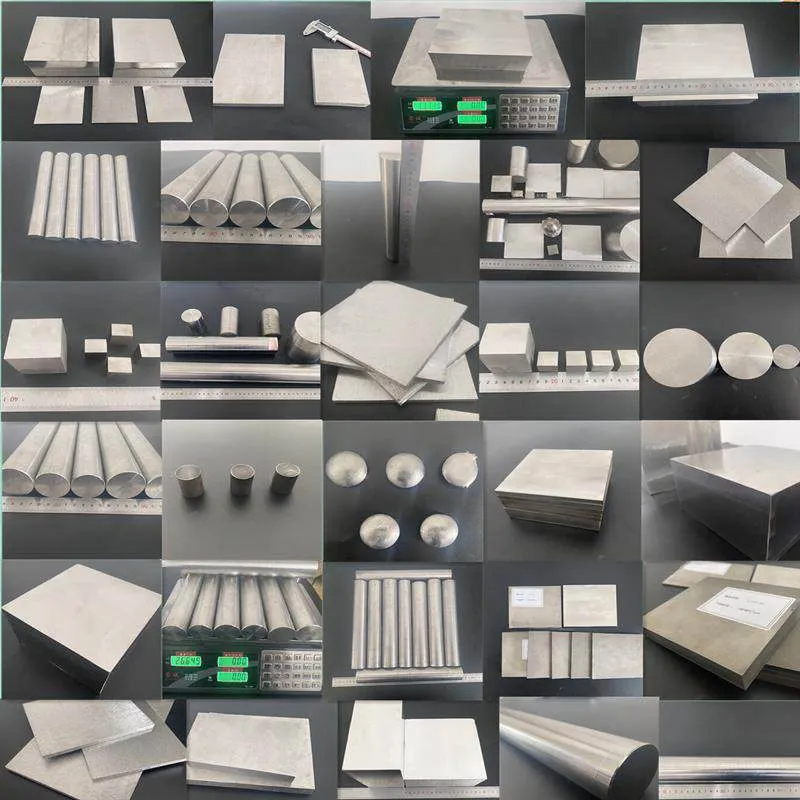
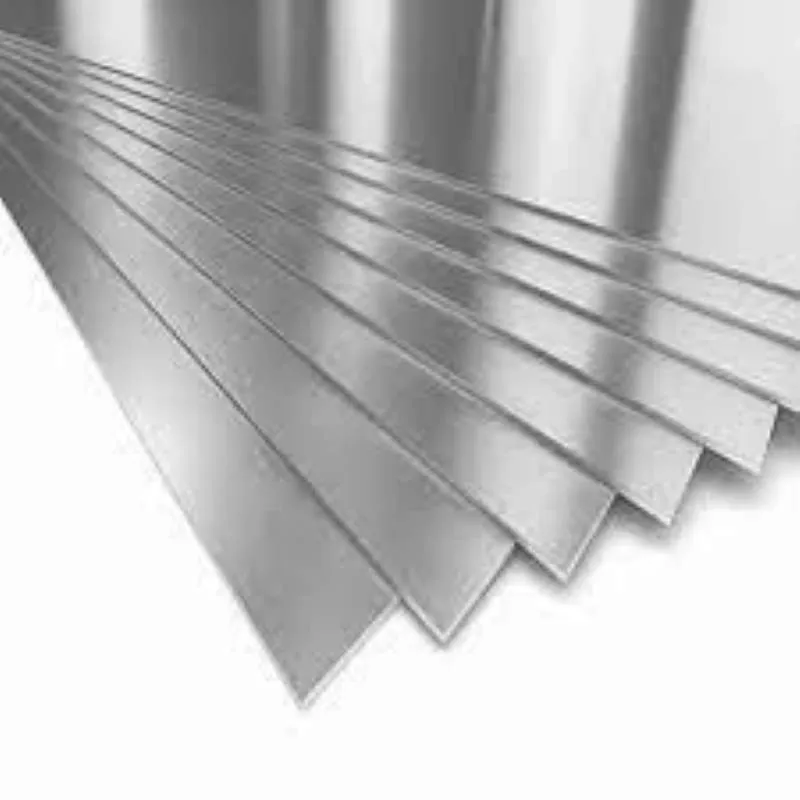
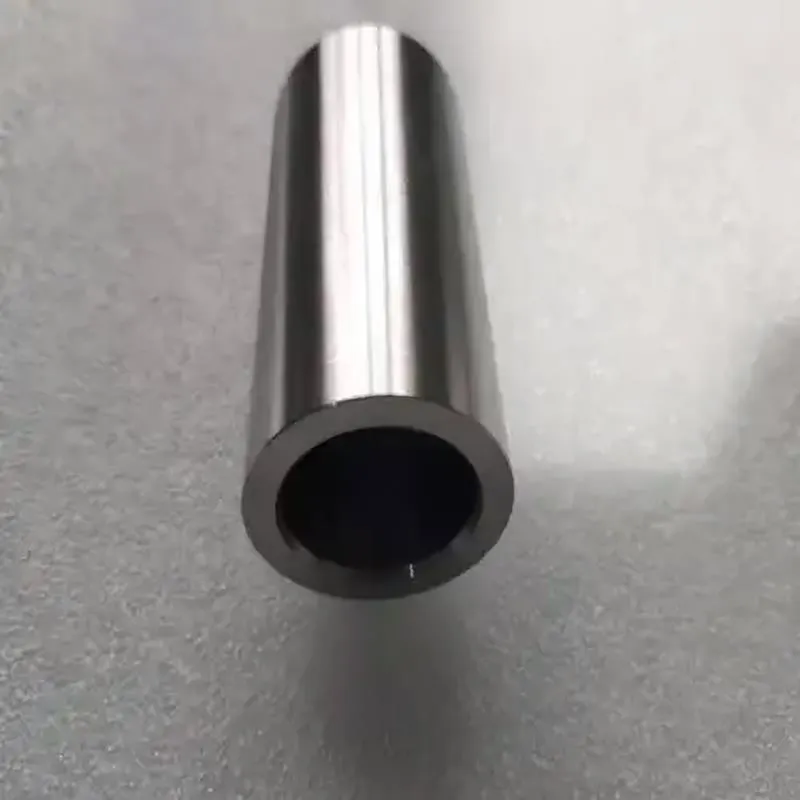
We provide AISI 3120 Steel (UNS G31200) is available in Bar (Round bar, Flat bar), Ribbon, Wire, Rods, Tube,Seamless Tube,Pipe, Ingots, Plate, Sheet, Strip and Forging Stock.,Purity, chemical composition, size, etc. can all be customized to meet specific requirements.
Please contact us if you need customized services. We will contact you with the price and availability in 24 hours.
AISI 3120 Steel (UNS G31200) Product Information
-:-
For detailed product information, please contact sales.
-:
AISI 3120 Steel (UNS G31200) Synonyms
-:-
For detailed product information, please contact sales.
-:
AISI 3120 Steel (UNS G31200) Product Information
-:-
For detailed product information, please contact sales.
-:
# **Product Introduction: AISI 3120 Steel (UNS G31200)**
## **Executive Summary**
**AISI 3120 (UNS G31200)** is a high-quality, nickel-chromium alloy steel specifically engineered for **case-hardening applications** requiring a balanced combination of core strength, toughness, and a hard, wear-resistant surface. As part of the AISI 31xx series, this steel contains approximately **1.25% nickel and 0.65% chromium**, providing improved hardenability, fatigue resistance, and core properties compared to plain carbon case-hardening steels. It is designed to produce components with excellent surface wear characteristics and a ductile, shock-resistant core, making it particularly suitable for medium-to-heavy duty gears, shafts, and other dynamically loaded components in automotive, industrial, and machinery applications.
---
## **1. Chemical Composition**
### **Standard Composition Ranges**
| Element | Content Range (% by weight) - **AISI 3120** | Primary Function |
| :--- | :--- | :--- |
| **Carbon (C)** | 0.17 - 0.22 | Provides core strength; optimized for case hardening with good machinability |
| **Nickel (Ni)** | 1.10 - 1.40 | Enhances core toughness, impact resistance, fatigue strength, and hardenability |
| **Chromium (Cr)** | 0.55 - 0.75 | Increases case and core hardenability, improves wear resistance of carburized case |
| **Manganese (Mn)** | 0.60 - 0.90 | Deoxidizer, improves hardenability and surface response to carburizing |
| **Silicon (Si)** | 0.15 - 0.35 | Deoxidizer, strengthens ferrite matrix |
| **Phosphorus (P)** | 0.035 max | Impurity (kept low for ductility) |
| **Sulfur (S)** | 0.040 max | Impurity (affects hot workability and transverse properties) |
| **Molybdenum (Mo)** | - | Typically not specified; may be present in trace amounts (<0.06%) |
| **Iron (Fe)** | Balance | Matrix element |
### **Key Metallurgical Features**
- **Core Properties:** Balanced nickel and chromium provide good toughness with moderate strength
- **Hardenability:** Good through-hardening capability for medium-sized sections
- **Case Formation:** Responds well to carburizing and carbonitriding processes
- **Grain Structure:** Nickel helps refine austenite grain size, promoting toughness
- **Cost-Performance Balance:** More economical than higher-nickel grades (e.g., 3310, 2515) while offering significant performance benefits over plain carbon steels
---
## **2. Physical & Mechanical Properties**
### **A. Fundamental Physical Properties**
| Property | Condition | Value/Range | Notes |
| :--- | :--- | :--- | :--- |
| **Density** | All conditions | 7.85 g/cm³ (0.284 lb/in³) | Comparable to standard alloy steels |
| **Melting Point** | - | ~1480°C (2695°F) | - |
| **Elastic Modulus** | Core (tempered) | 200-205 GPa (29,000-29,700 ksi) | - |
| **Shear Modulus** | Core (tempered) | 80-82 GPa (11,600-11,900 ksi) | - |
| **Poisson's Ratio** | - | 0.29 | - |
| **Thermal Conductivity** | 100°C | 42.0 W/m·K | - |
| **Specific Heat Capacity** | 20°C | 460 J/kg·K | - |
| **Thermal Expansion Coefficient** | 20-100°C | 11.8 × 10⁻⁶/°C | - |
| **Electrical Resistivity** | 20°C | 0.26 μΩ·m | - |
| **Magnetic Properties** | Below Curie temp | Ferromagnetic | - |
### **B. Mechanical Properties (Core - Before Case Hardening)**
#### **1. Normalized or Annealed Condition (Typical Machining State)**
- **Hardness:** 163-207 HB (Brinell)
- **Tensile Strength:** 550-655 MPa (80-95 ksi)
- **Yield Strength (0.2% offset):** 380-515 MPa (55-75 ksi)
- **Elongation:** 22-28%
- **Reduction of Area:** 55-65%
- **Charpy V-Notch Impact:** 70-100 J (52-74 ft-lb) at room temperature
- **Machinability Rating:** 60-65% of B1112 (fair to good)
#### **2. Core Properties After Case Hardening & Tempering**
*Typical heat treatment: Carburize (0.5-1.5mm case), quench, temper at 150-200°C*
| Property | Typical Value Range | Notes |
| :--- | :--- | :--- |
| **Core Hardness** | 30-38 HRC | After quenching from carburizing temperature |
| **Core Tensile Strength** | 860-1030 MPa (125-150 ksi) | - |
| **Core Yield Strength** | 690-860 MPa (100-125 ksi) | - |
| **Core Elongation** | 14-18% | Maintains good ductility |
| **Case Hardness** | 58-62 HRC | After carburizing, quenching, and tempering |
| **Effective Case Depth** | 0.5-1.5 mm (0.020-0.060") | Standard range; typically 0.8-1.2mm |
| **Surface Carbon Content** | 0.75-0.90% | Optimized for maximum wear resistance |
| **Charpy V-Notch Impact (Core)** | 40-70 J (30-52 ft-lb) | Good for case-hardened steel |
| **Bending Fatigue Strength** | 400-500 MPa (58-73 ksi) | At 10⁷ cycles with carburized case |
### **C. Special Properties**
- **Hardenability:** Good - suitable for sections up to 50-75mm (2-3") diameter
- **Fatigue Resistance:** Good bending and contact fatigue resistance due to compressive residual stresses
- **Low-Temperature Toughness:** Maintains reasonable impact strength down to **-20°C (-4°F)**
- **Wear Resistance:** Excellent surface wear resistance with carburized case
- **Notch Sensitivity:** Moderate - lower than higher carbon through-hardening steels
---
## **3. International Standards & Specifications**
### **Primary Governing Standards**
| Standard/Organization | Designation | Title/Scope |
| :--- | :--- | :--- |
| **AISI/SAE** | 3120 | Standard grade designation |
| **UNS** | G31200 | Unified Numbering System |
| **ASTM** | A534 | Standard Specification for Carburizing Steels |
| **ASTM** | A29/A29M | Standard Specification for Steel Bars, Carbon and Alloy, Hot-Wrought |
| **SAE** | J404, J412 | Chemical compositions and hardenability |
| **AMS** | 6260 | Aircraft quality bars (when specified) |
### **International Equivalents & Cross-References**
| Country/Region | Equivalent Designation | Standard | Notes |
| :--- | :--- | :--- | :--- |
| **ISO** | **20NiCrMo2** | ISO 683-11 | Similar nickel-chromium case-hardening steel |
| **European** | **20NiCrMo2-2** | EN 10084 | Close equivalent |
| **Germany** | **20NiCrMo2** | DIN 17210 | Similar composition and application |
| **United Kingdom** | **En 35** | BS 970 | Nickel-chromium case-hardening steel |
| **Japan** | **SNC 815** | JIS G4102 | Similar but slightly different composition |
| **China** | **20CrNi** | GB/T 3077 | Approximate equivalent |
| **Russia** | **20ХН** | GOST 4543 | Nickel-chromium case-hardening steel |
| **France** | **20 NCD 2** | NF A35-552 | Similar composition |
| **Hardenability Variant** | **3120H** | SAE J1268 | Available with guaranteed hardenability bands |
### **Industry-Specific Specifications**
- **Automotive:** Often specified in OEM material specifications for gears and shafts
- **Agricultural:** Used in tractor and implement component specifications
- **General Machinery:** Common in gear manufacturer specifications
---
## **4. Product Applications & Industries**
### **Available Product Forms**
- **Bar Stock:** Hot-rolled rounds (10-200mm), squares, hexagons (most common form)
- **Cold-Finished Bars:** Turned, ground, polished for precision applications
- **Wire Rod:** For cold heading of fasteners and small components
- **Forgings:** For larger or shaped components
- **Billets:** For further processing
### **Primary Industry Applications**
#### **1. Automotive & Transportation**
- **Transmission Components:** Gears, pinions, synchronizer rings
- **Drivetrain Parts:** Differential gears, axle shafts (medium duty)
- **Engine Components:** Camshafts, rocker arms, timing gears
- **Steering Components:** Pitman arms, steering gears
- **Heavy Truck:** Transmission and drivetrain components
#### **2. Industrial Machinery & Equipment**
- **Gear Manufacturing:** Industrial gears for power transmission, speed reducers
- **Power Transmission:** Sprockets, chain wheels, coupling components
- **Agricultural Machinery:** Tractor transmission gears, PTO shafts
- **Construction Equipment:** Gearbox components, final drive parts
- **Material Handling:** Conveyor drive components, hoisting gears
#### **3. General Manufacturing**
- **Machine Tool Components:** Gearbox gears, lead screws, feed mechanisms
- **Textile Machinery:** Gears, cams, and drive components
- **Printing Machinery:** Gear trains, roller drive components
- **Food Processing:** Drive components for heavy-duty equipment
#### **4. Other Applications**
- **Mining Equipment:** Smaller gear components, drive parts
- **Marine Applications:** Winch gears, steering gear components
- **Power Tools:** Gears for heavy-duty power tools
- **Fasteners:** High-strength bolts and studs (when case hardened)
---
## **5. Heat Treatment Technology**
### **Case Hardening Processes**
#### **1. Carburizing (Most Common Process)**
- **Temperature:** 900-930°C (1650-1705°F)
- **Atmosphere:** Endothermic gas with natural gas enrichment
- **Case Depth:** Typically 0.5-1.5 mm (0.020-0.060")
- **Surface Carbon:** 0.75-0.90%
- **Quenching:** Oil quench from 790-820°C (1450-1510°F)
- **Tempering:** 150-200°C (300-390°F) for 1-2 hours
#### **2. Carbonitriding (Alternative Process)**
- **Temperature:** 815-870°C (1500-1600°F)
- **Case Depth:** 0.1-0.8 mm (0.004-0.030")
- **Advantages:** Faster process, lower distortion, good for thinner cases
### **Typical Heat Treatment Cycle**
1. **Normalizing/Annealing:** 870-900°C (1600-1650°F), air cool (for machinability)
2. **Machining:** Component manufacturing
3. **Carburizing:** 900-930°C for required time to achieve case depth
4. **Quenching:** Oil quench from 800°C (1470°F)
5. **Tempering:** 150-200°C for 1-2 hours
6. **Finishing:** Grinding, honing, or shot peening as required
### **Special Considerations**
- **Grain Growth:** Moderate risk at high carburizing temperatures; control time at temperature
- **Distortion:** Moderate; consider press quenching or martempering for critical dimensions
- **Retained Austenite:** Typically 10-20% in case; sub-zero treatment optional for critical applications
---
## **6. Manufacturing & Fabrication Characteristics**
### **Machinability Assessment**
- **Annealed/Normalized Condition:** 60-65% of B1112 free-machining steel
- **Case Hardened Condition:** Very difficult; requires grinding or hard machining
- **Recommended Practices (Normalized Condition):**
- **Turning:** 60-90 m/min (200-300 SFM) with carbide inserts
- **Drilling:** 20-30 m/min (65-100 SFM) with HSS drills
- **Milling:** 70-110 m/min (230-360 SFM) with carbide cutters
- **Gear Cutting:** Good for hobbing, shaping, and shaving operations
- **Coolant:** Recommended for improved tool life and surface finish
### **Weldability Characteristics**
**Rating: FAIR (with precautions)**
#### **Welding Recommendations**
1. **Preheat Temperature:** 150-250°C (300-480°F)
2. **Interpass Temperature:** 150-200°C (300-390°F)
3. **Post-Weld Heat Treatment:** Stress relief at 595-650°C (1100-1200°F) recommended
4. **Filler Metals:** Low-hydrogen electrodes (E7018, E8018) or matching composition
5. **Processes:** GTAW or SMAW with low-hydrogen electrodes preferred
6. **Note:** Welding after carburizing is not recommended
### **Formability & Hot Working**
- **Hot Working Temperature:** 1150-900°C (2100-1650°F)
- **Forging:** Good forgeability with proper temperature control
- **Cold Forming:** Limited to simple operations in annealed condition
- **Hot Forming:** Preferred method for complex shapes
---
## **7. Quality Assurance & Testing**
### **Standard Certification Requirements**
1. **Chemical Analysis:** Heat analysis and product verification
2. **Mechanical Testing:** Hardness, tensile properties (when specified)
3. **Microstructural Examination:** Grain size, inclusion rating
4. **Non-Destructive Testing:** As required by customer specification
5. **Hardenability Testing:** For 3120H variant
### **Common Testing for Finished Components**
- **Case Depth Verification:** Microhardness traverse or effective case depth measurement
- **Surface Hardness:** Rockwell or microhardness testing
- **Core Hardness:** After case hardening
- **Dimensional Inspection:** Critical for heat treated components
---
## **8. Design & Engineering Guidelines**
### **Advantages of AISI 3120**
1. **Good Core Toughness:** Better than plain carbon case-hardening steels
2. **Improved Hardenability:** Suitable for medium-sized sections
3. **Cost-Effective:** More economical than higher-nickel grades
4. **Good Fatigue Resistance:** Suitable for dynamically loaded components
5. **Versatility:** Wide range of applications across industries
### **Design Considerations**
- **Case Depth:** Typically 0.5-1.5mm, depending on component size and loading
- **Core Properties:** Design for the tempered core hardness (30-38 HRC)
- **Surface Finish:** Important for fatigue performance
- **Residual Stresses:** Beneficial compressive stresses improve fatigue life
### **Economic Considerations**
- **Material Cost:** Moderate premium over plain carbon steels
- **Processing Cost:** Standard case hardening processes apply
- **Total Cost:** Good value for performance requirements
- **Availability:** Readily available from steel suppliers
---
## **9. Comparative Analysis: Case-Hardening Steels**
| Grade | C% | Ni% | Cr% | Core Toughness | Hardenability | Typical Applications |
| :--- | :--- | :--- | :--- | :--- | :--- | :--- |
| **1020** | 0.18-0.23 | - | - | Fair | Low | Light-duty gears, pins |
| **8620** | 0.18-0.23 | 0.40-0.70 | 0.40-0.60 | Good | Moderate | General-purpose gears |
| **3120** | 0.17-0.22 | 1.10-1.40 | 0.55-0.75 | **Very Good** | **Good** | Medium-duty gears, shafts |
| **3310** | 0.08-0.13 | 3.25-3.75 | 1.40-1.75 | Excellent | Very Good | High-stress gears, bearings |
| **4320** | 0.17-0.22 | 1.65-2.00 | 0.40-0.60 | Very Good | Good | Automotive gears |
---
## **10. Technical Summary & Selection Guidelines**
**Select AISI 3120 when:**
1. Good core toughness is required for impact loading
2. Component size requires better hardenability than plain carbon steels
3. Cost constraints limit use of higher-nickel grades
4. Medium-duty gear or shaft applications
5. Good balance of properties and cost is needed
**Consider Alternatives when:**
1. Maximum toughness is required (consider 3310 or higher nickel grades)
2. Very light loading conditions (consider 1020 or 8620)
3. Maximum hardenability for large sections is needed (consider 4320 or boron steels)
4. Cost is the primary driver (consider plain carbon steels)
5. Corrosion resistance is needed without coatings (consider stainless steels)
---
**AISI 3120 (UNS G31200)** represents a well-balanced, cost-effective case-hardening steel that offers significant performance improvements over plain carbon steels without the premium cost of higher-alloy grades. Its combination of nickel and chromium provides good core toughness, improved hardenability, and excellent surface wear characteristics after carburizing. Widely used in automotive, industrial, and general machinery applications, AISI 3120 continues to be a popular choice for components requiring a durable wear surface and a tough, shock-resistant core. Proper heat treatment and manufacturing practices are essential to realize its full potential in demanding applications.
-:-
For detailed product information, please contact sales.
-:
AISI 3120 Steel (UNS G31200) Specification
Dimensions
Size:
Diameter 20-1000 mm Length <4011 mm
Size:We can customized as required
Standard:
Per your request or drawing
We can customized as required
Properties(Theoretical)
Chemical Composition
-:-
For detailed product information, please contact sales.
-:
AISI 3120 Steel (UNS G31200) Properties
-:-
For detailed product information, please contact sales.
-:
Applications of AISI 3120 Steel (UNS G31200)
-:-
For detailed product information, please contact sales.
-:
Chemical Identifiers AISI 3120 Steel (UNS G31200)
-:-
For detailed product information, please contact sales.
-:
Packing of AISI 3120 Steel (UNS G31200)
-:-
For detailed product information, please contact sales.
-:
Standard Packing:
-:-
For detailed product information, please contact sales.
-:
Typical bulk packaging includes palletized plastic 5 gallon/25 kg. pails, fiber and steel drums to 1 ton super sacks in full container (FCL) or truck load (T/L) quantities. Research and sample quantities and hygroscopic, oxidizing or other air sensitive materials may be packaged under argon or vacuum. Solutions are packaged in polypropylene, plastic or glass jars up to palletized 482 gallon liquid totes Special package is available on request. E FORUs’ is carefully handled to minimize damage during storage and transportation and to preserve the quality of our products in their original condition