AISI 50B46 Steel
Product Code : STI-AL-101-CU
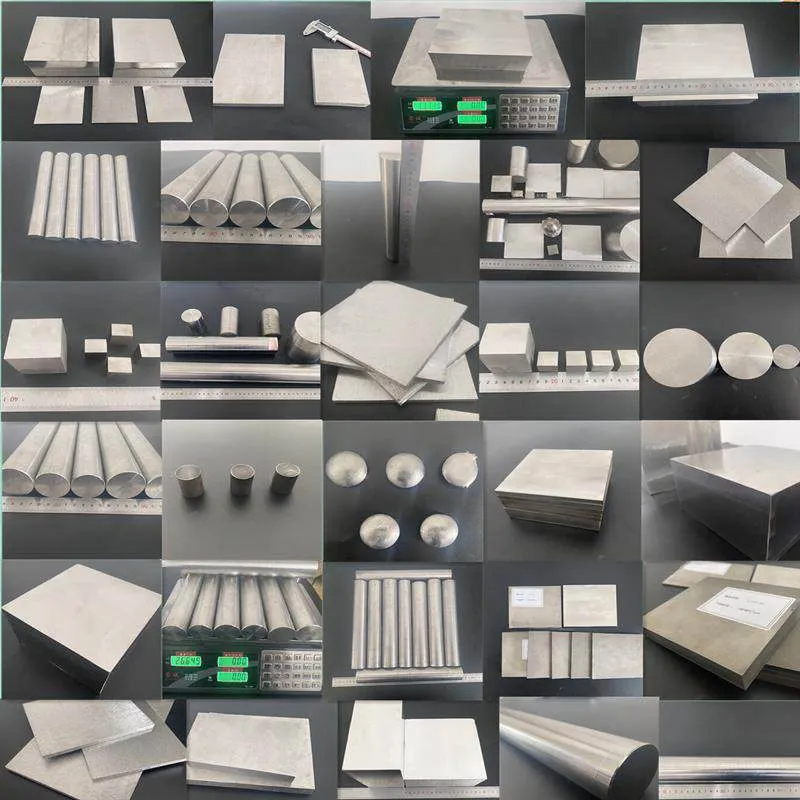
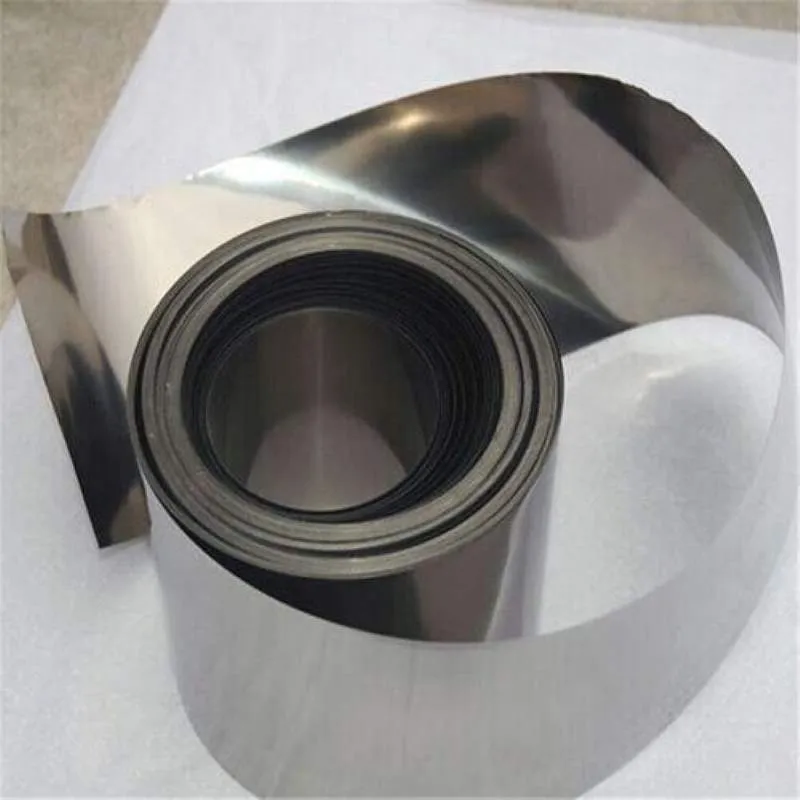
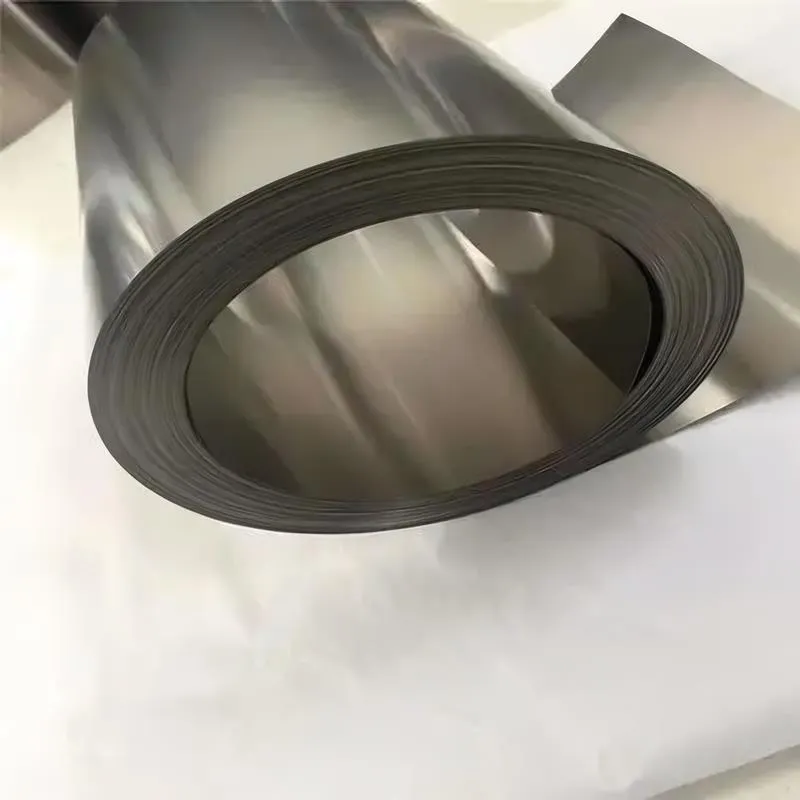
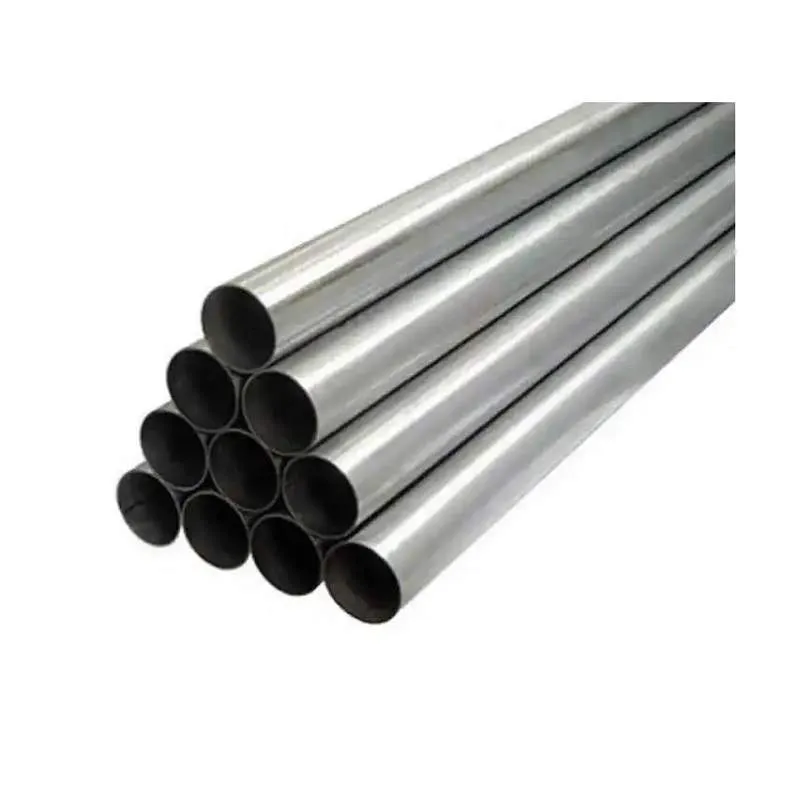
We provide AISI 50B46 Steel is available in Bar (Round bar, Flat bar), Ribbon, Wire, Rods, Tube,Seamless Tube,Pipe, Ingots, Plate, Sheet, Strip and Forging Stock.,Purity, chemical composition, size, etc. can all be customized to meet specific requirements.
Please contact us if you need customized services. We will contact you with the price and availability in 24 hours.
AISI 50B46 Steel Product Information
-:-
For detailed product information, please contact sales.
-:
AISI 50B46 Steel Synonyms
-:-
For detailed product information, please contact sales.
-:
AISI 50B46 Steel Product Information
-:-
For detailed product information, please contact sales.
-:
**Product Datasheet: AISI 50B46 Medium-Carbon Boron-Enhanced Alloy Steel**
---
### **1. Product Overview**
AISI 50B46 is a **cost-effective, medium-carbon alloy steel** enhanced with a controlled addition of **Boron (B)**. This deliberate alloying strategy leverages boron's powerful effect on hardenability, allowing the steel to achieve deep and uniform hardening characteristics typically associated with more heavily alloyed (and more expensive) grades. It is designed for **quenching and tempering** to produce components with a favorable combination of high strength, good toughness, and wear resistance. The "B" in its designation is the key feature, indicating a lean alloy base boosted by boron for superior performance-per-cost.
---
### **2. Key International & Equivalent Standards**
| Region/System | Standard Designation | Description / Notes |
| :--- | :--- | :--- |
| **USA (Primary)** | **SAE J404, J412, J770** | Standard designation: **AISI 50B46** |
| **USA (Material)** | **ASTM A29/A29M** | Standard Specification for Steel Bars, Carbon and Alloy, Hot-Wrought |
| **Europe (Similar Concept)** | **~34CrB4 (1.7321)** or similar boron-modified grades. | No direct numeric equivalent. European standards specify boron steels differently. |
| **Japan (Similar)** | Approx. **SCr435-B** or **SCr440-B** variants. | Boron-treated steels under JIS G4052/4053. |
| **ISO (Reference)** | Can be related to types in **ISO 683-1** for boron-treated steels. | e.g., Type 34MnB5 (higher Mn) shares the boron-enhancement concept. |
---
### **3. Chemical Composition (Weight %)**
*Composition per SAE J404 standard specification. Boron content is critical.*
| Element | Minimum | Maximum | Typical | Primary Function |
| :--- | :--- | :--- | :--- | :--- |
| **Carbon (C)** | 0.43 | 0.48 | 0.46 | Provides core hardness and strength after heat treatment. |
| **Manganese (Mn)** | 0.75 | 1.00 | 0.85 | Base hardenability agent and solid solution strengthener. |
| **Phosphorus (P)** | — | 0.035 | 0.020 | Residual impurity (controlled). |
| **Sulfur (S)** | — | 0.040 | 0.025 | Improves machinability. |
| **Silicon (Si)** | 0.15 | 0.35 | 0.25 | Deoxidizer, increases strength. |
| **Boron (B)** | **0.0005** | **0.003** | **0.0015** | **Primary Hardenability Enhancer.** Dramatically increases depth of hardening by retarding ferrite formation at austenite grain boundaries. |
| **Chromium (Cr)** | Report (often residual, ≤0.35%) | | ~0.20 | Minor contribution to hardenability and wear. |
| **Other Residuals** | (Ni, Mo, Cu, etc.) typically ≤0.35% each | | | |
---
### **4. Mechanical Properties (Heat-Treated Condition)**
*Properties after oil quenching from ~850°C (1560°F) and tempering. Values are typical for medium sections (~25-50mm diameter).*
| Condition / Tempering Temp. | Tensile Strength | Yield Strength (0.2%) | Elongation (%) | Reduction of Area (%) | Typical Hardness |
| :--- | :--- | :--- | :--- | :--- | :--- |
| **Annealed (for machining)** | 620 - 750 MPa | ~415 MPa | ~20 | — | 187 - 229 HB |
| **Q&T @ 200°C (400°F)** | 1550 - 1750 MPa | 1400 - 1600 MPa | 9 - 12 | 35 - 45 | 50 - 54 HRC |
| **Q&T @ 425°C (800°F)** | 1150 - 1350 MPa | 1050 - 1250 MPa | 13 - 16 | 45 - 55 | 38 - 42 HRC |
| **Q&T @ 540°C (1000°F)** | 1000 - 1150 MPa | 900 - 1050 MPa | 16 - 20 | 50 - 60 | 30 - 34 HRC |
| **Q&T @ 650°C (1200°F)** | 800 - 900 MPa | 700 - 800 MPa | 20 - 25 | 55 - 65 | 24 - 28 HRC |
#### **Hardenability Performance**
- Due to boron, AISI 50B46 exhibits **hardenability comparable to or exceeding that of higher-alloy steels like 4140**.
- Capable of **through-hardening in oil for sections up to approximately 75 mm (3 inches)** in diameter, depending on quenching conditions.
- Jominy test typically shows a relatively flat curve, maintaining high hardness to significant distances from the quenched end.
#### **Physical Properties**
- **Density:** 7.85 g/cm³
- **Modulus of Elasticity:** 205 GPa
- **Machinability (Annealed):** Fair to Good (~60-65% of 1212 steel standard). Boron can cause slight abrasiveness on tools.
- **Weldability:** **Poor.** Requires stringent procedures: preheating (200-315°C / 400-600°F), low-hydrogen electrodes, and post-weld tempering.
---
### **5. Heat Treatment Guidelines**
| Process | Key Parameters | Objective / Critical Notes |
| :--- | :--- | :--- |
| **Annealing** | 830-860°C (1525-1580°F), slow furnace cool. | Produce soft, machinable structure. |
| **Normalizing** | 870-900°C (1600-1650°F), air cool. | Grain refinement after forging. |
| **Hardening** | Austenitize: **830-860°C (1525-1580°F)**, **Oil quench**. | Boron maximizes martensite formation in the core. Avoid prolonged soaking to prevent grain growth. |
| **Tempering** | **Temper immediately** after quench. 1-2 hours at chosen temperature (200-650°C). | **Mandatory** to relieve stresses and achieve ductility. |
---
### **6. Primary Applications**
AISI 50B46 is widely used in cost-sensitive, high-volume manufacturing of components that require reliable strength and durability:
- **Automotive:** **Axle shafts**, torsion bars, steering linkage components (tie rods, drag links), high-strength bolts (Grade 10.9), gear blanks, and crankshafts.
- **Agricultural & Off-Highway:** Gears, drive shafts, plough beams, track link pins, and hydraulic cylinder rods.
- **General Engineering:** Shafts, spindles, couplings, rollers, and other machinery parts subjected to high static and dynamic loads.
- **Fasteners:** High-performance studs, bolts, and special fasteners.
---
### **7. Key Advantages & Selection Rationale**
- **Superior Cost Efficiency:** Provides the hardenability and strength of a more expensive alloy steel (e.g., containing more Cr, Ni, Mo) at a significantly lower material cost due to the lean base composition and efficient boron addition.
- **Excellent Through-Hardening:** Ideal for larger-diameter parts that require uniform core properties, reducing the risk of soft centers.
- **Consistent Quality:** When produced with proper boron protection (e.g., Ti or Al to tie up nitrogen), it offers very consistent hardenability.
- **Material Lightweighting Potential:** Its high strength allows for potential downsizing of components, contributing to weight reduction in vehicles and machinery.
---
### **Important Processing & Design Considerations**
1. **Boron Effectiveness:** The hardenability boost is highly dependent on having "active" or "effective" boron in solid solution. Steelmaking must control nitrogen content (via Al/Ti additions) to prevent the formation of inactive boron nitride (BN).
2. **Quench Severity:** While oil quenching is standard, very large sections or stringent requirements may necessitate a faster quenchant (e.g., polymer or agitated water). This must be balanced against distortion/cracking risks.
3. **Notch Sensitivity:** In high-hardness conditions, components are sensitive to stress concentrators. Generous fillets and good surface finish are critical for fatigue performance.
4. **Decarburization:** As with most medium-carbon steels, protect against surface decarburization during heat treatment to preserve surface hardness and fatigue strength.
---
**Disclaimer:**
This datasheet presents typical values and guidelines. For production, material should be ordered to the appropriate SAE/ASTM specification. The effectiveness of boron can vary between melts. For critical applications, specifying a **hardenability (H-band) requirement per ASTM A304 (i.e., 50B46H)** is strongly recommended to ensure consistent performance. Final properties are dependent on part geometry, exact heat treatment cycle, and prior processing. Prototype testing is advised.
-:-
For detailed product information, please contact sales.
-:
AISI 50B46 Steel Specification
Dimensions
Size:
Diameter 20-1000 mm Length <4099 mm
Size:We can customized as required
Standard:
Per your request or drawing
We can customized as required
Properties(Theoretical)
Chemical Composition
-:-
For detailed product information, please contact sales.
-:
AISI 50B46 Steel Properties
-:-
For detailed product information, please contact sales.
-:
Applications of AISI 50B46 Steel
-:-
For detailed product information, please contact sales.
-:
Chemical Identifiers AISI 50B46 Steel
-:-
For detailed product information, please contact sales.
-:
Packing of AISI 50B46 Steel
-:-
For detailed product information, please contact sales.
-:
Standard Packing:
-:-
For detailed product information, please contact sales.
-:
Typical bulk packaging includes palletized plastic 5 gallon/25 kg. pails, fiber and steel drums to 1 ton super sacks in full container (FCL) or truck load (T/L) quantities. Research and sample quantities and hygroscopic, oxidizing or other air sensitive materials may be packaged under argon or vacuum. Solutions are packaged in polypropylene, plastic or glass jars up to palletized 570 gallon liquid totes Special package is available on request. E FORUs’ is carefully handled to minimize damage during storage and transportation and to preserve the quality of our products in their original condition