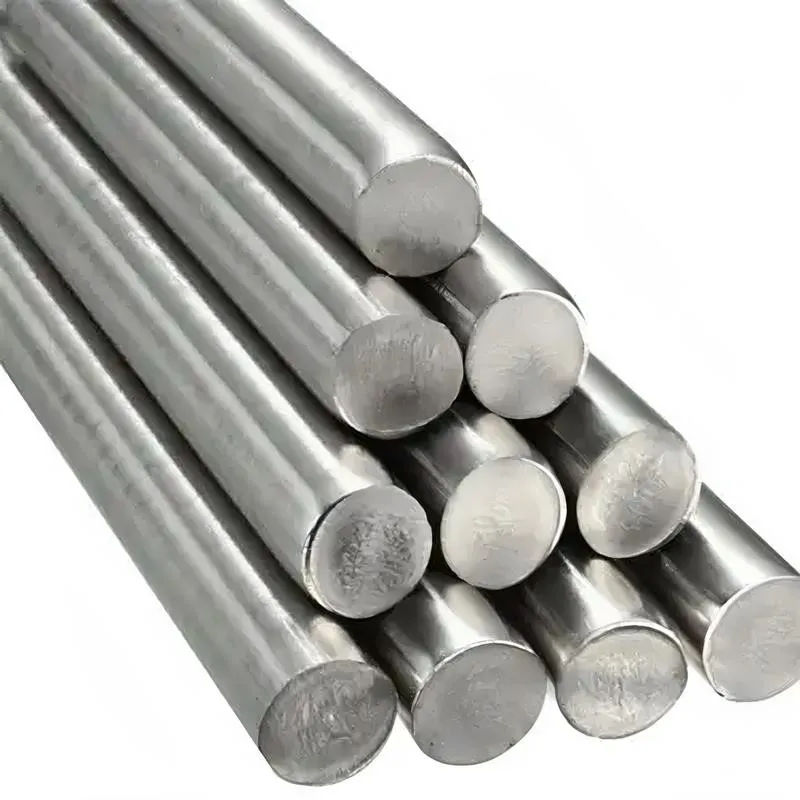
Bethlehem Steel ASTM A633 Grade E, steel
Product Code : STI-ASTM-503-CU
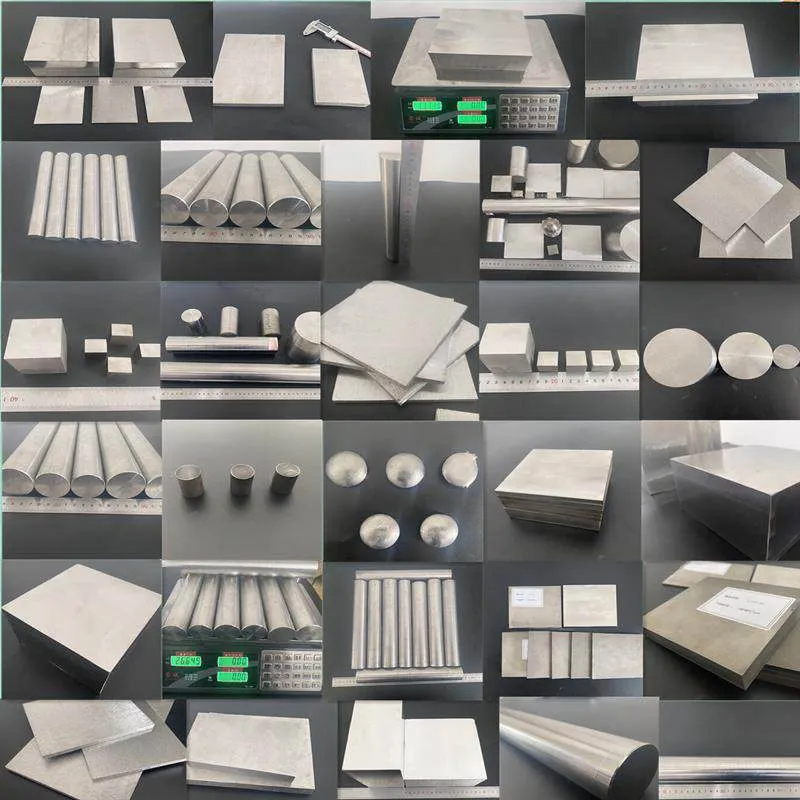
We provide Bethlehem Steel ASTM A633 Grade E >4 to 6 in. thick, steel plate is available in Bar (Round bar, Flat bar), Ribbon, Wire, Rods, Tube,Seamless Tube,Pipe, Ingots, Plate, Sheet, Strip and Forging Stock.,Purity, chemical composition, size, etc. can all be customized to meet specific requirements.
Please contact us if you need customized services. We will contact you with the price and availability in 24 hours.
Bethlehem Steel ASTM A633 Grade E >4 to 6 in. thick, steel plate Product Information
-:-
For detailed product information, please contact sales.
-:
Bethlehem Steel ASTM A633 Grade E >4 to 6 in. thick, steel plate Synonyms
-:-
For detailed product information, please contact sales.
-:
Bethlehem Steel ASTM A633 Grade E >4 to 6 in. thick, steel plate Product Information
-:-
For detailed product information, please contact sales.
-:
## **Product Specification: Bethlehem Steel ASTM A633 Grade E Ultra-Heavy Normalized Steel Plate (>4" to 6" Thick)**
### **Product Overview**
Bethlehem Steel ASTM A633 Grade E in thicknesses exceeding 4 inches (101.6 mm) up to 6 inches (152.4 mm) represents the absolute frontier of normalized structural steel plate manufacturing. This monumental plate product pushes the limits of metallurgical science to deliver the signature Grade E performance paradigm—65 ksi (450 MPa) yield strength with guaranteed low-temperature toughness—in cross-sections where thermal dynamics, solidification phenomena, and microstructural control present extraordinary challenges. Each plate in this range is a custom-engineered artifact, produced under **exceptional, non-standard specifications** that redefine the boundaries of the ASTM standard. It is reserved for applications where structural integrity is paramount and failure consequences are unacceptable, typically in megastructures subjected to extreme environments.
### **International Standard & Governance**
* **Reference Basis:** **ASTM A633 / A633M** (Grade E) provides only a **general compositional guideline and nomenclature**.
* **Regulatory Reality:** The published ASTM standard **is entirely inapplicable** for establishing guaranteed mechanical properties in this thickness range. The plate is governed by a **bespoke, performance-based specification**.
* **Governing Documents:** The controlling documents are the **Project-Specific Purchase Agreement** and its accompanying **Technical Annex**, which detail every aspect of chemistry, processing, testing, and acceptance criteria.
* **Certification Framework:** Requires the highest level of certification, typically **EN 10204 Type 3.2 Certificate**, with continuous **Independent Third-Party Authority (TPA)** surveillance from melt to shipment.
---
### **Chemical Composition (Radically Engineered for Monumental Sections)**
Conventional chemistry is insufficient. The design must prioritize through-thickness homogeneity and fabricability above all else, often resulting in a composition that resembles a low-carbon alloy steel more than a classic HSLA grade.
| Element | Standard A633E Range (Nominal) | Engineered Composition for >4" to 6" Plate | Metallurgical Imperative & Rationale |
| :--- | :--- | :--- | :--- |
| **Carbon (C)** | ≤ 0.22% | **0.04 – 0.08%** | **Extreme reduction.** Essential to achieve a **Carbon Equivalent (CE) below 0.30**, enabling welding without inducing untempered martensite in the HAZ and preventing hydrogen cracking in highly restrained, massive welds. |
| **Manganese (Mn)** | 1.15 – 1.60% | 1.00 – 1.30% | Reduced to minimize segregation and control CE. Strength deficit compensated by other elements. |
| **Phosphorus (P)** | ≤ 0.035% | **≤ 0.005%** | **Maximum permissible often set at 0.004%.** Essential to prevent any trace of grain boundary embrittlement that could initiate fracture from the plate's center. |
| **Sulfur (S)** | ≤ 0.040% | **≤ 0.0008%** | **Extreme desulfurization target.** Achieved via advanced ladle treatments. Critical for Z-direction properties. |
| **Nickel (Ni)** | Not Specified | **1.50 – 2.50%** | **The cornerstone alloying element.** Added in substantial quantities to ensure the **ferrite matrix at mid-thickness retains high toughness** at extremely low temperatures. It is the primary defense against brittle fracture initiation in the core. |
| **Molybdenum (Mo)** | Not Specified | **0.25 – 0.50%** | Added for solid solution strengthening and to ensure uniform hardenability through the immense thickness, promoting a fine bainitic microstructure upon normalizing or quenching. |
| **Chromium (Cr)** | Not Specified | 0.20 – 0.40% | Enhances hardenability and provides some solid solution strength. |
| **Copper (Cu)** | (When specified) | 0.20 – 0.35% | May be retained for incidental corrosion resistance. |
| **Vanadium (V) / Niobium (Nb)** | V≤0.10%, Nb≤0.05% | **0.01 – 0.03% (if any)** | Micro-alloying use is minimal or eliminated. Precipitation strengthening is secondary; the focus is on achieving toughness via a clean, fine-grained, alloyed matrix. |
| **Boron (B)** | Not Specified | **0.001 – 0.003% (Optional)** | May be added in minute, controlled amounts with stabilizing elements (Ti) to significantly boost hardenability with minimal impact on CE. |
| **Aluminum (Al)** | (When specified) | 0.020 – 0.040% | For grain refinement and nitrogen control. |
| **Calcium (Ca) / Rare Earth Treatment** | Not Specified | **Mandatory** | For ultimate sulfide shape control and oxide modification. |
| **Carbon Equivalent (CE IIW)** | ≤ 0.45 | **Target: ≤ 0.28** | A fundamental design goal. |
| **Pcm** | - | **Target: ≤ 0.17** | |
**Manufacturing Process Imperatives:**
* **Steelmaking:** **Primary melting (EAF/BOF) → LMF → Vacuum Degassing (preferably Vacuum Arc Degassing or similar for ultra-low gas content).** Aim for **[H] < 1.0 ppm, [O] < 20 ppm**.
* **Casting:** **Electro-Slag Remelting (ESR)** or **Vacuum Arc Remelting (VAR)** may be specified for the highest quality to eliminate segregation and achieve perfect homogeneity. Conventional casting with extreme control is the alternative.
* **Forging/Rolling:** The ingot/slab must undergo **extensive cogging or forging** prior to final rolling to thoroughly work the center and refine the grain structure.
* **Heat Treatment:** **Normalizing may be insufficient.** **Quenching and Tempering (Q&T)** is the **preferred and often mandatory** condition. Austempering or other isothermal treatments may be employed. The thermal cycle is meticulously programmed and recorded.
---
### **Physical & Mechanical Properties (Fully Negotiated & Verified)**
All properties are contractually guaranteed based on extensive testing.
| Property | Typical Negotiated Minimum / Range | Test Protocol & Location |
| :--- | :--- | :--- |
| **Yield Strength** | **52 – 58 ksi (360 – 400 MPa)** | Tested at **T/4 (Quarter-Thickness)** and **T/2 (Mid-Thickness)**. Strength at T/2 is the controlling criterion. |
| **Tensile Strength** | 70 – 85 ksi (485 – 585 MPa) | Same locations. A minimum tensile/yield ratio may be specified. |
| **Elongation in 2"** | 15 – 18% | |
| **Reduction of Area (Z-Direction)** | **≥ 35% (Z35) or ≥ 40% (Z40)** | Per ASTM A770. A critical requirement. |
| **Charpy V-Notch Impact** | **20 – 35 ft-lbf @ -40°F (-40°C) or -20°F (-29°C)** | **Testing at Surface, T/4, T/2, and sometimes 3T/4 is mandatory.** The curve of energy vs. through-thickness location is analyzed. |
| **Fracture Toughness (CTOD/K1C)** | **Always specified.** Minimum CTOD values at the project's Minimum Design Temperature (MDT) are defined. | Per ASTM E1820. Tests conducted at T/2 are crucial. |
| **Drop Weight Tear Test (DWTT)** | Often required for energy-absorbing applications. | Per ASTM E436. |
| **Ultrasonic Testing** | **100% to the most stringent level (beyond ASTM A578).** "Zero defect" criteria over critical zones may be applied. | |
---
### **Fabrication Considerations: A Specialized Engineering Field**
1. **Welding:** Treated as a **Major Nuclear Quality** activity. Procedures require exhaustive qualification on full-thickness test pieces, including thermal simulation of the actual structure's restraint.
2. **Preheat/Interpass:** **400°F – 500°F (204°C – 260°C)**. The entire assembly may be heated in a furnace.
3. **Welding Processes:** **Narrow-Gap Submerged Arc Welding (NG-SAW)** is standard. **Electro-Slag Welding (ESW)** or **Electro-Gas Welding (EGW)** for vertical joints.
4. **PWHT:** **Absolutely mandatory.** Complex multi-stage cycles are common to optimize stress relief and HAZ toughness.
5. **NDE:** **100% Volumetric examination** of all weldments via **Automated Ultrasonic Testing (AUT)** and often **Radiographic Testing (RT)**.
---
### **Product Applications**
Exclusively for landmark projects:
* **Nuclear Fusion Reactor Structural Components:** First wall supports, magnet coils structures requiring immense strength and irradiation resistance.
* **Deep-Sea Offshore Platform "Critical K-Nodes":** Primary joints in next-generation platforms for ultra-deep water or Arctic regions.
* **Heavy Naval Construction:** Hull structural members for next-generation icebreakers or strategic naval vessels.
* **Advanced Particle Accelerator & Research Facility Structures:** Where magnetic fields, cryogenics, and structural integrity intersect.
* **Geographically Critical Defense Installations:** Structures requiring guaranteed performance under extreme mechanical and thermal shock.
---
### **Procurement & Quality Assurance**
A project in itself, spanning years.
1. **Supplier Qualification:** Involves a full audit of the mill's quality systems, historical performance, and R&D capability.
2. **Prototype/Test Block Production:** A trial melt and plate may be produced and extensively tested before the final order is confirmed.
3. **Full Immersion Surveillance:** TPA inspectors are present for every significant manufacturing step.
4. **Comprehensive Data Package:** The final documentation is exhaustive, including all original charts, digital records, and independent analysis reports.
### **Disclaimer**
This specification describes a material at the **absolute limit of current industrial capability**. The production of normalized (or Q&T) steel plate to A633 Grade E performance levels in 6-inch thickness is an **extraordinarily rare and costly undertaking**. Only a handful of facilities worldwide possess the theoretical and practical expertise to attempt it. The procurement process is complex, lengthy, and involves significant technical and financial risk. **There are no standard guarantees or warranties; all performance is contractually defined and verified.** This document is a technical illustration based on the principles of physical metallurgy and should not be construed as a commercial offering. Any real procurement must be led by a consortium of expert metallurgists, welding engineers, and structural analysts.
-:-
For detailed product information, please contact sales.
-:
Bethlehem Steel ASTM A633 Grade E >4 to 6 in. thick, steel plate Specification
Dimensions
Size:
Diameter 20-1000 mm Length <4653 mm
Size:We can customized as required
Standard:
Per your request or drawing
We can customized as required
Properties(Theoretical)
Chemical Composition
-:-
For detailed product information, please contact sales.
-:
Bethlehem Steel ASTM A633 Grade E >4 to 6 in. thick, steel plate Properties
-:-
For detailed product information, please contact sales.
-:
Applications of Bethlehem Steel ASTM A633 Grade E >4 to 6 in. thick, steel plate
-:-
For detailed product information, please contact sales.
-:
Chemical Identifiers Bethlehem Steel ASTM A633 Grade E >4 to 6 in. thick, steel plate
-:-
For detailed product information, please contact sales.
-:
Packing of Bethlehem Steel ASTM A633 Grade E >4 to 6 in. thick, steel plate
-:-
For detailed product information, please contact sales.
-:
Standard Packing:
-:-
For detailed product information, please contact sales.
-:
Typical bulk packaging includes palletized plastic 5 gallon/25 kg. pails, fiber and steel drums to 1 ton super sacks in full container (FCL) or truck load (T/L) quantities. Research and sample quantities and hygroscopic, oxidizing or other air sensitive materials may be packaged under argon or vacuum. Solutions are packaged in polypropylene, plastic or glass jars up to palletized 1124 gallon liquid totes Special package is available on request. E FORUs’ is carefully handled to minimize damage during storage and transportation and to preserve the quality of our products in their original condition