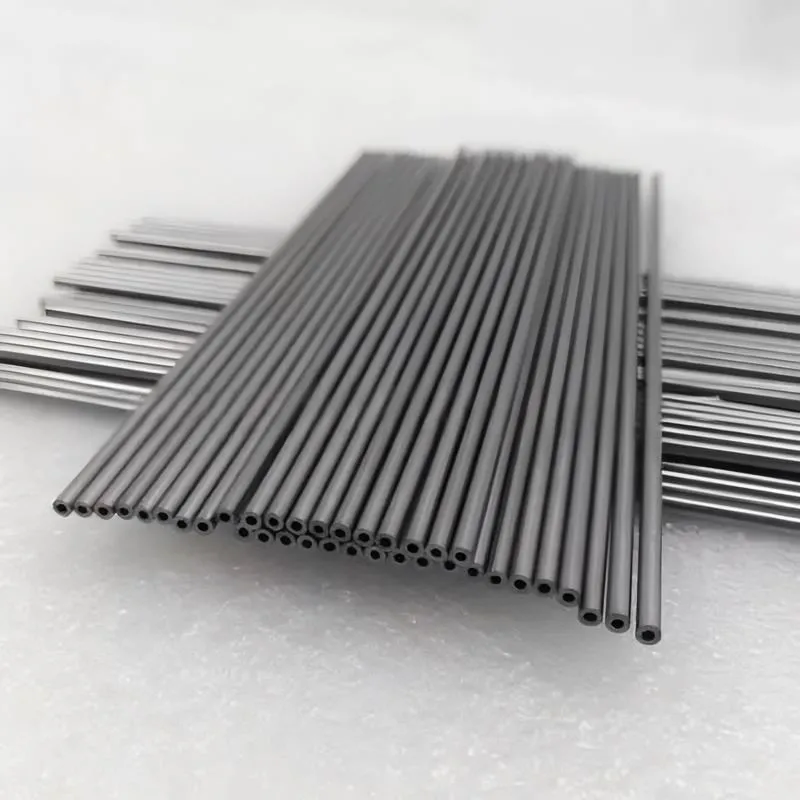
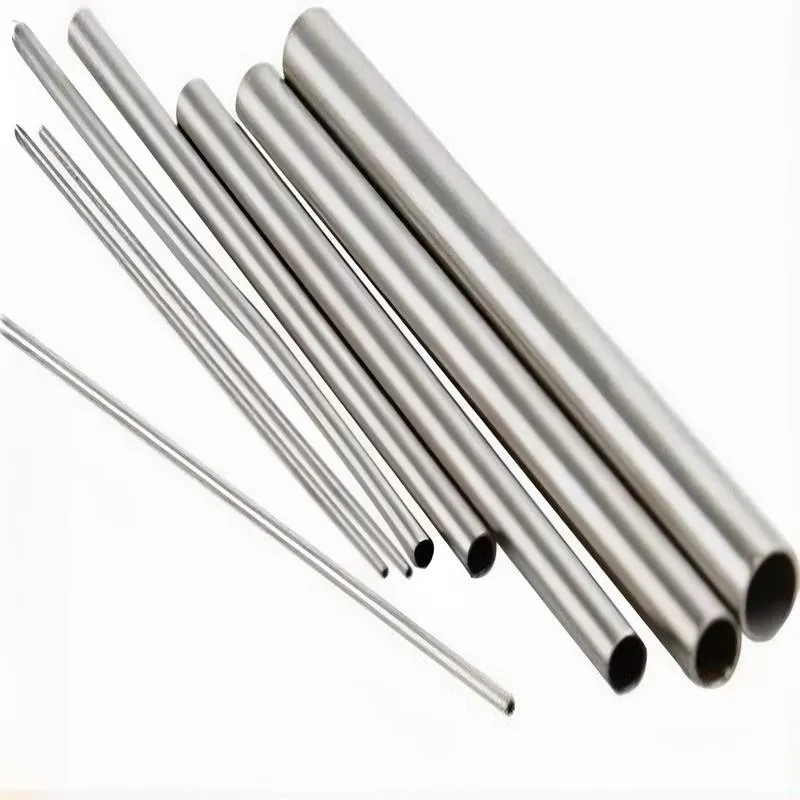
InduSteel Capillary,CREUSABRO® 4000 High Wear Resistant Steel Capillary
Product Code : STI-CSTI-1696-CU
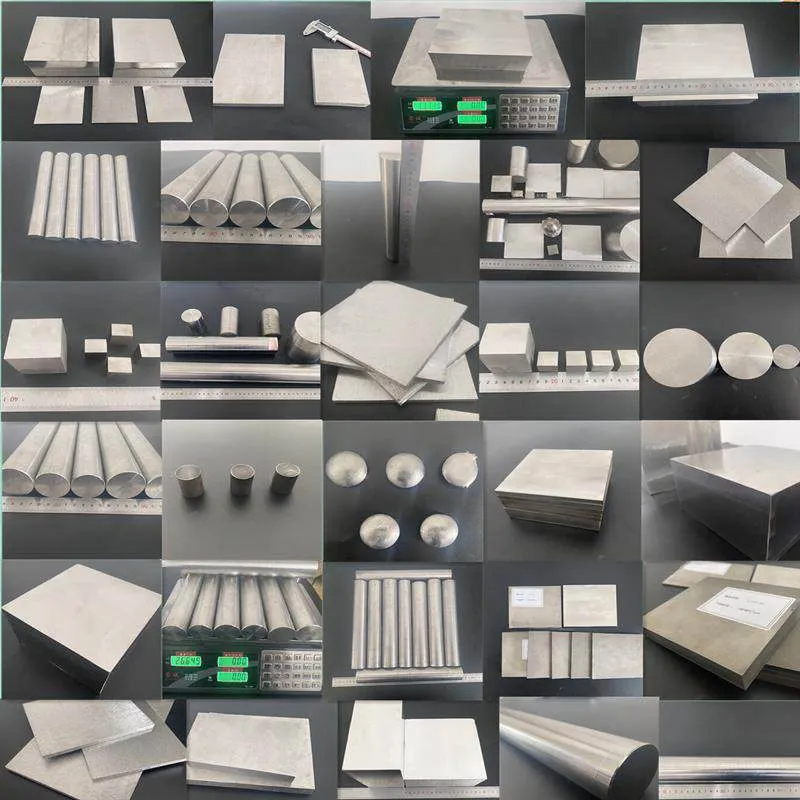
We provide InduSteel Capillary CREUSABRO® 4000 High Wear Resistant Steel Capillary is available in Bar (Round bar, Flat bar), Ribbon, Wire, Rods, Tube,Seamless Tube,Pipe, Ingots, Plate, Sheet, Strip and Forging Stock.,Purity, chemical composition, size, etc. can all be customized to meet specific requirements.
Please contact us if you need customized services. We will contact you with the price and availability in 24 hours.
InduSteel Capillary CREUSABRO® 4000 High Wear Resistant Steel Capillary Product Information
-:-
For detailed product information, please contact sales.
-:
InduSteel Capillary CREUSABRO® 4000 High Wear Resistant Steel Capillary Synonyms
-:-
For detailed product information, please contact sales.
-:
Industeel CREUSABRO® 4000 High Wear Resistant Steel Product Information
-:-
For detailed product information, please contact sales.
-:
# **Product Datasheet: Industeel CREUSABRO® 4000 High Wear Resistant Steel**
## **1. Product Overview**
**CREUSABRO® 4000** is a premium **work-hardening, abrasion-resistant steel** developed by Industeel (ArcelorMittal) for applications subjected to **extreme wear, high-impact loading, and severe surface degradation**. Unlike conventional quenched and tempered abrasion steels, the CREUSABRO® technology employs a unique metallurgical approach based on a **tough, ductile martensitic matrix** containing a high density of **fine, hard precipitates**. This steel exhibits exceptional **work-hardening capacity** – its surface hardness increases significantly under impact or pressure during service, creating a self-reinforcing wear layer while maintaining excellent toughness and weldability throughout its lifetime.
## **2. International Standards & Designations**
| System/Authority | Designation | Specification Title / Relationship |
| :--- | :--- | :--- |
| **Manufacturer** | **Industeel CREUSABRO® 4000** | Proprietary brand name, trademark of ArcelorMittal |
| **European (EN)** | **EN 10025-6:2019 (Similar)** | For quenched & tempered structural steels (Property reference only) |
| **ASTM (USA)** | **A514/A514M (Similar Strength)** | High-Yield-Strength, Quenched and Tempered Alloy Steel Plate |
| **Hardness Class** | **400 HBW Minimum** | Nominal hardness class (as-delivered) |
| **Common Names** | Work-Hardening Abrasion Steel, CREUSABRO 400, High-Impact Wear Plate |
## **3. Chemical Composition (% by Weight)**
The chemistry is a sophisticated low-alloy system with specific additions to enable work-hardening behavior and precipitate formation.
| Element | Typical CREUSABRO® 4000 Range | Key Metallurgical Function |
| :--- | :--- | :--- |
| **Carbon (C)** | **0.10 - 0.20** | Lower than conventional 400HB steels to ensure good toughness and weldability; carbon contributes to martensite strength and precipitate formation. |
| **Manganese (Mn)** | **1.00 - 1.60** | Austenite stabilizer, solid solution strengthener, and improves hardenability. |
| **Phosphorus (P)** | **≤ 0.020** | Ultra-low to prevent embrittlement. |
| **Sulfur (S)** | **≤ 0.005** | Ultra-low to maximize toughness and through-thickness properties. |
| **Silicon (Si)** | **≤ 0.50** | Deoxidizer and solid solution strengthener. |
| **Chromium (Cr)** | **1.00 - 1.80** | Forms hard carbides, increases hardenability, and improves corrosion/oxidation resistance. |
| **Molybdenum (Mo)** | **0.30 - 0.70** | Enhances hardenability, promotes secondary hardening, and forms fine, tough Mo₂C carbides. |
| **Nickel (Ni)** | **≤ 1.00** | **Critical for toughness:** Lowers ductile-brittle transition temperature and improves impact resistance. |
| **Boron (B)** | **≤ 0.004** | Trace addition to significantly boost hardenability, allowing a leaner overall alloy design. |
| **Niobium (Nb)** | **≤ 0.05** | Forms fine Nb(C,N) precipitates for grain refinement and precipitation strengthening. |
| **Titanium (Ti)** | **≤ 0.025** | Added for nitride formation to protect boron and aid in grain refinement. |
| **Iron (Fe)** | Balance | Matrix. |
**Key Metallurgical Principle:** The steel is supplied in a **quenched and tempered (Q&T) condition** with a microstructure of **tempered martensite**. It contains a fine dispersion of stable carbides (e.g., (Cr, Mo, Fe)₇C₃, NbC). Under **impact or severe surface pressure**, the retained austenite (if present) and the martensitic matrix undergo **strain-induced transformation and dislocation multiplication**, leading to significant **surface hardness increase** (up to 450-500 HBW) while the core remains tough.
## **4. Mechanical & Physical Properties**
Properties are for the as-delivered condition. Note the significant increase in surface hardness during service (work-hardening effect).
| Property | As-Delivered Condition (Typical) | Service-Hardened Surface (Typical) | Test Standard |
| :--- | :--- | :--- | :--- |
| **Nominal Hardness** | **≥ 400 HBW** | **450 - 500+ HBW** | EN ISO 6506-1 |
| **Yield Strength (Rp0.2)** | **≥ 1100 MPa (≥ 160 ksi)** | Increases with work-hardening | EN ISO 6892-1 |
| **Tensile Strength (Rm)** | **1250 - 1450 MPa (181 - 210 ksi)** | Increases with work-hardening | EN ISO 6892-1 |
| **Elongation (A₅)** | **≥ 12%** | Decreases locally at surface | EN ISO 6892-1 |
| **Impact Toughness (Charpy V-notch)** | **≥ 40 J at 20°C**
**≥ 20 J at -40°C** | Core properties maintained | EN ISO 148-1 |
| **Bend Test** | Bend to 180° over mandrel **t ≤ 1.5 * t** (plate thickness) | -- | EN ISO 7438 |
| **Modulus of Elasticity (E)** | **~210 GPa** | -- | -- |
| **Density** | **7.85 g/cm³** | -- | -- |
| **Work-Hardening Coefficient (n)** | **High** (Superior to standard Q&T abrasion steels) | -- | -- |
| **Abrasion Resistance** (Relative to 400 HBW Ref.) | **Excellent** | **Exceptional** | **Significantly outperforms** conventional 400 HB steel in high-impact/scratching wear tests. |
**Work-Hardening Mechanism:** Under impact (e.g., from rocks, ore) or high stress (e.g., grinding, compaction), the surface layer undergoes plastic deformation. This triggers:
1. Dislocation pile-up and entanglement.
2. Possible transformation of any retained austenite to martensite (Transformation-Induced Plasticity - TRIP-like effect).
3. Interaction of dislocations with the fine, hard precipitates.
This creates a **graded hardness profile**, with the extreme surface becoming much harder than the nominal bulk hardness, while the core retains its high toughness.
## **5. Key Characteristics & Advantages**
* **Dynamic Wear Resistance:** Its core advantage. **Wear resistance improves during service**, extending service life significantly in high-impact abrasive environments compared to static-hardness steels.
* **Exceptional Impact Toughness:** Maintains high impact energy absorption, making it resistant to chipping, spalling, and cracking under heavy shock loads – a critical weakness of many high-hardness, brittle abrasion steels.
* **Good Weldability:** Despite its high strength, the low carbon content and optimized chemistry allow it to be welded with standard procedures (preheat required), facilitating repair and fabrication.
* **Good Machinability & Formability:** Can be machined, drilled, and formed (with appropriate techniques) more easily than many abrasion steels of equivalent hardness.
* **Self-Renewing Surface:** The work-hardening effect means the wearing surface continuously strengthens, delaying the onset of severe wear.
* **Excellent Resistance to Deformation:** Very high yield strength prevents indentation and plastic deformation under heavy point loads.
## **6. Primary Applications**
CREUSABRO® 4000 is engineered for the most severe wear applications involving combined abrasion and impact.
* **Mining & Quarrying:** **Bucket liners, wear plates, dump truck bodies, chutes, hoppers, screens, crusher components** (liners, hammers for certain crushers), and **excavator bucket teeth adapters**.
* **Construction & Demolition:** **Crusher jaws, breaker tool holders, concrete mixer blades,** and **wear parts for recycling plants** (shredder hammers, anvils).
* **Earthmoving & Tunneling:** **Cutter heads, conveyor screws, scraper blades,** and **shield tunneling machine** wear parts.
* **Agriculture:** **Plowshares, harrow discs, subsoiler points,** and **chopper blades** in abrasive soils.
* **Cement & Asphalt Industry:** **Mixer paddles, classifier blades, fan blades,** and **pipeline elbows** handling abrasive raw meal or clinker.
* **Power Generation:** **Coal pulverizer rolls, classifier wear parts,** and **ash handling system** components.
* **Steel Industry:** **Skid pipes, guides, table rolls,** and **transfer channels** in rolling mills.
## **7. Fabrication Guidelines**
* **Cutting:** **Plasma cutting** is preferred. Oxy-fuel cutting requires preheating to **150-200°C** and slow cooling to avoid hard, crack-sensitive edges. **Abrasive waterjet cutting** is excellent.
* **Bending/Cold Forming:** Requires larger bend radii than mild steel. Preheating to **100-150°C** is recommended for thicknesses >10mm and tight bends to avoid cracking.
* **Machining:** Use **carbide or ceramic tooling**. Ensure rigid setups, positive rake angles, moderate speeds, and ample coolant.
* **Welding (Critical for Performance):**
* **Preheat:** **Mandatory.** **200-250°C** minimum for typical thicknesses. Maintain interpass temperature.
* **Filler Metal:** Use **tough, undermatching electrodes** (e.g., ~500-600 MPa yield strength) to prevent weld/HAZ cracking. Common choices include basic-coated low-hydrogen electrodes (e.g., AWS E11018M) or appropriate flux-cored wires.
* **Procedure:** Stringent control of heat input (recommended: 1.5-2.5 kJ/mm). Use buttering layers on edges when welding to mild steel. **Post-weld stress relieving** at 550-600°C is highly recommended for critical, highly restrained joints.
* **Bolt Fastening:** Requires pre-drilled holes. Ensure adequate edge distance and consider using hardened washers.
## **8. Comparison with Conventional Abrasion Steels**
| Property | **CREUSABRO® 4000** | Standard 400 HB Quenched & Tempered Steel | High-Carbon High-Chromium Cast Iron |
| :--- | :--- | :--- | :--- |
| **As-Delivered Hardness** | 400 HBW | 400 HBW | 550-650 HBW |
| **Service-Hardened Hardness** | **450-500+ HBW** | ~400 HBW (Static) | ~550-650 HBW (Static) |
| **Impact Toughness** | **Excellent** | Good | **Very Poor (Brittle)** |
| **Weldability** | **Good (with procedure)** | Fair | **Poor/Not Weldable** |
| **Optimal Wear Condition** | **High-Impact + Abrasion** | Pure Abrasion / Low Impact | **Pure Abrasion / No Impact** |
| **Failure Mode** | Gradual wear | Wear, possible spalling | **Catastrophic fracture** |
---
**Disclaimer:** This datasheet provides information on **Industeel CREUSABRO® 4000** steel. **CREUSABRO® is a registered trademark of ArcelorMittal.** The work-hardening performance is a characteristic of the product but depends on the specific in-service loading conditions (type of impact, pressure, abrasives). All fabrication, especially welding, requires strict adherence to **manufacturer-recommended procedures**. Consultation with **Industeel's technical service** is strongly recommended for application selection and fabrication planning. This material is a premium solution for extreme wear conditions where impact and toughness are as critical as hardness.
-:-
For detailed product information, please contact sales.
-:
Industeel CREUSABRO® 4000 High Wear Resistant Steel Specification
Dimensions
Size:
Diameter 20-1000 mm Length <6428 mm
Size:We can customized as required
Standard:
Per your request or drawing
We can customized as required
Properties(Theoretical)
Chemical Composition
-:-
For detailed product information, please contact sales.
-:
Industeel CREUSABRO® 4000 High Wear Resistant Steel Properties
-:-
For detailed product information, please contact sales.
-:
Applications of InduSteel Capillary CREUSABRO® 4000 High Wear Resistant Steel Capillary
-:-
For detailed product information, please contact sales.
-:
Chemical Identifiers InduSteel Capillary CREUSABRO® 4000 High Wear Resistant Steel Capillary
-:-
For detailed product information, please contact sales.
-:
Packing of InduSteel Capillary CREUSABRO® 4000 High Wear Resistant Steel Capillary
-:-
For detailed product information, please contact sales.
-:
Standard Packing:
-:-
For detailed product information, please contact sales.
-:
Typical bulk packaging includes palletized plastic 5 gallon/25 kg. pails, fiber and Steel Capillary drums to 1 ton super sacks in full container (FCL) or truck load (T/L) quantities. Research and sample quantities and hygroscopic, oxidizing or other air sensitive materials may be packaged under argon or vacuum. Solutions are packaged in polypropylene, plastic or glass jars up to palletized 2899 gallon liquid totes Special package is available on request. E FORUs’ is carefully handled to minimize damage during storage and transportation and to preserve the quality of our products in their original condition