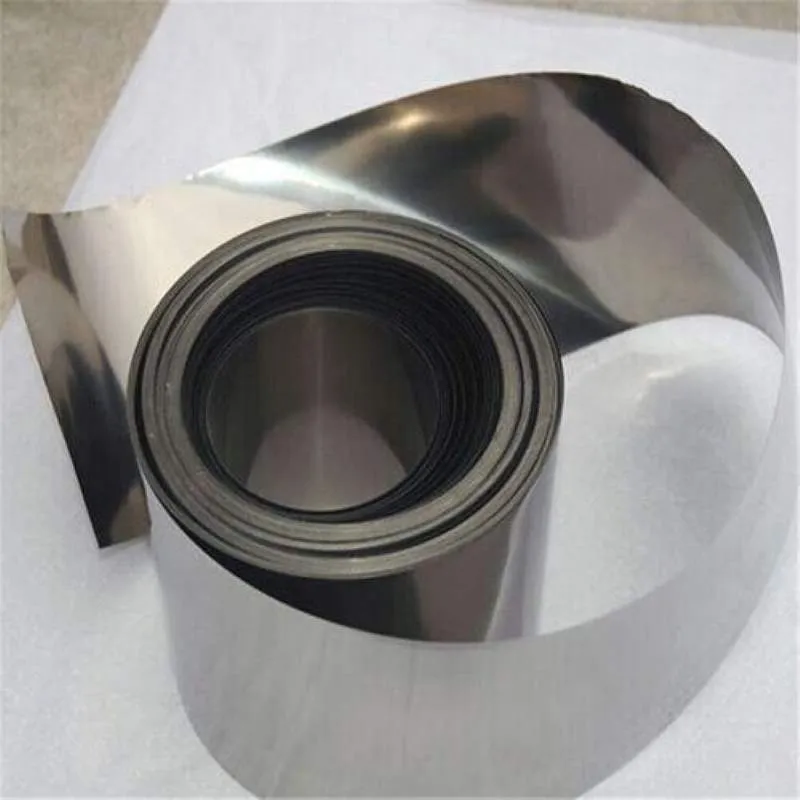
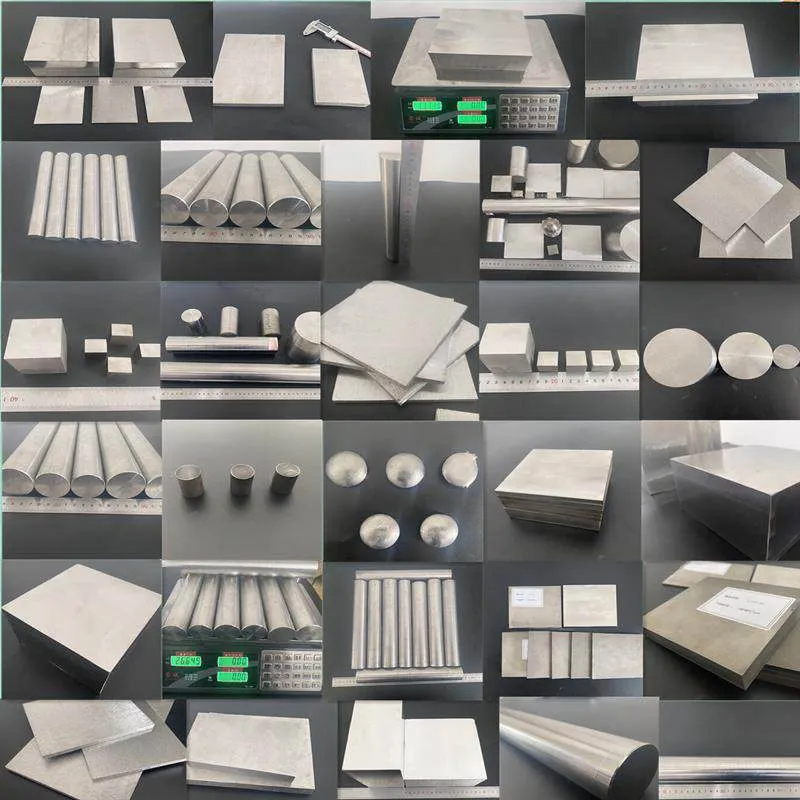
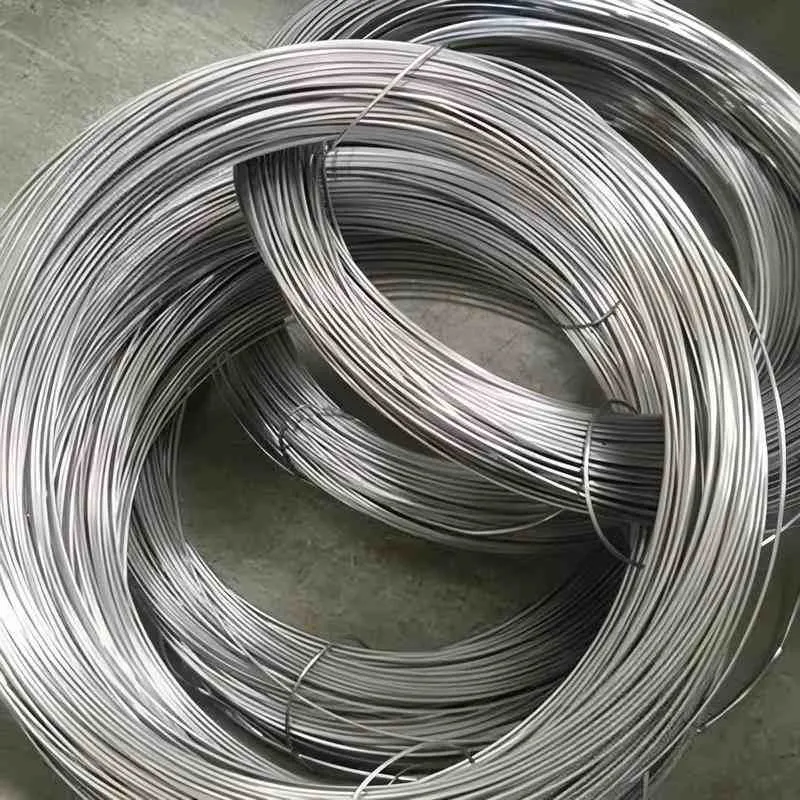
AISI 4137H Steel Foil/Strip
Product Code : STI-CSTI-1472-CU
We provide AISI 4137H Steel Foil/Strip is available in Bar (Round bar, Flat bar), Ribbon, Wire, Rods, Tube,Seamless Tube,Pipe, Ingots, Plate, Sheet, Strip and Forging Stock.,Purity, chemical composition, size, etc. can all be customized to meet specific requirements.
Please contact us if you need customized services. We will contact you with the price and availability in 24 hours.
AISI 4137H Steel Foil Product Information
-:-
For detailed product information, please contact sales.
-:
AISI 4137H Steel Foil Synonyms
-:-
For detailed product information, please contact sales.
-:
AISI 4137H Steel Product Information
-:-
For detailed product information, please contact sales.
-:
# **AISI 4137H Steel: Hardenability-Grade Alloy Steel Comprehensive Overview**
## **1. Introduction & Core Concept**
**AISI 4137H** represents the **hardenability-controlled version** of AISI 4137 alloy steel. The "H" designation signifies that this steel is manufactured to meet specific **end-quench hardenability band requirements** as defined by SAE J1268 and ASTM A304 standards, rather than solely to chemical composition ranges. This critical distinction ensures predictable and uniform depth of hardening in heat-treated components, particularly those with variable cross-sections or demanding core property requirements.
The primary advantage of 4137H over standard 4137 is **reduced performance variation** in finished parts, providing engineers with greater reliability in critical applications where consistent mechanical properties throughout the cross-section are non-negotiable.
## **2. Chemical Composition**
The chemical composition of 4137H is engineered with controlled ranges that prioritize hardenability consistency while maintaining the characteristic higher carbon content of the 4137 grade.
| Element | Composition Range (% by weight) | Functional Role in 4137H |
| :--- | :--- | :--- |
| **Carbon (C)** | **0.35 - 0.40** | **Primary strengthening element.** The elevated level (vs. 4135H) enables higher attainable hardness and tensile strength. Content is controlled to maintain hardenability consistency. |
| **Manganese (Mn)** | 0.70 - 1.00 | Enhances hardenability and strength. The range is slightly wider than standard 4137 to allow for precise hardenability adjustment during production. |
| **Phosphorus (P)** | ≤ 0.030 | Residual element, kept at a low maximum to preserve impact toughness. |
| **Sulfur (S)** | ≤ 0.030 | Residual element, kept low. May be controlled to specific levels for optimized machinability in certain orders. |
| **Silicon (Si)** | 0.15 - 0.35 | Deoxidizer and solid solution strengthener. |
| **Chromium (Cr)** | 0.80 - 1.10 | **Key hardenability element.** Increases depth of hardening, improves wear resistance and tempering stability. |
| **Molybdenum (Mo)** | 0.15 - 0.25 | **Critical for hardenability control.** Enhances hardenability, reduces temper embrittlement susceptibility, and improves high-temperature strength. |
*Note: Producers tightly control the melt chemistry within these ranges to guarantee the steel meets the specified hardenability band (H-band or narrower restricted JH-bands).*
## **3. Hardenability Characteristics (Defining Feature)**
The guaranteed hardenability band is the core value proposition of 4137H. This data, derived from the Jominy end-quench test, predicts how the steel will harden through its cross-section.
**Typical Hardenability Band (Per SAE J1268):**
| Jominy Distance (1/16 in.) | Hardness Range (HRC), Min - Max |
| :--- | :--- |
| **J1.5** | **52 - 59** |
| **J4** | **47 - 56** |
| **J7** | **40 - 51** |
| **J10** | **35 - 46** |
| **J14** | **30 - 41** |
| **J20** | **26 - 37** |
| **J30** | **22 - 33** |
| **J40** | **20 - 30** |
*Application Insight:* This predictable band allows designers to select quenching parameters and tempering cycles to achieve a target microstructure (e.g., >90% martensite) and hardness at the **center** of a specific part diameter, ensuring consistent core strength in large components.
## **4. Physical & Mechanical Properties**
Physical properties are inherent to the alloy system, while mechanical properties in the heat-treated condition are more consistent and predictable than standard 4137.
* **Physical Properties:**
* **Density:** 7.85 g/cm³
* **Melting Point:** ~1415-1455°C (2580-2650°F)
* **Modulus of Elasticity:** 190-205 GPa
* **Poisson's Ratio:** 0.29
* **Thermal Conductivity:** ~42.5 W/m·K @ 100°C
* **Coefficient of Thermal Expansion:** 11.3 µm/m·°C (20-100°C)
* **Achievable Mechanical Properties (Quenched & Tempered):**
* **Tensile Strength:** 950 - 1200 MPa (138,000 - 174,000 psi)
* **Yield Strength (0.2% Offset):** 800 - 1000 MPa (116,000 - 145,000 psi)
* **Elongation (in 50mm):** 15% - 18%
* **Reduction of Area:** 45% - 55%
* **Hardness Range:** 302 - 375 HB (typical for Q&T, equivalent to ~32-40 HRC)
* **Charpy V-Notch Impact:** 27 - 50 J (20 - 37 ft-lb) at room temperature.
## **5. Product Applications**
4137H is specified for **high-integrity components** where failure due to inconsistent hardening is unacceptable. Its higher strength vs. 4135H makes it ideal for the most demanding roles.
* **Heavy-Duty Automotive & Truck:** **High-performance crankshafts, severe-service axle shafts, transmission output shafts, and differential pinions** in racing, heavy haul, and off-road vehicles.
* **Oil & Gas Exploration:** **Extra-heavy-weight drill collars, critical tool joints, blow-out preventer (BOP) components, and perforating gun carriers** requiring guaranteed core properties in thick sections under extreme fatigue loads.
* **Aerospace & Defense:** **Critical landing gear components (piston rods, trunnions), helicopter rotor shafts, and weapon system components** where material certification to hardenability standards is mandatory.
* **Industrial Machinery:** **Large gear blanks, high-torque drive shafts, rolling mill pins, and crusher main shafts** in mining, cement, and steel production equipment.
* **Power Generation:** **High-strength bolts, turbine shafts, and gear components** in wind turbines and conventional power plants.
## **6. International Standards & Equivalent Grades**
| Standard / Country | Designation | Key Note |
| :--- | :--- | :--- |
| **AISI / SAE (USA)** | **4137H** | Governed by SAE J1268 standard for hardenability bands. |
| **ASTM (USA)** | **A304 (Grade 4137H)** | Specification for alloy steel bars subject to hardenability requirements. |
| **UNS** | **H41370** | Unified Numbering System designation. |
| **DIN / EN (Germany/EU)** | **34CrMo4H (1.7220+H)** | The "+H" suffix is crucial, denoting the hardenability-controlled version of 34CrMo4. |
| **JIS (Japan)** | **SCM440H** | A direct equivalent due to similar carbon content (SCM440: 0.38-0.43%C). SCM435H may also be used for the lower carbon range. |
| **GB (China)** | **42CrMoH** | The Chinese standard hardenability grade most closely matching 4137H's properties. |
| **ISO** | **ISO 683-18: Type 34CrMo4** | Can be supplied to meet hardenability requirements as agreed upon. |
## **7. Heat Treatment Guidelines**
* **Forging:** Heat uniformly to 1150-1200°C (2100-2200°F). Finish forging above 850°C (1560°F). Slow cool after forging.
* **Annealing:** Heat to 840-860°C (1545-1580°F), furnace cool. Produces maximum softness for machining (typically < 212 HB).
* **Hardening:**
* **Preheat:** 650-700°C (1200-1290°F) to minimize thermal shock.
* **Austenitize:** 830-850°C (1525-1560°F). Soak time is critical for full transformation.
* **Quench:** **Agitated oil quench** is standard. Large masses may require a fast oil or polymer quenchant to achieve the desired core hardness.
* **Tempering:** **Mandatory and must follow quenching immediately.** Temper within the range of **540°C - 660°C (1000°F - 1220°F)** for 1-2 hours per inch of thickness. **Double tempering** (e.g., temper, cool to room temperature, temper again) is highly recommended to ensure complete transformation of retained austenite and stress relief.
## **8. Conclusion**
**AISI 4137H steel** is a **premium, high-strength engineering material** where predictable performance is paramount. By guaranteeing hardenability within strict statistical limits, it eliminates the guesswork from heat treatment of large or complex components, ensuring uniform core properties that standard grades cannot consistently guarantee. Its higher carbon content provides a strength advantage over 4135H for the most severe applications. When component reliability under high cyclic stress and wear is critical—particularly in aerospace, energy, and heavy machinery sectors—4137H is the engineered choice. Procurement should always include the requirement for a certified hardenability test report.
-:-
For detailed product information, please contact sales.
-:
AISI 4137H Steel Specification
Dimensions
Size:
Diameter 20-1000 mm Length <6204 mm
Size:We can customized as required
Standard:
Per your request or drawing
We can customized as required
Properties(Theoretical)
Chemical Composition
-:-
For detailed product information, please contact sales.
-:
AISI 4137H Steel Properties
-:-
For detailed product information, please contact sales.
-:
Applications of AISI 4137H Steel Foil
-:-
For detailed product information, please contact sales.
-:
Chemical Identifiers AISI 4137H Steel Foil
-:-
For detailed product information, please contact sales.
-:
Packing of AISI 4137H Steel Foil/Strip
-:-
For detailed product information, please contact sales.
-:
Standard Packing:
-:-
For detailed product information, please contact sales.
-:
Typical bulk packaging includes palletized plastic 5 gallon/25 kg. pails, fiber and Steel Foil/Strip drums to 1 ton super sacks in full container (FCL) or truck load (T/L) quantities. Research and sample quantities and hygroscopic, oxidizing or other air sensitive materials may be packaged under argon or vacuum. Solutions are packaged in polypropylene, plastic or glass jars up to palletized 2675 gallon liquid totes Special package is available on request. E FORUs’ is carefully handled to minimize damage during storage and transportation and to preserve the quality of our products in their original condition