Carpenter Micro-Melt® M-4 Alloy (AISI M4)
Product Code : STI-CSTI-492-CU
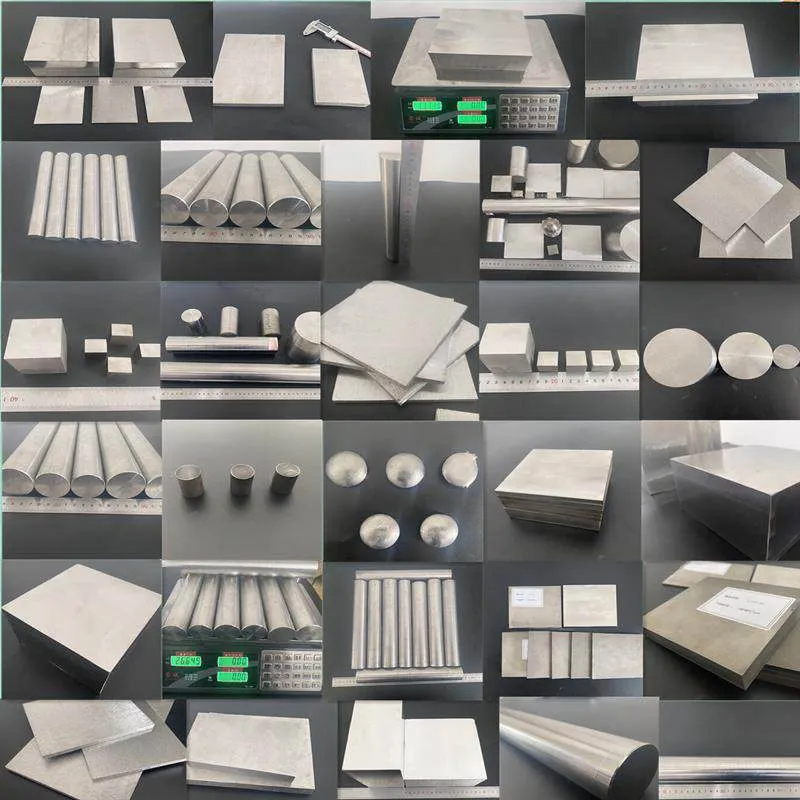
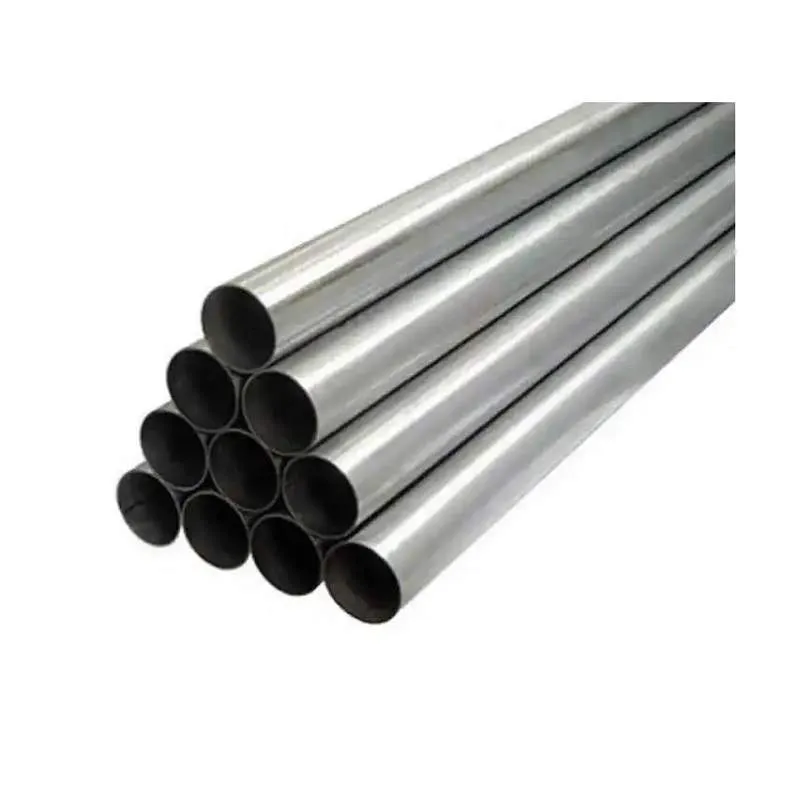
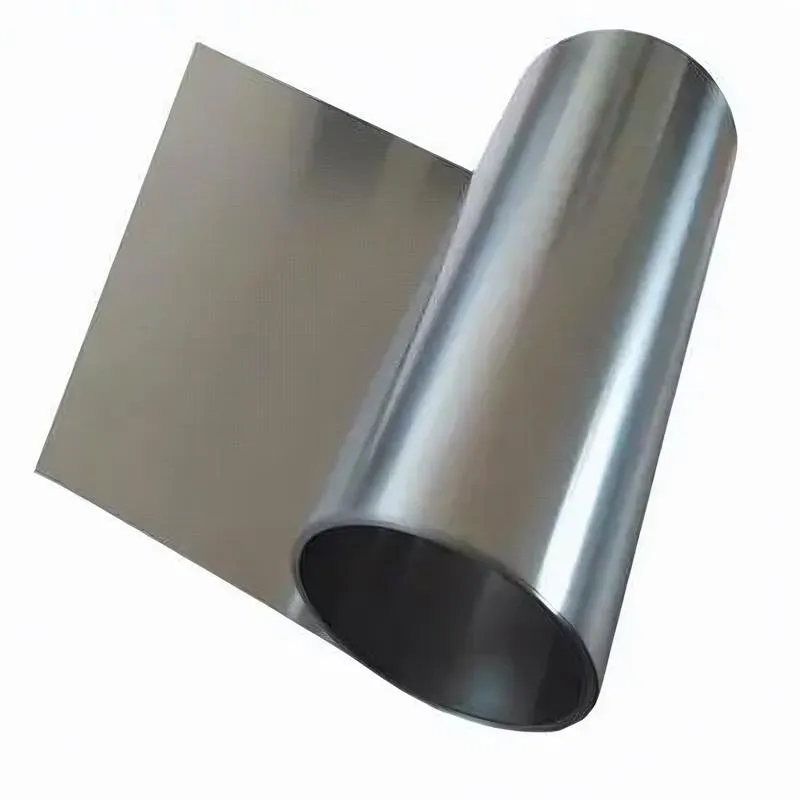
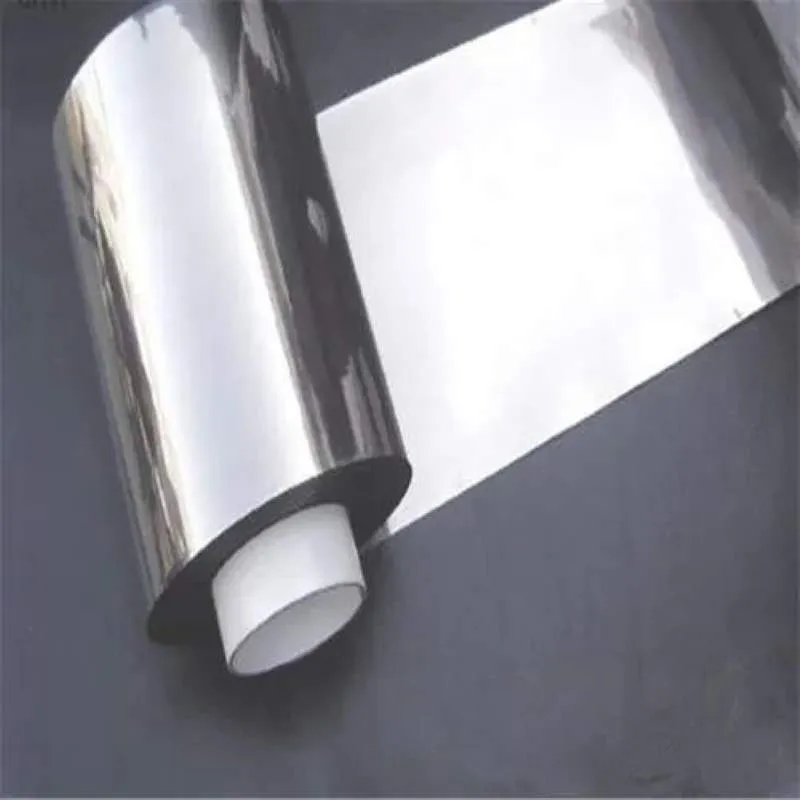
We provide Carpenter Micro-Melt® M-4 Alloy (AISI M4) is available in Bar (Round bar, Flat bar), Ribbon, Wire, Rods, Tube,Seamless Tube,Pipe, Ingots, Plate, Sheet, Strip and Forging Stock.,Purity, chemical composition, size, etc. can all be customized to meet specific requirements.
Please contact us if you need customized services. We will contact you with the price and availability in 24 hours.
Carpenter Micro-Melt® M-4 Alloy (AISI M4) Product Information
-:-
For detailed product information, please contact sales.
-:
Carpenter Micro-Melt® M-4 Alloy (AISI M4) Synonyms
-:-
For detailed product information, please contact sales.
-:
Carpenter Micro-Melt® M-4 Alloy (AISI M4) Product Information
-:-
For detailed product information, please contact sales.
-:
# **Technical Datasheet: Carpenter Micro-Melt® M-4 Alloy (AISI M4)**
---
## **1. Product Overview**
**Carpenter Micro-Melt® M-4** is a premium, **high-carbon, high-vanadium molybdenum-tungsten high-speed steel (HSS)** produced via advanced **powder metallurgy (PM)** technology. While based on the standard AISI M4 composition, the Micro-Melt® manufacturing process fundamentally enhances its microstructure and performance characteristics. This process involves gas atomization of the molten alloy followed by Hot Isostatic Pressing (HIP), resulting in a material with **exceptionally uniform, fine carbide distribution, minimal segregation, and isotropic properties**.
This advanced microstructure translates to **superior grindability, improved toughness, better dimensional stability during heat treatment, and more predictable performance** compared to conventionally cast and wrought M4. It is engineered for the most demanding cutting and wear applications where conventional high-speed steels reach their limits, particularly those involving high abrasive wear and requiring a keen cutting edge.
---
## **2. Key International Standards & Designations**
| Country/System | Standard Designation | Equivalent/Similar Grade |
| :--- | :--- | :--- |
| **USA (Carpenter)** | **Micro-Melt® M-4** | Proprietary PM HSS |
| **USA (AISI/SAE)** | **AISI M4** | UNS T11304 |
| **USA (ASTM)** | **ASTM A600** | Grade M4 |
| **ISO** | **ISO 4957:2018** | **HS2-9-2 / 1.3348** |
| **Europe (EN)** | **EN ISO 4957:2018** | **1.3348** |
| **Germany (DIN/W-Nr.)** | **1.3348** | S 2-9-2 |
| **Japan (JIS)** | **JIS G4403** | **SKH54** (Nearest equivalent) |
| **Common Names** | **"Super M4"**, High Vanadium HSS | - |
**Note:** The "Micro-Melt®" designation signifies Carpenter's proprietary powder metallurgy process, which delivers properties superior to standard wrought M4.
---
## **3. Chemical Composition (Typical %)**
The composition is balanced for high hot hardness and exceptional wear resistance, with vanadium being a key differentiator.
| Element | Weight % (Typical) | Metallurgical Function |
| :--- | :--- | :--- |
| **Carbon (C)** | 1.30 - 1.40 | High carbon content ensures carbon saturation of the matrix and supports the formation of abundant hard carbides, particularly vanadium carbides. |
| **Tungsten (W)** | 5.25 - 5.75 | Provides solid solution strengthening and hot hardness. Forms stable M₆C carbides. |
| **Molybdenum (Mo)** | 4.25 - 4.75 | Primary element for hardenability and hot hardness; forms M₂C carbides. More cost-effective than tungsten. |
| **Chromium (Cr)** | 4.00 - 4.50 | Provides hardenability, wear resistance (M₇C₃ carbides), and moderate oxidation resistance. |
| **Vanadium (V)** | **3.90 - 4.40** | **Critical Element.** Forms extremely hard (≈2800 HV), fine **MC-type vanadium carbides**. Primary source of its outstanding abrasive wear resistance. |
| **Cobalt (Co)** | - | **Not present** in standard M4. Distinguishes it from Co-containing grades like M35 or M42. |
| **Silicon (Si), Manganese (Mn)** | < 0.50 | Deoxidizers and residual elements. |
**Key Microstructural Advantage of Micro-Melt® Process:**
- **Carbide Size & Distribution:** Carbides are extremely fine (typically 2-4 µm) and uniformly dispersed, eliminating the large, brittle carbide networks found in wrought material.
- **Isotropy:** Properties are uniform in all directions, crucial for complex tools.
- **Cleanliness:** Very low levels of non-metallic inclusions.
---
## **4. Physical & Mechanical Properties**
### **4.1 Standard Heat Treatment (Micro-Melt® M-4)**
* **Preheating:** **Double preheat** at 650°C (1200°F) and 850°C (1560°F) is critical.
* **Austenitizing:** **1190-1220°C (2175-2230°F)**. Precise control within a narrow range is essential. Salt or vacuum furnace recommended.
* **Quenching:** **Oil, salt bath, or pressurized gas (vacuum furnaces).**
* **Tempering:** **Triple tempering mandatory.** Temper at **540-570°C (1000-1060°F)** for 2+ hours each, cooling to room temperature between tempers.
* **Cryogenic Treatment:** Often recommended between quenching and tempering to maximize transformation of retained austenite.
* **Expected Hardness:** **64-66 HRC** (properly heat treated).
### **4.2 Mechanical Properties (Hardened & Triple Tempered)**
| Property | Value / Rating | Benefit of PM Structure |
| :--- | :--- | :--- |
| **Hardness** | **64 - 66 HRC** | Consistent, high attainable hardness. |
| **Hot Hardness (at 600°C)** | **~58-60 HRC** | Excellent red-hardness for high-speed cutting. |
| **Transverse Rupture Strength (TRS)** | **3,000 - 3,800 MPa** | **Significantly higher than wrought M4** due to isotropic, fine structure. |
| **Compressive Strength** | ~ 3,500 - 4,000 MPa | Extremely high. |
| **Impact Toughness** | **Good (for its hardness)** | Better and more consistent than wrought M4; less prone to catastrophic fracture. |
| **Abrasive Wear Resistance** | **Outstanding** | Among the best of commercially available HSS, due to high volume of fine, hard vanadium carbides. |
| **Grindability** | **Fair to Good (for PM HSS)** | **Vastly superior to wrought M4.** The fine carbides are less abrasive to grinding wheels. |
### **4.3 Physical Properties (Approximate)**
* Density: 8.10 g/cm³
* Thermal Conductivity: ~23 W/m·K (relatively low)
* Coefficient of Thermal Expansion: 11.0 x 10⁻⁶/K (20-500°C)
* Modulus of Elasticity: 220 GPa
---
## **5. Typical Product Applications**
Micro-Melt® M-4 is specified for **severe-service cutting and wear applications** where extreme abrasion is the primary wear mechanism and high hot hardness is required.
* **High-Performance Cutting Tools:**
* **End Mills & Drills:** For machining abrasive materials (e.g., **high-temperature alloys, titanium, hardened steels, composites, stainless steels**).
* **Gear Hobs & Shaper Cutters:** For hard gear machining.
* **Broaches & Reamers:** Requiring high precision and wear life.
* **Inserts & Tool Bits:** For turning difficult materials.
* **Wear Parts & Forming Tools:**
* **Cold Work Dies:** For punching, blanking, and forming abrasive materials (e.g., fiberglass, graphite, pre-painted metals).
* **Thread Rolling Dies & Knurls:** For hard or abrasive workpieces.
* **Slitter Knives & Rotary Cutters.**
* **Precision Wear Components** in machinery.
---
## **6. Processing & Manufacturing Guidelines**
* **Machinability (Annealed ~250 HB):** **Poor.** Requires rigid setups and premium carbide or CBN tooling. The uniform hardness in annealed PM steel can be more challenging than wrought.
* **Grindability:** **One of its major advantages over wrought M4.** The fine, uniform carbides reduce wheel wear and allow better surface finishes. Use CBN or aluminum oxide wheels designed for HSS.
* **EDM Machining:** Excellent. The homogeneous structure yields consistent EDM rates and surface integrity. A low-temperature stress relief after EDM is advised.
* **Surface Treatments/Coatings:** An ideal substrate for advanced PVD coatings (TiAlN, AlTiN, AlCrN). The high base hardness and thermal stability of M-4 allow the coating to perform optimally. Pre-coating polish is excellent due to fine microstructure.
---
## **7. Comparative Performance & Selection Notes**
| Criterion | **Micro-Melt® M-4** | **Wrought AISI M4** | **M2 HSS** | **PM M4 (Generic)** |
| :--- | :--- | :--- | :--- | :--- |
| **Wear Resistance** | **Best** | Very Good | Good | Excellent |
| **Toughness (TRS)** | **Best** | Good | Fair | Very Good |
| **Grindability** | **Good** | Very Poor | Fair | Good |
| **Dimensional Stability** | **Best** | Good | Fair | Very Good |
| **Cost** | Highest | Moderate | Lowest | High |
**When to Choose Micro-Melt® M-4:**
1. **Abrasive wear is the dominant failure mode** in your cutting or forming process.
2. Tools have **complex geometries or thin cross-sections** that benefit from high toughness and isotropy.
3. **Grinding is a major cost driver** in tool manufacturing.
4. You require **maximum performance and consistency** from an M4-grade steel.
5. Tools will be used to machine **"difficult" materials** like titanium, Inconel, or hardened steels.
**Limitations:**
- Not as hard or hot-hard as **cobalt-containing grades (M35, M42)**.
- **Lower toughness than shock-resistant grades (S-series)** or some PM cold-work steels.
- **Higher cost** than conventional HSS.
---
## **8. Conclusion**
**Carpenter Micro-Melt® M-4 represents the pinnacle of M4 high-speed steel technology.** By leveraging advanced powder metallurgy, it transforms a already high-performance alloy into a superior engineering material that overcomes the historical limitations of wrought HSS: poor grindability, inconsistent toughness, and anisotropic behavior.
It delivers:
- **Unmatched abrasive wear resistance** for an HSS, thanks to its high vanadium content and fine carbide distribution.
- **Exceptional toughness and transverse strength**, enabling more robust and reliable tool designs.
- **Superior grindability and dimensional stability**, reducing manufacturing costs and improving precision.
For applications demanding the ultimate in wear resistance combined with high hot hardness—particularly in the aerospace, energy, and precision tooling sectors—**Micro-Melt® M-4 is a benchmark material.** It is the definitive choice when pushing the limits of cutting speed, feed rate, and tool life on the most challenging workpiece materials, and where the total cost of tool ownership justifies the investment in premium material.
-:-
For detailed product information, please contact sales.
-:
Carpenter Micro-Melt® M-4 Alloy (AISI M4) Specification
Dimensions
Size:
Diameter 20-1000 mm Length <5224 mm
Size:We can customized as required
Standard:
Per your request or drawing
We can customized as required
Properties(Theoretical)
Chemical Composition
-:-
For detailed product information, please contact sales.
-:
Carpenter Micro-Melt® M-4 Alloy (AISI M4) Properties
-:-
For detailed product information, please contact sales.
-:
Applications of Carpenter Micro-Melt® M-4 Alloy (AISI M4)
-:-
For detailed product information, please contact sales.
-:
Chemical Identifiers Carpenter Micro-Melt® M-4 Alloy (AISI M4)
-:-
For detailed product information, please contact sales.
-:
Packing of Carpenter Micro-Melt® M-4 Alloy (AISI M4)
-:-
For detailed product information, please contact sales.
-:
Standard Packing:
-:-
For detailed product information, please contact sales.
-:
Typical bulk packaging includes palletized plastic 5 gallon/25 kg. pails, fiber and steel drums to 1 ton super sacks in full container (FCL) or truck load (T/L) quantities. Research and sample quantities and hygroscopic, oxidizing or other air sensitive materials may be packaged under argon or vacuum. Solutions are packaged in polypropylene, plastic or glass jars up to palletized 1695 gallon liquid totes Special package is available on request. E FORUs’ is carefully handled to minimize damage during storage and transportation and to preserve the quality of our products in their original condition