AISI 1060 Steel, oil quenched
Product Code : STI-CSTI-114-CU
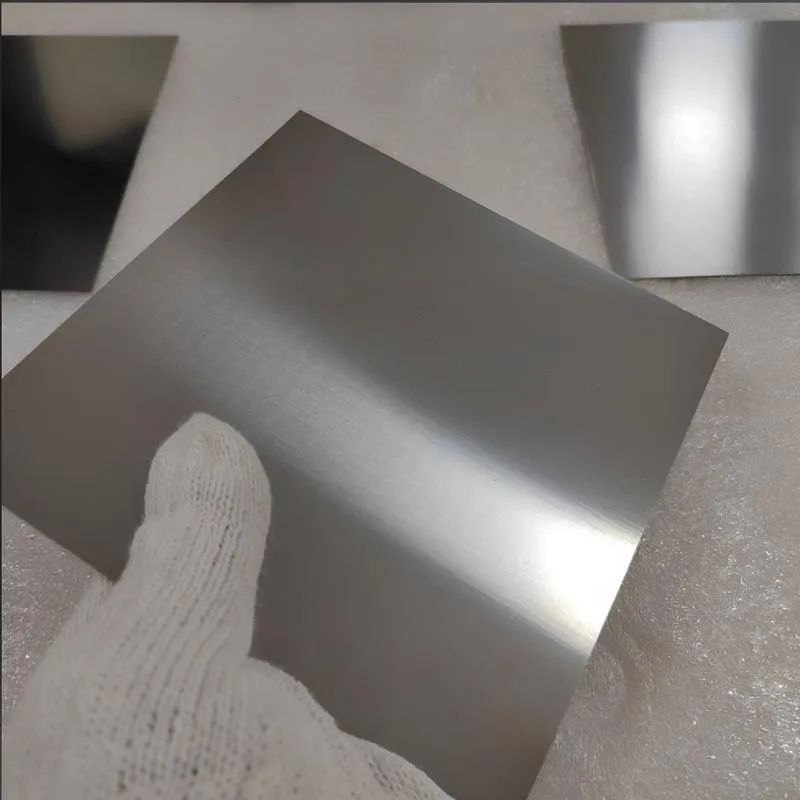
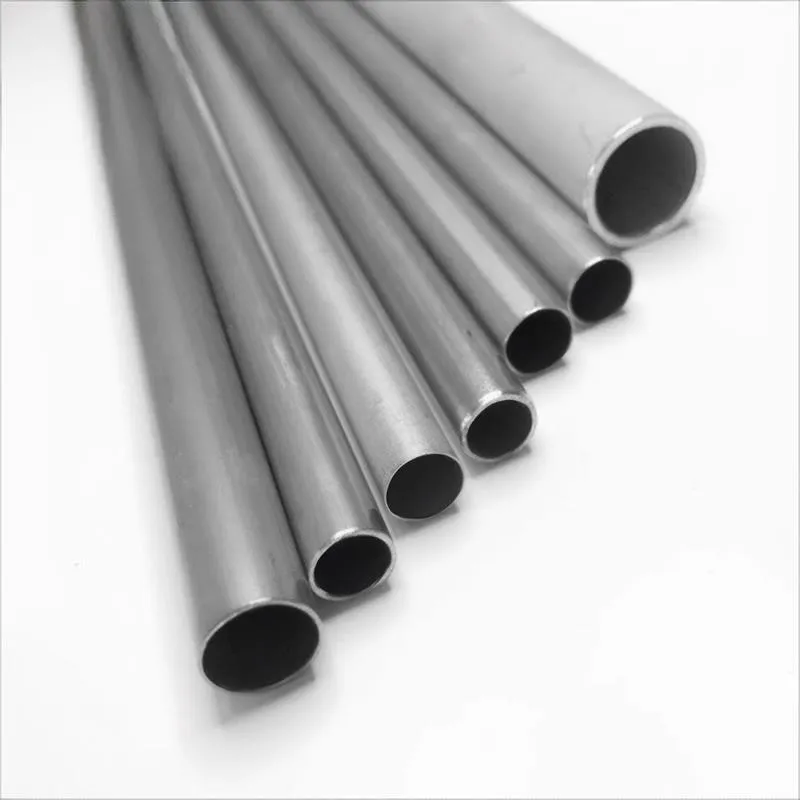
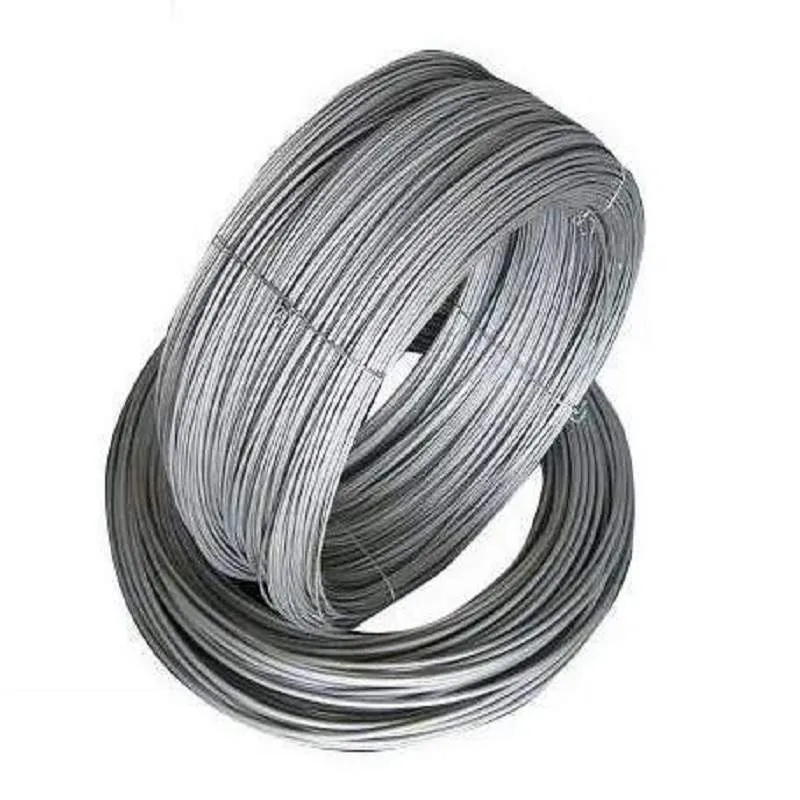
We provide AISI 1060 Steel, oil quenched 845°C (1550°F), 480°C (900°F) temper, 13 mm (0.5 in.) round is available in Bar (Round bar, Flat bar), Ribbon, Wire, Rods, Tube,Seamless Tube,Pipe, Ingots, Plate, Sheet, Strip and Forging Stock.,Purity, chemical composition, size, etc. can all be customized to meet specific requirements.
Please contact us if you need customized services. We will contact you with the price and availability in 24 hours.
AISI 1060 Steel, oil quenched 845°C (1550°F), 480°C (900°F) temper, 13 mm (0.5 in.) round Product Information
-:-
For detailed product information, please contact sales.
-:
AISI 1060 Steel, oil quenched 845°C (1550°F), 480°C (900°F) temper, 13 mm (0.5 in.) round Synonyms
-:-
For detailed product information, please contact sales.
-:
AISI 1060 Steel, oil quenched 845°C (1550°F), 480°C (900°F) temper, 13 mm (0.5 in.) round Product Information
-:-
For detailed product information, please contact sales.
-:
# **Technical Data Sheet: AISI 1060 Steel, Oil Quenched & Tempered, 13 mm (0.5 in.) Round**
---
## **1. Product Overview**
AISI 1060 steel in the 13 mm (0.5 in.) round format, subjected to oil quenching at 845°C (1550°F) followed by tempering at 480°C (900°F), represents a **high-strength, tempered martensite** condition engineered for applications demanding superior mechanical properties. This specific heat treatment transforms the steel's microstructure into fine, tempered martensite, providing an exceptional balance of strength, toughness, and wear resistance. The 13 mm diameter ensures complete through-hardening with minimal thermal gradients during quenching, resulting in uniform mechanical properties throughout the cross-section. This product is specifically designed for small precision components operating under high stress, impact, or cyclic loading conditions.
## **2. International Standard Specifications**
This heat-treated product meets stringent international standards:
| Standard System | Standard Number | Grade/Condition | Heat Treatment Specification |
|----------------|----------------|-----------------|------------------------------|
| **ASTM (USA)** | ASTM A29/A29M | 1060, Heat Treated | Quenched & Tempered Condition |
| **ASTM (USA)** | ASTM A304 | Grade 1060 | Bars subject to end-quench hardenability |
| **SAE (USA)** | SAE J403, J412 | 1060 | Standard composition with HT properties |
| **UNS (USA)** | G10600 | - | Unified Numbering System |
| **EN (Europe)** | EN 10083-2 | 1.0601 / C60 | Quenched & tempered, property class 800 |
| **ISO** | ISO 683-18 | C60E | Heat-treated, specific property ranges |
| **JIS (Japan)** | JIS G4051 | S58C | Heat-treated for machine structural use |
| **AMS** | AMS 2301 | - | Premium aircraft quality cleanliness |
## **3. Chemical Composition (Weight Percentage)**
Precision chemistry control is critical for consistent quench response:
| Element | Specification Range | Typical Value | Role in Quench & Temper Response |
|---------|-------------------|---------------|---------------------------------|
| **Carbon (C)** | 0.55-0.65% | 0.60% | Primary hardening element; determines maximum achievable hardness |
| **Manganese (Mn)** | 0.60-0.90% | 0.78% | Enhances hardenability; enables full martensite formation in 13 mm section |
| **Silicon (Si)** | 0.15-0.35% | 0.25% | Strengthens ferrite; improves temper resistance |
| **Phosphorus (P)** | ≤ 0.030% | 0.015% | Strictly controlled to prevent temper embrittlement |
| **Sulfur (S)** | ≤ 0.030% | 0.020% | Kept low for optimal transverse properties |
| **Iron (Fe)** | Balance | Balance | Matrix material |
*Hardenability Critical Elements:*
- **Chromium (Cr):** ≤0.25% (accidental residual)
- **Molybdenum (Mo):** ≤0.10% (accidental residual)
- **Nickel (Ni):** ≤0.25% (accidental residual)
- **Copper (Cu):** ≤0.20%
- **Vanadium (V):** ≤0.05% (sometimes added up to 0.10% for grain refinement)
## **4. Heat Treatment Details & Microstructure**
### **4.1 Complete Heat Treatment Cycle:**
1. **Austenitizing:** 845±5°C (1550±10°F) for 30-45 minutes
2. **Quenching:** Agitated oil (Fast quenching oil, 40-60°C)
3. **Tempering:** 480±5°C (900±10°F) for 60-90 minutes, air cooled
4. **Stress Relieving:** Optional 300°C for 30 minutes (for high-precision components)
### **4.2 Resulting Microstructure:**
- **Primary Structure:** Fine, tempered martensite with uniform carbide precipitation
- **Prior Austenite Grain Size:** ASTM 7-9 (10-25 μm)
- **Martensite Plate Size:** <1 μm width, 5-15 μm length
- **Carbide Precipitation:** Fine ε-carbide (Fe₂ₓC) and cementite (Fe₃C) particles
- **Retained Austenite:** <3% (negligible at this tempering temperature)
- **Microstructural Uniformity:** Complete through-section consistency in 13 mm diameter
## **5. Mechanical Properties (Quenched & Tempered Condition)**
### **5.1 Standard Mechanical Properties:**
| Property | Value Range | Typical Value | Test Standard | Notes |
|----------|-------------|---------------|---------------|-------|
| **Tensile Strength** | 950-1150 MPa | 1050 MPa | ASTM E8/E8M | Consistent through section |
| **Yield Strength (0.2%)** | 800-1000 MPa | 900 MPa | ASTM E8/E8M | High yield ratio (0.85-0.87) |
| **Elongation (50 mm)** | 12-18% | 15% | ASTM E8/E8M | Good ductility for strength level |
| **Reduction of Area** | 40-55% | 48% | ASTM E8/E8M | Excellent for quenched steel |
| **Hardness (Rockwell)** | 30-36 HRC | 33 HRC | ASTM E18 | Uniform ±1 HRC |
| **Hardness (Brinell)** | 285-340 HB | 312 HB | ASTM E10 | |
| **Modulus of Elasticity** | 205-210 GPa | 207 GPa | ASTM E111 | |
| **Shear Modulus** | 80-82 GPa | 81 GPa | - | |
| **Poisson's Ratio** | 0.28-0.30 | 0.29 | - | |
### **5.2 Special Properties for Engineering Design:**
| Property | Value Range | Test Conditions | Significance |
|----------|-------------|----------------|--------------|
| **Charpy V-Notch Impact** | 25-40 J @ 20°C | ASTM E23 | Good toughness for strength level |
| **Fatigue Limit (Rotating Bending)** | 420-500 MPa @ 10⁷ cycles | R=-1, polished | High endurance ratio (0.40-0.45) |
| **Fracture Toughness (K₁c)** | 55-75 MPa√m | Estimated | Adequate for most applications |
| **Machinability Rating** | 35-40% | Relative to B1112 | Difficult; requires carbide tools |
| **Wear Resistance** | Excellent | Compared to normalized | Due to hard martensitic structure |
| **Contact Fatigue Strength** | Good | For rolling contact | Suitable for lightly loaded bearings |
## **6. Physical Properties**
| Property | Value | Conditions / Notes |
|----------|-------|-------------------|
| **Density** | 7.85 g/cm³ | At 20°C (68°F) |
| **Thermal Conductivity** | 46.0 W/m·K | At 100°C; reduced by martensite |
| **Specific Heat Capacity** | 480 J/kg·K | At 20°C |
| **Electrical Resistivity** | 0.0000175 Ω·m | At 20°C; increased by lattice strain |
| **Coefficient of Thermal Expansion** | 11.8 μm/m·°C | 20-100°C range |
| **Magnetic Properties** | Ferromagnetic | Below Curie point (768°C) |
| **Weight per Meter** | 1.04 kg/m | 0.70 lb/ft |
## **7. Unique Advantages of 845°C Quench + 480°C Temper**
### **Optimal Property Balance:**
- **Strength-Toughness Combination:** 480°C temper provides ideal compromise
- **Tempered Martensite:** Maximum strength with reasonable ductility
- **Stress Relief:** Tempering eliminates 90%+ of quenching stresses
- **Dimensional Stability:** Good for precision components
### **Processing Benefits for 13 mm Diameter:**
- **Complete Through-Hardening:** Oil quench sufficient for full martensite
- **Minimal Distortion:** Symmetrical cooling minimizes warpage
- **Uniform Properties:** No soft core or excessive surface hardness
- **Repeatable Results:** Consistent response due to small section
## **8. Heat Treatment Response & Alternatives**
### **Effect of Tempering Temperature Variations:**
| Tempering Temperature | Resulting Hardness | Tensile Strength | Primary Application |
|----------------------|-------------------|-----------------|---------------------|
| **400°C (750°F)** | 36-40 HRC | 1100-1250 MPa | Maximum wear resistance |
| **480°C (900°F)** | 30-36 HRC | 950-1150 MPa | **Optimal balance** |
| **540°C (1000°F)** | 25-30 HRC | 850-1000 MPa | Increased toughness |
| **600°C (1110°F)** | 20-25 HRC | 700-850 MPa | Maximum toughness |
### **Alternative Quench Media Comparison:**
| Quench Medium | Hardness Achieved | Distortion Risk | Suitable Diameter |
|---------------|------------------|-----------------|-------------------|
| **Fast Oil (This spec)** | 58-62 HRC (as-quenched) | Low | Up to 25 mm |
| **Water** | 62-66 HRC | High | Up to 13 mm |
| **Polymer (10%)** | 56-60 HRC | Very Low | Up to 20 mm |
## **9. Primary Applications**
### **Precision High-Strength Components:**
- **Fasteners:** Grade 10.9 bolts, high-strength screws, aircraft bolts
- **Pins & Bushings:** Dowel pins, hinge pins, precision bushings
- **Shafts:** Small high-speed shafts, instrument shafts, gear shafts
- **Valve Components:** Engine valve springs, hydraulic valve parts
### **Tooling & Cutting Applications:**
- **Cutting Tool Blanks:** For lathe tools, milling cutters, drills
- **Die Components:** Punch pins, ejector pins, core pins
- **Mold Parts:** Injection mold components, die-casting cores
- **Fixtures:** Precision jig and fixture components
### **Automotive & Aerospace:**
- **Engine Components:** Valve spring retainers, rocker arms, cam followers
- **Transmission Parts:** Gear selector forks, shift rods, synchronizer hubs
- **Landing Gear:** Small pins, bushings, linkage components
- **Control Systems:** Actuator shafts, lever arms, pivot pins
### **Industrial Machinery:**
- **Hydraulic Components:** Piston rods, pump shafts, valve spools
- **Textile Machinery:** High-speed spindles, loom components
- **Food Processing:** Cutting blades, mixer shafts (where corrosion not critical)
- **Printing Equipment:** Roller shafts, blade holders
### **Defense & Firearms:**
- **Firearm Components:** Bolt parts, firing pins, sight bases
- **Optical Mounts:** Scope rings, sight mounts
- **Tooling:** Armorer's tools, maintenance fixtures
## **10. Fabrication Characteristics**
### **Machining in Heat-Treated Condition:**
| Operation | Speed (m/min) | Feed (mm/rev) | Tool Recommendation | Notes |
|-----------|---------------|---------------|---------------------|-------|
| **Turning** | 15-25 | 0.05-0.15 | Cermet or coated carbide | Light cuts, sharp edges |
| **Drilling** | 8-12 | 0.03-0.08 | Solid carbide drills | Peck drilling essential |
| **Milling** | 15-25 | 0.03-0.10/tooth | Micrograin carbide | Climb milling preferred |
| **Grinding** | 25-35 m/s | - | Al₂O₃ or CBN wheels | Only final operation |
| **Threading** | 5-10 | Pitch dependent | HSS ground form | Single-point preferred |
### **Post-Machining Treatments:**
- **Stress Relieving:** 300°C for 30-60 minutes after heavy machining
- **Surface Treatments:** Nitriding, chrome plating, phosphate coating possible
- **Straightening:** Limited cold straightening; may require re-tempering
### **Welding (Generally Not Recommended):**
- **If Unavoidable:** Preheat 300°C, post-heat 600°C immediately
- **Filler:** Austenitic stainless (309L) or nickel-based electrodes
- **Risk:** High probability of cracking in HAZ
- **Alternative:** Mechanical fastening or redesign
## **11. Quality Control & Inspection**
### **Mandatory Testing for Q&T 13 mm Rounds:**
1. **Hardness Testing:** Multiple longitudinal and transverse readings
2. **Microstructure Examination:** Tempered martensite verification
3. **Tensile Testing:** Longitudinal specimens from each heat/lot
4. **Impact Testing:** Charpy V-notch at room temperature
5. **Surface Integrity:** Magnetic particle inspection for quenching cracks
6. **Decarburization Check:** Max 0.05 mm total depth
7. **Dimensional Verification:** Diameter, roundness, straightness
### **Heat Treatment Documentation:**
- **Temperature Charts:** Complete recording of austenitize, quench, temper cycles
- **Quench Medium Analysis:** Oil viscosity, temperature, contamination levels
- **Furnace Surveys:** Temperature uniformity ±5°C verification
- **Certification:** EN 10204 3.2 with full traceability
## **12. Design Considerations**
### **Critical Design Factors:**
- **Notch Sensitivity:** Moderate; generous fillet radii (≥1 mm) recommended
- **Stress Concentrations:** Design for R≥0.2 to avoid fatigue initiation
- **Service Temperature:** Maximum 300°C (570°F) to avoid overtempering
- **Corrosion Resistance:** Poor; requires protective coatings for harsh environments
- **Galling Tendency:** Moderate; use lubrication in sliding contact applications
### **Comparison with Other Conditions:**
| Condition | Hardness (HRC) | Tensile (MPa) | Best Application |
|-----------|---------------|---------------|------------------|
| **Normalized** | 18-25 | 700-850 | General purpose |
| **Q&T 480°C** | 30-36 | 950-1150 | **High-strength components** |
| **Water Quenched** | 35-40 | 1100-1300 | Maximum hardness |
| **Annealed** | 75-85 HRB | 460-550 | Machining stock |
## **13. Limitations & Special Considerations**
### **Material Limitations:**
- **Size Limitation:** Through-hardening limited to ~25 mm diameter in oil
- **Weldability:** Very poor; avoid welding if possible
- **Corrosion:** Susceptible to rust; requires protection
- **Cost:** Higher than non-heat-treated conditions
### **Handling & Storage:**
- **Brittleness:** Higher hardness increases notch sensitivity
- **Surface Protection:** Oil or VCI coating to prevent corrosion
- **Identification:** Clear marking of heat-treated condition
- **Shelf Life:** Indefinite with proper storage
---
**CRITICAL TECHNICAL NOTICE:** This heat-treated material is in its final usable condition. **No additional thermal processing** should be performed without complete metallurgical review. Welding, re-heating above 300°C, or re-hardening will compromise mechanical properties and may cause catastrophic failure. The 480°C temper provides an optimal balance but may exhibit **temper embrittlement susceptibility** if slowly cooled through 375-575°C range. For dynamic loading applications, proof testing of actual components is recommended. The supplier guarantees chemical composition and adherence to the specified heat treatment cycle but assumes no liability for performance in service. All critical applications require engineering review and appropriate safety factors.
-:-
For detailed product information, please contact sales.
-:
AISI 1060 Steel, oil quenched 845°C (1550°F), 480°C (900°F) temper, 13 mm (0.5 in.) round Specification
Dimensions
Size:
Diameter 20-1000 mm Length <4846 mm
Size:We can customized as required
Standard:
Per your request or drawing
We can customized as required
Properties(Theoretical)
Chemical Composition
-:-
For detailed product information, please contact sales.
-:
AISI 1060 Steel, oil quenched 845°C (1550°F), 480°C (900°F) temper, 13 mm (0.5 in.) round Properties
-:-
For detailed product information, please contact sales.
-:
Applications of AISI 1060 Steel, oil quenched 845°C (1550°F), 480°C (900°F) temper, 13 mm (0.5 in.) round
-:-
For detailed product information, please contact sales.
-:
Chemical Identifiers AISI 1060 Steel, oil quenched 845°C (1550°F), 480°C (900°F) temper, 13 mm (0.5 in.) round
-:-
For detailed product information, please contact sales.
-:
Packing of AISI 1060 Steel, oil quenched 845°C (1550°F), 480°C (900°F) temper, 13 mm (0.5 in.) round
-:-
For detailed product information, please contact sales.
-:
Standard Packing:
-:-
For detailed product information, please contact sales.
-:
Typical bulk packaging includes palletized plastic 5 gallon/25 kg. pails, fiber and steel drums to 1 ton super sacks in full container (FCL) or truck load (T/L) quantities. Research and sample quantities and hygroscopic, oxidizing or other air sensitive materials may be packaged under argon or vacuum. Solutions are packaged in polypropylene, plastic or glass jars up to palletized 1317 gallon liquid totes Special package is available on request. E FORUs’ is carefully handled to minimize damage during storage and transportation and to preserve the quality of our products in their original condition