AISI 1137 Steel, normalized
Product Code : STI-CSTI-227-CU
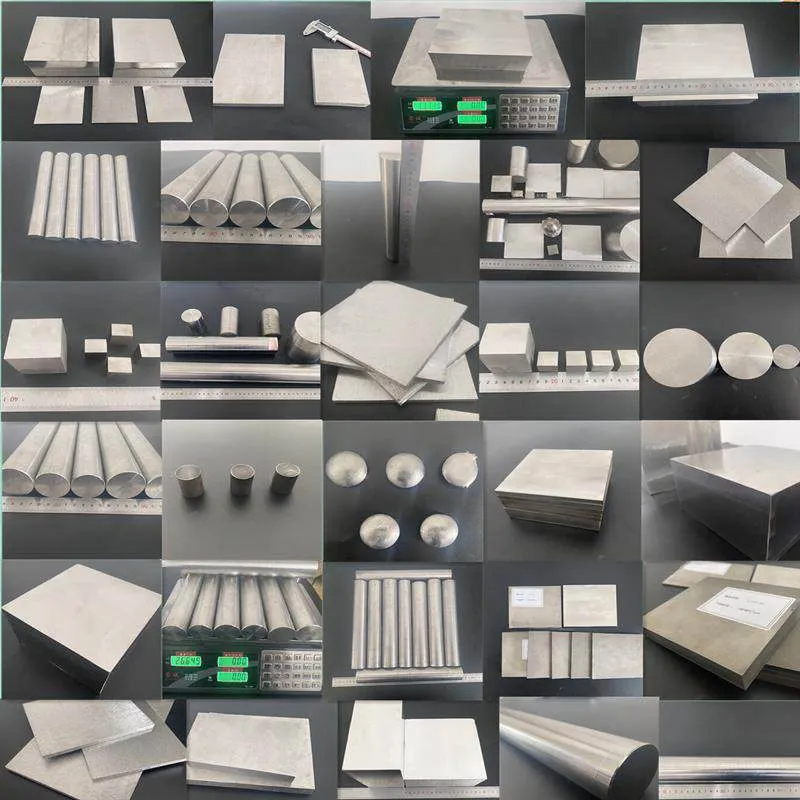
We provide AISI 1137 Steel, normalized at 900°C (1650°F), air cooled, round is available in Bar (Round bar, Flat bar), Ribbon, Wire, Rods, Tube,Seamless Tube,Pipe, Ingots, Plate, Sheet, Strip and Forging Stock.,Purity, chemical composition, size, etc. can all be customized to meet specific requirements.
Please contact us if you need customized services. We will contact you with the price and availability in 24 hours.
AISI 1137 Steel, normalized at 900°C (1650°F), air cooled, round Product Information
-:-
For detailed product information, please contact sales.
-:
AISI 1137 Steel, normalized at 900°C (1650°F), air cooled, round Synonyms
-:-
For detailed product information, please contact sales.
-:
AISI 1137 Steel, normalized at 900°C (1650°F), air cooled, round Product Information
-:-
For detailed product information, please contact sales.
-:
## **Product Data Sheet: AISI 1137 Steel, Normalized at 900°C (1650°F), Air Cooled, Round Bar**
---
### **1. Product Overview**
**AISI 1137**, in the **normalized at 900°C (1650°F)** condition, is a thermally processed medium-carbon, resulfurized steel designed to achieve a refined, homogeneous microstructure and optimized mechanical properties. The normalization process involves heating the steel above its upper critical transformation temperature to achieve complete austenitization, followed by controlled cooling in still air. This specific 900°C treatment refines the grain structure inherited from prior hot working, relieves internal stresses, and produces a uniform dispersion of fine ferrite and pearlite.
This condition represents an **ideal preparatory state for further machining or final heat treatment**, offering a superior balance of strength, ductility, and consistency compared to the as-rolled condition. It is particularly valuable for ensuring predictable performance in subsequent manufacturing steps.
**Key Advantages of Normalized AISI 1137:**
* **Refined & Homogeneous Microstructure:** Eliminates coarse, non-uniform grain structures, resulting in a fine, even distribution of ferrite and pearlite that enhances both strength and toughness.
* **Enhanced Dimensional Stability:** Effectively relieves internal stresses from prior rolling or forging, minimizing the risk of distortion during subsequent machining operations.
* **Improved & Consistent Mechanical Properties:** Delivers reliable and repeatable tensile strength, yield strength, and elongation, with minimal variation throughout the material cross-section.
* **Optimal Baseline for Further Processing:** Creates the perfect, uniform starting condition for final heat treatment (quenching & tempering, case hardening) or for heavy machining, leading to more predictable outcomes and reduced processing defects.
---
### **2. Chemical Composition (Standard % by Weight)**
The composition is engineered for a combination of machinability, strength, and moderate hardenability.
| Element | Content (%) | Function & Implication in Normalization |
| :--- | :--- | :--- |
| **Carbon (C)** | 0.32 - 0.39 | Determines the pearlite content and provides the foundation for strength in the normalized matrix. |
| **Manganese (Mn)** | 1.35 - 1.65 | **Key Hardenability Element.** Retards the transformation during air cooling, promoting a finer pearlitic structure and higher normalized strength. |
| **Phosphorus (P)** | ≤ 0.040 | Residual element, controlled to prevent embrittlement. |
| **Sulfur (S)** | 0.08 - 0.13 | **Machinability Enhancer.** Forms manganese sulfide (MnS) inclusions that improve chip breaking during machining in this softened state. |
| **Iron (Fe)** | Balance | Base metal. |
---
### **3. Typical Physical & Mechanical Properties (Normalized at 900°C)**
*Properties are indicative and can vary slightly with section size (cooling rate). The 900°C treatment promotes a fine austenitic grain size prior to transformation.*
| Property | Typical Value (Metric) | Typical Value (Imperial) | Notes |
| :--- | :--- | :--- | :--- |
| **Tensile Strength** | 580 - 700 MPa | 84,000 - 102,000 psi | Higher and more uniform than as-rolled. |
| **Yield Strength (0.2% Offset)** | 415 - 550 MPa | 60,000 - 80,000 psi | Improved yield ratio. |
| **Elongation (in 50 mm)** | 18% - 25% | 18% - 25% | Good ductility is maintained. |
| **Reduction of Area** | 45% - 60% | 45% - 60% | - |
| **Hardness** | 174 - 217 HB | 174 - 217 HB | Uniform hardness profile. |
| **Grain Size** | **Fine, ASTM 7-9** | | Result of controlled austenitization and cooling. |
| **Microstructure** | **Fine, uniform ferrite with refined pearlite.** | | Target outcome of normalization. |
| **Machinability** | **Good & Consistent** | | Predictable chip formation; superior to as-rolled. |
---
### **4. International Standards & Specifications**
Normalization is a standard heat treatment applied to steel meeting common material specifications.
| Standard System | Grade Designation | Applicable Base Specification | Heat Treatment Note |
| :--- | :--- | :--- | :--- |
| **ASTM / AISI (USA)** | AISI 1137 | ASTM A29 / ASTM A108 | Can be supplied normalized per ASTM A29 or as a special requirement. |
| **SAE (USA)** | SAE 1137 | SAE J403, J412 | - |
| **UNS (USA)** | G11370 | - | - |
| **DIN (Germany)** | 1.0735 (40S20) | DIN EN 10277 | Can be supplied to "**+N**" condition (Normalized). |
| **EN (Europe)** | 40S20 (1.0735) | EN 10277 | - |
| **Common Callout** | **Normalized 900°C (1650°F), Air Cool** | | Often specified on engineering drawings. |
---
### **5. Primary Applications**
This normalized condition is specified for components that require a reliable, high-quality microstructure as a foundation for performance or further processing.
* **Precision Machined Components:** Gear blanks, shafts, pins, and bushings that will be machined to tight tolerances prior to final hardening or use. The stable, stress-relieved state minimizes machining distortion.
* **Forged Component Pre-Treatment:** Critical forged parts (e.g., levers, connectors) that are normalized post-forging to refine the coarse grain structure before final machining and heat treatment.
* **Pre-Forms for Heat Treatment:** The ideal starting condition for parts destined for **quenching and tempering** or **carburizing**. The uniform structure ensures consistent response and minimizes distortion.
* **General High-Strength Parts:** Bolts, studs, and structural components requiring better and more consistent mechanical properties than as-rolled stock, where normalization may be the final treatment.
* **Tooling & Fixture Bases:** Jigs, fixtures, and machine components requiring good strength, stability, and toughness in the "as-machined" state.
---
### **6. Processing & Fabrication Notes**
* **Subsequent Heat Treatment:** Serves as an **excellent preparatory treatment for hardening.** The fine, homogeneous structure allows for predictable austenitization and more uniform transformation during quenching, reducing the risk of cracking and distortion.
* **Machinability:** **Very good and consistent.** The uniform fine-grained structure and stress-relieved state allow for stable cutting, good surface finishes, and predictable tool life. It is generally superior to as-rolled stock for precision work. The MnS inclusions aid chip breakability.
* **Weldability:** **Poor.** Despite normalization, the sulfur content remains a significant detriment to weldability, promoting hot cracking. Welding is not recommended for critical applications. If unavoidable, requires specialized low-hydrogen procedures with extensive pre- and post-heat treatment.
* **Cold Working:** More ductile and uniform than as-rolled material, suitable for moderate cold forming. The stress-relieved state reduces springback.
* **Dimensional Stability:** Superior to as-rolled material due to stress relief, making it the preferred choice for parts requiring stable dimensions during and after machining.
---
**Disclaimer:** The data provided is for general reference. The final mechanical properties are influenced by the specific bar diameter (which affects cooling rate) and the details of the normalization cycle. For performance-critical applications, consultation with the heat treater and material supplier is essential. Always review material certifications and Safety Data Sheets (SDS) prior to use.
-:-
For detailed product information, please contact sales.
-:
AISI 1137 Steel, normalized at 900°C (1650°F), air cooled, round Specification
Dimensions
Size:
Diameter 20-1000 mm Length <4959 mm
Size:We can customized as required
Standard:
Per your request or drawing
We can customized as required
Properties(Theoretical)
Chemical Composition
-:-
For detailed product information, please contact sales.
-:
AISI 1137 Steel, normalized at 900°C (1650°F), air cooled, round Properties
-:-
For detailed product information, please contact sales.
-:
Applications of AISI 1137 Steel, normalized at 900°C (1650°F), air cooled, round
-:-
For detailed product information, please contact sales.
-:
Chemical Identifiers AISI 1137 Steel, normalized at 900°C (1650°F), air cooled, round
-:-
For detailed product information, please contact sales.
-:
Packing of AISI 1137 Steel, normalized at 900°C (1650°F), air cooled, round
-:-
For detailed product information, please contact sales.
-:
Standard Packing:
-:-
For detailed product information, please contact sales.
-:
Typical bulk packaging includes palletized plastic 5 gallon/25 kg. pails, fiber and steel drums to 1 ton super sacks in full container (FCL) or truck load (T/L) quantities. Research and sample quantities and hygroscopic, oxidizing or other air sensitive materials may be packaged under argon or vacuum. Solutions are packaged in polypropylene, plastic or glass jars up to palletized 1430 gallon liquid totes Special package is available on request. E FORUs’ is carefully handled to minimize damage during storage and transportation and to preserve the quality of our products in their original condition