AISI 4118H Steel, heat treated
Product Code : STI-CSTI-853-CU
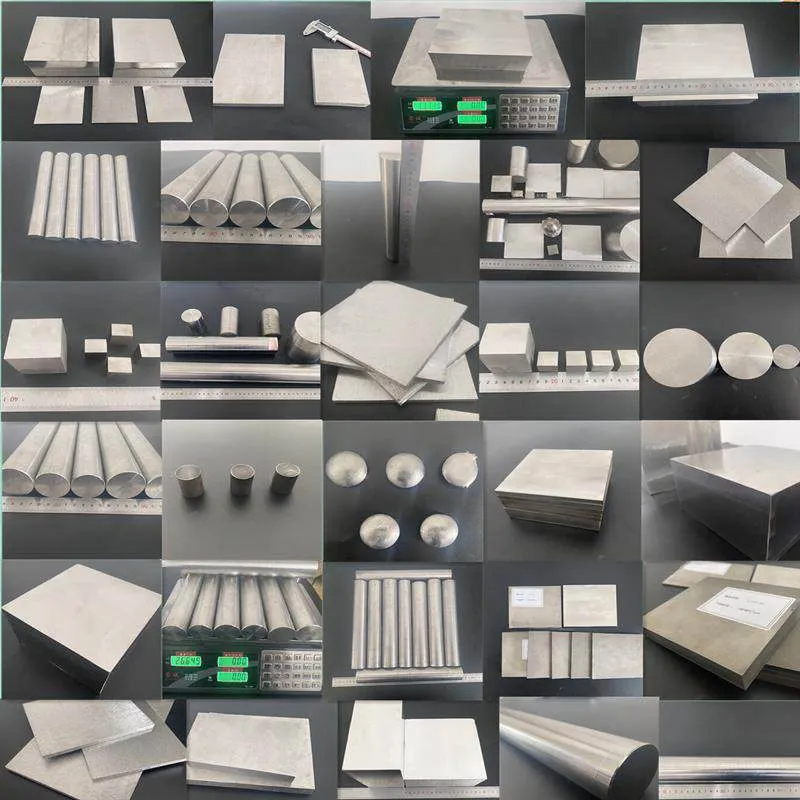
We provide AISI 4118H Steel, heat treated, 100 mm (4 in.) round is available in Bar (Round bar, Flat bar), Ribbon, Wire, Rods, Tube,Seamless Tube,Pipe, Ingots, Plate, Sheet, Strip and Forging Stock.,Purity, chemical composition, size, etc. can all be customized to meet specific requirements.
Please contact us if you need customized services. We will contact you with the price and availability in 24 hours.
AISI 4118H Steel, heat treated, 100 mm (4 in.) round Product Information
-:-
For detailed product information, please contact sales.
-:
AISI 4118H Steel, heat treated, 100 mm (4 in.) round Synonyms
-:-
For detailed product information, please contact sales.
-:
AISI 4118H Steel, heat treated, 100 mm (4 in.) round Product Information
-:-
For detailed product information, please contact sales.
-:
# **Product Technical Data Sheet: Heat Treated AISI 4118H Steel Round Bar**
**Product Designation:** AISI 4118H / SAE 4118H Heat Treated Steel
**Condition:** Through-Hardened and Tempered
**Form & Size:** Round Bar, 100 mm (4.0 inch) Diameter
**Hardenability Classification:** H-Grade (Guaranteed Hardenability Band)
**Typical Hardness Range:** 28-35 HRC (Customizable per requirement)
---
## **1. Overview**
AISI 4118H heat treated to a through-hardened condition represents a **heavy-section, high-strength alloy steel solution** specifically engineered for structural components requiring uniform mechanical properties throughout large cross-sections. The 100 mm (4-inch) diameter round bar undergoes controlled heat treatment—typically involving austenitizing, quenching, and tempering—to achieve a balanced combination of **core strength, toughness, and hardenability consistency**. As an "H"-grade material, it provides guaranteed hardenability within statistically defined limits, ensuring that even in this substantial 100 mm section, mechanical properties remain predictable and uniform from surface to center. This through-hardened condition is ideal for components where **bulk strength, wear resistance, and fatigue performance** are required without the complexity of case hardening.
## **2. Chemical Composition (Weight %)**
*Optimized composition for through-hardening response in 100 mm sections.*
| Element | Content Range (%) | Target Value (%) | Role in Heavy Section Through-Hardening |
|---------|------------------|-----------------|-----------------------------------------|
| **Carbon (C)** | 0.18 - 0.23 | 0.21 | Provides base hardenability and strength in tempered condition |
| **Manganese (Mn)** | 0.70 - 0.95 | 0.83 | Critical for achieving adequate hardenability in 100 mm section |
| **Silicon (Si)** | 0.15 - 0.35 | 0.25 | Enhances tempering resistance and solid solution strengthening |
| **Chromium (Cr)** | 0.40 - 0.65 | 0.53 | Improves hardenability depth and provides secondary hardening during tempering |
| **Molybdenum (Mo)** | 0.10 - 0.15 | 0.13 | Essential for preventing temper embrittlement and enhancing hardenability in heavy sections |
| **Phosphorus (P)** | ≤ 0.025 | 0.015 | Minimized to ensure good transverse ductility |
| **Sulfur (S)** | ≤ 0.025 | 0.018 | Controlled for machinability while maintaining transverse properties |
| **Nickel (Ni)** | ≤ 0.25 | 0.15 | Often residual, improves toughness in heavy sections |
| **Iron (Fe)** | Balance | Balance | Matrix element |
**Heavy-Section Chemistry Considerations:**
- **Hardenability Emphasis:** Mn, Cr, and Mo optimized for through-hardening of 100 mm diameter
- **Carbon Level:** Mid-range to balance hardenability with weldability and toughness
- **Impurity Control:** Reduced P and S for improved ductility in large sections
## **3. Physical Properties (Through-Hardened Condition)**
| Property | Value | Unit | Condition/Notes |
|----------|-------|------|-----------------|
| **Density** | 7.85 | g/cm³ | Uniform throughout section |
| **Melting Range** | 1415 - 1465 | °C | Solidus to liquidus |
| **Modulus of Elasticity** | 200 - 205 | GPa | 29.0 - 29.7 × 10⁶ psi |
| **Shear Modulus** | 77 - 80 | GPa | 11.2 - 11.6 × 10⁶ psi |
| **Poisson's Ratio** | 0.29 | - | Typical for low-alloy steels |
| **Thermal Conductivity** | 41.0 - 43.5 | W/m·K | At 100°C (212°F) |
| **Specific Heat Capacity** | 475 - 490 | J/kg·K | At 20°C (68°F) |
| **Coefficient of Thermal Expansion** | 11.8 × 10⁻⁶ | /°C | 20-100°C range |
| **Electrical Resistivity** | 0.23 - 0.25 | μΩ·m | At 20°C (68°F) |
## **4. Mechanical Properties (Through-Hardened, 100 mm Round)**
*Properties shown for typical condition of 30-32 HRC; customizable per application requirements*
| Property | Surface Value | Center Value | Test Standard | Notes |
|----------|---------------|--------------|---------------|-------|
| **Hardness Range** | 28 - 35 HRC | 28 - 35 HRC | ASTM E18 | Customizable hardness level |
| **Tensile Strength** | 900 - 1150 MPa | 880 - 1130 MPa | ASTM E8/E8M | 131-167 ksi |
| **Yield Strength (0.2%)** | 750 - 950 MPa | 730 - 930 MPa | ASTM E8/E8M | 109-135 ksi |
| **Elongation (50mm)** | 14 - 18% | 13 - 17% | ASTM E8/E8M | - |
| **Reduction of Area** | 45 - 55% | 40 - 50% | ASTM E8/E8M | - |
| **Impact Energy (CVN)** | 40 - 60 J | 35 - 55 J | ASTM E23 | At 20°C (68°F) |
| **Fatigue Strength** | 430 - 480 MPa | 410 - 460 MPa | Rotating bending, 10⁷ cycles | R = -1 |
| **Endurance Ratio** | 0.45 - 0.50 | 0.45 - 0.50 | Fatigue/UTS | - |
**Property Uniformity in 100 mm Section:**
- **Hardness Gradient:** Typically ≤ 3 HRC from surface to center
- **Strength Variation:** ≤ 5% from surface to center
- **Toughness Gradient:** Center values approximately 10-15% lower than surface
## **5. Heat Treatment Process for 100 mm Sections**
### **Standard Through-Hardening Process:**
1. **Austenitizing:** 850-870°C (1562-1598°F) for 90-120 minutes
2. **Quenching:** Oil quench with strong agitation (ISO VG 100-150 oil)
3. **Tempering:** 540-620°C (1004-1148°F) for 120-180 minutes
4. **Cooling:** Air cool after tempering
### **Alternative Heat Treatment Options:**
- **Lower Temperature Tempering (300-400°C):** For higher hardness (35-42 HRC)
- **Higher Temperature Tempering (620-650°C):** For maximum toughness (25-30 HRC)
- **Normalizing & Tempering:** For applications requiring better machinability
- **Quench & Partition (Q&P):** For advanced high-strength-toughness combinations
### **Critical Process Considerations for 100 mm Diameter:**
- **Extended Soaking Times:** Required for temperature uniformity
- **Controlled Quenching:** To minimize distortion and residual stresses
- **Tempering Duration:** Extended times for complete transformation
- **Distortion Allowance:** Typical 0.1-0.3% diameter change
## **6. Material Characteristics & Advantages**
### **Key Benefits of Through-Hardened 4118H:**
1. **Uniform Properties:** Consistent mechanical properties throughout 100 mm section
2. **Predictable Performance:** H-grade guarantee ensures batch-to-batch consistency
3. **Good Machinability:** In tempered condition for post-heat treatment machining
4. **Weldability:** With proper pre- and post-weld heat treatment
5. **Cost Effectiveness:** Eliminates need for case hardening in many applications
### **Through-Hardening vs. Case Hardening for 100 mm Sections:**
| Aspect | Through-Hardened 4118H | Case-Hardened 4118H |
|--------|------------------------|---------------------|
| **Processing Time** | Shorter | Significantly longer |
| **Property Uniformity** | Excellent throughout | Gradient properties |
| **Distortion** | Generally lower | Potentially higher |
| **Surface Hardness** | 28-35 HRC | 58-63 HRC surface |
| **Core Toughness** | Very good | Good to very good |
| **Cost** | Lower | Higher |
## **7. Applications**
### **Primary Applications for Through-Hardened 100 mm 4118H:**
**Heavy Machinery & Equipment:**
- Large hydraulic cylinder rods and piston rods
- Heavy-duty shafts and axles
- Mining equipment components
- Crane and hoist shafts
**Energy & Power Generation:**
- Turbine and generator shafts
- Large pump shafts
- Wind turbine components
- Oil and gas equipment shafts
**Transportation & Marine:**
- Marine propeller shafts
- Large axle shafts
- Railway components
- Heavy vehicle drive shafts
**Industrial Manufacturing:**
- Large gear blanks (for subsequent hardening)
- Machine tool spindles and shafts
- Rolling mill components
- Large fastener stock
### **Component Design Considerations:**
- **Optimal for:** Components requiring uniform strength throughout cross-section
- **Less suitable for:** Applications requiring extreme surface hardness/wear resistance
- **Alternative to:** Larger diameter case-hardened components where case depth would be insufficient
## **8. International Standards & Specifications**
### **Applicable Standards:**
| Standard System | Designation | Application/Requirement |
|----------------|-------------|-------------------------|
| **SAE/AISI** | 4118H | Base material specification (SAE J404, J1268) |
| **ASTM** | A304 | Alloy steel bars subject to end-quench requirements |
| **ASTM** | A29/A29M | General requirements for steel bars |
| **ISO** | ISO 683-1 | Heat-treatable steels, alloy steels |
| **DIN** | 1.7139+H | 16MnCr5+H (German equivalent) |
| **EN** | EN 10083-3 | Steels for quenching and tempering |
| **JIS** | G4105 | Chromium-molybdenum steels |
### **Heat Treatment Standards:**
- **AMS 2759:** Pyrometry and heat treatment requirements
- **ISO 4885:** Heat treatment vocabulary
- **ASTM A255:** Standard test method for end-quench hardenability
## **9. Quality Assurance & Testing**
### **Standard Testing Requirements:**
1. **Chemical Analysis:** Full elemental analysis with hardenability verification
2. **Mechanical Testing:** Tensile and impact tests from representative locations
3. **Hardness Survey:** Multiple points across diameter (surface, mid-radius, center)
4. **Microstructural Examination:** Grain size and microstructure uniformity
5. **Ultrasonic Testing:** For internal soundness in 100 mm sections
### **Acceptance Criteria for 100 mm Through-Hardened Bars:**
| Parameter | Specification | Test Method |
|-----------|---------------|-------------|
| **Hardness Uniformity** | ±3 HRC max variation | Multiple point testing |
| **Tensile Strength** | Per customer requirement | ASTM E8 |
| **Yield Strength** | Typically ≥ 700 MPa | ASTM E8 |
| **Impact Toughness** | Typically ≥ 35 J | ASTM E23 |
| **Internal Soundness** | No indications > 3.2 mm FBH | ASTM A388 |
| **Straightness** | ≤ 2 mm per meter | Straightedge measurement |
### **Special Considerations for 100 mm Sections:**
- **Test Location:** Mechanical tests typically taken at 1/4 radius position
- **Property Correlation:** Jominy hardenability data correlated with actual section properties
- **Size Effect:** Consideration of decreased properties in center vs. standard test specimens
## **10. Design & Manufacturing Guidelines**
### **Design Recommendations:**
- **Section Size Optimization:** 100 mm diameter represents practical limit for uniform through-hardening
- **Fillet Radii:** Minimum R = 5 mm to prevent stress concentrations
- **Transition Sections:** Gradual changes in diameter recommended
- **Surface Finish Requirements:** Specify based on application needs
### **Machining Considerations:**
- **Pre-Hardening Machining:** Rough machining before heat treatment
- **Post-Hardening Machining:** Hard turning or grinding possible
- **Tool Selection:** Carbide tools recommended for tempered material
- **Cutting Parameters:** Moderate speeds and feeds (30-50 m/min for turning)
### **Welding Guidelines:**
- **Preheat Temperature:** 200-250°C minimum for 100 mm thickness
- **Post-Weld Heat Treatment:** 590-620°C for stress relief
- **Filler Material:** Typically low-alloy matching composition
- **Welding Processes:** SMAW, GTAW, or GMAW with proper procedures
### **Economic Considerations:**
- **Material Cost:** Moderate among alloy steels
- **Processing Cost:** Lower than case hardening alternatives
- **Total Cost of Ownership:** Favorable for applications not requiring extreme surface hardness
- **Life Cycle Cost:** Competitive due to good fatigue resistance and toughness
---
**Technical Summary:**
Through-hardened AISI 4118H in 100 mm diameter represents an optimal solution for structural components requiring uniform strength and toughness throughout large cross-sections. The H-grade guarantee provides the predictability necessary for engineering design, while the alloy composition ensures adequate hardenability even in this substantial section size. This material-process combination offers a balanced approach that avoids the complexities and costs of case hardening while providing excellent mechanical properties for demanding applications.
**Application Selection Guide:**
1. **Choose through-hardened 4118H when:**
- Uniform properties throughout section are required
- Component experiences bulk loading rather than surface contact stresses
- Cost-effective manufacturing is important
- Good toughness at moderate hardness is sufficient
2. **Consider alternatives when:**
- Extreme surface wear resistance is needed (consider case hardening)
- Maximum possible strength-to-weight ratio is critical
- Component is subject to very high contact stresses
**Future Development Trends:**
- Advanced quenching technologies for even larger section uniformity
- Computational modeling for property prediction in heavy sections
- Integration with non-destructive evaluation for real-time quality assurance
- Customized tempering cycles for specific property combinations
**Disclaimer:** This datasheet provides typical values for through-hardened AISI 4118H in 100 mm diameter. Actual properties may vary based on specific heat treatment parameters, quenching conditions, and material history. For critical applications, prototype testing and process validation are recommended. The H-grade guarantee ensures material consistency but does not eliminate the need for proper process control and quality assurance.
-:-
For detailed product information, please contact sales.
-:
AISI 4118H Steel, heat treated, 100 mm (4 in.) round Specification
Dimensions
Size:
Diameter 20-1000 mm Length <5585 mm
Size:We can customized as required
Standard:
Per your request or drawing
We can customized as required
Properties(Theoretical)
Chemical Composition
-:-
For detailed product information, please contact sales.
-:
AISI 4118H Steel, heat treated, 100 mm (4 in.) round Properties
-:-
For detailed product information, please contact sales.
-:
Applications of AISI 4118H Steel, heat treated, 100 mm (4 in.) round
-:-
For detailed product information, please contact sales.
-:
Chemical Identifiers AISI 4118H Steel, heat treated, 100 mm (4 in.) round
-:-
For detailed product information, please contact sales.
-:
Packing of AISI 4118H Steel, heat treated, 100 mm (4 in.) round
-:-
For detailed product information, please contact sales.
-:
Standard Packing:
-:-
For detailed product information, please contact sales.
-:
Typical bulk packaging includes palletized plastic 5 gallon/25 kg. pails, fiber and steel drums to 1 ton super sacks in full container (FCL) or truck load (T/L) quantities. Research and sample quantities and hygroscopic, oxidizing or other air sensitive materials may be packaged under argon or vacuum. Solutions are packaged in polypropylene, plastic or glass jars up to palletized 2056 gallon liquid totes Special package is available on request. E FORUs’ is carefully handled to minimize damage during storage and transportation and to preserve the quality of our products in their original condition