AISI 4118H Steel, mock carburized
Product Code : STI-CSTI-847-CU
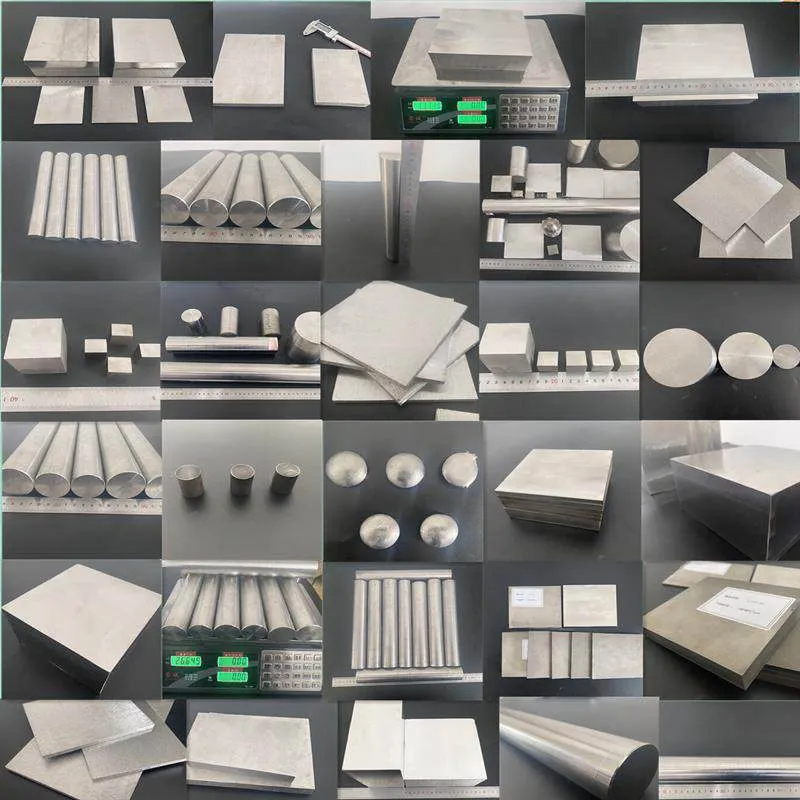
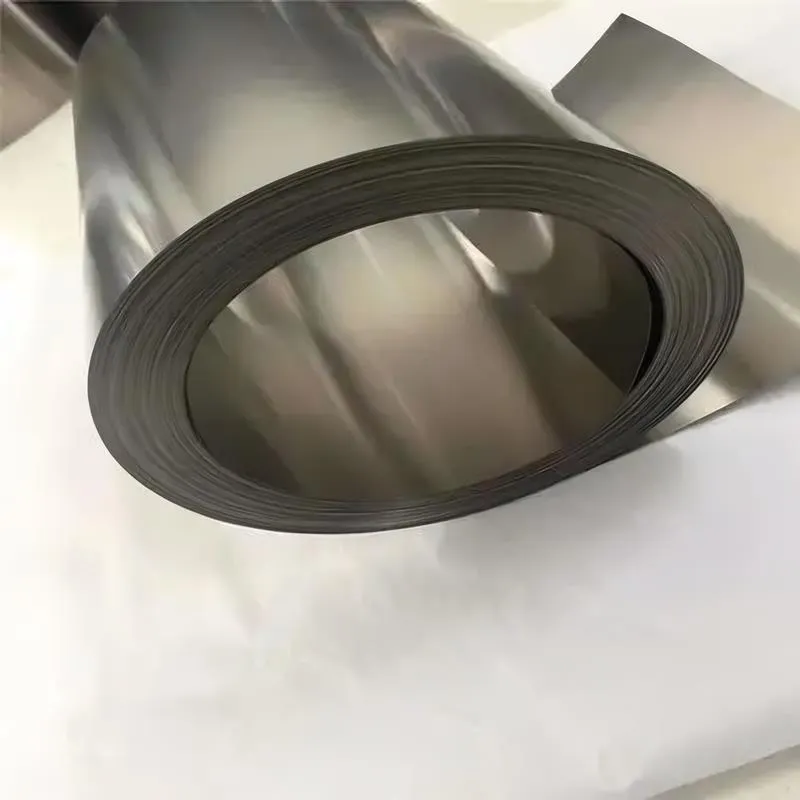
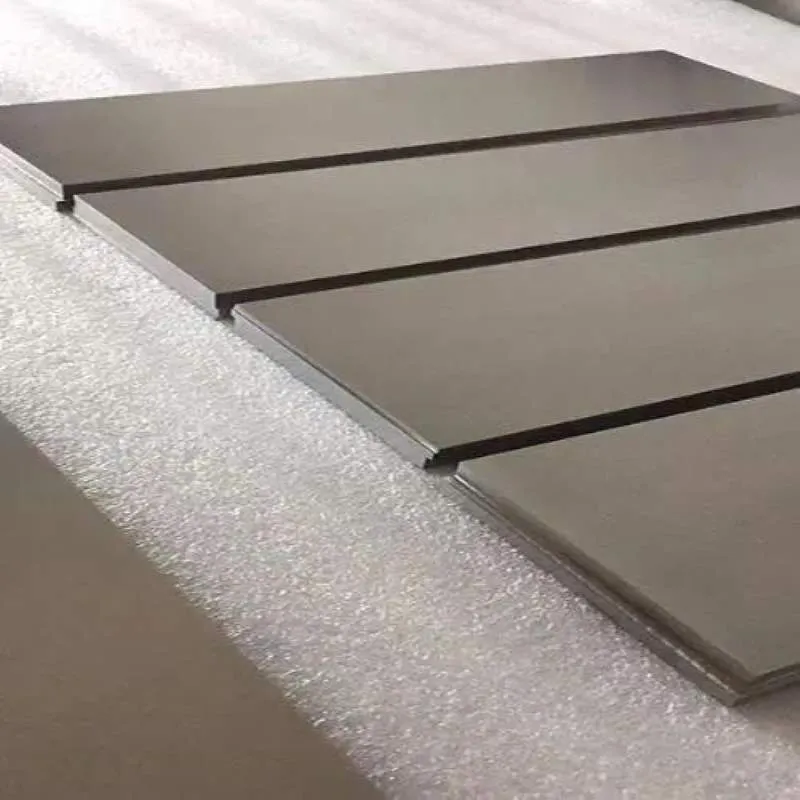
We provide AISI 4118H Steel, mock carburized, 150°C (300°F) temper, 14 mm (0.55 in.) round is available in Bar (Round bar, Flat bar), Ribbon, Wire, Rods, Tube,Seamless Tube,Pipe, Ingots, Plate, Sheet, Strip and Forging Stock.,Purity, chemical composition, size, etc. can all be customized to meet specific requirements.
Please contact us if you need customized services. We will contact you with the price and availability in 24 hours.
AISI 4118H Steel, mock carburized, 150°C (300°F) temper, 14 mm (0.55 in.) round Product Information
-:-
For detailed product information, please contact sales.
-:
AISI 4118H Steel, mock carburized, 150°C (300°F) temper, 14 mm (0.55 in.) round Synonyms
-:-
For detailed product information, please contact sales.
-:
AISI 4118H Steel, mock carburized, 150°C (300°F) temper, 14 mm (0.55 in.) round Product Information
-:-
For detailed product information, please contact sales.
-:
# **Product Technical Data Sheet: Mock Carburized AISI 4118H Steel**
**Product Designation:** AISI 4118H / SAE 4118H Mock Carburized Steel
**Heat Treatment:** Mock Carburized, 150°C (300°F) Temper
**Form & Size:** Round Bar, 14 mm (0.55 inch) Diameter
**Hardenability Classification:** H-Grade (Guaranteed Hardenability Band)
**Special Condition:** Mock Carburizing Simulation
---
## **1. Overview**
AISI 4118H mock carburized material represents a **process simulation condition** used for material qualification, prototype testing, and process development without the time and expense of actual carburizing. The "mock carburizing" thermal cycle subjects the material to the **same time-temperature profile as actual carburizing** but in a neutral atmosphere, preventing carbon enrichment. This is followed by standard quenching and a **150°C (300°F) temper**, simulating the thermal stresses and microstructural changes of carburizing without creating a carbon gradient. The 14mm diameter provides an ideal test section size that balances adequate material volume with reasonable heat treatment uniformity. This condition is essential for evaluating **core properties, distortion behavior, and hardenability response** before committing to full production carburizing.
## **2. Chemical Composition (Weight %)**
*Base material composition per SAE J404 4118H requirements - NO surface carbon enrichment.*
| Element | Content Range (%) | Typical Value (%) | Role in Mock Carburizing |
|---------|------------------|------------------|--------------------------|
| **Carbon (C)** | 0.17 - 0.23 | 0.20 | Uniform throughout, no gradient |
| **Manganese (Mn)** | 0.60 - 0.95 | 0.78 | Austenite stabilizer during thermal cycle |
| **Silicon (Si)** | 0.15 - 0.35 | 0.25 | Maintains consistent oxidation resistance |
| **Chromium (Cr)** | 0.35 - 0.65 | 0.50 | Enhances through-section hardenability |
| **Molybdenum (Mo)** | 0.08 - 0.15 | 0.12 | Prevents grain growth during extended heating |
| **Phosphorus (P)** | ≤ 0.035 | 0.020 | Standard residual control |
| **Sulfur (S)** | ≤ 0.040 | 0.030 | Standard machinability element |
| **Iron (Fe)** | Balance | Balance | Uniform matrix composition |
**Key Distinction from Actual Carburizing:**
- **NO carbon gradient** - uniform carbon content throughout
- **NO carbon enrichment** at surface (maintains base carbon level)
- **NO carbides formation** in case region
- **Identical thermal history** to carburizing process
## **3. Physical Properties**
| Property | Value | Unit | Notes |
|----------|-------|------|-------|
| **Density** | 7.85 | g/cm³ | Uniform throughout section |
| **Modulus of Elasticity** | 200 - 205 | GPa | Consistent with through-hardened low-alloy steel |
| **Thermal Conductivity** | 42.5 | W/m·K | At 100°C |
| **Coefficient of Thermal Expansion** | 11.6 × 10⁻⁶ | /°C | 20-100°C range |
| **Electrical Resistivity** | 0.23 | μΩ·m | Uniform resistivity |
| **Magnetic Properties** | Ferromagnetic | - | Consistent throughout |
**Microstructural Uniformity:**
- **100% tempered martensite** throughout 14mm section
- **No case-core interface** or microstructural transition
- **Uniform prior austenite grain size:** ASTM 7-9
- **No retained austenite** gradient (typically <5% uniformly)
## **4. Mechanical Properties**
### **Uniform Properties Throughout 14mm Section:**
| Property | Value Range | Typical | Test Standard | Notes |
|----------|-------------|---------|---------------|-------|
| **Hardness (Surface)** | 38 - 48 HRC | 43 HRC | ASTM E18 | No hardness gradient |
| **Hardness (Center)** | 38 - 48 HRC | 43 HRC | ASTM E18 | Identical to surface |
| **Tensile Strength** | 1250 - 1450 MPa | 1350 MPa | ASTM E8 | 181-210 ksi |
| **Yield Strength (0.2%)** | 1050 - 1250 MPa | 1150 MPa | ASTM E8 | 152-181 ksi |
| **Elongation (50mm)** | 8 - 12% | 10% | ASTM E8 | Uniform ductility |
| **Reduction of Area** | 35 - 45% | 40% | ASTM E8 | Consistent through section |
| **Impact Energy (CVN)** | 25 - 40 J | 32 J | ASTM E23 | Room temperature |
| **Fatigue Strength** | 550 - 650 MPa | 600 MPa | Rotating bending | 10⁷ cycles |
### **Distortion Characteristics (Typical for 14mm Round):**
- **Diameter Change:** ±0.05 - 0.15 mm
- **Length Change:** 0.1 - 0.3% (expansion)
- **Out-of-Roundness:** <0.05 mm increase
- **Straightness Change:** <0.1 mm per 100 mm length
## **5. Mock Carburizing Process Details**
### **Simulated Carburizing Thermal Cycle:**
1. **Heat to Carburizing Temperature:** 925°C (1697°F) at 150°C/hour
2. **Hold at Temperature:** 4-8 hours (simulating typical case depth development)
3. **Atmosphere:** Neutral (nitrogen or argon) to prevent carbon transfer
4. **Cooling:** Slow cool to room temperature (simulating pot cooling)
### **Subsequent Heat Treatment:**
1. **Reheat for Hardening:** 850°C (1562°F) for 30 minutes
2. **Quenching:** Oil quench at 60°C (140°F) with moderate agitation
3. **Tempering:** 150°C (300°F) for 2 hours
4. **Cooling:** Air cool to room temperature
### **Key Simulation Parameters:**
- **Thermal gradient simulation:** Identical to production carburizing
- **Grain growth conditions:** Same as carburized parts
- **Transformation stresses:** Similar to actual process
- **Distortion behavior:** Predictive of production results
## **6. Material Characteristics & Testing Advantages**
### **Quality Control & Development Benefits:**
1. **Core Property Evaluation:** Assesses core hardness, strength, and toughness without case influence
2. **Distortion Prediction:** Provides accurate distortion data for fixture design and machining allowances
3. **Grain Growth Assessment:** Evaluates grain size stability during extended high-temperature exposure
4. **Hardenability Verification:** Confirms through-section hardening capability
5. **Process Development:** Allows optimization of quenching parameters without carbon gradient complications
### **Comparative Analysis Capabilities:**
- **Batch-to-batch consistency** verification
- **Supplier qualification** and material comparison
- **Heat treatment parameter** optimization
- **Quenchant performance** evaluation
## **7. Applications**
### **Primary Uses:**
**Research & Development:**
- Material selection studies for carburizing applications
- Quenching system design and optimization
- Distortion prediction model calibration
- Fixture design verification
**Quality Assurance:**
- Incoming material qualification for carburizing
- Heat treat process capability studies
- Batch consistency monitoring
- Supplier material performance validation
**Production Support:**
- Machining allowance determination
- Dimensional change prediction for tooling design
- Process troubleshooting and root cause analysis
- New equipment qualification
**Specific Test Applications:**
1. **Jominy Correlation:** Relating end-quench data to actual section hardness
2. **Dilatometry Studies:** Measuring transformation behavior under simulated conditions
3. **Residual Stress Analysis:** Understanding stress development without carbon gradient
4. **Microstructural Evolution:** Studying grain growth and phase transformation
### **Industry Applications:**
- **Automotive:** Transmission gear development, camshaft prototyping
- **Aerospace:** Gearbox component qualification, bearing development
- **Industrial:** Heavy machinery gear development, tooling qualification
- **Defense:** Weapon system component testing, reliability studies
## **8. International Standards & Testing Protocols**
### **Applicable Standards:**
| Standard | Designation | Purpose/Application |
|----------|-------------|-------------------|
| **SAE/AISI** | 4118H | Base material specification |
| **ASTM** | A255 | Hardenability testing |
| **ASTM** | E112 | Grain size determination |
| **ISO** | 642 | Steel - Hardenability test by end quenching |
| **AMS** | 2759/9 | Heat treatment of steel parts |
| **Customer Specific** | Various | Mock carburizing test procedures |
### **Standard Test Protocols for Mock Carburized Material:**
1. **Microhardness Survey:** Minimum 5 points across radius (uniformity verification)
2. **Microstructure Examination:** 100X to 1000X at surface, mid-radius, and center
3. **Grain Size Measurement:** ASTM E112 method at multiple locations
4. **Tensile Testing:** Longitudinal and transverse specimens
5. **Impact Testing:** Charpy V-notch at room and sub-zero temperatures
6. **Dimensional Analysis:** Pre- and post-heat treatment measurements
## **9. Quality Assurance & Documentation**
### **Required Documentation:**
- **Material Certification:** Full chemical analysis and hardenability data
- **Heat Treatment Record:** Complete time-temperature chart of mock carburizing cycle
- **Test Reports:** Mechanical properties, hardness surveys, microstructural analysis
- **Dimensional Analysis:** Pre- and post-treatment measurements with statistical analysis
### **Acceptance Criteria:**
| Parameter | Acceptance Criteria | Test Method |
|-----------|-------------------|-------------|
| **Hardness Uniformity** | ±2 HRC max variation across section | Multiple point test |
| **Microstructural Consistency** | Uniform tempered martensite throughout | Metallographic exam |
| **Grain Size** | ASTM 7 or finer | ASTM E112 |
| **Mechanical Properties** | Meet specified minimums for core properties | Standard mechanical tests |
| **Decarburization** | None permitted | Microexamination |
### **Traceability Requirements:**
- Heat number and melt identification
- Heat treatment lot identification
- Test specimen location documentation
- Measurement equipment calibration records
## **10. Comparative Analysis with Actual Carburized Material**
### **Similarities:**
- Identical thermal history and distortion behavior
- Same grain growth characteristics
- Similar residual stress patterns (from thermal gradients only)
- Identical quenching response in core regions
### **Differences:**
| Aspect | Mock Carburized | Actual Carburized |
|--------|----------------|-------------------|
| **Surface Carbon** | Base level (0.20%) | High (0.70-0.90%) |
| **Hardness Gradient** | None | Significant (58-63 HRC surface to 35-45 HRC core) |
| **Microstructure** | Uniform tempered martensite | Case: High-carbon martensite + retained austenite; Core: Low-carbon martensite |
| **Residual Stress** | Thermal only | Thermal + transformation stresses |
| **Application** | Testing/development only | Final production parts |
---
**Technical Significance:**
Mock carburizing provides invaluable data for predicting the behavior of actual carburized components. The 14mm diameter is particularly useful as it represents a common size for many carburized components while being small enough to ensure uniform properties in the mock carburized condition. The 150°C temper represents a typical low-temperature stress relief used in carburized components to maximize surface hardness.
**Testing Recommendations:**
1. Always test mock carburized material from the same heat as production material
2. Maintain identical heat treatment equipment and parameters between mock and actual carburizing
3. Use statistical process control for mock carburizing tests to ensure consistency
4. Correlate mock carburizing results with actual production data for continuous improvement
**Limitations and Considerations:**
- Does not simulate carbon gradient effects on residual stress
- Does not account for carbon's effect on Ms (martensite start) temperature
- Does not simulate case-core property interactions
- Thermal properties may differ slightly due to carbon content differences
**Industry Best Practices:**
1. Use mock carburizing for all new material qualifications
2. Maintain a database of mock carburizing results for trend analysis
3. Perform annual mock carburizing tests to monitor process consistency
4. Use results for finite element analysis model calibration
**Disclaimer:** Mock carburized material is for testing and development purposes only and should not be used in production applications. Results should be correlated with actual carburizing trials for final process validation. Properties may vary based on specific simulation parameters and material heat history.
-:-
For detailed product information, please contact sales.
-:
AISI 4118H Steel, mock carburized, 150°C (300°F) temper, 14 mm (0.55 in.) round Specification
Dimensions
Size:
Diameter 20-1000 mm Length <5579 mm
Size:We can customized as required
Standard:
Per your request or drawing
We can customized as required
Properties(Theoretical)
Chemical Composition
-:-
For detailed product information, please contact sales.
-:
AISI 4118H Steel, mock carburized, 150°C (300°F) temper, 14 mm (0.55 in.) round Properties
-:-
For detailed product information, please contact sales.
-:
Applications of AISI 4118H Steel, mock carburized, 150°C (300°F) temper, 14 mm (0.55 in.) round
-:-
For detailed product information, please contact sales.
-:
Chemical Identifiers AISI 4118H Steel, mock carburized, 150°C (300°F) temper, 14 mm (0.55 in.) round
-:-
For detailed product information, please contact sales.
-:
Packing of AISI 4118H Steel, mock carburized, 150°C (300°F) temper, 14 mm (0.55 in.) round
-:-
For detailed product information, please contact sales.
-:
Standard Packing:
-:-
For detailed product information, please contact sales.
-:
Typical bulk packaging includes palletized plastic 5 gallon/25 kg. pails, fiber and steel drums to 1 ton super sacks in full container (FCL) or truck load (T/L) quantities. Research and sample quantities and hygroscopic, oxidizing or other air sensitive materials may be packaged under argon or vacuum. Solutions are packaged in polypropylene, plastic or glass jars up to palletized 2050 gallon liquid totes Special package is available on request. E FORUs’ is carefully handled to minimize damage during storage and transportation and to preserve the quality of our products in their original condition