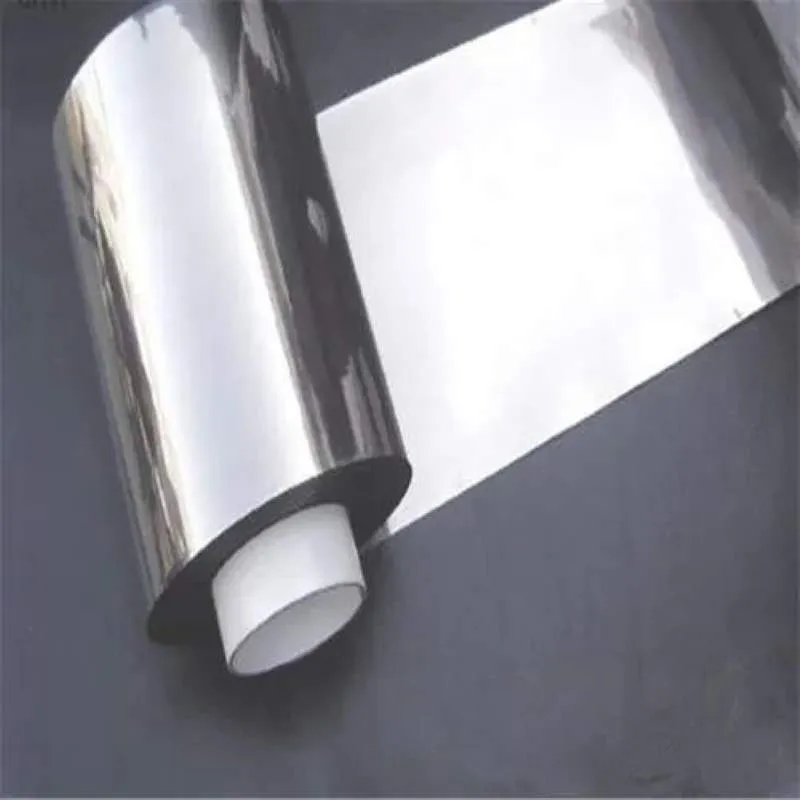
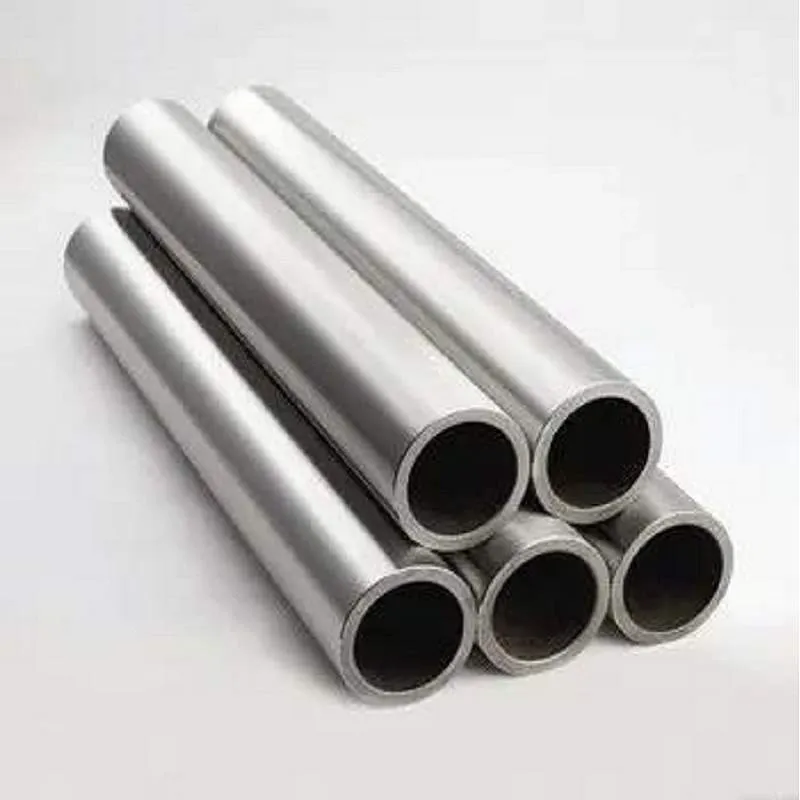
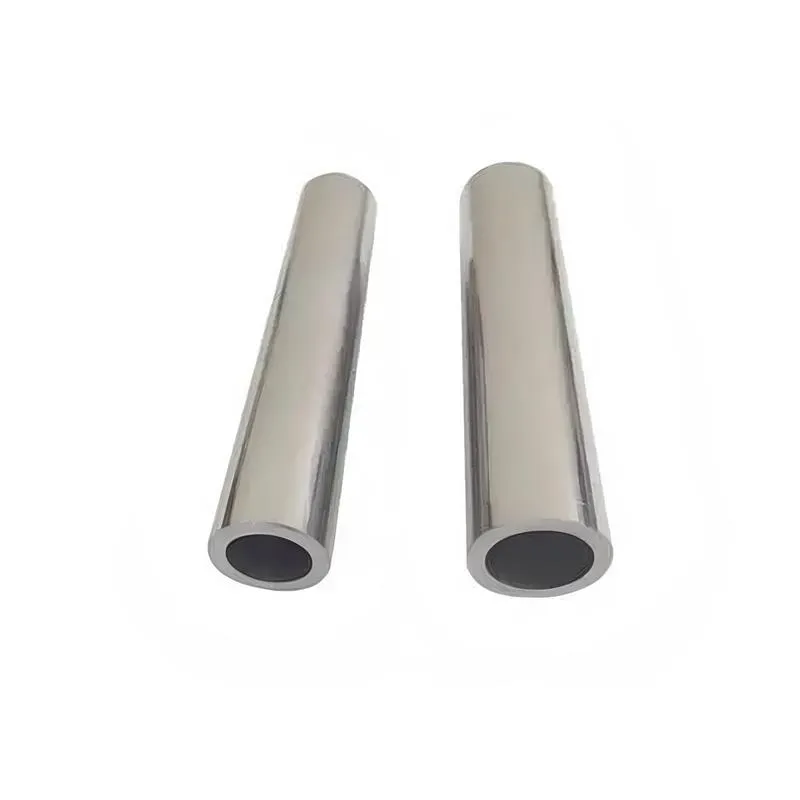
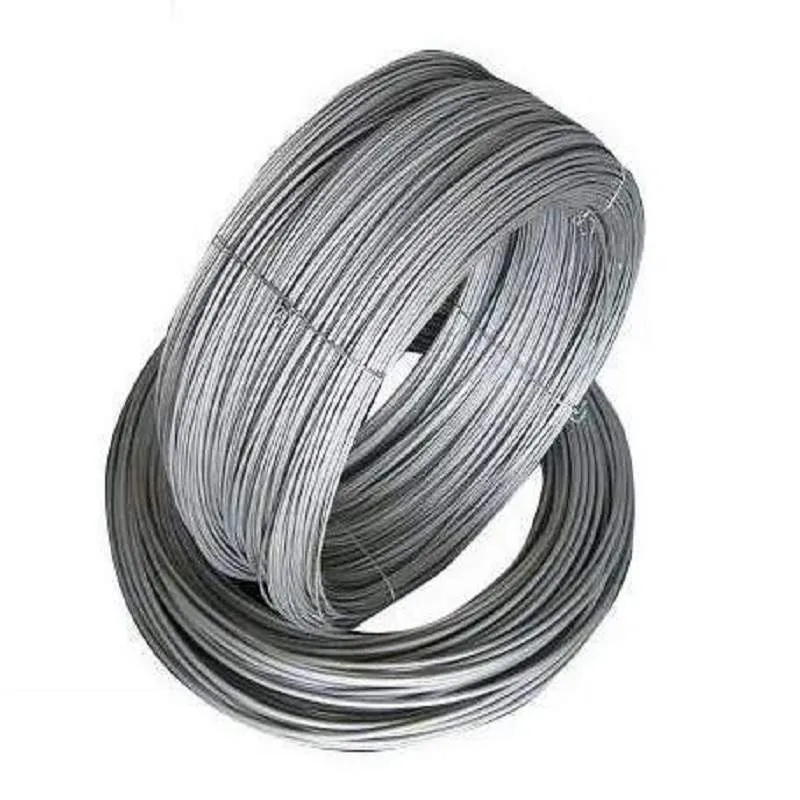
AISI 4150 Steel Foil/Strip
Product Code : STI-CSTI-1495-CU
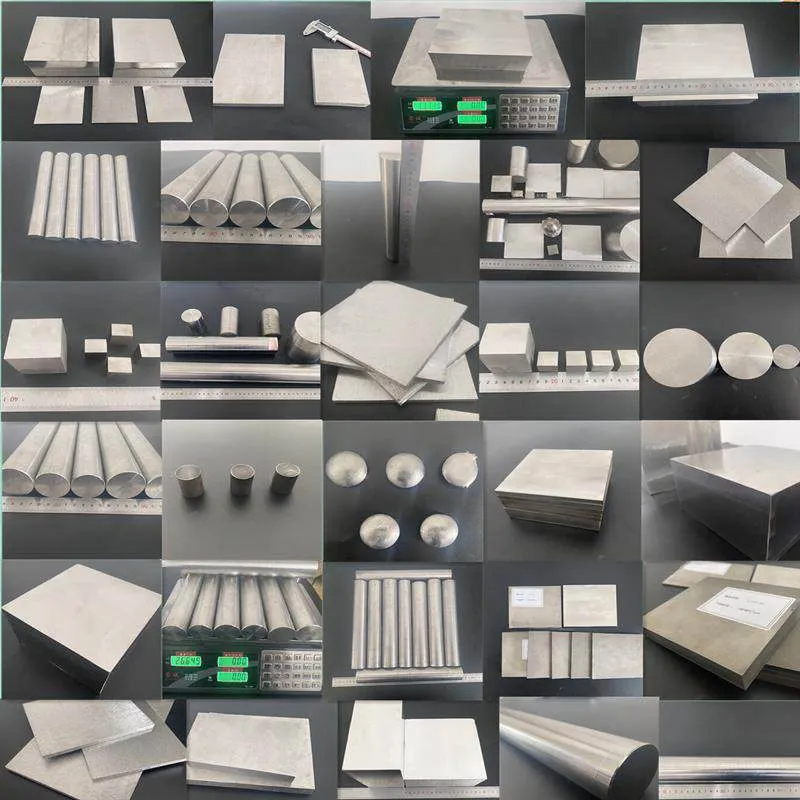
We provide AISI 4150 Steel Foil/Strip, oil quenched 830°C (1525°F), 595°C (1100°F) temper is available in Bar (Round bar, Flat bar), Ribbon, Wire, Rods, Tube,Seamless Tube,Pipe, Ingots, Plate, Sheet, Strip and Forging Stock.,Purity, chemical composition, size, etc. can all be customized to meet specific requirements.
Please contact us if you need customized services. We will contact you with the price and availability in 24 hours.
AISI 4150 Steel Foil, oil quenched 830°C (1525°F), 595°C (1100°F) temper Product Information
-:-
For detailed product information, please contact sales.
-:
AISI 4150 Steel Foil, oil quenched 830°C (1525°F), 595°C (1100°F) temper Synonyms
-:-
For detailed product information, please contact sales.
-:
AISI 4150 Steel, oil quenched 830°C (1525°F), 595°C (1100°F) temper Product Information
-:-
For detailed product information, please contact sales.
-:
# **AISI 4150 Steel (Oil Quenched and High-Temperature Tempered) Product Specification**
## **1. PRODUCT IDENTIFICATION & THERMAL PROCESS**
**Product:** AISI 4150 High-Carbon Chromium-Molybdenum Alloy Steel
**Material State:** Fully Heat Treated, Quenched and Tempered (Q&T) Condition
**Specified Heat Treatment:**
- **Austenitizing:** 830°C (1525°F)
- **Quenching:** Oil quench (agitated)
- **Tempering:** 595°C (1100°F) → Air Cool
**Metallurgical Significance:** This heat treatment produces a **uniquely balanced combination of high strength, excellent toughness, and good ductility** for AISI 4150 steel. The relatively low austenitizing temperature (830°C) minimizes grain growth while ensuring complete austenitization. The high tempering temperature (595°C) provides substantial stress relief and promotes the formation of stable, fine alloy carbides, resulting in exceptional impact resistance and fracture toughness while retaining significant strength. This condition represents the optimal tempering range for maximizing toughness in this high-carbon alloy steel.
## **2. CHEMICAL COMPOSITION**
AISI 4150 is distinguished by its higher carbon content compared to the 4140 series, providing increased hardenability and strength potential.
| Element | Composition Range (% by weight) | Metallurgical Role in This Condition |
| :--- | :--- | :--- |
| **Carbon (C)** | **0.48 - 0.53** | **Defining characteristic.** Higher than 4140 series. Forms substantial tempered martensite and promotes fine alloy carbide precipitation during 595°C tempering, providing excellent strength-toughness balance. |
| **Manganese (Mn)** | 0.75 - 1.00 | Ensures deep hardenability for complete martensitic transformation in oil quench. Contributes to solid solution strengthening. |
| **Phosphorus (P)** | ≤ 0.035 | Kept low to maximize toughness at this high tempering temperature. |
| **Sulfur (S)** | ≤ 0.040 | Controlled for good transverse properties. |
| **Silicon (Si)** | 0.15 - 0.35 | Provides solid solution strengthening; enhances resistance to softening during high-temperature tempering. |
| **Chromium (Cr)** | 0.80 - 1.10 | Forms stable (Cr,Fe)₂₃C₆ and M₇C₃ carbides during 595°C tempering, contributing to secondary hardening and excellent wear resistance. |
| **Molybdenum (Mo)** | **0.15 - 0.25** | **Critical at this tempering temperature.** Completely suppresses temper embrittlement in the 595°C range. Forms fine Mo₂C carbides that provide precipitation strengthening and enhance creep resistance. |
## **3. MICROSTRUCTURE & TRANSFORMATION CHARACTERISTICS**
**Microstructural Features:**
- **Matrix:** Fully tempered martensite (tempered at 595°C)
- **Carbides:** Fine, well-dispersed alloy carbides (Mo₂C, Cr₂₃C₆, M₇C₃)
- **Grain Size:** ASTM 8-10 (very fine due to 830°C austenitizing)
- **Retained Austenite:** <1% (fully transformed at 595°C)
- **Tempering Stage:** Stage 4 - Complete spheroidization of carbides
**Transformation Data:**
- **Ac₁:** ~735°C
- **Ac₃:** ~780°C
- **Mₛ:** ~290°C
- **M_f:** ~100°C
- **Ideal Critical Diameter (Dᵢ):** ~125mm in oil
## **4. MECHANICAL PROPERTIES (After Q&T at 595°C)**
*Typical for sections up to 75mm (3") diameter*
| Property | Typical Range | Test Standard / Notes |
| :--- | :--- | :--- |
| **Ultimate Tensile Strength** | 1000 - 1150 MPa (145,000 - 167,000 psi) | High for this tempering temperature |
| **Yield Strength (0.2% Offset)** | 850 - 1000 MPa (123,000 - 145,000 psi) | Excellent yield ratio (~0.87) |
| **Elongation (in 50mm)** | **18% - 22%** | **Exceptional ductility** for this strength level |
| **Reduction of Area** | **55% - 65%** | **Outstanding toughness indicator** |
| **Hardness** | **28 - 33 HRC** (285 - 315 HB) | Optimized hardness-toughness balance |
| **Charpy V-Notch Impact (21°C)** | **50 - 80 J** (37 - 59 ft-lb) | **Excellent impact resistance** |
| **Fracture Toughness (K₁C)** | **80 - 110 MPa√m** | Very good for high-strength steel |
| **Fatigue Endurance Limit** | ~500 - 550 MPa | For polished specimens, R=-1 |
| **Shear Strength** | ~600 - 690 MPa | ~60% of UTS |
| **Modulus of Elasticity** | 205 GPa (29,700 ksi) | |
## **5. PHYSICAL PROPERTIES**
| Property | Value / Condition |
| :--- | :--- |
| **Density** | 7.85 g/cm³ |
| **Thermal Conductivity** | 40.5 W/m·K @ 100°C |
| **Coefficient of Thermal Expansion** | 11.1 µm/m·°C (20-100°C) |
| **Specific Heat Capacity** | 460 J/kg·K |
| **Electrical Resistivity** | 0.24 µΩ·m @ 20°C |
| **Magnetic Properties** | Fully ferromagnetic |
## **6. TARGET APPLICATIONS**
This specific condition is engineered for **critical, high-stress components** requiring the optimal combination of strength, toughness, and fatigue resistance.
* **Heavy-Duty Power Transmission:**
- **Large gear wheels** for mining, marine, and power generation
- **Heavy vehicle axle shafts** and **drive shafts**
- **Differential gears** and **pinions** for off-road equipment
* **Oil & Gas Drilling Equipment:**
- **Drill collars** and **stabilizers** for demanding conditions
- **Tool joints** and **kelly bars**
- **Wellhead components** requiring high fracture toughness
* **Heavy Machinery & Mining:**
- **Crusher shafts** and **main gears**
- **Excavator swing shafts** and **travel gears**
- **Ball mill trunnions** and **gear blanks**
* **Aerospace & Defense:**
- **Landing gear components** (after appropriate certification)
- **Helicopter rotor shafts** and **drive components**
- **Armored vehicle suspension components**
* **High-Performance Automotive:**
- **Racing crankshafts** and **connecting rods**
- **Performance transmission gears**
- **High-stress fasteners** and **pivot pins**
## **7. INTERNATIONAL STANDARDS & EQUIVALENT GRADES**
| Standard / Country | Designation | Equivalent Status | Notes |
| :--- | :--- | :--- | :--- |
| **AISI/SAE** | **4150** | Primary Standard | Higher carbon variant of 4140 |
| **ASTM** | A322 Grade 4150 | US Standard | |
| **UNS** | G41500 | Unified Numbering | |
| **DIN/EN** | **50CrMo4 (1.7228)** | **Important:** 50CrMo4 (0.47-0.55%C) is the true equivalent, not 42CrMo4 | EN 10083-3 |
| **JIS** | **SCM445** | Closest equivalent (0.42-0.48%C) | G4105 |
| **GB** | **50CrMo / 55CrMo** | Chinese equivalents | GB/T 3077 |
| **ISO** | **ISO 683-18 Type 50CrMo4** | International standard | |
## **8. FABRICATION & PROCESSING**
**Machinability (in Heat-Treated State):**
- **Condition:** Fair to Good (for this hardness)
- **Tooling:** Carbide recommended
- **Cutting Speed:** 80-120 m/min (260-400 SFM) for turning
- **Feed Rate:** 0.20-0.35 mm/rev (0.008-0.014 in/rev)
- **Coolant:** Recommended
**Welding Characteristics:**
- **Poor weldability** in heat-treated condition
- **If unavoidable:** Preheat to 300-350°C (575-660°F)
- **Electrodes:** Low-hydrogen only
- **Post-Weld:** Full re-heat treatment required (re-austenitize, quench, temper)
- **Recommended:** Weld in annealed state, then full heat treatment
**Grinding:**
- Excellent grindability
- Use aluminum oxide or CBN wheels
- Standard grinding practices apply
**Forming & Straightening:**
- Limited cold forming possible
- Hot working at 300-400°C recommended
- Maximum cold strain: 1-2%
## **9. HEAT TREATMENT PROCESS DETAILS**
**Critical Parameters:**
- **Austenitizing:** 830°C ±10°C (1525°F ±20°F), soak 30 min/inch
- **Quenching:** Agitated oil at 50-70°C (120-160°F)
- **Quench Delay:** <20 seconds
- **Tempering:** 595°C ±5°C (1100°F ±10°F), 2 hours/inch minimum
- **Cooling:** Air cool after tempering
**Special Considerations:**
- **Double Tempering Recommended:** Temper at 595°C, cool to RT, re-temper at 580°C
- **Stress Relieving:** After heavy machining, 550-600°C for 1-2 hours
- **Avoid:** Tempering between 375-575°C without Mo stabilization (not applicable here due to Mo content)
## **10. QUALITY ASSURANCE**
**Standard Testing:**
- Tensile testing per ASTM A370
- Hardness testing (Brinell or Rockwell)
- Impact testing (Charpy V-notch)
- Microstructure examination
**Non-Destructive Testing (Recommended):**
- Ultrasonic testing for internal defects
- Magnetic particle inspection for surface defects
- Dye penetrant for critical surfaces
**Certification Requirements:**
- Chemical analysis certificate
- Mechanical test reports
- Heat treatment records
- Grain size report (ASTM E112)
## **11. PERFORMANCE CHARACTERISTICS**
**Key Advantages:**
1. **Exceptional Toughness:** Outstanding Charpy impact values for this strength level
2. **Good Fatigue Resistance:** Suitable for highly cyclic loading
3. **Excellent Fracture Toughness:** Resistant to crack propagation
4. **Good Wear Resistance:** Adequate for many industrial applications
5. **Dimensional Stability:** Good after high-temperature tempering
**Design Considerations:**
- **Notch Sensitivity:** Moderate; use generous fillet radii (R > 3mm)
- **Corrosion Resistance:** Poor; requires protective coatings
- **Maximum Service Temperature:** ~400°C continuous
- **Weldability:** Poor in heat-treated state
**Section Size Limitations:**
- **Full hardening in oil:** Up to 125mm (5") diameter
- **Recommended maximum:** 100mm (4") for optimal properties
- **Minimum:** 15mm (0.6") to avoid excessive distortion
## **12. COMPARATIVE ANALYSIS**
**vs. 4140 at Same Tempering Temperature (595°C):**
- +10-15% higher tensile and yield strength
- +5-8% lower elongation
- Similar impact toughness
- Better wear resistance
- Deeper hardenability
**vs. 4150 at Lower Tempering Temperature (425°C):**
- -10-12 HRC lower hardness
- +100-150% higher impact toughness
- Better ductility and fracture toughness
- Lower residual stresses
- Better dimensional stability
**Optimal Application Range:**
- Components subject to impact or shock loading
- Parts requiring high fracture toughness
- Applications with stress concentrations
- Environments with potential for overload
- Safety-critical components
---
**TECHNICAL SUMMARY:** **AISI 4150 steel, oil quenched from 830°C and tempered at 595°C,** represents a **premium engineering material condition** that achieves an exceptional balance between high strength and outstanding toughness. The high carbon content (0.48-0.53%) provides substantial strength potential, while the high tempering temperature (595°C) maximizes toughness and ductility through complete tempering and stable carbide formation. This condition is particularly valuable for components that must withstand both high static loads and dynamic/impact loading, such as heavy machinery gears, drill collars, and critical shafts. The combination of 1000+ MPa tensile strength with 50-80 J impact toughness is rare in alloy steels and makes this specific 4150 treatment ideal for the most demanding applications where component reliability and resistance to catastrophic failure are paramount. When both strength and toughness are critical design requirements, this heat treatment condition provides an optimal solution that balances these often-competing properties.
-:-
For detailed product information, please contact sales.
-:
AISI 4150 Steel, oil quenched 830°C (1525°F), 595°C (1100°F) temper Specification
Dimensions
Size:
Diameter 20-1000 mm Length <6227 mm
Size:We can customized as required
Standard:
Per your request or drawing
We can customized as required
Properties(Theoretical)
Chemical Composition
-:-
For detailed product information, please contact sales.
-:
AISI 4150 Steel, oil quenched 830°C (1525°F), 595°C (1100°F) temper Properties
-:-
For detailed product information, please contact sales.
-:
Applications of AISI 4150 Steel Foil, oil quenched 830°C (1525°F), 595°C (1100°F) temper
-:-
For detailed product information, please contact sales.
-:
Chemical Identifiers AISI 4150 Steel Foil, oil quenched 830°C (1525°F), 595°C (1100°F) temper
-:-
For detailed product information, please contact sales.
-:
Packing of AISI 4150 Steel Foil/Strip, oil quenched 830°C (1525°F), 595°C (1100°F) temper
-:-
For detailed product information, please contact sales.
-:
Standard Packing:
-:-
For detailed product information, please contact sales.
-:
Typical bulk packaging includes palletized plastic 5 gallon/25 kg. pails, fiber and Steel Foil/Strip drums to 1 ton super sacks in full container (FCL) or truck load (T/L) quantities. Research and sample quantities and hygroscopic, oxidizing or other air sensitive materials may be packaged under argon or vacuum. Solutions are packaged in polypropylene, plastic or glass jars up to palletized 2698 gallon liquid totes Special package is available on request. E FORUs’ is carefully handled to minimize damage during storage and transportation and to preserve the quality of our products in their original condition