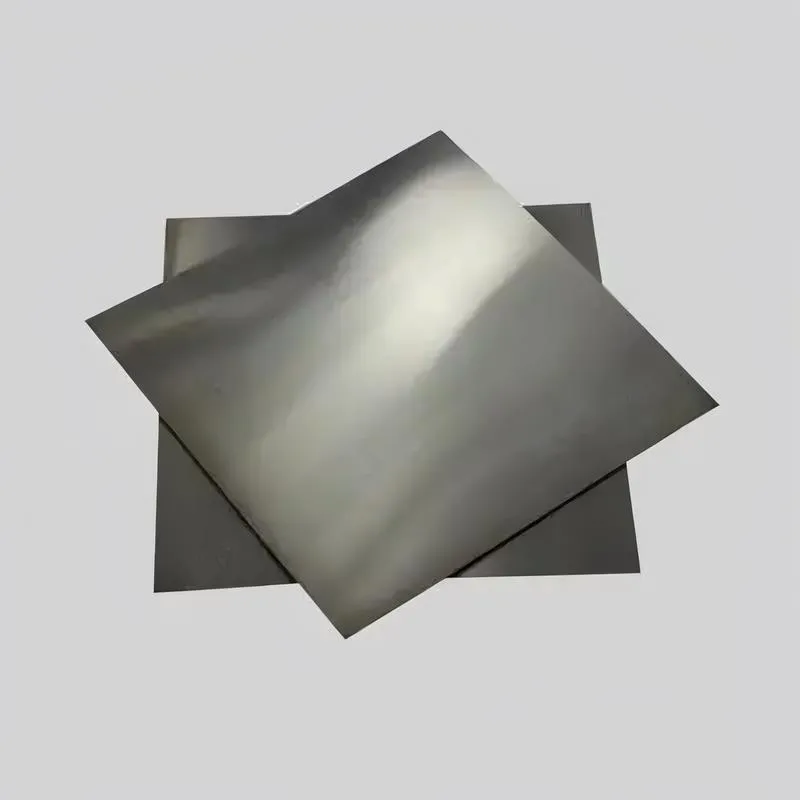
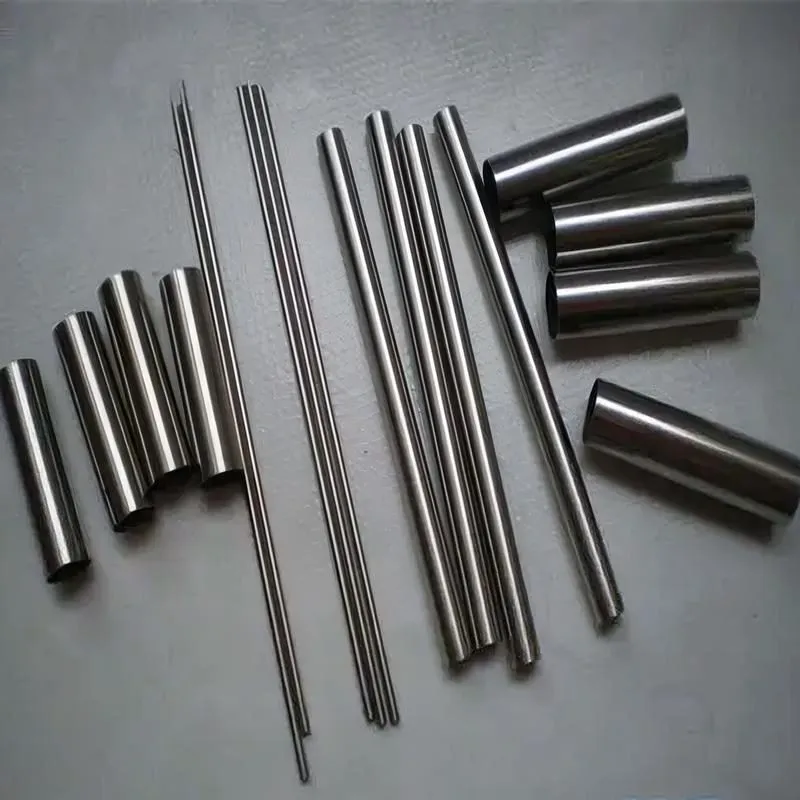
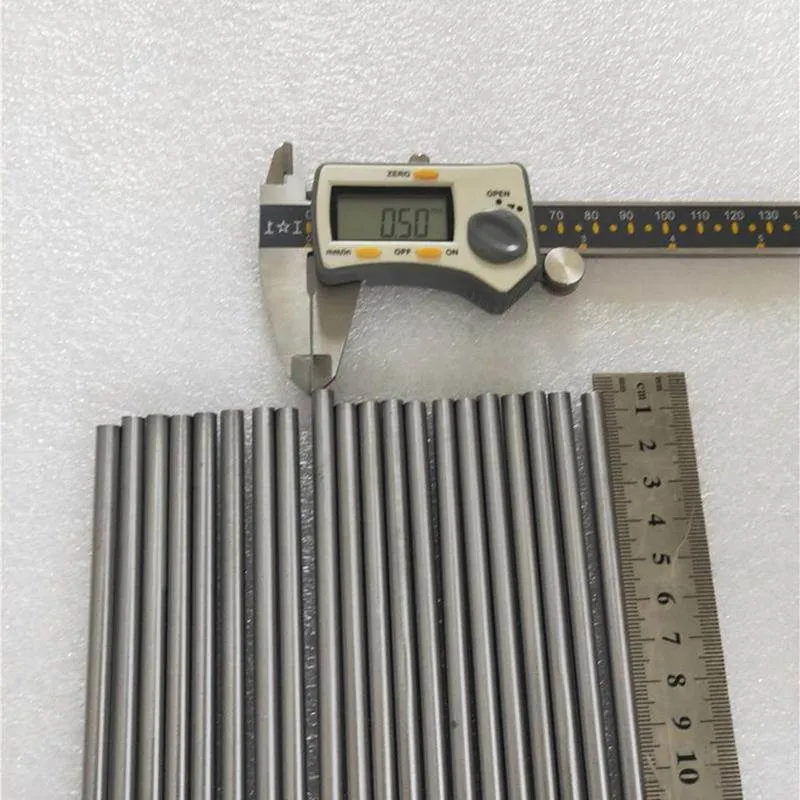
AISI 4161H Steel Foil/Strip
Product Code : STI-CSTI-415-CU
We provide AISI 4161H Steel Foil/Strip is available in Bar (Round bar, Flat bar), Ribbon, Wire, Rods, Tube,Seamless Tube,Pipe, Ingots, Plate, Sheet, Strip and Forging Stock.,Purity, chemical composition, size, etc. can all be customized to meet specific requirements.
Please contact us if you need customized services. We will contact you with the price and availability in 24 hours.
AISI 4161H Steel Foil Product Information
-:-
For detailed product information, please contact sales.
-:
AISI 4161H Steel Foil Synonyms
-:-
For detailed product information, please contact sales.
-:
AISI 4161H Steel Product Information
-:-
For detailed product information, please contact sales.
-:
### **Product Datasheet: AISI 4161H Hardenability Band Steel**
**1. Material Overview**
AISI 4161H is a **chromium-molybdenum-nickel (Cr-Mo-Ni) alloy steel supplied under a controlled hardenability specification**, as denoted by the **"H" suffix**. It shares the same base composition as standard AISI 4161 but is produced to meet specific **end-quench hardenability (Jominy test) band requirements** defined by SAE standards. This ensures more predictable and consistent heat treatment response, particularly in terms of depth of hardening and final mechanical properties across large cross-sections. It is a premium-grade, high-strength engineering steel used where **reliability and uniformity of properties in heavy sections are critical**.
**2. Key Material Concept: The “H” Designation**
The **“H”** in 4161H stands for **Hardenability**. Unlike standard grades with fixed chemical ranges, “H”-grade steels have **broader chemical composition ranges** but must have their hardenability (measured by the Jominy end-quench test) fall within a predetermined band on a standard chart (SAE J1268). This guarantees that:
* **Consistent Core Properties:** Large-diameter bars will achieve more uniform hardness and strength from surface to core after quenching.
* **Predictable Performance:** Heat treaters can rely on known transformation characteristics, reducing the risk of under-hardening or distortion.
* **Batch-to-Batch Uniformity:** Different production lots will respond similarly to the same heat treatment cycle.
**3. International Standard & Cross-References**
This steel grade is governed by hardenability-specific standards:
* **Primary Standard:** **SAE J1268** (Hardenability Bands for Carbon and Alloy H-Steels) / **AISI 4161H**
* **UNS Designation:** **H41610**
* **ASTM Standards:** **ASTM A304** (Standard Specification for Carbon and Alloy Steel Bars Subject to End-Quench Hardenability Requirements) is the primary governing specification for procurement.
* **Other Relevant Standards:** ASTM A29/A29M (General requirements for bars).
* **European Equivalent:** No direct equivalent. The concept is similar to steel specified to **EN ISO 683-1** with required hardenability values, but a specific grade match does not exist.
* **Japanese Equivalent:** No direct JIS equivalent for the “H” band system.
**4. Chemical Composition (% by Weight, per SAE J1268)**
The chemistry for “H” grades is wider to allow mills to “tune” the composition to hit the hardenability band. The ranges below are typical for 4161H:
| Element | Content Range (%) | Key Role |
| :--- | :--- | :--- |
| **Carbon (C)** | **0.54 – 0.65** | Primary hardening element. Range adjusted to meet hardenability curve. |
| **Manganese (Mn)** | **0.65 – 1.10** | Major hardenability enhancer; range is wider than standard 4161. |
| **Phosphorus (P)** | **≤ 0.035** | Impurity; kept low. |
| **Sulfur (S)** | **≤ 0.040** | Impurity; kept low. |
| **Silicon (Si)** | **0.15 – 0.35** | Deoxidizer, strengthens ferrite. |
| **Chromium (Cr)** | **0.55 – 0.90** | Increases hardenability and wear resistance. Range is wider. |
| **Nickel (Ni)** | **1.55 – 2.05** | Key for toughness and hardenability in the core. Range is wider. |
| **Molybdenum (Mo)** | **0.20 – 0.35** | Powerful hardenability agent, resists temper embrittlement. Range is wider. |
| **Iron (Fe)** | **Balance** | Base metal. |
**5. Typical Physical & Mechanical Properties**
*Physical properties are identical to standard 4161. Mechanical properties are guaranteed through the hardenability band and subsequent heat treatment.*
**A. Physical Properties:**
* **Density:** 7.85 g/cm³ (0.284 lb/in³)
* **Modulus of Elasticity:** 190 – 210 GPa (28 – 30 x 10⁶ psi)
* **Poisson’s Ratio:** 0.27 – 0.30
**B. Hardenability Band (Per SAE J1268):**
The defining characteristic. The hardenability is expressed as a range of HRC values at specific distances (1/16 inch intervals) from the quenched end on a Jominy bar.
* **Typical Band (Example):** At Jominy distance J4 (4/16" or 6.35mm), hardness might be specified between 54-60 HRC. At J10 (10/16" or 15.9mm), between 45-52 HRC, etc.
* **Result:** This band translates to predictable core hardness in actual parts. A 3-inch (75mm) diameter bar, when properly oil-quenched, will have a known minimum hardness at its center.
**C. Achievable Mechanical Properties (After Q&T):**
For a section size of 50-75mm (2-3 inch) round, properly heat treated:
* **Tensile Strength:** 1380 – 1650 MPa (200 – 240 ksi)
* **Yield Strength:** 1240 – 1520 MPa (180 – 220 ksi)
* **Elongation:** 10% – 14%
* **Reduction in Area:** 40% – 50%
* **Core Hardness (in large sections):** Can maintain 35-45 HRC at the center, where a non-"H" grade might drop significantly.
**6. Processing & Fabrication Characteristics**
* **Hardenability:** **Guaranteed High.** The entire purpose of the “H” grade. It is specifically selected for parts where standard grade hardenability is insufficient or too variable.
* **Machinability (Annealed State):** **Fair.** Similar to standard 4161. The wider chemistry can lead to slight variability. Use positive rake, rigid setups, and ample coolant.
* **Weldability:** **Very Poor.** Identical to standard 4161. High carbon equivalent prohibits welding for critical applications. If unavoidable, extreme preheat, low-hydrogen processes, and mandatory PWHT are required.
* **Heat Treatment Consistency:** **Excellent.** The primary advantage. Response to quenching (cooling rate) is predictable, allowing for optimized furnace and quench tank cycles to minimize distortion and achieve target properties reliably.
**7. Primary Applications**
AISI 4161H is specified for **critical, high-integrity components** where property uniformity in large sections is non-negotiable:
* **Critical Large-Diameter Shafting:** High-horsepower motor shafts, generator rotors, marine drive shafts, and heavy truck axles where consistent torsional strength through the cross-section is vital.
* **Large, High-Load Gears:** Gears in wind turbine gearboxes, mining excavators, and naval propulsion systems that require predictable case and core properties to handle extreme bending and contact stresses.
* **Oil & Gas Heavy Equipment:** Critical components for deep-well drilling and large compression systems where failure is catastrophic.
* **High-Performance Forgings:** Large connecting rods, crank throws, and press rams where reproducible heat treatment results are required for safety and performance.
* **Aerospace Landing Gear Components (Secondary Use):** For certain large, high-strength structural parts requiring guaranteed through-hardening.
**8. Available Forms & Procurement Note**
* **Forms:** Typically supplied as hot-rolled or forged rounds and billets, often in the annealed condition.
* **Procurement:** Must be ordered to **ASTM A304**, with the **AISI 4161H designation**. The manufacturer’s certified material test report (CMTR) will include both **chemical analysis and the actual Jominy hardenability test results** verifying compliance with the band.
**Disclaimer:** **AISI 4161H is a high-performance engineering steel.** Its successful application depends entirely on proper heat treatment design based on the hardenability data. Engineers must use the Jominy data to model the cooling rates and expected properties in their specific part geometry. Always collaborate with a qualified metallurgist and the steel supplier for critical components.
-:-
For detailed product information, please contact sales.
-:
AISI 4161H Steel Specification
Dimensions
Size:
Diameter 20-1000 mm Length <5147 mm
Size:We can customized as required
Standard:
Per your request or drawing
We can customized as required
Properties(Theoretical)
Chemical Composition
-:-
For detailed product information, please contact sales.
-:
AISI 4161H Steel Properties
-:-
For detailed product information, please contact sales.
-:
Applications of AISI 4161H Steel Foil
-:-
For detailed product information, please contact sales.
-:
Chemical Identifiers AISI 4161H Steel Foil
-:-
For detailed product information, please contact sales.
-:
Packing of AISI 4161H Steel Foil/Strip
-:-
For detailed product information, please contact sales.
-:
Standard Packing:
-:-
For detailed product information, please contact sales.
-:
Typical bulk packaging includes palletized plastic 5 gallon/25 kg. pails, fiber and Steel Foil/Strip drums to 1 ton super sacks in full container (FCL) or truck load (T/L) quantities. Research and sample quantities and hygroscopic, oxidizing or other air sensitive materials may be packaged under argon or vacuum. Solutions are packaged in polypropylene, plastic or glass jars up to palletized 1618 gallon liquid totes Special package is available on request. E FORUs’ is carefully handled to minimize damage during storage and transportation and to preserve the quality of our products in their original condition