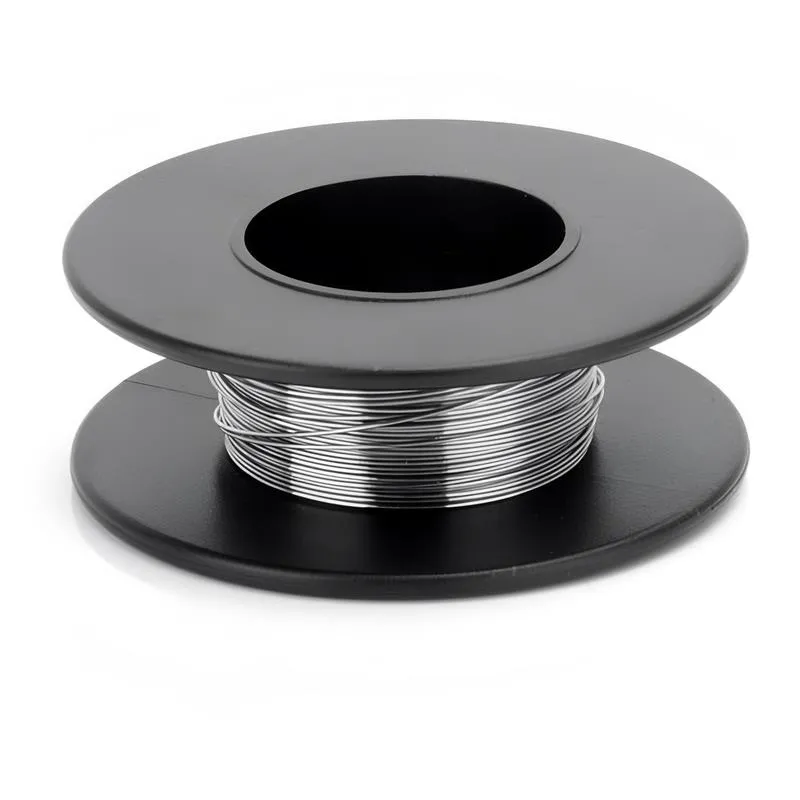
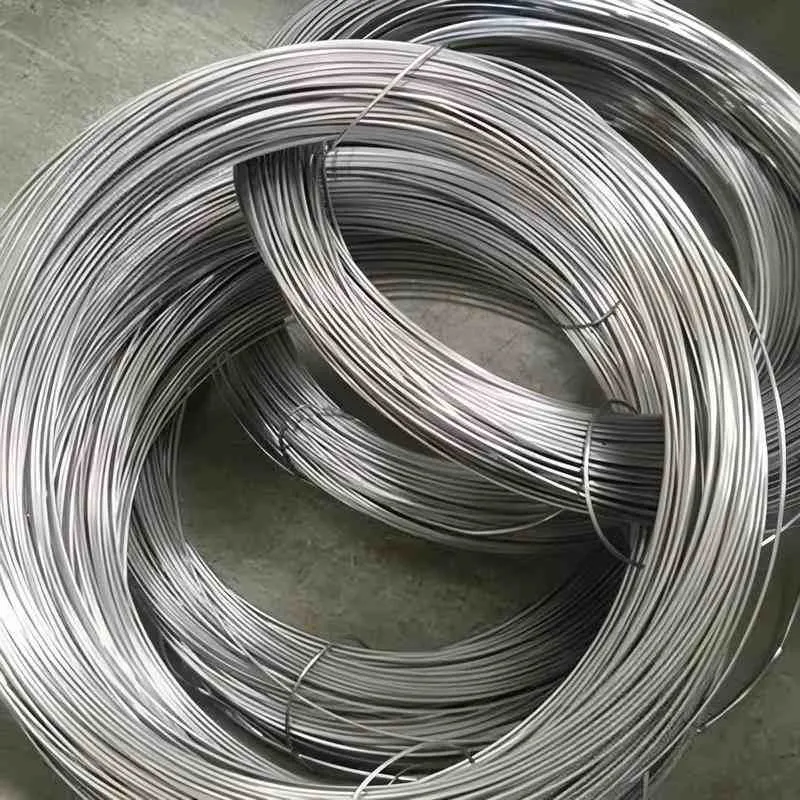
AISI 4340H Steel Wire
Product Code : STI-CSTI-1512-CU
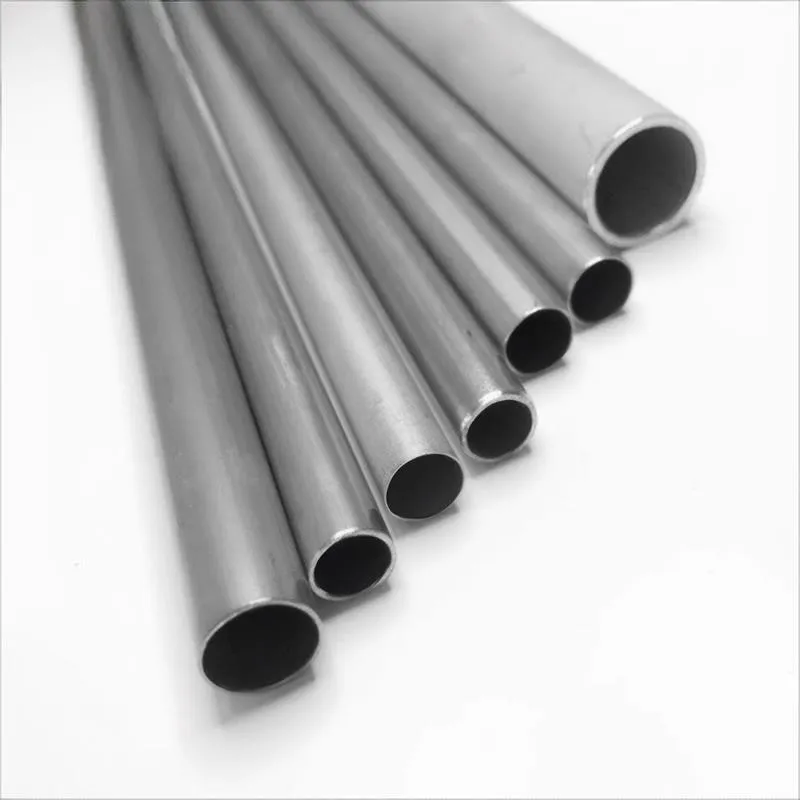
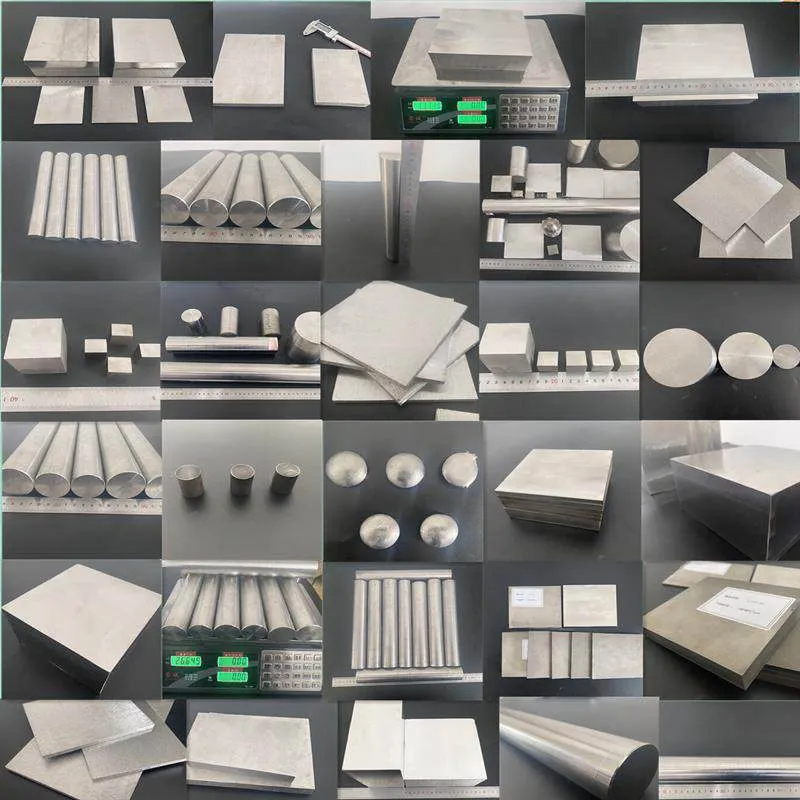
We provide AISI 4340H Steel Wire, annealed 810°C (1490°F) is available in Bar (Round bar, Flat bar), Ribbon, Wire, Rods, Tube,Seamless Tube,Pipe, Ingots, Plate, Sheet, Strip and Forging Stock.,Purity, chemical composition, size, etc. can all be customized to meet specific requirements.
Please contact us if you need customized services. We will contact you with the price and availability in 24 hours.
AISI 4340H Steel Wire, annealed 810°C (1490°F) Product Information
-:-
For detailed product information, please contact sales.
-:
AISI 4340H Steel Wire, annealed 810°C (1490°F) Synonyms
-:-
For detailed product information, please contact sales.
-:
AISI 4340H Steel, annealed 810°C (1490°F) Product Information
-:-
For detailed product information, please contact sales.
-:
# **AISI 4340H Steel (Annealed Condition, Hardenability Grade) Product Specification**
## **1. PRODUCT IDENTIFICATION & THERMAL PROCESS**
**Product:** AISI 4340H Nickel-Chromium-Molybdenum Alloy Steel
**Material State:** Fully Annealed (Softened) - Hardenability Controlled Grade
**Specified Annealing Process:**
- **Heating:** 810°C (1490°F) with complete soak
- **Cooling:** Controlled slow furnace cooling
**Metallurgical Significance:** This full annealing treatment at 810°C produces the **softest possible condition** for AISI 4340H steel, creating an optimal microstructure for machining, cold forming, and subsequent manufacturing operations. The temperature ensures complete austenitization while minimizing grain growth for this nickel-alloy steel. The subsequent slow furnace cooling promotes maximum spheroidization of carbides and formation of coarse, soft pearlite in a ferrite matrix. As an "H" grade material, it carries certified hardenability data per SAE J1268, guaranteeing predictable and consistent response to subsequent heat treatment despite its soft, annealed state.
## **2. CHEMICAL COMPOSITION (Hardenability Controlled)**
| Element | Composition Range (% by weight) | Role in Annealed Condition & Hardenability Control |
| :--- | :--- | :--- |
| **Carbon (C)** | 0.38 - 0.43 | Forms coarse, soft pearlite and/or spheroidized carbides during slow cooling. Provides hardenability foundation. Content is precisely controlled. |
| **Manganese (Mn)** | 0.65 - 0.85 | **Primary hardenability adjuster.** Range expanded versus standard 4340 to allow precise Jominy curve positioning while maintaining softness in annealed state. |
| **Phosphorus (P)** | ≤ 0.025 | **Tighter than standard 4340** (≤0.035) for consistent impact properties and machinability. |
| **Sulfur (S)** | ≤ 0.025 | **Minimized** for optimal transverse properties and machining consistency. |
| **Silicon (Si)** | 0.15 - 0.35 | Deoxidizer; minimal effect in annealed condition. |
| **Nickel (Ni)** | **1.65 - 2.00** | **Critical element.** Provides exceptional toughness potential. Does not affect annealed hardness significantly but is vital for final properties. Tightly controlled for consistency. |
| **Chromium (Cr)** | 0.70 - 0.95 | Forms carbides that readily spheroidize during slow cooling. Slightly expanded range for hardenability tuning. |
| **Molybdenum (Mo)** | **0.20 - 0.30** | **Essential for hardenability control.** Promotes complete spheroidization during annealing and ensures consistent hardenability response. |
**Unique Aspect:** The nickel content, while critical for final toughness, has minimal effect on annealed hardness, allowing 4340H to achieve similar machinability to lower-nickel steels in this condition.
## **3. CERTIFIED HARDENABILITY (SAE J1268)**
The material carries certified hardenability data defining its predictable response to quenching.
**Standard Hardenability Band for 4340H:**
| Jominy Distance (1/16 in.) | As-Quenched Hardness Range, HRC (Min - Max) |
| :--- | :--- |
| **J1.5** | 54 - 60 |
| **J5** | 48 - 56 |
| **J10** | 40 - 50 |
| **J15** | 35 - 45 |
**Engineering Value:** This certification guarantees that even in its softest state, the material will respond predictably to subsequent heat treatment, with through-hardening characteristics consistent across all production lots.
## **4. MICROSTRUCTURE & METALLURGY**
**Microstructural Features:**
- **Matrix:** Ferrite with fully spheroidized carbides
- **Carbide Morphology:** Spheroidal, uniformly dispersed (≥95% spheroidization)
- **Carbide Size:** 0.5-2.0 μm diameter
- **Grain Size:** ASTM 6-8 (moderate, optimized for machinability)
- **Spheroidization:** Complete, with carbides evenly distributed
**Annealing Transformation Details:**
- **Ac₁:** ~730°C
- **Ac₃:** ~775°C
- **Soak Time:** 1-2 hours per inch at 810°C
- **Critical Cooling:** Slow furnace cooling (typically 15-30°C/hour through 700-500°C range)
- **Temperature Rationale:** 810°C provides ~35°C above Ac₃ for complete austenitization while minimizing decarburization
## **5. PHYSICAL & MECHANICAL PROPERTIES (Annealed Condition)**
* **Physical Properties:**
* **Density:** 7.85 g/cm³
* **Melting Point:** ~1427°C (2600°F)
* **Modulus of Elasticity:** 205 GPa (29,700 ksi)
* **Thermal Conductivity:** 42.5 W/m·K @ 100°C
* **Coefficient of Thermal Expansion:** 11.4 µm/m·°C (20-100°C)
* **Specific Heat Capacity:** 460 J/kg·K
* **Mechanical Properties (Typical for Annealed Condition):**
* **Tensile Strength:** 590 - 730 MPa (86,000 - 106,000 psi)
* **Yield Strength (0.2% Offset):** 380 - 480 MPa (55,000 - 70,000 psi)
* **Elongation (in 50mm):** **22% - 28%**
* **Reduction of Area:** **50% - 60%**
* **Hardness:** **190 - 230 HB** (Approx. 90-99 HRB)
* **Charpy V-Notch Impact (21°C):** 50 - 80 J (37 - 59 ft-lb) - **Excellent for annealed steel**
* **Machinability Rating:** **Good (70-75% of B1112 standard)**
* **Fatigue Strength:** ~260-310 MPa
**Machinability Advantage:** Despite its higher alloy content, annealed 4340H achieves machinability comparable to lower-alloy steels due to complete spheroidization.
## **6. PRODUCT APPLICATIONS (Annealed Condition)**
This condition serves exclusively as **premium machining stock** for critical components requiring certified material consistency.
### **Aerospace & Defense Components:**
- **Landing gear forgings** requiring extensive machining before heat treatment
- **Aircraft engine mounts** and **structural fittings**
- **Helicopter rotor hub blanks** and **drive shaft pre-forms**
- **Missile component forgings** requiring complex machining
### **Oil & Gas Critical Equipment:**
- **Drill collar blanks** for extreme service applications
- **Tool joint pre-forms** requiring certified material consistency
- **High-pressure valve bodies** and **wellhead components**
- **Pump shaft blanks** for critical service
### **Power Transmission & Heavy Machinery:**
- **Large gear blanks** for wind turbine and marine gearboxes
- **Crankshaft forgings** for high-performance engines
- **Heavy-duty axle shaft blanks** for off-road vehicles
- **Rolling mill roll forgings** requiring extensive machining
### **Tooling & Manufacturing:**
- **Large plastic injection mold bases**
- **Die casting die blocks** for high-volume production
- **Precision fixture components** requiring dimensional stability
- **Machine tool elements** for high-precision applications
### **Why Specify Annealed 4340H vs. Standard 4340:**
1. **Certified consistency** for safety-critical applications
2. **Predictable heat treatment response** for large components
3. **Reduced qualification testing** requirements
4. **Mandatory** for many aerospace and defense contracts
5. **Elimination** of heat treatment lot-to-lot variability
## **7. INTERNATIONAL STANDARDS & EQUIVALENT GRADES**
| Standard / Country | Designation | Equivalent Status | Critical Notes |
| :--- | :--- | :--- | :--- |
| **AISI/SAE** | **4340H** | Primary Standard | SAE J1268 governs hardenability |
| **ASTM** | **A304 Grade 4340H** | US Standard | For bars with hardenability requirements |
| **AMS** | **AMS 6414** | Aerospace Standard | Often specified annealed for aircraft quality |
| **UNS** | **H43400** | Unified Numbering | |
| **DIN/EN** | **36NiCrMo6H (1.6562+H)** | European H-grade | "+H" suffix denotes hardenability grade |
| **JIS** | **SNCM439H** | Japanese H-grade | |
| **GB** | **40CrNiMoAH** | Chinese H-grade | |
| **ISO** | **ISO 683-18 Type 36NiCrMo6** | International | Can specify hardenability requirements |
**Industry Specifications for Annealed Condition:**
- **AMS 6414:** Annealed aircraft quality steel bars
- **MIL-S-16974:** Military specification
- **ASTM A519:** For seamless mechanical tubing
## **8. PROCESSING & FABRICATION**
### **Annealing Process Control:**
- **Temperature:** 810°C ±10°C (1490°F ±20°F)
- **Soak Time:** 2 hours per inch minimum at temperature
- **Cooling Rate:** Slow furnace cooling (15-30°C/hour to 500°C)
- **Atmosphere:** Protective (endothermic or nitrogen) to limit decarburization to <0.15mm
- **Loading:** Proper spacing for uniform temperature distribution
### **Machinability (Optimal Condition):**
- **Tooling:** Carbide or HSS both perform well
- **Cutting Speed:** 80-120 m/min (260-400 SFM) for turning with carbide
- **Feed Rate:** 0.20-0.40 mm/rev (0.008-0.016 in/rev)
- **Depth of Cut:** Up to 6mm (0.25") for roughing operations
- **Coolant:** Recommended for improved tool life and chip control
- **Surface Finish:** Can achieve 1.6 μm Ra with proper techniques
### **Forming & Bending:**
- **Excellent cold formability** due to spheroidized structure
- **Minimum bend radius:** 2-3 × thickness
- **Hot forming:** At 1100-900°C if complex shapes required
- **Springback allowance:** 2-3° required for precision bending
### **Welding Characteristics:**
- **Good weldability** in annealed condition (preferred state for welding)
- **Preheat:** 150-200°C (300-400°F) recommended
- **Electrodes:** Low-hydrogen electrodes required
- **Post-Weld:** Stress relieve at 595-650°C or full re-anneal
- **Best Practice:** Complete all welding before final heat treatment
## **9. SUBSEQUENT HEAT TREATMENT**
### **Recommended Manufacturing Sequence:**
1. Receive material in annealed condition (190-230 HB)
2. Rough machine all features
3. Stress relieve at 600-650°C if heavy machining performed
4. Finish machine to near-final dimensions
5. Normalize at 870°C (optional but recommended for critical components)
6. Austenitize at 815-845°C, oil quench
7. Temper at desired temperature (425-650°C)
8. Final grinding/finishing
### **Heat Treatment Response from Annealed State:**
- **Exceptional hardenability:** Can through-harden very large sections (>150mm)
- **Maximum as-quenched hardness:** Up to 55-58 HRC achievable
- **Outstanding tempered properties:** Can achieve 28-52 HRC with appropriate tempering
- **Dimensional stability:** Good with proper processing
### **Typical Heat Treated Properties (After Proper Heat Treatment):**
- **650°C (1200°F) Temper:** 25-30 HRC, 950-1100 MPa UTS, 90-140 J impact
- **540°C (1000°F) Temper:** 38-43 HRC, 1240-1380 MPa UTS, 45-75 J impact
- **425°C (800°F) Temper:** 46-50 HRC, 1515-1655 MPa UTS, 25-45 J impact
## **10. QUALITY ASSURANCE**
### **Mandatory Certification:**
1. **Hardenability Test Report** (Jominy curve per SAE J1268)
2. **Chemical Analysis Certificate** (complete with trace elements)
3. **Mechanical Test Report** for annealed condition
4. **Microstructure Report** (spheroidization percentage, grain size)
5. **Heat Treatment Certificate** with temperature records
### **Standard Testing:**
- Tensile testing per ASTM A370
- Hardness testing (Brinell scale preferred)
- Impact testing if specified
- Macro-etch test for soundness
- Grain size determination (ASTM E112)
### **Acceptance Criteria:**
- **Hardness:** 190-230 HB (fully annealed)
- **Spheroidization:** ≥95% spheroidized carbides
- **Decarburization:** ≤0.20mm total depth
- **Grain Size:** ASTM 6-8
- **Surface Quality:** Free from seams, laps, and rolling defects
### **Aerospace Additional Requirements:**
- Ultrasonic testing for internal defects
- Magnetic particle inspection for surface quality
- Fracture toughness testing for critical applications
- Hydrogen content analysis (<2 ppm typically)
## **11. COMPARATIVE ANALYSIS**
### **vs. Annealed 4140H:**
- Similar hardness and machinability in annealed state
- +30-50% better impact toughness after heat treatment
- +15-25% higher strength potential after heat treatment
- Higher cost (typically 40-60% premium)
- Essential for applications requiring maximum toughness
### **vs. Normalized 4340H:**
- Softer (190-230 HB vs 240-290 HB)
- Better machinability and formability
- Lower residual stresses
- More dimensional stability during machining
- Less suitable for direct application without heat treatment
### **vs. Annealed 4340 (Non-H Grade):**
- **Guaranteed hardenability consistency**
- **Predictable heat treatment response** across all production lots
- **Reduced testing requirements** due to certification
- **Essential for safety-critical applications**
### **Economic Considerations:**
- Higher material cost than standard 4340
- Reduced risk of heat treatment failures and scrap
- Lower total cost for critical applications when considering reliability
- Justified for safety-critical or high-value components
## **12. DESIGN & SELECTION GUIDELINES**
### **When to Specify Annealed 4340H:**
- Safety-critical components requiring certified material consistency
- Large components (>75mm diameter) requiring predictable through-hardening
- Applications where maximum toughness after heat treatment is essential
- Components requiring extensive, complex machining operations
- Aerospace, defense, or nuclear applications with certification requirements
### **Design Considerations:**
- **Section transitions:** Minimum radius = 5mm or 0.5× section thickness
- **Machining allowances:** 2-3mm per side for finish grinding after heat treatment
- **Stress concentrations:** Avoid sharp corners and sudden changes
- **Symmetry:** Design symmetrical parts to minimize heat treatment distortion
### **Manufacturing Best Practices:**
- Complete all heavy machining before final heat treatment
- Stress relieve after rough machining if distortion is a concern
- Use sharp tools with positive rake angles for best results
- Consider normalized condition if components will be used without hardening
### **Risk Management with 4340H:**
- **Lower technical risk** due to certified properties
- **Reduced qualification testing** for new components
- **Improved supply chain consistency**
- **Enhanced safety margins** for critical applications
## **13. TECHNICAL SUMMARY**
**AISI 4340H steel annealed at 810°C (1490°F)** represents the **ultimate premium starting material** for manufacturing critical high-performance components requiring guaranteed consistency. This specific annealing treatment transforms 4340H into its softest, most machinable state while preserving the exceptional hardenability and toughness potential that defines this nickel-alloy steel.
The "H" grade certification is particularly valuable for annealed 4340H, as it provides engineers with the certainty that complex components machined from this stock will achieve predictable and consistent through-hardening when subsequently heat treated. This eliminates one of the most significant variables in manufacturing high-reliability components.
This material condition is specified not for cost-sensitive applications, but for situations where component performance, reliability, and consistency are paramount. It is the material of choice for aerospace landing gear, critical power transmission components, safety-related machinery parts, and applications where material certification and traceability are mandatory requirements.
When failure is not an option—when components must perform identically whether produced today or years from now, and when the consequences of failure justify the additional material and processing costs—annealed AISI 4340H provides the material certainty that allows engineers to push performance boundaries while maintaining absolute reliability. It represents not just a material specification, but a comprehensive quality assurance system for the world's most demanding mechanical applications.
-:-
For detailed product information, please contact sales.
-:
AISI 4340H Steel, annealed 810°C (1490°F) Specification
Dimensions
Size:
Diameter 20-1000 mm Length <6244 mm
Size:We can customized as required
Standard:
Per your request or drawing
We can customized as required
Properties(Theoretical)
Chemical Composition
-:-
For detailed product information, please contact sales.
-:
AISI 4340H Steel, annealed 810°C (1490°F) Properties
-:-
For detailed product information, please contact sales.
-:
Applications of AISI 4340H Steel Wire, annealed 810°C (1490°F)
-:-
For detailed product information, please contact sales.
-:
Chemical Identifiers AISI 4340H Steel Wire, annealed 810°C (1490°F)
-:-
For detailed product information, please contact sales.
-:
Packing of AISI 4340H Steel Wire, annealed 810°C (1490°F)
-:-
For detailed product information, please contact sales.
-:
Standard Packing:
-:-
For detailed product information, please contact sales.
-:
Typical bulk packaging includes palletized plastic 5 gallon/25 kg. pails, fiber and Steel Wire drums to 1 ton super sacks in full container (FCL) or truck load (T/L) quantities. Research and sample quantities and hygroscopic, oxidizing or other air sensitive materials may be packaged under argon or vacuum. Solutions are packaged in polypropylene, plastic or glass jars up to palletized 2715 gallon liquid totes Special package is available on request. E FORUs’ is carefully handled to minimize damage during storage and transportation and to preserve the quality of our products in their original condition