AISI 4620 Steel, quenched
Product Code : STI-CSTI-909-CU
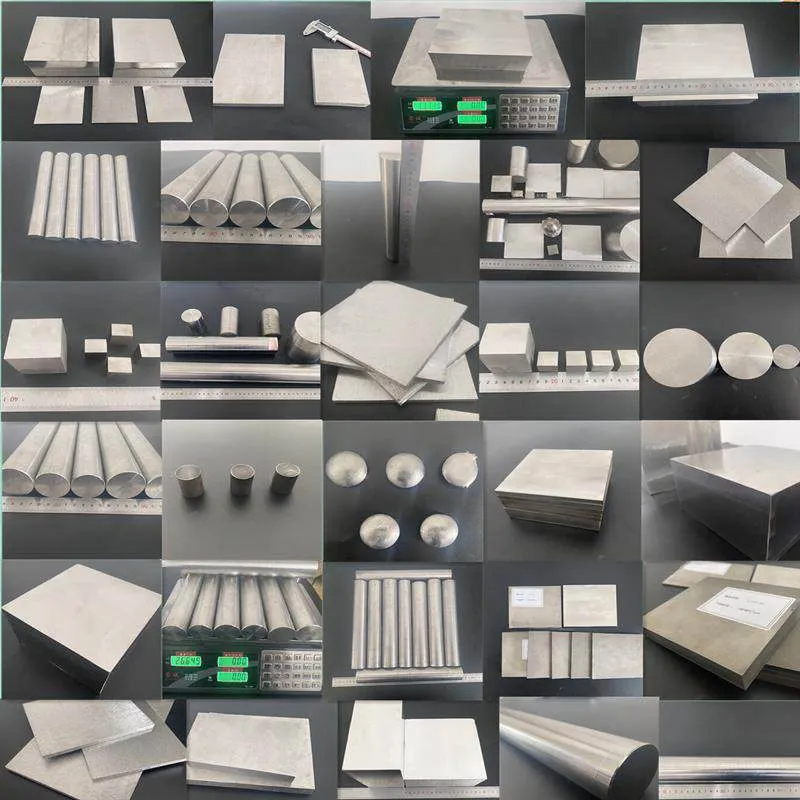
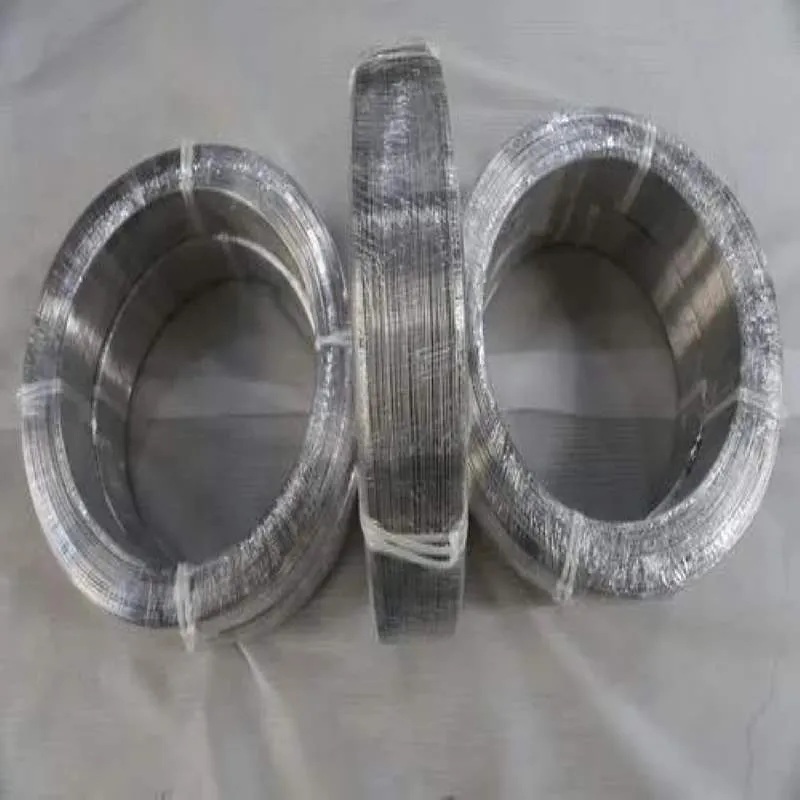
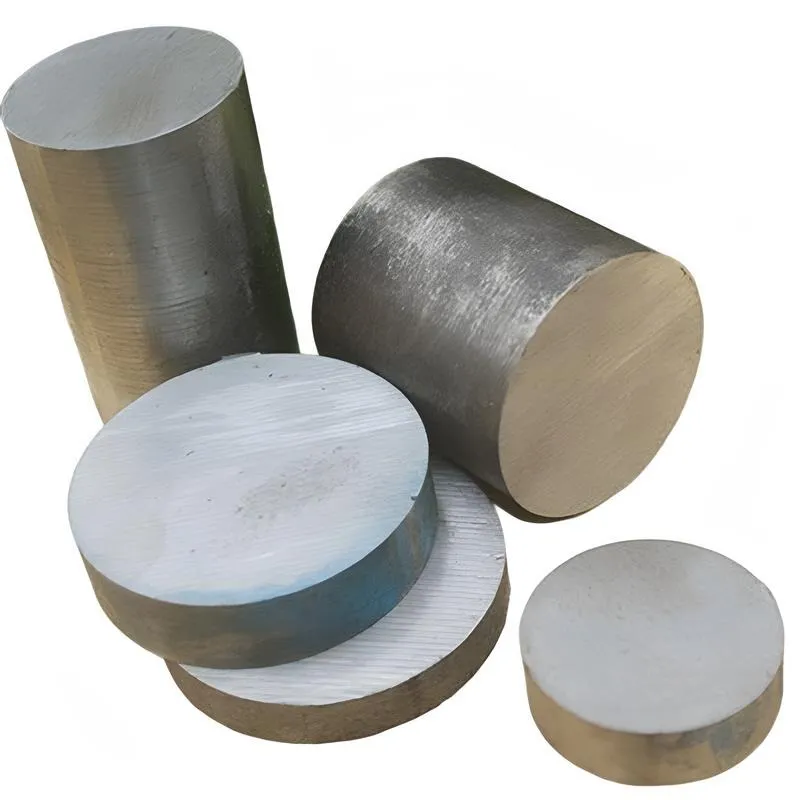
We provide AISI 4620 Steel, quenched 900°C (1650°F), 150°C (300°F) temper is available in Bar (Round bar, Flat bar), Ribbon, Wire, Rods, Tube,Seamless Tube,Pipe, Ingots, Plate, Sheet, Strip and Forging Stock.,Purity, chemical composition, size, etc. can all be customized to meet specific requirements.
Please contact us if you need customized services. We will contact you with the price and availability in 24 hours.
AISI 4620 Steel, quenched 900°C (1650°F), 150°C (300°F) temper Product Information
-:-
For detailed product information, please contact sales.
-:
AISI 4620 Steel, quenched 900°C (1650°F), 150°C (300°F) temper Synonyms
-:-
For detailed product information, please contact sales.
-:
AISI 4620 Steel, quenched 900°C (1650°F), 150°C (300°F) temper Product Information
-:-
For detailed product information, please contact sales.
-:
# **Technical Specification: AISI 4620 Steel, Quenched 900°C (1650°F), Tempered 150°C (300°F)**
## **1. PRODUCT OVERVIEW**
AISI 4620 steel processed through **austenitization at 900°C (1650°F), rapid oil quenching, and low-temperature tempering at 150°C (300°F)** represents a specialized high-strength, through-hardened condition of this nickel-molybdenum alloy steel. While AISI 4620 is traditionally a case-hardening grade, this unique heat treatment protocol transforms it into a **fully martensitic, ultra-high strength material** by fully exploiting its alloy content. The 150°C temper provides minimal stress relief while preserving maximum as-quenched hardness, resulting in a component with exceptional yield strength, good wear resistance, and surprisingly retained toughness from the nickel content, making it suitable for demanding applications where extreme strength in moderate sections is required.
## **2. MATERIAL SPECIFICATIONS & STANDARDS**
| **Parameter** | **Specification** | **Governing Standards** |
|---------------|-------------------|-------------------------|
| **Material Designation** | AISI 4620 / SAE 4620 | SAE J404, SAE J412 |
| **UNS Number** | G46200 | ASTM A29 |
| **International Reference** | Through-hardened low-alloy steel | ISO 683-1:2018 (through-hardening steels) |
| **Heat Treatment Condition** | Quenched & Tempered (Through-Hardened) | AMS 2759 |
| **Austenitizing Temperature** | 900°C ± 10°C (1650°F ± 20°F) | — |
| **Tempering Temperature** | 150°C ± 5°C (300°F ± 10°F) | — |
| **Quenching Medium** | Fast oil (ISO VG 68 or equivalent) | — |
| **Typical Hardness Range** | 45-49 HRC | ASTM E18 |
| **Optimum Section Size** | Up to 40 mm (1.6 in.) diameter | For uniform through-hardening |
## **3. CHEMICAL COMPOSITION**
| **Element** | **Minimum (%)** | **Maximum (%)** | **Typical (%)** | **Metallurgical Function at 900°C/150°C** |
|-------------|-----------------|-----------------|-----------------|------------------------------------------|
| **Carbon (C)** | 0.17 | 0.22 | 0.19 | Fully dissolved at 900°C; provides the primary basis for martensite hardness. The relatively low carbon (for through-hardening) results in a tougher, less brittle martensite than higher carbon steels. |
| **Manganese (Mn)** | 0.45 | 0.65 | 0.55 | Ensures sufficient hardenability to form martensite in moderate sections. |
| **Silicon (Si)** | 0.15 | 0.35 | 0.25 | Solid solution strengthener, raises Ac1 temperature. |
| **Nickel (Ni)** | 1.65 | 2.00 | 1.80 | **The Critical Differentiator.** Provides exceptional toughness and crack resistance at this high hardness level. Lowers the ductile-brittle transition temperature dramatically. |
| **Molybdenum (Mo)** | 0.20 | 0.30 | 0.25 | Provides hardenability for full martensite formation, refines grain structure at 900°C, and imparts tempering resistance. |
| **Sulfur (S)** | — | 0.040 | 0.025 | Residual. |
| **Phosphorus (P)** | — | 0.035 | 0.015 | Residual. |
| **Iron (Fe)** | Balance | Balance | Balance | Matrix. |
**Critical Transformation Temperatures (Estimated):**
- **Ac₁:** ~730°C (1345°F)
- **Ac₃:** ~800°C (1470°F)
- **Ms:** ~380-400°C (715-750°F)
- **Mf:** ~230-250°C (445-480°F)
- **Austenitizing at 900°C:** Provides ~100°C superheat above Ac₃, ensuring complete austenitization and some grain growth control via Mo.
## **4. HEAT TREATMENT PROCESS & MICROSTRUCTURE**
### **4.1 Thermal Cycle**
```
Preheat → Austenitize at 900°C → Oil Quench → Temper at 150°C
```
**Detailed Parameters:**
- **Preheat:** 650-700°C (1200-1290°F) – **Critical** to prevent cracking in this low-carbon, high-hardenability steel.
- **Austenitizing:** 890-910°C for 30-45 minutes per inch of thickness.
- **Atmosphere:** Protective (endogas or vacuum) to prevent decarburization.
- **Quenching:** Fast oil at 60-70°C with strong agitation.
- **Tempering:** 145-155°C for 2-3 hours – long enough for stress relief but short of significant hardness reduction.
- **Cooling:** Air cool after tempering.
### **4.2 Resultant Microstructure**
- **Matrix:** **Fine, low-carbon tempered lath martensite.** The lath structure is finer and tougher than the plate martensite of high-carbon steels.
- **Carbides:** Fine ε-carbides (transition carbides) precipitated during the 150°C temper.
- **Prior Austenite Grain Size:** ASTM 7-9 (fine, due to Mo's grain-refining effect and controlled temperature).
- **Retained Austenite:** < 5% (typically 2-3%). The Mf is above the tempering temperature, so most austenite transforms.
- **Key Feature:** The combination of a low-carbon martensite matrix with nickel in solid solution creates a uniquely tough microstructure for its hardness level.
## **5. MECHANICAL PROPERTIES**
### **5.1 Standard Mechanical Properties (25 mm/1 in. section)**
| **Property** | **Value Range** | **Test Standard** | **Notes** |
|--------------|-----------------|-------------------|-----------|
| **Hardness** | 45-49 HRC | ASTM E18 | The 150°C temper reduces as-quenched hardness by only 1-3 HRC. |
| **Ultimate Tensile Strength** | 1500-1650 MPa (218-239 ksi) | ASTM E8/E8M | Extremely high for a 0.19% C steel. |
| **Yield Strength (0.2% offset)** | 1350-1500 MPa (196-218 ksi) | ASTM E8/E8M | Excellent yield-to-tensile ratio (~0.9). |
| **Elongation (in 4D)** | 10-13% | ASTM E8/E8M | Remarkable ductility for this strength level. |
| **Reduction of Area** | 40-50% | ASTM E8/E8M | Indicates good micro-ductility. |
| **Modulus of Elasticity** | 205 GPa (29,700 ksi) | ASTM E111 | Unaffected by heat treatment. |
| **Shear Strength** | ~870-950 MPa | Estimated (0.6 x UTS) | |
### **5.2 Toughness Properties (The Key Advantage)**
| **Property** | **Test Condition** | **Value Range** | **Significance** |
|--------------|-------------------|-----------------|-----------------|
| **Charpy V-Notch Impact** | 20°C (68°F) | 30-45 J (22-33 ft·lb) | **Exceptionally high** for 46-48 HRC. A standard 1045 steel at this hardness would be <10 J. |
| **Charpy V-Notch Impact** | 0°C (32°F) | 25-40 J (18-30 ft·lb) | Good low-temperature retention. |
| **Fracture Toughness (KIC)** | Estimated | 65-85 MPa√m | Very good resistance to crack propagation. |
| **Ductile-Brittle Transition (50% FATT)** | Derived | Below -20°C (-4°F) | The nickel content significantly suppresses brittleness. |
### **5.3 Fatigue & Wear Properties**
| **Property** | **Performance** | **Test/Condition** |
|--------------|----------------|-------------------|
| **Bending Fatigue Limit** | Excellent | ~600-675 MPa (R=-1, polished, 10⁷ cycles). High strength directly benefits fatigue. |
| **Contact Fatigue Resistance** | Good | Suitable for rolling/sliding contact at this hardness. |
| **Abrasive Wear Resistance** | Very Good | Superior to lower hardness steels, though not as good as high-carbon grades at the same hardness. |
| **Adhesive Wear/Galling** | Fair to Good | Benefits from hardness but lower carbon reduces carbide content. |
## **6. PHYSICAL PROPERTIES**
| **Property** | **Value** | **Unit** | **Notes** |
|--------------|-----------|----------|-----------|
| **Density** | 7.85 | g/cm³ | |
| **Thermal Conductivity (20°C)** | 41.0 | W/m·K | Reduced from annealed state by the martensitic structure. |
| **Specific Heat (20°C)** | 460 | J/kg·K | |
| **Mean CTE (20-100°C)** | 11.8 × 10⁻⁶ | /K | |
| **Electrical Resistivity** | 0.25 | μΩ·m | Increased due to lattice strain of martensite. |
| **Magnetic Response** | Ferromagnetic | — | Low retained austenite. |
## **7. APPLICATIONS**
This specific condition of AISI 4620 is chosen for applications that require a **unique combination of ultra-high strength and superior toughness** in a through-hardened state, where conventional medium-carbon through-hardening steels (like 4140) would be too brittle at equivalent hardness, and where case hardening is not feasible or necessary.
### **7.1 Target Industries & Components**
| **Industry** | **Specific Components** | **Rationale for Selection** |
|--------------|------------------------|----------------------------|
| **Aerospace & Defense** | High-strength landing gear components, arrestor hooks, actuator shafts, missile body sections. | Maximizes strength-to-weight ratio with inherent damage tolerance (crack resistance) from nickel. |
| **Oil & Gas Downhole** | Heavy-weight drill pipe tool joints, perforating gun carriers, high-strength subs. | Withstands high tensile and torsional loads in aggressive environments; good resistance to sulfide stress cracking compared to higher carbon steels. |
| **High-Performance Automotive** | Rally/race car suspension components, torsion bars, high-stress fasteners, sequential gearbox shafts. | Can handle extreme shock and fatigue loads without sudden brittle failure. |
| **Tooling & Machinery** | High-pressure die casting plunger tips, wear plates subject to impact, slitter knives for non-ferrous metals. | Hardness provides wear resistance, while toughness prevents chipping and catastrophic fracture. |
| **Medical (Surgical Tools)** | High-strength, reusable bone drills, osteotomes, impactor tools. | Can be sterilized repeatedly; strength allows for slim, precise designs; toughness prevents breakage. |
### **7.2 Advantages vs. Other Through-Hardening Steels**
- **vs. 4140/4340 at same hardness:** **Far superior toughness and impact resistance.** 4620 @ 47 HRC can have 2-3x the Charpy impact energy of 4140 @ 47 HRC.
- **vs. Case-Hardened 4620:** Provides uniform high strength throughout, with no risk of case spalling or core yielding. Better for primarily tensile/torsional loaded parts.
- **vs. 8620 (through-hardened):** Higher hardenability and strength potential due to Mo content.
- **Limitation:** Lower maximum attainable hardness (~49 HRC) compared to medium-carbon grades like 4140 (~55 HRC).
## **8. PROCESSING CHARACTERISTICS**
### **8.1 Machinability (in Final Hardened State)**
* **Rating:** Poor. Only grinding, honing, and EDM are practical.
* **Grinding:** Use Aluminum Oxide (A46-K8-V) or CBN wheels with ample coolant to avoid burns.
* **EDM:** Excellent method for achieving complex geometries.
### **8.2 Weldability**
* **Rating:** Very Poor. **Not recommended.**
* **If absolutely necessary:** Requires high preheat (300-400°C), use of high-nickel filler metal (e.g., AWS ERNiCrMo-3), and immediate PWHT at tempering temperature. The HAZ will be hard and brittle.
### **8.3 Formability**
* None in this condition. All forming must be done prior to heat treatment.
## **9. INTERNATIONAL STANDARDS & EQUIVALENTS**
| **Standard** | **Designation / Approach** | **Notes** |
|--------------|----------------------------|-----------|
| **SAE (USA)** | 4620 | Base material standard. |
| **ASTM (USA)** | A29 (Grade 4620) | The specific heat treatment (900°C QT, 150°C temper) is a special condition. |
| **DIN (Germany)** | 1.6523 + W.Nr. | Material is equivalent; the heat treatment creates the unique properties. |
| **ISO** | ISO 683-1:2018 | Can be supplied as a through-hardening steel to this standard with the specified properties. |
## **10. QUALITY ASSURANCE**
Testing for this condition should be stringent:
1. **Chemical Certification.**
2. **Hardness Survey:** Multiple points to ensure uniformity.
3. **Tensile Testing:** To verify ultra-high strength levels.
4. **Charpy Impact Testing:** **Crucial** to confirm the high toughness specification is met.
5. **Microstructure Examination:** To verify fine tempered martensite and grain size.
## **11. DESIGN & ENGINEERING GUIDELINES**
### **11.1 Design Stresses**
| **Loading Type** | **Allowable Design Stress** | **Safety Factor** | **Basis** |
|------------------|-----------------------------|-------------------|-----------|
| **Static Tension** | 675-750 MPa | 2.0 | Based on yield strength. |
| **Static Shear** | 400-450 MPa | 2.0 | τ ≈ 0.6 x σ_y. |
| **Bending Fatigue** | 200-250 MPa | 3.0 | For as-ground surface, infinite life. |
### **11.2 Important Design Considerations**
- **Notch Sensitivity:** High. Use generous fillets (R > 2 mm) and avoid sharp corners.
- **Section Size Limit:** For full through-hardening to this hardness, limit diameter to ~40 mm. Larger sections will have a softer core.
- **Service Temperature:** Do not expose to temperatures > 200°C for extended periods to avoid overtempering.
## **12. SUMMARY**
**AISI 4620, quenched from 900°C and tempered at 150°C, is a niche but highly valuable engineering material.** It re-purposes a classic case-hardening steel into a through-hardened condition that achieves an extraordinary property combination: **strength levels approaching 1650 MPa with toughness typically associated with steels 10-15 HRC points softer.** This is made possible by its low-carbon, nickel-alloyed martensite. It is the material of choice when the design requires pushing the limits of strength without sacrificing fracture resistance, particularly in safety-critical, high-stress aerospace, defense, and energy applications.
---
**Disclaimer:** This heat treatment pushes AISI 4620 beyond its conventional use. Achieving the full combination of properties requires precise control of the austenitizing and quenching process to avoid distortion or cracking. The excellent toughness is contingent on the nickel content being at the higher end of the specification. Prototype testing is strongly advised.
-:-
For detailed product information, please contact sales.
-:
AISI 4620 Steel, quenched 900°C (1650°F), 150°C (300°F) temper Specification
Dimensions
Size:
Diameter 20-1000 mm Length <5641 mm
Size:We can customized as required
Standard:
Per your request or drawing
We can customized as required
Properties(Theoretical)
Chemical Composition
-:-
For detailed product information, please contact sales.
-:
AISI 4620 Steel, quenched 900°C (1650°F), 150°C (300°F) temper Properties
-:-
For detailed product information, please contact sales.
-:
Applications of AISI 4620 Steel, quenched 900°C (1650°F), 150°C (300°F) temper
-:-
For detailed product information, please contact sales.
-:
Chemical Identifiers AISI 4620 Steel, quenched 900°C (1650°F), 150°C (300°F) temper
-:-
For detailed product information, please contact sales.
-:
Packing of AISI 4620 Steel, quenched 900°C (1650°F), 150°C (300°F) temper
-:-
For detailed product information, please contact sales.
-:
Standard Packing:
-:-
For detailed product information, please contact sales.
-:
Typical bulk packaging includes palletized plastic 5 gallon/25 kg. pails, fiber and steel drums to 1 ton super sacks in full container (FCL) or truck load (T/L) quantities. Research and sample quantities and hygroscopic, oxidizing or other air sensitive materials may be packaged under argon or vacuum. Solutions are packaged in polypropylene, plastic or glass jars up to palletized 2112 gallon liquid totes Special package is available on request. E FORUs’ is carefully handled to minimize damage during storage and transportation and to preserve the quality of our products in their original condition