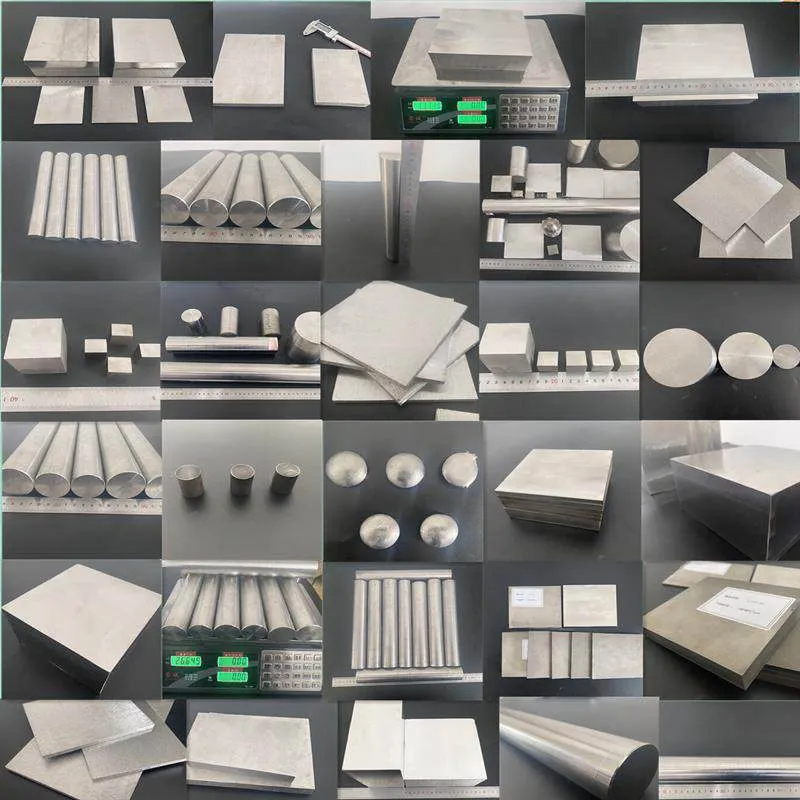
AISI 4815H Steel, pseudocarburized and oil quenched
Product Code : STI-CSTI-932-CU
We provide AISI 4815H Steel, pseudocarburized and oil quenched is available in Bar (Round bar, Flat bar), Ribbon, Wire, Rods, Tube,Seamless Tube,Pipe, Ingots, Plate, Sheet, Strip and Forging Stock.,Purity, chemical composition, size, etc. can all be customized to meet specific requirements.
Please contact us if you need customized services. We will contact you with the price and availability in 24 hours.
AISI 4815H Steel, pseudocarburized and oil quenched Product Information
-:-
For detailed product information, please contact sales.
-:
AISI 4815H Steel, pseudocarburized and oil quenched Synonyms
-:-
For detailed product information, please contact sales.
-:
AISI 4815H Steel, pseudocarburized and oil quenched Product Information
-:-
For detailed product information, please contact sales.
-:
# Technical Data Sheet: AISI 4815H Steel – Pseudocarburized & Oil Quenched Condition
## 1. Product Overview
**AISI 4815H** steel in the **pseudocarburized and oil quenched condition** represents a highly controlled engineering material state designed specifically for **core property validation and process development** of high-performance carburized components. As an **"H"-grade** steel, its chemical composition is tightly controlled to guarantee specific hardenability bands per ASTM A304. This material undergoes a complete thermal simulation of the carburizing cycle in a neutral atmosphere, followed by oil quenching, to produce a **through-hardened microstructure that precisely replicates the final core condition** of a carburized part—without the actual high-carbon case. This engineered condition provides the exact hardness, strength, microstructure, and dimensional response needed for accurate prototyping, distortion analysis, and machining qualification of critical aerospace and automotive components.
## 2. Material Specifications & Standards
* **UNS Designation:** H48150
* **AISI/SAE:** 4815H
* **Primary Material Standard:** **ASTM A304** - *Standard Specification for Carbon and Alloy Steel Bars Subject to End-Quench Hardenability Requirements* (Defining standard for "H"-grade steels)
* **Additional Standards:**
* **SAE J404:** Chemical Compositions of SAE Alloy Steels
* **ASTM A534:** Carburizing Steels for Anti-Friction Bearings
* **Heat Treatment Reference Standards:**
* **AMS 2759/7:** Carburizing and Carbonitriding
* **SAE J1268:** Heat Treatment of Steel
* **ISO 2639:** Determination of Case Hardening Depth
* **International Equivalents:**
* **EN/DIN:** 15NiMo7+H (1.6565+H)
* **JIS:** SNCM415H
* **GB:** 15NiMoH (China)
## 3. Chemical Composition (ASTM A304 H-Band Ranges)
The composition is controlled to specific hardenability bands, with the high nickel content being the distinguishing feature of the 4800 series.
| Element | Content Range (%) | Metallurgical Significance for Pseudocarburizing |
|---------|-------------------|--------------------------------------------------|
| **Carbon (C)** | 0.13–0.18 | **Controlled for hardenability consistency.** Low carbon ensures excellent core toughness after quenching. |
| **Manganese (Mn)** | 0.40–0.60 | Enhances hardenability; range controlled for predictable quench response. |
| **Silicon (Si)** | 0.15–0.35 | Deoxidizer, solid solution strengthening. |
| **Nickel (Ni)** | 3.25–3.75 | **Primary alloying element.** Provides exceptional core toughness and impact resistance; tightly controlled for hardenability. |
| **Chromium (Cr)** | ≤0.20 (residual) | Not a specified alloying element; kept low as residual. |
| **Molybdenum (Mo)** | 0.20–0.30 | **Critical for grain refinement and hardenability.** Prevents excessive grain growth during pseudocarburizing thermal cycle. |
| **Phosphorus (P)** | ≤0.035 | Tightly controlled residual. |
| **Sulfur (S)** | ≤0.040 | Tightly controlled residual. |
**Key Point:** The "H" designation requires the producer to certify both the chemical composition and the **Jominy hardenability band** (e.g., 4815H, Band 2H) for each heat of steel, ensuring predictable and consistent through-hardening in the final simulated core.
## 4. Heat Treatment Process & Metallurgical Rationale
### 4.1 Process Sequence:
This two-stage process creates the **exact core condition** of a quenched, carburized part.
1. **Pseudocarburizing:**
* **Temperature:** 900–925°C (1650–1700°F) – standard carburizing range.
* **Atmosphere:** Strictly neutral (endothermic gas or nitrogen). **No carbon is added.**
* **Time:** Equivalent to the full intended carburizing cycle for the target case depth.
* **Purpose:** To subject the steel to the identical **thermal history**—including time at high temperature for potential austenite grain growth—that the core of a real part would experience.
2. **Oil Quenching (Directly or After Reheating):**
* The material is then **oil quenched** from an appropriate austenitizing temperature (typically ~800–850°C / 1470–1560°F).
* This transforms the low-carbon core microstructure into a **low-carbon martensite** (or martensite/bainite mixture), exactly as would occur in the core of a real carburized and quenched component.
* **No tempering** is applied in this specific condition, leaving the material in the as-quenched state for maximum hardness and stress state simulation.
### 4.2 Resulting Metallurgical State:
* **Microstructure:** **Low-carbon tempered martensite** (if allowed to auto-temper) or untempered martensite with possible bainite.
* **Grain Size:** Typically ASTM 7-9. The Mo helps restrain grain growth during the high-temperature pseudocarburizing cycle.
* **Core Property Simulation:** The hardness, strength, and residual stress state of the core are accurately replicated.
* **Surface Condition:** The surface has the same composition and hardness as the core—**there is no high-carbon, hard case.**
## 5. Mechanical & Physical Properties (Typical, As-Processed)
| Property | Typical Value | Test Standard | Notes |
| :--- | :---: | :--- | :--- |
| **Hardness (Core)** | **38 – 45 HRC** | ASTM E18 | **This is the key simulated property.** Represents the final core hardness after carburizing and quenching. Consistency is guaranteed by the "H" grade. |
| **Ultimate Tensile Strength** | 1150 – 1400 MPa (167 – 203 ksi) | ASTM E8 | Derived from hardness; represents core tensile strength. |
| **Yield Strength (0.2% Offset)** | 950 – 1200 MPa (138 – 174 ksi) | ASTM E8 | High yield strength characteristic of martensitic core. |
| **Elongation** | 8 – 12% | ASTM E8 | Reduced due to as-quenched martensitic structure. |
| **Impact Toughness (Charpy V)** | **20 – 35 J (15 – 26 ft·lb)** | ASTM E23 | **Lower than tempered material.** Represents the **untempered or auto-tempered** core condition. A final temper would improve this significantly. |
| **Residual Stress State:** | **Highly Net Tensile** | X-ray Diffraction | The surface and core are in a state of high tensile stress due to the martensitic transformation without a compensating compressive case. This is important for distortion studies. |
## 6. Key Characteristics & Purpose
* **Primary Purpose:** **Advanced Engineering Development and Validation.**
* **Accurate Core Hardness Simulation:** Provides the exact core hardness for design verification and finite element analysis (FEA).
* **Machinability of Hardened Core:** Allows testing of final machining processes (grinding, honing, hard turning) on material with the correct **final core hardness**, which is much harder and more abrasive than annealed material.
* **Distortion & Stress Analysis:** This is the most critical application. The high tensile stresses and martensitic transformation in this state cause dimensional changes (growth, distortion) that closely mirror what will happen to a real part. By machining a part to final dimensions in the soft state, then applying this pseudocarburize+quench cycle, engineers can **precisely measure and predict distortion** to build compensation into the design and process.
* **"H"-Grade Consistency:** Guarantees that the core hardness and distortion behavior will be consistent across all prototype and production batches, reducing development risk.
## 7. Typical Applications (for this specific condition)
This is a **development material, not a service material.**
* **Aerospace:** Prototyping of critical jet engine or helicopter transmission gears, where predicting distortion of expensive forgings is paramount.
* **High-Performance Automotive:** Development of Formula 1 or Le Mans prototype transmission components.
* **Bearing Industry:** Developing manufacturing processes for large, precision bearing races where post-heat-treat grinding must be minimized.
* **Process Development:** Used to create **master fixtures and gauges** for inspecting the distorted shape of carburized parts.
* **First-Article Inspection:** A part can be fully machined, put through this cycle, measured on a CMM, and the distortion data used to adjust the CNC program for the soft machining of production parts.
## 8. Important Limitations & Notes
* **NO CASE HARDNESS:** The surface is identical to the core (~40 HRC). It has **zero wear resistance**.
* **High Stress State:** The material is in a brittle, highly stressed (as-quenched) condition and is susceptible to cracking if mishandled or incorrectly machined.
* **Not for Service:** **Absolutely unsuitable for any operational use.** Its sole purpose is simulation and development.
* **Untempered Condition:** The low impact toughness reflects the as-quenched state. The core of a real part would be tempered, improving toughness.
* **Certification:** Must be supplied with a test report confirming chemistry, hardenability band, and core hardness.
## 9. Comparative Note: Pseudocarburized & Quenched vs. Pseudocarburized Only
* **Pseudocarburized Only:** Results in a **soft, normalized core** (~85 HRB). Good for initial shape and fit checks.
* **Pseudocarburized & Quenched (This Product):** Results in a **hard, martensitic core** (~40 HRC). Essential for predicting final dimensions, stress, and machining response after the full heat treatment.
---
**Disclaimer:** This material is an **engineering tool**. The values provided are typical. Its condition is designed to induce the specific distortion and hardness of a final part's core. All development work using this material must be followed by validation with actual carburized production parts. Specifications must be clearly defined on engineering drawings and process sheets.
-:-
For detailed product information, please contact sales.
-:
AISI 4815H Steel, pseudocarburized and oil quenched Specification
Dimensions
Size:
Diameter 20-1000 mm Length <5664 mm
Size:We can customized as required
Standard:
Per your request or drawing
We can customized as required
Properties(Theoretical)
Chemical Composition
-:-
For detailed product information, please contact sales.
-:
AISI 4815H Steel, pseudocarburized and oil quenched Properties
-:-
For detailed product information, please contact sales.
-:
Applications of AISI 4815H Steel, pseudocarburized and oil quenched
-:-
For detailed product information, please contact sales.
-:
Chemical Identifiers AISI 4815H Steel, pseudocarburized and oil quenched
-:-
For detailed product information, please contact sales.
-:
Packing of AISI 4815H Steel, pseudocarburized and oil quenched
-:-
For detailed product information, please contact sales.
-:
Standard Packing:
-:-
For detailed product information, please contact sales.
-:
Typical bulk packaging includes palletized plastic 5 gallon/25 kg. pails, fiber and steel drums to 1 ton super sacks in full container (FCL) or truck load (T/L) quantities. Research and sample quantities and hygroscopic, oxidizing or other air sensitive materials may be packaged under argon or vacuum. Solutions are packaged in polypropylene, plastic or glass jars up to palletized 2135 gallon liquid totes Special package is available on request. E FORUs’ is carefully handled to minimize damage during storage and transportation and to preserve the quality of our products in their original condition