AISI 5140 Steel, normalized
Product Code : STI-CSTI-1554-CU
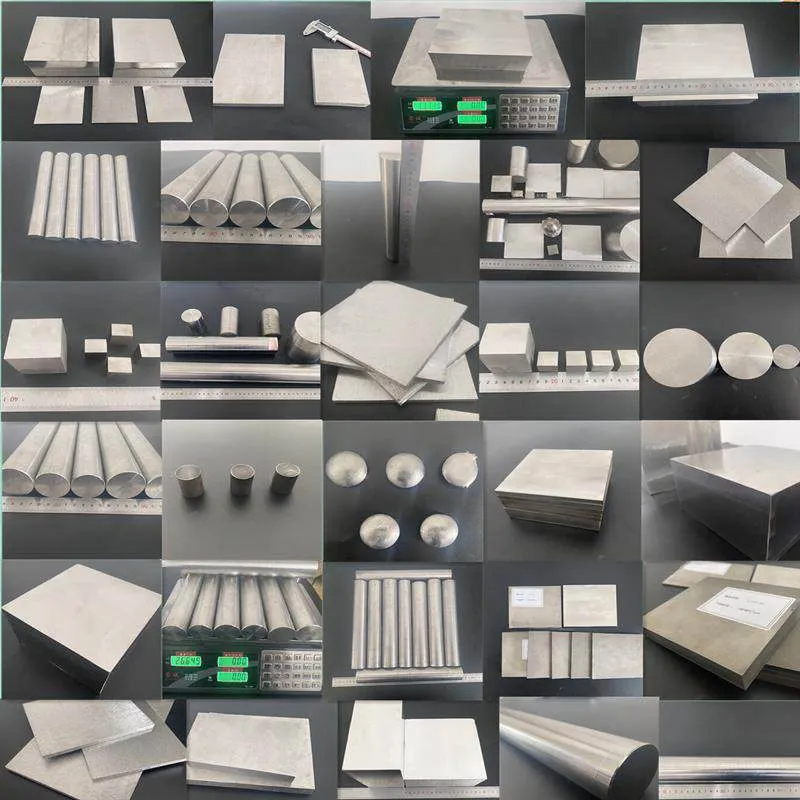
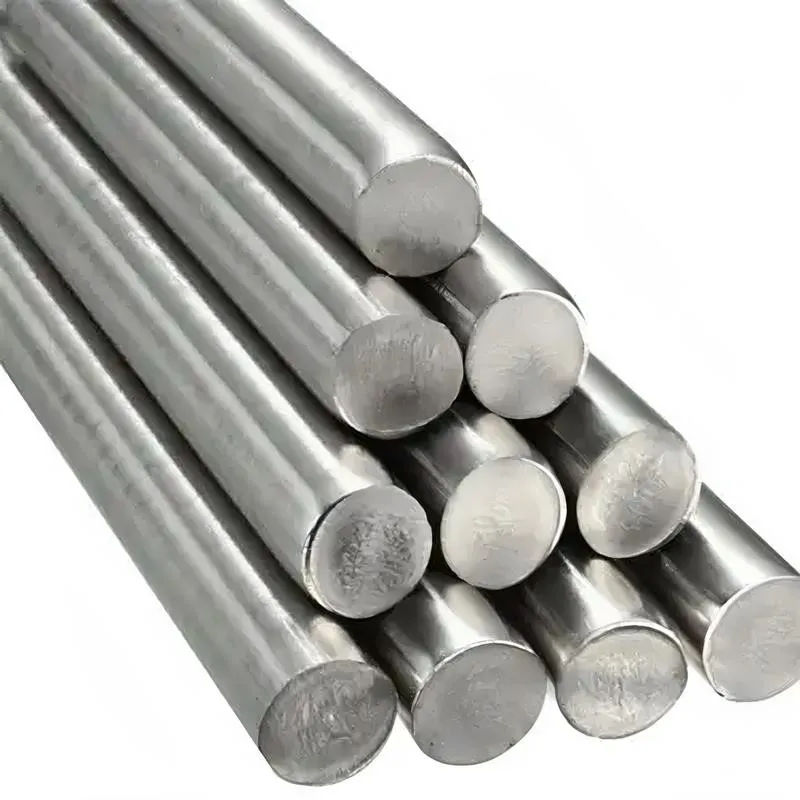
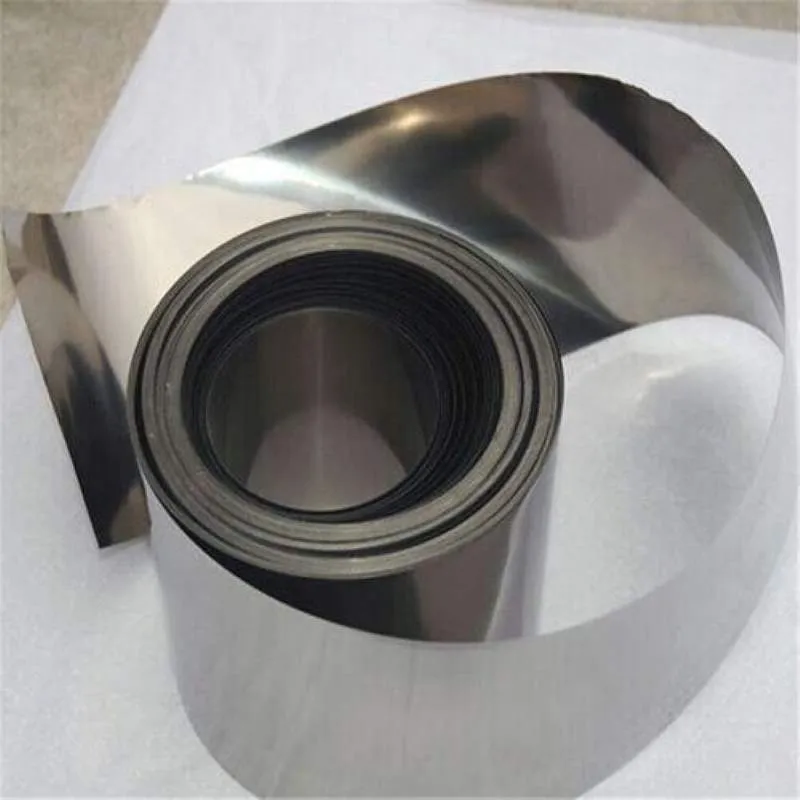
We provide AISI 5140 Steel, normalized is available in Bar (Round bar, Flat bar), Ribbon, Wire, Rods, Tube,Seamless Tube,Pipe, Ingots, Plate, Sheet, Strip and Forging Stock.,Purity, chemical composition, size, etc. can all be customized to meet specific requirements.
Please contact us if you need customized services. We will contact you with the price and availability in 24 hours.
AISI 5140 Steel, normalized Product Information
-:-
For detailed product information, please contact sales.
-:
AISI 5140 Steel, normalized Synonyms
-:-
For detailed product information, please contact sales.
-:
AISI 5140 Steel, normalized Product Information
-:-
For detailed product information, please contact sales.
-:
# **Product Introduction: AISI 5140 Steel, Normalized Condition**
## **Executive Summary**
**AISI 5140 in the normalized condition** is a **medium-carbon chromium alloy steel** that has undergone a **normalizing heat treatment** to refine its grain structure, improve mechanical homogeneity, and enhance machinability. Normalizing involves heating the steel to approximately 900°C (1650°F) followed by air cooling, resulting in a **fine-grained pearlitic-ferritic microstructure** with improved strength and toughness compared to the annealed state. This condition provides an optimal balance of **enhanced mechanical properties, good machinability, and dimensional stability**, making it an ideal starting material for components that will undergo subsequent heat treatment or machining operations. It is particularly valued for forgings, castings, and heavy sections where uniformity of properties is critical.
---
## **1. Chemical Composition**
The chemical composition of AISI 5140 remains unchanged by normalizing, but the treatment optimizes the microstructure for improved performance.
| Element | Composition Range (%) | Typical Value (%) | Role in AISI 5140 & Normalizing Effect |
|---------|----------------------|-------------------|----------------------------------------|
| **Carbon (C)** | 0.38 - 0.43 | 0.40 | Primary strengthener; forms fine pearlite during normalizing for improved strength-toughness balance |
| **Manganese (Mn)** | 0.70 - 0.90 | 0.80 | Enhances hardenability; promotes finer grain structure during normalizing |
| **Phosphorus (P)** | ≤ 0.035 | 0.020 | Residual impurity; normalizing minimizes segregation effects |
| **Sulfur (S)** | ≤ 0.040 | 0.025 | Controlled for machinability; normalizing improves distribution |
| **Silicon (Si)** | 0.15 - 0.35 | 0.25 | Deoxidizer and strengthener; in solid solution contributes to strength |
| **Chromium (Cr)** | 0.70 - 0.90 | 0.80 | Key alloying element; forms carbides and improves hardenability; normalizing refines carbide distribution |
**Metallurgical State after Normalizing:**
- **Microstructure:** **Fine lamellar pearlite** in a **ferrite matrix** with refined grain boundaries
- **Grain Size:** Typically ASTM 6-8 (finer than annealed condition)
- **Carbide Distribution:** Uniformly dispersed fine carbides
- **Purpose:** To refine grain structure, homogenize mechanical properties, relieve internal stresses from prior processing, and improve response to subsequent heat treatment
---
## **2. Physical & Mechanical Properties (Normalized Condition)**
### **Physical Properties**
| Property | Value / Range | Notes |
|----------|---------------|-------|
| **Density** | 7.85 g/cm³ | Unaffected by normalizing |
| **Modulus of Elasticity (E)** | 195 - 210 GPa | Slightly higher than annealed due to finer structure |
| **Shear Modulus (G)** | 79 - 83 GPa | - |
| **Poisson's Ratio** | 0.29 | - |
| **Thermal Conductivity** | 45 - 50 W/m·K | At 20°C |
| **Coefficient of Thermal Expansion** | 11.8 - 12.3 ×10⁻⁶/K | 20-100°C |
| **Specific Heat Capacity** | 465 - 485 J/kg·K | At 20°C |
### **Mechanical Properties (As-Normalized)**
| Property | Typical Range | Significance |
|----------|---------------|--------------|
| **Hardness** | **207 - 255 HB** (Approx. **95 - 105 HRB**) | Higher than annealed state, but still machinable with proper tools |
| **Tensile Strength** | 700 - 850 MPa (102 - 123 ksi) | 15-20% higher than annealed condition |
| **Yield Strength (0.2% Offset)** | 450 - 600 MPa (65 - 87 ksi) | Improved strength for handling and pre-service loads |
| **Elongation (in 50mm)** | 18 - 22% | Slightly reduced from annealed but still good ductility |
| **Reduction of Area** | 40 - 50% | Good ductility for the strength level |
| **Impact Toughness (Charpy V-notch)** | 40 - 60 J | Better than as-rolled condition, good for intermediate state |
| **Fatigue Strength (Unnotched)** | 350 - 400 MPa | Improved over annealed state |
| **Machinability (Relative to 1212 steel)** | **~55%** | Acceptable with proper carbide tools and parameters |
### **Normalizing Process Parameters:**
- **Heating Temperature:** 870-920°C (1600-1690°F) - typically 900°C (1650°F)
- **Soaking Time:** 30-60 minutes per inch of thickness
- **Cooling Method:** Still or slightly agitated air
- **Cooling Rate:** Approximately 5-10°C per minute through transformation range
- **Microstructural Result:** Fine, uniform pearlite + ferrite
### **Comparison: Normalized vs. Annealed AISI 5140**
| Property | Annealed (830°C) | Normalized (900°C) | Advantage of Normalizing |
|----------|------------------|---------------------|--------------------------|
| **Hardness (HB)** | 179-229 | 207-255 | Higher strength for handling |
| **Tensile Strength** | 620-750 MPa | 700-850 MPa | Better intermediate properties |
| **Yield Strength** | 415-550 MPa | 450-600 MPa | Higher load capacity before final HT |
| **Elongation** | 20-25% | 18-22% | Slightly reduced but adequate |
| **Grain Size (ASTM)** | 5-7 | 6-8 | Finer, more uniform |
| **Impact Toughness** | Good | Better | Improved resistance to shock |
| **Response to Final HT** | Good | Excellent | More uniform hardening |
---
## **3. Product Applications (Normalized Condition)**
AISI 5140 in normalized condition is specified when **superior homogeneity and consistent properties** are required prior to final machining and heat treatment.
**Typical Applications Utilizing Normalized AISI 5140:**
- **Forgings and Drop Forgings:** Crankshafts, connecting rods, gear blanks, and yoke components
- **Heavy Sections:** Large shafts, rolls, and structural components where through-properties are critical
- **Castings Repair and Improvement:** Normalizing to refine as-cast structure
- **Weldment Normalization:** Stress relief and property improvement in welded assemblies
- **Pre-hardened Components:** Where the normalized properties are sufficient for the application
- **Tooling Pre-forms:** Dies, jigs, and fixtures requiring good dimensional stability
**Manufacturing Advantages of Normalized State:**
1. **Improved Homogeneity:** Eliminates banding and segregation from rolling or forging
2. **Enhanced Response to Heat Treatment:** More uniform hardening and tempering
3. **Better Machined Surface Finish:** Fine grain structure improves surface quality
4. **Reduced Distortion:** More stable dimensions during subsequent heat treatment
5. **Good Intermediate Strength:** Can withstand handling and some service loads before final hardening
6. **Superior Ultrasonic Testability:** Clean, uniform structure improves NDT reliability
**Industry-Specific Applications:**
- **Automotive:** Forged crankshafts and connecting rod blanks
- **Heavy Equipment:** Large gear blanks, shaft forgings
- **Oil & Gas:** Valve bodies, connector forgings
- **Railroad:** Axle forgings, coupler components
- **Mining:** Crusher roll forgings, shaft components
---
## **4. International Standards & Equivalent Grades (Normalized Condition)**
### **Standard Specifications for Normalized AISI 5140**
| Standard System | Designation | Relevant Specification |
|----------------|-------------|------------------------|
| **AISI/SAE (USA)** | **5140** | SAE J404 (Chemical Composition) |
| **UNS** | **G51400** | - |
| **ASTM** | **A29/A29M** | Specifies normalized as a standard condition |
| **ASTM** | **A291** | For normalized alloy steel gear blanks |
| **AMS** | **AMS 6320** | May specify normalizing for aerospace quality |
### **International Equivalents**
| Country/Region | Standard | Equivalent Grade | Normalized Condition Designation |
|----------------|----------|------------------|----------------------------------|
| **Europe (EN)** | EN 10083-3 | **41Cr4** | Usually specified as "+N" (normalized) |
| **Germany (DIN)** | DIN 17212 | **41Cr4** | Normalisiert (normalized) |
| **Japan (JIS)** | JIS G4105 | **SCr440** | Normalized (N) condition available |
| **International (ISO)** | ISO 683-18 | **Type 1.7035** | Condition +N |
| **China (GB)** | GB/T 3077 | **40Cr** | Normalized state (调质前正火) |
| **United Kingdom** | BS 970 | **530M40** | Normalized and tempered |
### **Normalizing Process Standards:**
- **ASTM A29/A29M:** Standard Specification for Steel Bars, Carbon and Alloy
- **ASTM A291:** Standard Specification for Steel Forgings, Carbon and Alloy
- **AMS-H-6875:** Heat Treatment of Steel Raw Materials
- **ISO 4885:** Heat treatments – Vocabulary
---
## **5. Subsequent Processing & Heat Treatment Paths**
Normalized AISI 5140 is typically an **intermediate manufacturing condition** with several possible paths:
### **Path 1: Direct Machining → Final Heat Treatment**
1. **Material State:** Normalized AISI 5140
2. **Machining:** Perform majority of machining operations
3. **Final Heat Treatment:** Austenitize (850°C), quench, and temper
4. **Finish Machining:** Light grinding/honing to correct minor distortion
### **Path 2: Forging → Normalizing → Machining → Final HT**
1. **Forging:** Hot forge to rough shape
2. **Normalizing:** Refine grain structure, relieve forging stresses
3. **Machining:** Machine to near-final dimensions
4. **Final Heat Treatment:** Harden and temper
5. **Finishing:** Final grinding/polishing
### **Path 3: Normalizing as Final Treatment**
For some non-critical applications where the normalized properties are sufficient:
- **Applications:** Some structural components, fixtures, non-critical shafts
- **Properties:** Tensile: 700-850 MPa, Hardness: 207-255 HB
- **Advantage:** Cost savings by eliminating quench and temper
### **Expected Final Properties After Hardening from Normalized State:**
| Starting Condition | Advantages for Final Heat Treatment |
|-------------------|-------------------------------------|
| **Normalized** | • More uniform response to austenitizing
• Reduced risk of distortion
• More consistent hardness penetration
• Better impact properties in final tempered state
• Less susceptibility to quench cracking |
### **Heat Treatment Response from Normalized State:**
- **Austenitizing Temperature:** 830-860°C (1525-1580°F)
- **Recommended Soak Time:** 20-30 minutes per inch at temperature
- **Quenching Medium:** Oil (preferred), water for large sections
- **Tempering Range:** 400-650°C (750-1200°F) for 1-2 hours per inch
- **Final Hardness Range:** 25-55 HRC depending on tempering temperature
---
## **6. Quality Considerations for Normalized Material**
### **Key Specifications When Ordering:**
1. **Hardness Range:** Specify maximum/minimum Brinell or Rockwell values
2. **Grain Size Requirement:** Typically ASTM 6 or finer
3. **Microstructural Requirements:** Freedom from excessive banding, decarburization limits
4. **Mechanical Properties:** Tensile, yield, elongation if required
5. **Normalizing Parameters:** Temperature and cooling method if critical
### **Quality Control Tests for Normalized Material:**
| Test | Method | Acceptance Criteria |
|------|--------|-------------------|
| **Hardness Test** | ASTM E10 (Brinell) or E18 (Rockwell) | Typically 207-255 HB |
| **Microstructure** | ASTM E112 (Grain Size), E45 (Inclusions) | ASTM 6-8 grain size, inclusion rating per spec |
| **Tensile Test** | ASTM A370 | When specified by purchase order |
| **Impact Test** | ASTM A370 (Charpy V-notch) | For critical applications |
| **Decarburization** | ASTM E1077 | Typically ≤0.015" per side |
| **Ultrasonic Test** | ASTM A388 | For critical forged or large sections |
### **Common Defects to Avoid in Normalized Condition:**
- **Excessive Decarburization:** From improper atmosphere control during heating
- **Mixed Microstructure:** From improper cooling rate or temperature
- **Excessive Grain Growth:** From too high normalizing temperature or time
- **Banding:** Incomplete homogenization of segregation from original processing
---
## **7. Economic & Manufacturing Considerations**
### **Cost Factors:**
- **Material Cost:** Slightly higher than as-rolled, similar to annealed
- **Processing Cost:** Normalizing adds ~10-20% to base material cost
- **Machining Cost:** Slightly higher than annealed due to increased hardness
- **Tooling Cost:** May require more robust tooling than for annealed material
- **Overall Value:** Improved consistency and performance often justify the additional cost
### **Manufacturing Recommendations:**
1. **Tool Selection:** Use C2/C3 grade carbides or premium coated tools
2. **Cutting Parameters:** Moderate speeds (30-45 m/min for turning), moderate feeds
3. **Coolant:** Use water-soluble oils or synthetic coolants for best results
4. **Chip Control:** May produce longer chips than annealed material
5. **Dimensional Control:** Normalized material is more stable during machining than annealed
### **When to Specify Normalized vs. Annealed:**
| Consideration | Choose Normalized When: | Choose Annealed When: |
|---------------|-------------------------|-----------------------|
| **Final Part Size** | Large sections (>3" diameter) | Small to medium sections |
| **Prior Processing** | Following forging or heavy reduction | Following cold drawing or light working |
| **Property Requirements** | Need better intermediate strength | Maximum machinability is critical |
| **Subsequent Heat Treatment** | Critical final properties required | Final properties less critical |
| **Cost Sensitivity** | Can justify ~10-15% premium | Minimum material cost is essential |
| **Homogeneity Needs** | Ultrasonic testing required | Standard homogeneity acceptable |
---
## **Summary**
**AISI 5140 steel in the normalized condition** represents an **optimized intermediate manufacturing state** that bridges the gap between as-processed material and final heat-treated components. The normalizing treatment at approximately 900°C (1650°F) followed by air cooling produces a **fine-grained, homogeneous microstructure** that offers significant advantages for critical applications.
**Key Advantages of Normalized AISI 5140:**
1. **Superior Homogeneity:** Eliminates property variations from prior processing
2. **Enhanced Mechanical Properties:** Better strength and toughness than annealed state
3. **Improved Heat Treatment Response:** More uniform hardening and better final properties
4. **Good Machinability:** Acceptable tool life with proper machining parameters
5. **Dimensional Stability:** Minimal distortion during subsequent processing
**Typical Applications:**
- **Heavy forgings and large sections** requiring uniform properties
- **Components for critical service** where reliability is paramount
- **Pre-forms for high-performance parts** requiring final heat treatment
- **Applications where normalized properties** meet design requirements without quenching
**Final Recommendation:**
**Specify AISI 5140 in normalized condition when:** Component reliability, property uniformity, and consistent response to final heat treatment are more important than minimizing initial material cost. The normalized state provides an excellent foundation for manufacturing high-quality components that will deliver reliable performance in demanding service conditions. For applications requiring the ultimate in machinability with less concern for intermediate properties, annealed AISI 5140 may be preferable, but for most engineering applications where performance is critical, normalized AISI 5140 offers superior value through the manufacturing chain.
-:-
For detailed product information, please contact sales.
-:
AISI 5140 Steel, normalized Specification
Dimensions
Size:
Diameter 20-1000 mm Length <6286 mm
Size:We can customized as required
Standard:
Per your request or drawing
We can customized as required
Properties(Theoretical)
Chemical Composition
-:-
For detailed product information, please contact sales.
-:
AISI 5140 Steel, normalized Properties
-:-
For detailed product information, please contact sales.
-:
Applications of AISI 5140 Steel, normalized
-:-
For detailed product information, please contact sales.
-:
Chemical Identifiers AISI 5140 Steel, normalized
-:-
For detailed product information, please contact sales.
-:
Packing of AISI 5140 Steel, normalized
-:-
For detailed product information, please contact sales.
-:
Standard Packing:
-:-
For detailed product information, please contact sales.
-:
Typical bulk packaging includes palletized plastic 5 gallon/25 kg. pails, fiber and steel drums to 1 ton super sacks in full container (FCL) or truck load (T/L) quantities. Research and sample quantities and hygroscopic, oxidizing or other air sensitive materials may be packaged under argon or vacuum. Solutions are packaged in polypropylene, plastic or glass jars up to palletized 2757 gallon liquid totes Special package is available on request. E FORUs’ is carefully handled to minimize damage during storage and transportation and to preserve the quality of our products in their original condition