AISI 5140 Steel, oil quenched
Product Code : STI-CSTI-1555-CU
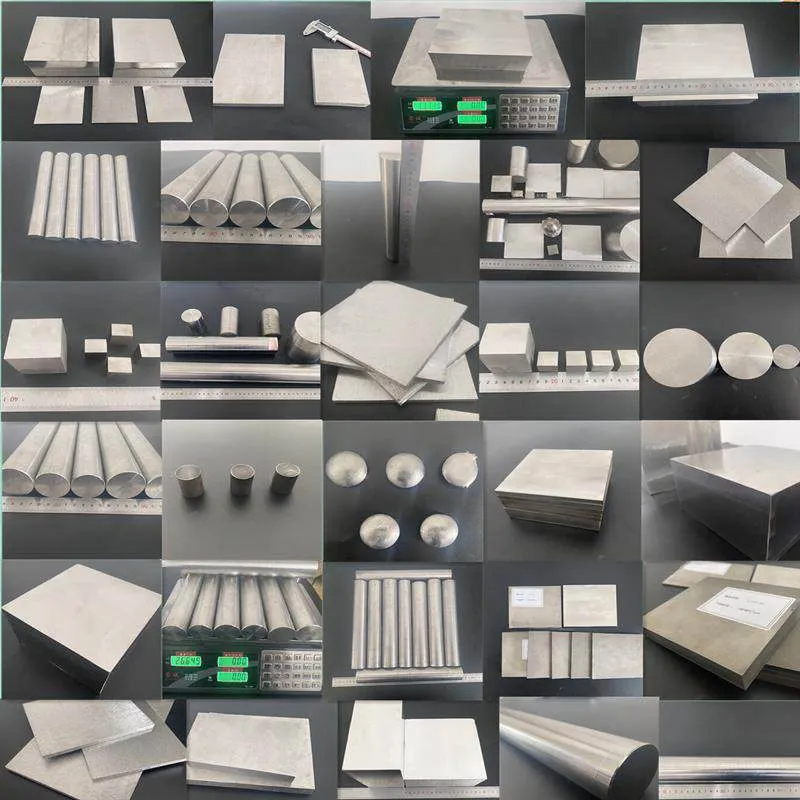
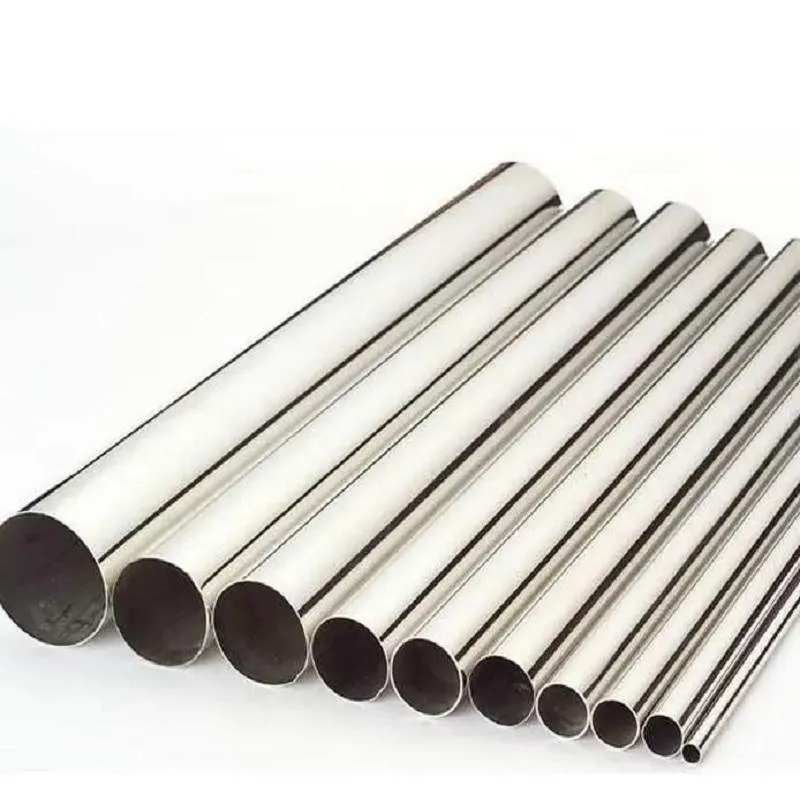
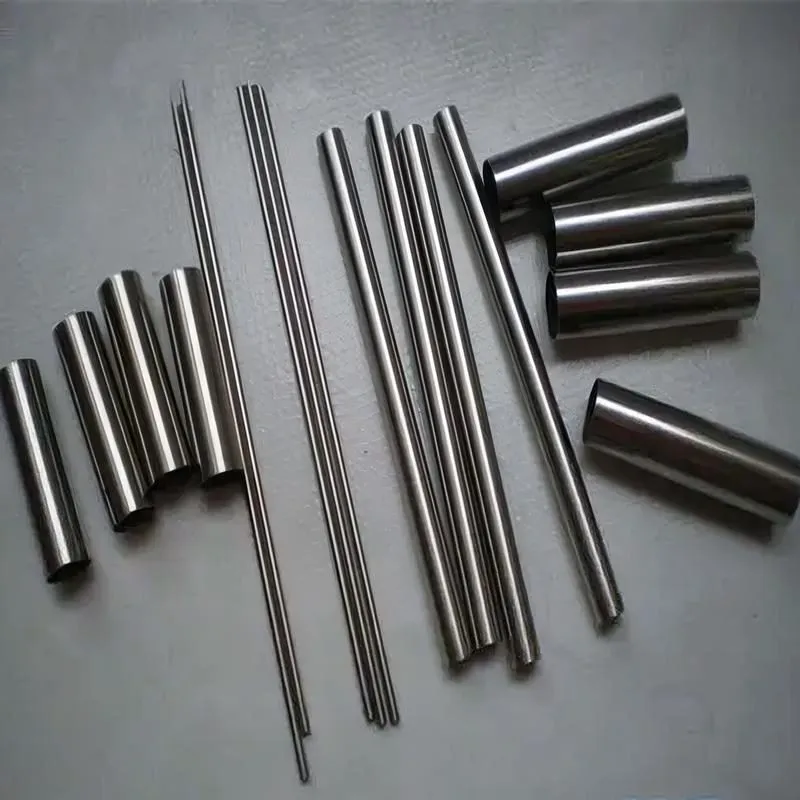
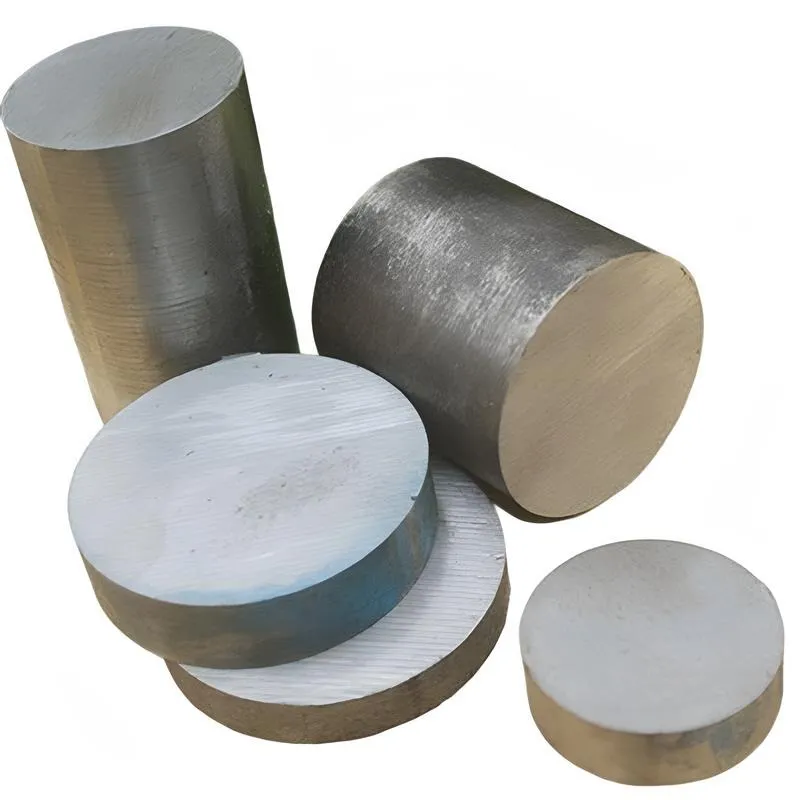
We provide AISI 5140 Steel, oil quenched 845°C (1550°F), 540°C (1000°F) temper is available in Bar (Round bar, Flat bar), Ribbon, Wire, Rods, Tube,Seamless Tube,Pipe, Ingots, Plate, Sheet, Strip and Forging Stock.,Purity, chemical composition, size, etc. can all be customized to meet specific requirements.
AISI 5140 Steel, oil quenched 845°C (1550°F), 540°C (1000°F) temper Product Information
-:-
For detailed product information, please contact sales.
-:
AISI 5140 Steel, oil quenched 845°C (1550°F), 540°C (1000°F) temper Synonyms
-:-
For detailed product information, please contact sales.
-:
AISI 5140 Steel, oil quenched 845°C (1550°F), 540°C (1000°F) temper Product Information
-:-
For detailed product information, please contact sales.
-:
# **Product Introduction: AISI 5140 Steel, Heat Treated to 845°C Oil Quenched + 540°C Tempered Condition**
## **Executive Summary**
**AISI 5140 steel heat treated to 845°C (1550°F) oil quenched and tempered at 540°C (1000°F)** represents the material in its **peak service condition**, achieving an optimal balance of **high strength, good toughness, and excellent wear resistance**. This specific heat treatment regimen transforms the medium-carbon chromium steel into a **tempered martensitic microstructure**, delivering mechanical properties ideal for demanding applications in automotive, machinery, and industrial sectors. The 540°C (1000°F) tempering temperature specifically targets the **second tempering zone**, providing an exceptional combination of hardness (approx. 35-40 HRC) with maintained ductility and impact resistance, making it suitable for components subjected to dynamic loading, fatigue, and moderate impact.
---
## **1. Chemical Composition**
The chemical composition defines the inherent potential that is fully realized through this specific heat treatment.
| Element | Composition Range (%) | Typical Value (%) | Role in Achieving Final Properties (845°C OQ + 540°C Temper) |
|---------|----------------------|-------------------|--------------------------------------------------------------|
| **Carbon (C)** | 0.38 - 0.43 | 0.40 | **Critical for hardenability & strength.** At 0.40%, it allows full martensite formation upon oil quenching from 845°C, providing a high as-quenched hardness (~55 HRC). Tempering at 540°C precipitates fine ε-carbides within the martensite, giving the final balanced hardness (35-40 HRC) and strength. |
| **Manganese (Mn)** | 0.70 - 0.90 | 0.80 | Enhances hardenability, ensuring through-hardening of moderate sections during oil quenching. Suppresses the formation of soft transformation products like ferrite or pearlite. |
| **Chromium (Cr)** | 0.70 - 0.90 | 0.80 | **Key alloying element.** Increases hardenability and promotes secondary hardening during tempering. Forms stable chromium carbides (Cr₂₃C₆, Cr₇C₃) at 540°C, contributing to wear resistance and tempering resistance (retained strength at elevated temperature). |
| **Silicon (Si)** | 0.15 - 0.35 | 0.25 | A solid solution strengthener that raises the tempering resistance, helping to maintain strength at the 540°C temper. It also promotes temper embrittlement resistance. |
| **Sulfur (S)** | ≤ 0.040 | 0.025 | Residual. Typically kept low in this grade to ensure good transverse ductility and impact toughness, which are critical for the final tempered state. |
| **Phosphorus (P)** | ≤ 0.035 | 0.020 | Residual. Kept minimal to avoid temper embrittlement, especially important when tempering in the 540°C range. |
**Metallurgical State after 845°C OQ + 540°C Temper:**
- **Microstructure:** **Tempered Martensite (Tempered Lath Martensite)** with a uniform dispersion of fine, stable alloy carbides (mainly chromium-rich carbides).
- **Prior Austenite Grain Size:** Fine (ASTM 7-9), resulting from the 845°C austenitization.
- **Carbide Morphology:** Fine, spheroidized carbides uniformly precipitated within the martensitic matrix.
- **Key Outcome:** This structure provides the optimal compromise between the high strength of martensite and the ductility/toughness restored by high-temperature tempering.
---
## **2. Physical & Mechanical Properties (Heat Treated Condition)**
### **Physical Properties (At Room Temperature)**
| Property | Value / Range | Notes |
|----------|---------------|-------|
| **Density** | 7.85 g/cm³ | Unchanged by heat treatment. |
| **Modulus of Elasticity (E)** | **200 - 210 GPa** (29 - 30.5 x 10⁶ psi) | Slightly increased compared to annealed state due to the martensitic structure. |
| **Shear Modulus (G)** | 80 - 83 GPa | - |
| **Poisson's Ratio** | 0.29 | - |
| **Thermal Conductivity** | 42 - 46 W/m·K | Lower than annealed state due to the martensitic lattice strain. |
| **Coefficient of Thermal Expansion** | 12.0 - 12.5 ×10⁻⁶/K (20-100°C) | - |
| **Specific Heat Capacity** | 480 - 500 J/kg·K | - |
### **Mechanical Properties (845°C OQ + 540°C Temper)**
*These are the guaranteed or typical minimum properties achieved with this specific heat treatment.*
| Property | Typical / Minimum Range | Significance for Design & Application |
|----------|-------------------------|----------------------------------------|
| **Hardness** | **341 - 401 HB** / **35 - 40 HRC** | **Core property.** Provides excellent wear resistance while remaining machinable (with grinding) and resistant to brittle fracture. |
| **Tensile Strength** | **950 - 1100 MPa** (138 - 160 ksi) | High strength suitable for heavily loaded components. |
| **Yield Strength (0.2% Offset)** | **800 - 950 MPa** (116 - 138 ksi) | Excellent resistance to permanent deformation. High yield-to-tensile ratio (~0.85). |
| **Elongation (in 50mm / 2")** | **14 - 18%** | Good ductility for a high-strength steel, allowing for some deformation before fracture. |
| **Reduction of Area** | **45 - 55%** | Indicates good micro-ductility and toughness. |
| **Charpy V-Notch Impact Energy** | **40 - 60 J** (at 20°C) | **Key property.** Good impact toughness, making it suitable for dynamic and shock-loading applications. Demonstrates the effectiveness of the 540°C temper. |
| **Fatigue Strength (Rotating Bending, R=-1)** | **~450 - 500 MPa** | High endurance limit, excellent for components undergoing cyclic stresses (e.g., shafts, gears). |
| **Fracture Toughness (K₁c)** | ~70 - 90 MPa√m | Good resistance to crack propagation. |
### **Heat Treatment Process Details:**
1. **Austenitizing (845°C / 1550°F):**
* **Purpose:** To dissolve carbides and create a homogeneous austenitic solid solution.
* **Soak Time:** 30-60 minutes per inch of thickness.
* **Atmosphere:** Protective (endothermic gas) to prevent decarburization.
2. **Quenching (Oil):**
* **Medium:** Fast oil quench (e.g., ISO VG 68 or equivalent).
* **Purpose:** To achieve a fully martensitic microstructure. The chromium content ensures sufficient hardenability for oil quenching of sections up to ~75mm (3 inches) diameter.
* As-Quenched Hardness: ~52-56 HRC.
3. **Tempering (540°C / 1000°F):**
* **Purpose:** To relieve quenching stresses, precipitate fine carbides, and achieve the desired balance of hardness and toughness.
* **Time:** 1-2 hours per inch of thickness, followed by air cooling.
* **Key Effect:** The tempering in the **"secondary hardening" range** for chromium steels maximizes toughness while retaining a significant portion of the quenched hardness.
---
## **3. Product Applications (In This Heat Treated Condition)**
This is the **final, ready-for-service condition** for high-performance components. The 35-40 HRC hardness range is one of the most versatile for engineering applications.
**Primary Application Sectors & Components:**
**Automotive & Transportation:**
* **Axle Shafts & Drive Shafts:** For trucks and heavy vehicles requiring high torsional strength and fatigue resistance.
* **Gears & Pinions:** Transmission and differential gears where a balance of surface durability and core toughness is needed.
* **Steering Components:** Pitman arms, idler arms, drag links.
* **Suspension Components:** Torsion bars, stabilizer bars, king pins.
* **Engine Components:** Crankshafts (medium-duty), camshafts.
**Heavy Machinery & Equipment:**
* **Construction/Mining:** Track rollers, idlers, pivot pins, bucket teeth adapters, hydraulic cylinder rods.
* **Agricultural:** PTO shafts, gearbox shafts, heavy-duty tillage tool components.
* **Material Handling:** Crane hooks, sheave pins, conveyor drive shafts.
**Industrial Manufacturing:**
* **Shafts & Spindles:** Machine tool spindles, pump shafts, motor shafts.
* **Fasteners:** High-strength bolts (Grade 10.9 equivalent), studs, and special connectors.
* **Tooling & Dies:** Jigs, fixtures, die holders, press brake tooling.
* **Gears & Sprockets:** For industrial gearboxes and power transmission systems.
**Why This Specific Heat Treatment (845°C OQ + 540°C Temper) is Specified:**
* **For Fatigue Resistance:** The tempered martensite structure has a high fatigue limit.
* **For Impact Loads:** The 540°C temper maximizes toughness (Charpy values >40 J).
* **For Wear & Galling Resistance:** The 35-40 HRC hardness provides good resistance to adhesive and abrasive wear.
* **For Dimensional Stability:** Tempering at 540°C effectively relieves quenching stresses, minimizing dimensional changes in service.
---
## **4. International Standards & Equivalent Grades (In Heat Treated Condition)**
This heat-treated condition is often the **end-state specified on engineering drawings**, referenced by mechanical property requirements rather than a process standard.
### **Property-Based Specifications:**
| Standard System | Potential Designation / Reference | How It Applies |
|-----------------|-----------------------------------|----------------|
| **ASTM** | **A29/A29M** (Property Class) | The material would be supplied to meet the specified hardness and tensile property ranges. |
| **SAE J1397** | (Automatic Steel Standard) | May specify a similar hardness/strength condition for automotive parts. |
| **Engineering Drawing** | **"Heat Treat to 35-40 HRC"** or **"Material: AISI 5140, Condition: HT-540"** | Most common. The heat treat process (845°C OQ + 540°C temper) is the proven method to achieve these properties. |
### **International Material Equivalents (Can be heat treated to similar properties):**
| Country/Region | Standard | Equivalent Grade | Comparable Heat Treated Condition |
|----------------|----------|------------------|-----------------------------------|
| **Europe (EN)** | EN 10083-3 | **41Cr4** | Can be quenched and tempered to achieve 950-1100 MPa tensile strength (similar to ~36 HRC). |
| **Germany (DIN)** | DIN 17212 | **41Cr4** | Condition **"+QT"** (Quenched and Tempered) to specified hardness. |
| **Japan (JIS)** | JIS G4105 | **SCr440** | Can be heat treated to equivalent mechanical properties (Hardness: HV 350-400). |
| **International (ISO)** | ISO 683-18 | **Type 1.7035** | Designation for the steel composition; condition specified separately. |
| **China (GB)** | GB/T 3077 | **40Cr** | Widely used in quenched and tempered condition (调质状态) for similar applications. |
### **Heat Treatment Process Standards (Reference):**
* **AMS 2759/1:** Pyrometry for Heat Treatment.
* **ASTM A255:** Standard Test Methods for Determining Hardenability of Steel.
* **ISO 4885:** Heat treatments – Vocabulary.
* **CQI-9:** Special Process: Heat Treat System Assessment (Automotive Industry).
---
## **5. Manufacturing, Finishing & Service Considerations**
### **Post-Heat Treatment Processing:**
* **Machining:** **Not recommended** in this hardened state except by abrasive methods (grinding) or hard turning with CBN/PCBN tools.
* **Finishing Operations:**
* **Grinding:** Commonly used to achieve final dimensions and surface finish.
* **Shot Peening:** Highly beneficial to induce compressive surface stresses, further enhancing fatigue life.
* **Surface Coatings:** Can be phosphate-coated (Parkerizing) or black-oxidized for corrosion protection and aesthetic purposes. Chrome plating is also common for hydraulic rods.
* **Joining:**
* **Welding:** **Generally not recommended** after final heat treatment. If absolutely necessary, requires pre-heat (~300°C) and post-weld tempering, with significant risk of property degradation in the Heat-Affected Zone (HAZ).
* **Mechanical Fastening:** Ideal state for assembly with high-strength bolts.
### **Service Performance & Limitations:**
* **Maximum Service Temperature:** **~300°C (570°F).** Above this, tempering continues, leading to gradual softening (overtempering).
* **Corrosion Resistance:** Similar to plain carbon steel – **poor.** Requires protective coatings (paint, plating, oil) for exposed service.
* **Notch Sensitivity:** Moderate. Sharp corners and machining marks should be avoided in highly stressed areas; radii are important.
### **Quality Control for Heat Treated Parts:**
1. **Hardness Verification:** 100% check on representative locations (Rockwell C scale).
2. **Microstructure Evaluation:** Sample verification of tempered martensite, absence of retained austenite or untempered martensite.
3. **Surface Integrity:** Check for decarburization, grinding burns, or quench cracks (via magnetic particle or liquid penetrant inspection).
4. **Mechanical Testing:** Batch testing of tensile and impact properties from witness coupons processed with the load.
---
## **6. Design & Selection Guidelines**
### **Why Select This Condition of AISI 5140?**
* **When you need:** A proven, cost-effective alloy steel for high-stress components.
* **When the design requires:** A hardness of 35-40 HRC as the optimal balance of properties.
* **When the application involves:** Cyclic loading (fatigue), moderate impact, and wear.
### **Alternative Heat Treatments for AISI 5140:**
| Tempering Temperature | Resulting Hardness (HRC) | Property Emphasis | Typical Application |
|-----------------------|--------------------------|-------------------|---------------------|
| **200°C (390°F)** | 50-55 | Maximum Hardness/Wear Resistance | Cutting edges, wear plates. |
| **400°C (750°F)** | 42-48 | High Strength, Good Wear | General high-strength parts. |
| **540°C (1000°F)** | 35-40 | **Optimal Strength-Toughness Balance** | **Shafts, gears, highly stressed components.** |
| **650°C (1200°F)** | 25-30 | High Toughness/Spring Applications | Springs, high-impact parts. |
---
## **Summary**
**AISI 5140 steel, oil quenched from 845°C (1550°F) and tempered at 540°C (1000°F),** represents a **classic and highly effective heat treatment regimen** that unlocks the full potential of this versatile alloy steel. It delivers a **tempered martensitic microstructure** characterized by an outstanding balance of:
* **High Strength:** 950-1100 MPa tensile strength.
* **Good Toughness:** 40-60 J Charpy impact energy.
* **Excellent Fatigue Resistance.**
* **Good Wear Resistance** at 35-40 HRC hardness.
**Final Service Condition:** This is a **ready-for-service state**. Components are fully heat treated, with all machining completed prior to hardening and tempering. Final finishing is typically limited to grinding, polishing, and protective coating.
**Ideal For:** Engineering components where **reliability under dynamic and high-stress conditions is non-negotiable**. It is a benchmark material for drivetrain, chassis, and structural components across automotive, agricultural, and general engineering industries, offering superior performance to carbon steels at a reasonable cost. The specific 540°C temper ensures that toughness is not sacrificed for strength, making it a safe and durable choice for critical applications.
-:-
For detailed product information, please contact sales.
-:
AISI 5140 Steel, oil quenched 845°C (1550°F), 540°C (1000°F) temper Specification
Dimensions
Size:
Diameter 20-1000 mm Length <6287 mm
Size:We can customized as required
Standard:
Per your request or drawing
We can customized as required
Properties(Theoretical)
Chemical Composition
-:-
For detailed product information, please contact sales.
-:
AISI 5140 Steel, oil quenched 845°C (1550°F), 540°C (1000°F) temper Properties
-:-
For detailed product information, please contact sales.
-:
Applications of AISI 5140 Steel, oil quenched 845°C (1550°F), 540°C (1000°F) temper
-:-
For detailed product information, please contact sales.
-:
Chemical Identifiers AISI 5140 Steel, oil quenched 845°C (1550°F), 540°C (1000°F) temper
-:-
For detailed product information, please contact sales.
-:
Packing of AISI 5140 Steel, oil quenched 845°C (1550°F), 540°C (1000°F) temper
-:-
For detailed product information, please contact sales.
-:
Standard Packing:
-:-
For detailed product information, please contact sales.
-:
Typical bulk packaging includes palletized plastic 5 gallon/25 kg. pails, fiber and steel drums to 1 ton super sacks in full container (FCL) or truck load (T/L) quantities. Research and sample quantities and hygroscopic, oxidizing or other air sensitive materials may be packaged under argon or vacuum. Solutions are packaged in polypropylene, plastic or glass jars up to palletized 2758 gallon liquid totes Special package is available on request. E FORUs’ is carefully handled to minimize damage during storage and transportation and to preserve the quality of our products in their original condition