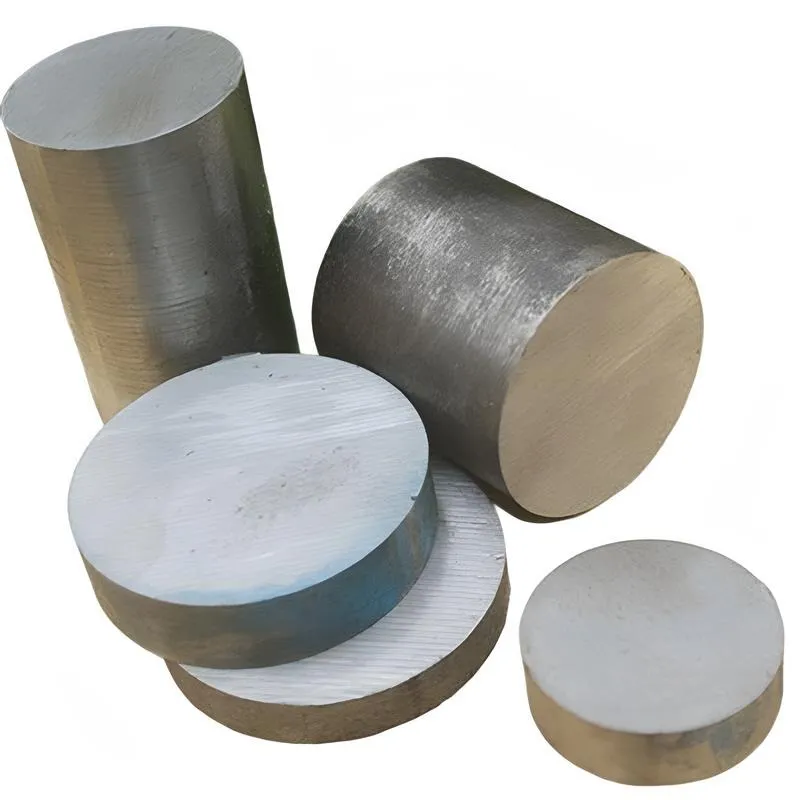
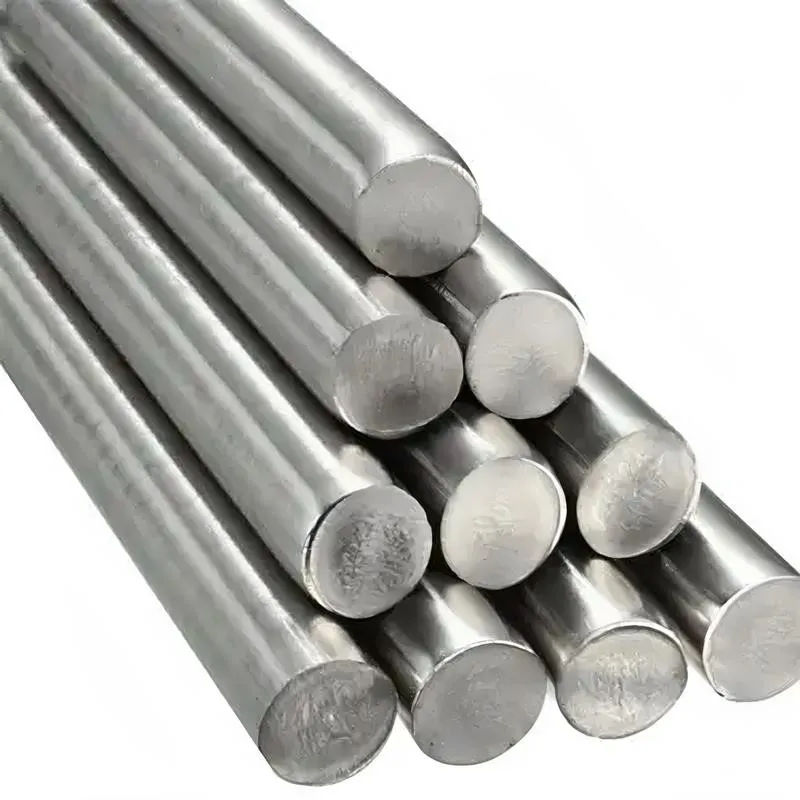
AISI 5150 Steel, normalized
Product Code : STI-CSTI-1564-CU
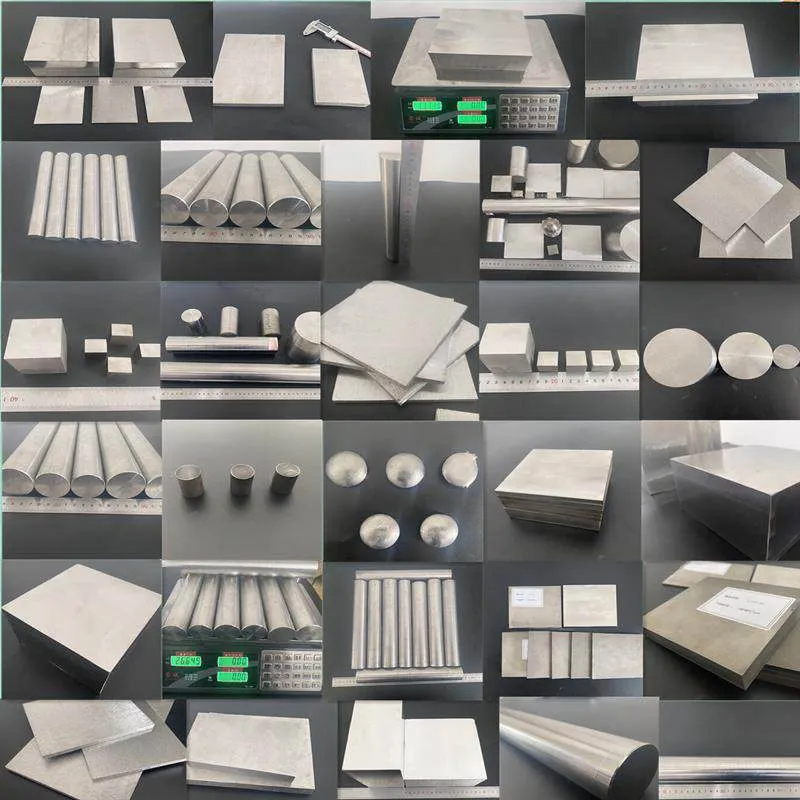
We provide AISI 5150 Steel, normalized, 100 mm (4 in.) round is available in Bar (Round bar, Flat bar), Ribbon, Wire, Rods, Tube,Seamless Tube,Pipe, Ingots, Plate, Sheet, Strip and Forging Stock.,Purity, chemical composition, size, etc. can all be customized to meet specific requirements.
Please contact us if you need customized services. We will contact you with the price and availability in 24 hours.
AISI 5150 Steel, normalized, 100 mm (4 in.) round Product Information
-:-
For detailed product information, please contact sales.
-:
AISI 5150 Steel, normalized, 100 mm (4 in.) round Synonyms
-:-
For detailed product information, please contact sales.
-:
AISI 5150 Steel, normalized, 100 mm (4 in.) round Product Information
-:-
For detailed product information, please contact sales.
-:
# **Product Introduction: AISI 5150 Steel, Normalized Condition - 100 mm (4 inch) Round Bar**
## **Executive Summary**
**AISI 5150 steel supplied as 100 mm (4 inch) diameter round bar in the normalized condition** represents a **high-performance, medium-high carbon chromium steel** specifically processed for large-section applications requiring uniform properties throughout the cross-section. Normalizing this substantial diameter refines the microstructure, relieves internal stresses from prior processing, and establishes a consistent foundation for subsequent heat treatment or machining operations. This product is engineered for **heavy-duty components** in industries such as mining, construction, power generation, and heavy machinery where large cross-sections must maintain property uniformity and predictable response to final heat treatment.
---
## **1. Chemical Composition**
The chemical composition is optimized to provide excellent hardenability in large sections while maintaining adequate toughness in the normalized state.
| Element | Composition Range (%) | Typical Value (%) | Metallurgical Role in 100 mm Normalized Round |
|---------|----------------------|-------------------|----------------------------------------------|
| **Carbon (C)** | 0.48 - 0.53 | 0.50 | **Primary strength determinant.** In 100 mm normalized round, ensures uniform pearlite formation during air cooling; critical for achieving consistent properties to the center of the large section. |
| **Manganese (Mn)** | 0.70 - 0.90 | 0.80 | Enhances hardenability and promotes uniform transformation throughout the 100 mm diameter during normalizing. |
| **Chromium (Cr)** | 0.70 - 0.90 | 0.80 | **Key alloying element.** Improves hardenability significantly, ensuring that the 100 mm section can be through-hardened after normalizing; forms fine carbides that enhance wear resistance. |
| **Silicon (Si)** | 0.15 - 0.35 | 0.25 | Deoxidizer; strengthens ferrite and promotes uniform microstructure development in large sections. |
| **Sulfur (S)** | ≤ 0.040 | 0.025 | Controlled for machinability; particularly important for the large 100 mm diameter where machining operations may be extensive. |
| **Phosphorus (P)** | ≤ 0.035 | 0.020 | Residual impurity; kept low to maintain ductility in the large cross-section. |
**Metallurgical Considerations for 100 mm Diameter:**
- **Normalizing Challenge:** Ensuring uniform cooling and transformation throughout the 100 mm cross-section
- **Microstructure Target:** Fine, uniform pearlite in ferrite matrix from surface to center
- **Cooling Rate:** Air cooling of 100 mm rounds requires controlled conditions to avoid mixed microstructures
- **Property Uniformity:** Critical for large sections to prevent property gradients that could lead to service failures
**Normalized Microstructure for 100 mm Round:**
- **Primary Structure:** **Fine lamellar pearlite** in **polygonal ferrite matrix**
- **Grain Size:** Typically ASTM 6-8, uniform throughout cross-section
- **Carbide Distribution:** Fine, uniformly dispersed carbides
- **Depth of Uniformity:** Normalizing achieves consistent properties to the center of 100 mm diameter
---
## **2. Physical & Mechanical Properties (100 mm Normalized Round)**
### **Physical Properties**
| Property | Value / Range | Notes for 100 mm Round |
|----------|---------------|------------------------|
| **Density** | 7.85 g/cm³ | Weight: ~61.6 kg/m (41.3 lb/ft) |
| **Modulus of Elasticity** | 195 - 205 GPa | Consistent throughout 100 mm section |
| **Thermal Conductivity** | 43 - 48 W/m·K | At 100°C; important for heat treatment of large sections |
| **Specific Heat Capacity** | 460 - 480 J/kg·K | At 20°C |
| **Coefficient of Thermal Expansion** | 11.6 - 12.1 ×10⁻⁶/K | 20-100°C range |
| **Diameter Tolerance** | Typically ±0.8 - 1.5 mm | For hot-rolled normalized rounds |
| **Straightness** | ≤2.0 mm/m | Standard for large diameter normalized bars |
### **Mechanical Properties (As-Normalized, 100 mm Round)**
| Property | Typical Range | Significance for Large Section Manufacturing |
|----------|---------------|---------------------------------------------|
| **Hardness** | **207 - 255 HB** (Surface to Center) | **Key property.** Provides adequate strength for handling while maintaining machinability; minimal hardness drop from surface to center (<15 HB) |
| **Tensile Strength** | 700 - 850 MPa | Higher than annealed, providing good rigidity for machining large components |
| **Yield Strength (0.2% Offset)** | 450 - 600 MPa | Sufficient for resisting deformation during heavy machining operations |
| **Elongation (50mm)** | 15 - 20% | Adequate ductility for the carbon level and section size |
| **Reduction of Area** | 35 - 45% | Good micro-ductility for a large normalized section |
| **Charpy V-Notch Impact** | 30 - 50 J | Moderate impact resistance; center values typically 80-90% of surface values |
| **Machinability Rating** | **~50-55%** (vs. 1212 steel) | Acceptable with proper tooling and parameters for large diameter machining |
### **Normalizing Process for 100 mm Round:**
```
Critical Process Parameters for 100 mm Diameter:
1. Heating: → 900-925°C (1650-1700°F) at controlled rate (50-100°C/hr)
2. Soaking: 90-120 minutes per inch of radius (3-4 hours total)
3. Cooling: Still air or controlled forced air to ensure uniform cooling
4. Cooling Rate: 2-5°C/min at center during transformation
5. Verification: Hardness testing at surface, mid-radius, and center
```
**Property Uniformity Requirements for 100 mm Rounds:**
- **Hardness Variation:** ≤15 HB from surface to center
- **Microstructural Consistency:** Uniform pearlite colony size throughout
- **Decarburization:** ≤0.5 mm per surface (acceptable for large sections)
- **Ultrasonic Quality:** Class A or better for critical applications
### **Through-Section Properties (Typical):**
| Location | Hardness (HB) | Microstructure | Tensile Strength |
|----------|---------------|----------------|------------------|
| **Surface** | 235-255 HB | Fine pearlite + ferrite | 800-850 MPa |
| **Mid-Radius** | 220-240 HB | Fine pearlite + ferrite | 750-800 MPa |
| **Center** | 207-230 HB | Slightly coarser structure | 700-750 MPa |
---
## **3. Product Applications**
### **Primary Application Sectors for 100 mm Normalized Rounds**
**Heavy Machinery & Mining:**
- **Large Shafts:** Main drive shafts, line shafts, and transmission shafts
- **Crusher Components:** Roll shafts, hammer mill shafts, jaw crusher eccentrics
- **Mill Components:** Grinding mill shafts, trunnions, and pinions
- **Excavator Components:** Swing shafts, travel motor shafts, boom pivot shafts
**Power Generation:**
- **Turbine Shafts:** For hydroelectric and industrial turbines
- **Generator Components:** Rotor shafts, coupling shafts
- **Pump Shafts:** Large centrifugal pump shafts for water and process applications
**Marine & Offshore:**
- **Propulsion Shafting:** Intermediate shafts, tail shafts
- **Winch and Windlass Components:** Main shafts and gears
- **Crane Components:** Slewing ring shafts, hoist drum shafts
**Steel & Processing Industries:**
- **Rolling Mill Rolls:** Backup roll shafts, work roll necks
- **Continuous Caster Components:** Roller shafts, segment shafts
- **Processing Line Shafts:** Conveyor drive shafts, tensioner shafts
### **Why 100 mm Normalized AISI 5150?**
**Manufacturing Advantages for Large Sections:**
1. **Property Uniformity:** Normalizing ensures consistent properties throughout the 100 mm cross-section
2. **Dimensional Stability:** Stress relief minimizes distortion during heavy machining
3. **Machinability Balance:** Hard enough for stable machining, soft enough for reasonable tool life
4. **Predictable Heat Treatment:** Uniform starting condition ensures consistent hardening response
5. **Cost Effectiveness:** More economical than through-hardened large sections for many applications
**Typical Manufacturing Sequence for 100 mm Components:**
```
1. Procure 100 mm normalized AISI 5150 rounds
2. Rough turn to remove surface irregularities
3. Complete major machining operations (flanges, keyways, etc.)
4. Optional stress relief for complex geometries
5. Heat treatment (often oil quench and temper)
6. Finish grind critical diameters and bearing surfaces
7. Final machining of non-critical features
```
### **Specific Component Examples:**
- **100 mm Drive Shafts:** For industrial gearboxes and power transmission systems
- **Large Gear Blanks:** 100 mm rounds turned into gear blanks for heavy machinery
- **Hydraulic Cylinder Rods:** For large-bore hydraulic cylinders
- **Bearing Journals:** Large diameter bearing surfaces on heavy equipment
- **Coupling Hubs:** For connecting large rotating equipment
---
## **4. International Standards & Specifications**
### **Primary Specifications for 100 mm Normalized Rounds**
| Standard System | Designation | Requirements for 100 mm Normalized Rounds |
|----------------|-------------|------------------------------------------|
| **ASTM A29/A29M** | Standard Specification for Steel Bars | Governs normalized condition, chemistry, and mechanical properties |
| **ASTM A668** | Standard Specification for Steel Forgings | May apply to forged and normalized rounds |
| **SAE J404** | Chemical Composition of SAE Alloy Steels | Defines chemistry for AISI 5150 |
| **ISO 683-18** | Heat-treatable steels | International standard for similar materials |
### **International Equivalents (100 mm Rounds)**
| Country/Region | Standard | Equivalent Grade | Normalized Condition Designation |
|----------------|----------|------------------|----------------------------------|
| **Europe (EN)** | EN 10083-3 | **50Cr4** | Condition "+N" for normalized |
| **Germany (DIN)** | DIN 17212 | **50Cr4** | Normalisiert |
| **Japan (JIS)** | JIS G4105 | **SCr445** | Normalized (N) condition |
| **China (GB)** | GB/T 3077 | **50Cr** | Normalized state available |
| **India** | IS 5517 | **50Cr4** | Normalized condition |
### **Dimensional Standards for 100 mm Rounds:**
- **Diameter Tolerance:** Typically ±0.8% of nominal diameter (±0.8 mm for 100 mm)
- **Out-of-Round:** ≤0.5% of diameter
- **Length Tolerance:** ±25 mm for standard lengths
- **Straightness:** 2.0 mm/m maximum
- **Surface Finish:** 12.5-25 μm Ra typical for as-normalized condition
### **Purchase Specification Example:**
```
MATERIAL: AISI 5150, Normalized per ASTM A29
FORM: Round Bar, Hot Rolled and Normalized
DIAMETER: 100 mm (+1.5/-0.8 mm)
CONDITION: Normalized, air cooled
HARDNESS: 220-250 HB (surface), 200-230 HB (center)
CHEMISTRY: Per SAE J404 for 5150
CERTIFICATION: Mill test certificate required
SPECIAL: Ultrasonic testing to ASTM A388 Class A
```
---
## **5. Manufacturing & Processing Guidelines**
### **Machining 100 mm Normalized AISI 5150:**
```
Recommended Parameters for Large Diameter Machining:
• Turning Speed: 25-40 m/min (carbide), 15-25 m/min (HSS)
• Feed Rate: 0.20-0.40 mm/rev for roughing, 0.10-0.20 mm/rev for finishing
• Depth of Cut: 3-8 mm for roughing, 0.5-2.0 mm for finishing
• Tool Materials: Heavy-duty carbide grades (C5/C6), positive rake geometry
• Coolant: High-pressure coolant essential for large diameter turning
• Chip Control: May require chip breakers for continuous chips
• Power Requirements: Substantial machine power needed for 100 mm machining
```
### **Heat Treatment Considerations for 100 mm Sections:**
**Challenges with 100 mm Diameter:**
- **Through-Hardening:** Requires adequate hardenability; oil quenching typically used
- **Distortion Control:** Large sections prone to distortion during quenching
- **Cracking Risk:** Higher thermal stresses in large sections
- **Property Gradient:** Some property variation from surface to center is inevitable
**Recommended Heat Treatment:**
- **Preheat:** 650-700°C essential for large sections
- **Austenitize:** 840-860°C, extended soaking time (60+ minutes)
- **Quench:** Fast oil or polymer quenchant to minimize distortion
- **Temper:** Immediately after quenching, 400-600°C based on desired properties
- **Expected Results:** Surface hardness 45-55 HRC, center hardness 35-45 HRC after proper heat treatment
### **Special Processing Requirements:**
1. **Heavy-Duty Equipment:** Lathes with ≥50 hp, steady rests for 100 mm turning
2. **Tooling:** Robust tool holders, heavy-duty inserts
3. **Handling:** Overhead cranes typically required
4. **Inspection:** Large capacity testing equipment for mechanical properties
5. **Heat Treatment:** Furnaces capable of handling 100 mm sections uniformly
### **Quality Control for 100 mm Rounds:**
**Incoming Inspection:**
- **Dimensional:** Diameter, out-of-round, straightness
- **Surface:** Visual inspection for seams, cracks, excessive scale
- **Hardness:** Multiple locations (surface, mid-radius, center)
- **Ultrasonic Testing:** For internal soundness in critical applications
- **Certification:** Review mill test certificate for compliance
**In-Process Controls:**
- **Tool Wear Monitoring:** Regular inspection due to large material volume
- **Dimensional Checks:** Frequent measurement during machining
- **Thermal Management:** Monitor temperatures during heavy machining
- **Stress Relief:** May be required between roughing and finishing operations
---
## **6. Technical Comparison & Selection Guide**
### **Comparison: 100 mm Normalized vs. Other Conditions/Sizes**
| Parameter | 25 mm Annealed 5150 | **100 mm Normalized 5150** | 100 mm As-Rolled 5150 |
|-----------|---------------------|---------------------------|----------------------|
| **Hardness** | 187-229 HB | **207-255 HB** | 235-285 HB |
| **Property Uniformity** | Good | **Excellent** | Poor (gradients likely) |
| **Machinability** | Very Good | **Good** | Fair to Poor |
| **Distortion Risk** | Low | **Moderate** | High |
| **Best For** | Small precision parts | **Large heavy-duty components** | Non-critical large parts |
### **When to Specify 100 mm Normalized AISI 5150:**
- **✔** Large shafts and axles (75-150 mm finished diameter)
- **✔** Components requiring uniform properties throughout large cross-section
- **✔** Heavy machinery parts subject to significant bending/torsional loads
- **✔** Applications where normalized properties may be sufficient for service
- **✔** Pre-forms for components that will be heat treated after machining
- **✘** Small precision components (<50 mm finished size)
- **✘** Applications requiring maximum machinability
- **✘** Components where weight minimization is critical
### **Alternative Materials for Large Sections:**
| Material | Relative Cost | Advantages | Disadvantages vs. 5150 |
|----------|---------------|------------|------------------------|
| **4140 Normalized** | 90-95% | Better weldability, slightly better toughness | Lower strength, poorer wear resistance |
| **4340 Normalized** | 120-130% | Superior toughness, better hardenability | Higher cost, more difficult to machine |
| **1045 Normalized** | 60-70% | Lower cost, better machinability | Much lower hardenability, lower strength |
| **5160 Normalized** | 105-110% | Higher hardness potential, better spring properties | Lower toughness, more difficult to machine |
---
## **7. Economic & Supply Considerations**
### **Cost Factors for 100 mm Rounds:**
- **Material Cost:** ~$800-1,200/ton depending on quantity and processing
- **Machining Cost:** Higher than smaller diameters due to increased material removal
- **Heat Treatment Cost:** Significant for through-hardening large sections
- **Tooling Cost:** Higher due to need for heavy-duty tooling
- **Handling Cost:** Requires heavy equipment for movement and positioning
### **Supply Chain Considerations:**
- **Availability:** Typically made-to-order rather than stock item
- **Lead Time:** 8-16 weeks for production and normalizing
- **Minimum Order:** Often 2-5 tons due to mill minimums
- **Transportation:** Requires heavy transport; cost significant for small quantities
- **Processing Services:** Some suppliers offer cutting, machining, or heat treatment services
### **Total Cost of Ownership Analysis:**
**For Large Shaft Production (100 mm diameter):**
| Cost Component | Percentage of Total | Notes |
|----------------|---------------------|-------|
| **Material** | 25-35% | Higher than for smaller sections |
| **Machining** | 40-50% | Dominant cost for turned components |
| **Heat Treatment** | 10-15% | Significant for through-hardening |
| **Inspection/QC** | 5-10% | More extensive for large critical parts |
| **Total** | 100% | Large sections are capital-intensive to produce |
---
## **8. Quality Assurance & Testing**
### **Mandatory Testing for 100 mm Normalized Rounds**
| Test | Standard Method | Frequency | Special Requirements for 100 mm |
|------|----------------|-----------|---------------------------------|
| **Chemical Analysis** | ASTM E415 | Each heat | Required for certification |
| **Hardness Testing** | ASTM E10 (Brinell) | Each piece or lot | Surface, mid-radius, and center locations |
| **Tensile Testing** | ASTM A370 | Each heat | May require testing at different radii |
| **Impact Testing** | ASTM A370 | As specified | Often at multiple temperatures for critical apps |
| **Ultrasonic Testing** | ASTM A388 | For critical applications | Class A or better typically specified |
| **Macroetch Testing** | ASTM E340 | Sample basis | Checks for internal defects in large section |
| **Microstructure** | ASTM E112 | Each heat | Grain size and uniformity assessment |
### **Certification Requirements:**
1. **Mill Test Certificate:** With full heat traceability
2. **Chemical Analysis:** Complete spectrographic report
3. **Mechanical Properties:** Hardness and tensile data
4. **Normalizing Record:** Temperature, time, cooling details
5. **Dimensional Report:** Diameter, straightness measurements
6. **Non-Destructive Testing Reports:** If specified (UT, MT, etc.)
### **Statistical Quality Requirements:**
- **Hardness Uniformity:** CpK ≥ 1.0 for through-section properties
- **Chemistry Control:** All elements within middle 70% of specification
- **Dimensional Control:** Diameter within ±0.8% of nominal
- **Straightness:** ≤2.0 mm/m for standard quality
---
## **Summary**
**AISI 5150 steel supplied as 100 mm (4 inch) diameter round bar in the normalized condition** represents a **specialized material solution** for large-section, heavy-duty applications. The combination of the steel's inherent properties and the normalizing treatment addresses the unique challenges of manufacturing and heat treating substantial cross-sections.
**Key Advantages for Large Section Applications:**
1. **Property Uniformity:** Normalizing ensures consistent properties throughout the 100 mm cross-section
2. **Manufacturing Stability:** Stress-relieved structure minimizes distortion during heavy machining
3. **Predictable Performance:** Consistent starting condition enables reliable final heat treatment
4. **Strength Potential:** High carbon content provides excellent strength and wear resistance after hardening
5. **Cost Effectiveness:** More economical than through-hardened large sections for many applications
**Critical Success Factors:**
- **Proper Normalizing:** Essential for achieving uniform properties in 100 mm sections
- **Adequate Equipment:** Heavy-duty machine tools required for processing
- **Controlled Heat Treatment:** Special procedures needed for large section hardening
- **Comprehensive Inspection:** Thorough testing required to ensure quality
**Ideal Application Profile:**
- **Large drive shafts** for heavy machinery and power transmission
- **Heavy equipment components** subject to significant loading
- **Industrial rolls and shafts** requiring wear resistance
- **Marine propulsion components** needing strength and reliability
- **Any application** where large cross-sections must maintain property uniformity
**Final Recommendation:**
**Specify 100 mm normalized AISI 5150 when** manufacturing large, heavy-duty components that require uniform properties throughout their cross-section. This material provides an optimal balance of strength, hardenability, and processability for challenging large-section applications. While requiring specialized processing equipment and techniques, it delivers reliable performance in demanding service conditions where smaller sections or lower-strength materials would be inadequate.
The normalized condition specifically addresses the challenges of large-diameter manufacturing, providing a stable, uniform starting point for subsequent machining and heat treatment operations that is essential for producing reliable large components.
-:-
For detailed product information, please contact sales.
-:
AISI 5150 Steel, normalized, 100 mm (4 in.) round Specification
Dimensions
Size:
Diameter 20-1000 mm Length <6296 mm
Size:We can customized as required
Standard:
Per your request or drawing
We can customized as required
Properties(Theoretical)
Chemical Composition
-:-
For detailed product information, please contact sales.
-:
AISI 5150 Steel, normalized, 100 mm (4 in.) round Properties
-:-
For detailed product information, please contact sales.
-:
Applications of AISI 5150 Steel, normalized, 100 mm (4 in.) round
-:-
For detailed product information, please contact sales.
-:
Chemical Identifiers AISI 5150 Steel, normalized, 100 mm (4 in.) round
-:-
For detailed product information, please contact sales.
-:
Packing of AISI 5150 Steel, normalized, 100 mm (4 in.) round
-:-
For detailed product information, please contact sales.
-:
Standard Packing:
-:-
For detailed product information, please contact sales.
-:
Typical bulk packaging includes palletized plastic 5 gallon/25 kg. pails, fiber and steel drums to 1 ton super sacks in full container (FCL) or truck load (T/L) quantities. Research and sample quantities and hygroscopic, oxidizing or other air sensitive materials may be packaged under argon or vacuum. Solutions are packaged in polypropylene, plastic or glass jars up to palletized 2767 gallon liquid totes Special package is available on request. E FORUs’ is carefully handled to minimize damage during storage and transportation and to preserve the quality of our products in their original condition