AISI 8620 Steel, single quenched
Product Code : STI-CSTI-983-CU
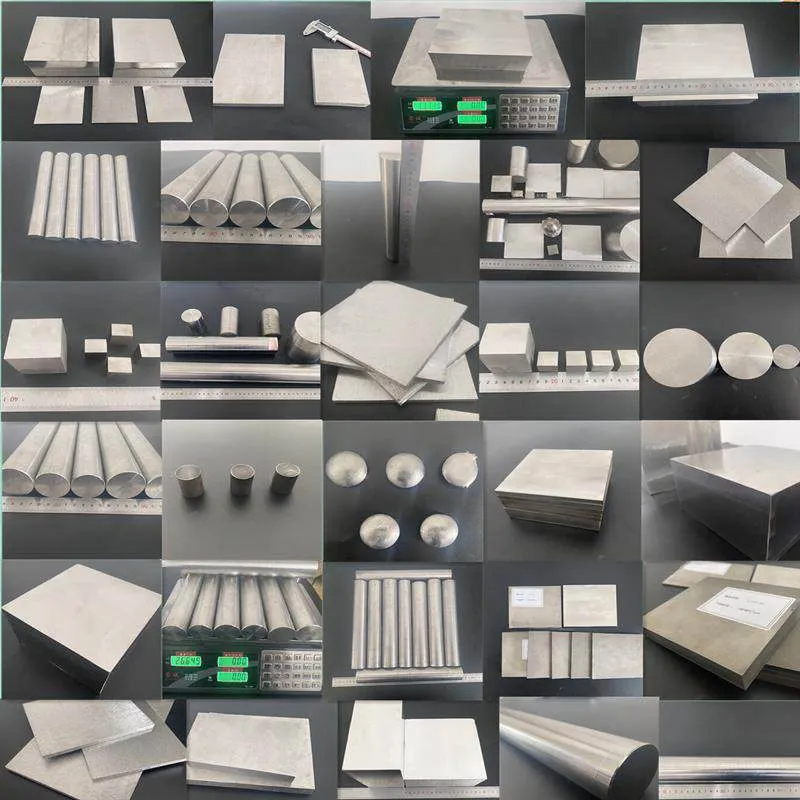
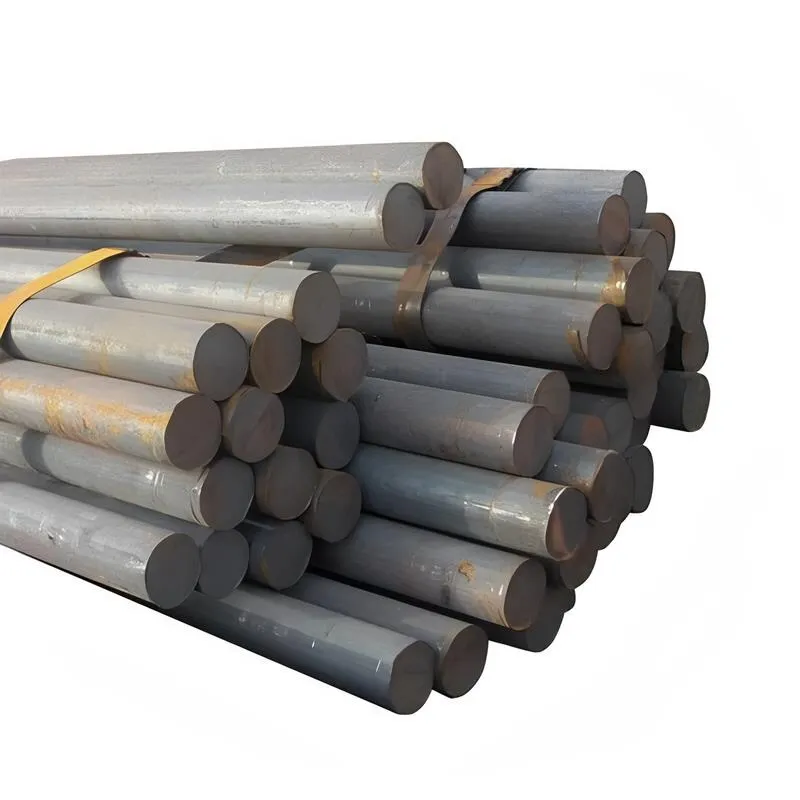
We provide AISI 8620 Steel, single quenched and tempered (150°C (300°F)), carburized is available in Bar (Round bar, Flat bar), Ribbon, Wire, Rods, Tube,Seamless Tube,Pipe, Ingots, Plate, Sheet, Strip and Forging Stock.,Purity, chemical composition, size, etc. can all be customized to meet specific requirements.
Please contact us if you need customized services. We will contact you with the price and availability in 24 hours.
AISI 8620 Steel, single quenched and tempered (150°C (300°F)), carburized Product Information
-:-
For detailed product information, please contact sales.
-:
AISI 8620 Steel, single quenched and tempered (150°C (300°F)), carburized Synonyms
-:-
For detailed product information, please contact sales.
-:
AISI 8620 Steel, single quenched and tempered (150°C (300°F)), carburized Product Information
-:-
For detailed product information, please contact sales.
-:
### **Product Introduction: AISI 8620 Steel, Single Quenched and Tempered (150°C/300°F), Carburized**
#### **1. Overview**
This specification defines AISI 8620 low-carbon nickel-chromium-molybdenum alloy steel in its final processed state following a **refined single-step heat treatment cycle after carburizing**. The complete manufacturing sequence involves:
1. **Carburizing**: Components are heated in a carbon-rich atmosphere (typically 900-930°C/1650-1710°F) to develop a high-carbon surface layer.
2. **Single Quenching**: Parts are cooled from carburizing temperature (or a slightly reduced temperature) directly into a quench medium (usually oil) in one continuous operation.
3. **Low-Temperature Tempering**: Immediately after quenching, components are tempered at **150°C (300°F)** to relieve internal stresses while preserving high hardness.
This process represents the **standard industrial method** for producing carburized components, offering an optimal balance between manufacturing efficiency and mechanical performance. It produces components with a **hard, wear-resistant case** (58-63 HRC) and a **strong, fatigue-resistant core** (35-45 HRC).
#### **2. International Standards & Designations**
This material condition complies with major international standards for both base material and heat treatment processing.
| Region/System | Standard Designation | Title / Purpose |
| :--- | :--- | :--- |
| **Material Standard** | **AISI 8620, SAE J404** | Standard Chemical Composition |
| **Material Specification** | **ASTM A322** | Steel Bars, Alloy, Standard Grades |
| **UNS Number** | **G86200** | Unified Numbering System |
| **Heat Treatment Process** | **AMS 2759/3** | Carburizing and Carbonitriding of Steel |
| **Case Depth Measurement** | **ISO 2639** | Determination of Carburized Case Depth |
| **Heat Treatment Quality** | **SAE AMS-H-6875** | Heat Treatment of Steel, General Requirements |
| **Europe (EN)** | **1.6523 (20NiCrMo2-2)** | Equivalent Material Designation |
| **Japan (JIS)** | **SNCM220** | Equivalent Material Standard |
#### **3. Chemical Composition (Core) & Case Characteristics**
The core maintains standard AISI 8620 chemistry while the carburizing process creates a controlled carbon gradient at the surface.
**Core Composition (% by Weight, AISI 8620):**
| Element | Content Range | Metallurgical Function |
| :--- | :--- | :--- |
| **Carbon (C)** | 0.18 - 0.23 | Provides base strength for core properties |
| **Manganese (Mn)** | 0.70 - 0.90 | Enhances hardenability and strength |
| **Silicon (Si)** | 0.15 - 0.35 | Deoxidizer, strengthens ferrite |
| **Nickel (Ni)** | 0.40 - 0.70 | Improves core toughness and hardenability |
| **Chromium (Cr)** | 0.40 - 0.60 | Increases hardenability, promotes carbide formation |
| **Molybdenum (Mo)** | 0.15 - 0.25 | Enhances hardenability, reduces temper embrittlement |
| **Impurities** | P≤0.035, S≤0.040 | Controlled for quality |
**Resulting Case Profile:**
- **Surface Carbon Content**: 0.75-0.90% (controlled by atmosphere and time)
- **Effective Case Depth**: Typically 0.5-1.5 mm (0.020-0.060 inches) to 550 HV (50 HRC)
- **Carbon Gradient**: Controlled diffusion profile with smooth transition to core
- **Microstructure**: Tempered high-carbon martensite with minimal retained austenite (<15%)
#### **4. Mechanical & Physical Properties (Final Condition)**
The single quench and temper process produces well-defined mechanical properties with excellent consistency.
**Final Component Properties:**
* **Surface (Case) Properties:**
* **Hardness**: **58-63 HRC** (after 150°C temper)
* **Compressive Residual Stress**: 300-500 MPa (highly beneficial for fatigue resistance)
* **Wear Resistance**: Excellent against abrasion and surface fatigue
* **Surface Finish**: Typically 0.4-1.6 μm Ra after processing
* **Core Properties:**
* **Hardness**: **35-45 HRC** (dependent on section size and quench severity)
* **Tensile Strength**: 1000-1300 MPa (145-189 ksi)
* **Yield Strength**: 850-1150 MPa (123-167 ksi)
* **Elongation**: 10-15%
* **Reduction of Area**: 40-55%
* **Charpy Impact (room temp)**: 40-60 J (29-44 ft-lb)
* **Fatigue Performance:**
* **Bending Fatigue Limit**: 500-650 MPa (72-94 ksi)
* **Contact Fatigue Resistance**: Excellent due to hard case and compressive stresses
* **Physical Properties (Core):**
* Density: 7.85 g/cm³ (0.284 lb/in³)
* Modulus of Elasticity: 205 GPa (29,700 ksi)
* Poisson's Ratio: 0.29
* Thermal Conductivity: 42-46 W/m·K at 100°C
* Coefficient of Thermal Expansion: 12.0-12.5 × 10⁻⁶/°C (20-100°C)
#### **5. Product Applications**
This standard heat treatment is specified for a wide range of high-performance components across multiple industries.
* **Automotive Transmission Systems**: Gears, synchronizers, shift forks, and drive components
* **Power Transmission Equipment**: Industrial gearbox components, drive shafts, and couplings
* **Heavy Machinery**: Construction and mining equipment gears, track pins, and roller components
* **Aerospace Components**: Non-critical gearing systems, actuator components, and landing gear parts
* **Agricultural Equipment**: Drive train components, PTO shafts, and implement gears
* **Bearings and Bushings**: Medium-duty bearing races and wear surfaces
#### **6. Key Characteristics & Process Advantages**
**Technical Advantages:**
1. **Optimized Strength-Toughness Balance**: The 150°C temper provides optimal stress relief while maintaining maximum case hardness
2. **Good Dimensional Control**: Single quenching minimizes thermal cycling, reducing distortion compared to double-quench processes
3. **Consistent Case Properties**: Controlled carbon diffusion ensures uniform case depth and hardness profile
4. **Excellent Fatigue Resistance**: High surface compressive stresses combined with tough core material provide superior fatigue performance
5. **Cost-Effective Production**: Single heat treatment cycle reduces energy consumption and processing time
**Process Considerations:**
- **Quench Medium Selection**: Typically oil quenching (ISO-L-AN or equivalent) for optimal balance of hardness and distortion control
- **Temperature Control**: Critical during both carburizing and tempering phases to ensure consistent properties
- **Atmosphere Control**: Precise carbon potential control required during carburizing (typically 0.8-1.0% C-potential)
- **Distortion Management**: Fixture design and quench agitation critical for maintaining dimensional accuracy
**Quality Control Parameters:**
- Surface hardness verification (Rockwell C scale)
- Case depth measurement (metallographic or microhardness methods)
- Core hardness testing
- Microstructure examination (per ASTM E112 and E45)
- Dimensional inspection post-heat treatment
**Comparative Performance:**
- **vs. Direct Quench**: Better microstructural control and potentially less distortion
- **vs. Double Quench**: More cost-effective while maintaining good mechanical properties
- **vs. Through-Hardened Grades**: Superior surface properties with tougher core for impact resistance
**Conclusion:**
**AISI 8620 in the single quenched and tempered (150°C) carburized condition represents the industry standard for high-performance case-hardened components.** This process delivers an optimal combination of **surface durability, core strength, and manufacturing efficiency**, making it suitable for the majority of demanding mechanical applications. The well-balanced properties, proven reliability, and cost-effectiveness of this heat treatment route have established it as the preferred choice for automotive, industrial, and machinery components where wear resistance, fatigue strength, and impact tolerance are critical performance requirements. The 150°C temper specifically optimizes the stress state while preserving the essential hardness characteristics needed for long service life in demanding environments.
-:-
For detailed product information, please contact sales.
-:
AISI 8620 Steel, single quenched and tempered (150°C (300°F)), carburized Specification
Dimensions
Size:
Diameter 20-1000 mm Length <5715 mm
Size:We can customized as required
Standard:
Per your request or drawing
We can customized as required
Properties(Theoretical)
Chemical Composition
-:-
For detailed product information, please contact sales.
-:
AISI 8620 Steel, single quenched and tempered (150°C (300°F)), carburized Properties
-:-
For detailed product information, please contact sales.
-:
Applications of AISI 8620 Steel, single quenched and tempered (150°C (300°F)), carburized
-:-
For detailed product information, please contact sales.
-:
Chemical Identifiers AISI 8620 Steel, single quenched and tempered (150°C (300°F)), carburized
-:-
For detailed product information, please contact sales.
-:
Packing of AISI 8620 Steel, single quenched and tempered (150°C (300°F)), carburized
-:-
For detailed product information, please contact sales.
-:
Standard Packing:
-:-
For detailed product information, please contact sales.
-:
Typical bulk packaging includes palletized plastic 5 gallon/25 kg. pails, fiber and steel drums to 1 ton super sacks in full container (FCL) or truck load (T/L) quantities. Research and sample quantities and hygroscopic, oxidizing or other air sensitive materials may be packaged under argon or vacuum. Solutions are packaged in polypropylene, plastic or glass jars up to palletized 2186 gallon liquid totes Special package is available on request. E FORUs’ is carefully handled to minimize damage during storage and transportation and to preserve the quality of our products in their original condition