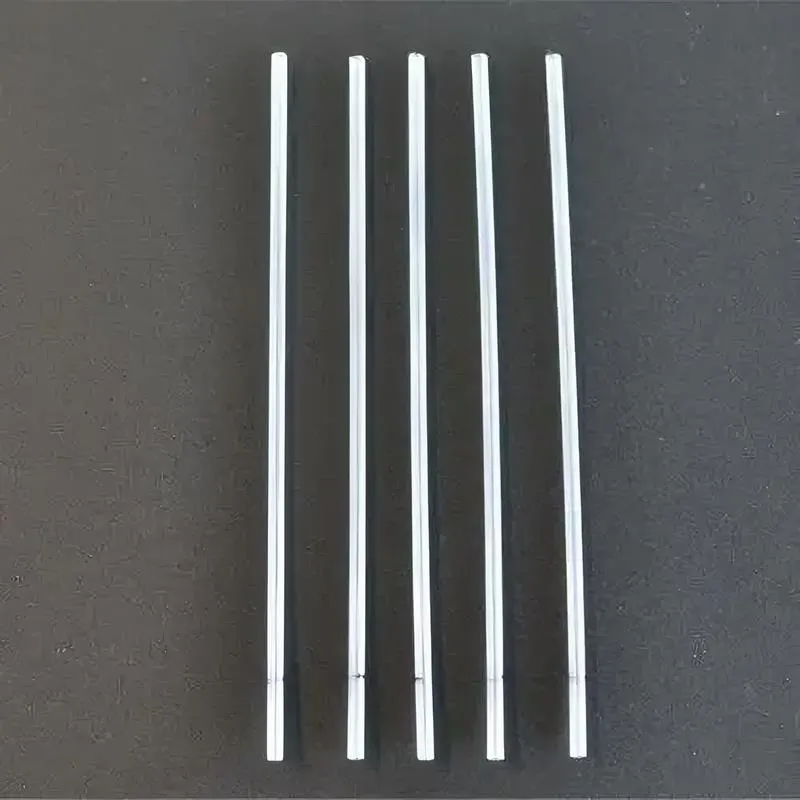
AISI 8645H Steel Tube,Pipe
Product Code : STI-CSTI-1630-CU
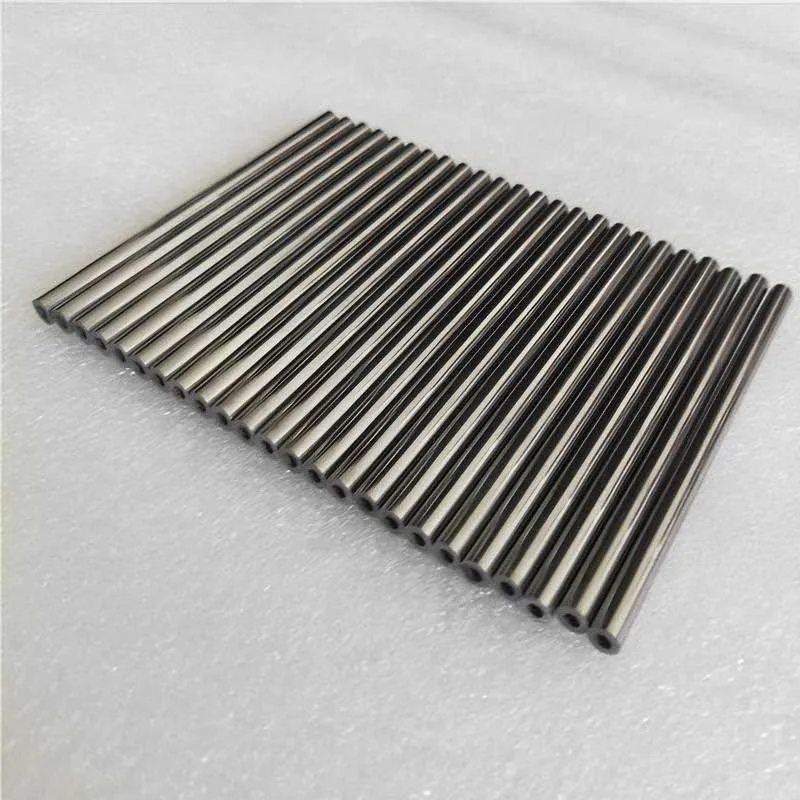
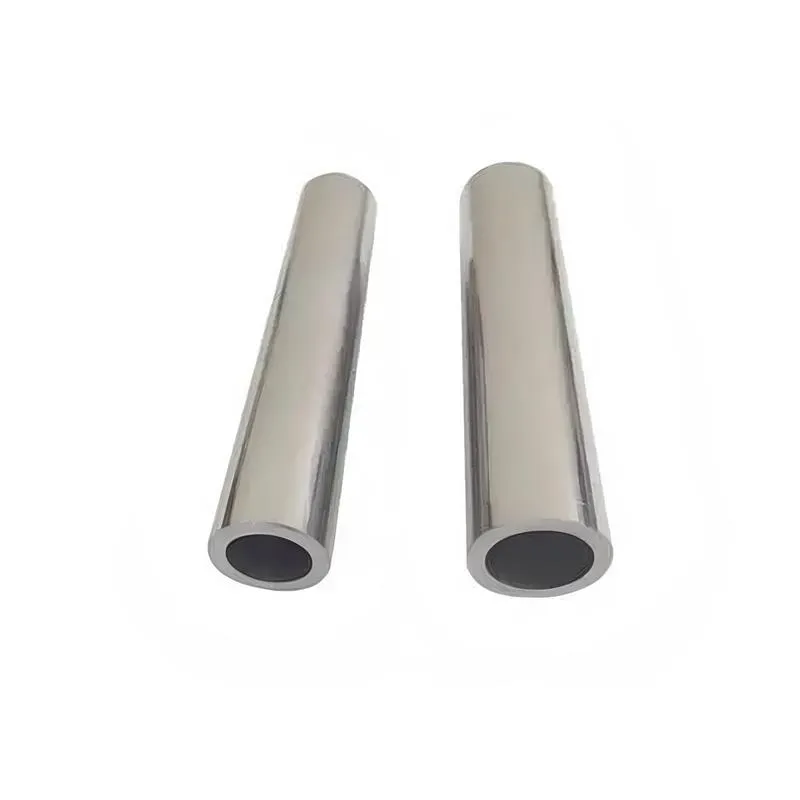
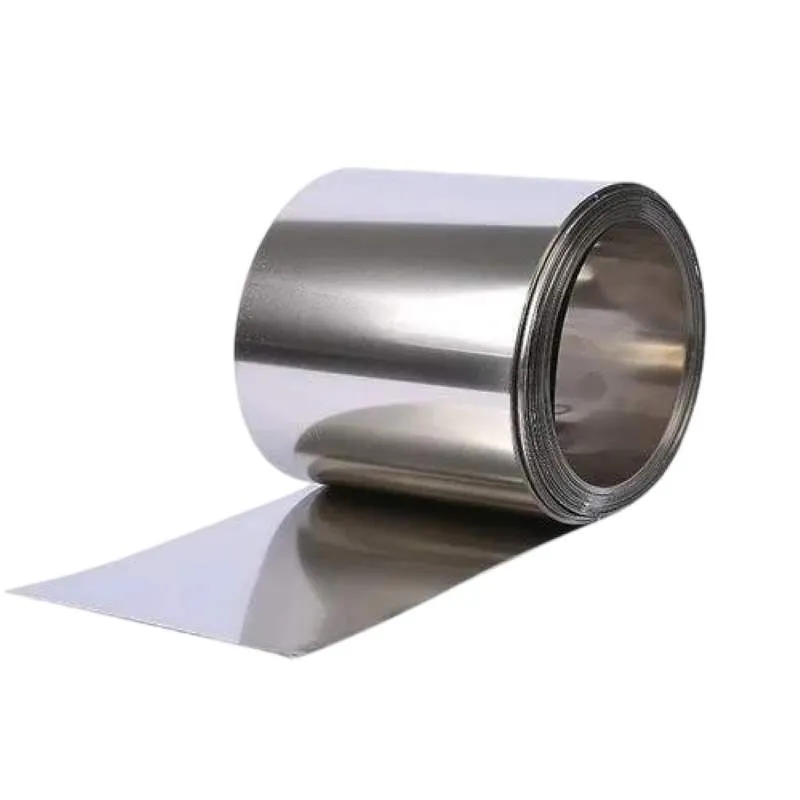
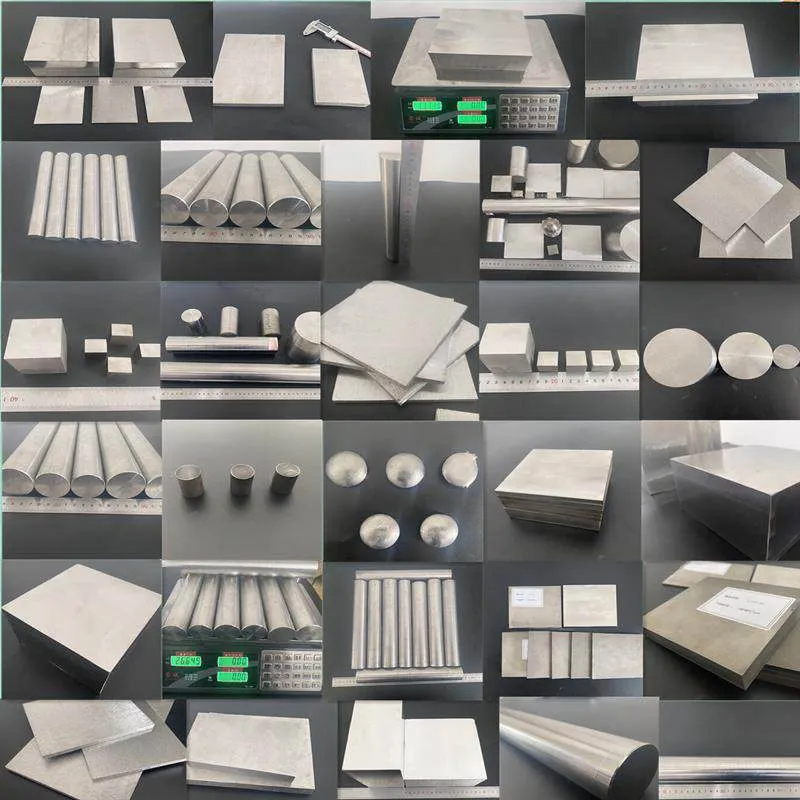
We provide AISI 8645H Steel Tube is available in Bar (Round bar, Flat bar), Ribbon, Wire, Rods, Tube,Seamless Tube,Pipe, Ingots, Plate, Sheet, Strip and Forging Stock.,Purity, chemical composition, size, etc. can all be customized to meet specific requirements.AISI 8645H Steel Pipe
Please contact us if you need customized services. We will contact you with the price and availability in 24 hours.
AISI 8645H Steel Tube Product Information
-:-
For detailed product information, please contact sales.
-:
AISI 8645H Steel Tube Synonyms
-:-
For detailed product information, please contact sales.
-:
AISI 8645H Steel Product Information
-:-
For detailed product information, please contact sales.
-:
# Technical Data Sheet: AISI 8645H Alloy Steel
## Hardenability-Controlled Nickel-Chromium-Molybdenum Steel
---
### 1. Material Overview
**Designation:** AISI 8645H / UNS H86450
**Material Classification:** Hardenability-Controlled Nickel-Chromium-Molybdenum Medium-Carbon Alloy Steel
**Key Characteristics:** AISI 8645H is a hardenability-controlled variant of the standard 8645 alloy steel, distinguished by its guaranteed response to heat treatment within specified SAE J1268 Jominy bands. The "H" designation ensures predictable and consistent through-hardening characteristics, making this material ideal for high-volume manufacturing of components requiring reliable performance and minimal property variation across production batches. With a carbon content of 0.43-0.48%, 8645H provides higher strength potential than 8640H while maintaining good toughness through balanced nickel, chromium, and molybdenum alloying.
---
### 2. International Standards Compliance
**Primary Specifications:**
- **UNS:** H86450
- **ASTM Standards:**
- **A304:** Steel Bars, Alloy, Subject to End-Quench Hardenability Requirements
- **A914/A914M:** Steel Bars Subject to Restricted Hardenability Requirements
- **A29/A29M:** Steel Bars, Carbon and Alloy, Hot-Wrought and Cold-Finished
- **SAE/AISI Specifications:**
- **SAE J1268:** Hardenability Bands for H-Grade Steels
- **SAE J404:** Chemical Compositions of SAE Alloy Steels
- **ISO Standards:**
- **ISO 683-11:** Heat-treatable steels, alloy steels and free-cutting steels
- **European Standards:**
- **EN 10083-3:** Steels for quenching and tempering
- **1.6546H** (34CrNiMo6H): Similar hardenability-controlled grade
- **Japanese Standards:**
- **JIS G4105:** Chromium molybdenum steels (SCM445H equivalent)
- **German Standards:**
- **DIN 17200:** Case-hardening and heat-treatable steels with H-classification
---
### 3. Chemical Composition (H-Grade Controlled)
**Guaranteed Composition Ranges (Weight %):**
| Element | H-Grade Range | Target Value | H-Grade Control Purpose | Metallurgical Significance |
|---------|---------------|--------------|-------------------------|---------------------------|
| **Carbon (C)** | 0.42 - 0.49% | 0.45% | Controlled for consistent hardenability response | Primary strength contributor, higher than 8640H for enhanced strength |
| **Manganese (Mn)** | 0.70 - 1.05% | 0.87% | Primary hardenability control element | Ensures predictable Jominy curve development |
| **Silicon (Si)** | 0.15 - 0.35% | 0.25% | Controlled for consistent effects | Deoxidizer, provides solid solution strengthening |
| **Nickel (Ni)** | 0.35 - 0.75% | 0.55% | Controlled within narrower bands | Enhances toughness despite higher carbon content |
| **Chromium (Cr)** | 0.35 - 0.65% | 0.50% | Ensures consistent hardenability depth | Improves hardenability and wear resistance |
| **Molybdenum (Mo)** | 0.15 - 0.25% | 0.20% | Critical for temper embrittlement control | Reduces susceptibility to temper embrittlement |
| **Phosphorus (P)** | ≤ 0.035% | 0.020% | Minimized for improved toughness | Residual element, tightly controlled |
| **Sulfur (S)** | ≤ 0.040% | 0.025% | May be controlled for machinability | Standard grade; resulfurized variants available |
| **Iron (Fe)** | Balance | Balance | Matrix element | - |
**H-Grade Critical Control Points:**
- Carbon content specifically centered around 0.45% ±0.03% for predictable strength development
- Manganese range optimized for consistent hardenability across production lots
- Nickel content controlled to ensure reliable toughness despite higher carbon
- All elements maintained within tighter ranges than standard 8645
**Comparison with Standard 8645:**
- **Carbon:** More tightly controlled (0.42-0.49% vs 0.43-0.48%)
- **Manganese:** Wider controlled range for hardenability adjustment
- **Overall:** Composition optimized for predictable heat treatment response
---
### 4. Hardenability Specifications
**SAE J1268 Hardenability Band Requirements for 8645H:**
| Distance from Quenched End | Rockwell C Hardness Range (As-Quenched) | Equivalent Section Capability |
|----------------------------|-----------------------------------------|-------------------------------|
| 1.5 mm (1/16") | 48-60 HRC | Surface of small sections |
| 3.0 mm (1/8") | 47-59 HRC | - |
| 5.0 mm (3/16") | 45-57 HRC | - |
| 9.5 mm (3/8") | 39-51 HRC | 1/4 radius of 50 mm section |
| 12.7 mm (1/2") | 36-48 HRC | Mid-radius of 50 mm section |
| 19.0 mm (3/4") | 31-43 HRC | 3/4 radius of 75 mm section |
| 25.4 mm (1") | 27-39 HRC | Center of 50 mm section |
| 38.1 mm (1.5") | 23-35 HRC | Center of 75 mm section |
| 50.8 mm (2") | 20-32 HRC | Center of 100 mm section |
**Ideal Diameter (DI) Values:**
- **DI (Oil):** 85-110 mm (3.3-4.3 inches)
- **DI (Water):** 120-150 mm (4.7-5.9 inches)
- **Critical Diameter (95% martensite):** ~65 mm (2.6 inches) in oil
**Hardenability Advantages:**
- Predictable through-hardening to specified diameters
- Consistent hardness gradients across production batches
- Reduced need for extensive mechanical testing
- Reliable heat treatment results regardless of production source
---
### 5. Heat Treatment Response
**Typical Heat Treatment Parameters:**
**Austenitizing:**
- **Temperature:** 830-855°C (1525-1575°F) - typically 845°C (1550°F)
- **Soak Time:** 30-45 minutes per inch of thickness
- **Atmosphere:** Controlled to limit decarburization (<0.25 mm)
**Quenching:**
- **Preferred Medium:** Fast oil quench (H-value 0.35-0.50)
- **Alternative:** Water quench for simple geometries (with caution)
- **Agitation:** Moderate to vigorous for uniform cooling
**Tempering Ranges & Results:**
| Temper Temperature | Resulting Hardness | Tensile Strength Range | Yield Strength Range | Typical Applications |
|-------------------|-------------------|------------------------|---------------------|---------------------|
| **205°C (400°F)** | 48-53 HRC | 1550-1725 MPa | 1240-1380 MPa | High wear applications |
| **425°C (800°F)** | 39-44 HRC | 1240-1380 MPa | 1100-1240 MPa | High strength components |
| **540°C (1000°F)** | 31-36 HRC | 965-1100 MPa | 830-965 MPa | General engineering |
| **595°C (1100°F)** | 27-32 HRC | 860-965 MPa | 690-830 MPa | Impact-resistant parts |
| **650°C (1200°F)** | 23-28 HRC | 760-860 MPa | 620-760 MPa | High toughness applications |
**H-Grade Heat Treatment Benefits:**
- Reduced property variation: ≤5% vs 15-20% for standard grade
- Predictable distortion: Consistent thermal response
- Reliable hardness patterns: Guaranteed within Jominy bands
- Statistical process control compatibility
---
### 6. Mechanical Properties (Guaranteed Minimums)
**Properties After Oil Quench & 540°C Temper:**
| Property | 25 mm (1") Diameter | 50 mm (2") Diameter | 75 mm (3") Diameter | Test Standard |
|----------|---------------------|---------------------|---------------------|---------------|
| **Tensile Strength** | 1035-1105 MPa | 965-1035 MPa | 895-965 MPa | ASTM A370 |
| **Yield Strength (0.2%)** | 895-965 MPa | 860-930 MPa | 795-860 MPa | ASTM A370 |
| **Elongation** | 12% minimum | 13% minimum | 14% minimum | ASTM A370 |
| **Reduction of Area** | 40% minimum | 42% minimum | 44% minimum | ASTM A370 |
| **Hardness** | 31-36 HRC | 30-35 HRC | 29-34 HRC | ASTM E18 |
| **Charpy V-Notch (20°C)** | 25 J minimum | 27 J minimum | 29 J minimum | ASTM E23 |
| **Charpy V-Notch (-18°C)** | 15 J minimum | 17 J minimum | 19 J minimum | ASTM E23 |
| **Fatigue Strength (10⁷)** | 480-550 MPa | 470-540 MPa | 460-530 MPa | ASTM E466 |
**H-Grade Property Consistency:**
- **Batch-to-Batch Variation:** ≤4% for strength properties
- **Cross-Section Uniformity:** Hardness gradient ≤3 HRC in 75 mm diameter
- **Statistical Control:** 99.7% within ±1.5σ of target values
- **Testing Reduction:** Sample frequency can be reduced by 40%
**Physical Properties:**
| Property | Value | Units | Conditions |
|----------|-------|-------|------------|
| **Density** | 7.85 | g/cm³ | At 20°C |
| **Melting Range** | 1415-1460 | °C | Liquidus to solidus |
| **Thermal Conductivity** | 41.5 | W/m·K | At 100°C |
| **Specific Heat** | 460 | J/kg·K | At 100°C |
| **Thermal Expansion** | 11.5 × 10⁻⁶ | /°C | 20-100°C |
| **Modulus of Elasticity** | 205 | GPa | At 20°C |
| **Shear Modulus** | 80 | GPa | At 20°C |
| **Electrical Resistivity** | 0.23 | μΩ·m | At 20°C |
---
### 7. Material Characteristics & Performance
**H-Grade Specific Advantages:**
1. **Manufacturing Reliability:** 30-40% reduction in scrap and rework
2. **Design Optimization:** Engineers can utilize 85-90% of material capability
3. **Quality Assurance:** Reduced inspection requirements with improved consistency
4. **Supply Chain Management:** Identical properties from multiple suppliers
5. **Predictable Performance:** Statistical reliability in critical applications
**Performance Benefits of 8645H vs. 8640H:**
- **Strength:** 10-15% higher tensile and yield strength
- **Hardenability:** Better through-hardening in larger sections
- **Wear Resistance:** Superior due to higher carbon content
- **Fatigue Strength:** Improved for high-cycle applications
- **Cost Effectiveness:** Better strength-to-cost ratio for many applications
**Limitations & Considerations:**
- **Toughness:** Lower impact resistance than 8640H at same hardness
- **Weldability:** More challenging than lower-carbon H-grades
- **Maximum Section:** ~75 mm for optimal through-hardening
- **Machinability:** Slightly lower than 8640H in annealed condition
**Special Characteristics:**
- Excellent response to induction and flame hardening
- Good dimensional stability during heat treatment
- Suitable for carburizing when ultra-high surface hardness needed
- Moderate temper embrittlement susceptibility (controlled by Mo content)
---
### 8. Applications
**Automotive & Heavy Transportation (High-Volume Production):**
- Heavy truck axle shafts and differential gears
- Commercial vehicle transmission components
- Large diesel engine crankshafts and connecting rods
- Mass-produced steering and suspension components
- Off-highway vehicle final drive parts
**Aerospace & Defense (Quality-Critical Components):**
- Aircraft landing gear components (secondary structures)
- Helicopter rotor shafts and drive train parts
- Missile launch system structural members
- Armored vehicle suspension and running gear
- Military vehicle transmission components
**Oil & Gas Equipment (Reliability-Critical):**
- Drill string tool joints and subs
- Mud pump fluid end components
- High-pressure valve stems and gates
- Wellhead equipment structural parts
- Downhole tool bodies
**Power Generation (Long-Life Requirements):**
- Turbine generator shafting and coupling bolts
- Large pump shafts for power plants
- Wind turbine gearbox components
- Hydroelectric turbine shafts
- Generator drive components
**Heavy Machinery & Construction:**
- Excavator swing mechanism gears and shafts
- Crane boom foot pins and sheave shafts
- Mining equipment drive components
- Large press columns and rams
- Rolling mill backup rolls
**Industrial Manufacturing (Consistency-Critical):**
- Large gearbox input/output shafts
- Extrusion press components
- Injection molding machine tie bars
- Machine tool spindles and shafts
- Processing equipment drive components
**Comparison with Other H-Grades:**
- **vs. 8640H:** Higher strength, better wear resistance, slightly lower toughness
- **vs. 4340H:** Lower cost, adequate for many applications, lower hardenability
- **vs. 4140H:** Better toughness, higher alloy cost, better hardenability
- **vs. 8740H:** Similar strength, different alloy balance, similar applications
---
### 9. Manufacturing & Processing
**Machining Guidelines:**
- **Annealed Condition (Recommended):** BHN 187-229, machinability 50-55%
- **Hardened Condition:** Possible with carbide tools, reduced speeds
- **Tools:** Coated carbide for production, CBN for hard machining
- **Parameters:** 60-100 m/min turning, feed 0.15-0.30 mm/rev
- **Coolant:** Essential for heat management and chip control
**H-Grade Machining Advantages:**
- Consistent tool life and wear patterns
- Predictable machining forces
- Reduced trial runs for new batches
- More reliable production scheduling
**Heat Treatment Quality Control:**
- Statistical process control throughout
- Temperature uniformity verification (±5°C)
- Quench rate monitoring and control
- Hardness pattern verification
- Microstructure validation
**Welding (When Necessary):**
- **Preheat:** 200-300°C minimum
- **Interpass:** Maintain 200-300°C
- **PWHT:** Temper at 595-650°C immediately
- **Processes:** GTAW or SMAW with low-hydrogen electrodes
- **Filler:** AWS A5.28 ER80S-B2 or similar
---
### 10. Quality Assurance & Testing
**H-Grade Mandatory Requirements:**
1. **Jominy Testing:** Each heat tested per ASTM A255
2. **Enhanced Chemical Analysis:** 9-point OES analysis with statistical reporting
3. **Statistical Process Control:** Cpk ≥ 1.67 for critical parameters
4. **Enhanced Traceability:** Complete documentation from melt to shipment
**Testing Protocol:**
- Full Jominy curve for each heat
- Mechanical testing from multiple locations
- Non-destructive testing as specified
- Microstructural examination and inclusion rating
**Certification Requirements:**
- EN 10204 3.2 certificate mandatory
- Hardenability test report with actual curve
- Statistical process control data
- Full traceability documentation
- Heat treatment records (if supplied heat treated)
**Quality Control Points:**
- Raw material verification
- Melting and composition control
- Rolling/forging process control
- Heat treatment parameter verification
- Final inspection and testing
---
### 11. Technical Recommendations
**Design Guidelines:**
- **Optimal Size Range:** 25-75 mm diameter for best property consistency
- **Stress Concentrations:** Use generous fillet radii (minimum R=3 mm)
- **Surface Treatments:** Shot peening recommended for fatigue improvement
- **Temperature Limits:** Maximum continuous service ~400°C
- **Corrosion Protection:** Essential for harsh environments
**Procurement Specification Example:**
```plaintext
MATERIAL: AISI 8645H Alloy Steel
SPECIFICATION: ASTM A304, SAE J1268 Hardenability Band
CONDITION: Annealed, normalized, or heat treated as specified
CHEMISTRY: Per H-grade requirements
HARDENABILITY: Must meet SAE J1268 band for 8645H
TESTING: Jominy test report required for each heat
CERTIFICATION: EN 10204 3.2 with full traceability
```
**Safety Factors (Based on H-Grade Reliability):**
- Static loading: 2.0-2.3 (can be lower than standard grade)
- Fatigue loading: 1.8-2.0
- Impact loading: 2.5-3.0
- Combined loading: 2.2-2.5
---
### 12. Economic Considerations
**Cost Factors:**
- Material cost: 5-10% premium over standard 8645
- Processing cost: Similar to standard grade
- Quality cost: Reduced inspection and testing requirements
- Life cycle cost: Improved reliability reduces total cost
**Value Proposition:**
- Reduced scrap and rework in manufacturing
- Improved component reliability and consistency
- Lower total cost of ownership for critical applications
- Enhanced design capability with predictable material behavior
**Application Selection Guidelines:**
- Choose 8645H when consistent heat treatment response is critical
- Consider for high-volume production where consistency reduces costs
- Select for safety-critical applications requiring predictable performance
- Use when multiple suppliers must provide identical material properties
---
### 13. Environmental & Sustainability
**Environmental Compliance:**
- Fully recyclable at end of life
- REACH and RoHS compliant
- Conflict mineral policy compliance
- Energy-efficient manufacturing processes
**Sustainability Features:**
- Long service life reduces replacement frequency
- High strength allows weight reduction in designs
- Established recycling infrastructure
- Compatible with green manufacturing initiatives
**Life Cycle Considerations:**
- Design for durability and extended service life
- Consider total cost of ownership
- Evaluate environmental impact throughout life cycle
- Plan for end-of-life recycling
---
**Disclaimer:** This technical data sheet provides characteristic values for AISI 8645H alloy steel. H-grade materials provide enhanced consistency but require verification for specific applications. Always consult with materials engineering professionals for critical applications.
---
**Document Control**
- **Document:** TDS-8645H-GEN
- **Revision:** 1.0
- **Date:** March 2024
- **Prepared By:** Materials Engineering Department
- **Approved By:** Quality Assurance Manager
- **Quality System:** ISO 9001:2015, IATF 16949 Certified
-:-
For detailed product information, please contact sales.
-:
AISI 8645H Steel Specification
Dimensions
Size:
Diameter 20-1000 mm Length <6362 mm
Size:We can customized as required
Standard:
Per your request or drawing
We can customized as required
Properties(Theoretical)
Chemical Composition
-:-
For detailed product information, please contact sales.
-:
AISI 8645H Steel Properties
-:-
For detailed product information, please contact sales.
-:
Applications of AISI 8645H Steel Tube
-:-
For detailed product information, please contact sales.
-:
Chemical Identifiers AISI 8645H Steel Tube
-:-
For detailed product information, please contact sales.
-:
Packing of AISI 8645H Steel Tube
-:-
For detailed product information, please contact sales.
-:
Standard Packing:
-:-
For detailed product information, please contact sales.
-:
Typical bulk packaging includes palletized plastic 5 gallon/25 kg. pails, fiber and Steel Tube drums to 1 ton super sacks in full container (FCL) or truck load (T/L) quantities. Research and sample quantities and hygroscopic, oxidizing or other air sensitive materials may be packaged under argon or vacuum. Solutions are packaged in polypropylene, plastic or glass jars up to palletized 2833 gallon liquid totes Special package is available on request. E FORUs’ is carefully handled to minimize damage during storage and transportation and to preserve the quality of our products in their original condition