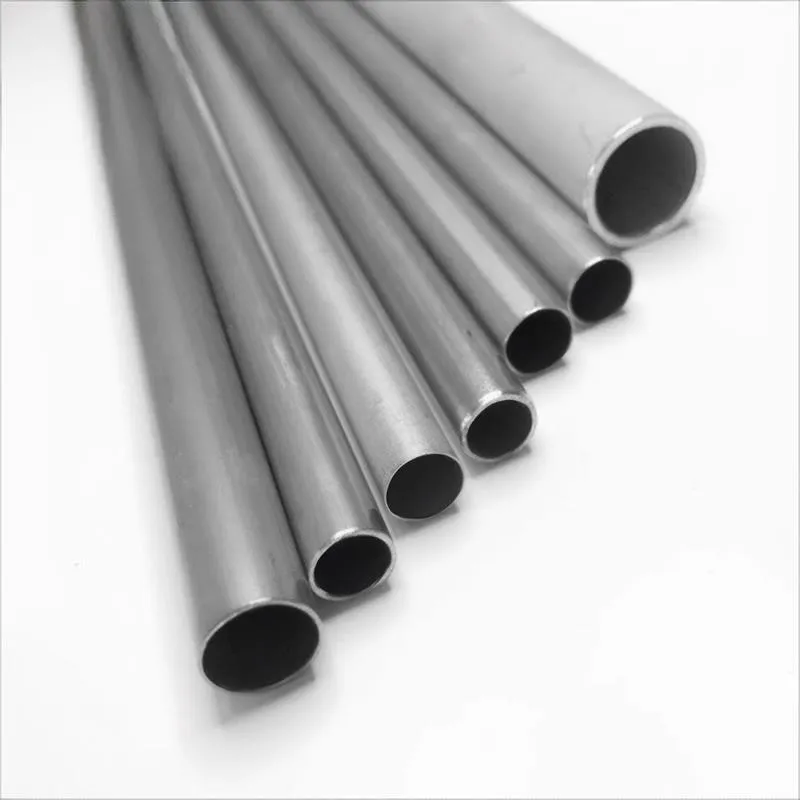
AISI 86B30H Steel, quenched
Product Code : STI-CSTI-1608-CU
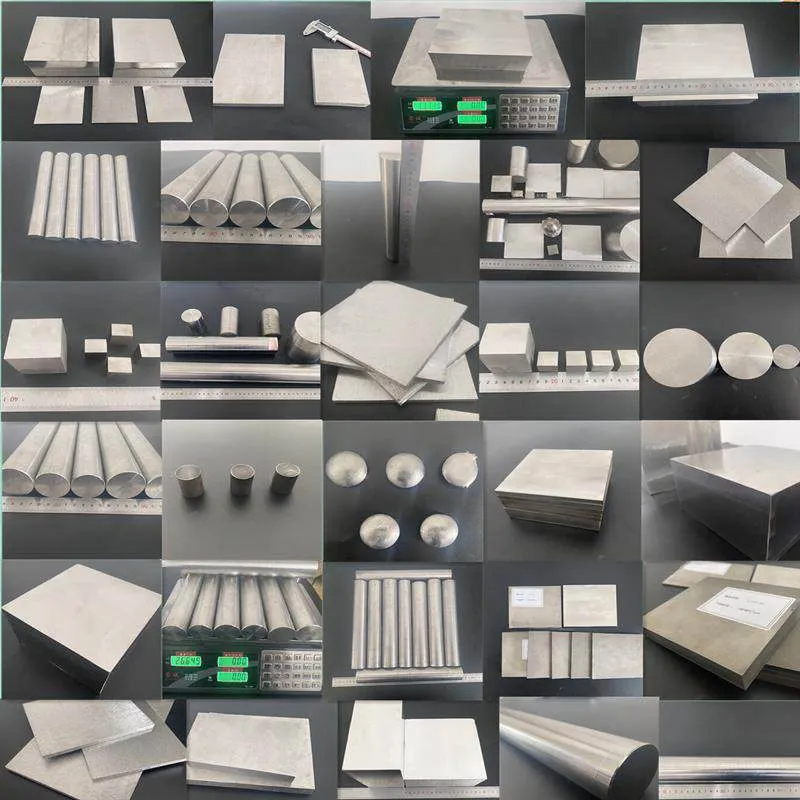
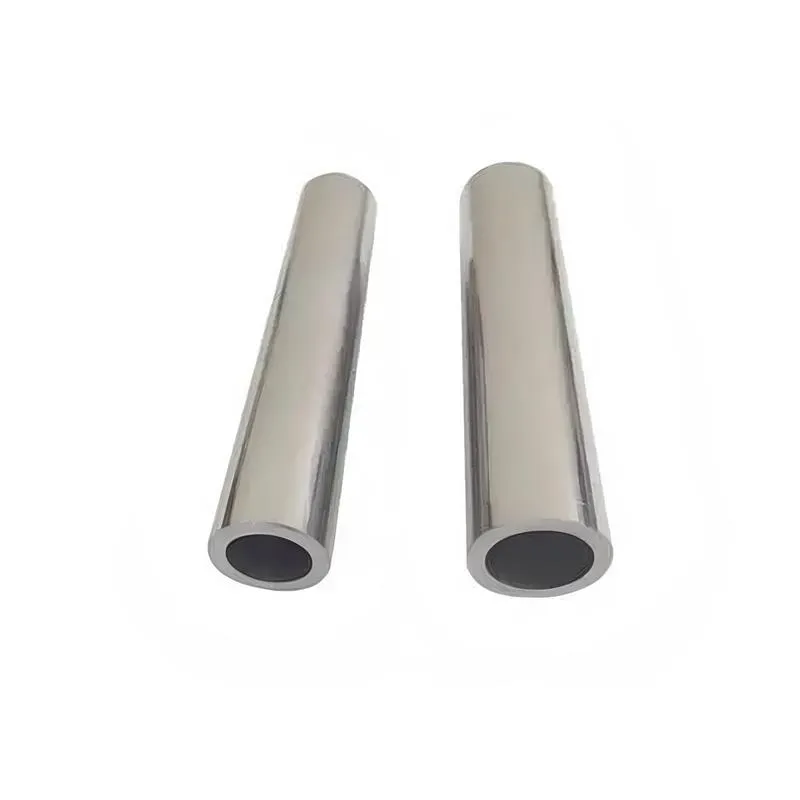
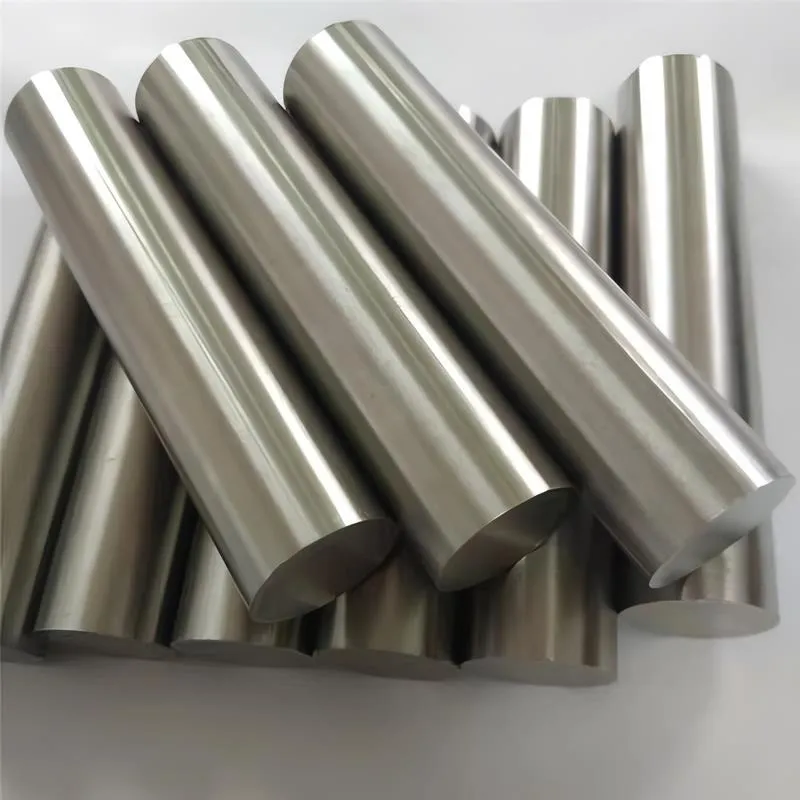
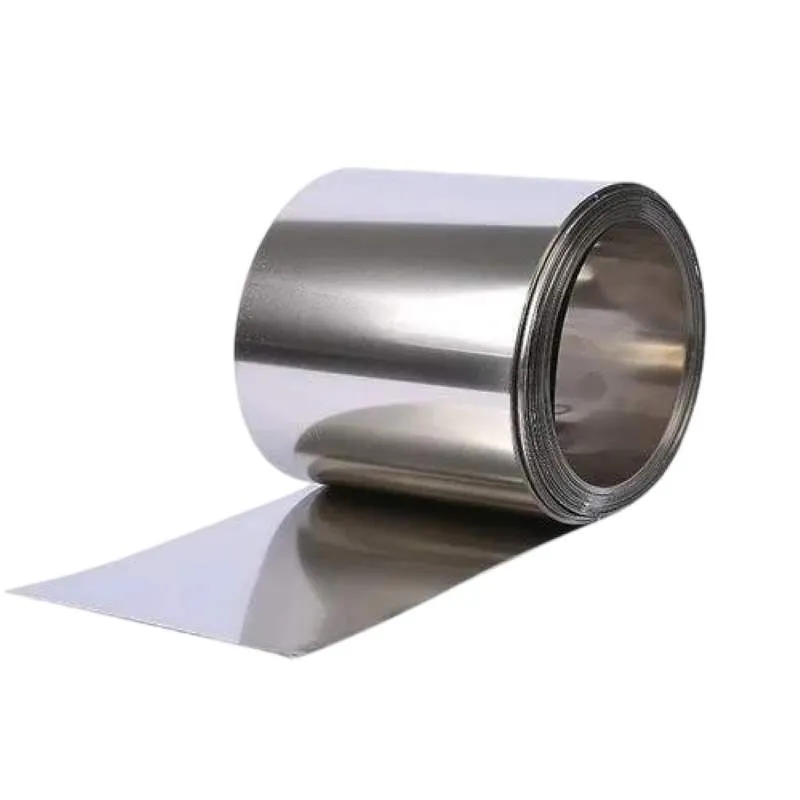
We provide AISI 86B30H Steel, quenched from 855°C (1570°F), 650°C (1200°F) temper is available in Bar (Round bar, Flat bar), Ribbon, Wire, Rods, Tube,Seamless Tube,Pipe, Ingots, Plate, Sheet, Strip and Forging Stock.,Purity, chemical composition, size, etc. can all be customized to meet specific requirements.
Please contact us if you need customized services. We will contact you with the price and availability in 24 hours.
AISI 86B30H Steel, quenched from 855°C (1570°F), 650°C (1200°F) temper Product Information
-:-
For detailed product information, please contact sales.
-:
AISI 86B30H Steel, quenched from 855°C (1570°F), 650°C (1200°F) temper Synonyms
-:-
For detailed product information, please contact sales.
-:
AISI 86B30H Steel, quenched from 855°C (1570°F), 650°C (1200°F) temper Product Information
-:-
For detailed product information, please contact sales.
-:
# **AISI 86B30H Steel, Quenched & Tempered (855°C / 650°C)**
## **Product Introduction**
AISI 86B30H is a **boron-enhanced, hardenability-controlled** nickel-chromium-molybdenum alloy steel that represents a sophisticated engineering material optimized for demanding applications. The "B" designation indicates intentional boron addition (0.0005-0.003%) for enhanced hardenability, while the "H" suffix guarantees compliance with specific end-quench hardenability bands.
When processed through the specialized heat treatment of **quenching from 855°C (1570°F)** followed by **high-temperature tempering at 650°C (1200°F)**, this steel achieves a **remarkable property profile characterized by exceptional toughness, high ductility, substantial strength, and superior dimensional stability**. This treatment represents the **toughness-optimized extreme** of the 86B30H alloy system, specifically engineered for applications where maximum impact resistance, damage tolerance, and stability are paramount over ultimate hardness.
The elevated austenitizing temperature (855°C vs. standard 845°C) ensures complete solutioning of boron and alloy carbides, while the 650°C temper produces a highly tempered, stable microstructure approaching sorbitic characteristics in some applications.
---
## **1. Chemical Composition (Typical Weight %)**
| Element | Content Range | Metallurgical Function |
|---------|---------------|------------------------|
| **Carbon (C)** | 0.28 - 0.33 | Base hardenability and strength |
| **Manganese (Mn)** | 0.70 - 0.90 | Hardenability enhancement, solid solution strengthening |
| **Phosphorus (P)** | ≤ 0.035 | Residual element (minimized for toughness) |
| **Sulfur (S)** | ≤ 0.040 | Residual element (controlled for machinability) |
| **Silicon (Si)** | 0.20 - 0.35 | Deoxidizer, improves temper resistance |
| **Nickel (Ni)** | 0.40 - 0.70 | Critical for toughness enhancement |
| **Chromium (Cr)** | 0.40 - 0.60 | Hardenability and wear resistance |
| **Molybdenum (Mo)** | 0.15 - 0.25 | Prevents temper embrittlement, improves creep resistance |
| **Boron (B)** | **0.0005 - 0.003** | **Powerful hardenability enhancer** |
**Special Significance of 855°C Austenitizing:**
- **Complete Boron Solutioning:** Ensures maximum hardenability effect from minimal boron content
- **Optimal Carbide Dissolution:** Maximizes Mo and Cr in solution for uniform properties
- **Grain Size Control:** Allows sufficient temperature for uniform austenitization while controlling grain growth
- **Heavy Section Processing:** Essential for uniform properties in sections exceeding 100mm
**Boron's Critical Role in This Treatment:**
At 650°C tempering, boron's primary function has been completed during quenching—ensuring full martensitic transformation in heavy sections. The resulting uniform starting structure then responds optimally to high-temperature tempering, developing maximum toughness without the strength penalties associated with conventional steels.
---
## **2. Physical & Mechanical Properties**
### **2.1 Core Mechanical Properties**
| Property | Typical Range | Test Standard | Technical Notes |
|----------|---------------|---------------|-----------------|
| **Hardness** | **217 - 269 HBW** (Approx. 18-26 HRC) | ASTM E18/E10 | Uniform throughout section |
| **Tensile Strength** | **700 - 860 MPa** (102-125 ksi) | ASTM A370 | Balanced strength level |
| **Yield Strength (0.2%)** | **550 - 690 MPa** (80-100 ksi) | ASTM A370 | Excellent for toughness level |
| **Elongation (50mm)** | **22 - 28%** | ASTM A370 | Exceptional ductility |
| **Reduction of Area** | **60 - 70%** | ASTM A370 | Superior toughness indicator |
| **Charpy V-Notch (RT)** | **95 - 135+ J** (70-100+ ft-lb) | ASTM A370 | Outstanding impact resistance |
| **Charpy V-Notch (-40°C)** | **54 - 95 J** (40-70 ft-lb) | ASTM A370 | Excellent low-temperature performance |
| **Fracture Toughness (K₁C)** | **90 - 120 MPa√m** | ASTM E399 | Excellent damage tolerance |
| **Fatigue Strength** | **350 - 415 MPa** (51-60 ksi) | ASTM E466 | At 10⁷ cycles, R=-1 |
| **Fatigue Crack Growth Rate** | Very low (da/dN) | ASTM E647 | Superior crack propagation resistance |
### **2.2 Section Hardening Performance**
- **Through-Hardening Capability:** Full hardening (≥25 HRC) in sections up to **150mm (6 inches)**
- **Effective Depth:** Maintains >90% of surface properties at 50mm depth in 125mm sections
- **Property Uniformity:** <5% variation in mechanical properties through 100mm sections
- **Hardenability Band:** Conforms to SAE J1268; boron ensures exceptionally flat Jominy curve
- **Quench Media Compatibility:** Effective with oil, polymer, or carefully controlled water quench
### **2.3 Physical Properties**
| Property | Value | Conditions / Notes |
|----------|-------|-------------------|
| **Density** | 7.85 g/cm³ | Room temperature |
| **Modulus of Elasticity** | 205 GPa | 20°C |
| **Shear Modulus** | 80 GPa | 20°C |
| **Poisson's Ratio** | 0.29 | - |
| **Thermal Conductivity** | 42.0 W/m·K | 100°C |
| **Specific Heat Capacity** | 460 J/kg·K | 20°C |
| **Thermal Expansion Coefficient** | 11.5 × 10⁻⁶/°C | 20-100°C |
| **Electrical Resistivity** | 0.25 μΩ·m | 20°C |
| **Magnetic Properties** | Ferromagnetic | Below Curie temperature |
### **2.4 Microstructural Characteristics**
- **As-Quenched Structure:** 100% fine lath martensite with minimal retained austenite (<2%)
- **After 650°C Tempering:** **Highly tempered martensite/sorbitic structure** with extensive carbide spheroidization
- **Carbide Morphology:** Well-spheroidized Mo₂C and Cr₇C₃ carbides (100-300nm)
- **Prior Austenite Grain Size:** ASTM 7-9 (controlled refinement)
- **Ferrite Grain Structure:** Equiaxed grains with uniform carbide distribution
- **Boron Status:** Primarily in solid solution at prior austenite grain boundaries
**Microstructural Evolution at 650°C:**
1. **Complete Tempering:** All martensite fully tempered to ferrite + carbides
2. **Carbide Spheroidization:** Extensive rounding and coarsening of carbides
3. **Recovery and Recrystallization:** Partial recrystallization of ferrite matrix
4. **Stress Relief:** >95% of quenching stresses eliminated
---
## **3. Key Features & Advantages**
### **3.1 Exceptional Toughness Development**
- **Ultimate Impact Resistance:** Charpy values up to 135J at room temperature—among the highest for quenched and tempered steels
- **Superior Fracture Toughness:** K₁C values >90 MPa√m enable damage-tolerant design
- **Excellent Low-Temperature Performance:** Maintains >54J at -40°C
- **Minimal Transition Temperature:** Very low ductile-to-brittle transition temperature
### **3.2 Optimal Dimensional Stability**
- **Complete Stress Relief:** 650°C temper eliminates virtually all residual stresses
- **Minimal Distortion:** Predictable dimensional changes during and after machining
- **Thermal Stability:** Maintains dimensions during temperature cycling
- **Machining Precision:** Enables tight tolerance maintenance after heat treatment
### **3.3 Superior Damage Tolerance**
- **Fatigue Crack Growth Resistance:** Very low da/dN values for long service life
- **Overload Capacity:** Can withstand substantial overload without catastrophic failure
- **Notch Insensitivity:** Relatively low notch sensitivity factor
- **Flaw Tolerance:** Accommodates minor defects without significant strength reduction
### **3.4 Manufacturing & Economic Advantages**
- **Machinability:** Best among hardened conditions for this alloy system
- **Weldability:** Most weldable condition (with proper procedures)
- **Economic Efficiency:** Provides premium toughness at 80-90% of high-alloy steel cost
- **Process Reliability:** Predictable response to heat treatment
- **Reduced Scrap Rates:** Lower distortion and cracking risks
### **3.5 Special Properties of 650°C Temper**
- **Maximum Toughness:** Achieves the highest possible toughness for this alloy
- **Optimal Ductility:** Elongation values approaching normalized material
- **Stress Corrosion Resistance:** Improved resistance to stress corrosion cracking
- **Temperature Capability:** Maintains properties to 450°C
---
## **4. Primary Applications**
### **4.1 Heavy Machinery & Mining Equipment**
- **Large Excavator Components:** Dipper handles, boom sections (100-200mm sections)
- **Crusher Frames & Housings:** Subject to severe impact and vibration
- **Mill Components:** Grinding mill trunnions, gear housings
- **Dragline Components:** Equalizer bars, suspension systems
### **4.2 Energy & Power Generation**
- **Turbine Shafts:** Hydroelectric and steam turbine rotors (150-300mm diameter)
- **Generator Components:** Rotor forgings, retaining rings requiring high toughness
- **Nuclear Components:** Reactor internals, pressure vessel supports
- **Large Valve Bodies:** For critical service where failure is unacceptable
### **4.3 Oil & Gas Industry**
- **Subsea Equipment:** Connectors, hubs, manifolds requiring high fracture toughness
- **Wellhead Components:** Hangers, mandrels for deepwater applications
- **Drilling Equipment:** Large stabilizer bodies, shock sub components
- **Pipeline Components:** Valves, fittings for sour service environments
### **4.4 Marine & Shipbuilding**
- **Propulsion Shafting:** Intermediate and propeller shafts (>150mm diameter)
- **Rudder Stocks & Steering Gear:** Critical structural components
- **Offshore Platform Components:** Nodes, connection points, leg sections
- **Naval Applications:** Submarine pressure hull fittings, surface vessel components
### **4.5 Specialized Structural Applications**
- **Earthquake-Resistant Structures:** Bolts, connections for seismic applications
- **Bridge Components:** High-strength fasteners, connection plates
- **Heavy Construction:** Crane components, foundation bolts
- **Pressure Vessels:** For nuclear, chemical, and cryogenic applications
### **4.6 Aerospace & Defense**
- **Launch Support Equipment:** Pad components, handling equipment
- **Armor Backing Plates:** For composite and ceramic armor systems
- **Missile Components:** Launcher structures, transport equipment
- **Ground Support:** Aircraft tow bars, jacking points
---
## **5. International Standards & Specifications**
### **5.1 North American Standards**
| Standard | Title | Relevance |
|----------|-------|-----------|
| **ASTM A304** | Steel Bars Subject to End-Quench Hardenability Requirements | Primary material specification |
| **SAE J1268** | Hardenability Bands for H-Steels | Compliance verification |
| **SAE J770** | Boron H Steels | Chemical and property requirements |
| **ASTM A434** | Quenched and Tempered Alloy Steel Bars | Bar product standard |
| **ASTM A788** | Steel Forgings | Forging applications |
| **AMS 6321** | Steel Bars, Boron Modified 8630H | Aerospace quality |
| **ASTM A668** | Steel Forgings, Carbon and Alloy | General forging standard |
### **5.2 European Standards**
| Standard | Equivalent/Similar | Notes |
|----------|-------------------|-------|
| **DIN EN 10083-3** | 34CrNiMo6 with boron | European equivalent with boron |
| **EN 10250-3** | - | Open die forgings specification |
| **EN 10222-2** | - | Pressure vessel steels |
| **EN 10269** | - | Steels for fasteners |
### **5.3 International Standards**
| Standard | Country/Region | Application |
|----------|---------------|-------------|
| **ISO 683-18** | International | Heat-treatable steels |
| **JIS G 4103** | Japan | SNCM630 with boron addition |
| **GB/T 3077** | China | 30CrNi2MoB |
| **AS 1444** | Australia | - |
### **5.4 Industry-Specific Specifications**
| Industry | Specifications | Application Notes |
|----------|---------------|------------------|
| **Nuclear** | ASME Section III, RCC-M | Class 1, 2, 3 components |
| **Marine** | ABS Rules, DNV GL, LR | Shafting, critical components |
| **Oil & Gas** | API 6A, NACE MR0175 | Sour service applications |
| **Power Generation** | ASME B31.1, IEC | Turbine and generator components |
| **Defense** | MIL-SPEC, NATO STANAG | Stringent requirements |
---
## **6. Heat Treatment Process Details**
### **6.1 Recommended Thermal Cycle**
```
1. PREHEATING: 650-700°C (1200-1290°F) for 45-60 min/inch
• Atmosphere: Air or protective
• Purpose: Minimize thermal shock, reduce distortion
• Critical for sections >75mm
2. AUSTENITIZING: 855°C ± 8°C (1570°F ± 15°F) for 60-75 min/inch
• Atmosphere: Protective (endothermic gas or nitrogen-based)
• Critical: Complete boron solutioning and carbide dissolution
• Control: ±8°C uniformity in furnace
3. QUENCHING: Based on section size and geometry:
• Oil quench (fast oil): For sections <100mm, complex shapes
• Polymer quench: For sections 100-150mm, reduced distortion
• Water quench: For sections >150mm (with careful control)
• Agitation: 0.5-1.0 m/s for uniform cooling
4. TEMPERING: 650°C ± 10°C (1200°F ± 20°F) for 3-4 hours/inch
• Double temper recommended: 2 × 2-3 hours/inch
• Air cool between tempers and after final temper
• Purpose: Maximum toughness development and stress relief
5. FINAL PROCESSING:
• Straightening if necessary between tempers
• Stress relieve at 650°C if required for complex geometries
• Final machining with appropriate techniques
```
### **6.2 Critical Process Parameters**
| Parameter | Control Range | Importance |
|-----------|---------------|------------|
| **Austenitizing Temperature** | 855°C ± 8°C | Complete boron solutioning |
| **Soak Time** | 60-75 min/inch | Uniform austenitization |
| **Quench Delay** | <25 seconds | Prevent transformation before quench |
| **Tempering Uniformity** | ±8°C | Consistent properties |
| **Cooling After Temper** | Air cool (avoid rapid cooling) | Prevent thermal stress |
### **6.3 Boron-Specific Considerations**
- **Atmosphere Quality:** Essential to prevent boron nitride formation
- **Quench Severity:** Must exceed critical cooling rate for full boron effectiveness
- **Tempering Response:** Maximum toughness development at 650°C
- **Quality Verification:** Jominy testing essential for hardenability confirmation
---
## **7. Quality Control & Testing**
### **7.1 Mandatory Testing Requirements**
| Test | Standard | Frequency | Acceptance Criteria |
|------|----------|-----------|-------------------|
| **Chemical Analysis** | ASTM E415 | Each heat | Full range including boron |
| **Jominy Hardenability** | ASTM A255 | Each heat | SAE J1268 compliance |
| **Tensile Testing** | ASTM A370 | Each lot | Surface, mid-radius, and core samples |
| **Charpy Impact Testing** | ASTM A370 | Each lot | Room temp, -20°C, -40°C |
| **Hardness Testing** | ASTM E18 | Each piece | 217-269 HBW |
| **Macro-Etch Examination** | ASTM E340 | Representative | Soundness assessment |
### **7.2 Specialized Testing for This Condition**
| Test | Purpose | Requirements |
|------|---------|--------------|
| **Fracture Toughness (K₁C)** | Damage tolerance | ≥90 MPa√m |
| **Drop Weight Test (NDT)** | Nil-ductility transition | Per ASTM E208 |
| **Stress Rupture Testing** | High-temperature stability | 1000h at 450°C |
| **Corrosion Fatigue** | Environmental performance | Per ASTM E466 |
### **7.3 Non-Destructive Examination**
| Method | Standard | Application |
|--------|----------|-------------|
| **Ultrasonic Testing (UT)** | ASTM A388 | Full volume examination |
| **Magnetic Particle Testing (MT)** | ASTM E709 | Surface and near-surface |
| **Radiographic Testing (RT)** | ASTM E94 | Weldments, critical areas |
| **Dye Penetrant Testing (PT)** | ASTM E165 | Non-magnetic surfaces |
---
## **8. Comparison with Alternative Materials & Treatments**
### **8.1 Performance Comparison**
| Property | 86B30H (855°C/650°C) | 86B30H (855°C/540°C) | 4340H (845°C/650°C) | Normalized 86B30H |
|----------|----------------------|----------------------|-------------------|-------------------|
| **Hardness (HRC)** | 18-26 | 32-38 | 20-28 | 12-18 |
| **Tensile Strength** | 700-860 MPa | 1030-1240 MPa | 700-860 MPa | 620-760 MPa |
| **Yield Strength** | 550-690 MPa | 930-1100 MPa | 550-690 MPa | 415-550 MPa |
| **Elongation** | 22-28% | 14-18% | 20-26% | 22-28% |
| **Charpy Impact (RT)** | 95-135J | 47-81J | 81-120J | 41-68J |
| **Fracture Toughness** | 90-120 MPa√m | 75-95 MPa√m | 80-110 MPa√m | - |
| **Max Section Size** | 150mm | 125mm | 100mm | Unlimited |
| **Relative Cost** | 85-90% | 100% | 110-120% | 80-85% |
### **8.2 Economic Comparison**
| Factor | 855°C/650°C Treatment | Alternative Treatments | Competitive Materials |
|--------|----------------------|------------------------|----------------------|
| **Material Cost** | Low-Medium | Medium-High | Variable |
| **Processing Cost** | Medium | Medium | Low-High |
| **Section Capacity** | High | Medium | Low-High |
| **Scrap Rate** | Low | Medium | Variable |
| **Tooling Cost** | Low | Medium | High |
| **Lifecycle Cost** | **Excellent** | Good | Variable |
---
## **9. Design & Manufacturing Guidelines**
### **9.1 Design Considerations**
- **Optimum Section Size:** 75-125mm diameter
- **Minimum Thickness:** 25mm for effective boron utilization
- **Section Transitions:** Gradual (1:4 minimum ratio)
- **Fillet Radii:** Minimum 6mm for sections <100mm, 10mm for >100mm
- **Hole Placement:** Minimum 2.5× diameter from edges
- **Stress Concentrations:** Kt < 2.0 recommended
- **Load Conditions:** Ideal for impact, shock, and alternating loads
### **9.2 Machining Recommendations**
| Operation | Condition | Tool Material | Parameters | Notes |
|-----------|-----------|---------------|------------|-------|
| **Turning** | Pre-hard | Carbide | 150-200 m/min, 0.3-0.5 mm/rev | Preferred method |
| **Turning** | Post-hard | CBN | 100-150 m/min, 0.15-0.25 mm/rev | Light cuts |
| **Milling** | Either | Carbide | 120-180 m/min, 0.1-0.2 mm/tooth | Climb milling preferred |
| **Drilling** | Pre-hard | HSS/Carbide | 25-35 m/min, peck drilling | Best before hardening |
| **Tapping** | Pre-hard | HSS | 5-10 m/min | Oversize tap drill recommended |
| **Grinding** | Post-hard | Alumina/CBN | 25-35 m/s | Low-stress conditions |
### **9.3 Welding Procedures**
- **Generally Recommended:** Only when essential, with full re-heat treatment
- **Preheat Temperature:** 200-250°C minimum
- **Interpass Temperature:** 200-300°C
- **Post-Weld Heat Treatment:** Mandatory - full re-temper at 650°C
- **Filler Metal:** Under-matching strength (AWS E9018-M or equivalent)
- **Welding Processes:** GTAW preferred; SMAW with control
- **Restrictions:** Not recommended for highly constrained welds or critical applications
### **9.4 Surface Treatments**
- **Shot Peening:** Almen intensity 0.010-0.014A for fatigue improvement
- **Nitriding:** Ion or gas nitriding for wear resistance (case 0.3-0.5mm)
- **Induction Hardening:** For localized surface hardening
- **Coating:** Appropriate organic or inorganic coatings for corrosion protection
- **Plating:** Requires baking at 190°C for 8+ hours to prevent hydrogen embrittlement
---
## **10. Technical Limitations & Special Considerations**
### **10.1 Material Limitations**
- **Maximum Service Temperature:** 450°C continuous, 500°C intermittent
- **Corrosion Resistance:** Comparable to other low-alloy steels; requires protection
- **Weldability:** Limited; requires strict procedures and full PWHT
- **Notch Sensitivity:** Low, but design consideration still required
- **Size Limitations:** Practical maximum 200mm for consistent properties
### **10.2 Processing Limitations**
- **Heat Treatment Requirements:** Precise control essential
- **Distortion Potential:** Moderate in asymmetric sections
- **Size Effects:** Properties vary slightly with section size
- **Quality Assurance:** Requires comprehensive testing program
- **Lead Times:** May be longer than standard grades
### **10.3 Economic & Supply Considerations**
- **Material Availability:** May require special ordering
- **Cost Premium:** 10-15% over non-boron equivalent grades
- **Processing Costs:** Higher than normalized or annealed conditions
- **Inventory Considerations:** May not be stock material
- **Minimum Orders:** May apply for specialized processing
---
## **11. Technical Conclusion & Recommendations**
### **11.1 Summary of Advantages**
1. **Exceptional Toughness:** Charpy impact values up to 135J at room temperature
2. **Superior Damage Tolerance:** Excellent fracture toughness and crack resistance
3. **Optimal Dimensional Stability:** Complete stress relief at 650°C
4. **Heavy Section Capability:** Processes sections up to 150mm diameter
5. **Economic Efficiency:** Provides premium properties at competitive cost
### **11.2 Ideal Application Profile**
- Components requiring maximum toughness and impact resistance
- Heavy sections (75-150mm) subject to shock or impact loading
- Applications where dimensional stability is critical
- Replacements for more expensive alloys in toughness-critical applications
- Components in energy, mining, and heavy machinery sectors
### **11.3 Critical Success Factors**
1. **Proper Material Specification:** Ensure correct hardenability band
2. **Precise Heat Treatment:** Controlled processing essential
3. **Comprehensive Testing:** Full mechanical and NDE program
4. **Appropriate Design:** Consideration of material characteristics
### **11.4 Future Development Trends**
- **Advanced Processing:** Improved heat treatment control and monitoring
- **Digital Integration:** Modeling and simulation for process optimization
- **Sustainability:** Reduced energy consumption in manufacturing
- **Quality Innovation:** Advanced NDE and quality assurance techniques
### **11.5 Final Recommendation**
**AISI 86B30H steel in the 855°C quenched and 650°C tempered condition represents the ultimate toughness-optimized solution for heavy-section applications requiring maximum impact resistance and damage tolerance.**
This material provides:
- **Unmatched toughness** in sections up to 150mm diameter
- **Superior economic value** versus premium high-alloy alternatives
- **Excellent manufacturing characteristics** for complex components
- **Reliable, predictable performance** in the most demanding applications
**Highly recommended for:**
- **Critical structural components** in heavy industry
- **Impact-loaded applications** where failure is unacceptable
- **Components requiring maximum damage tolerance**
- **Replacements for more expensive alloys** in toughness-critical applications
When specified with appropriate quality controls, designed with understanding of its characteristics, and processed with precision, this material delivers **exceptional performance and value** in the world's most demanding engineering applications.
-:-
For detailed product information, please contact sales.
-:
AISI 86B30H Steel, quenched from 855°C (1570°F), 650°C (1200°F) temper Specification
Dimensions
Size:
Diameter 20-1000 mm Length <6340 mm
Size:We can customized as required
Standard:
Per your request or drawing
We can customized as required
Properties(Theoretical)
Chemical Composition
-:-
For detailed product information, please contact sales.
-:
AISI 86B30H Steel, quenched from 855°C (1570°F), 650°C (1200°F) temper Properties
-:-
For detailed product information, please contact sales.
-:
Applications of AISI 86B30H Steel, quenched from 855°C (1570°F), 650°C (1200°F) temper
-:-
For detailed product information, please contact sales.
-:
Chemical Identifiers AISI 86B30H Steel, quenched from 855°C (1570°F), 650°C (1200°F) temper
-:-
For detailed product information, please contact sales.
-:
Packing of AISI 86B30H Steel, quenched from 855°C (1570°F), 650°C (1200°F) temper
-:-
For detailed product information, please contact sales.
-:
Standard Packing:
-:-
For detailed product information, please contact sales.
-:
Typical bulk packaging includes palletized plastic 5 gallon/25 kg. pails, fiber and steel drums to 1 ton super sacks in full container (FCL) or truck load (T/L) quantities. Research and sample quantities and hygroscopic, oxidizing or other air sensitive materials may be packaged under argon or vacuum. Solutions are packaged in polypropylene, plastic or glass jars up to palletized 2811 gallon liquid totes Special package is available on request. E FORUs’ is carefully handled to minimize damage during storage and transportation and to preserve the quality of our products in their original condition