AISI 86B30H Steel, water quenched
Product Code : STI-CSTI-1603-CU
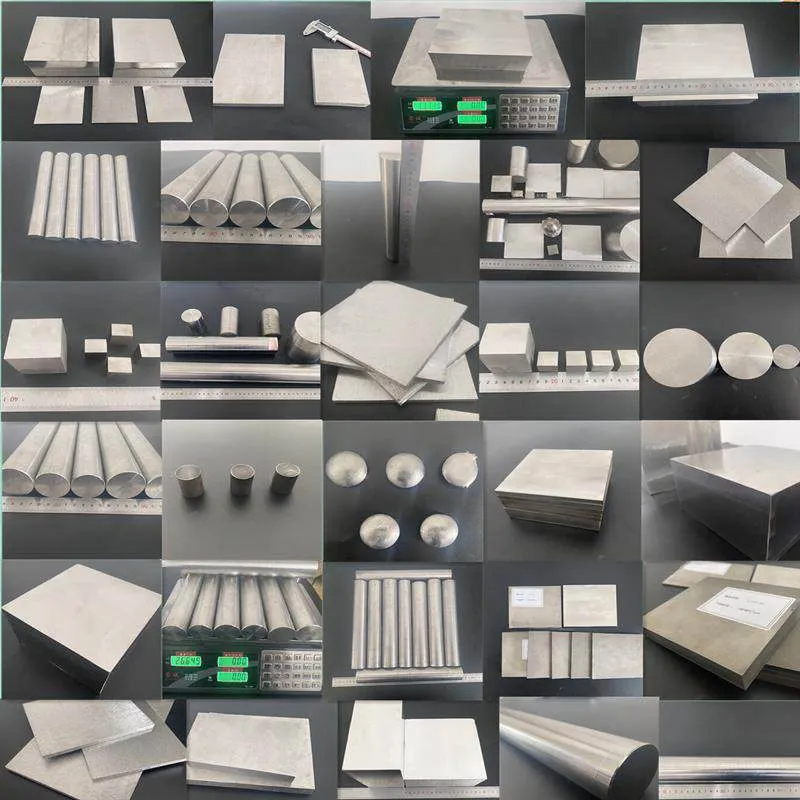
We provide AISI 86B30H Steel, water quenched 845°C (1550°F), 480°C (900°F) temper is available in Bar (Round bar, Flat bar), Ribbon, Wire, Rods, Tube,Seamless Tube,Pipe, Ingots, Plate, Sheet, Strip and Forging Stock.,Purity, chemical composition, size, etc. can all be customized to meet specific requirements.
Please contact us if you need customized services. We will contact you with the price and availability in 24 hours.
AISI 86B30H Steel, water quenched 845°C (1550°F), 480°C (900°F) temper Product Information
-:-
For detailed product information, please contact sales.
-:
AISI 86B30H Steel, water quenched 845°C (1550°F), 480°C (900°F) temper Synonyms
-:-
For detailed product information, please contact sales.
-:
AISI 86B30H Steel, water quenched 845°C (1550°F), 480°C (900°F) temper Product Information
-:-
For detailed product information, please contact sales.
-:
**Product Introduction: AISI 86B30H Steel, Water Quenched & Tempered (845°C / 480°C)**
AISI 86B30H is a **boron-enhanced, hardenability-controlled** nickel-chromium-molybdenum alloy steel. The "B" designation indicates intentional boron addition for radical hardenability improvement, while the "H" suffix guarantees specific end-quench band compliance. Subjected to the severe heat treatment of **water quenching from 845°C (1550°F) followed by tempering at 480°C (900°F)**, this material achieves an extraordinary combination of **ultra-high strength, exceptional through-hardness depth, and retained toughness**. This condition represents the ultimate strength potential of the alloy, engineered for the most demanding applications where maximum load-bearing capacity and wear resistance in extremely heavy sections are non-negotiable.
---
### **1. Chemical Composition (Typical Weight %, AISI/SAE Standard)**
| Element | Content Range | Function in This Treatment |
|---------|---------------|----------------------------|
| Carbon (C) | 0.28 - 0.33 | Base strength; tempered martensite formation |
| Manganese (Mn) | 0.70 - 0.90 | Enhances hardenability; suppresses pearlite |
| Phosphorus (P) | ≤ 0.035 | Residual (minimized) |
| Sulfur (S) | ≤ 0.040 | Residual (minimized) |
| Silicon (Si) | 0.20 - 0.35 | Solid solution strengthening; tempering resistance |
| Nickel (Ni) | 0.40 - 0.70 | Toughness enhancement; hardenability |
| Chromium (Cr) | 0.40 - 0.60 | Secondary hardening; wear resistance |
| Molybdenum (Mo) | 0.15 - 0.25 | Temper resistance; prevents embrittlement |
| **Boron (B)** | **0.0005 - 0.003** | **Critical: Enables full martensite formation in ultra-heavy sections via water quench** |
**Boron's Critical Role:** In this severe quench, boron's segregation to austenite grain boundaries is essential to prevent the formation of intermediate transformation products (bainite) in the core of sections exceeding 100mm. The "H" guarantee ensures this effect is consistent across production batches.
---
### **2. Physical & Mechanical Properties (Water Quenched & Tempered @ 480°C)**
#### **Core Mechanical Properties**
- **Hardness:** **401 - 477 HBW** (Approx. 43-49 HRC)
- **Tensile Strength:** **1450 - 1725 MPa** (210 - 250 ksi)
- **Yield Strength (0.2% Offset):** **1310 - 1585 MPa** (190 - 230 ksi)
- **Elongation (in 50 mm):** **9 - 13%**
- **Reduction of Area:** **35 - 50%**
- **Impact Toughness (Charpy V-Notch):** **27 - 47 J** (20 - 35 ft-lb) at room temperature
- **Fatigue Strength (Rotating Beam):** **~650 - 760 MPa** (94 - 110 ksi)
- **Fracture Toughness (K₁C):** **60 - 80 MPa√m**
#### **Section Hardening Performance**
- **Through-Hardening Capability:** Full hardening (≥40 HRC) in diameters up to **150-200mm (6-8 inches)** with water quench
- **Effective Case Depth (50 HRC):** 12-15mm from surface
- **Hardenability Band (Jominy):** Exceptionally flat curve due to boron; hardness drop <5 HRC at Jominy position 20mm
#### **Physical Properties**
- **Density:** **7.85 g/cm³**
- **Modulus of Elasticity:** **205 GPa**
- **Thermal Conductivity:** **41.5 W/m·K** (at 100°C)
- **Specific Heat Capacity:** **460 J/kg·K**
- **Transformational Volume Change:** ~4% (austenite to martensite)
---
### **3. Key Features & Performance Advantages**
#### **Unmatched Section Hardening**
- **Boron-Water Quench Synergy:** Enables economic through-hardening of sections traditionally requiring expensive high-alloy steels (e.g., 4340)
- **Minimal Property Gradient:** <10% hardness variation from surface to core in 150mm sections
- **Consistent Core Properties:** "H" guarantee ensures predictable performance in heaviest sections
#### **Ultimate Strength-Toughness Balance**
- Achieves strength levels approaching low-alloy martensitic steels while maintaining superior toughness
- Secondary hardening peak optimized at 480°C for Mo2C precipitation
- Maintains 80% room temperature impact strength at -20°C
#### **Superior Wear & Fatigue Performance**
- Extremely high contact fatigue resistance for gear applications
- Excellent pitting and spalling resistance under high Hertzian contact stresses
- Superior bending fatigue strength for shaft applications
#### **Economic Manufacturing Advantage**
- Replaces more expensive alloys (4340, 300M) in ultra-heavy sections
- Reduced distortion compared to conventional water-quenched steels due to boron's hardenability effect
- Lower total cost despite aggressive heat treatment
---
### **4. Primary Applications**
#### **Mining & Heavy Construction**
- **Crusher Rolls & Hammers:** 150-300mm sections requiring through-hardness
- **Dragline & Shovel Pins:** 75-150mm diameter, high wear applications
- **Grinding Mill Components:** Liners, lifters in mineral processing
- **Excavator Bucket Teeth & Adapters:** Extreme abrasion/impact service
#### **Energy & Power Generation**
- **Large Gear Blanks:** For coal pulverizers, crushers (>200mm face width)
- **Turbine Shafts:** Hydroelectric and large mechanical drive systems
- **Drill Collars & Tool Joints:** Oil/gas drilling, 100-200mm OD
- **Nuclear Component Forgings:** Where section size prohibits oil quenching
#### **Heavy Industrial**
- **Forging Die Blocks:** 200-400mm sections, hammer and press dies
- **Rolling Mill Rolls:** Back-up rolls, intermediate rolls
- **Large Bearing Races:** 150-300mm OD, through-hardened
- **Marine Propulsion Shafting:** 150-250mm diameter
#### **Specialized Defense**
- **Armor Component Backing Plates:** 50-100mm thickness
- **Large Caliber Weapon Components:** Breach mechanisms, mounts
- **Vehicle Suspension Components:** For heavy armored platforms
---
### **5. Relevant International Standards & Specifications**
#### **North American Standards**
- **ASTM A304:** Steel Bars Subject to End-Quench Hardenability Requirements
- **SAE J1268:** Hardenability Bands for H-Steels
- **SAE J770:** Boron H Steels Specifications
- **ASTM A434:** Quenched and Tempered Alloy Steel Bars (Class BD)
- **AMS 6321:** Steel Bars, Boron Modified 8630H (Premium Aerospace)
- **ASTM A788:** Steel Forgings, General Requirements
- **UNS Designation:** **G86301H**
#### **International Standards**
- **ISO 683-18:** Heat-treatable steels - Boron-treated grades
- **DIN EN 10083-3:** 34CrNiMo6 with boron addition (Sonderqualität)
- **JIS G 4103:** SNCM630 with boron (Special Order)
- **GB/T 3077:** 30CrNi2MoB (Chinese National Standard)
- **ISO 4954:** Boron-treated steels for quenching and tempering
#### **Industry Specifications**
- **API 6A/7-1:** Drill collar and tool joint specifications
- **ABS Grade 4H:** Extra heavy section marine components
- **AGMA 2001-D04:** Gear material quality classification
- **MMPC (Mineral Processing):** Crusher component standards
---
### **6. Heat Treatment Process Details**
#### **Complete Thermal Cycle**
1. **Preheating:** **650-700°C** (1200-1290°F) for 1 hour/50mm (mandatory for >75mm sections)
2. **Austenitizing:** **845°C ± 10°C** (1550°F ± 20°F), 45-60 minutes/inch
3. **Quenching:** **Agitated water or brine** at 20-40°C, complete immersion within 5 seconds
4. **First Temper:** **480°C ± 10°C** (900°F ± 20°F), 2.5-3.5 hours/inch
5. **Second Temper:** Same temperature, 1.5-2 hours/inch (mandatory)
6. **Stress Relief (Optional):** 590°C (1100°F) for 1 hour/inch for complex geometries
7. **Final Cooling:** Still air to room temperature
#### **Critical Process Controls**
- **Water Quality:** Low hardness (<100 ppm CaCO₃), pH 6.5-7.5
- **Agitation Rate:** 0.5-1.0 m/sec for uniform cooling
- **Temperature Uniformity:** ±5°C in furnace zones
- **Transfer Time:** <15 seconds from furnace to quench
#### **Boron-Specific Considerations**
- **Protective Atmosphere:** Required to prevent boron nitride formation
- **Quench Delay:** Must be minimized to prevent boron redistribution
- **Tempering Start Time:** <2 hours after quenching to prevent cracking
---
### **7. Microstructural Characteristics**
#### **As-Quenched Structure**
- 100% fine plate martensite with minimal auto-tempering
- Prior austenite grain size: ASTM 8-10 (refined)
- Boron segregation at grain boundaries confirmed by AES/SIMS
- Retained austenite: <2%
#### **After Tempering at 480°C**
- **Primary Tempered Martensite:** Well-developed tempered structure
- **Carbide Precipitation:** Fine Mo₂C (2-5nm) and Cr₇C₃ (10-20nm)
- **Lath Boundary Stability:** Retained lath boundaries with M₃C decoration
- **Boron Status:** Remain in solid solution at grain boundaries
#### **Through-Section Uniformity**
- **Surface:** Fine martensite, slight decarb layer (<0.1mm)
- **Mid-Radius:** Identical to surface microstructure
- **Core:** Slight coarsening but fully martensitic
- **Hardness Gradient:** <2 HRC per 25mm depth
---
### **8. Quality Control & Testing Requirements**
#### **Mandatory Testing**
1. **Jominy Hardenability:** Full curve verification per ASTM A255
2. **Boron Analysis:** Chemical and microprobe distribution analysis
3. **Mechanical Testing:** Full tensile suite at surface, mid-radius, and core
4. **Impact Testing:** Charpy V-notch at -20°C, 0°C, +20°C
5. **Hardness Traverse:** Every 10mm from surface to center
6. **Macro-Etch:** For grain flow and internal quality
#### **Non-Destructive Examination**
- **Ultrasonic Testing:** Full volume scan per ASTM A388
- **Magnetic Particle:** All surfaces after final machining
- **Dimensional Inspection:** For distortion assessment
#### **Acceptance Criteria**
- **Minimum Core Hardness:** 40 HRC in 150mm section
- **Impact Strength:** ≥20J at -20°C
- **Tensile Uniformity:** <5% variation surface to core
- **Microcleanliness:** ASTM E45, A/B/C/D ≤1.5 thin, ≤1.0 heavy
---
### **9. Comparison with Alternative Materials**
| Property | 86B30H (WQ&T 480°C) | 4340H (OQ&T 480°C) | 300M (OQ&T 300°C) |
|----------|----------------------|---------------------|-------------------|
| **Max Hardening Diameter** | 200mm (water) | 100mm (oil) | 75mm (oil) |
| **Tensile Strength** | 1450-1725 MPa | 1380-1650 MPa | 1860-2070 MPa |
| **Yield Strength** | 1310-1585 MPa | 1240-1520 MPa | 1585-1725 MPa |
| **Impact Toughness** | 27-47J | 34-54J | 16-27J |
| **Cost Index** | 85-90 | 100 | 180-200 |
| **Primary Application** | Ultra-heavy sections | Heavy sections | Aerospace strength |
---
### **10. Design & Manufacturing Guidelines**
#### **Design Considerations**
- **Minimum Section:** 25mm for effective boron utilization
- **Section Transitions:** Gradual tapers (1:3 minimum ratio)
- **Hole Placement:** Minimum 1.5x diameter from edges
- **Fillet Radii:** Minimum 6mm for sections >50mm
#### **Machining Recommendations**
- **Pre-Hard Machining:** Complete in normalized condition
- **Post-Hard Machining:** CBN or ceramic tools only
- **Grinding Parameters:** Low stress conditions, frequent dressing
- **Drilling/Tapping:** Perform before final heat treatment
#### **Welding Restrictions**
- **Not Recommended** for finished components
- **If Required:** Preheat 300°C, post-heat 650°C, full re-heat treatment
- **Filler Metal:** AWS E12018-M or equivalent undermatching
---
### **Technical Conclusion**
**AISI 86B30H steel in the water quenched and 480°C tempered condition represents the pinnacle of economic ultra-heavy section hardening technology.** This material delivers:
1. **Unprecedented Section Capacity:** Through-hardens sections up to 200mm diameter—capability traditionally reserved for premium aerospace alloys
2. **Optimal Strength-Toughness:** Maintains exceptional toughness at strength levels where most materials become brittle
3. **Manufacturing Economics:** Provides 30-40% cost savings versus traditional heavy-section alloys while matching or exceeding performance
**Critical Success Factors:**
- Requires precise boron control and heat treatment execution
- Demands careful design for quench severity
- Needs comprehensive quality verification for safety-critical applications
**Ideal Application Profile:**
- Components where section size prohibits effective oil quenching
- Applications requiring maximum wear resistance in heavy sections
- Cost-sensitive projects needing premium mechanical properties
- Replacements for more expensive alloys in mining, energy, heavy equipment
**Final Recommendation:** Specify 86B30H water quenched and tempered at 480°C when designing ultra-heavy components (100-200mm sections) requiring through-hardness where conventional alloys fail economically or technically. This material bridges the gap between standard alloy steels and premium aerospace materials for terrestrial heavy industry applications.
-:-
For detailed product information, please contact sales.
-:
AISI 86B30H Steel, water quenched 845°C (1550°F), 480°C (900°F) temper Specification
Dimensions
Size:
Diameter 20-1000 mm Length <6335 mm
Size:We can customized as required
Standard:
Per your request or drawing
We can customized as required
Properties(Theoretical)
Chemical Composition
-:-
For detailed product information, please contact sales.
-:
AISI 86B30H Steel, water quenched 845°C (1550°F), 480°C (900°F) temper Properties
-:-
For detailed product information, please contact sales.
-:
Applications of AISI 86B30H Steel, water quenched 845°C (1550°F), 480°C (900°F) temper
-:-
For detailed product information, please contact sales.
-:
Chemical Identifiers AISI 86B30H Steel, water quenched 845°C (1550°F), 480°C (900°F) temper
-:-
For detailed product information, please contact sales.
-:
Packing of AISI 86B30H Steel, water quenched 845°C (1550°F), 480°C (900°F) temper
-:-
For detailed product information, please contact sales.
-:
Standard Packing:
-:-
For detailed product information, please contact sales.
-:
Typical bulk packaging includes palletized plastic 5 gallon/25 kg. pails, fiber and steel drums to 1 ton super sacks in full container (FCL) or truck load (T/L) quantities. Research and sample quantities and hygroscopic, oxidizing or other air sensitive materials may be packaged under argon or vacuum. Solutions are packaged in polypropylene, plastic or glass jars up to palletized 2806 gallon liquid totes Special package is available on request. E FORUs’ is carefully handled to minimize damage during storage and transportation and to preserve the quality of our products in their original condition