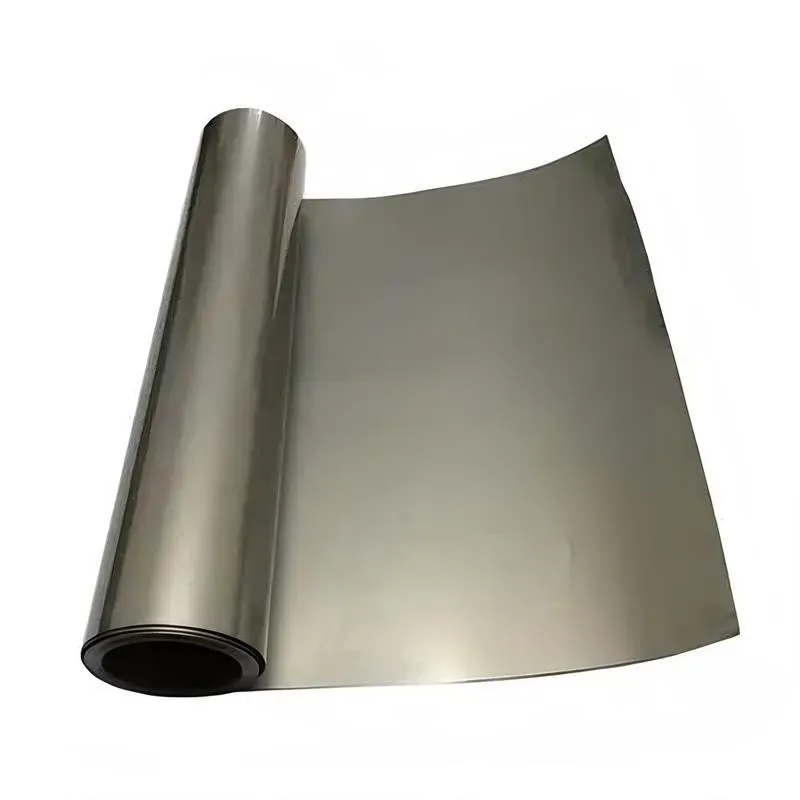
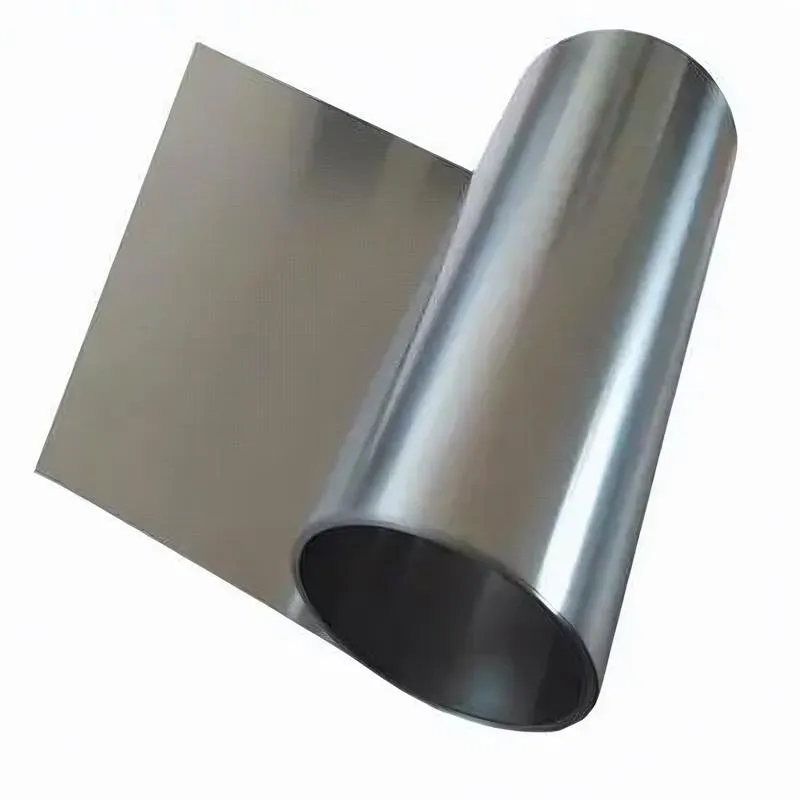
AISI 94B17H Steel Foil/Strip
Product Code : STI-CSTI-1049-CU
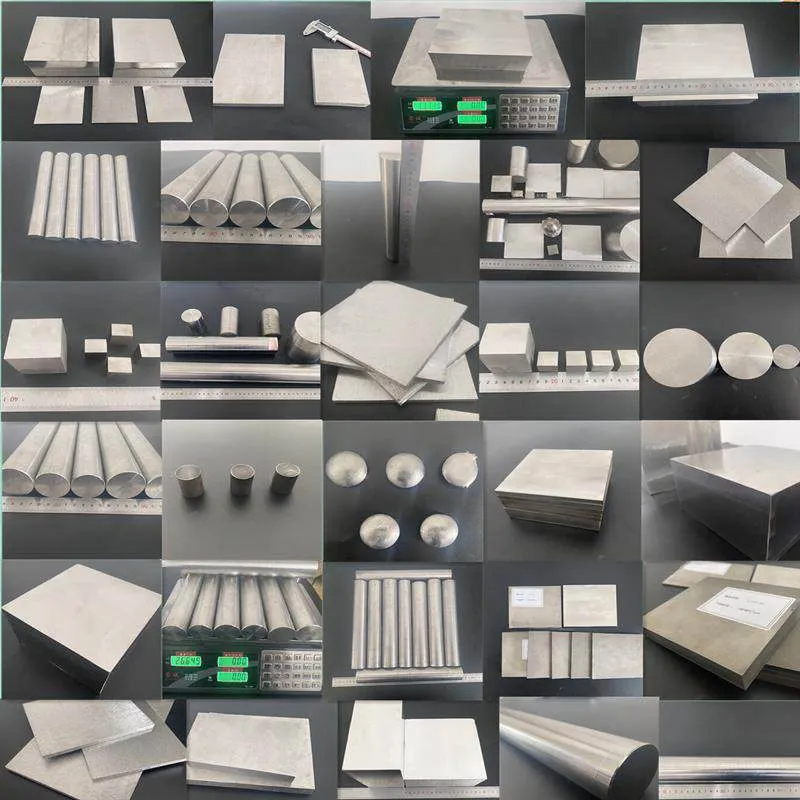
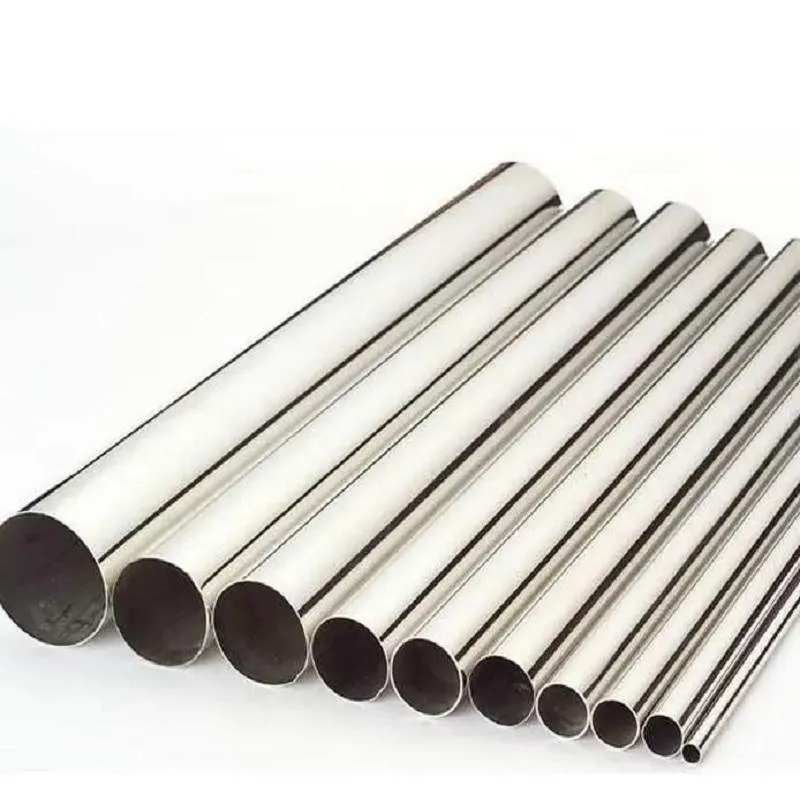
We provide AISI 94B17H Steel Foil/Strip is available in Bar (Round bar, Flat bar), Ribbon, Wire, Rods, Tube,Seamless Tube,Pipe, Ingots, Plate, Sheet, Strip and Forging Stock.,Purity, chemical composition, size, etc. can all be customized to meet specific requirements.
Please contact us if you need customized services. We will contact you with the price and availability in 24 hours.
AISI 94B17H Steel Foil Product Information
-:-
For detailed product information, please contact sales.
-:
AISI 94B17H Steel Foil Synonyms
-:-
For detailed product information, please contact sales.
-:
AISI 94B17H Steel Product Information
-:-
For detailed product information, please contact sales.
-:
# **Technical Datasheet: AISI 94B17H Steel**
## **1. PRODUCT OVERVIEW**
**AISI 94B17H** is a **hardenability-controlled, medium-carbon, boron-treated alloy steel** designed to provide **consistent and predictable mechanical properties** across production batches and component section sizes. The **"H" designation** indicates compliance with SAE J1268 hardenability band requirements, guaranteeing that the steel's response to quenching falls within specified, narrow limits. With a nominal **0.17% carbon content** and a strategic addition of **boron (B)**, this grade achieves deep hardenability with a lean alloy composition, offering an optimal balance of **strength, toughness, and cost-effectiveness** for medium to heavy-duty applications.
This steel is typically supplied in the annealed or normalized condition for machining and is subsequently **quenched and tempered** to achieve high strength throughout its cross-section (through-hardening). It can also be **case hardened** (carburized) when surface wear resistance is required alongside a tough core. The guaranteed hardenability makes 94B17H particularly valuable for high-volume manufacturing of critical components where heat treatment consistency is paramount.
**Key Characteristics:**
- **Guaranteed Hardenability:** Predictable and uniform quenching response per SAE J1268 specifications.
- **Boron-Enhanced Performance:** Achieves oil-hardening capability in substantial sections without high alloy costs.
- **Versatile Heat Treatment:** Suitable for both through-hardening and case hardening processes.
- **Excellent Strength-Toughness Balance:** Provides a favorable combination of tensile strength and impact resistance after proper tempering.
- **Manufacturing Consistency:** Reduces part-to-part variability in final properties, improving quality and yield.
---
## **2. CHEMICAL COMPOSITION**
**Compliance:** SAE J404, SAE J1268 (Hardenability Bands), ASTM A304
| Element | Minimum (%) | Maximum (%) | Typical (%) | Metallurgical Function & Control Importance |
| :--- | :---: | :---: | :---: | :--- |
| **Carbon (C)** | 0.14 | 0.20 | 0.17 | Primary determinant of as-quenched hardness and core strength. Tightly controlled for H-grade consistency. |
| **Manganese (Mn)** | 0.70 | 1.00 | 0.85 | Enhances hardenability and strength. Controlled to a narrower range than standard grade to meet H-band limits. |
| **Silicon (Si)** | 0.20 | 0.35 | 0.25 | Deoxidizer; provides solid solution strengthening. Contributes to hardenability. |
| **Boron (B)** | 0.0005 | 0.0030 | 0.0015 | **Critical Hardenability Enhancer.** Multiplies the hardenability effect of other elements. Its level and "free" (active) state are precisely controlled. |
| **Chromium (Cr)** | 0.35 | 0.65 | 0.50 | Increases hardenability, wear resistance, and tempering resistance. |
| **Phosphorus (P)** | — | 0.035 | ≤ 0.025 | Residual impurity; minimized to prevent embrittlement. |
| **Sulfur (S)** | — | 0.040 | ≤ 0.025 | Residual element; improves machinability via MnS inclusions. |
| **Titanium (Ti)** | — | 0.05* | 0.02-0.04 | **"Boron Protector."** Intentionally added to tie up nitrogen, preventing the formation of inert Boron Nitride (BN) and ensuring boron remains active. |
| **Aluminum (Al)** | — | 0.05* | 0.02-0.05 | Used for deoxidation; also helps control grain size. |
| **Nickel, Mo, etc.** | — | Residual* | Trace | Present only as residuals from scrap. |
| **Iron (Fe)** | Balance | — | Balance | Base metal. |
*\* Ti and Al are typical intentional additions for processing; other residuals are limited by specification.*
**Critical Metallurgical Aspect – Boron Protection:**
The extreme hardenability effect of boron is only realized when it is in a "free" or solute state within the austenite grain boundaries. To achieve this, strong nitride-forming elements like **Titanium** or **Zirconium** are added in a stoichiometric ratio relative to the nitrogen content of the melt. This ensures nitrogen is tied up as TiN or ZrN, leaving the boron free to perform its hardenability-enhancing function.
---
## **3. HARDENABILITY (JOMINY END-QUENCH TEST)**
**Compliance:** SAE J1268 – Hardenability Band for 94B17H
The "H" suffix is defined by this standard, which provides minimum and maximum hardness values at specific distances from the quenched end of a standardized test bar. This allows engineers to predict the hardness at the center of a round bar of a given diameter after oil quenching.
**Typical Hardenability Band (Illustrative):**
| Distance from Quenched End | Hardness Range (HRC), Min-Max |
| :--- | :---: |
| **J1 (1/16 inch / 1.5 mm)** | 45-55 |
| **J4 (4/16 inch / 10 mm)** | 40-50 |
| **J7 (7/16 inch / 20 mm)** | 35-45 |
| **J10 (10/16 inch / 30 mm)** | 30-40 |
| **J12 (12/16 inch / 40 mm)** | 25-35 |
| **J16 (1 inch / 50 mm)** | 20-30 |
**Design Significance:**
- **Predictable Core Hardness:** Enables accurate selection of bar diameter to achieve target core properties (e.g., HRC 30-35) after quenching.
- **Consistent Case Depth:** In carburized parts, ensures uniform case-core transition and core support.
- **Reduced Distortion:** Uniform hardenability leads to more symmetrical transformation stresses, minimizing warpage.
---
## **4. PHYSICAL & MECHANICAL PROPERTIES**
### **A. Physical Properties:**
- **Density:** 7.85 g/cm³ (0.284 lb/in³)
- **Modulus of Elasticity:** 205 GPa (29.7 x 10⁶ psi)
- **Shear Modulus:** 80 GPa (11.6 x 10⁶ psi)
- **Poisson's Ratio:** 0.29
- **Thermal Conductivity:** ~45-47 W/m·K @ 100°C
- **Coefficient of Thermal Expansion:** 12.3-12.8 x 10⁻⁶/°C (20-300°C)
### **B. Properties in Supply Condition (Annealed/Normalized):**
- **Hardness (Annealed):** 156-207 HB (Typical: 179 HB)
- **Hardness (Normalized):** 187-229 HB (Typical: 207 HB)
- **Machinability:** Good. Rated at **65-70%** of 1212 steel. The consistent hardness of H-grade material promotes stable tool life.
### **C. Typical Mechanical Properties After Quench & Temper (Through-Hardened):**
*Based on oil quenching and tempering; properties vary with section size.*
| Tempering Temperature | Tensile Strength | Yield Strength (0.2%) | Elongation (%) | Reduction in Area (%) | Typical Hardness (HRC) | Charpy V-Notch Impact* |
| :--- | :---: | :---: | :---: | :---: | :---: | :---: |
| **205°C (400°F)** | 1650-1930 MPa | 1380-1655 MPa | 9-12 | 35-45 | 48-54 | 15-25 J |
| **425°C (800°F)** | 1240-1380 MPa | 1105-1240 MPa | 12-16 | 45-55 | 38-44 | 27-41 J |
| **540°C (1000°F)** | 1035-1170 MPa | 930-1035 MPa | 15-20 | 50-60 | 32-38 | 34-54 J |
| **650°C (1200°F)** | 860-1030 MPa | 760-930 MPa | 18-25 | 55-65 | 25-32 | 41-68 J |
*\* Longitudinal orientation, room temperature. Impact energy is section size and tempering time dependent.*
### **D. Properties After Case Hardening (Carburizing):**
- **Surface Hardness (as-quenched):** 58-63 HRC
- **Surface Hardness (after temper):** 54-60 HRC (at 150-200°C temper)
- **Core Hardness:** 30-40 HRC (dependent on section size and quench)
- **Effective Case Depth:** Typically specified per application (0.5-2.0 mm common).
---
## **5. HEAT TREATMENT GUIDELINES**
### **A. Preliminary Conditioning (For Machining):**
- **Full Annealing:** Heat to **830-860°C (1525-1580°F)**, slow furnace cool (≤28°C/hr to 600°C). Provides optimal softness for machining.
- **Normalizing:** Heat to **870-900°C (1600-1650°F)**, air cool. A common supply condition that refines the grain structure.
### **B. Through-Hardening (Quench & Temper):**
1. **Austenitizing:** **830-860°C (1525-1580°F)**. Soak time: ~1 hour per inch of maximum thickness. **Avoid exceeding 900°C to prevent grain growth and boron embrittlement.**
2. **Quenching:** **Agitated oil quench.** The boron addition provides excellent hardenability for oil quenching. Approximate maximum diameter for through-hardening to 50% martensite at center: **~50-75 mm (2-3 inches)**.
3. **Tempering:** **Mandatory immediately after quenching.** Temper within the range **425-650°C (800-1200°F)** for 1-2 hours per inch of thickness to achieve the desired strength-toughness balance.
### **C. Case Hardening (Carburizing):**
1. **Carburizing:** **900-925°C (1650-1700°F)** in an endothermic atmosphere with a carbon potential of 0.8-1.0%.
2. **Quenching:** Direct oil quench or lower-temperature reheat (e.g., 800-850°C) followed by oil quench.
3. **Tempering:** **150-200°C (300-400°F)** for 1-3 hours to relieve quenching stresses.
**Critical Consideration for Boron Steels:** Strict control of the austenitizing temperature and time is essential to avoid **"boron embrittlement,"** a phenomenon where excessive heat causes boron to overly segregate to grain boundaries, potentially reducing toughness.
---
## **6. TYPICAL APPLICATIONS**
The guaranteed hardenability of 94B17H makes it a preferred choice for **high-volume, quality-critical components** where consistent performance is non-negotiable.
- **Automotive & Truck:**
- **Drivetrain:** Axle shafts, drive shafts, transmission shafts, differential gears and pinions.
- **Suspension & Chassis:** High-strength bolts, U-bolts, king pins, spring pins.
- **Engine:** Camshafts (select applications), crankshafts (medium-duty), connecting rods.
- **Agricultural & Off-Highway Machinery:**
- **Power Transmission:** Gears, pinions, and shafts in transmissions and final drives.
- **Undercarriage:** Track pins, bushings, rollers, and idler wheels.
- **Implement Parts:** Plow beams, cultivator shanks, PTO components.
- **General Industrial & Manufacturing:**
- **Shafting:** Main drive shafts, conveyor rollers, pump shafts.
- **Gearing:** Industrial gearbox gears (medium duty).
- **Tooling & Fixturing:** Jigs, heavy-duty fixtures, die components (e.g., bolster plates).
- **Fasteners:** Large-diameter high-strength bolts and studs for structural applications.
---
## **7. INTERNATIONAL STANDARDS & EQUIVALENTS**
### **Primary Designations:**
- **USA:** AISI 94B17H, SAE 94B17H, UNS G94171
- **Governing Standards:** SAE J404 (Chemistry), SAE J1268 (Hardenability)
- **Common Supply Standards:** **ASTM A304** (Standard Specification for Carbon and Alloy Steel Bars Subject to End-Quench Hardenability Requirements), ASTM A29.
### **Approximate International Equivalents:**
*Note: The "H" (hardenability-controlled) practice is predominantly North American. Equivalent grades may not guarantee the same hardenability band control unless specifically ordered to similar chemical/hardenability limits.*
| Country/Standard | Designation | Notes |
| :--- | :--- | :--- |
| **Europe (EN)** | 1.5528 / 1.7131 | 16B16Cr1 / 16MnCrB5. Similar composition, but hardenability not typically band-controlled. |
| **Germany (DIN/W-Nr.)** | 1.5528 / 1.7131 | 16B16Cr1 / 16MnCrB5. Common boron case-hardening steels. |
| **Japan (JIS)** | — | No direct equivalent. SCM435 (Cr-Mo) is a common alternative for similar applications. |
| **United Kingdom** | 530H17 / 527M17 | Boron-treated steels; "H" may denote hardenability but not necessarily to SAE bands. |
| **ISO** | — | No direct ISO designation. |
---
## **8. ADVANTAGES AND DESIGN CONSIDERATIONS**
### **Advantages:**
- **Cost-Performance Leader:** Delivers high hardenability and strength at a lower cost than conventional Cr-Mo or Ni-Cr-Mo alloys like 4140 or 4340.
- **Manufacturing Reliability:** Guaranteed hardenability bands minimize heat treatment variation, reducing scrap and improving quality control.
- **Processing Flexibility:** Effective for both through-hardening and case hardening.
- **Good Machinability:** Consistent starting hardness allows for optimized machining processes.
### **Considerations / Limitations:**
- **Boron Embrittlement Risk:** Requires strict adherence to recommended austenitizing temperatures. Overheating must be avoided.
- **Weldability:** **Poor.** Not recommended for welded structures. If repair welding is absolutely necessary, it requires extensive procedures: high preheat (300-400°C), low-hydrogen electrodes, controlled interpass temperature, and a full post-weld heat treatment (PWHT).
- **Temperature Service Limit:** The beneficial effect of boron is lost above **~400-450°C (750-840°F)**, making it unsuitable for sustained high-temperature service.
- **Fatigue Performance:** Adequate for many applications, but for the most severe, high-cycle fatigue environments, cleaner vacuum-melted grades or those with higher alloy content (e.g., 4340) may be superior.
### **Material Selection Comparison:**
- **vs. 1045H:** 94B17H offers much superior hardenability, allowing oil quenching of larger sections to higher strengths.
- **vs. 4140H:** 94B17H is more economical and has comparable (or slightly better) hardenability, but 4140H generally offers better toughness, tempering resistance, and a more established pedigree for critical parts.
- **vs. 94B15H:** 94B17H has higher carbon content, resulting in higher core strength and hardness but slightly lower impact toughness. Selection depends on the required core strength level.
**Conclusion:** **AISI 94B17H** is an **engineered, consistency-focused material solution** that bridges the gap between cost-effective boron steels and the predictable performance required for modern manufacturing. It is an **excellent choice** for designers and engineers specifying components like shafts, gears, and fasteners for the automotive, agricultural, and general industrial sectors, where consistent heat treatment results, good strength, and controlled costs are all critical success factors.
-:-
For detailed product information, please contact sales.
-:
AISI 94B17H Steel Specification
Dimensions
Size:
Diameter 20-1000 mm Length <5781 mm
Size:We can customized as required
Standard:
Per your request or drawing
We can customized as required
Properties(Theoretical)
Chemical Composition
-:-
For detailed product information, please contact sales.
-:
AISI 94B17H Steel Properties
-:-
For detailed product information, please contact sales.
-:
Applications of AISI 94B17H Steel Foil
-:-
For detailed product information, please contact sales.
-:
Chemical Identifiers AISI 94B17H Steel Foil
-:-
For detailed product information, please contact sales.
-:
Packing of AISI 94B17H Steel Foil/Strip
-:-
For detailed product information, please contact sales.
-:
Standard Packing:
-:-
For detailed product information, please contact sales.
-:
Typical bulk packaging includes palletized plastic 5 gallon/25 kg. pails, fiber and Steel Foil/Strip drums to 1 ton super sacks in full container (FCL) or truck load (T/L) quantities. Research and sample quantities and hygroscopic, oxidizing or other air sensitive materials may be packaged under argon or vacuum. Solutions are packaged in polypropylene, plastic or glass jars up to palletized 2252 gallon liquid totes Special package is available on request. E FORUs’ is carefully handled to minimize damage during storage and transportation and to preserve the quality of our products in their original condition