AISI E9310H Steel, mock carburized
Product Code : STI-CSTI-1042-CU
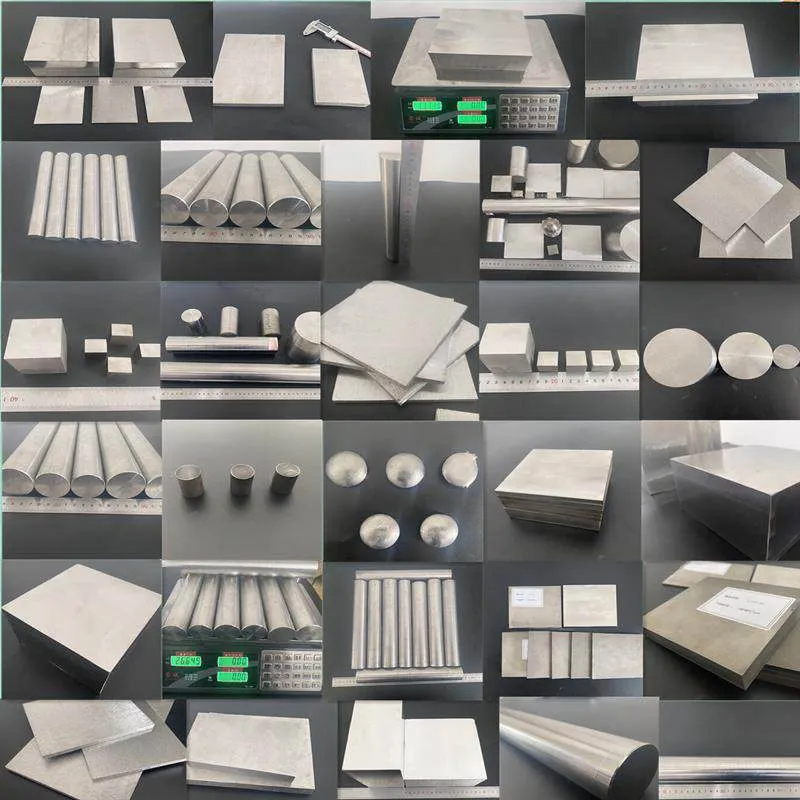
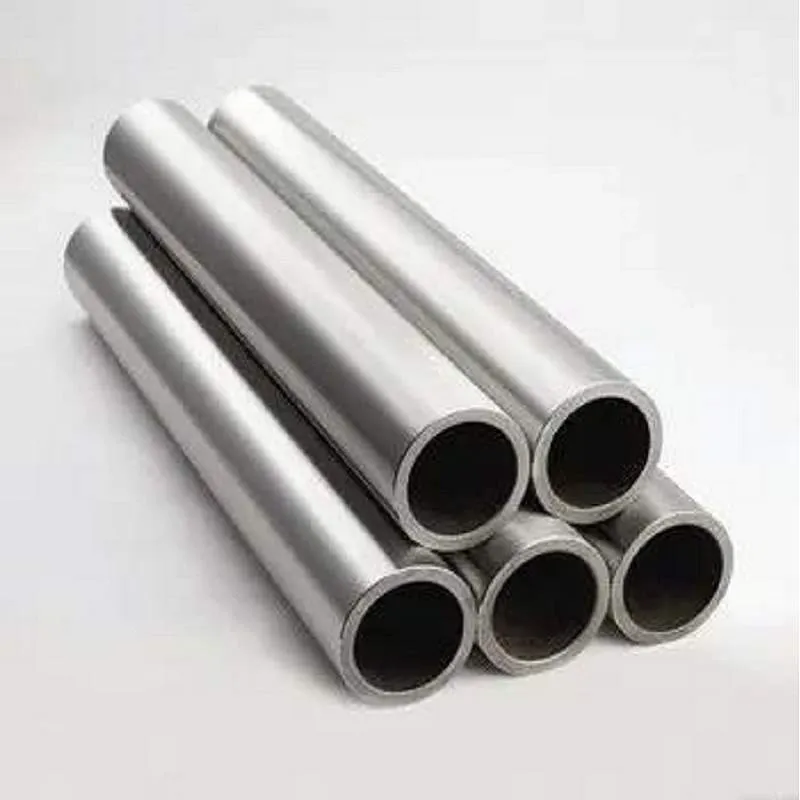
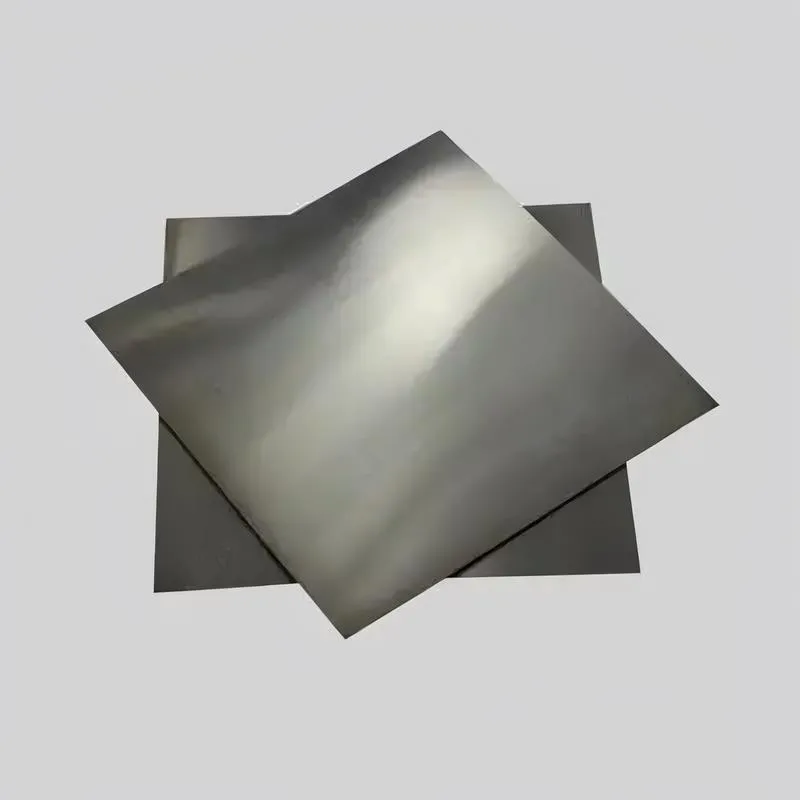
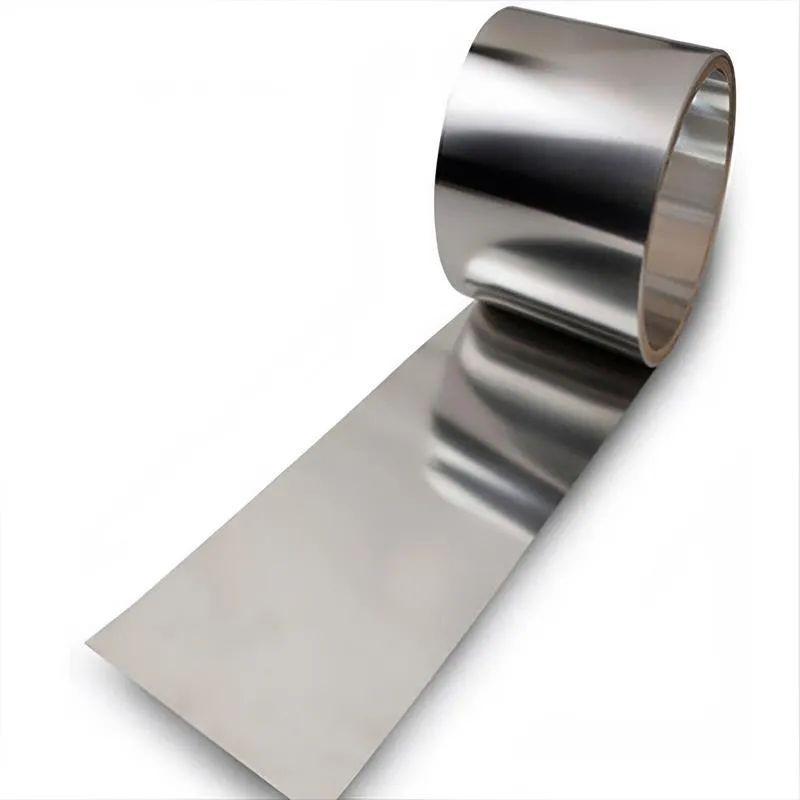
We provide AISI E9310H Steel, mock carburized is available in Bar (Round bar, Flat bar), Ribbon, Wire, Rods, Tube,Seamless Tube,Pipe, Ingots, Plate, Sheet, Strip and Forging Stock.,Purity, chemical composition, size, etc. can all be customized to meet specific requirements.
Please contact us if you need customized services. We will contact you with the price and availability in 24 hours.
AISI E9310H Steel, mock carburized Product Information
-:-
For detailed product information, please contact sales.
-:
AISI E9310H Steel, mock carburized Synonyms
-:-
For detailed product information, please contact sales.
-:
AISI E9310H Steel, mock carburized Product Information
-:-
For detailed product information, please contact sales.
-:
# **Technical Datasheet: AISI E9310H Steel (Mock Carburized Condition)**
---
## **1. PRODUCT OVERVIEW**
**AISI E9310H Steel in the Mock Carburized Condition** represents a specialized material state used primarily for **process validation, tooling development, and manufacturing studies** in the production of case-hardened components. This product undergoes a simulated carburizing thermal cycle—exposing the material to typical carburizing temperatures and times—but in a **neutral or protective atmosphere that prevents carbon enrichment** of the surface. The result is a material with a **fully transformed, normalized microstructure** that replicates the thermal history and potential grain growth of actual carburizing, without altering the surface carbon content.
This condition is essential for:
- **Predicting distortion** and dimensional changes before committing production parts
- **Developing machining parameters** for post-carburizing operations
- **Qualifying heat treatment fixtures and tooling**
- **Conducting metallurgical studies** on core properties after simulated carburizing cycles
**Key Distinguishing Features:**
- **Identical Thermal History to Carburizing:** Same time-temperature profile as production carburizing
- **Unmodified Surface Chemistry:** Maintains original 0.08-0.13% C surface content
- **Stable Microstructure:** Fully normalized condition ideal for machining studies
- **Process Development Tool:** Enables optimization without consuming valuable carburized components
---
## **2. CHEMICAL COMPOSITION**
**Base Material Compliance:** SAE J404, AMS 6260H, ASTM A534 (Hardenability Controlled)
| Element | Minimum (%) | Maximum (%) | Typical (%) | Role in Mock Carburizing Response |
|---------|------------|-------------|-------------|----------------------------------|
| **Carbon (C)** | 0.08 | 0.13 | 0.10 | Uniform throughout; no case-core gradient |
| **Manganese (Mn)** | 0.45 | 0.65 | 0.55 | Controls hardenability of "core" material |
| **Silicon (Si)** | 0.15 | 0.30 | 0.22 | Influences grain growth during thermal cycle |
| **Nickel (Ni)** | 3.00 | 3.50 | 3.25 | Stabilizes austenite grain size at high temperature |
| **Chromium (Cr)** | 1.00 | 1.40 | 1.20 | Minimal surface oxidation in protective atmosphere |
| **Molybdenum (Mo)** | 0.08 | 0.15 | 0.12 | Prevents grain boundary weakening during cycling |
| **Phosphorus (P)** | — | 0.025 | 0.012 | Controlled for consistent thermal response |
| **Sulfur (S)** | — | 0.025 | 0.008 | Minimal effect in neutral atmosphere processing |
| **Iron (Fe)** | Balance | — | Balance | Base metal with uniform properties |
**Critical Chemistry Controls for Mock Carburizing:**
- **Carbon Uniformity:** Verified to be within ±0.02% from surface to center
- **Surface Integrity:** No decarburization or carburization allowed
- **Grain Boundary Elements:** Controlled to prevent thermal embrittlement
- **Oxidation Potential:** Chemistry optimized for minimal surface reaction
---
## **3. MOCK CARBURIZING PROCESS**
### **Standard Process Parameters:**
- **Thermal Cycle:** Identical to production carburizing cycle (typically 925-940°C for 4-12 hours)
- **Atmosphere:** Neutral (N₂ based) or slightly reducing (N₂-H₂) to prevent oxidation
- **Carbon Potential:** Maintained at 0.10% (equal to base carbon content)
- **Cooling Method:** Controlled furnace cooling to simulate production cooling rates
- **Post-Process Condition:** Typically supplied in as-cooled state, may be stress relieved
### **Typical Process Sequences:**
**Option A - Single Phase Mock Carburizing:**
1. Heat to 930°C (1706°F) at 100-150°C/hour
2. Hold for 8 hours in neutral atmosphere (CP=0.10%)
3. Slow cool to 500°C (932°F) at 25-50°C/hour
4. Air cool to room temperature
**Option B - Multi-Stage Mock Carburizing:**
1. Boost: 930°C for 4 hours (simulating carburizing phase)
2. Diffuse: 900°C for 4 hours (simulating diffusion phase)
3. Slow cool per production specifications
### **Resultant Microstructural Characteristics:**
- **Surface Condition:** Clean, scale-free surface with original carbon content
- **Grain Structure:** ASTM 5-7 throughout (representative of carburized grain size)
- **Microstructure:** Uniform ferrite-pearlite (no martensite or high-carbon phases)
- **Prior Austenite Grain Size:** Representative of actual carburized material
- **No Case-Core Interface:** Uniform carbon content eliminates transition zone
---
## **4. MECHANICAL & PHYSICAL PROPERTIES**
### **Mechanical Properties (After Mock Carburizing):**
- **Hardness (Brinell):** 187-229 HB (Uniform throughout cross-section)
- **Hardness (Rockwell):** 92-100 HRB
- **Tensile Strength:** 620-760 MPa (90-110 ksi)
- **Yield Strength (0.2% offset):** 380-515 MPa (55-75 ksi)
- **Elongation:** 22-30%
- **Reduction of Area:** 50-65%
- **Uniform Hardness Profile:** Variation <15 HB surface to center
### **Physical Properties:**
- **Density:** 7.85 g/cm³ (0.284 lb/in³)
- **Modulus of Elasticity:** 200-205 GPa (29.0-29.7 × 10⁶ psi)
- **Coefficient of Thermal Expansion:** 12.2 × 10⁻⁶/°C (20-300°C)
- **Thermal Conductivity:** 41.5 W/m·K at 100°C
- **Specific Heat:** 460 J/kg·K at 100°C
### **Distortion Characteristics:**
- **Dimensional Change:** Typically 0.1-0.3% (depends on geometry and previous processing)
- **Predictability:** Excellent correlation with actual carburized parts
- **Repeatability:** Within ±0.05% for identical geometries and processing
---
## **5. APPLICATIONS & USE CASES**
### **Primary Applications:**
**Process Development & Validation:**
- **Distortion Analysis:** Predicting dimensional changes before production
- **Fixture Design:** Developing and qualifying heat treatment fixtures
- **Process Optimization:** Determining optimal racking and spacing
- **Cycle Development:** Establishing time-temperature parameters
**Manufacturing Engineering:**
- **Machining Studies:** Determining post-carburizing machining parameters
- **Tooling Design:** Developing fixtures for hard turning/grinding operations
- **Quality Planning:** Establishing inspection methods for carburized parts
- **Process Capability Studies:** Assessing manufacturing variability
**Metallurgical Research:**
- **Grain Growth Studies:** Investigating thermal effects without carbon interference
- **Distortion Mechanisms:** Studying thermal stress effects
- **Material Response:** Evaluating alloy behavior under carburizing conditions
- **Benchmarking:** Comparing different heats or material sources
### **Specific Industry Uses:**
**Aerospace Manufacturing:**
- **Gear Process Development:** For critical aircraft transmission components
- **Bearing Manufacturing:** Process validation for aerospace bearings
- **Fixture Qualification:** For carburizing of large, complex components
**Automotive & Racing:**
- **Prototype Development:** For high-performance transmission gears
- **Tooling Verification:** For mass production heat treatment
- **Process Transfer:** Between manufacturing facilities
**General Industry:**
- **New Product Introduction:** For industrial gear manufacturing
- **Supplier Qualification:** Verifying heat treatment capabilities
- **Cost Reduction Studies:** Optimizing material utilization
---
## **6. INTERNATIONAL STANDARDS & SPECIFICATIONS**
### **Governing Standards:**
- **AMS 6260H:** Base material specification
- **SAE J404:** Chemical composition requirements
- **AMS 2759/1:** Heat treatment process control requirements
### **Process Reference Standards:**
- **CQI-9:** AIAG Heat Treat System Assessment (for process control)
- **NADCAP Heat Treating AC7102:** For aerospace thermal processing
- **ISO 2639:** Reference for carburizing process parameters (modified for mock cycle)
### **Testing Standards:**
- **ASTM E1019:** Carbon analysis verification
- **ASTM E112:** Grain size determination
- **ASTM E18:** Hardness testing
- **ASTM E10:** Brinell hardness verification
### **Documentation Requirements:**
- **Process Certification:** Full documentation of mock carburizing cycle
- **Material Certification:** Base material compliance with AMS 6260H
- **Dimensional Reports:** Pre- and post-process measurements
- **Microstructural Documentation:** Grain size and uniformity verification
---
## **7. MANUFACTURING & PROCESSING GUIDELINES**
### **Post-Mock Carburizing Operations:**
**Machining Considerations:**
- **Machinability:** Excellent (similar to normalized condition)
- **Tool Life:** Extended compared to hardened material
- **Surface Finish:** Can achieve fine finishes for dimensional measurement
- **Dimensional Stability:** Predictable for fixturing development
**Measurement & Inspection:**
- **Dimensional Analysis:** Critical for distortion studies
- **Hardness Verification:** Uniformity checks required
- **Microstructural Examination:** Grain size documentation
- **Surface Analysis:** Verification of carbon content uniformity
**Special Processing Notes:**
- **No Hardening Response:** Material cannot be case hardened after mock carburizing
- **Thermal History:** Should be documented for correlation studies
- **Lot Control:** Important for experimental consistency
---
## **8. QUALITY ASSURANCE**
### **Verification Testing:**
1. **Carbon Profile Analysis:** Verification of uniform carbon content
2. **Hardness Survey:** Multiple points to confirm uniformity
3. **Grain Size Measurement:** At surface and center locations
4. **Dimensional Verification:** Comparison to pre-process measurements
5. **Surface Analysis:** Visual and microscopic examination
### **Acceptance Criteria:**
- **Carbon Uniformity:** Surface to center variation ≤0.03%
- **Hardness Uniformity:** ≤15 HB variation throughout
- **Grain Size:** ASTM 5-8 (consistent with intended carburizing cycle)
- **Surface Condition:** Free from oxidation, decarburization, or carburization
- **Dimensional Changes:** Documented and within predicted range
### **Certification Requirements:**
- Complete mock carburizing cycle documentation
- Base material certification
- Dimensional measurement reports
- Microstructural analysis
- Hardness survey data
---
## **9. TECHNICAL ADVANTAGES**
### **Development & Validation Benefits:**
1. **Risk Reduction:** Identifies potential issues before production
2. **Cost Savings:** Avoids scrapping valuable carburized components
3. **Time Efficiency:** Accelerates process development cycles
4. **Data Quality:** Provides accurate predictive data for production planning
### **Manufacturing Advantages:**
- **Fixture Optimization:** Enables perfect fitting of heat treatment fixtures
- **Process Understanding:** Reveals thermal distortion mechanisms
- **Quality Improvement:** Identifies potential quality issues in advance
- **Capacity Planning:** Helps optimize furnace loading and utilization
### **Research Value:**
- **Controlled Studies:** Isolates thermal effects from carbon diffusion effects
- **Material Characterization:** Provides baseline data for material behavior
- **Comparative Analysis:** Enables comparison of different material lots
- **Process Modeling:** Supplies data for finite element analysis validation
---
## **10. LIMITATIONS & CONSIDERATIONS**
### **Technical Limitations:**
- **Not for Production Parts:** Cannot be converted to usable carburized components
- **Limited Material State:** Represents only thermal effects, not carbon diffusion
- **Single Use:** Typically used once for process development
- **Cost Premium:** Additional processing adds to material cost
### **Application Considerations:**
- **Must Match Production:** Cycle must exactly match intended production process
- **Geometry Sensitive:** Results are specific to part geometry
- **Material Sensitive:** Different heats may show varying responses
- **Process Dependent:** Results valid only for documented process parameters
### **Economic Factors:**
- **Development Cost:** Additional expense for process validation
- **Time Investment:** Requires additional processing and analysis time
- **ROI Justification:** Must be weighed against production risk reduction
- **Volume Consideration:** More valuable for high-volume or high-value parts
---
## **11. ORDERING INFORMATION**
### **Standard Supply Specification:**
```
Material: AISI 9310H Mock Carburized
Base Condition: Normalized per AMS 6260H
Mock Cycle: As specified by customer
Certification: Full process documentation
Dimensions: As specified for development parts
Quantity: Typically small lots for development
```
### **Customization Options:**
- Specific mock carburizing cycles
- Special geometries for fixture development
- Enhanced documentation packages
- Multiple thermal cycles for process window studies
### **Typical Lead Times:**
- Standard mock carburizing: 2-3 weeks
- Custom cycles: 3-4 weeks
- With extensive documentation: 4-6 weeks
---
## **12. CONCLUSION**
**AISI E9310H Steel in the Mock Carburized Condition** is an essential **process development tool** for manufacturers of case-hardened components. By providing a material state that replicates the thermal history of carburizing without carbon enrichment, it enables:
1. **Accurate distortion prediction** for complex geometries
2. **Optimization of heat treatment processes** before production commitment
3. **Development of manufacturing methods** for post-carburizing operations
4. **Reduction of technical risk** in new product introduction
This specialized material condition finds its greatest value in **aerospace, automotive, and high-performance industrial applications** where the cost of failed heat treatment runs is significant. While representing an additional investment in process development, mock carburized material typically pays for itself many times over by preventing production problems, reducing scrap, and accelerating time-to-market for new components.
For organizations committed to **robust manufacturing processes** and **first-time quality**, mock carburized material provides invaluable insights that cannot be obtained through theoretical modeling or trial-and-error approaches with production parts.
---
**DISCLAIMER:** Mock carburized material is for process development and validation purposes only. It is not suitable for use in production components. All results and correlations should be verified with actual production processing. Specifications and capabilities are subject to change based on specific requirements and material availability.
-:-
For detailed product information, please contact sales.
-:
AISI E9310H Steel, mock carburized Specification
Dimensions
Size:
Diameter 20-1000 mm Length <5774 mm
Size:We can customized as required
Standard:
Per your request or drawing
We can customized as required
Properties(Theoretical)
Chemical Composition
-:-
For detailed product information, please contact sales.
-:
AISI E9310H Steel, mock carburized Properties
-:-
For detailed product information, please contact sales.
-:
Applications of AISI E9310H Steel, mock carburized
-:-
For detailed product information, please contact sales.
-:
Chemical Identifiers AISI E9310H Steel, mock carburized
-:-
For detailed product information, please contact sales.
-:
Packing of AISI E9310H Steel, mock carburized
-:-
For detailed product information, please contact sales.
-:
Standard Packing:
-:-
For detailed product information, please contact sales.
-:
Typical bulk packaging includes palletized plastic 5 gallon/25 kg. pails, fiber and steel drums to 1 ton super sacks in full container (FCL) or truck load (T/L) quantities. Research and sample quantities and hygroscopic, oxidizing or other air sensitive materials may be packaged under argon or vacuum. Solutions are packaged in polypropylene, plastic or glass jars up to palletized 2245 gallon liquid totes Special package is available on request. E FORUs’ is carefully handled to minimize damage during storage and transportation and to preserve the quality of our products in their original condition