AISI Type W5 Tool Steel Sheet,Plate
Product Code : STI-CSTI-488-CU
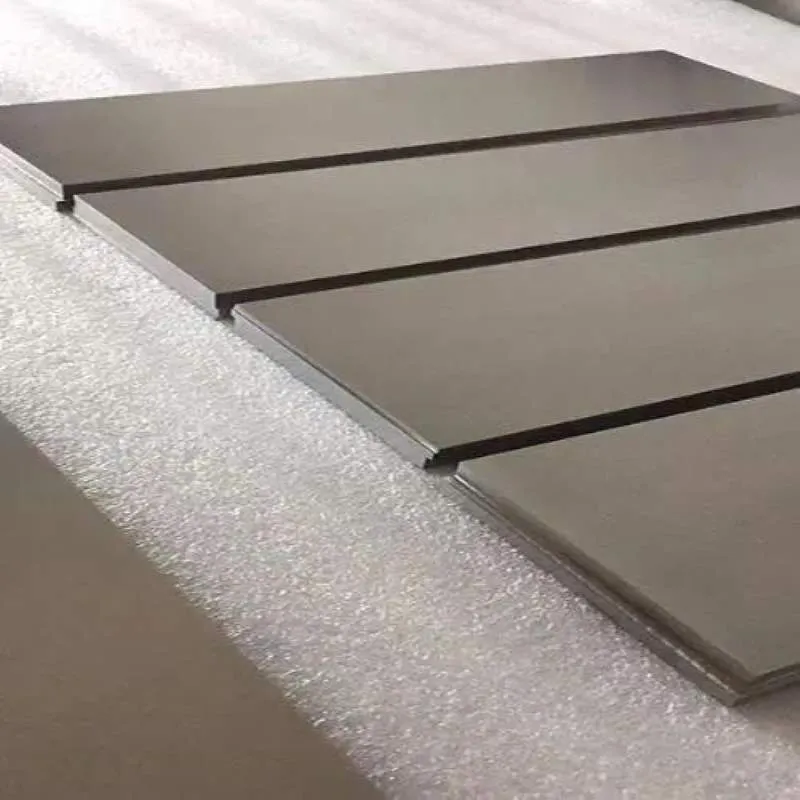
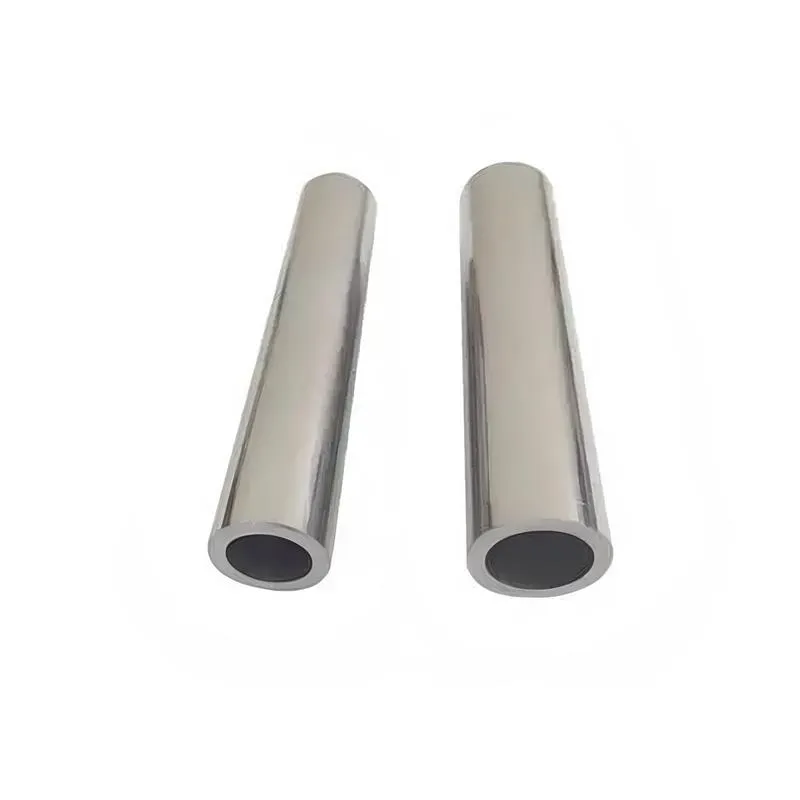
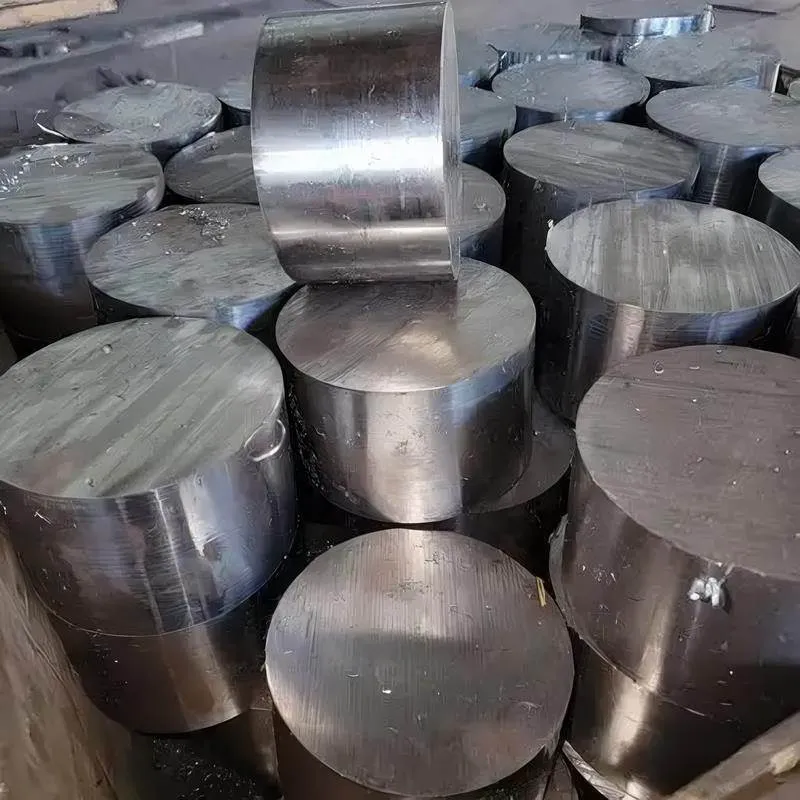
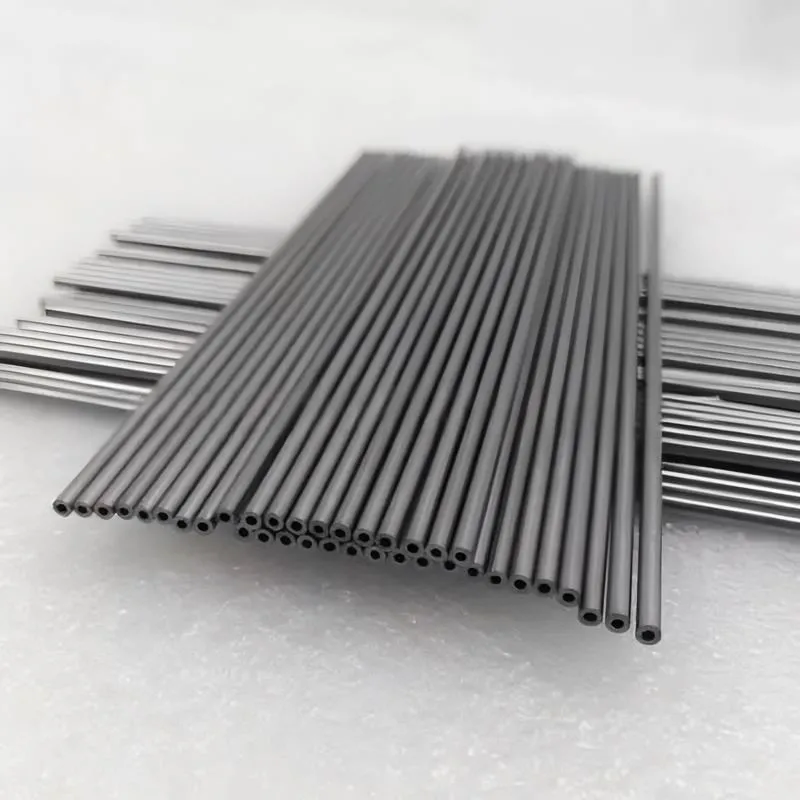
We provide AISI Type W5 Tool Steel Sheet/Plate is available in Bar (Round bar, Flat bar), Ribbon, Wire, Rods, Tube,Seamless Tube,Pipe, Ingots, Plate, Sheet/Plate, Strip and Forging Stock.,Purity, chemical composition, size, etc. can all be customized to meet specific requirements.
Please contact us if you need customized services. We will contact you with the price and availability in 24 hours.
AISI Type W5 Tool Steel Sheet/Plate Product Information
-:-
For detailed product information, please contact sales.
-:
AISI Type W5 Tool Steel Sheet/Plate Synonyms
-:-
For detailed product information, please contact sales.
-:
AISI Type W5 Tool Steel Product Information
-:-
For detailed product information, please contact sales.
-:
# Technical Datasheet: AISI Type W5 Tool Steel
---
## **1. Product Overview**
**AISI W5** is a **high-carbon, water-hardening tool steel** representing a specific composition within the water-hardening (W-series) tool steel family. It is characterized by a **carbon content of approximately 1.05-1.15%**, placing it at the higher end of the W-series carbon range, which gives it a **slightly higher maximum attainable hardness** compared to lower-carbon W-grades (like W1 or W2), while maintaining similar characteristics of shallow hardenability, good machinability, and low alloy cost.
As a **plain carbon tool steel** with minimal alloying additions, W5 is hardened by rapid water or brine quenching, which produces a hard martensitic case while leaving a softer, tougher pearlitic core—a useful characteristic for certain tooling applications. It is a traditional, economical steel for general-purpose tooling where extreme wear resistance or deep hardening is not required, but where high surface hardness and ease of resharpening are valued.
---
## **2. Key International Standards & Designations**
| Country/System | Standard Designation | Equivalent / Comparable Grade |
| :--- | :--- | :--- |
| **USA (AISI/SAE)** | **AISI Type W5** | (Part of AISI W1-W7 series, defined by carbon range) |
| **USA (ASTM)** | **ASTM A686** | Standard Specification for Carbon Tool Steel |
| **ISO** | **ISO 4957:2018** | **1.1545** (C105W1) - Similar, but exact carbon match may vary |
| **Europe (EN)** | **EN ISO 4957:2018** | **1.1545** / C105W1 |
| **Germany (DIN/W-Nr.)** | **1.1545** | C105W1 / C80W2 |
| **Japan (JIS)** | **JIS G4401:2009** | **SK105** / **SK120** (depending on carbon) |
| **United Kingdom (BS)** | **BW1C** (for similar carbon range) | - |
| **China (GB)** | **GB/T 1298-2008** | **T10A** (~1.0%C) or **T12A** (~1.2%C) |
**Note:** The AISI W5 designation is less commonly referenced in modern international standards than the generic W1 classification. It is often treated as a subset of W1 with a specified higher carbon content (typically ~1.10% C). The closest modern equivalents are high-carbon variants of EN 1.1545 or JIS SK105/SK120.
---
## **3. Chemical Composition (Typical %)**
The defining feature of W5 is its carbon content. Other elements are kept low to maintain the "water-hardening" characteristic of shallow hardenability.
| Element | Weight % (Typical Range) | Metallurgical Function |
| :--- | :--- | :--- |
| **Carbon (C)** | **1.05 - 1.15** | **Primary element.** Determines maximum hardness (~66-67 HRC achievable), wear resistance, and contributes to strength. Higher carbon vs. W1/W2 increases hardness potential but slightly reduces toughness. |
| **Manganese (Mn)** | 0.20 - 0.40 | Enhances hardenability slightly and acts as a deoxidizer. Kept low to limit depth of hardening. |
| **Silicon (Si)** | 0.15 - 0.35 | Deoxidizer, provides mild solid solution strengthening. |
| **Phosphorus (P)** | ≤ 0.025 | Impurity; kept very low to prevent cold shortness (embrittlement). |
| **Sulfur (S)** | ≤ 0.025 | Impurity; may be slightly elevated to improve machinability in the annealed state (resulting in "free-machining" variants). |
| **Chromium (Cr)** | ≤ 0.15 (residual) | Unintentional residual; minimal effect. |
| **Vanadium (V)** | ≤ 0.10 (residual) | Unintentional residual; may be present in trace amounts. |
**Key Distinction from W1/W2:** W5 has a **higher specified carbon content** than the standard W1 range (0.70-1.00% C) and typically lacks the intentional vanadium addition (0.15-0.35% V) that defines W2. This makes W5 a **simple, high-carbon water-hardening steel**.
---
## **4. Physical & Mechanical Properties**
### **4.1 Heat Treatment Response**
* **Annealing:** Heat to 740-760°C (1365-1400°F), slow furnace cool. Annealed hardness: **183-217 HB**.
* **Austenitizing (Hardening):** **770-815°C (1420-1500°F)**. Lower temperatures (~790°C) promote finer grain size and better toughness; higher temperatures (~815°C) maximize hardness.
* **Quenching:** **Water or brine (5-10% NaCl).** Vigorous agitation is **critical** to break the vapor blanket and prevent soft spots. Brine is preferred for more uniform hardening. Quench to room temperature.
* **Tempering:** **Must be performed immediately** after quenching to relieve stress. Typical range: **150-400°C (300-750°F)**.
* **150-200°C:** For maximum hardness and wear resistance (62-65 HRC), lower toughness.
* **250-350°C:** Best general-purpose balance (58-62 HRC), good toughness.
* **400°C+:** For springs or high-impact tools (50-55 HRC), maximum toughness.
### **4.2 Typical Mechanical Properties (Hardened & Tempered)**
| Property | Value / Condition | Notes |
| :--- | :--- | :--- |
| **As-Quenched Hardness** | ~65-67 HRC | Maximum surface hardness, very brittle. |
| **Hardness (Tempered @ 200°C)** | 63-65 HRC | High wear resistance applications. |
| **Hardness (Tempered @ 315°C)** | 58-60 HRC | **Most common general-purpose condition.** |
| **Tensile Strength** | 1900-2200 MPa (@ ~60 HRC) | High strength but limited ductility. |
| **Yield Strength** | 1700-2000 MPa | |
| **Compressive Strength** | 2200-2500 MPa | Excellent for compressive loads. |
| **Impact Toughness** | **Low to Moderate** (10-25 J, Charpy) | Inherently brittle; toughness depends heavily on tempering temperature and design (tough core helps). |
| **Wear Resistance** | **Good** | Good for its cost, but inferior to alloy steels with hard carbides (e.g., D2, M2). |
| **Hardenability** | **Very Shallow** | Effective case depth in water: **3-6 mm (1/8" - 1/4")**. Core remains soft and pearlitic. |
| **Dimensional Stability** | **Poor** | Water quenching causes significant distortion, warping, and high risk of cracking. Not for precision tools without post-HT grinding. |
### **4.3 Physical Properties (Approximate)**
* Density: 7.83 g/cm³ (0.283 lb/in³)
* Thermal Conductivity: ~46 W/m·K (at 20°C)
* Coefficient of Thermal Expansion: 11.5 x 10⁻⁶/K (20-100°C)
* Modulus of Elasticity (Young's Modulus): 200-205 GPa (29-30 x 10⁶ psi)
* Poisson's Ratio: 0.29
---
## **5. Typical Product Applications**
W5 is suitable for **low-cost, general-purpose tools** that benefit from a hard, wear-resistant surface and a tough, shock-absorbing core. Its use has declined in favor of more forgiving oil-hardening steels (O-series) but remains relevant for specific applications.
* **Hand Tools:** Cold chisels, center punches, drifts, nail sets, some types of hammers.
* **Woodworking Tools:** Plane irons, wood chisels, drawknives, carving tools.
* **Metal Cutting Tools (Low-Speed):** Lathe tools, form tools, and drills for soft metals (aluminum, brass).
* **Simple Cutting Dies:** For paper, leather, rubber, or soft plastics.
* **Agricultural Tools:** Cultivator blades, knife sections.
* **Springs (when tempered at high temperature):** Simple flat springs or coil springs for low-stress applications.
* **Miscellaneous Tools:** Screwdriver tips, pry bars, scrapers.
---
## **6. Processing & Manufacturing Guidelines**
* **Machinability (Annealed):** **Excellent.** One of its primary advantages. Rated at **80-90%** of a standard free-machining steel (1212). Produces good surface finishes.
* **Grindability (Hardened):** **Excellent.** Grinds easily without excessive heat generation or risk of burn, making it ideal for tools that are ground to final shape after heat treatment.
* **Forging:** Forge at 1000-1100°C (1830-2010°F). Do not forge below ~850°C (1560°F). Cool slowly after forging (in lime, mica, or furnace) to prevent cracking.
* **Welding:** **Not recommended.** High risk of cracking in the heat-affected zone (HAZ). If absolutely necessary, preheat to 300-400°C and use a low-hydrogen process, followed by full re-annealing and re-hardening.
* **Key Heat Treatment Challenge:** **Quench Cracking.** The high carbon content and severe water quench create enormous internal stresses. **Design is critical:** avoid sharp corners, use generous fillet radii (min. 3mm), and maintain uniform cross-sections.
---
## **7. Comparative Performance & Selection Notes**
* **vs. AISI W1 (lower carbon):** W5 can achieve slightly higher maximum hardness and better wear resistance, but at the cost of marginally lower toughness and slightly higher cracking risk.
* **vs. AISI W2 (with vanadium):** W2 has vanadium for grain refinement and better toughness at similar hardness. W5 is simpler and cheaper but less resistant to overheating during austenitizing.
* **vs. AISI O1 (Oil-Hardening):** O1 is the **strongly preferred alternative** for most modern tooling. O1 offers better hardenability (for thicker sections), much lower distortion, minimal cracking risk, and better dimensional stability, with only a small cost premium.
* **vs. AISI A2 (Air-Hardening):** A2 offers vastly superior dimensional stability, deeper hardening, and better wear resistance, but is more expensive and less machinable.
**When to Choose W5:**
* Cost is the primary driver.
* Tool design is simple and accommodates water quenching (no thin sections, sharp corners).
* Tools are regularly resharpened (easy grinding is a benefit).
* The application is low-volume or a prototype.
---
## **8. Important Design & Handling Notes**
1. **Section Size Limit:** Do not use for sections thicker than **12-15 mm (1/2")** if through-hardening is required. The hard case depth is limited.
2. **Corrosion Resistance:** **Very poor.** Will rust quickly. Always apply a protective coating (oil, paint, plating, bluing) after final grinding.
3. **Temperature Resistance:** **Poor.** Hardness begins to drop significantly above **150-200°C (300-390°F)**. Not suitable for high-speed cutting or hot work.
4. **Stress Relieving:** For complex shapes, a stress relief at 600-650°C after rough machining and before final hardening is recommended.
---
## **9. Conclusion**
**AISI Type W5 tool steel is a traditional, high-carbon, water-hardening steel that represents a specific point in the evolution of tool materials.** Its high carbon content (~1.10% C) gives it a slight edge in potential hardness over standard W1, while its simple composition keeps it economical. However, it embodies all the classic challenges of water-hardening steels: **severe quenching stresses, high distortion, risk of cracking, and shallow hardenability.**
Its modern use is niche, primarily in applications where **low cost and excellent grindability for resharpening are paramount**, and where tool design can be adapted to mitigate quenching risks. For the vast majority of tooling applications—especially those requiring precision, complex geometry, or reliability—**oil-hardening (O1) or air-hardening (A2, D2) steels are superior and more forgiving choices.** W5 remains a valid material for understanding fundamental tool steel heat treatment and for specific, cost-sensitive traditional toolmaking where its limitations are well-understood and controlled.
---
-:-
For detailed product information, please contact sales.
-:
AISI Type W5 Tool Steel Specification
Dimensions
Size:
Diameter 20-1000 mm Length <5220 mm
Size:We can customized as required
Standard:
Per your request or drawing
We can customized as required
Properties(Theoretical)
Chemical Composition
-:-
For detailed product information, please contact sales.
-:
AISI Type W5 Tool Steel Properties
-:-
For detailed product information, please contact sales.
-:
Applications of AISI Type W5 Tool Steel Sheet,Plate
-:-
For detailed product information, please contact sales.
-:
Chemical Identifiers AISI Type W5 Tool Steel Sheet,Plate
-:-
For detailed product information, please contact sales.
-:
Packing of AISI Type W5 Tool Steel Sheet/Plate
-:-
For detailed product information, please contact sales.
-:
Standard Packing:
-:-
For detailed product information, please contact sales.
-:
Typical bulk packaging includes palletized plastic 5 gallon/25 kg. pails, fiber and Steel Sheet/Plate drums to 1 ton super sacks in full container (FCL) or truck load (T/L) quantities. Research and sample quantities and hygroscopic, oxidizing or other air sensitive materials may be packaged under argon or vacuum. Solutions are packaged in polypropylene, plastic or glass jars up to palletized 1691 gallon liquid totes Special package is available on request. E FORUs’ is carefully handled to minimize damage during storage and transportation and to preserve the quality of our products in their original condition