Carpenter AerMet® 310
Product Code : STI-GSTI-259-CU
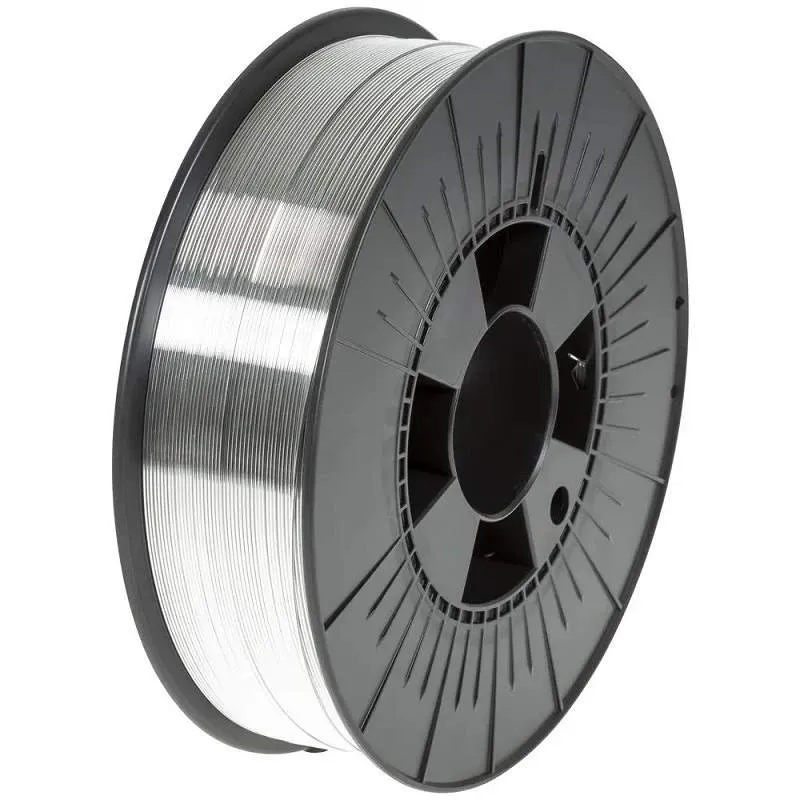
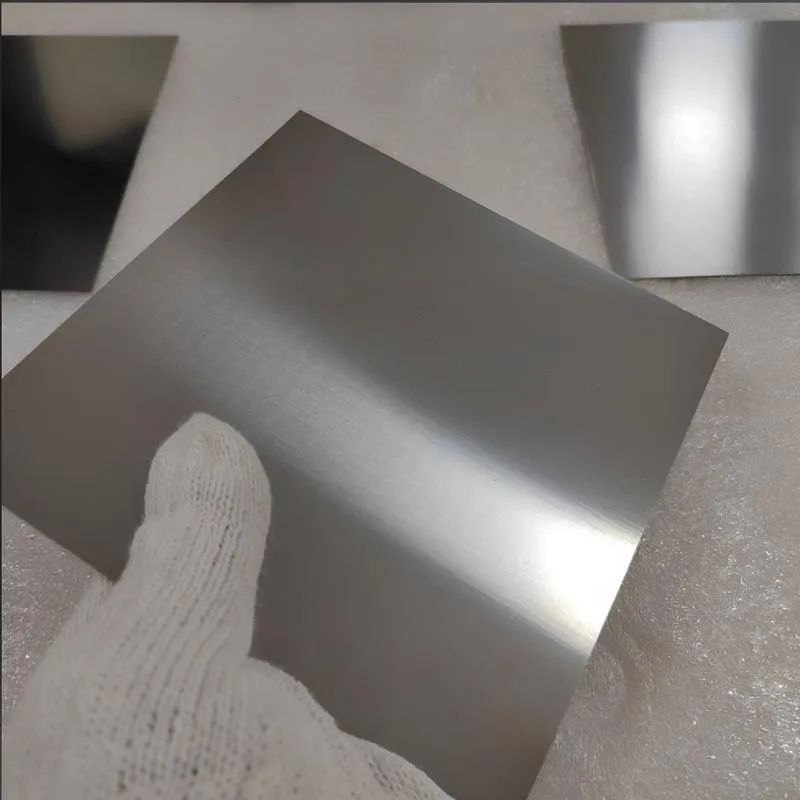
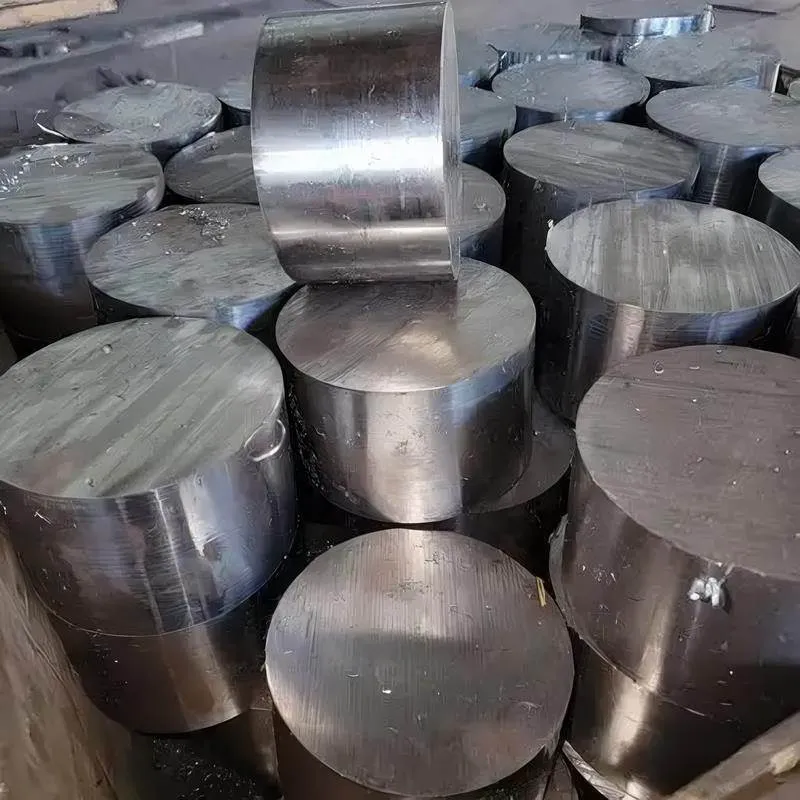
We provide Carpenter AerMet® 310 is available in Bar (Round bar, Flat bar), Ribbon, Wire, Rods, Tube,Seamless Tube,Pipe, Ingots, Plate, Sheet, Strip and Forging Stock.,Purity, chemical composition, size, etc. can all be customized to meet specific requirements.
Please contact us if you need customized services. We will contact you with the price and availability in 24 hours.
Carpenter AerMet® 310 Product Information
-:-
For detailed product information, please contact sales.
-:
Carpenter AerMet® 310 Synonyms
-:-
For detailed product information, please contact sales.
-:
Carpenter AerMet® 310 Product Information
-:-
For detailed product information, please contact sales.
-:
# **Carpenter AerMet® 310 Alloy**
## **Product Overview**
**Carpenter AerMet® 310** is an advanced **ultra-high-strength, cobalt-nickel secondary hardening martensitic steel** representing the third generation of the proven AerMet® alloy family. Engineered to deliver **superior combinations of strength, toughness, and fatigue resistance** beyond the capabilities of AerMet® 100, this alloy achieves its exceptional properties through optimized chemistry and precise thermal processing. AerMet® 310 is specifically designed for the most demanding aerospace, defense, and high-performance industrial applications where **maximum mechanical performance, damage tolerance, and reliability** are critical requirements.
---
## **1. Key Characteristics & Advantages**
* **Enhanced Strength-Toughness Combination:** Surpasses AerMet® 100 with higher tensile strength (>2200 MPa) while maintaining exceptional fracture toughness (>115 MPa√m).
* **Superior Fatigue Performance:** Excellent resistance to both fatigue crack initiation and propagation, particularly at high stress ratios.
* **Improved Stress Corrosion Resistance:** Enhanced resistance to stress corrosion cracking and hydrogen embrittlement compared to previous generations.
* **Optimized Microstructural Stability:** Refined carbide distribution and grain boundary chemistry for improved property consistency.
* **Excellent Through-Thickness Uniformity:** Maintains consistent mechanical properties even in thick sections with minimal property gradient.
* **Enhanced Temper Resistance:** Better retention of mechanical properties at moderately elevated temperatures.
* **Proven Processing Heritage:** Builds upon the established AerMet® heat treatment protocols with optimized parameters.
---
## **2. Typical Chemical Composition (Weight %)**
| Element | Carbon (C) | Chromium (Cr) | Nickel (Ni) | Molybdenum (Mo) | Cobalt (Co) | Vanadium (V) | Titanium (Ti) |
| :--- | :---: | :---: | :---: | :---: | :---: | :---: | :---: |
| **Content** | **0.25 - 0.30** | **2.00 - 2.50** | **10.0 - 11.0** | **1.00 - 1.50** | **14.0 - 15.0** | **0.05 - 0.15** | **0.02 - 0.06** |
**Key Metallurgical Advancements vs. AerMet® 100:**
* **Higher Carbon Content (0.28%):** Enables higher strength potential through increased M₂C carbide volume fraction while maintaining toughness via refined carbide morphology.
* **Optimized Cobalt (14.5%):** Enhanced cobalt content improves secondary hardening response and retards recovery processes during aging.
* **Vanadium Addition (0.10%):** Refines prior austenite grain size and contributes to secondary hardening through fine carbide formation.
* **Titanium Addition (0.04%):** Forms stable carbonitrides that pin grain boundaries and refine microstructure.
* **Adjusted Chromium/Nickel Ratios:** Optimized for improved corrosion resistance and toughness balance.
* **Advanced Melting Practice:** Utilizes triple vacuum melting (VIM + VAR + ESR) for exceptional cleanliness and homogeneity.
---
## **3. Physical & Mechanical Properties**
### **Physical Properties:**
* **Density:** 7.85 g/cm³ (0.284 lb/in³)
* **Thermal Conductivity:** 19.0 W/(m·K) at 20°C
* **Modulus of Elasticity:** 195 GPa (28.3 × 10⁶ psi)
* **Shear Modulus:** 76 GPa (11.0 × 10⁶ psi)
* **Poisson's Ratio:** 0.29
* **Coefficient of Thermal Expansion:** 11.0 × 10⁻⁶/K (20-100°C)
* **Specific Heat:** 460 J/(kg·K)
### **Standard Heat Treatment:**
1. **Austenitizing:** 870-900°C (1600-1650°F) for 1 hour per 25mm, rapid air or oil quench
2. **Cryogenic Treatment:** -73°C (-100°F) minimum for 2 hours
3. **Aging:** 460-480°C (860-900°F) for 5-10 hours, air cool
### **Mechanical Properties (Aged Condition):**
| Property | Typical Value | Minimum Value | Test Standard |
| :--- | :---: | :---: | :---: |
| **Ultimate Tensile Strength** | **2200-2350 MPa (320-340 ksi)** | 2070 MPa (300 ksi) | ASTM E8 |
| **Yield Strength (0.2% offset)** | **1930-2070 MPa (280-300 ksi)** | 1790 MPa (260 ksi) | ASTM E8 |
| **Elongation** | **12-15%** | 10% | ASTM E8 |
| **Reduction of Area** | **60-65%** | 55% | ASTM E8 |
| **Hardness** | **55-58 HRC** | 54 HRC | ASTM E18 |
| **Fracture Toughness (K₁c)** | **115-130 MPa√m (105-118 ksi√in)** | 100 MPa√m (91 ksi√in) | ASTM E399 |
| **Charpy V-Notch Impact** | **40-50 J (30-37 ft-lb)** | 35 J (26 ft-lb) | ASTM E23 |
| **Fatigue Strength (10⁷ cycles, R=0.1)** | **750-800 MPa (109-116 ksi)** | 690 MPa (100 ksi) | ASTM E466 |
### **Specialized Properties:**
* **True Fracture Strength:** 2500-2700 MPa
* **Fatigue Crack Growth Threshold (ΔK_th):** 6.5-7.0 MPa√m
* **Paris Law Exponent (m):** 2.8-3.0
* **Stress Corrosion Threshold (K₁scc):** 70-80 MPa√m in 3.5% NaCl
* **Crack Tip Opening Displacement:** 0.18-0.25 mm
---
## **4. Primary Applications**
### **Aerospace & Defense:**
* **Next-Generation Aircraft Landing Gear:** For commercial and military aircraft requiring higher performance than AerMet® 100
* **Carrier-Based Aircraft Components:** Arrestor hooks, launch bars, and critical structural elements
* **Helicopter Rotor Components:** Hubs, sleeves, and retention systems
* **Space Launch Systems:** Critical structural components and fastening systems
* **Missile & Defense Systems:** Airframes, motor cases, and guidance sections
### **High-Performance Industrial:**
* **Oil & Gas Exploration:** Downhole tools, drilling equipment, and completion tools for extreme environments
* **Precision Forming Tools:** Dies and molds for high-strength aerospace alloys
* **High-Strength Fasteners:** For critical structural connections in demanding applications
* **Racing & Performance Automotive:** Suspension components, drivetrain parts, and safety systems
* **Heavy Machinery:** Critical components for mining, construction, and industrial equipment
### **Specialized Applications:**
* **Medical Implants:** High-strength surgical instruments and orthopedic devices
* **Power Generation:** Turbine components and high-stress fastening systems
* **Marine & Offshore:** Critical components for subsea applications
---
## **5. Relevant International Standards & Specifications**
| Organization | Specification | Title / Description |
| :--- | :--- | :--- |
| **Proprietary** | **Carpenter AerMet® 310** | Primary technical data sheet and specifications |
| **AMS** | **In Development** | Expected to receive AMS specification for aerospace applications |
| **ASTM** | **A1011** | Referenced for certain product forms and testing methods |
| **ISO** | **ISO 683-13** | General classification under heat-treatable alloy steels |
| **MIL** | **MIL-DTL-32159** | Applicable for fastener applications (with specific approval) |
| **NADCAP** | **Various** | Meets requirements for aerospace heat treating and testing |
### **Comparison with AerMet® Family:**
| Property | AerMet® 310 | AerMet® 100 | AerMet® 210 |
| :--- | :---: | :---: | :---: |
| **Tensile Strength** | **2350 MPa** | 2000 MPa | 1700 MPa |
| **Yield Strength** | **2070 MPa** | 1725 MPa | 1550 MPa |
| **Fracture Toughness** | **125 MPa√m** | 115 MPa√m | 140 MPa√m |
| **Fatigue Strength** | **775 MPa** | 690 MPa | 620 MPa |
| **Primary Advantage** | **Balanced Performance** | **Proven Heritage** | **Maximum Toughness** |
---
## **6. Processing & Manufacturing Guidelines**
### **Machining (Annealed Condition ~32 HRC):**
* **Machinability Rating:** 30-35% (relative to 1212 steel)
* **Turning:** Carbide inserts (C2-C4 grade), 50-90 m/min, feed 0.10-0.20 mm/rev
* **Milling:** Fine-grained carbide end mills, 40-70 m/min, feed 0.06-0.12 mm/tooth
* **Drilling:** Premium cobalt HSS or carbide drills, 8-15 m/min, peck drilling essential
* **Grinding:** Aluminum oxide (46-60 grit) or CBN wheels, light passes with high-pressure coolant
### **Heat Treatment Critical Parameters:**
1. **Austenitizing:** 880°C ±10°C in vacuum or protective atmosphere
2. **Quenching:** Rapid air (≥5 m/s) or oil quench for sections >50mm
3. **Cryogenic Treatment:** -73°C for 2 hours minimum (essential for complete transformation)
4. **Aging:** 470°C ±5°C for optimal properties, time dependent on section size
5. **Temperature Uniformity:** ±5°C throughout load during all thermal cycles
### **Welding & Joining:**
* **Weldability Classification:** Poor (requires specialized procedures)
* **Recommended Processes:** Electron beam, laser, or GTAW with trailing shield
* **Filler Metals:** Matching composition or Ni-based superalloys (IN625, IN718)
* **Preheat/Interpass:** 200-300°C minimum
* **Post-Weld Heat Treatment:** Full reheat treatment generally required
* **Special Considerations:** Avoid welding in aged condition when possible
### **Surface Treatments:**
* **Shot Peening:** Almen intensity 0.008-0.012A for fatigue improvement
* **Nitriding:** Gas or plasma nitriding (480-520°C) produces 0.10-0.25mm case at 1000-1200 HV
* **PVD Coatings:** TiAlN, AlCrN, DLC for specific wear applications
* **Plating:** Cadmium-titanium or nickel plating for corrosion protection
---
## **7. Technical Performance Data**
### **Fatigue & Fracture Performance:**
* **High-Cycle Fatigue (R=0.1):** 775 MPa at 10⁷ cycles
* **Fatigue Ratio (σ_fatigue/σ_UTS):** 0.35
* **Fatigue Crack Growth Threshold:** ΔK_th = 6.8 MPa√m
* **Paris Law Constants:** C = 8.0×10⁻¹¹, m = 2.9 (da/dN in m/cycle)
* **Crack Growth Rate at ΔK=30 MPa√m:** 8.0×10⁻⁷ mm/cycle
### **Temperature-Dependent Properties:**
| Temperature | Tensile Strength | Yield Strength | K₁c | CVN Impact |
| :---: | :---: | :---: | :---: | :---: |
| **-54°C (-65°F)** | 2410 MPa | 2140 MPa | 110 MPa√m | 35 J |
| **24°C (75°F)** | 2350 MPa | 2070 MPa | 125 MPa√m | 45 J |
| **100°C (212°F)** | 2280 MPa | 2000 MPa | 135 MPa√m | 50 J |
| **200°C (392°F)** | 2140 MPa | 1860 MPa | 140 MPa√m | 55 J |
### **Corrosion & Environmental Performance:**
* **Salt Spray Resistance:** 750+ hours to red rust (unplated)
* **Stress Corrosion Threshold:** K₁scc = 75 MPa√m in 3.5% NaCl
* **Hydrogen Embrittlement:** Superior resistance compared to AerMet® 100
* **Corrosion Fatigue:** Maintains 90% of air fatigue strength in marine environments
---
## **8. Design & Engineering Considerations**
### **Optimal Application Conditions:**
1. **High-Stress Structural Applications:** Where maximum strength with damage tolerance is required
2. **Fatigue-Critical Components:** Subjected to high-cycle or spectrum loading
3. **Corrosive Service Environments:** Where strength must be maintained in aggressive conditions
4. **Weight-Critical Designs:** Where high specific strength provides advantage
5. **High-Reliability Systems:** Where component failure has severe consequences
### **Design Allowables (Recommended):**
| Property | Design Value | Basis | Safety Factor |
| :--- | :---: | :---: | :---: |
| **Tensile Ultimate** | 2070 MPa | A-basis | 1.5 |
| **Tensile Yield** | 1790 MPa | A-basis | 1.5 |
| **Shear Ultimate** | 1240 MPa | B-basis | 2.0 |
| **Bearing Ultimate** | 3100 MPa | e/D=2.0 | 2.0 |
| **Fatigue (10⁷ cycles)** | 550 MPa | Typical | 2.0 |
### **Failure Analysis Considerations:**
* **Primary Failure Modes:** Fatigue, overload, stress corrosion
* **Fracture Appearance:** Mixed mode (ductile-brittle) with shear lips
* **Fatigue Striations:** Well-defined at intermediate ΔK levels
* **Crack Initiation Sites:** Surface defects, microstructural features
---
## **9. Quality Assurance & Testing**
### **Standard Material Certification:**
* **Chemical Analysis:** Per heat using advanced spectroscopic methods
* **Mechanical Testing:** Full suite per heat and product form
* **Microcleanliness:** Per AMS 2301 or equivalent (≤0.5% total inclusions)
* **Grain Size:** ASTM 9 or finer
* **Ultrasonic Inspection:** 100% per AMS 2630 Class AA
* **Fracture Toughness:** K₁c testing for critical applications
### **Advanced Testing Capabilities:**
* **Fracture Mechanics Testing:** J-R curves, CTOD, dynamic fracture toughness
* **Fatigue Testing:** Spectrum loading, variable amplitude, thermal-mechanical fatigue
* **Corrosion Testing:** SCC, corrosion fatigue, hydrogen permeation
* **Microstructural Analysis:** TEM, SEM-EDS, EBSD for phase identification
* **Residual Stress Analysis:** X-ray diffraction, neutron diffraction
---
## **10. Conclusion**
**Carpenter AerMet® 310** represents a **significant advancement in ultra-high-strength alloy technology**, building upon the proven success of the AerMet® family while pushing performance boundaries to new levels. This third-generation alloy delivers **superior combinations of strength, toughness, and fatigue resistance** that enable new possibilities in aerospace, defense, and high-performance industrial applications.
The alloy's **optimized chemistry and refined microstructure** provide tangible improvements over previous generations, particularly in applications where **maximum strength must be combined with exceptional damage tolerance**. While maintaining the essential processing characteristics of the AerMet® family, AerMet® 310 offers designers and engineers **enhanced performance capabilities** for the most demanding applications.
For **next-generation aircraft programs, advanced defense systems, and critical industrial applications** where performance requirements exceed the capabilities of existing ultra-high-strength alloys, AerMet® 310 provides a technically superior solution. Its balanced property profile, combined with Carpenter's proven metallurgical expertise, makes it an ideal choice for advancing the state of the art in high-performance materials engineering.
-:-
For detailed product information, please contact sales.
-:
Carpenter AerMet® 310 Specification
Dimensions
Size:
Diameter 20-1000 mm Length <6915 mm
Size:We can customized as required
Standard:
Per your request or drawing
We can customized as required
Properties(Theoretical)
Chemical Composition
-:-
For detailed product information, please contact sales.
-:
Carpenter AerMet® 310 Properties
-:-
For detailed product information, please contact sales.
-:
Applications of Carpenter AerMet® 310
-:-
For detailed product information, please contact sales.
-:
Chemical Identifiers Carpenter AerMet® 310
-:-
For detailed product information, please contact sales.
-:
Packing of Carpenter AerMet® 310
-:-
For detailed product information, please contact sales.
-:
Standard Packing:
-:-
For detailed product information, please contact sales.
-:
Typical bulk packaging includes palletized plastic 5 gallon/25 kg. pails, fiber and steel drums to 1 ton super sacks in full container (FCL) or truck load (T/L) quantities. Research and sample quantities and hygroscopic, oxidizing or other air sensitive materials may be packaged under argon or vacuum. Solutions are packaged in polypropylene, plastic or glass jars up to palletized 3386 gallon liquid totes Special package is available on request. E FORUs’ is carefully handled to minimize damage during storage and transportation and to preserve the quality of our products in their original condition