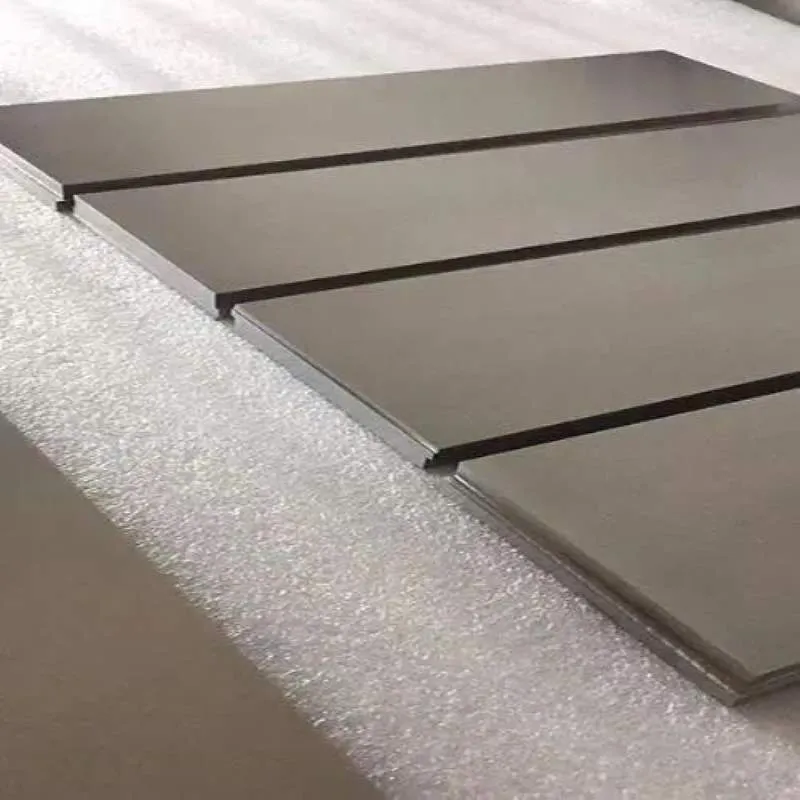
3D Systems LaserForm® Ni625 (B), AFTER STRESS RELIEF Nickel Super Alloy
Product Code : STI-GSTI-572-CU
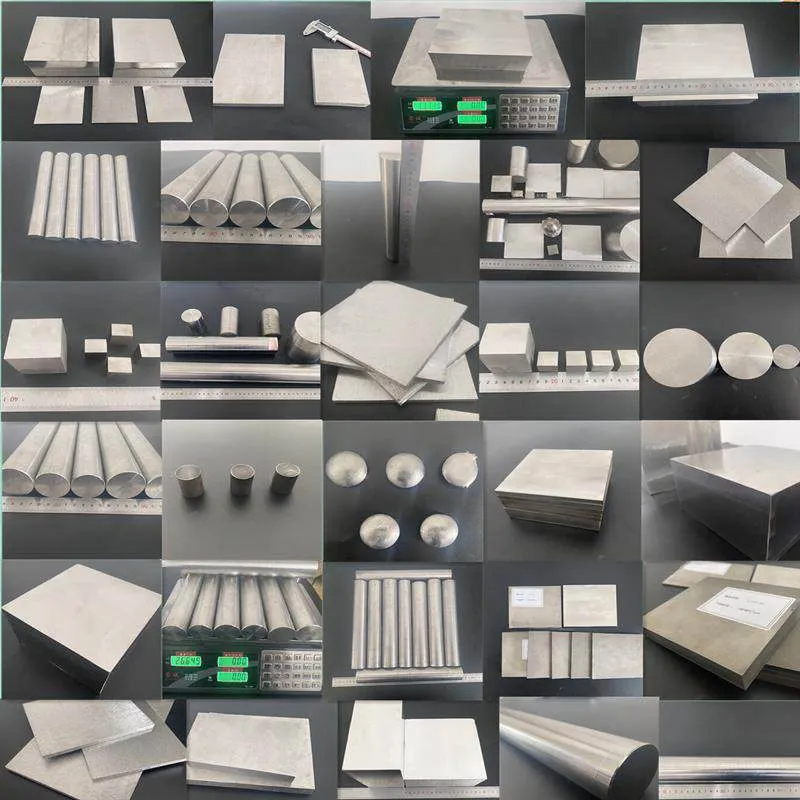
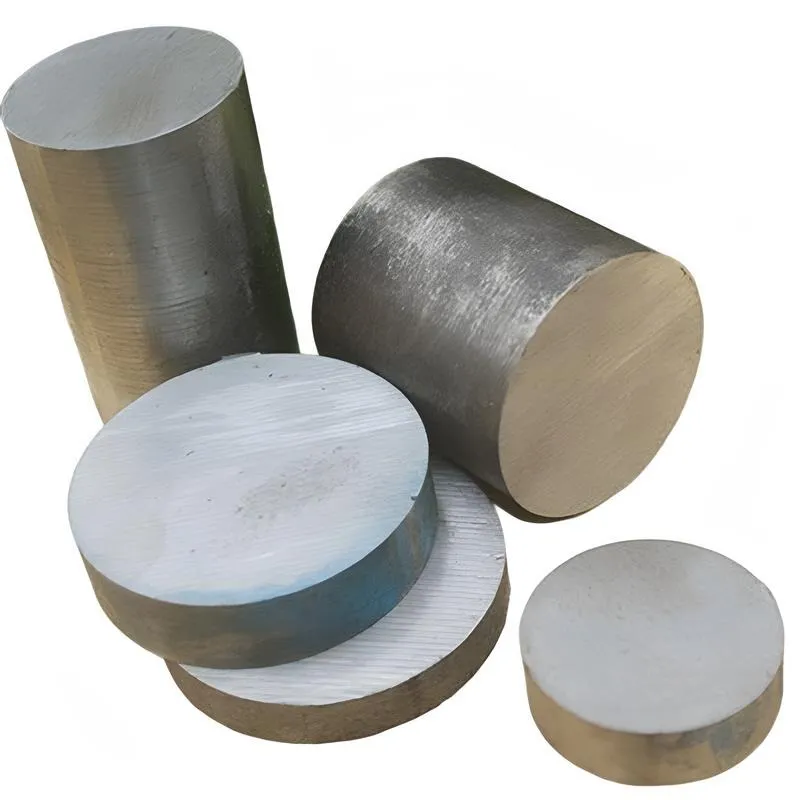
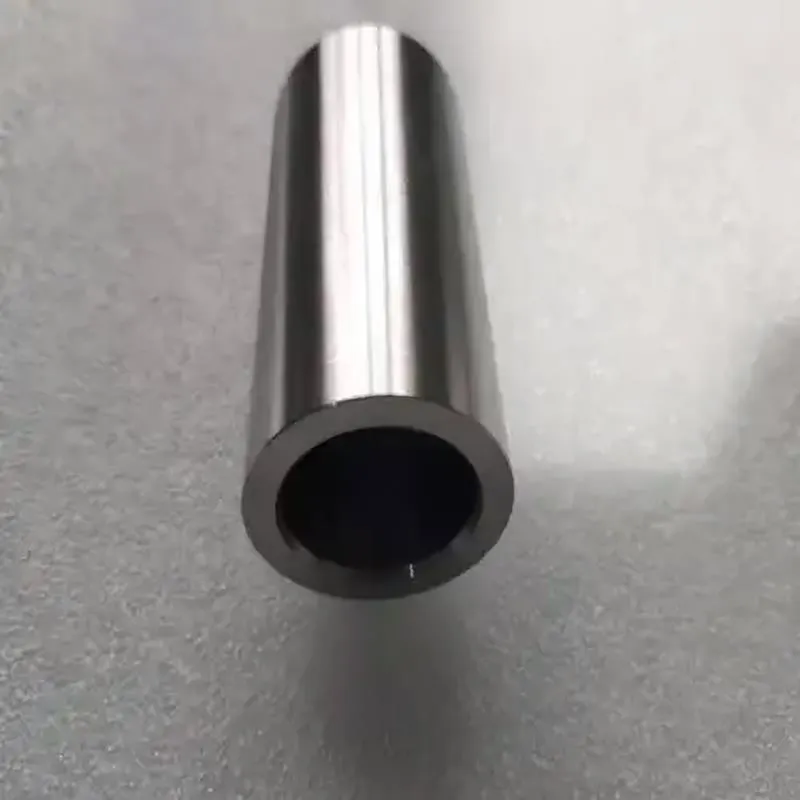
We provide 3D Systems LaserForm® Ni625 (B), AFTER STRESS RELIEF Nickel Super Alloy is available in Bar (Round bar, Flat bar), Ribbon, Wire, Rods, Tube,Seamless Tube,Pipe, Ingots, Plate, Sheet, Strip and Forging Stock.,Purity, chemical composition, size, etc. can all be customized to meet specific requirements.
3D Systems LaserForm® Ni625 (B), AFTER STRESS RELIEF Nickel Super Alloy Product Information
-:-
For detailed product information, please contact sales.
-:
3D Systems LaserForm® Ni625 (B), AFTER STRESS RELIEF Nickel Super Alloy Synonyms
-:-
For detailed product information, please contact sales.
-:
3D Systems LaserForm® Ni625 (B), AFTER STRESS RELIEF Nickel Super Alloy Product Information
-:-
For detailed product information, please contact sales.
-:
# **3D Systems LaserForm® Ni625 (B), AFTER STRESS RELIEF Nickel Super Alloy**
## **Product Overview**
**3D Systems LaserForm® Ni625 (B), AFTER STRESS RELIEF** is a premium nickel-chromium-molybdenum superalloy powder material engineered for Direct Metal Printing (DMP) technology, subjected to a **mandatory stress relief heat treatment** following the additive manufacturing process. This critical post-processing step transforms the as-built material by significantly reducing residual stresses (typically 80-90% reduction), improving dimensional stability, and slightly enhancing ductility and corrosion resistance—all while maintaining the exceptional strength characteristic of nickel superalloys. The stress-relieved condition is essential for precision components operating in demanding aerospace, chemical processing, and energy applications where dimensional accuracy, thermal stability, and resistance to stress-corrosion cracking are paramount.
---
## **TECHNICAL SPECIFICATIONS**
### **Manufacturing & Processing Specification**
| Parameter | Specification |
|-----------|---------------|
| **Primary Process** | Direct Metal Printing (DMP) / Laser Powder Bed Fusion (LPBF) |
| **Post-Process Condition** | **After Stress Relief** (mandatory treatment) |
| **Stress Relief Protocol** | 870°C ± 10°C for 1-2 hours, air cooled |
| **Optional Further Treatments** | Solution Annealing, Hot Isostatic Pressing (HIP), Aging |
| **Compatible Systems** | 3D Systems ProX DMP Series, DMP Factory Series |
| **Build Volume** | Up to 500 × 500 × 500 mm (system dependent) |
| **Optimal Layer Thickness** | 30-40 μm |
| **Atmosphere Control** | High-purity argon (< 20 ppm O₂) during build |
| **Stress Relief Atmosphere** | High-purity argon or vacuum (< 10⁻² mbar) |
| **Build Plate Temperature** | 100-150°C |
| **Scan Strategy** | Island scanning with 67° rotation to minimize residual stress |
### **Material Composition (wt%, Powder Specification)**
| Element | Target Range | Metallurgical Function After Stress Relief |
|---------|--------------|-----------------------------------|
| **Nickel (Ni)** | ≥ 58.0 | Matrix element, austenite stabilizer |
| **Chromium (Cr)** | 20.0-23.0 | Corrosion/oxidation resistance, solid solution strengthening |
| **Molybdenum (Mo)** | 8.0-10.0 | Pitting/crevice corrosion resistance, solid solution strengthening |
| **Niobium (Nb)** | 3.15-4.15 | Precipitation hardening (γ'' Ni₃Nb), stress relief response control |
| **Iron (Fe)** | ≤ 5.0 | Matrix element, controlled |
| **Manganese (Mn)** | ≤ 0.40 | Deoxidizer, impurity control |
| **Silicon (Si)** | ≤ 0.40 | Deoxidizer, impurity control |
| **Carbon (C)** | ≤ 0.08 | Controlled for carbide stability during stress relief |
| **Aluminum (Al)** | ≤ 0.35 | Oxide formation control, minor precipitation |
| **Titanium (Ti)** | ≤ 0.35 | γ' (Ni₃Ti) formation control, grain boundary stabilization |
| **Cobalt (Co)** | ≤ 0.80 | Impurity control |
| **Phosphorus (P)** | ≤ 0.012 | Impurity control (enhanced purity) |
| **Sulfur (S)** | ≤ 0.012 | Impurity control (enhanced purity) |
| **Boron (B)** | 0.003-0.008 | Controlled addition for grain boundary strengthening during stress relief |
| **Magnesium (Mg)** | ≤ 0.01 | Optional addition for sulfide shape control |
*Proprietary chemistry optimized for controlled microstructural evolution during stress relief*
---
## **STRESS RELIEF PROTOCOL**
### **Standard Stress Relief Thermal Cycle**
| Parameter | Specification | Metallurgical Effect |
|-----------|---------------|----------------------|
| **Heating Rate** | ≤ 100°C/hour to 600°C, then ≤ 50°C/hour to 870°C | Minimizes thermal gradients and additional stress |
| **Stress Relief Temperature** | 870°C ± 10°C (1598°F ± 18°F) | Optimal for Ni625: below recrystallization but above recovery temperature |
| **Hold Time** | 1 hour minimum, plus 30 min per 25 mm thickness | Complete stress relaxation |
| **Atmosphere** | High-purity argon (dew point < -40°C) or vacuum (< 10⁻² mbar) | Prevents oxidation, decarburization |
| **Cooling Rate** | Controlled furnace cooling at 50-100°C/hour to 500°C | Maintains low residual stress state |
| **Final Cooling** | Air cool from 500°C to room temperature | |
| **Maximum Load Temperature** | 200°C (392°F) for loading/unloading | Safety consideration |
### **Microstructural Transformation During Stress Relief**
| Microstructural Feature | As-Built Condition | After Stress Relief | Metallurgical Significance |
|------------------------|-------------------|---------------------|---------------------------|
| **Residual Stress Level** | High (300-500 MPa) | Low (< 50 MPa) | Dimensional stability, reduced distortion risk |
| **Dislocation Density** | Very high (10¹⁴-10¹⁵ m⁻²) | Moderate (10¹²-10¹³ m⁻²) | Improved ductility, reduced brittleness |
| **Precipitate State** | Fine γ'' (Ni₃Nb), partially coherent | Coarsened γ'', more stable | Stabilized microstructure |
| **Carbide Distribution** | Fine MC carbides at cell boundaries | Slight coarsening, more uniform | Reduced susceptibility to intergranular attack |
| **Grain Structure** | Columnar, highly textured | Columnar maintained but stress-relieved | Minimal grain growth, retained strength |
| **Lattice Strain** | High from thermal cycling | Significantly reduced | Improved dimensional stability |
| **Retained Strain Energy** | High | Low (< 10% of as-built) | Reduced driving force for distortion |
### **Dimensional Stability Characteristics**
- **Typical Dimensional Change:** < 0.03% (varies with geometry)
- **Distortion Reduction:** 75-85% compared to as-built
- **Flatness Improvement:** Significant for thin-walled structures
- **Stress Relief Effectiveness:** > 85% residual stress reduction
- **Repeatability:** Excellent with controlled furnace conditions
---
## **MECHANICAL PROPERTIES (After Stress Relief)**
### **Tensile Properties (ASTM E8/E8M, Room Temperature)**
| Orientation | Ultimate Tensile Strength | Yield Strength (0.2%) | Elongation | Reduction of Area |
|-------------|---------------------------|-----------------------|------------|-------------------|
| **Horizontal (XY)** | 900-1000 MPa | 650-750 MPa | 30-40% | 45-55% |
| **Vertical (Z)** | 850-950 MPa | 600-700 MPa | 25-35% | 40-50% |
| **45° Diagonal** | 875-975 MPa | 625-725 MPa | 27-37% | 42-52% |
*Note: 5-10% strength reduction but 20-30% ductility improvement vs as-built*
### **Elevated Temperature Tensile Properties (After Stress Relief)**
| Temperature | UTS (MPa) | YS (MPa) | Elongation (%) | Notes |
|-------------|-----------|----------|----------------|-------|
| **425°C (797°F)** | 750-850 | 550-650 | 25-35 | Excellent retention |
| **650°C (1202°F)** | 600-700 | 400-500 | 25-35 | Primary service range |
| **760°C (1400°F)** | 350-450 | 250-350 | 30-40 | Good performance |
| **870°C (1600°F)** | 200-300 | 150-250 | 35-45 | Short-term exposure |
### **Comprehensive Mechanical Properties**
| Property | After Stress Relief | Test Standard | Notes |
|----------|---------------------|---------------|-------|
| **Hardness** | 230-280 HV (22-28 HRC) | ASTM E92/E18 | Slight reduction from as-built |
| **Impact Toughness** | 70-100 J | ASTM E23 | Charpy V-notch, 22°C (15-20% improvement) |
| **Fatigue Strength** | 375-425 MPa | ASTM E466 | R = -1, 10⁷ cycles |
| **Young's Modulus** | 200-210 GPa | ASTM E111 | |
| **Shear Strength** | 500-600 MPa | ASTM B831 | |
| **Compressive Strength** | 950-1100 MPa | ASTM E9 | |
| **Bearing Strength** | 1300-1500 MPa | ASTM E238 | |
| **Fracture Toughness (KIC)** | 110-140 MPa√m | ASTM E399 | Improved vs as-built |
| **Creep Rupture (650°C/100h)** | > 275 MPa | ASTM E139 | |
| **Residual Stress** | < 50 MPa surface, < 30 MPa core | X-ray diffraction | Verified measurement |
---
## **PHYSICAL PROPERTIES (After Stress Relief)**
| Property | Value | Conditions/Notes |
|----------|-------|------------------|
| **Density** | 8.44 g/cm³ | > 99.6% dense per ASTM B962 |
| **Thermal Conductivity** | 10.2 W/m·K | 20°C (slight increase from as-built) |
| **Coefficient of Thermal Expansion** | 12.9 × 10⁻⁶/K | 20-200°C |
| **Specific Heat Capacity** | 415 J/kg·K | 20°C |
| **Electrical Resistivity** | 1.25 μΩ·m | 20°C |
| **Magnetic Permeability** | Paramagnetic (μ ≈ 1.001) | Essentially non-magnetic |
| **Melting Range** | 1290-1350°C | Solidus-Liquidus |
| **Thermal Diffusivity** | 2.9 × 10⁻⁶ m²/s | 20°C |
---
## **CORROSION PERFORMANCE (After Stress Relief)**
### **Enhanced Corrosion Resistance**
| Test Environment | Performance Rating | Improvement vs As-Built | Notes |
|------------------|-------------------|------------------------|-------|
| **Stress Corrosion Cracking** | Excellent | Significant | Primary benefit of stress relief |
| **Intergranular Corrosion** | Excellent | Improved | Reduced susceptibility |
| **Pitting Resistance** | Excellent | Slight improvement | |
| **General Corrosion** | Excellent | Similar | Already excellent |
| **Galvanic Corrosion** | Excellent | Similar | |
### **Specific Corrosion Test Results**
| Test Method | Conditions | Results | Standard |
|-------------|------------|---------|----------|
| **Stress Corrosion Cracking** | Boiling 42% MgCl₂, U-bend | No failure (vs. potential failure as-built) | ASTM G36 |
| **Intergranular Corrosion** | ASTM A262 Practice E | No attack | ASTM A262 |
| **Salt Spray** | 5% NaCl, 35°C, 3000h | No red rust | ASTM B117 |
| **Critical Pitting Temperature** | 1M NaCl | > 85°C | ASTM G150 |
| **Electrochemical Polarization** | 3.5% NaCl, 25°C | Ecorr = -150 mV, Epit = +450 mV | ASTM G61 |
### **High-Temperature Oxidation Performance**
- **Oxidation Rate at 870°C:** < 0.3 mg/cm²·100h
- **Scale Adherence:** Excellent - protective Cr₂O₃ scale maintained
- **Thermal Cycling Resistance:** Improved vs as-built due to reduced stress
---
## **DESIGN FOR ADDITIVE MANUFACTURING & STRESS RELIEF**
### **Geometric Guidelines for Stress-Relieved Parts**
| Parameter | Recommendation | Rationale |
|-----------|----------------|-----------|
| **Minimum Wall Thickness** | 1.0 mm (uniform stress relief) | Ensures consistent stress relief response |
| **Maximum Section Thickness** | 150 mm (standard), 200 mm (extended cycle) | Stress relief effectiveness diminishes with thickness |
| **Section Transitions** | Gradual (3:1 ratio maximum) | Prevents stress concentration |
| **Internal Cavities** | Minimum 5 mm access ports | Allows stress relief atmosphere penetration |
| **Feature Size** | Minimum 0.5 mm (post-stress relief) | Accounts for potential dimensional changes |
| **Support Contact Areas** | Designed for removal post-stress relief | Stress-relieved material may have different removal characteristics |
| **Critical Dimensions** | Allow ±0.1% tolerance for stress relief effects | |
### **Stress Relief-Specific Design Considerations**
1. **Fixture Design:** Consider fixturing for critical flatness/alignment during stress relief
2. **Thermal Mass Distribution:** Uniform wall thickness promotes even stress relief
3. **Residual Stress Management:** Radius all sharp corners (minimum R2.0 mm)
4. **Support Strategy:** Plan for potential distortion during stress relief
5. **Tolerance Allocation:** Include dimensional allowances for stress relief effects
---
## **PRIMARY APPLICATIONS**
### **Aerospace & Defense (Critical Components)**
- **Rocket Engine Components:** Combustion chambers, nozzles requiring dimensional stability
- **Gas Turbine Components:** Casings, mounts, brackets with tight tolerances
- **Aircraft Structural Components:** Brackets, fittings, mounts for flight-critical systems
- **Spacecraft Mechanisms:** Deployment systems, structural supports requiring precision
- **Military Hardware:** Fire control components, guidance system housings
### **Chemical & Process Industry (Pressure Equipment)**
- **Pressure Vessels:** ASME Code Stamp components requiring dimensional stability
- **Heat Exchangers:** Shell and tube, plate type with precise flow channels
- **Reactor Internals:** Catalyst supports, distribution trays requiring accuracy
- **High-Pressure Piping:** Manifolds, headers, junctions
- **Valve Bodies & Trims:** For critical service with tight tolerances
### **Energy & Power Generation**
- **Gas Turbine Components:** Transition pieces, combustor liners requiring thermal stability
- **Nuclear Components:** Non-radioactive but precision components
- **Solar Thermal Systems:** Receiver assemblies, heat exchanger plates
- **Geothermal Systems:** Wellhead components, heat exchanger parts
- **Hydrogen Systems:** Components for hydrogen service requiring stress relief
### **Oil & Gas (High-Pressure Service)**
- **Wellhead Components:** Christmas trees, manifolds, connectors
- **Downhole Tools:** Measurement tools requiring dimensional stability
- **Subsea Equipment:** Connectors, jumpers, manifolds
- **Refinery Components:** Reactor internals, heat exchanger parts
- **LNG Facilities:** Cryogenic heat exchangers, cold box internals
### **Marine & Offshore (Critical Systems)**
- **Propulsion Systems:** Shafting components, bearing housings
- **Sea Water Systems:** High-pressure pumps, valve bodies
- **Subsea Production:** Control modules, hydraulic accumulators
- **Shipboard Safety Systems:** Firefighting, emergency systems
### **Medical & Pharmaceutical (Precision Equipment)**
- **Medical Device Components:** Precision mechanisms, housings
- **Pharmaceutical Reactors:** Mixing systems, reaction vessels
- **Sterilization Equipment:** Autoclave components, trays
- **Analytical Equipment:** Mass spectrometer components, HPLC parts
---
## **POST-PROCESSING & FINISHING (After Stress Relief)**
### **Machining Considerations**
- **Tool Material:** Carbide (K10-K20 grade) or ceramic recommended
- **Cutting Speed:** 20-35 m/min (turning)
- **Feed Rate:** 0.15-0.30 mm/rev
- **Depth of Cut:** 1.0-3.0 mm (moderate)
- **Coolant:** Essential for heat dissipation and dimensional control
- **Chip Formation:** Continuous chips - chip breakers essential
- **Dimensional Stability:** Excellent - minimal distortion during machining
- **Surface Finish:** Ra 0.8-1.6 μm achievable with proper technique
### **Surface Enhancement Treatments**
- **Grinding:** Silicon carbide or diamond wheels, achieves Ra < 0.4 μm
- **Polishing:** Progressive grit to mirror finish (Ra < 0.05 μm achievable)
- **Electropolishing:** Highly effective, improves corrosion resistance
- **Shot Peening:** Almen 0.008-0.012A for fatigue improvement
- **Passivation:** Nitric acid passivation per ASTM A967 optional
- **Coatings:** Generally not needed but compatible with most coating systems
### **Joining Technologies**
- **Welding:** Excellent weldability - GTAW, GMAW, PAW all suitable
- **Post-Weld Treatment:** Stress relief recommended for critical welds
- **Adhesive Bonding:** Good with proper surface preparation
- **Mechanical Fastening:** Standard practices applicable
- **Brazing:** Excellent with nickel-based brazing alloys
---
## **QUALITY STANDARDS & CERTIFICATIONS**
| Standard | Applicability | Compliance Status |
|----------|---------------|-------------------|
| **ASTM F3055** | Ni625 for Additive Manufacturing | Fully compliant |
| **ASME SB-443** | Nickel Alloy Plate, Sheet, and Strip | Property equivalent |
| **AMS 5666** | Nickel Alloy, Corrosion and Heat Resistant | Chemistry compliant |
| **NACE MR0175/ISO 15156** | Materials for use in H₂S environments | Fully compliant |
| **ASTM B443** | Nickel-Chromium-Molybdenum-Columbium Alloy | Property equivalent |
| **ISO 9001:2015** | Quality Management System | Certified |
| **AS9100** | Aerospace Quality Management | Compliant |
| **NADCAP** | Heat Treating Accreditation | Available through partners |
### **Testing & Documentation Package**
- **Full Chemical Analysis:** ICP-OES, combustion analysis for C/S
- **Mechanical Testing:** Tensile (multiple orientations, temperatures), impact
- **Residual Stress Measurement:** X-ray diffraction or hole-drilling method
- **Corrosion Testing:** Full ASTM corrosion test suite
- **Microstructural Analysis:** Grain structure, precipitate characterization
- **Non-Destructive Testing:** Dye penetrant, X-ray radiography
- **Certification:** 3.2 Material Certificate per EN 10204 with stress relief parameters
---
## **COMPARATIVE PERFORMANCE DATA**
| Condition | UTS (MPa) | YS (MPa) | Elongation (%) | Residual Stress | Best Application |
|-----------|-----------|----------|----------------|----------------|------------------|
| **As-Built** | 950-1050 | 700-800 | 25-35 | High (300-500 MPa) | Non-critical, rapid prototypes |
| **After Stress Relief** | 900-1000 | 650-750 | 30-40 | Low (< 50 MPa) | Precision components, tooling |
| **Fully Annealed** | 800-900 | 400-500 | 40-50 | Very low | Maximum ductility, forming |
| **Wrought Annealed** | 830 | 410 | 30 | Low | Traditional applications |
---
## **STORAGE & HANDLING**
### **Powder Management**
- **Storage Life:** 24 months in original argon-purged packaging
- **Storage Conditions:** < 40% relative humidity, 15-30°C
- **Handling:** Inert atmosphere glove box recommended for extended exposure
- **Safety:** NFPA 484 combustible metals standard, nickel sensitization precautions
### **Stress Relief Facility Requirements**
- **Furnace Type:** Vacuum or atmosphere-controlled with recording capability
- **Temperature Uniformity:** ±8°C throughout work zone
- **Heating Elements:** Nickel-chromium or molybdenum
- **Atmosphere Control:** Capable of < 10⁻² mbar vacuum or argon purging
- **Cooling Control:** Programmable cooling rate capability
- **Certification:** NADCAP heat treating accreditation preferred for aerospace
---
## **TECHNICAL SUPPORT SERVICES**
- **Stress Relief Protocol Development:** Custom cycles for specific geometries
- **Distortion Prediction & Compensation:** FEA analysis services
- **Application Engineering:** Material selection for corrosive/high-temperature service
- **Failure Analysis:** Comprehensive metallurgical investigation
- **Quality Assurance:** Development of inspection and testing protocols
---
## **ORDERING INFORMATION**
| Item | Specification |
|------|---------------|
| **Standard Packaging** | 5 kg, 10 kg, 20 kg argon-sealed containers |
| **Stress Relief Service** | Available as standard or optional service |
| **Lead Time** | 4-10 weeks (including stress relief and testing) |
| **Documentation** | Certificate of Analysis, MSDS, Stress Relief Certificate |
| **Custom Processing** | Available for specialized requirements |
---
**3D Systems Corporation**
*Precision Superalloy Additive Manufacturing Solutions*
[www.3dsystems.com](https://www.3dsystems.com)
Phone: +1-803-326-3900
Email: materials@3dsystems.com
---
**CRITICAL PROCESS NOTE:**
Parts manufactured with LaserForm® Ni625 (B) material intended for AFTER STRESS RELIEF condition **MUST** undergo the specified stress relief heat treatment before being placed in service or subjected to significant machining operations. This treatment is essential for achieving dimensional stability and preventing stress-corrosion cracking in service.
**HEALTH & SAFETY WARNING:**
Nickel and its compounds are known to cause sensitization and allergic reactions in some individuals. Proper handling procedures including ventilation, protective equipment, and hygiene practices must be followed when processing nickel alloy powders.
**DISCLAIMER:**
The data provided represents typical values obtained from standardized test specimens manufactured under controlled conditions. Actual performance in production applications may vary based on specific geometry, build parameters, stress relief execution, and service conditions. For critical applications, comprehensive application-specific testing is mandatory. Specifications are subject to change without notice. Always consult the most current technical data sheets before design and production.
© 2024 3D Systems Corporation. All rights reserved. LaserForm is a registered trademark of 3D Systems Corporation. INCONEL is a registered trademark of Special Metals Corporation.
-:-
For detailed product information, please contact sales.
-:
3D Systems LaserForm® Ni625 (B), AFTER STRESS RELIEF Nickel Super Alloy Specification
Dimensions
Size:
Diameter 20-1000 mm Length <7228 mm
Size:We can customized as required
Standard:
Per your request or drawing
We can customized as required
Properties(Theoretical)
Chemical Composition
-:-
For detailed product information, please contact sales.
-:
3D Systems LaserForm® Ni625 (B), AFTER STRESS RELIEF Nickel Super Alloy Properties
-:-
For detailed product information, please contact sales.
-:
Applications of 3D Systems LaserForm® Ni625 (B), AFTER STRESS RELIEF Nickel Super Alloy
-:-
For detailed product information, please contact sales.
-:
Chemical Identifiers 3D Systems LaserForm® Ni625 (B), AFTER STRESS RELIEF Nickel Super Alloy
-:-
For detailed product information, please contact sales.
-:
Packing of 3D Systems LaserForm® Ni625 (B), AFTER STRESS RELIEF Nickel Super Alloy
-:-
For detailed product information, please contact sales.
-:
Standard Packing:
-:-
For detailed product information, please contact sales.
-:
Typical bulk packaging includes palletized plastic 5 gallon/25 kg. pails, fiber and steel drums to 1 ton super sacks in full container (FCL) or truck load (T/L) quantities. Research and sample quantities and hygroscopic, oxidizing or other air sensitive materials may be packaged under argon or vacuum. Solutions are packaged in polypropylene, plastic or glass jars up to palletized 3699 gallon liquid totes Special package is available on request. E FORUs’ is carefully handled to minimize damage during storage and transportation and to preserve the quality of our products in their original condition